How to Get Better at Fortnite: The Improvement Roadmap
Getting better at Fortnite isn't random grinding — it's a stack of skills in the right order. Settings first, then aim, then building and editing, then game sense, then the practice habits that turn reps into rank. Here's the roadmap, with the order that actually matters.
Most people trying to get better at Fortnite are grinding hard and improving slowly, and it's almost never an effort problem. It's an order problem. They're drilling 90s with a sensitivity they've never tuned, or forcing build fights when their game sense puts them in losing spots every match. Skill in Fortnite stacks, and the stack only holds if you build it bottom-up: the foundation has to be solid before the layer on top of it is worth grinding.
This is that stack, in order. Settings and keybinds first, because everything you do runs through them. Then aim, then building and editing, then game sense and rotations, then the practice habits — VOD review and purposeful Creative work — that turn reps into actual rank. You can absolutely work on several layers at once, but if a lower layer is broken, fix it before you pour hours into the one above. We've got a deep guide on each step; this roadmap is the map that tells you which to read when, and why.
Why order matters more than hours
Two players put in the same ten hours this week. One climbs, one doesn't. The difference is usually that one of them spent those hours reinforcing a broken foundation. Here's the logic of the order:
- Settings gate everything. If you can't see enemies (wrong graphics/visibility), can't aim consistently (untuned sensitivity), or can't build fast (bad keybinds), no amount of aim or build practice fully cashes in. Fix the controls and every other hour you spend gets more efficient.
- Aim is the floor of every fight. Build mode or Zero Build, you still have to hit the shot. Aim that holds up under pressure makes every other skill more valuable.
- Building and editing are the multiplier. This is the Fortnite-specific layer that beats people who only know how to shoot. But building reps with bad keybinds or shaky aim underneath are reps you'll partly redo later.
- Game sense decides how often you fight on your terms. The best mechanics in the world lose if you're constantly caught in the open or third-partied. Positioning turns your mechanics into wins.
- Review is how all of it actually improves. Without watching your own deaths, you repeat them. This is the layer almost everyone skips, and it's why almost everyone plateaus.
You don't have to perfect each layer before touching the next. You do have to make sure a weak lower layer isn't quietly capping everything above it.
Step 1 — Fix your settings and keybinds
This is the cheapest improvement you'll ever make, and it's a one-time fix. Before you grind anything, get your settings right: chase frame rate over visuals on PC, turn on performance/120Hz options on console, set a render and visibility config you can actually spot enemies in, and get your audio set so you can hear footsteps and builds. A player on 30 FPS who can't hear footsteps is fighting with a hand tied behind their back, and no amount of aim practice fixes that.
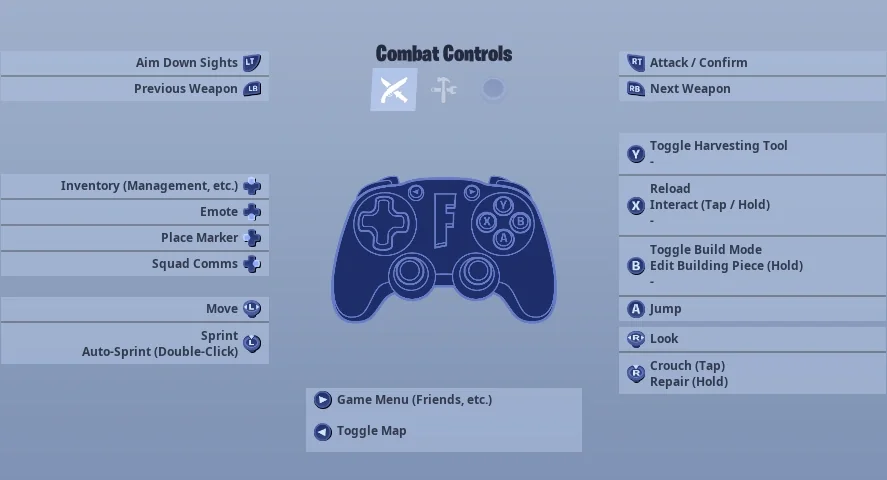
Then keybinds. Each build piece and each edit needs a dedicated, one-press input — Builder Pro on controller, or build/edit keys near WASD on PC. If you're cycling through pieces or hunting for the edit button mid-fight, you've lost before the fight started. This single change feels horrible for an hour and then becomes invisible, and it's the prerequisite for everything in Steps 3 onward.
Don't skip this because it's boring. Read the full best Fortnite settings guide and the best Fortnite keybinds breakdown, set it once, and never think about it again. Every hour after this counts for more.
Step 2 — Build aim you can rely on

Aim is the floor of every engagement. You can have the cleanest builds in the lobby and still lose if you can't hit the shot through the edit. The first and most important aim decision is sensitivity, and it's the one number nobody on the internet can pick for you — copying a pro's sens is the most common aim mistake there is. You want a setting low enough to be consistent but high enough to turn and track, and you find it by testing and committing, not by copying.
After sensitivity, aim improvement is just structured reps: tracking moving targets, flicking to new ones, and — the Fortnite-specific bit — aiming the instant you come out of a build or an edit, because that's when 90% of your real shots happen. A short daily warmup in Creative beats long unfocused sessions. Work through the full method in the Fortnite aim training guide; the short version is: tune your sens, warm up daily, and practice the shot you actually take in matches (post-edit) rather than only static target galleries.
Step 3 — Learn building and editing
This is the layer that makes Fortnite Fortnite. If you're playing Build mode, building and editing are the multiplier on everything else — a great shot who can't build loses to an average shot who can. (If you're a Zero Build player, you can mostly skip this step and lean harder on aim and positioning, which is a completely valid path — see the Fortnite Zero Build guide.)
Learn it in this order so you're never grinding something whose foundation isn't set:
- Fundamentals first. The four pieces, the box, the ramp rush, and a clean 90. Get these from the Fortnite building basics and drill them slow before fast.
- Editing second. The door, window, and cone edits, and the edit-peek-shoot-reset rhythm. Editing is half of building, and the Fortnite editing guide covers the edits that actually come up in fights.
- Box and build fights third. Piece control, taking walls, and tunneling — the close-range build duel where most players find out their aim was never the problem. The Fortnite box fighting guide is the deep dive.
- Advanced patterns last. Tunnels, wall rushes, building for height, and retakes from the advanced building guide — these reward you most once the fundamentals underneath are automatic.
The honest timeline: clean boxes and ramp rushes in days, passable 90s in a couple of weeks, fast-under-pressure building over months. That's normal. Everyone who builds well grinded Creative to get there.
Step 4 — Develop game sense and rotations
Mechanics decide who wins a fight. Game sense decides how often you fight on your terms — and how often you avoid fights you can't win. This is the layer that separates a mechanically good player who dies 12th from a smart one who keeps reaching endgame.
The core of it is rotation: moving through the map ahead of the storm, using cover, and reaching the next zone alive instead of getting caught in the open mid-rotation, which is where most deaths actually happen. Reading where the safe zone is pulling, moving early through cover instead of late across the open, using mobility and natural terrain, and knowing when to hold a position versus take it — that's the skill, and it's trainable. The Fortnite rotation guide breaks it all down, and the Fortnite movement guide covers sprint, mantling, and the mobility that makes rotations safe.
Game sense also means fight selection: not every fight is worth taking. Knowing when to third-party, when to disengage, and when to play for placement instead of kills is what turns good mechanics into consistent results. You build this by playing with intent and — crucially — by reviewing your deaths, which is the next step.
Step 5 — Review your VODs and practice with purpose
Here's the layer almost everyone skips, and it's the single biggest reason players plateau: they never watch their own deaths. If you don't review, you repeat the same mistake every match without realizing it's a pattern. VOD review — rewatching your own recorded gameplay — is how you find the leak.
You don't need a fancy setup. Record your sessions (or use the in-game replay system), then after a session watch your deaths and ask three questions:
- What actually killed me? Not "I got unlucky" — the real cause. Caught in the open mid-rotation? Lost piece control in the box? Took a fight I had no business taking? Name it.
- Was it a one-off or a pattern? Watch three or four deaths in a row and the same mistake usually shows up. That pattern is your highest-value thing to fix.
- What's the specific fix? Turn the pattern into one concrete practice goal — "rotate 20 seconds earlier," "reset every edit," "stop pushing third parties" — and take exactly that into your next session.
Then practice that one thing on purpose. Purposeful practice beats mindless grinding every time: ten minutes drilling the specific weakness your VOD review exposed is worth more than two hours of unfocused matches. Creative is your gym — warm up there, drill the exact skill your review flagged, then take it into matches and review again. That loop, review → drill → play → review, is the whole engine of improvement. Most people never start it, which is exactly why most people stay stuck.
A weekly practice routine that works
You don't need to no-life the game to climb. A sustainable weekly rhythm beats burnout grinding. Here's a realistic template you can scale to the time you have:
- Daily (10–20 min): Creative warmup before you queue — aim routine, a few edit-course runs, some 90s and tunnels. Cold hands cost you the first two fights every session otherwise.
- A few times a week: Focused matches where you play with one intent (better rotations this session, resetting every edit, taking fewer bad fights), not just queuing on autopilot.
- Once or twice a week: A VOD review session — watch your deaths, name the pattern, set the next fix.
- As needed: Targeted Creative drilling of whatever your last review flagged. This is where the actual improvement happens.
Quality over quantity is the whole point. A focused hour with a warmup, an intent, and a review beats a distracted four-hour session every single time.
Mistakes that keep you stuck
The habits that quietly cap your improvement, so you can stop doing them:
- Copying a pro's sensitivity. Their sens fits their setup and reps, not yours. Tune your own and commit.
- Grinding the layer above a broken one. Drilling builds on bad keybinds, or builds with aim you never trained — fix the foundation first.
- Never reviewing your deaths. This is the big one. No review means repeating the same death forever.
- Forcing build fights when behind. If your building's shaky, taking every build duel just feeds you to better players. Pick fights you can win and drill the rest in Creative.
- Mistaking hours for practice. Mindless queuing isn't practice. Practice has an intent and a feedback loop.
- Chasing kills over placement. Reaching endgame consistently teaches you more (and ranks you higher) than dying 12th with three kills every game.
Quick Action Checklist
The roadmap, in the order that actually works:
- Settings and keybinds first — frames, visibility, audio, and one dedicated input per build piece and edit
- Tune your own sensitivity — never copy a pro's number — then warm up your aim daily
- Learn building in order: fundamentals, then editing, then box fights, then advanced patterns
- Train game sense and rotations — move early through cover, pick your fights, play for placement
- Review your VODs — name what killed you, find the pattern, set one specific fix
- Practice that one fix on purpose in Creative, then take it into matches and review again
- Run a sustainable weekly routine — daily warmup, intent-driven matches, regular review — over burnout grinding
Frequently Asked Questions
How do I get better at Fortnite fast?
What order should I learn Fortnite skills in?
What is the most important setting to fix in Fortnite?
Do I need to learn building to be good at Fortnite?
How does VOD review help you improve at Fortnite?
How much should I practice to improve at Fortnite?
Keep Reading
Related Guides

Fortnite Third-Partying Guide: When to Push, When to Hold
Third-partying is the most reliable way to win a fight without earning it — you let two players gut each other, then collect. But the same logic points back at you the second you start shooting. Here's how to be the third party instead of the corpse two of them split.

Fortnite Duos & Trios Strategy: How to Win in Small Teams
Duos and Trios aren't just Squads with empty slots. With fewer guns, every knock swings the math harder, every res is riskier, and one bad split loses the game. Here's how to play 2s and 3s — roles, comms, trading, reboots, shared loot, and third-partying as a small unit.
Fortnite Weak Spots & Aiming Guide: Where to Aim
Two players land the same shots and one does way more damage. The difference isn't aim — it's where they're aiming. Here's the where: headshots and weak spots, crosshair centering, pre-aiming, tracking vs flicking, and aiming the gaps in someone's build.
Fortnite Tunneling Guide: Cross Open Ground Without Dying
Tunneling is how good players cross open ground while being shot at and live to fight in the next zone. It's the move-and-rebuild rhythm that turns a death-march across a field into a moving box nobody can crack. Here's how to actually do it.
Fortnite Weapon Tier List: How to Rank Any Loot Pool
Any Fortnite tier list is stale the second a patch drops. So instead of memorizing this season's gun names, learn how to rank weapons by class and role — the framework that's S-tier in every season.
Best Fortnite Settings for PC & Console
Half your settings menu is noise; a handful of options decide whether you can see, aim, and build. Here's what to change on PC and console, why, and the one number nobody else can pick for you.