Genshin Weapon Guide — Base ATK, Secondary Stats and When to Pull
The 5-star weapon with the highest base ATK in the game and the 5-star with the highest secondary stat are 200 base ATK apart, and picking the wrong one for your character quietly costs you more damage than a constellation would give you.
The Weapon Slot Is a Third of Your Damage
A character's final damage rests on three roughly equal pillars: their talents, their artifacts, and their weapon. Most players pour primogems into the first two and treat the weapon as whatever fell out of the last ten-pull. That is how you end up running a support catalyst on your main DPS and wondering why the numbers feel soft.
Here is the claim I will spend this guide backing up. The 5-star weapon with the highest base attack in the game reaches 741 base ATK at level 90. The 5-star with the lowest base attack sits at 542 — but it carries the single highest secondary stat in the game, an 88.2 percent CRIT DMG bonus. That is a 199-point base ATK gap on one side and a monster crit stat on the other, and knowing which of those two a given character actually wants is worth more than a constellation you would spend real pulls on.
Weapons are the cheapest lever you can pull to fix an underperforming character, and the game explains them about as well as it explains everything else — which is to say, barely. So here are the real mechanics.
Five Types, One Weapon Per Character
Genshin has exactly five weapon types: Swords, Claymores, Polearms, Catalysts, and Bows. Every character is locked to one type forever. Diluc will never hold anything but a claymore; Ganyu will never fire anything but a bow. When a new banner weapon drops, the first question is not "is it good" but "can my character even equip it."
The types are not just cosmetic. Claymore attacks are Blunt Attacks, which deal bonus damage to Geo constructs like the shields on Abyss Mages and Geovishaps — genuinely useful when you are shield-breaking. Catalysts are the odd one out: every normal and charged attack a catalyst user throws is elemental damage matching their vision, which is why catalyst characters basically never care about Physical damage and why a Physical DMG weapon is wasted on them. Bows get fully-charged aimed shots that deal elemental damage and reach across a room.
None of that changes the core math, but it does quietly rule certain weapons in or out before you even look at the stats.
Base ATK Versus Secondary Stat — The Real Tradeoff
Every weapon of 3-star rarity or higher has two numbers that matter: its base attack, and its secondary attribute (the wiki's term for what everyone calls the secondary stat or substat). These two are inversely balanced by design. A weapon with a huge base ATK carries a weak secondary stat; a weapon with a monstrous secondary stat is handed a smaller base ATK to compensate.
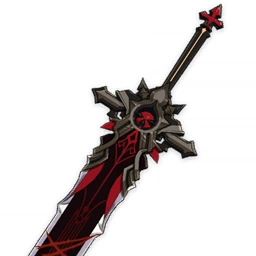
The 5-star claymore Wolf's Gravestone sits near the top of the base-ATK pile, while a weapon like Redhorn Stonethresher trades base ATK down to 542 in exchange for that 88.2 percent CRIT DMG line. Same rarity, wildly different shape.
Why does the split matter? Base ATK is a flat additive stat that gets added before all your percentage multipliers apply. On a character who already has a mountain of ATK% from artifacts and buffs, another slab of flat base ATK hits diminishing returns. On a character starving for a specific stat, the secondary attribute is where the value lives.
The Secondary Stat Decides Who the Weapon Is For
The secondary attribute can be one of eight things: ATK%, DEF%, HP%, CRIT Rate, CRIT DMG, Elemental Mastery, Energy Recharge, or Physical DMG Bonus. That single stat is the clearest signal of who the weapon is designed for, and it is the first thing you should read.
- CRIT Rate or CRIT DMG weapons are damage-dealer weapons, full stop. They only make sense on a character who is landing crits.
- Energy Recharge weapons are the support and burst-dependent crowd. If a character cannot fire their burst every rotation, an ER stat stick fixes it faster than any artifact — the Favonius series is the classic example, and our energy recharge guide breaks down exactly how much ER you actually need.
- Elemental Mastery weapons belong on reaction drivers — anyone leaning on Vaporize, Melt, Overload, or the Dendro reactions. A crit weapon on a Hyperbloom trigger is a wasted slot, because those transformative reactions cannot crit at all; check our elemental reactions guide before you build one.
- HP% or DEF% weapons exist because a growing roster of characters scale their damage off HP or DEF instead of ATK. Put an ATK weapon on one of them and you are buffing a stat their kit barely uses.
Match the secondary stat to how the character actually deals damage first. Base ATK is the tiebreaker, not the headline.
Read the Passive Before You Read the Rarity
Weapons of 3-star quality and up also carry a passive effect, and this is where a 4-star can quietly outperform a 5-star. Passives range from dead-simple flat buffs — increased damage against enemies afflicted by Hydro or Pyro, say — to conditional monsters that stack attack speed, elemental damage, or crit under specific triggers.
The trap is assuming a 5-star passive is automatically better than a 4-star one. It frequently is not. Some 4-star passives are simply well-suited to a particular character's rotation, and — the big one — a 4-star can be refined to maximum for free while a 5-star almost never can. A fully-refined 4-star passive routinely beats a single copy of a flashier 5-star.
Read the passive's actual condition, too. A buff that triggers "after using an Elemental Skill" is worthless on a character who barely touches their skill, and a passive that ramps over several seconds is great in melee and useless on a hit-and-run driver who taps once and swaps out.
Refinement — Why R1 of the Right Weapon Beats R5 of the Wrong One
Refinement raises a weapon's passive strength, from Refinement Rank 1 up to a maximum of R5. You refine by feeding the weapon an identical copy of itself — every duplicate bumps the rank by one. Refinement never touches base ATK or the secondary stat; it only scales the passive.
This is where gacha rarity and practical power split hard. To take a 5-star weapon to R5 you need five copies of it off a banner where each copy can cost up to 25,600 primogems (more on that below). Nobody outside the whales does this. A gacha 5-star lives at R1 on virtually every account, and that is fine.
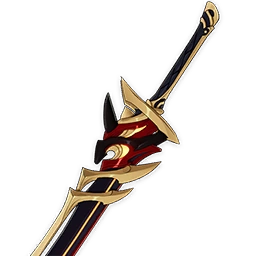
Free and forgeable weapons are the opposite story. A 3-star weapon shows up in your inventory constantly, so R5 is trivial. Forgeable 4-stars can be crafted five times for R5. And that changes the comparison completely: an R5 4-star with a strong passive and the right secondary stat can match or beat an R1 5-star for a specific character, at zero pull cost.
The practical rule: refine what is cheap and refuse to chase refinement on anything from a limited banner. R1 on the correct weapon almost always beats R5 on the wrong one, and duplicate limited 5-stars are a luxury, not a target.
Should You Pull the Weapon Banner?
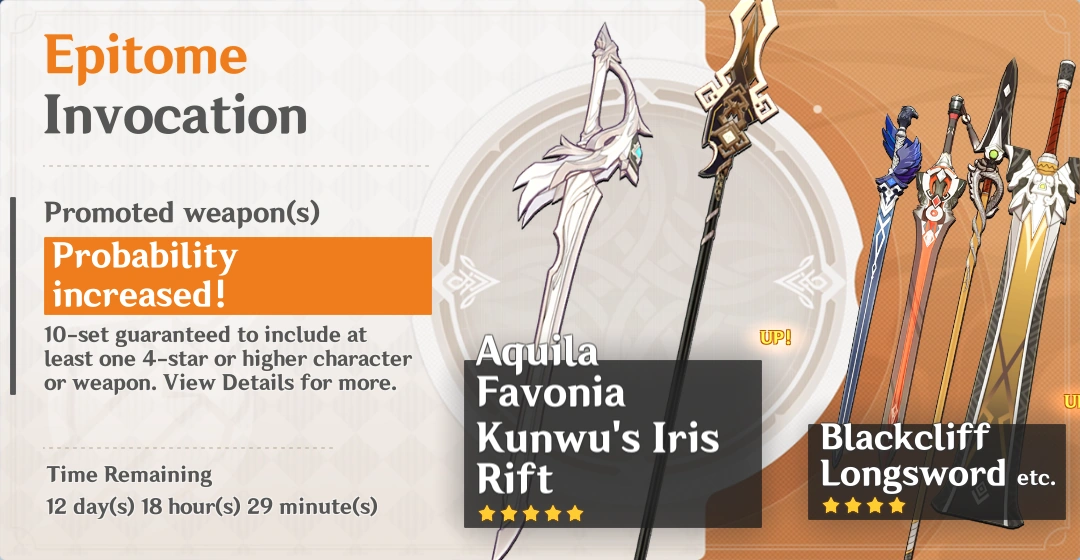
The Epitome Invocation — the weapon banner — is its own wish with its own pity, and it is meaningfully worse odds than the character banner in one specific way. Understand the numbers before you spend a single Intertwined Fate.
The base rate for a 5-star on the weapon banner is 0.7 percent. Soft pity kicks in around pull 63, where the rate starts climbing sharply, and there is a hard guarantee: if you have gone 79 wishes without a 5-star, the 80th is guaranteed to be one. That is a lower hard-pity ceiling than the character banner's 90 — but do not get excited, because the featured mechanic is stingier.
When you do hit a 5-star on the weapon banner, there is a 75 percent chance it is one of the two rate-up weapons, and if you lose that roll, the next 5-star is guaranteed to be featured. The problem is the "two rate-up weapons" part: even when you win the 75 percent, you might get the promotional weapon you did not want. That is the whole reason the Epitomized Path exists.
For how pity, the 50/50, and Intertwined versus Acquaint Fates work across all the banners, our wish and gacha guide covers the full system.
Epitomized Path and the Fate Point Math
Epitomized Path lets you chart a course to one specific weapon before you pull. Here is exactly how it resolves:
- You pick your target weapon. Every time you pull a 5-star weapon that is not your chosen one, you earn 1 Fate Point.
- The moment you have 1 Fate Point, your next 5-star weapon is guaranteed to be the one you charted.
- Getting your charted weapon resets your Fate Points, and Fate Points also reset if you change your target or when the banner ends.
Do the worst-case arithmetic. You could hit a 5-star and get the other promotional weapon (1 Fate Point), then hard-pity your way to the next 5-star, which is now guaranteed to be yours. Two 5-stars, at up to 80 pulls each, is a maximum of 160 wishes — 25,600 primogems — to guarantee the exact weapon you want. That is the number to budget against. If you cannot comfortably reach 160 pulls, going in for a specific weapon is a gamble, not a plan.
Because that ceiling is so high, the weapon banner is generally a "pull only if you love the character and the weapon is a genuine best-in-slot" proposition. A great free weapon closes most of the gap for a fraction of the cost.
The Free Weapons That Punch Above Their Rarity
You do not need the banner to build a strong account. The game hands out a startling amount of weapon value if you know where to look.
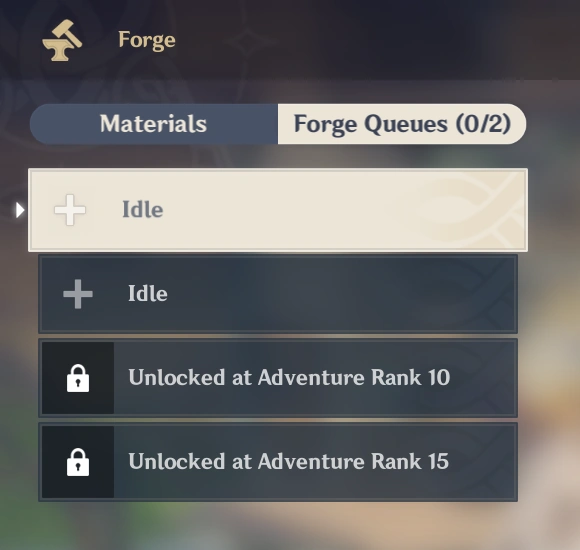
Forgeable 4-stars (Billet weapons). Using Billets and Mora at a blacksmith, you can forge one of a rotating set of 4-star weapons — the Prototype series (Prototype Rancour, Archaic, Amber, Starglitter, Crescent) plus region-specific options. Because you forge them one at a time, reaching R5 is just a matter of patience and materials, and several of these carry excellent secondary stats.
The Favonius and Sacrificial series (4-star standard-banner). These are support staples. Favonius weapons carry Energy Recharge and generate elemental particles on crit; Sacrificial weapons can reset an Elemental Skill's cooldown. Both series appear in the standard wish pool, so copies accumulate over time.
The Catch (free 4-star polearm). Bought with a single copy plus its refinement materials from the Inazuma Fishing Association, The Catch is famous for being a completely free R5 polearm that competes with 5-stars on burst-focused characters. Fishing is the whole cost.

Battle Pass weapons. The Gnostic Hymn Battle Pass lets you select one 4-star weapon from its series at BP level 30 — a reliable, cheap way to grab a targeted secondary stat.
3-star specialists. Do not sleep on 3-stars for early and mid-game. Harbinger of Dawn, for instance, is a catalyst that hands out a large CRIT DMG boost while the wielder stays above 90 percent HP — genuinely strong on shielded or early carries, and it goes to R5 without effort. When you are still assembling your first real teams, cheap weapons keep everyone functional; our best free-to-play teams guide leans on exactly this kind of weapon.
Leveling and Ascension — What It Actually Costs
A weapon levels with Weapon EXP (from Enhancement Ores or by feeding it other weapons) and ascends in phases, exactly like a character. There are six ascension phases, taking a 3-, 4-, or 5-star weapon from level 20 up to a maximum of level 90. One- and two-star weapons stop at level 70 and never gain a secondary stat or passive at all.
The Mora bill is real. Ascending a single 5-star weapon all the way to level 90 costs 225,000 Mora in ascension fees alone, on top of the Weapon EXP materials and the Weapon Ascension Materials farmed from domains and bosses. That is per weapon, and Mora is one of the tightest resources on any account.
The discipline that saves you: only fully ascend weapons you are actually using now. A weapon parked on a bench character does not need to be at 90. Feed your leveling resources into the weapons on your active teams first, and let the rest wait.
For the broader picture of what your Original Resin should be buying week to week — talent books, weapon materials, artifacts, boss drops — our resin management guide lays out the priority order. More Genshin coverage sits on the Genshin Impact hub, and the rest of our guides live on the Mythras blog.
Quick Action Checklist
- Read the secondary stat first. It tells you who the weapon is for faster than base ATK or rarity ever will.
- Base ATK and secondary stat are inversely balanced — the 741 base ATK ceiling and the 88.2 percent CRIT DMG ceiling live on different weapons for a reason.
- Never put a Physical DMG weapon on a catalyst user; their attacks are always elemental.
- Match Elemental Mastery weapons to reaction drivers, and never run a crit weapon on a Hyperbloom or Burgeon trigger.
- Read a passive's condition before committing. A conditional buff your rotation never triggers is worth zero.
- Refine what is cheap. R5 a forgeable 4-star or a 3-star for free; never chase refinement on a limited 5-star.
- The weapon banner has a hard pity of 80 and a 75 percent featured chance across two weapons — worse targeting than the character banner.
- Budget 160 pulls (25,600 primogems) as the Epitomized Path worst case to guarantee one specific weapon. If you cannot reach it, do not go in.
- Grab the free heavy hitters: forgeable Prototypes, the Favonius and Sacrificial series, The Catch, and the Battle Pass weapon.
- Fully ascend only the weapons on your active teams. Ascending one 5-star to level 90 costs 225,000 Mora before materials.
Frequently Asked Questions
Is base ATK or the secondary stat more important on a Genshin weapon?
How does weapon refinement work in Genshin Impact?
Is the Genshin weapon banner worth pulling on?
What are Fate Points and Epitomized Path in Genshin Impact?
What are the best free weapons in Genshin Impact?
How much does it cost to fully ascend a weapon in Genshin?
Can any character use any weapon in Genshin Impact?
Keep Reading
Related Guides

Genshin Artifact Guide — Stats, Rolls and Resin Math
A five-star artifact can roll the exact same substat four times and give you anywhere from 10.88 percent to 15.54 percent CRIT DMG. Understanding that spread is the difference between a functional account and a museum of half-built characters.

Best F2P Teams in Genshin Impact — Four-Star Squads That Clear
Xiangling costs one Spiral Abyss clear. Xingqiu costs nothing but a Beginners' Wish. Bennett is on the standard banner forever. Put those three together and you have a team that has been clearing endgame content since 2020 and still does.

Genshin Escoffier Build Guide — Talents, Weapon, Artifacts
Nothing you equip on Escoffier changes her 55% Hydro and Cryo RES shred: it reads your party, not her stats. Her build decides everything else — how hard her Cooking Mek hits, how much she heals, and whether her Burst comes back on time.

Genshin Skirk Build Guide — Talents, Weapon, Artifacts
Two effects in Skirk's kit and one in Escoffier's only reach their ceiling when all four party slots are Hydro or Cryo. In an Escoffier team, swap one teammate for any other element and her Seven-Phase Flash hits land at roughly 55% of what they were.

Genshin Vesna Build Guide — Talents, Weapon, Artifacts
Vesna's biggest hits change damage formulas depending on whether a Stellar Swirl went off in the last eight seconds. Build her like an ordinary Anemo carry and you are optimising the half of her kit that does the least.

Genshin Vodyanitsa Build Guide — Talents, Weapon, Artifacts
Vodyanitsa's signature ascension passive does precisely nothing below 40,000 Max HP, and both halves of its bonus cap out at exactly 65,000 — a target most support builds never plan a single roll around.