MTG Turn Structure: Every Phase and Step, Explained
A Shock in your own end step finishes off a 3/3 your attacker already hit for 2. The same Shock in your opponent's upkeep does not. The difference is a step in which nobody normally gets priority: cleanup. Here is the whole Magic turn in order — what the game does automatically at the start of each phase and step, where you get priority and where you don't, checked against the Comprehensive Rules effective September 25, 2026.
Your 2/2 attacks and gets blocked by a 3/3. It deals 2 damage and dies. In your own end step you Shock the 3/3, and it dies too — the 2 combat damage is still marked on it. Hold the same Shock until your opponent's upkeep and their creature shrugs it off, because between those two moments sits the cleanup step, where all marked damage is removed (rule 514.2).
That is the case for learning the turn properly. A Magic turn is a fixed sequence — five phases, three of which split into ten steps — and the answer to "wait, can I do that now?" starts with which segment you are in and what the game does automatically at the start of it. This guide walks the whole turn in order, checked against the Comprehensive Rules effective September 25, 2026. Rule numbers are given so you can check any of it yourself.
Combat gets one paragraph here, deliberately: it already has its own step-by-step guide. And if "priority" is a fuzzy word for you, read how the stack and priority work alongside this — the turn structure tells you when the priority windows open; that guide tells you what happens inside them.
The whole turn in one table
Rule 500.1 fixes the order: beginning phase, precombat main phase, combat phase, postcombat main phase, ending phase. Every one of them happens every turn, "even if nothing happens during the phase." The beginning phase has three steps, combat has five, and the ending phase has two.
| Phase | Step | What the game does first, with no stack | Does anyone get priority? |
|---|---|---|---|
| Beginning | Untap | Phasing, then the day/night check, then the active player untaps | No |
| Beginning | Upkeep | Nothing — but every "at the beginning of your upkeep" trigger goes on the stack | Yes |
| Beginning | Draw | The active player draws a card | Yes, after the draw |
| First main | — | A lore counter on each of your Sagas (plus Archenemy schemes and Attractions, in those formats) | Yes |
| Combat | Beginning of combat | In some multiplayer variants, the active player picks the defending player | Yes |
| Combat | Declare attackers | The active player declares attackers | Yes |
| Combat | Declare blockers | The defending player declares blockers | Yes |
| Combat | Combat damage | Damage is assigned and dealt | Yes |
| Combat | End of combat | Nothing | Yes |
| Second main | — | Nothing | Yes |
| Ending | End | Nothing — but every "at the beginning of the end step" trigger goes on the stack | Yes |
| Ending | Cleanup | Discard down to maximum hand size, then remove all damage and end "until end of turn" effects | Normally no |
Two rows say no. Everywhere else, one rule governs when you move on (500.2): a phase or step ends only when the stack is empty and every player passes in succession. The stack merely emptying does not end anything — everyone gets one more chance to add something first.
Everything in the third column except the triggers is a turn-based action. Rule 703.3 says they happen before state-based actions are checked, before triggered abilities go on the stack, and before anyone receives priority. Nobody controls them and nobody can respond to them.
Untap: the one step nobody can interrupt
The untap step does three things, in a fixed order (502.1–502.3):
- Phasing. Your phased-in permanents with phasing phase out, and anything that phased out under your control phases back in.
- Day and night. If it was day and the previous turn's active player cast no spells, it becomes night. If it was night and they cast two or more, it becomes day. If the game has never been day or night, this check is skipped.
- Untap. You untap your permanents, all at once.
That settles the "can I respond before they untap?" question. Rule 502.4: "No player receives priority during the untap step." Nothing can be cast, nothing can be activated, and anything that triggers during this step waits until the next time a player would receive priority, which is usually the upkeep.
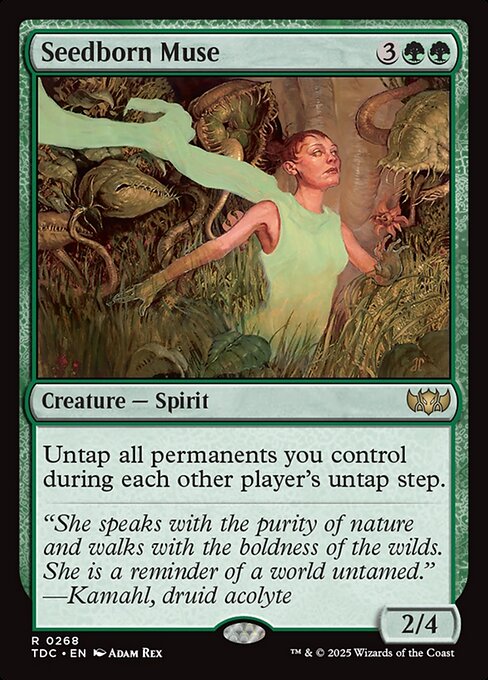
That is why Seedborn Muse is as strong as it looks. "Untap all permanents you control during each other player's untap step" happens inside a step nobody can act in, so nobody can respond to it — you simply start every opponent's turn with everything untapped. The step gets bent the other way too: Stasis reads "Players skip their untap steps," and Winter Orb, while it is untapped, stops each player from untapping more than one land during their untap step. On Scryfall, 384 cards with a paper printing mention the untap step in their Oracle text (search run 28 September 2026).
Upkeep: where the triggers pile up
The upkeep step has no turn-based action at all (503.1). What it has is triggers. Anything that triggered during the untap step, plus everything that says "at the beginning of your upkeep," goes on the stack before the active player gets priority (503.1a). Scryfall counts 863 cards with a paper printing carrying the exact phrase "at the beginning of your upkeep," and another 68 that trigger "at the beginning of each upkeep."
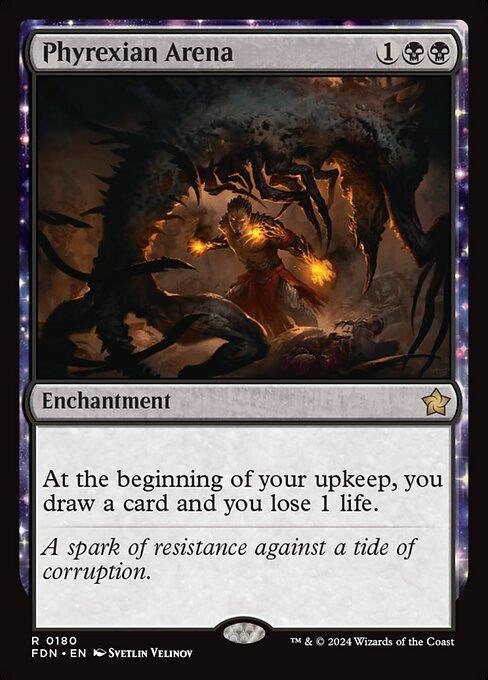
When several players' triggers fire at once, they go on the stack in APNAP order (active player, then nonactive players in turn order; rules 101.4 and 603.3b). The active player's triggers are placed first, which means they resolve last. If your Phyrexian Arena and an opponent's "at the beginning of each upkeep" card trigger together in your upkeep, theirs resolves before your card draw.
The upkeep also has a strategic identity: it is the last moment in a turn when anyone can act before that turn's draw. The next section explains why.
Draw: the card arrives before anyone can respond
The draw step runs in two beats (504.1–504.2): first the active player draws a card as a turn-based action, then they get priority. There is no window between "the draw step begins" and "the card is in hand." If you want to do something to an opponent before they see their next card, their upkeep is your last chance.
That ordering also settles how draw-step triggers interact with the normal draw. Howling Mine says "at the beginning of each player's draw step... that player draws an additional card." Because turn-based actions come before triggers go on the stack (703.3), the regular draw always happens first and Howling Mine's extra card arrives after it.
The one draw the rules skip by default is the starting player's first one, and that rule is not the same in every game type (103.8a–c):
| Game type | Does the starting player skip their first draw? | Rule |
|---|---|---|
| Two-player, including a one-on-one Commander game | Yes | 103.8a |
| Two-Headed Giant | Yes — the whole starting team skips it | 103.8b |
| Every other multiplayer game, including a normal Commander pod | No — nobody skips | 103.8c |
So in a four-player Commander game, the player going first draws on turn one. The team version is covered in our Two-Headed Giant guide, where both teammates share a single turn.
Main phases: the only home of sorcery speed
Rule 505.6a is blunt: "The main phase is the only phase in which a player can normally cast artifact, creature, enchantment, planeswalker, and sorcery spells." Those noninstant spells need three things at once — it is your main phase, you have priority, and the stack is empty (117.1a). Instants, and anything with flash ("You may play this card any time you could cast an instant," 702.8a), need only the second.
Your land drop lives here too. Playing a land is a special action, not a spell (116.2a, 505.6b): once per turn by default, during a main phase of your turn, with an empty stack. It does not use the stack, so it cannot be countered and nobody can respond to it.
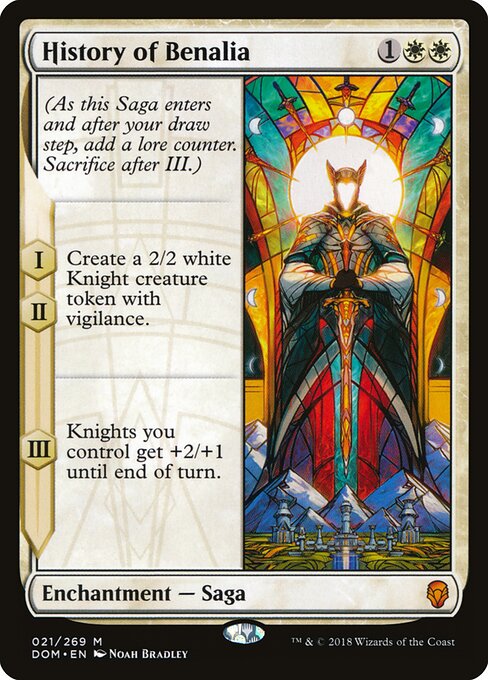
The first main phase also carries a turn-based action of its own. As it begins, the active player puts a lore counter on each Saga they control (505.4) — which is exactly what History of Benalia's reminder text means by "after your draw step." Scryfall lists 227 cards with the Saga subtype and a paper printing; each one you control with a chapter ability advances at this moment, before you get priority in the phase.
Two naming details are worth getting right, because card text depends on them:
- Only the first main phase is "precombat." Every main phase after it is "postcombat," including the second main phase of a turn whose combat was skipped and every extra main phase an extra-combat card creates (505.1a). A card that says "each of your postcombat main phases" triggers in all of them.
- "First main phase" and "second main phase" count main phases that have happened this turn (505.1b). Current Oracle text uses that wording: 58 cards with a paper printing say "first main phase," 22 say "second main phase," 11 say "postcombat main phase," and none say "precombat main phase."
Finally, the main phase does not end just because you are done. It ends when every player passes in succession with an empty stack (505.2, 500.2). If an opponent responds to your pass — say, by killing a creature with an instant — the spell resolves, you receive priority again (117.3b), and you are still in your main phase with every sorcery-speed option intact. (Tournament play modifies this with a shortcut; see the last section.)
A habit worth building on top of that rule: cast creatures in the second main phase unless they improve the attack. A creature cast before combat shows your opponent what you have and how much mana you have left for tricks before they choose blocks; cast after combat, it shows them nothing they could use in that fight. Haste creatures, removal on a would-be blocker, and anything that pumps your attackers are the exceptions, and they are exceptions because they change combat.
Combat, in one paragraph
Combat is five steps — beginning of combat, declare attackers, declare blockers, combat damage, end of combat — and three structural rules matter for the rest of the turn. If nothing attacks, the declare blockers and combat damage steps are skipped entirely (506.1, 508.8). If any attacking or blocking creature has first strike or double strike, the phase gets a second combat damage step (510.4). And effects that last "until end of combat" expire at the end of the combat phase, not as the end of combat step begins (500.5a, 511.2). Everything else — attackers, blockers, damage assignment, and the keywords that bend them — is in the combat guide. Forty-five cards with a paper printing mention an "additional combat phase," which is where the postcombat naming rule above starts to matter.
End step: the busiest window on your opponent's turn
The end step has no turn-based action (513.1). It opens with triggers: Scryfall counts 463 cards that act "at the beginning of your end step" and 320 that set up something for "the beginning of the next end step." Older cards printed "at end of turn," and those have received Oracle errata to "at the beginning of the end step" (513.1a).
Three rules make this the step instant-speed decks live in:
- "Until end of turn" has not ended yet. Those effects end in cleanup, the step after this one (514.2), and damage is still marked. That is the Shock from the introduction: a creature that took damage this turn is still carrying it during the end step.
- A creature you flash in during an opponent's end step can attack on your turn. The attacking rule asks whether a creature has been under your control continuously since your most recent turn began (302.6). A creature that arrived at the end of your opponent's turn passes that test the moment your turn starts.
- The step does not back up. If a delayed trigger for "the beginning of the next end step" is created during the end step, it waits for the next turn's end step (513.2). Kiki-Jiki, Mirror Breaker's copy says "Sacrifice it at the beginning of the next end step" — make that copy during an opponent's end step and it is still around, with haste, for your turn.
Put those together and you get the classic instant-deck turn: pass with mana open, answer whatever your opponent does, and if they do nothing, spend the mana in their end step on card draw or a flash creature. The mana was going to empty anyway.
Cleanup: discard, wipe damage, and usually no priority
The cleanup step is the other place nobody normally acts. It runs two turn-based actions in order:
- Discard to hand size. If the active player has more cards than their maximum hand size — normally seven (402.2) — they discard down to it (514.1).
- Wipe the slate. Simultaneously, all damage marked on permanents is removed, and every "until end of turn" and "this turn" effect ends (514.2).
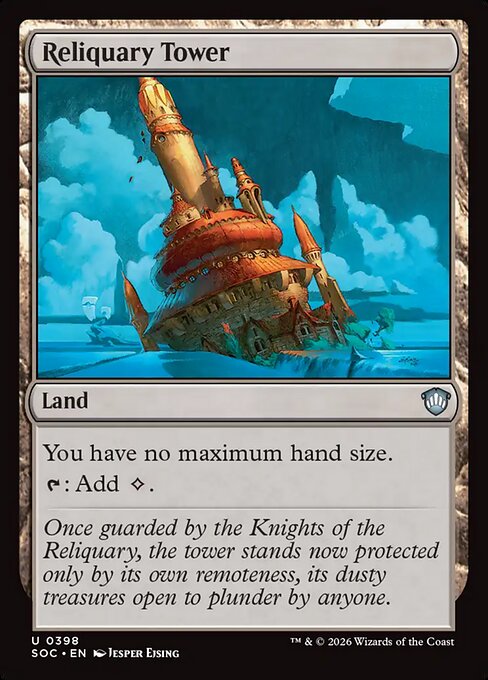
Step one is what Reliquary Tower switches off; 37 cards with a paper printing carry the exact line "You have no maximum hand size." Step two is why damage never carries between turns, and why an "until end of turn" pump spell cast on your turn is gone by the time your opponent untaps.
Normally, nobody gets priority in cleanup (514.3). The exception is rule 514.3a: if a state-based action needs performing or anything triggered — including something triggered by the discard — those are handled, the active player does get priority, and once everyone passes with an empty stack, another cleanup step begins. Madness is the cleanest example. Discard Fiery Temper to hand size and it goes to exile with its madness trigger waiting; the trigger goes on the stack, players get priority, and as it resolves you can cast Fiery Temper for its madness cost of {R}. The card's official rulings on Scryfall confirm madness works when you discard "because you have too many cards in your hand during your cleanup step." Once the stack is empty and everyone passes, cleanup runs again.
Mana empties between every step, and there is no mana burn
Rule 106.4: "Each player's mana pool empties at the end of each step and phase." Mana you make in your upkeep is gone before your draw step; mana you make in the beginning of combat step is gone before you declare attackers. Tap only when you are about to spend.
The emptying costs you nothing but the mana. The Comprehensive Rules glossary keeps an entry for "Mana Burn (Obsolete)" solely to say the old life-loss rule "no longer exists"; the MTG Wiki dates its removal to the Magic 2010 rules update.
Extra turns, extra phases and skipped steps
Cards can stretch the turn, and the rules say exactly where the new pieces go:
- Extra turns are inserted directly after the specified turn; if several are created, the most recently created one is taken first (500.7). Our extra-turn spells ranking covers the cards that do it.
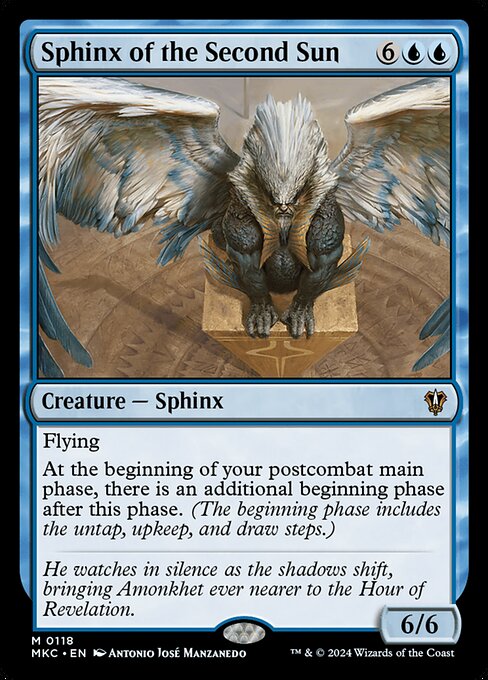
- Extra phases go directly after the specified phase (500.8). Sphinx of the Second Sun adds "an additional beginning phase" after each of your postcombat main phases: you untap, your upkeep triggers fire again, and you draw again. But no main phase follows it — Shadow of the Second Sun, which does the same thing for whichever player it enchants, spells it out in its reminder text: "The end step happens after the added untap, upkeep, and draw steps." Whatever you untap is instant-speed mana.
- Extra steps inside a phase can create a whole phase to hold them (500.10). The Comprehensive Rules use Obeka, Splitter of Seconds as the worked example: its extra upkeep steps arrive as new beginning phases that contain only an upkeep step, with the untap and draw steps skipped.
- Skipping is a replacement effect, and once a step, phase or turn has started it can no longer be skipped — skip effects wait for the next occurrence (614.10).
- Nothing happens between steps. Rule 500.12: "No game events can occur between steps, phases, or turns." There is always a named segment you are in.
Two tournament shortcuts built on the turn structure
The Comprehensive Rules model each priority pass individually. The Magic Tournament Rules (effective February 27, 2026), section 4.2, sets default shortcuts that compress those passes — and two of those defaults are about exactly where you are in the turn:
| What the active player does | What the opponent is assumed to be doing | Consequence |
|---|---|---|
| Passes priority with an empty stack in their first main phase | Acting in the beginning of combat step, unless they are affecting whether a beginning-of-combat ability triggers | If they tap or kill your creature at that point, you are already in combat — there is no main-phase window left to cast sorcery-speed spells |
| Passes priority with an empty stack in their second main phase, or says "go" or "your turn" at any time | Acting in the end step, unless they are affecting how or whether an end-of-turn ability triggers | Their instant-speed plays happen in your end step, not in your main phase |
The first row is the one that changes outcomes. Under the bare Comprehensive Rules, an opponent who kills your creature as you pass the main phase hands priority back to you in that main phase. Under the tournament shortcut, the same removal spell lands in beginning of combat. The practical fix is simple: finish every sorcery-speed play you want before you pass priority in your first main phase.
Quick Action Checklist
- Memorize the order: untap, upkeep, draw; first main; beginning of combat, declare attackers, declare blockers, combat damage, end of combat; second main; end, cleanup.
- Nobody acts in the untap step, ever, and normally nobody acts in cleanup. Everything triggered during untap waits for the upkeep.
- The draw happens before anyone gets priority. Act in the upkeep if it has to be before the draw.
- In a multiplayer Commander game, the starting player draws on turn one. Only two-player games and Two-Headed Giant skip that draw.
- Sorcery speed means your main phase, with an empty stack. Land drops follow the same timing and cannot be responded to.
- Sagas tick up as your first main phase begins, before you get priority there.
- Damage and "until end of turn" effects last through the end step and end in cleanup — finish off damaged creatures before then.
- Mana empties at the end of every step and phase. There has been no mana burn since the Magic 2010 rules.
- In tournaments, passing your first main phase puts your opponent in beginning of combat. Finish your sorcery-speed plays before you pass.
Frequently Asked Questions
What are the phases of a turn in Magic: The Gathering?
What happens during the upkeep step in MTG?
What is the difference between the end step and the cleanup step in MTG?
Can you respond to anything during the untap step in Magic?
Does the first player draw a card in Commander?
Does unused mana carry over between phases in MTG?
When can you play a land in Magic: The Gathering?
Keep Reading
- Wizards of the Coast — Magic: The Gathering Comprehensive Rules, effective September 25, 2026 (section 5, Turn Structure, rules 500–514; plus 103.8, 106.4, 116.2a, 117, 302.6, 402.2, 603.3b, 614.10, 703 and the Mana Burn glossary entry)
- Wizards of the Coast — Comprehensive Rules download page (source for the current rules revision)
- Wizards of the Coast — Magic: The Gathering Tournament Rules, effective February 27, 2026 (section 4.2, Tournament Shortcuts: the beginning-of-combat and end-step defaults)
- Scryfall — Oracle search for "at the beginning of your upkeep" (863 cards with a paper printing, 28 September 2026; the same method gives the untap step, end step, hand size, Saga and main-phase counts)
- Scryfall — Fiery Temper Oracle text and official rulings (madness works when discarding to hand size in cleanup, and ignores card-type timing)
- Scryfall — Shadow of the Second Sun (reminder text: the end step happens after the added untap, upkeep and draw steps)
- MTG Wiki — Mana burn (removed with the Magic 2010 rules update)
Related Guides
MTG Keyword Abilities Explained: From Flying to Ward
Magic packs whole rules into single words. Flying, trample, deathtouch, ward — each keyword is shorthand for a specific effect, and knowing them is the difference between reading a card and understanding it. Here is every common keyword, grouped and explained.
How the Stack and Priority Work in Magic: The Gathering
The stack is the single rules concept that decides whether you actually understand Magic or just play the cards. Here is how it resolves, when you get priority, how to respond to a spell, and the timing rulings that trip up every new player.
MTG Layers Explained: How Continuous Effects Resolve
Turn to Frog a 5/5 with three +1/+1 counters and you get a 4/4, not a 1/1. That is the layer system doing its job. Here is rule 613 in plain English — all seven layers, the four sublayers of layer 7, timestamps, dependency, and the interactions that actually decide games.
MTG Planechase Rules: Planar Die, Planes and Phenomena
Your first roll of the planar die each turn is free. The sixth costs five mana on its own, and the six together cost fifteen. Here is how Planechase actually works, from the planar deck and the starting plane to the die, chaos, phenomena and Commander pods, checked against the Comprehensive Rules effective September 25, 2026.
MTG Commander Format Guide — How to Start Playing EDH (2026)
Commander is the most-played MTG format on the planet and the easiest one for new players to start in. The rules look intimidating on paper. They are not. Here is the full beginner guide.

Best Commander Staples Every Deck Wants, Ranked
There's a short list of cards that show up in basically every Commander deck regardless of theme — the silent 25 that make the splashy 75 work. Here are the staples worth a slot in almost any list, sorted by the job they do, with the legality double-checked.