How to Find Netherite in Minecraft (Fast)
Netherite is not found in the ground as ingots — you have to dig ancient debris out of the Nether, and digging it the way you'd dig diamonds is brutally slow. Here is the best Y level, why bed-mining works, and how to turn debris into the best gear in the game.
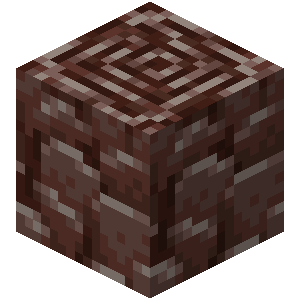
Netherite is the best gear material in Minecraft, and it is also the one people mine completely wrong. They take their shiny diamond pickaxe down into the Nether, dig straight tunnels like they're hunting diamonds, and come back two hours later with three ancient debris and a singed ego. The problem is that ancient debris does not behave like any other ore. It is far rarer than diamond, it never sits exposed in caves, and the efficient way to mine it is to blow up the Nether with explosives — including, weirdly, the beds you are told never to bring down there.
If you've already done the diamond run, this is the next rung of the ladder, and the method is genuinely different. Here is the fast version: the best Y level, the two explosion-based mining methods, why beds are a tool and a weapon at the same time, and how to turn a pile of brown-banded blocks into a full set of the toughest armor in the game.
The short answer: go to Y 15 in the Nether
Ancient debris generates throughout the lower Nether, but it is not spread evenly. It peaks at Y 15, with a usable band running from roughly Y 8 up to Y 22. There's a second, smaller bump higher up, but Y 15 is where the density is best, so that's where you mine. Press F3 (Java) or enable Show Coordinates (Bedrock) and tunnel until your Y reads 15.
The other rule that makes debris weird: it never generates exposed to open air or lava. Every ancient debris block has at least one block of netherrack between it and any cave or lava pocket. You will never spot a vein glinting in a cavern wall the way you spot diamonds. That single fact is why the smart methods all involve clearing a large volume of netherrack at once instead of eyeballing tunnels. You can't see debris coming — you have to expose it in bulk.
If you only remember one number from this guide: Y 15.
What ancient debris actually is
Ancient debris is a rare, brown-banded block that only generates in the Nether. You can't use it directly. The pipeline is:
- Mine ancient debris (needs a diamond or netherite pickaxe — iron and below won't break it).
- Smelt it in a furnace or blast furnace into netherite scrap.
- Combine 4 scrap + 4 gold ingots in a crafting grid to make 1 netherite ingot.
- Upgrade diamond gear to netherite at a smithing table — and since 1.20 you also need a Netherite Upgrade smithing template to do it.
A few properties make it worth the grind: netherite gear has more durability than diamond, gives knockback resistance, and — the headline feature — netherite items float in lava and don't burn. Drop a netherite sword in a lava lake and it bobs back up. Drop a diamond one and it's gone. That alone makes netherite the material you want before any serious Nether or End work.
Gear up before you go
This is a Nether trip with explosions, so the packing list is specific. If you haven't done a Nether run before, read the full Nether survival guide first — this post assumes you can already get there and stay alive.
Bring:
- A diamond or netherite pickaxe (Efficiency helps a ton). Iron will not mine debris — it'll break the block and drop nothing.
- Fire Resistance potions. Non-negotiable. You will be detonating explosions at Y 15 where lava is everywhere, and one bad blast drops you into a lava pocket. Fire Res turns that from a death into an inconvenience.
- Beds (a stack) or TNT, depending on which method you're running below.
- A stack-plus of netherrack, cobblestone, or blackstone to wall off lava and rebuild your blast chamber. Never use sand or gravel near lava — it falls.
- A way to detonate from cover: for beds, you just punch them from two blocks back; for TNT, a flint and steel or a redstone setup.
- Full diamond armor with Protection so the explosions and stray mobs don't delete you.
- Food, and a marked-out base so you don't wander off and lose your tunnel.
Set up a small walled room at Y 15 first, with a one-block-deep alcove you can duck into. You're going to be blowing things up at point-blank range; you want a wall between you and the boom every single time.
Method 1: bed mining (the cheap one)
Beds are dirt cheap (three wool, three planks) and they explode violently in the Nether, which makes them the budget netherite miner's best friend. The loop:
- At Y 15, dig a 1-wide, 2-tall tunnel forward.
- Place a bed in the wall ahead of you, then back up two blocks and step into your alcove.
- Punch (interact with) the bed. It detonates with a large explosion, blasting out a chunk of netherrack.
- Ancient debris is blast-resistant, so any debris caught in the blast radius survives while the netherrack around it is vaporized. Walk in, grab the exposed debris, and repeat.

The catch with beds is that the explosion is unpredictable and can break the bed itself, so you go through a lot of them — bring a full stack and a few extra wool. But because each bed is so cheap, it's the method most survival players use. Always detonate from behind a block and with Fire Resistance up; bed blasts have killed more players than ghasts ever will.
Method 2: TNT mining (the fast one)
If you've got a creeper or gunpowder farm feeding you explosives (see our best farms guide), TNT mining is faster and more controllable than beds. Same principle — blow up netherrack, leave the blast-resistant debris standing — but you can chain it.
The efficient pattern is to dig out a room at Y 15, then place TNT in a grid (commonly every few blocks, sometimes layered so the chain reaction clears a big cube) and light it. The explosions chew through netherrack and any debris in the volume is left sitting in the air or wall, ready to collect. With enough TNT you can clear a huge area per detonation and pick the debris out of the rubble.
TNT mining costs gunpowder and sand, so it only makes sense once you have a steady gunpowder supply. But for a player with a creeper farm, it's the fastest way to convert "I want netherite" into "I have a stack of ancient debris" — far quicker than picking at tunnels by hand. The trade-off is the same as bed mining: set it up wrong over a lava pocket and you'll lose the dropped debris into the lava, so build a floor and keep Fire Res running.
Why beds explode in the Nether
This trips up everyone the first time, so here's the actual mechanic. Beds only let you sleep in the Overworld. In the Nether (and the End), trying to use a bed triggers a large explosion instead — comparable to TNT. It's a deliberate design choice to stop players from setting their spawn point in those dimensions.
For 99% of Nether play, that's a hazard: accidentally clicking a bed in your hotbar near your gear is a classic way to blow up your own base. Which is exactly why our Nether guide tells you not to bring a bed.
For netherite mining, it's the entire point. That explosion is free, cheap, and — crucially — won't destroy ancient debris because debris has a high blast resistance. So you're weaponizing the thing that normally kills careless players. Just respect it: never punch a bed without a solid block between you and it, and never do it without Fire Resistance, because the blast can knock you straight into lava.
From debris to netherite ingot
Once you've got your ancient debris, here's the exact recipe chain — and the numbers matter, because a full kit is a real commitment:
- Smelt each ancient debris into 1 netherite scrap (furnace or blast furnace; blast furnace is faster).
- 4 netherite scrap + 4 gold ingots crafted together make 1 netherite ingot. That's the bottleneck: every single ingot eats 4 debris and 4 gold.
- Upgrade at a smithing table using a Netherite Upgrade smithing template, 1 netherite ingot, and the diamond item you want to upgrade.
That smithing template requirement is the part old guides miss. Since the 1.20 update you cannot upgrade to netherite with just an ingot anymore — you need the Netherite Upgrade template, which you find in bastion remnant chests in the Nether. The good news: you can duplicate the template by combining it with 7 diamonds and a netherrack block at a smithing table, so you only ever need to find one, then copy it as many times as you need.
Do the math on a full set: one netherite ingot per armor piece is 4 ingots for armor, which is 16 ancient debris and 16 gold just for armor — before you touch tools. Netherite is a grind by design. Pace it.
What to upgrade first
You will not have enough netherite to upgrade everything at once, so spend your first few ingots where they matter most:
- Pickaxe first. A netherite pickaxe mines faster than diamond, lasts longer, and — most importantly — won't burn if you drop it in lava while mining more debris. It pays for itself.
- Sword next, if you fight a lot. More damage and durability than diamond, and lava-proof, which matters in the Nether and the End.
- Boots and chestplate for the armor toughness and knockback resistance. Knockback resistance is genuinely strong in PvP and against mobs that shove you (hi, hoglins).
- Helmet and leggings to round out the set when you have spare ingots.
Don't bother upgrading tools you rarely use (a netherite shovel is mostly a flex), and remember the upgrade carries over all the diamond gear's enchantments — so upgrade your good enchanted gear, not a fresh diamond pickaxe. The enchantments are the expensive part; netherite is just the chassis upgrade.
Java vs Bedrock notes
The method is the same on both editions, with minor differences:
- Ancient debris distribution (peak at Y 15, band Y 8–22, never exposed to air or lava) is identical on Java and Bedrock.
- Beds explode in the Nether on both editions — bed mining works the same everywhere.
- The smithing template requirement (Netherite Upgrade template to upgrade) applies to both editions since 1.20.
- Coordinates display is F3 on Java; on Bedrock, enable Show Coordinates in world settings.
- Explosion behavior has tiny differences in how blocks drop and chain, but blast-resistant debris survives explosions on both, so bed and TNT mining work either way.
Wherever you play: diamond+ pickaxe, get to Y 15, blow up netherrack in bulk, and keep Fire Resistance running the whole time.
Quick netherite run checklist
- Get to the Nether geared and read the Nether guide if it's your first trip
- Bring a diamond or netherite pickaxe (iron won't mine debris)
- Pack Fire Resistance potions — the single most important item
- Bring a stack of beds (cheap) or TNT (fast, if you have gunpowder)
- Dig down safely to Y 15 and wall off a small blast room with an alcove
- Detonate beds/TNT from behind a block to expose the blast-resistant debris
- Smelt debris to scrap, then 4 scrap + 4 gold = 1 netherite ingot
- Find one Netherite Upgrade template in a bastion, then duplicate it (7 diamonds + netherrack)
- Upgrade your enchanted pickaxe and sword first, then armor
Frequently Asked Questions
What is the best Y level for netherite in Minecraft?
How do you mine netherite fast?
Why do beds explode in the Nether?
How do you make a netherite ingot?
Do you need a smithing template for netherite?
What should I upgrade to netherite first?
Keep Reading
Related Guides
Minecraft Speedrun Guide: The Any% Route to the Ender Dragon
Speedrunning Minecraft is a race from an empty spawn to a dead dragon in under ten minutes. Here is the actual route the world's fastest players run — wood to Nether to stronghold to bed bombs — and where beginners lose the run.
Minecraft Hardcore Mode Guide: How to Survive Permadeath
Hardcore mode locks you to Hard difficulty and gives you exactly one life. Die once and the world is over — you watch it as a ghost. Here is how the mode actually works, and the survival plan that gets you past the deaths that kill most runs.
Minecraft XP Guide: Fastest Ways to Level Up
XP is not points — it is the currency that runs your whole late game: enchanting, anvils, and Mending gear that repairs itself. Here are the fastest XP sources actually worth your time, ranked, with the real values.
Minecraft Beacon Guide: How to Build and Power One
A beacon is the closest Minecraft gets to a permanent buff station — stand near one and you get Haste, Speed, or Resistance for free, forever. The catch is everything in front of it: kill the Wither for a nether star, then stack up to 164 mineral blocks into a pyramid. Here is the whole build, tier by tier.
Minecraft Survival Guide for Beginners: Your First Days
You have about ten minutes of daylight before the sun sets and the world tries to kill you. Here is exactly what to do with them — punch a tree, build a tool chain, and get a roof over your head before the zombies arrive.
Best Minecraft Enchantments, Ranked — The Ones Worth Your XP
Mending is the enchantment that ends the grind — gear that repairs itself forever. Everything else is a fight over your XP and anvil uses. Here is what actually earns a slot, ranked, with the real max levels.