Minecraft Fishing Guide: Loot Tables, Enchants & AFK Farms
Fishing looks like the most boring thing in Minecraft until you read the loot table. A maxed-out rod pulls enchanted books, saddles, name tags, and nautilus shells out of a pool you dug yourself. Here is exactly how the catch math works, how to keep treasure switched on, and what an AFK farm can and cannot catch.
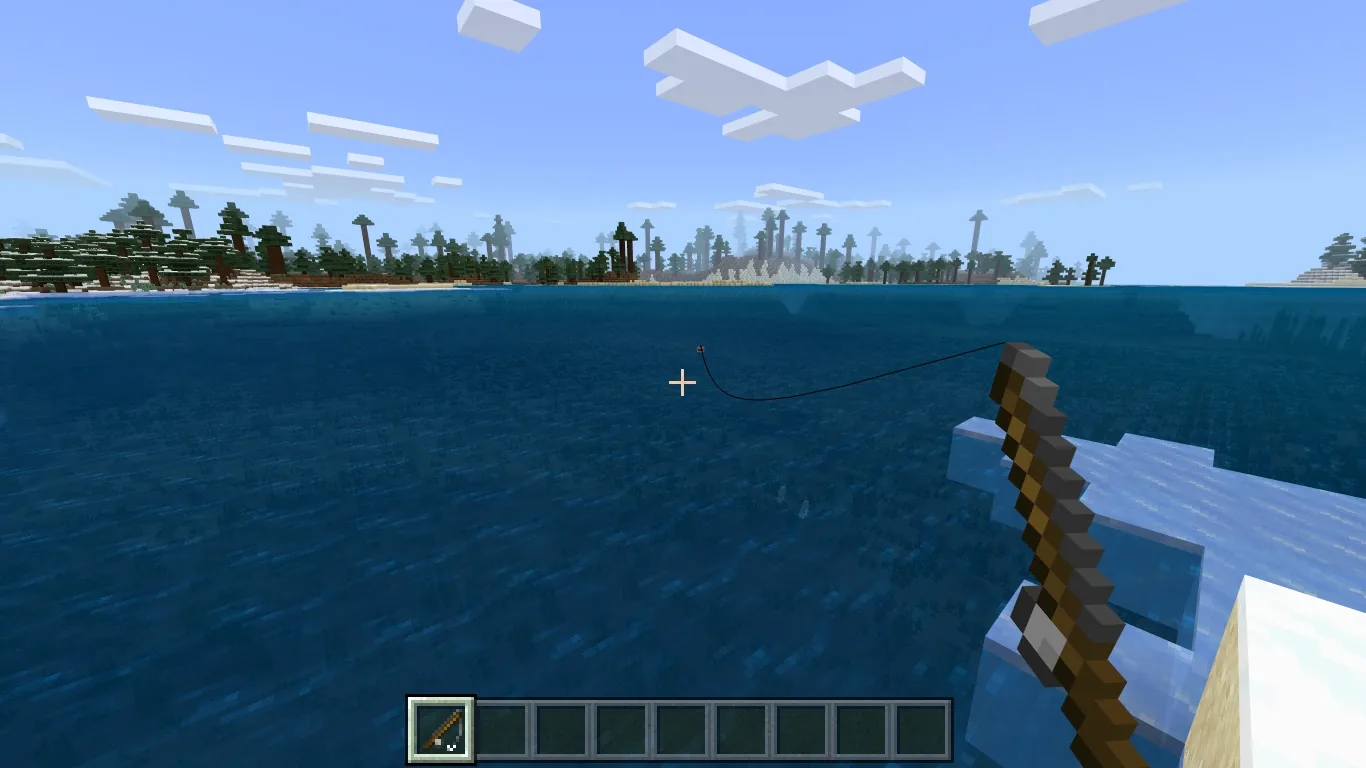
Fishing has a reputation as the thing you do when you are bored and there is nothing else to grind. That reputation is wrong, and the loot table is the proof. A fully enchanted rod cast into open water has a real shot at pulling an enchanted book, a saddle, a name tag, or a nautilus shell — items you would otherwise spend materials, emeralds, or structure runs on — out of a pool you dug next to your base. The catch is that on Java Edition it is easy to fish wrong and quietly disable the treasure category of the loot table without noticing.
This guide is the version with the actual numbers. We will cover crafting and casting, the three loot categories and their real percentages, the Java open-water rule that decides whether you ever see treasure there, what Lure and Luck of the Sea genuinely do, how a hands-off farm works, and the durability math. The numbers are checked against the Minecraft Wiki and the game's own loot data, because there is a lot of outdated fishing advice floating around from old versions.
Why fishing is secretly good
Fishing is the cheapest renewable source of three things at once: food, enchanted gear, and experience. You catch raw cod and salmon for eating, you catch enchanted books and tools you can salvage or use, and every successful reel grants 1 to 6 experience points. None of it costs you anything but a rod, and a rod with Mending repairs itself off that same XP.
The standout is treasure. The treasure pool includes enchanted books, enchanted bows, enchanted fishing rods, name tags, nautilus shells, and saddles. Saddles and name tags are both craftable now, so a fished one is a free bonus that saves you the materials. A saddle takes 3 leather + 1 iron ingot on a crafting table (since Java 1.21.6 / Bedrock 1.21.90, June 2025), and a name tag takes 1 paper + 1 copper, iron, or gold nugget (since Java 26.1 / Bedrock 26.10, March 2026). Nautilus shells build conduits. Enchanted books pulled from water can roll high-value enchantments you would otherwise grind a librarian for. That is the whole pitch: a rod and some patience turn into rare loot.
Crafting a rod and casting
A fishing rod is 3 sticks and 2 string. Place the sticks on the diagonal from the bottom-left corner of the crafting grid to the top-right corner, and the 2 string in the right column below the top stick — the classic diagonal-rod shape. String comes from spiders, cobwebs, or breaking tripwire; sticks are sticks. One rod, done.

To fish, right-click (use) the rod while aiming at water to cast the bobber, then wait. After a random delay of 5 to 30 seconds, a trail of fishing particles appears on the surface and swims toward the bobber. When that trail reaches the bobber, it dips underwater — that is your cue. Right-click again immediately to reel in. Your timing window is tight, roughly half a second on Bedrock and one to two seconds on Java, so do not get distracted. Miss it and the fish gets away and you wait again.
The loot table: fish, treasure, junk
Every successful catch rolls one of three categories. With an unenchanted rod in open water the split is:
| Category | Chance | What is in the pool |
|---|---|---|
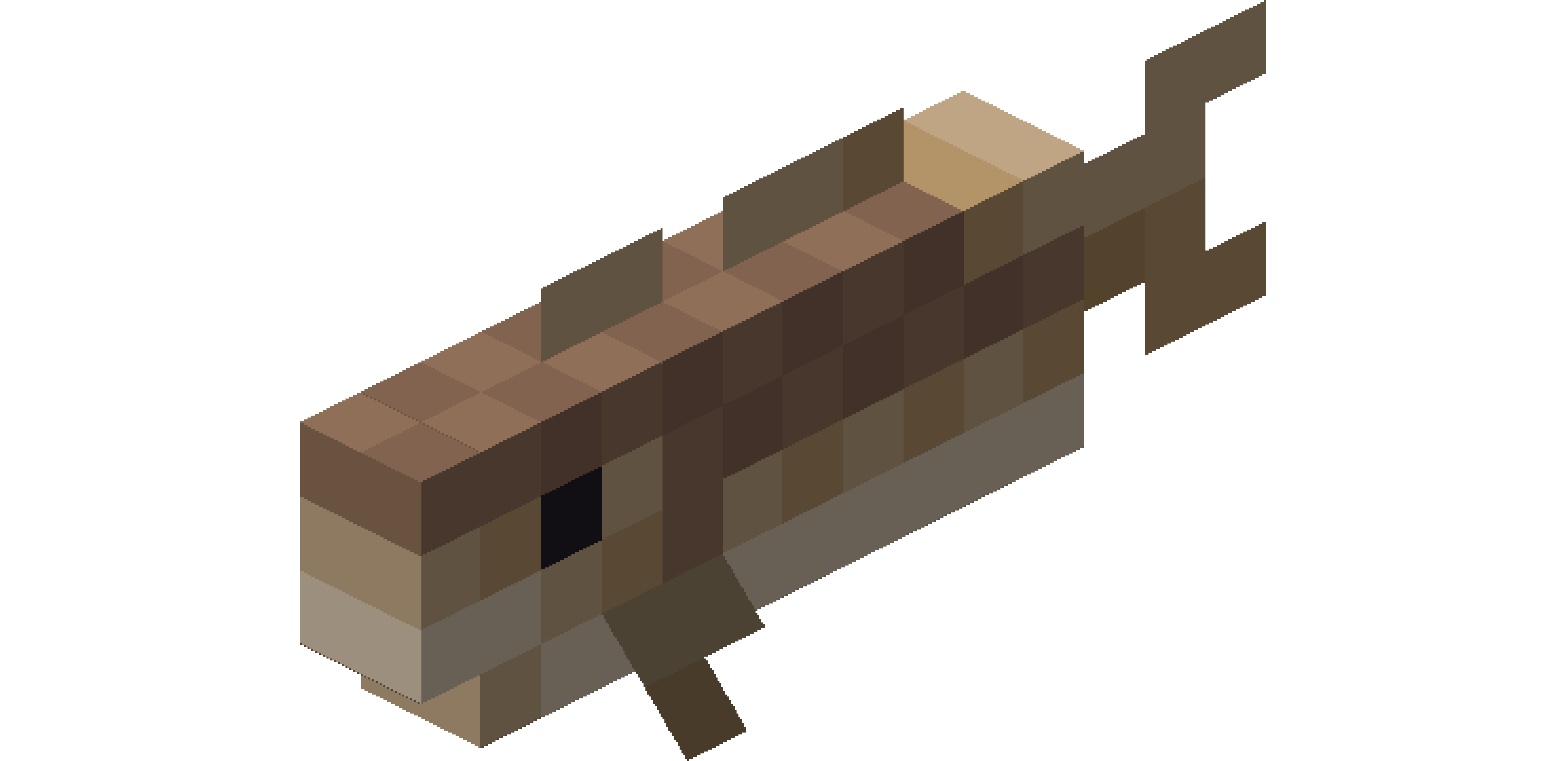
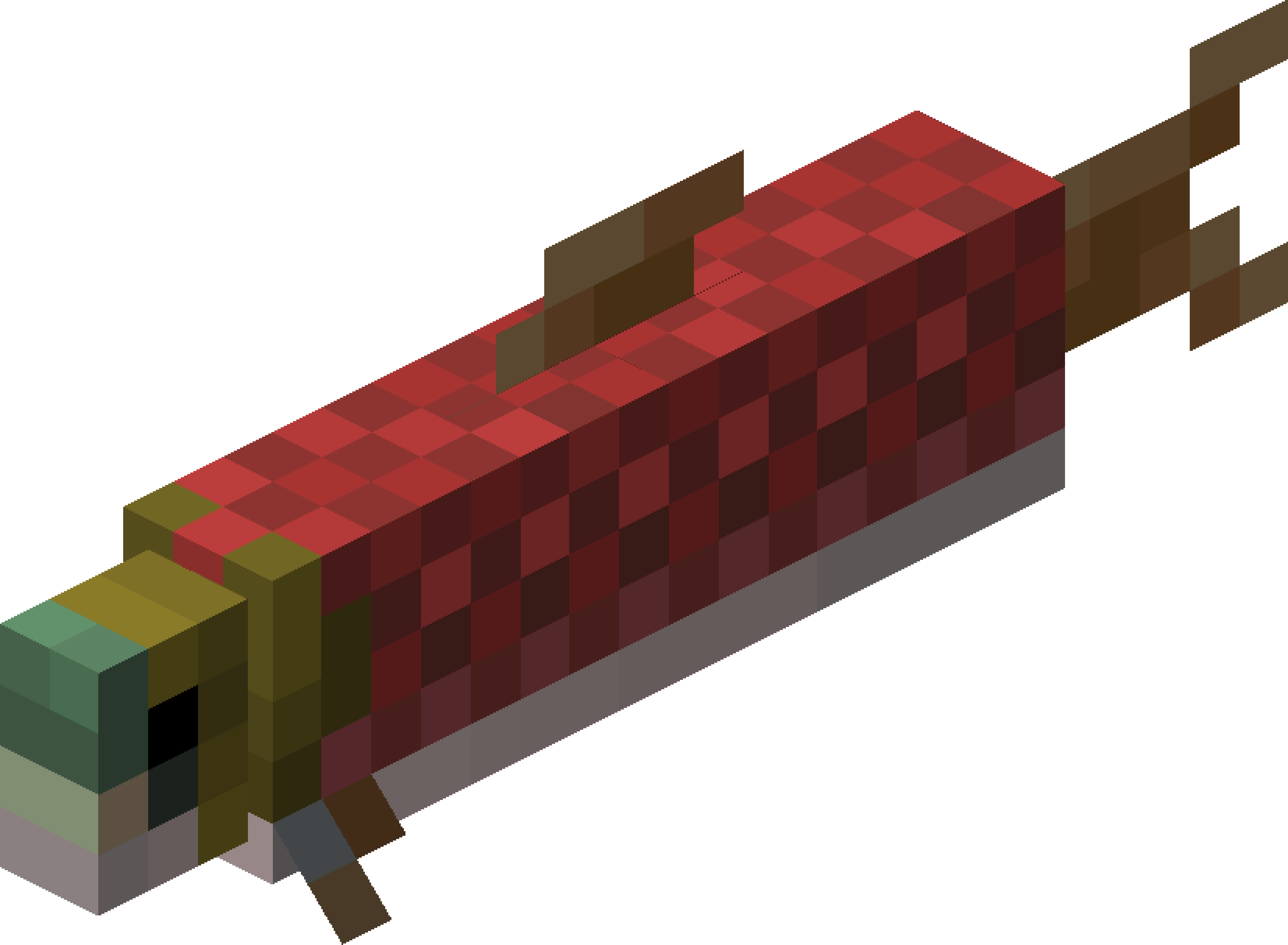
| Fish | ~85% | Raw cod 60%, raw salmon 25%, pufferfish 13%, tropical fish 2% |
| Junk | ~10% | Lily pads, bowls, leather, leather boots, bones, rotten flesh, water bottles, tripwire hooks, sticks, string, ink sacs, and a low chance at a damaged fishing rod |
| Treasure | ~5% | Enchanted bow, enchanted book, enchanted fishing rod, name tag, nautilus shell, saddle — each roughly an equal slice |
Within the fish pool it is mostly food, plus the occasional pufferfish (useful for Water Breathing potions) and tropical fish (a 1-hunger snack, or a treat that sends a dolphin toward the nearest shipwreck or underwater ruin chest; axolotls breed on buckets of live tropical fish, not the fished item). Junk is mostly garbage, though lily pads and the occasional bonus rod are not nothing.
The six treasure slices are exactly equal on Java, so each item is about 0.83% per catch before Luck of the Sea. Bedrock gives the enchanted book a slightly bigger slice (6 of 31 against 5 for each of the other five), which leaves the saddle and name tag at about 0.81% there.
Treasure is the category you actually care about, and on Java it is the one the open-water rule can switch off entirely. Out of the box, roughly five in every hundred catches are treasure — if you set up correctly. On Java, skip the open-water requirement and that 5% becomes 0%.
The open-water rule that breaks treasure
On Java Edition this is the single most important fishing fact and the easiest way to wreck a homemade fish farm. On Java, treasure can only be caught in open water. Junk and fish still come up anywhere, so a player fishing in a tiny hole keeps catching cod and leather and assumes everything is fine — but they will never pull a saddle, because they have silently disabled the treasure roll.
Bedrock Edition is different: its fishing loot data has no open-water condition, so a small Bedrock pool does not switch treasure off.
Java defines open water precisely: the bobber needs a 5×4×5 area around it (2 blocks out on every side, 2 blocks down from the water surface and 2 blocks up) that contains only water source blocks, air, lily pads, or waterlogged non-solid blocks. A single solid block, a wall, or a slab inside that box flags the water as not-open, and treasure is off the table.
The practical takeaway: if you want treasure on Java, the bobber needs at least 2 blocks of open water on every side (a 5×5 patch centered on it), with nothing but air above. Cast toward the middle of a lake or build a dedicated pool. A 5×5 pool only passes when the bobber settles in its center block, so build wider for margin, and dig it three blocks deep: Java checks two blocks down from the surface, and a bobber that dips can push that check one block lower. If you only want food, a one-block puddle still works fine — you just will not see treasure on Java. On Bedrock the box does not gate treasure, but building to it costs nothing and gives you one pool design that works on both editions.
Lure and Luck of the Sea
Two enchantments turn a casual rod into a loot machine, and they do completely different jobs.
Lure (max level III) reduces the wait time before a fish bites by 5 seconds per level. At Lure III you shave up to 15 seconds off every cast, so bites come fast and your catches-per-hour skyrockets. Lure does not change what you catch — it only changes how often. It is the throughput enchantment.
Luck of the Sea (max level III) shifts the loot table toward treasure and away from fish and junk. Each level adds roughly 2% to your treasure chance while trimming the fish and junk pools. With Luck of the Sea III you push treasure noticeably above the 5% baseline. It is the quality enchantment.
Run both. A rod with Lure III + Luck of the Sea III + Mending + Unbreaking III bites quickly, skews toward treasure, never breaks, and costs you nothing to maintain. That is the endgame fishing rod, and getting there is a great use of an XP stockpile — see our Minecraft XP guide for fast leveling, and the best Minecraft enchantments for where these rank against everything else.
Building an AFK fish farm
Fishing is just two clicks separated by a wait, but on Java, holding the use button down over a pool does not automate it: a held button reels the rod in early, long before anything bites. Java AFK fish farms give the held click something else to hit until a fish is actually on the line. The Minecraft Wiki's simple design works like this:
- Aim the held click at a muted note block. While the note block takes the click, the rod does not reel in.
- Land the bobber on a heavy weighted pressure plate sitting on a waterlogged fence, with a hopper under the fence feeding a chest.
- Let the bite swap the target. A bite pulls the bobber below the pressure plate, an iron trapdoor drops over the note block, and the held click now reels in and recasts. The bobber lands on the plate again, the trapdoor lifts, and the loop repeats.
The wiki is blunt about the trade-off: that simple design will not catch treasure, so treat it as a fish, junk and XP farm. Newer Java designs detect the bite with a sculk sensor, which picks up the bobber sinking and triggers the trapdoor; whichever build you copy, check it against the 5×4×5 open-water box before you count on saddles or books from it. On Java you can keep the button held mechanically (an item wedged against the mouse, or a key binding) and walk away. The wiki notes these designs do not work on Bedrock, where AFK fishing setups have mostly relied on bugs that later get fixed. Either way, a Mending rod repairs itself from the XP each catch drops.
If you would rather automate food and resources without the click loop, our best Minecraft farms to build first covers higher-throughput options, and the survival guide for beginners covers where a fish farm fits in your early base.
Rod durability and Mending
A fishing rod has 64 durability on Java (385 on Bedrock), and the cost per use depends on what you reel:
- Reeling in an item (a normal catch) costs 1 durability.
- Reeling in a stuck bobber (it hit a block) costs 2 durability.
- Hooking and pulling a non-item entity — a mob, a boat, a minecart — costs 5 durability.
Sixty-four uses on Java sounds low, but Unbreaking III makes the rod last about four times as long on average, and Mending repairs the rod from the XP you earn fishing — and since every catch gives 1 to 6 XP, a Mending rod with even modest use stays topped up indefinitely. The first thing you should do with a treasure-pulled enchanted rod is check whether it rolled Mending; if it did, that is your forever-rod.
Java vs Bedrock fishing notes
The systems are close but not identical:
- Reel timing. Java gives you one to two seconds after the bobber dips; Bedrock's window is tighter (around half a second), so be ready.
- AFK setups. Java AFK farms hold the use button against a note block that only gives way to the rod when a fish bites. The Minecraft Wiki notes those designs do not work on Bedrock, where AFK fishing has mostly relied on bugs that later get fixed.
- Loot pools. The fish, treasure, and junk categories are shared, and minor percentage tweaks exist between versions, but the 85/5/10 split is the working model on both editions.
- Open water. The 5×4×5 open-water requirement is Java only. Bedrock's fishing loot data has no open-water condition, so a small pool still rolls treasure there.
- Treasure weights. Java's six treasure items are equal slices (about 0.83% each per catch); Bedrock weights the enchanted book 6 and the other five 5 each, out of 31 (about 0.81% for a saddle or name tag).
- Enchantment caps. Lure III and Luck of the Sea III are the maximums on both editions.
Quick Action Checklist
- Craft a rod from 3 sticks + 2 string
- Cast into water, watch for the particle trail, reel the instant the bobber dips
- On Java, fish in open water (5×4×5 box of only water/air) or you will never catch treasure; Bedrock has no open-water rule
- Remember the split: ~85% fish, ~5% treasure, ~10% junk on an unenchanted rod
- Add Lure III to bite faster (−5s per level) and Luck of the Sea III for more treasure
- Put Mending + Unbreaking III on the rod so it repairs itself off fishing XP
- For a Java treasure pool, give the bobber 2 blocks of open water on every side and dig 3 blocks deep
- For Java AFK fishing, hold use on a note block that a trapdoor covers when a fish bites (holding use alone reels in early); the simple build catches no treasure
- Treat fished saddles and name tags as a bonus: both are craftable now (saddle: 3 leather + 1 iron ingot; name tag: 1 paper + 1 copper, iron, or gold nugget)
- Keep pufferfish for Water Breathing potions; axolotls need buckets of live tropical fish, not fished ones
Frequently Asked Questions
How do you fish in Minecraft?
What can you catch fishing in Minecraft?
Why am I not catching treasure when fishing?
What do Lure and Luck of the Sea do?
How do you make an AFK fishing farm in Minecraft?
Keep Reading
- Minecraft Wiki — fishing mechanics, loot tables, and open water
- Minecraft Wiki — fishing rod crafting, durability, and enchantments
- Minecraft Wiki — Luck of the Sea enchantment
- Minecraft Wiki — Fish farming tutorial: note block and trapdoor AFK design, no treasure from the simple build
- Mojang bedrock-samples: Bedrock fishing treasure table (enchanted book weight 6, other five items weight 5)
- Java Edition vanilla data (misode/mcmeta): fishing loot table with the in_open_water treasure condition
Related Guides

Minecraft Nether Fortress & Bastion Guide: Loot Safely
Two structures hold the keys to the late game: the fortress (blaze rods, wither skulls) and the bastion (netherite templates, gold to barter). Both will also delete you in seconds if you walk in blind. Here's how to clear them on purpose.
Minecraft Food & Hunger Guide: Saturation, Best Foods, Regen
Everyone knows you eat when the drumsticks run low. Almost nobody knows about saturation — the hidden stat that decides how long you stay full and whether you regen health fast or slow. Get this right and you carry steak, not bread, and you stop starving on long expeditions.
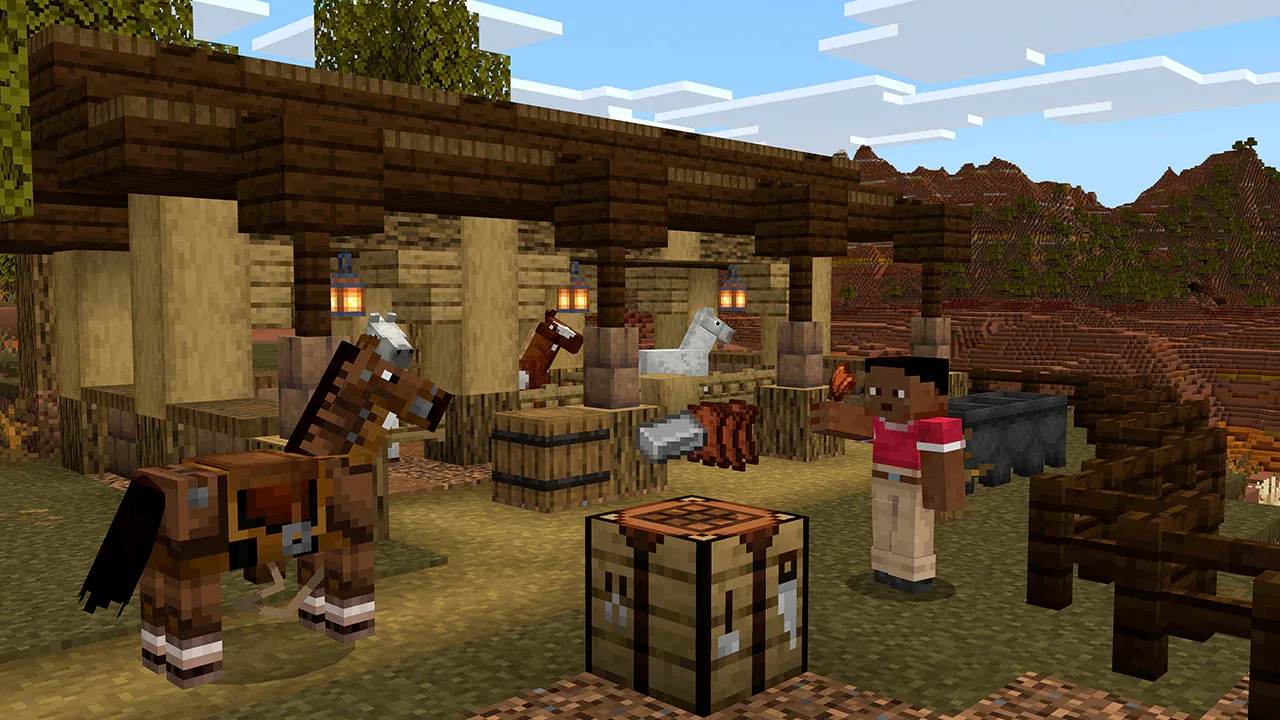
How to Make a Saddle in Minecraft: Recipe and Loot Odds
Saddles have been craftable since June 2025: three leather and one iron ingot. Here is the recipe and what it really costs, every chest, trade and mob drop that still gives one with Java and Bedrock odds, the five chests that stopped, all eleven mobs it fits, and how shears take it back.
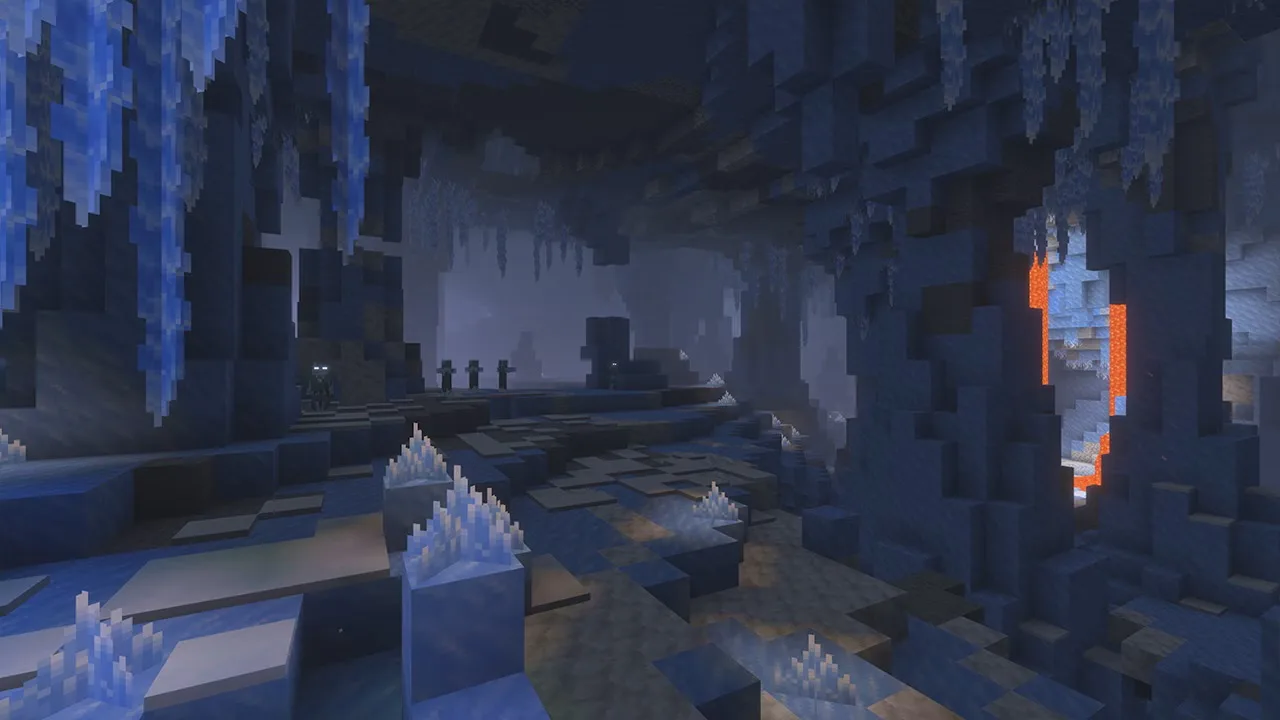
Minecraft Ice Caves Guide: Frostbite, Icicles and Freezing
Minecraft's fifth cave biome is mostly packed ice, its icicles drop when you light them, and its new zombie variant applies a brand-new Freezing effect with its melee hits. The ice caves drop is playable today in Bedrock Preview 26.60.29 and not yet in Java. Here is what is in it, with the numbers, and what could still change.
Minecraft Survival Guide for Beginners: Your First Days
You have about ten minutes of daylight before the sun sets and the world tries to kill you. Here is exactly what to do with them — punch a tree, build a tool chain, and get a roof over your head before the zombies arrive.
Best Minecraft Enchantments, Ranked — The Ones Worth Your XP
Mending is the enchantment that ends the grind — gear that repairs itself forever. Everything else is a fight over your XP and anvil uses. Here is what actually earns a slot, ranked, with the real max levels.