Minecraft Sulfur Caves: Geysers, Cinnabar, and Sulfur Cubes
Java 26.2 dropped a cave biome that does not reward you with a mob you fight, or loot you carry home. It rewards you with a ball. The sulfur cube takes on the physics of whatever block you feed it, and the game ships twelve different physics profiles to choose from — bounciness, friction and air drag, all published numbers. Here is the whole biome, including the geyser maths.
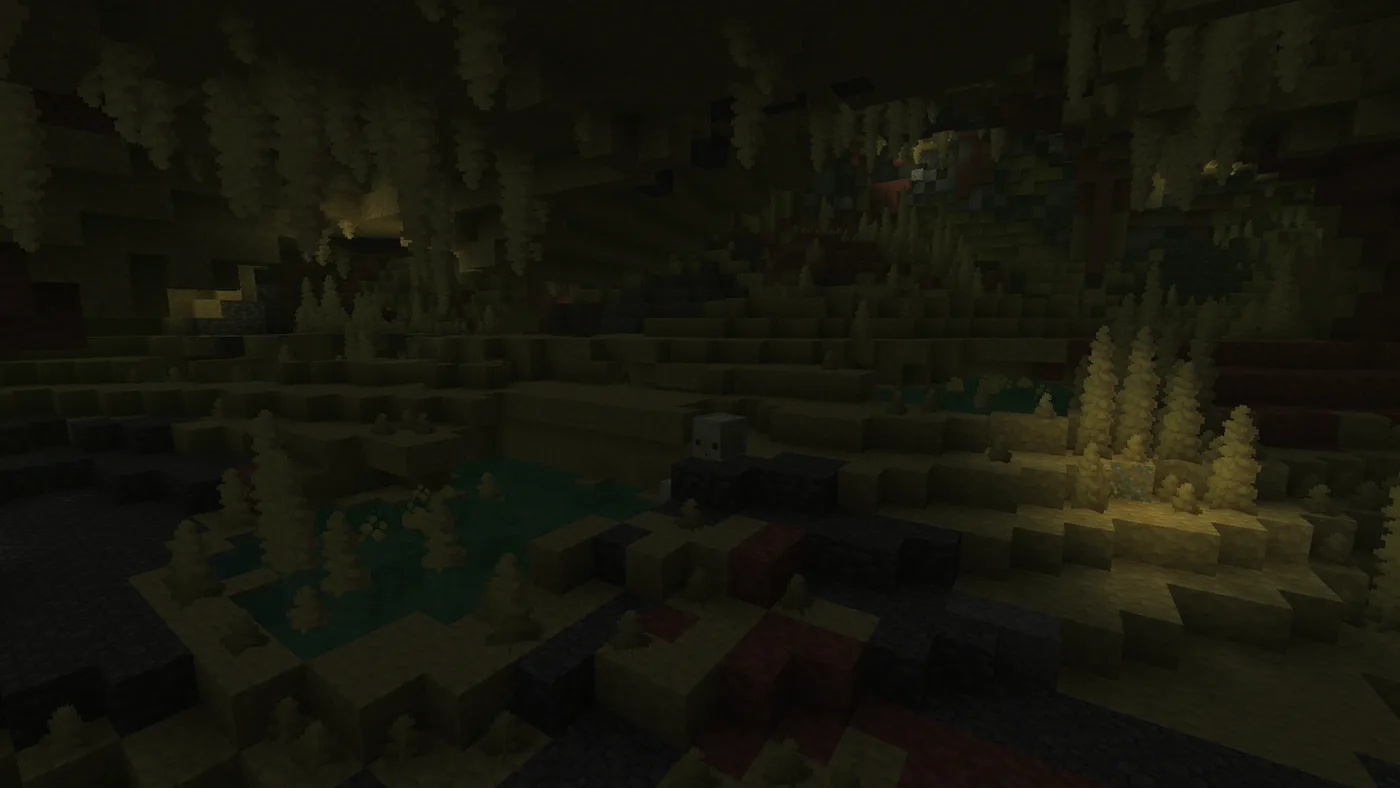
Every cave biome before this one had a point you could put in a sentence. Lush caves have axolotls. The deep dark has ancient cities. Dripstone caves have copper and a pointy ceiling.
Sulfur caves, added in Java Edition 26.2 "Chaos Cubed" on 16 June 2026, have a ball. The sulfur cube is a passive mob that swallows a block and takes on that block's physics, and Mojang shipped twelve distinct profiles with published bounciness, friction and air-drag values. Feed one wool and it floats down like a beach ball. Feed it honeycomb and it sticks where it lands. Feed it TNT and you have made a mistake.
The biome around it is hard to find on purpose, and it hides the feature that makes geysers possible. Here is all of it, with the numbers.
The fourth cave biome, and a hard one to find on purpose
Counting the Overworld's underground biomes, sulfur caves make four: lush caves, dripstone caves, the deep dark, and now this. It generates at the same depth as lush caves and dripstone caves, but much smaller and more fragmented than either.
The generation rules are narrow, which is why you can mine for hours in the right depth band and never see one:
- Only at low weirdness values (≤ -0.45), with medium continentalness and medium-to-high erosion.
- That combination means it never generates directly under river valleys — it appears as small pockets under hilltops instead.
- It does not generate under oceans or high mountains, though it can generate close to both.
- It is more common under flatland terrain near swamps and deserts.
- Rarely, at weirdness below -1.0, it generates above ground. It can also leak out of cave openings and ravines.
So the honest advice is not "dig at Y -40 and hope". Stand on flat ground near a swamp or a desert and look for the thing in the next section.
Sulfur springs are the surface tell
Lush caves have azalea trees. Sulfur caves have sulfur springs — a surface feature that generates only above a sulfur cave, in any Overworld surface biome, whose blocks extend roots down into the cave below the way an azalea tree's do.
A spring is a small pond ringed by sulfur, sulfur spikes, tuff, granite, cinnabar and stone, containing potent sulfur sitting on a magma block — the exact configuration that makes a geyser. Spot water erupting and you have found both a natural geyser and a marked entrance.
There are 10 variants across four sizes, rarity rising with size, so the small ones are what you will actually see: each of the four small variants weighs 5,000 out of 31,500, about 15.87%, against 9.52% for the first medium. A representative small spring runs to 133 tuff, 74 sulfur, 56 stone, 49 granite, 40 cinnabar, 8 sulfur spikes and 7 water — plus exactly 1 magma block and 1 potent sulfur. That pair is the whole engine.
What is actually down there
The cave is banded sulfur and cinnabar in roughly equal amounts, with deepslate and stone variants between them. The pools are a distinctive acid green, the sky fog reads green, and with Vibrant Visuals enabled the biome uses warmish colour grading and a dense volumetric fog.
One consequence matters for your pickaxe: ores rarely generate here, because sulfur and cinnabar replace most of the stone and deepslate they would otherwise have spawned in. Do not reroute a diamond run through it.
| Block | Tool | Notes |
|---|---|---|
| Sulfur | Wooden pickaxe | Drops nothing without a pickaxe. Renewable. |
| Cinnabar | Pickaxe | Purely decorative. Bass drum on a note block. |
| Sulfur spike | Any tool or hand (pickaxe fastest) | Stalactites and stalagmites, waterloggable. |
| Potent sulfur | Wooden pickaxe | Drops nothing without a pickaxe. Powers gas and geysers. |
Sulfur spikes are pointed dripstone with a difference that matters. Stalactites still behave as falling projectiles: break the supporting block and the unsupported spike drops, damaging anything beneath it like a falling anvil, with the death message "was skewered by a falling stalactite". But falling onto a sulfur stalagmite does not increase fall damage at all — that death is logged as ordinary fall damage, and the "impaled on a stalagmite" message never appears. Dripstone-style spike floors do not work with these.
They also grow, which is what makes sulfur renewable. A spike grows only while hanging directly under a sulfur block, downward, to a maximum stalactite length of 3; a stalagmite can grow up toward it from any full solid top face less than 11 blocks below the tip, but not once the stalactite hits 3 blocks, and neither grows while waterlogged. Growth is slow — 1.138% (64/5625) per random tick, averaging about 100 minutes per step — but four spikes craft into one sulfur block and wandering traders sell them two at a time, so farming them is optional.
Two more finds worth naming: a mineshaft chest minecart generated inside a sulfur cave can hold the "Bounce" music disc by fingerspit, and in Bedrock Edition woodland mansions can generate in sulfur caves as they can in other cave biomes — the wiki's own word for the odds is "nearly impossible".
The sulfur cube: passive, but it spawns like a monster
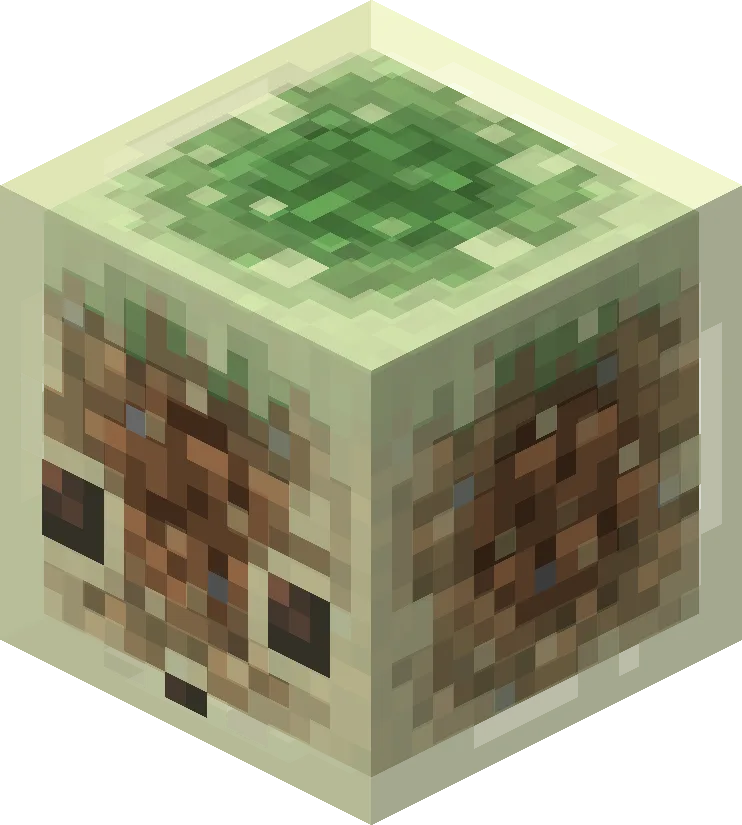
The sulfur cube is classified as both monster and animal, and that split is not cosmetic: it spawns in the monster category, competing for the hostile mob cap, while behaving as a passive mob that jumps around aimlessly and never attacks you.
| Large | Small | |
|---|---|---|
| Health | 8 | 4 |
| Hitbox | 0.98 × 0.98 | 0.49 × 0.49 |
| Speed | 0.4 | 0.3 |
| Can absorb blocks | Yes | No |
| Drops | Absorbed block + 1-2 XP | Nothing |
Large cubes spawn naturally at any light level, in groups of 2-4, at spawn weight 100 in Java — the highest in the biome, against 50 each for creepers, skeletons and zombies, 25 for slimes in slime chunks, 20 for cave spiders and 10 for endermen. Bedrock weights the cube higher still at 150, though it also raises slimes to 100. Note what is absent from that list: no regular spiders, only cave spiders.
Kill a large cube and it splits into two small ones, the exception being a cube that died to its own explosion, which splits into nothing. Small cubes do not split, drop nothing, and give no experience. They grow up after 20 minutes, and you can steer that clock both ways: slimeballs tempt a small cube and cut its remaining growth time, while a golden dandelion pauses growth entirely.
An empty bucket on a large cube produces a bucket of sulfur cube, which removes it from the mob cap and stops it despawning — the practical way to move one home, with the tooltip naming whatever block it is holding. A lead also works, but only on a cube that has absorbed something.
Absorbing a block is the whole mechanic
Only large cubes absorb, and only roughly full-sized blocks — slabs and stairs are refused. Four ways to load one:
- Interact with it while holding the block.
- Drop the block nearby. Cubes move toward absorbable dropped items and follow players holding one. This route obeys
mobGriefing: set that gamerule false and it stops. - Fire it from a dispenser.
- Commands, which bypass the list entirely.
Feeding a loaded cube a second block swaps them and drops the first. Shears — held or dispensed — pull the block back out, and killing it returns the block too.
The instant a cube absorbs something, two things change. It stops moving until the block comes out. And it trades damage for knockback: a loaded cube resists melee attacks, projectiles, falling blocks including anvils and stalactites, explosions other than its own, fall damage including onto stalagmites, freezing, cactus and sweet berry contact, poison, and magma. Hit it and it flies instead of dying.
It is not invincible. Fire, suffocation, cramming and the Wither effect still kill it, and zoglins, the wither and wardens attack it regardless. A warden's melee cannot hurt it; the warden's sonic boom can. Tamed wolves will pile on a cube their owner hits.
The archetype table
Every absorbable block maps to one of twelve archetypes, and the archetype sets four attribute values plus how much knockback it takes. Negative knockback resistance means it takes more knockback than a normal mob.
| Archetype | Feed it | Knockback resist | Bounciness | Friction | Air drag | Floats |
|---|---|---|---|---|---|---|
| Bouncy (rubber ball) | Planks, logs, wood, bamboo blocks | -2.0 | 0.9 | 0.3 | 0.01 | Yes |
| Light (beach ball) | Wool | -1.0 | 1.0 | 0.3 | 1.8 | Yes |
| Regular (football) | Dirt, clay, coal blocks, concrete powder, mud, bone blocks | -1.0 | 0.5 | 0.3 | 0.1 | Yes |
| Slow Bouncy | Most stone-like blocks, ores, terracotta, obsidian, observers | 0.4 | 0.6 | 0.3 | 0.05 | No |
| Fast Flat (golf ball) | Coral, sponge, moss, resin, pumpkins, melons, hay, froglights | -1.0 | 0.5 | 0.2 | 0.01 | No |
| Slow Flat (medicine ball) | Iron, gold, netherite, copper, raw ore blocks, ancient debris | 0.5 | 0.4 | 0.4 | 0.1 | No |
| Fast Sliding (hockey puck) | Blue ice, packed ice, snow blocks | 0.5 | 0.1 | 0.05 | 0.01 | No |
| Slow Sliding (curling stone) | Mushroom blocks, mycelium, wart blocks, shroomlight | 0.8 | 0.1 | 0.05 | 0.01 | No |
| High Resistance | Soul sand, soul soil | 0.7 | 0.2 | 1.0 | 0.01 | No |
| Sticky | Honeycomb block | -2.0 | 0.0 | 2.0 | 0.01 | No |
| Explosive | TNT | -1.0 | 0.5 | 0.3 | 0.3 | Yes |
| Hot | Magma block | -1.0 | 0.5 | 0.3 | 0.1 | Yes |
Read the extremes and the design becomes obvious. Wool is the trick shot: bounciness 1.0, the highest in the table, paired with air drag of 1.8 — 180 times the 0.01 shared by half the list — so it launches beautifully and then hangs and drifts down. Honeycomb is the opposite, bounciness 0.0 and friction 2.0, landing exactly where you aimed and staying there. Ice slides at friction 0.05; soul sand parks at 1.0.
Knockback resistance is the other lever. Bouncy and Sticky both sit at -2.0, which is why a log-filled cube travels so far off one hit, while Slow Sliding at 0.8 barely moves. Fast Flat gets an outlier horizontal knockback modifier of 0.9125 against the 0.4125 nearly everything else uses, so a pumpkin cube is the flattest, fastest thing you can hit. And only five archetypes float — Bouncy, Light, Regular, Explosive and Hot — which decides whether your cube crosses a pool or sinks into it.
TNT and magma turn a toy into a hazard
Two archetypes carry their block's function with them.
Explosive (TNT). Ignite it deliberately and the fuse is 120 game ticks — 6 seconds, against the 80 ticks (4 seconds) a normal block of TNT runs. Set it off with another explosion nearby and the fuse is instead a random 15 to 44 game ticks (0.75 to 2.2 seconds), which is how one popped cube chains into the rest. While lit it cannot be damaged, bucketed or sheared, and when it goes off no small cubes spawn.
The ignition list is longer than TNT's own: flint and steel from a player or dispenser, a fire charge, any fire damage at all (fire, lava, a flaming projectile, a campfire, a magma block) — which works even with Fire Resistance on the cube — a Fire Aspect weapon, any nearby explosion including another sulfur cube's, and a redstone signal whenever the centre of its hitbox sits where placed TNT would be activated. It also primes while occupying the same position as a redstone component emitting a signal, such as a comparator, even if that position is not itself powered.
Maximum blast damage scales with difficulty, in health points against a 20-point bar: 29 on Easy, 56 on Normal, 84.5 on Hard. Feeding one TNT at all earns an advancement — "Uh Oh", in the Husbandry tree — which tells you Mojang expected this to happen by accident. Standard TNT blast rules still apply.
Hot (magma block). A cube holding a magma block damages nearby mobs as though they had stepped on magma: 1 health point every 10 game ticks, half a heart per half-second, continuously, to anything that gets close. Left in a corridor it is a slow area-denial trap that never expires.
How to launch one properly
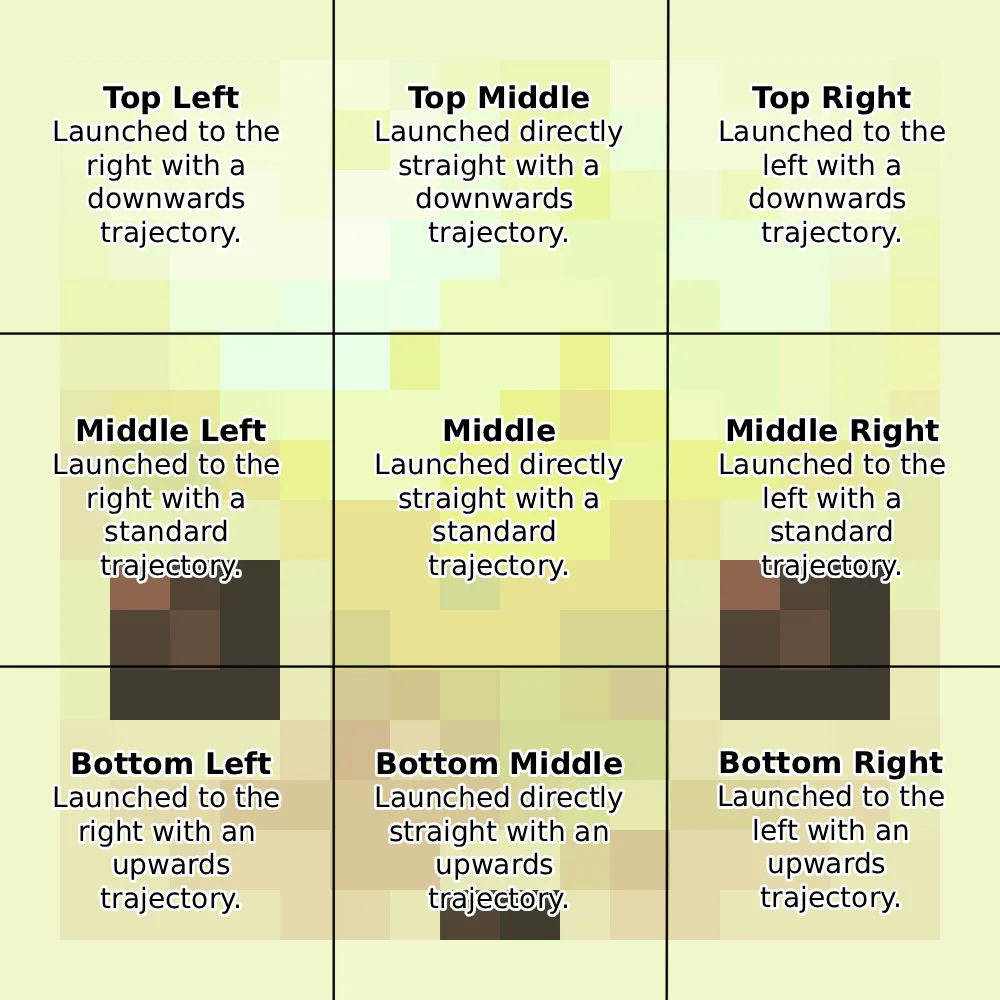
Knockback on a loaded cube behaves like a kick, not a hit. The direction is opposite to where on its body you struck it — hit the lower-left face and it goes up and to the right. That is the aiming mechanic, and it takes a few attempts before it stops feeling random.
Power comes from two places: the launch force scales with how much damage the attack would have done, so a diamond sword sends it further than a bare fist, and Knockback and Punch stack on top — the enchantments still work even though the damage does not. In Java Edition, a loaded cube can also climb ladders and vines while launched.
Geysers and noxious gas
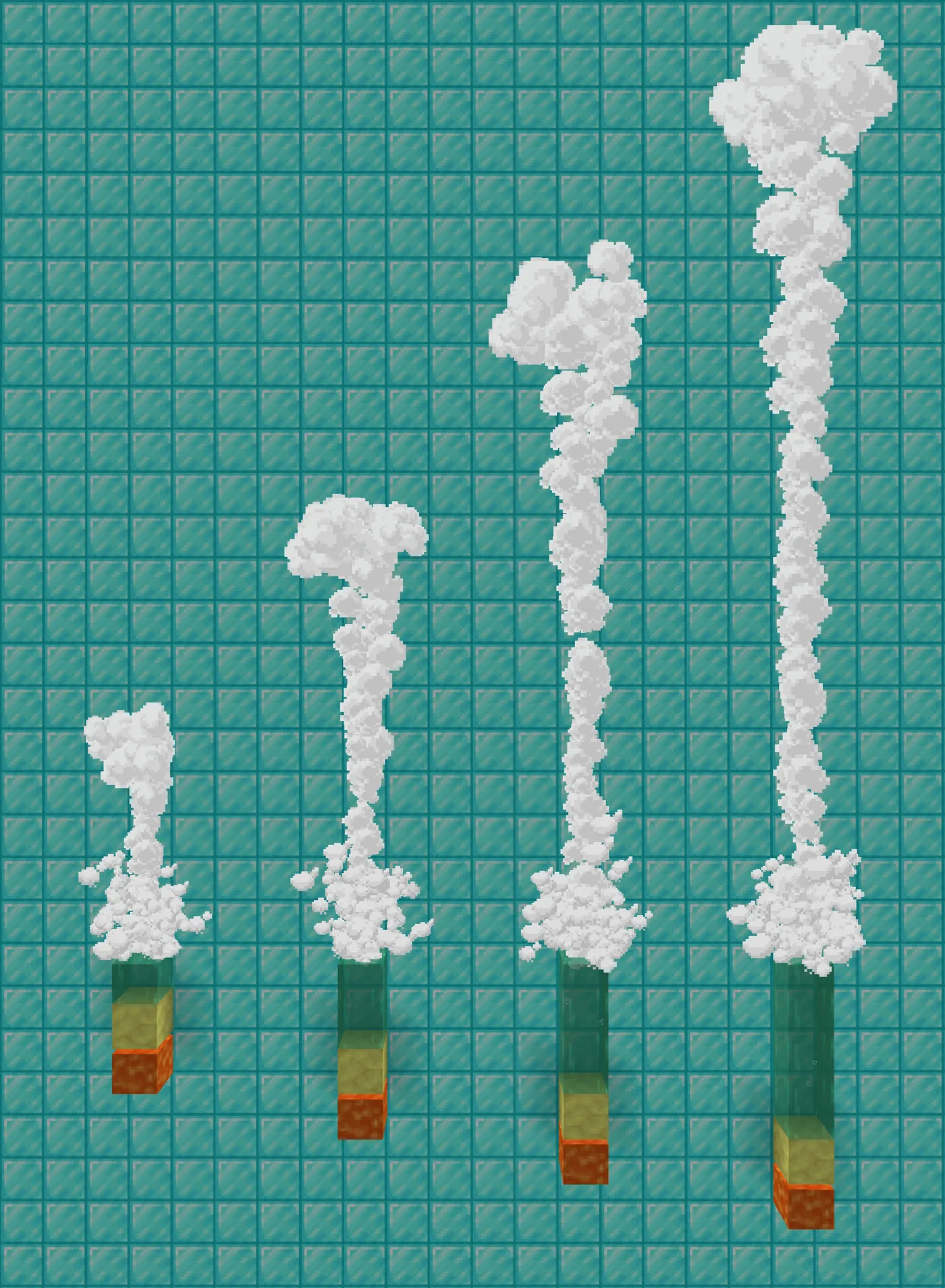
Potent sulfur is the biome's other export, crafted 9 sulfur into 1, and it does two different things depending on what sits under it.
With a magma block under it, in a water column 1 to 4 blocks tall, it becomes a periodic geyser. Over a lava source it erupts continuously instead. Launch height is straightforward: 5 × the height of the water column, so a 4-block column throws entities 20 blocks up.
Timing is not one global number: each placed block takes a dormant value of 15-30 and an eruption value of 1-2 from its world position, which is why two identical builds run on different clocks.
| Water column | Dormant (sec) | Eruption (sec) | Geyser height |
|---|---|---|---|
| 1 | 15-30 | 1-2 | 5 blocks |
| 2 | 25-40 | 2-3 | 10 blocks |
| 3 | 35-50 | 3-4 | 15 blocks |
| 4 | 45-60 | 4-5 | 20 blocks |
Across the whole range a full cycle runs 300 to 1200 game ticks (15 to 60 seconds) with an eruption phase of 20 to 100 ticks (1 to 5 seconds). Deeper water buys height and a longer eruption window, and costs a longer wait. One build note: a block placed above a geyser but not directly over its water source lets some particles through while stripping their ability to launch entities, so a careless roof silently disables the lift.
And the catch that sends people digging in the wrong place: the sulfur pools inside the caves have no magma blocks beneath their potent sulfur, so geysers do not generate naturally underground. Every natural geyser is in a surface sulfur spring.
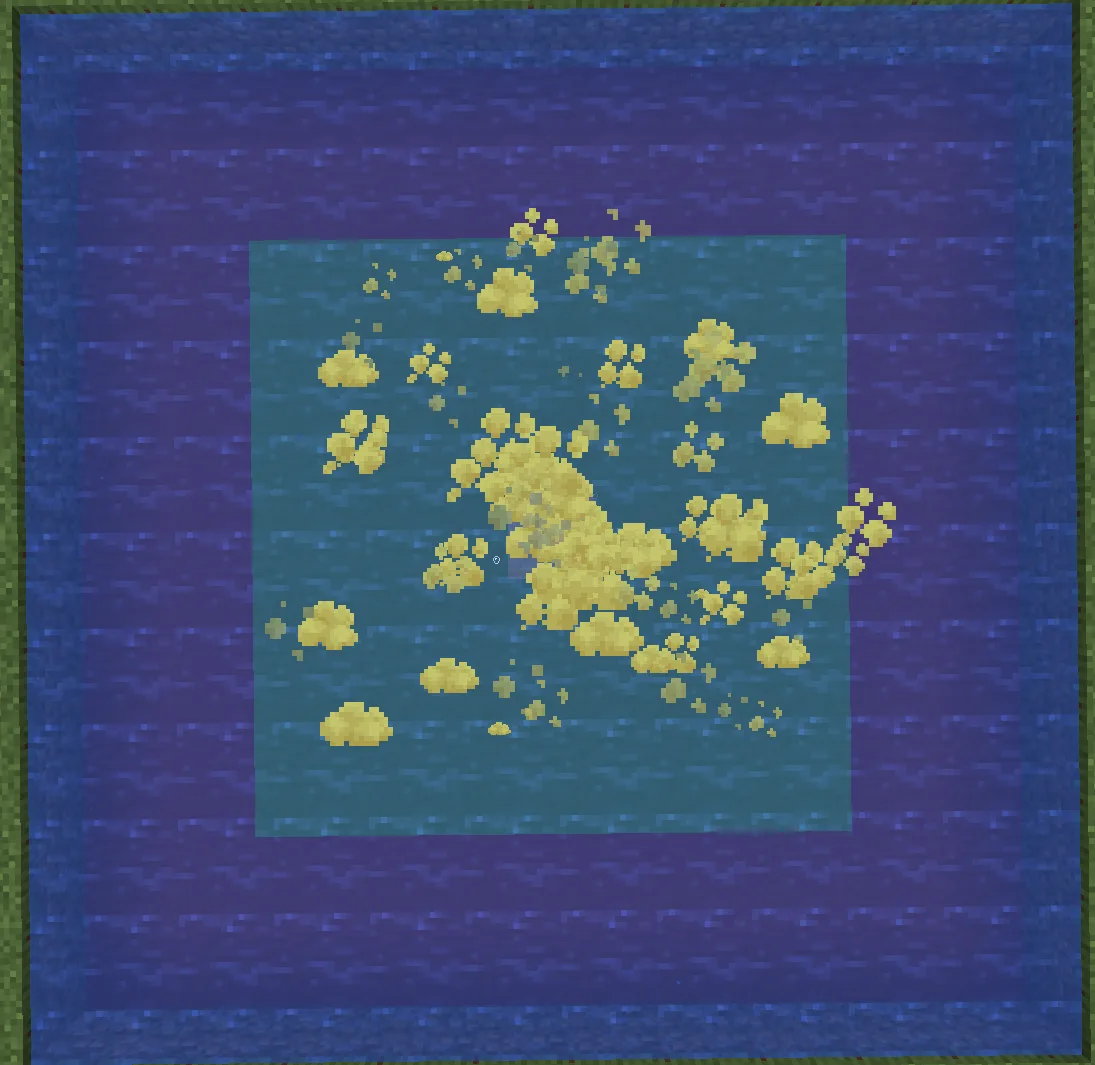
Without magma or lava under it, potent sulfur in water produces noxious gas instead, under strict conditions:
- Every water block above it must be a source block.
- The potent sulfur must sit no more than 4 blocks below the surface.
- The block directly above the water surface must be air.
Meet all three and gas is emitted on every water source block with air above it in a 3-block radius, centred on the surface block directly above the potent sulfur. Anything swimming in it takes 4 seconds of Nausea as an ambient effect, renewed continuously while it stays in the water — disorienting rather than lethal, but the reason those pools feel worse than they look. The status effects guide has the full list of what Nausea does to your screen.
One redstone limitation to plan around: potent sulfur is a block entity and cannot be moved by pistons, sticky or otherwise.
Building with sulfur and cinnabar
Both new blocks come as complete building sets, which is the quiet reason to visit even if you never touch a cube. A stonecutter turns a single sulfur block into twelve outputs: slabs, stairs and walls; polished sulfur with its own slabs, stairs and walls; sulfur bricks with theirs; and chiseled sulfur. Cinnabar carries the matching family.
Cinnabar has no non-decorative function whatsoever — a deep red stone-family block that plays a bass drum on a note block, and that is the feature list. Sulfur is the one with jobs: nine of it crafts a potent sulfur, and it is the only block a sulfur spike will grow beneath. Worth knowing for a build — both sit in the Slow Bouncy archetype, so a cube fed your own wall material bounces at 0.6 and sinks.
What to know before you go down
Four things that catch people out:
- You cannot mine your way to it reliably. Find a sulfur spring on the surface instead, and expect a bad ore biome when you get down there.
- Stalagmites here are not dripstone. No bonus fall damage, so a spike pit kills nothing. Falling stalactites still do.
- Do not bring TNT down there. A cube absorbs dropped blocks on its own, any fire damage lights it even through Fire Resistance, and one detonation chains the rest on a fuse as short as 0.75 seconds.
- Bucket the cube before you experiment. A bucketed cube leaves the mob cap and stops despawning; a loose one is subject to both.
Do that and the biome stops being a curiosity. It is a stone set, a renewable block, a surface feature that flings you 20 blocks in the air, and a mob whose entire personality is a table of physics constants you get to pick from.
Frequently Asked Questions
How do you find sulfur caves in Minecraft?
What does a sulfur cube do in Minecraft?
How do you make a geyser in Minecraft?
What happens if a sulfur cube absorbs TNT?
Are sulfur spikes the same as pointed dripstone?
Is cinnabar useful in Minecraft?
Keep Reading
- Minecraft Wiki — sulfur caves generation rules, blocks, and Java/Bedrock spawn tables
- Minecraft Wiki — sulfur cube stats, absorbing blocks, and the full archetype attribute table
- Minecraft Wiki — potent sulfur noxious gas conditions and geyser timing formulas
- Minecraft Wiki — sulfur spike growth rates, falling stalactites, and fall-damage behaviour
- Minecraft Wiki — sulfur block mining tier, crafting, and stonecutter outputs
- Minecraft Wiki — cinnabar generation and decorative variants
- Minecraft Wiki — sulfur spring variants, weights, and block composition
- Minecraft Wiki — Java Edition 26.2 "Chaos Cubed" changelog and release date
- Minecraft Wiki — the "Uh Oh" advancement criteria
Related Guides
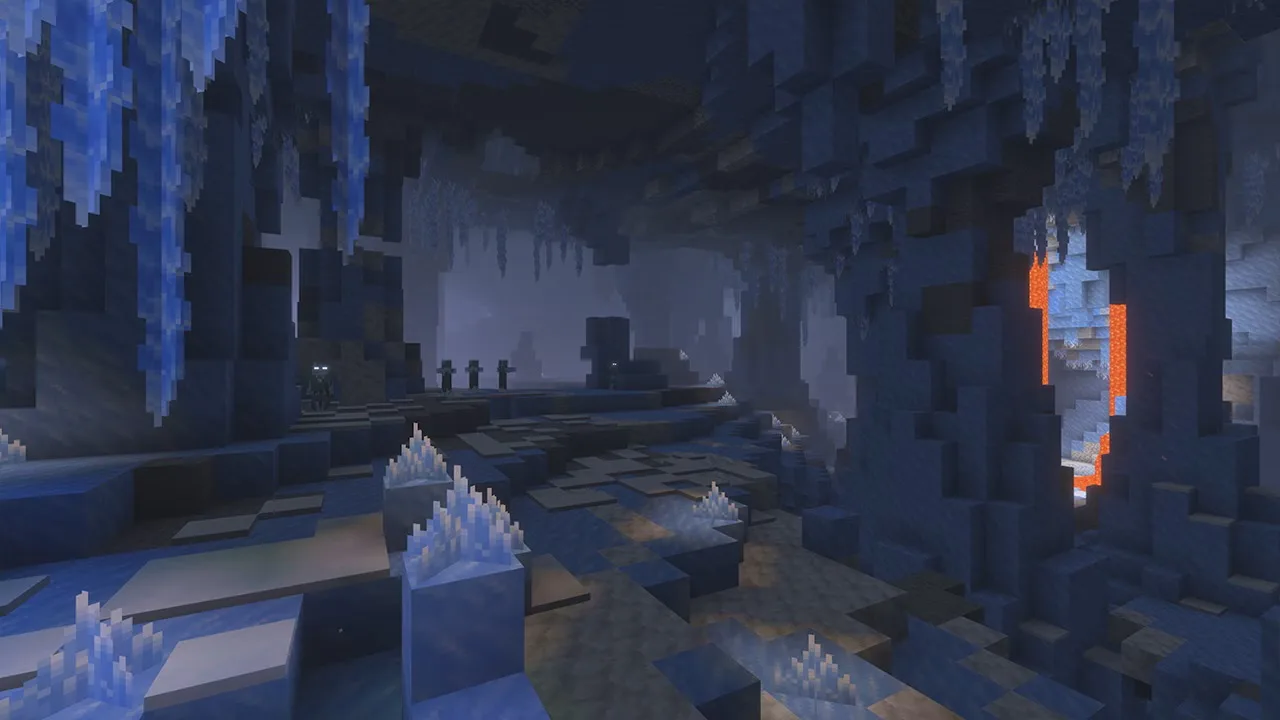
Minecraft Ice Caves Guide: Frostbite, Icicles and Freezing
Minecraft's fifth cave biome is mostly packed ice, its icicles drop when you light them, and its new zombie variant applies a brand-new Freezing effect with its melee hits. The ice caves drop is playable today in Bedrock Preview 26.60.29 and not yet in Java. Here is what is in it, with the numbers, and what could still change.
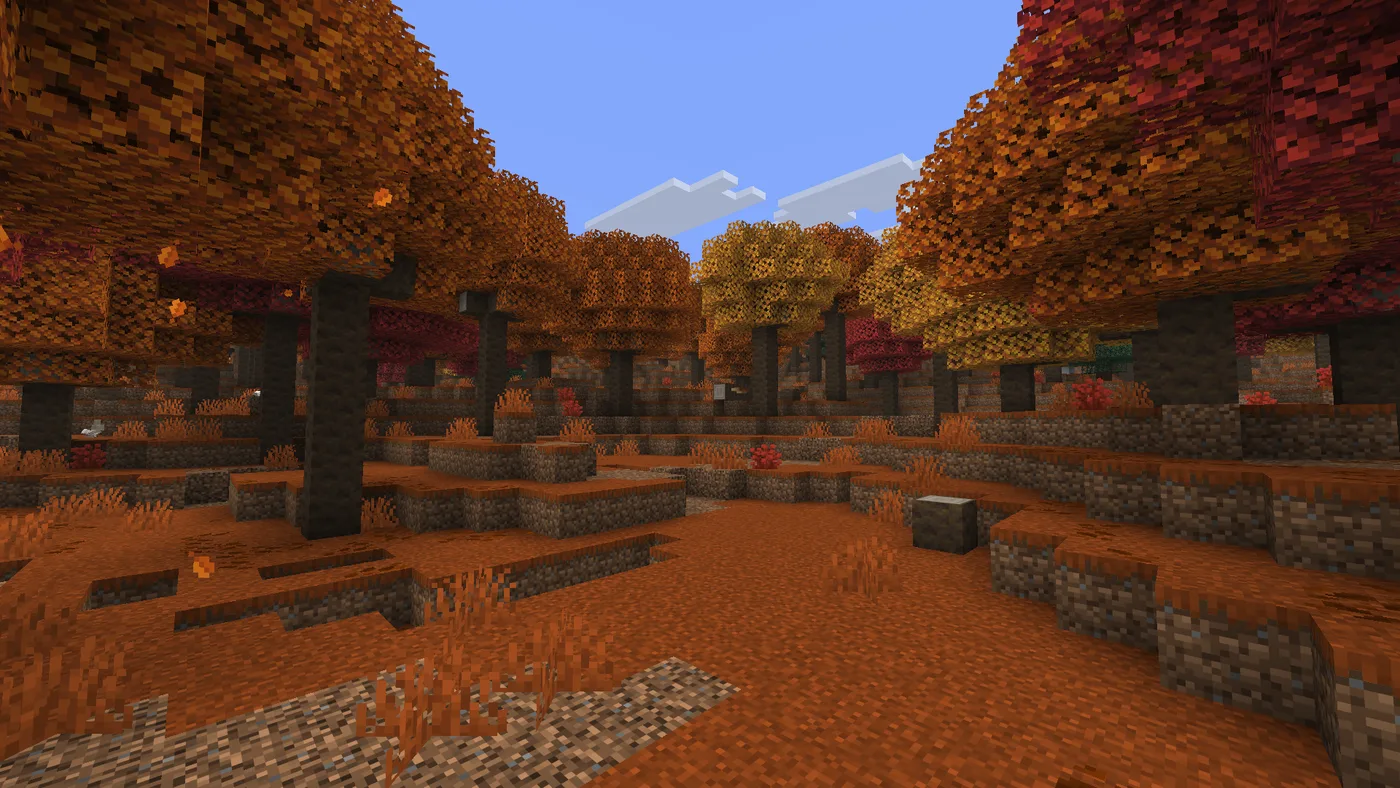
Minecraft Wilderness Bound Guide: Dappled Forest and Camps
Minecraft quietly swapped its whole version-numbering scheme and shipped a full content drop the same week — a new autumn biome, camping structures with a chest that hides in a different spot every time, and the game's first real sit-down furniture. Here is every number from Wilderness Bound, checked against the wiki the day after launch.

Minecraft Pale Garden Guide: Creaking, Resin, and Pale Oak
The pale garden is the only biome in Minecraft that turns your music off on purpose, and it guards the only mob in the game you cannot damage. Here is how the creaking staring contest actually works, how to turn its heart into a renewable resin farm, and every Java/Bedrock number that matters.
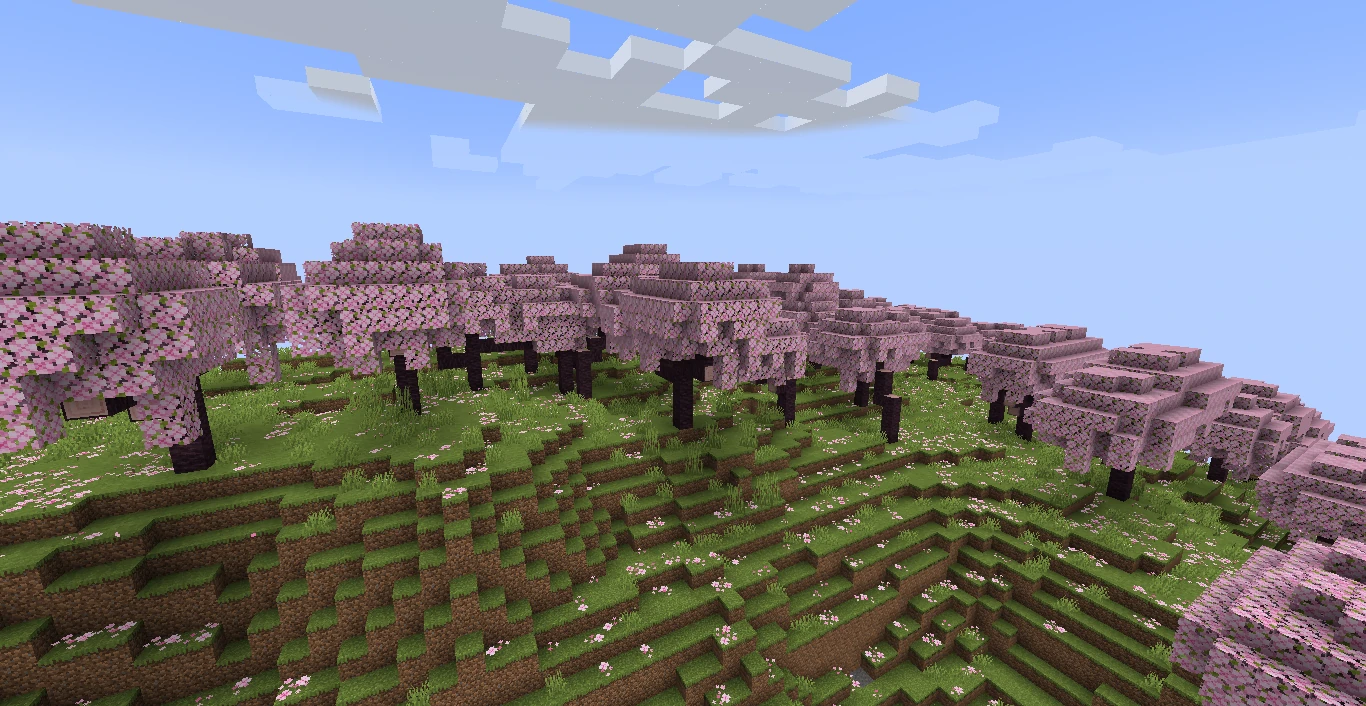
Minecraft Cherry Grove Guide: Wood, Pink Petals, and Mobs
The cherry grove is the prettiest biome in Minecraft and one of the most underrated places to start a world. It's a meadow with pink trees on paper, but it quietly hands you a whole salmon-colored wood set, a renewable decoration block, emeralds in the hills, and bees on the branches.
Minecraft Survival Guide for Beginners: Your First Days
You have about ten minutes of daylight before the sun sets and the world tries to kill you. Here is exactly what to do with them — punch a tree, build a tool chain, and get a roof over your head before the zombies arrive.
Best Minecraft Enchantments, Ranked — The Ones Worth Your XP
Mending is the enchantment that ends the grind — gear that repairs itself forever. Everything else is a fight over your XP and anvil uses. Here is what actually earns a slot, ranked, with the real max levels.