Minecraft Buried Treasure Guide: Maps, Loot, Where to Dig
The red X is not the hard part of a Minecraft treasure hunt — the last three blocks are. The chest always generates at the same spot inside its chunk, the map that finds it comes from exactly two structures, and since the nautilus arrived, these chests carry loot you cannot craft or trade for. Here is the whole chain with the percentages.
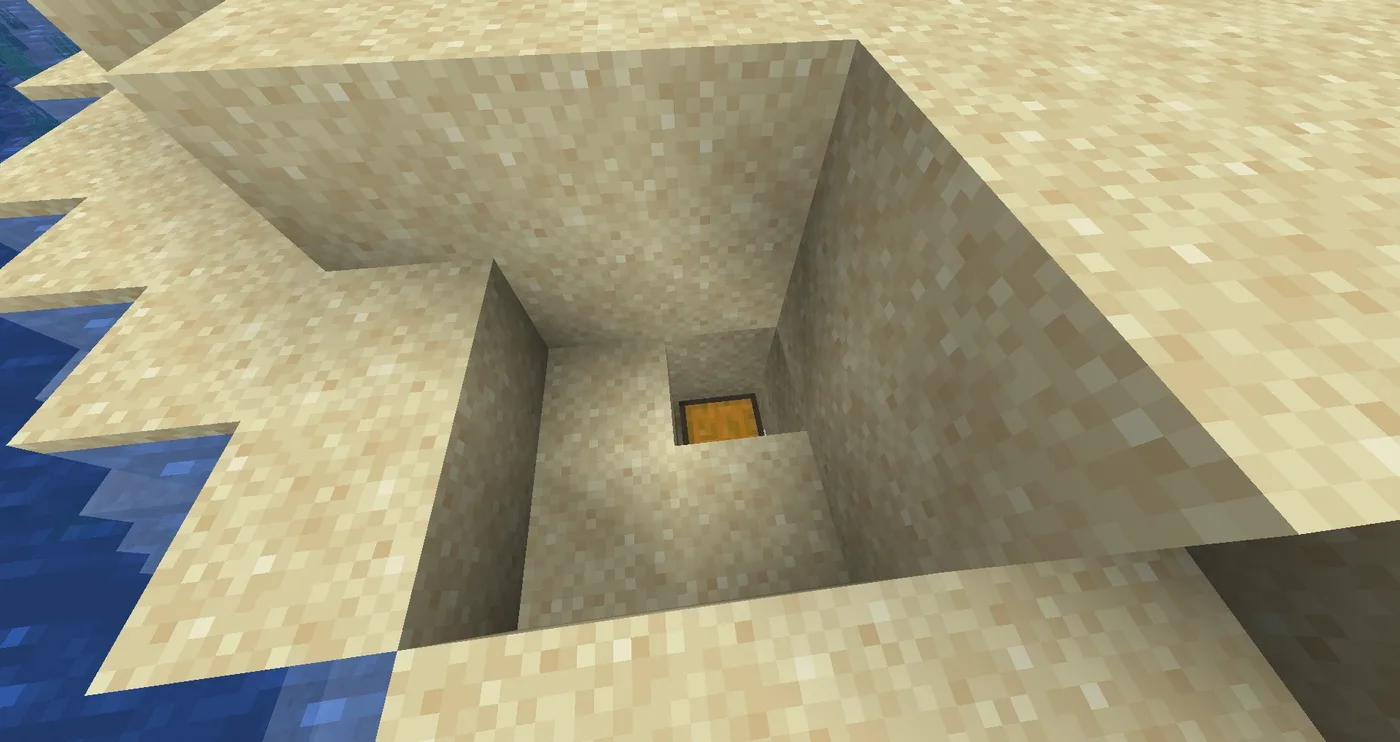
The red X is not the hard part of a treasure hunt. Players find the X, dig a crater the size of a swimming pool, and swim home convinced the chest never generated. It did — it was one chunk-corner away, exactly where it always is, because buried treasure chests generate at the same relative position inside their chunk every single time.
That rule is the payoff of this guide, but the whole chain is worth doing properly, because the loot has quietly changed. Since Java 1.21.11 — the Mounts of Mayhem drop that added the rideable nautilus on December 9, 2025 — buried treasure and the chests that lead to it are where you find nautilus armor, which cannot be crafted at any tier.
Here is every link: where the maps drop, what each chest holds with real percentages, and which block to actually dig.
The treasure chain, start to finish
Three links, in order:
- Find a shipwreck or an ocean ruin. These are the two structures whose chests generate buried treasure maps — cartographer villagers do not sell them; their stock is ocean, trial and woodland explorer maps.
- Loot the right chest for the map. In a shipwreck that specifically means the stern, not the bow.
- Follow the X and dig at the chunk mark. The chest is nearly always covered by a block or two of sand, gravel or stone.
Every buried treasure chest contains exactly one heart of the sea, guaranteed — still the only source of the item, and the reason the whole trip exists if you want a conduit. Everything else in the chest is a bonus on top.
One mechanic worth knowing before you hoard maps: an explorer map locks onto its target at the moment the loot generates — the tick you open (or break, or hopper-drain) the chest. Buried treasure maps are also the one explorer map type that does not exclude structures earlier maps already found, so two treasure maps can point at the same X. If you loot five map chests in one bay and two maps look identical, that is the game working as designed, not a broken seed.
Shipwrecks: three chests, and the map is in the stern
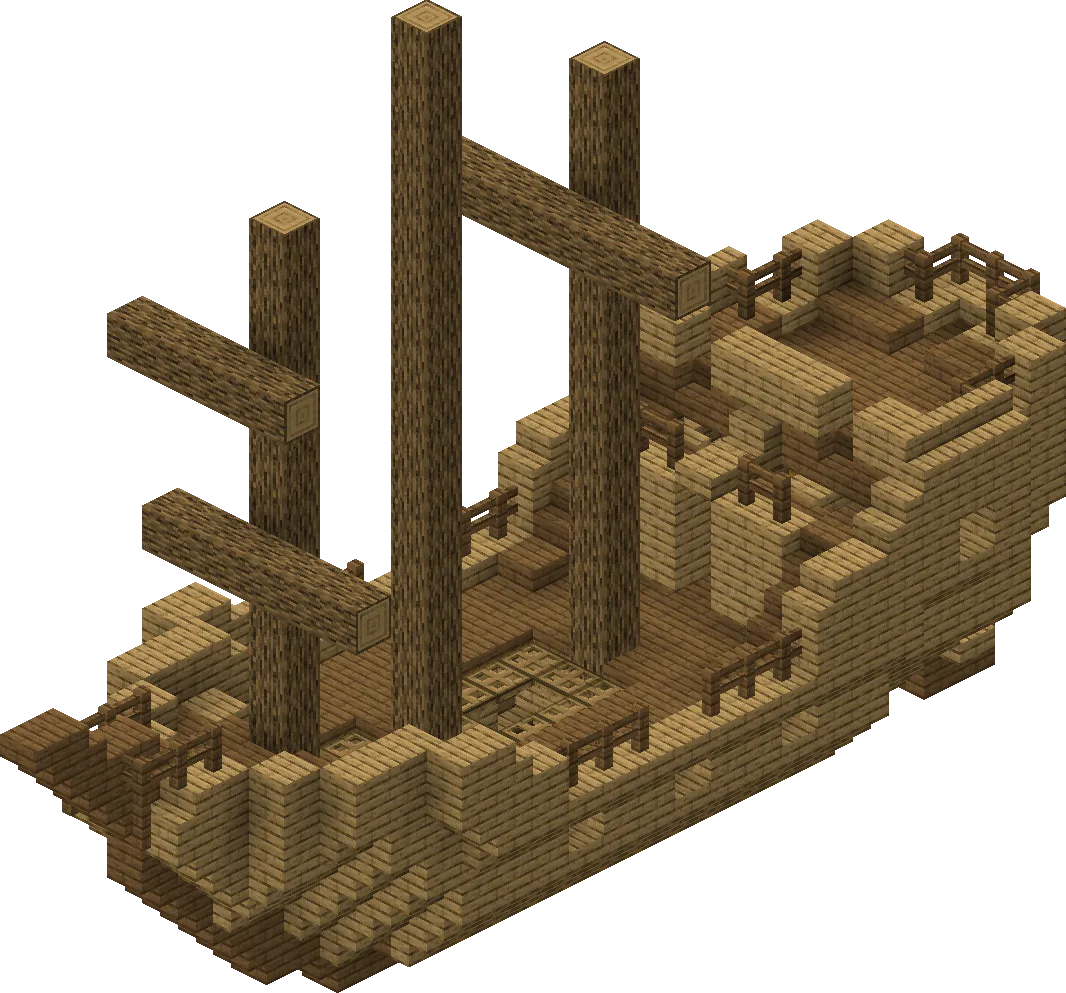
Shipwrecks generate commonly in every ocean biome, and rarely on beaches, inside icebergs, or overlapping other structures. A complete wreck carries three chests with three different loot tables: a supply chest in the bow, a treasure chest in the upper stern, and a map chest in the lower stern. Wrecks generate upright, keeled sideways or fully upside-down, often missing the bow or stern entirely — but two rules cut your search time:
- Any shipwreck with at least two chests always has its map chest.
- On upside-down wrecks, the map chest can generate in the bow even when the stern is missing.
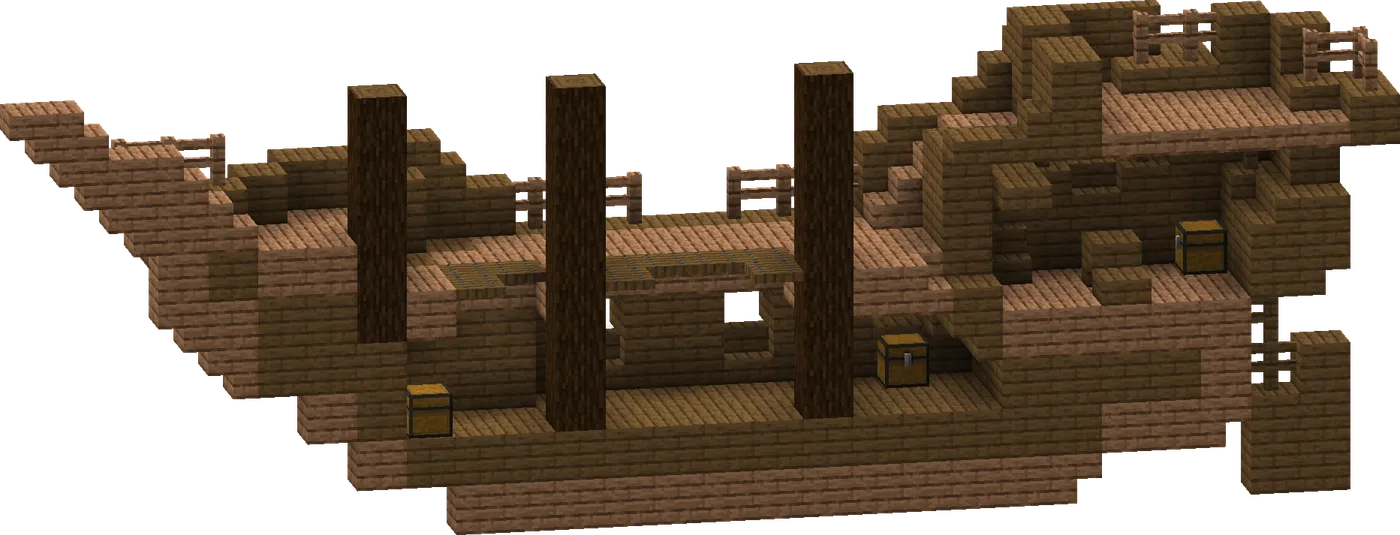
The map chest is the one that matters for a treasure hunt, and it does not make you gamble:
| Map chest item | Chance (Java) | Avg. per chest |
|---|---|---|
| Buried treasure map | 100% | 1.000 |
| Paper | 89.4% | 8.684 |
| Feather | 60.0% | 2.368 |
| Book | 34.5% | 1.184 |
| Coast armor trim template (always 2) | 16.7% | 0.333 |
| Copper nautilus armor | 10.8% | 0.108 |
| Clock / compass / empty map | 7.7% each | 0.079 each |
The treasure chest one deck above it is the wreck's payday even before the dig: iron ingots at 97.4% (avg 8.1), iron nuggets at 94.5% (avg 12), emeralds at 73.7% (avg 3.6), lapis at 61.5%, gold nuggets at 36.6%, gold ingots at 26.5%, and a 14.1% shot each at a diamond and a bottle o' enchanting. The supply chest in the bow is the food run: suspicious stew at 54.3%, wheat, carrots, potatoes and moss blocks each around 42%, plus a 20.8% chance apiece at four pieces of enchanted leather armor. All three chest types can also roll the Coast armor trim at 16.7% — and when it appears, it always comes as two templates, so you can keep one and duplicate from the other.
Drowned patrol most wrecks, so clear the deck before you loot — the trident guide covers why the ones spawned near structures are worth fighting carefully.
Ocean ruins are the faster map farm
Shipwrecks get the attention, but ocean ruins are the better map-per-minute source. They come in two flavors — cold ruins (stone brick, in regular, cold, frozen and deep oceans) and warm ruins (sandstone, in warm, lukewarm and deep lukewarm oceans) — and both roll the same map odds:
| Ruin chest | Buried treasure map | Notable extras |
|---|---|---|
| Large ruin | 43.5% | Enchanted book 21.7%, enchanted fishing rod 21.7%, golden apple 4.3% |
| Small ruin | 41.7% | Enchanted fishing rod 41.7%, stone axe 28.5% |
The farming math is the point: 30% of ruins generate large, and a large ruin has a 90% chance to spawn 4-8 small ruins clustered around it. One good find is up to nine lootable structures, each chest a roughly two-in-five shot at a treasure map. Drowned and zombie nautiluses — the undead counterpart of the mount — guard the ruins, so the same combat caution applies.
Reading the map and digging at the X
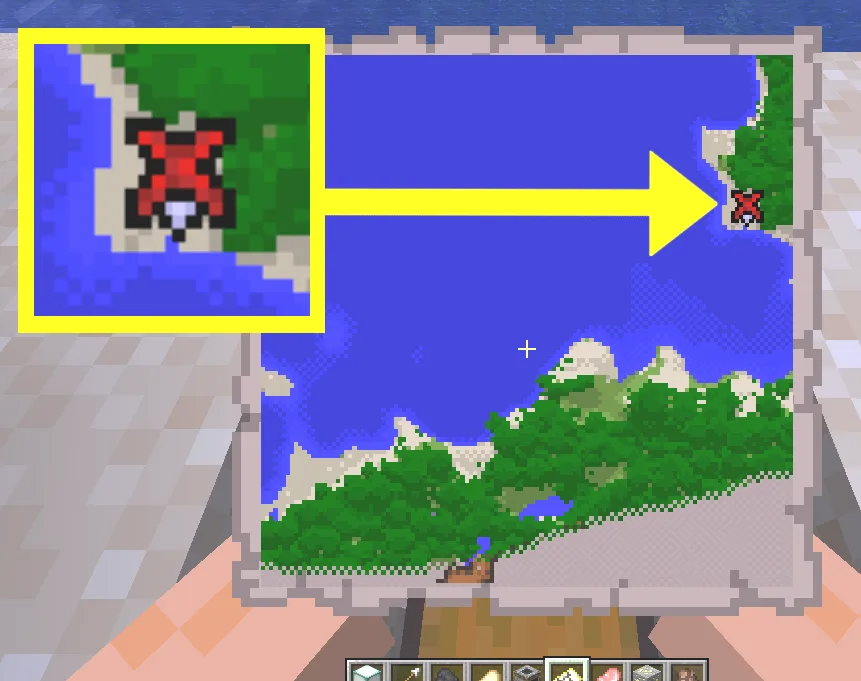
A buried treasure map draws the land-water outline of its area — water in orange striations, land blank — with a red X over the chest (Bedrock draws a target instead, and calls the item a Treasure Map). Your marker shrinks when you are far away and pops to full size once you are within 1,027 blocks of the mapped area. Walk until the marker sits on the X — with one edition quirk worth knowing: Java renders your arrow underneath the X, Bedrock renders it on top, so on Java the X hides your marker at the exact moment you have it right.
Then stop digging craters, because the chest's position is deterministic:
- Java: the chest always generates at position (9, 9) within its chunk.
- Bedrock: always at (8, 8) within its chunk.
Press F3 (Java) and read the chunk-relative coordinates — dig where both X and Z read 9, straight down through the covering material. The chest sits under sand or gravel on beaches, stone when it generates in an underwater hillside, and occasionally under whatever terrain block happened to generate there instead, diorite and coal ore included. A chest exposed to water generates waterlogged, so bring blocks to wall off the tide before you open it over open ocean floor.
Where you end up digging is almost always a beach or snowy beach — that is where the structure generates, with Bedrock also allowing stony shores and mushroom field shores — and rarely the open ocean floor.
The buried treasure loot table
The dig pays in bulk, not just in the guaranteed heart. Java's table, per chest:
| Item | Chance | Avg. per chest |
|---|---|---|
| Heart of the sea | 100% | 1.000 |
| Iron ingot | 99.4% | 9.286 |
| Gold ingot | 88.0% | 4.643 |
| Cooked cod / cooked salmon | 75.0% each | 3.000 each |
| Potion of Water Breathing | 66.7% | 1.000 |
| TNT | 62.7% | 1.393 |
| Emerald | 59.9% | 5.000 |
| Prismarine crystals | 59.9% | 2.500 |
| Diamond | 59.9% | 1.250 |
| Leather tunic / iron spear / iron sword | 16.7% each | 0.167 each |
| Copper nautilus armor | 10.8% | 0.108 |
| Iron nautilus armor | 5.4% | 0.054 |
| Golden nautilus armor | 2.7% | 0.027 |
| Diamond nautilus armor | 1.1% | 0.011 |
Read that diamond row again: 1.25 diamonds per chest on average is the highest of any structure in the game — end city chests average 1.06. Nobody plans a diamond run around beaches, but per chest opened, nothing beats it.
Bedrock's table matches Java's since the 1.21.130 overhaul, with two deviations: the gem pool rolls 1-3 times instead of 1-4 (emeralds, prismarine crystals and diamonds each land at 53.1% instead of 59.9%), and TNT stacks run 1-5 instead of 1-2 (avg 2.786). That overhaul also removed the music discs "mellohi" and "wait", name tags, chainmail armor, books and quills, leads, bottles o' enchanting, Regeneration potions and cake from Bedrock's table — if a guide promises you a disc from buried treasure, it predates the change.
Spears and nautilus armor made this loop current again
Two of the rows in that table did not exist before December 2025, and they are the reason this loop is worth rerunning on an old world.
Iron spears (16.7% per buried treasure chest) are the new weapon class from 1.21.11 — a longer-reach jab at 3 attack damage in Java, with a charge attack on top. Ocean ruin chests can hold the stone version.
Nautilus armor is the bigger deal. The nautilus is a tameable, saddleable underwater mount that dashes and protects its rider from drowning, and its armor comes in five tiers — copper (4 armor), iron (5), golden (7), diamond (11) and netherite (19). None of it can be crafted. Netherite nautilus armor exists only by smithing the diamond version with a netherite ingot; the other four tiers come exclusively from generated loot — and buried treasure, shipwreck chests and ocean ruin chests are exactly where they roll. One edition split to know: Java rolls the nautilus armor pool on all three shipwreck chest types; Bedrock rolls it on supply chests only.
The odds are honest about the grind — copper at 10.8% per chest is common enough, diamond at 1.1% averages out near one per ninety chests — but a ruin cluster plus its treasure maps chews through chests fast. And the loop is about to get company: the third drop of 2026 is slated to add abandoned camp maps and four new explorer map types, so map-chest looting is a mechanic Mojang is still actively building on.
Mistakes that waste a treasure hunt
- Digging a crater at the X. The chest is at chunk-relative (9, 9) on Java, (8, 8) on Bedrock. Check F3, dig one column, done.
- Looting only the bow of a shipwreck. The supply chest is the worst of the three. The map chest is in the lower stern — and if the wreck has two chests at all, the map chest is one of them.
- Buying maps from a cartographer. They sell ocean, trial and woodland explorer maps, never buried treasure maps. Those come from shipwreck map chests (100%) and ruin chests (about 42-44%).
- Tossing "duplicate" maps. Buried treasure maps can legitimately point at the same treasure — check the X pattern against the coastline before assuming a map is redundant.
- Expecting a heart of the sea anywhere else. Fishing gives nautilus shells, not hearts. The heart comes from this chest and this chest only — one per, every time.
The whole loop — wreck, map, dig — takes one evening with a Water Breathing potion, and the chest at the end now carries mount armor the game will not sell you any other way. Bring a shovel and count to nine.
Frequently Asked Questions
Where do you get a buried treasure map in Minecraft?
Where exactly do you dig at the red X on a treasure map?
What loot is in a Minecraft buried treasure chest?
Which shipwreck chest has the treasure map?
Can you get nautilus armor from buried treasure?
Is the heart of the sea guaranteed in buried treasure?
Keep Reading
- Minecraft Wiki — buried treasure generation, chunk position, and loot tables
- Minecraft Wiki — shipwreck structure, chest placement, and the three chest loot tables
- Minecraft Wiki — cold ocean ruins generation, cluster odds, and chest loot
- Minecraft Wiki — warm ocean ruins biomes and chest loot
- Minecraft Wiki — explorer map mechanics, map generation timing, and structure icons
- Minecraft Wiki — the nautilus mount, taming, and Mounts of Mayhem history
- Minecraft Wiki — nautilus armor tiers, armor values, and loot-only sourcing
- Minecraft Wiki — spear damage values and 1.21.11 introduction
Related Guides
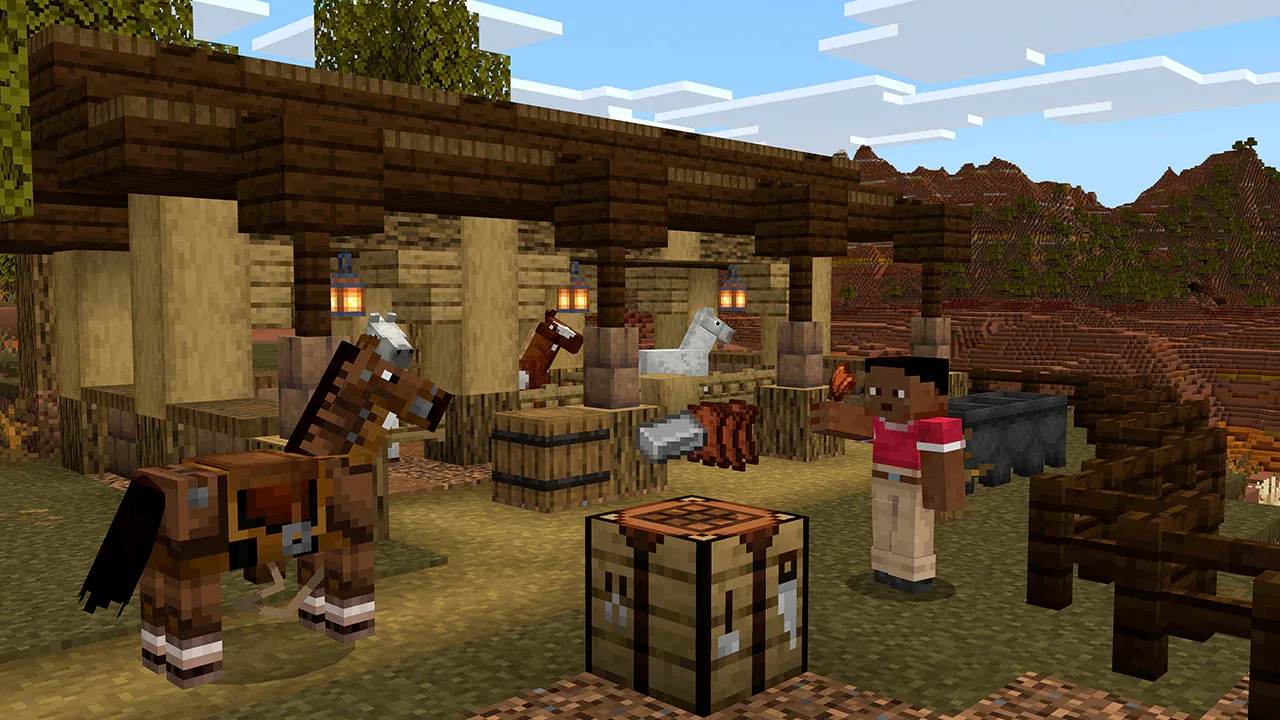
How to Make a Saddle in Minecraft: Recipe and Loot Odds
Saddles have been craftable since June 2025: three leather and one iron ingot. Here is the recipe and what it really costs, every chest, trade and mob drop that still gives one with Java and Bedrock odds, the five chests that stopped, all eleven mobs it fits, and how shears take it back.
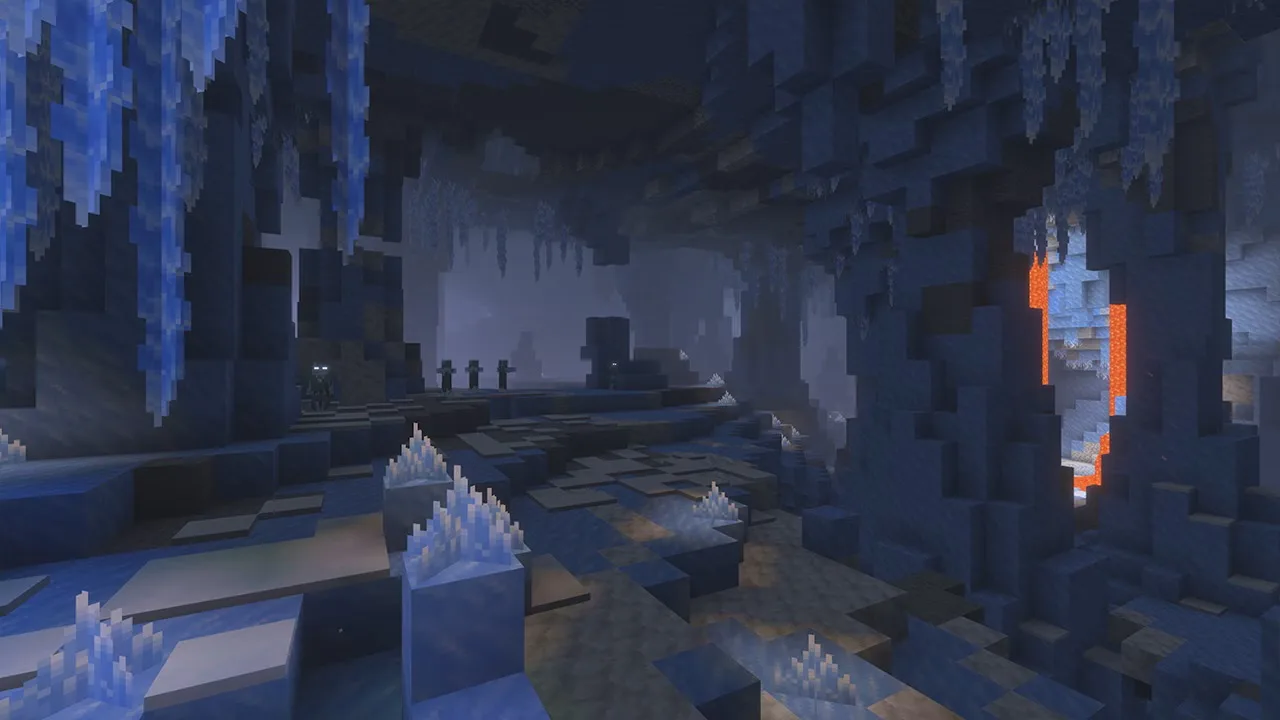
Minecraft Ice Caves Guide: Frostbite, Icicles and Freezing
Minecraft's fifth cave biome is mostly packed ice, its icicles drop when you light them, and its new zombie variant applies a brand-new Freezing effect with its melee hits. The ice caves drop is playable today in Bedrock Preview 26.60.29 and not yet in Java. Here is what is in it, with the numbers, and what could still change.
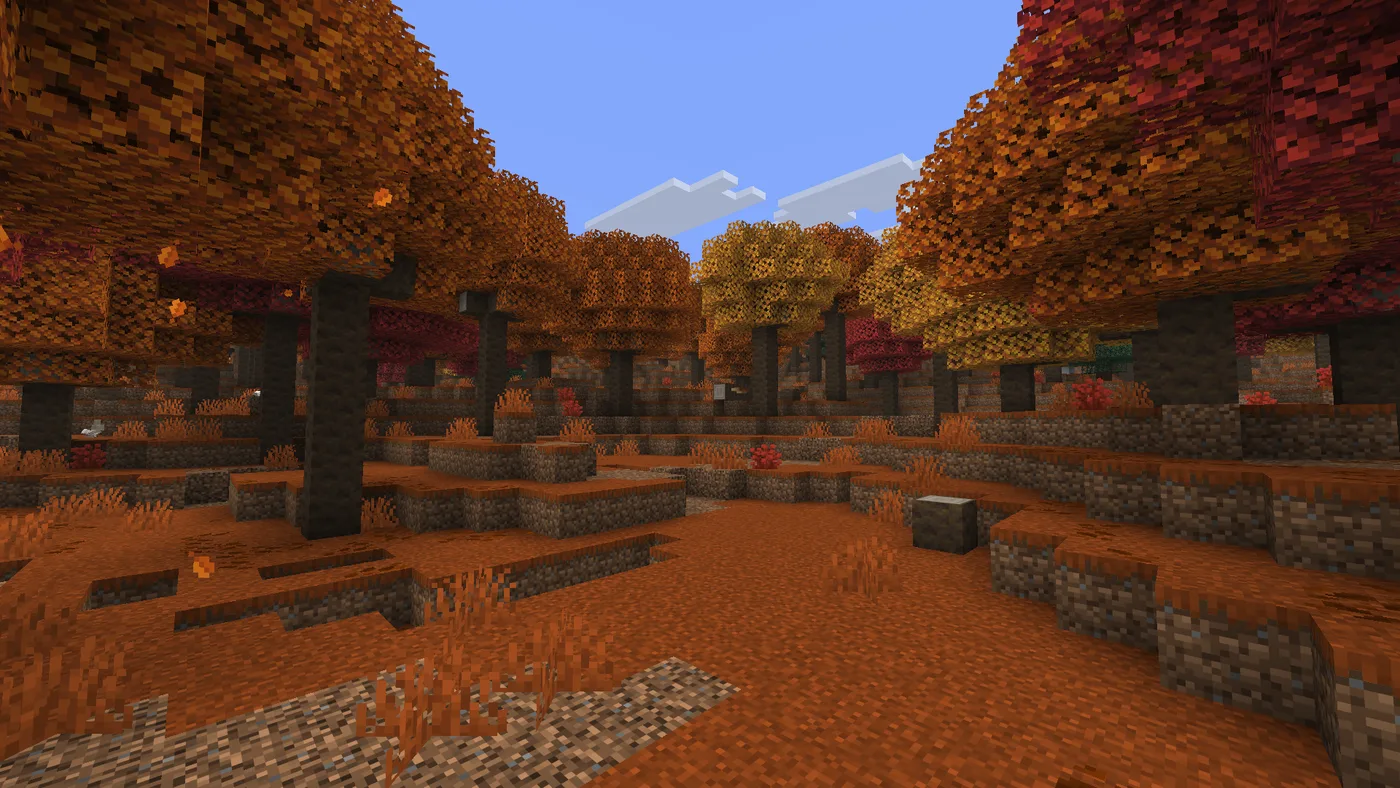
Minecraft Wilderness Bound Guide: Dappled Forest and Camps
Minecraft quietly swapped its whole version-numbering scheme and shipped a full content drop the same week — a new autumn biome, camping structures with a chest that hides in a different spot every time, and the game's first real sit-down furniture. Here is every number from Wilderness Bound, checked against the wiki the day after launch.
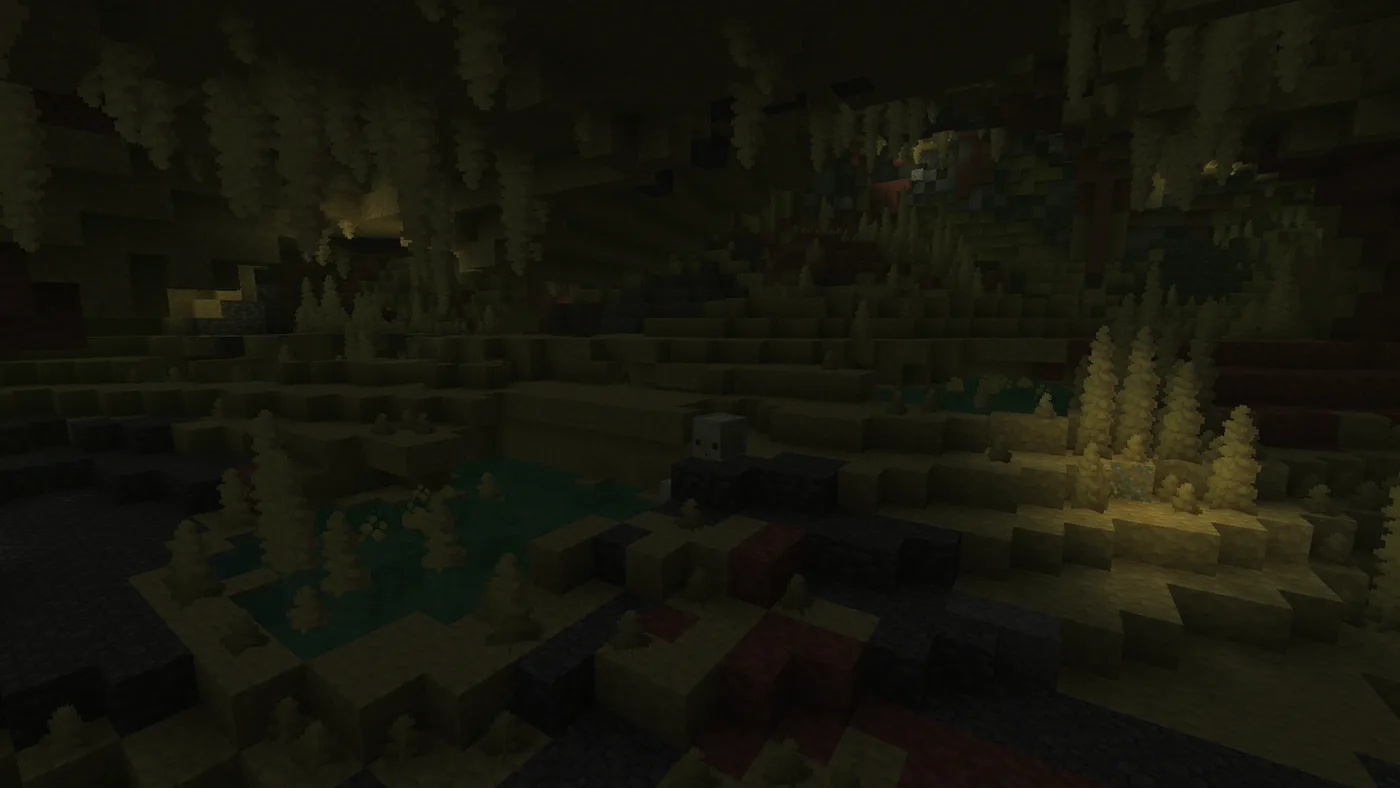
Minecraft Sulfur Caves: Geysers, Cinnabar, and Sulfur Cubes
Java 26.2 dropped a cave biome that does not reward you with a mob you fight, or loot you carry home. It rewards you with a ball. The sulfur cube takes on the physics of whatever block you feed it, and the game ships twelve different physics profiles to choose from — bounciness, friction and air drag, all published numbers. Here is the whole biome, including the geyser maths.
Minecraft Survival Guide for Beginners: Your First Days
You have about ten minutes of daylight before the sun sets and the world tries to kill you. Here is exactly what to do with them — punch a tree, build a tool chain, and get a roof over your head before the zombies arrive.
Best Minecraft Enchantments, Ranked — The Ones Worth Your XP
Mending is the enchantment that ends the grind — gear that repairs itself forever. Everything else is a fight over your XP and anvil uses. Here is what actually earns a slot, ranked, with the real max levels.