Minecraft Food & Hunger Guide: Saturation, Best Foods, Regen
Everyone knows you eat when the drumsticks run low. Almost nobody knows about saturation — the hidden stat that decides how long you stay full and whether you regen health fast or slow. Get this right and you carry steak, not bread, and you stop starving on long expeditions.
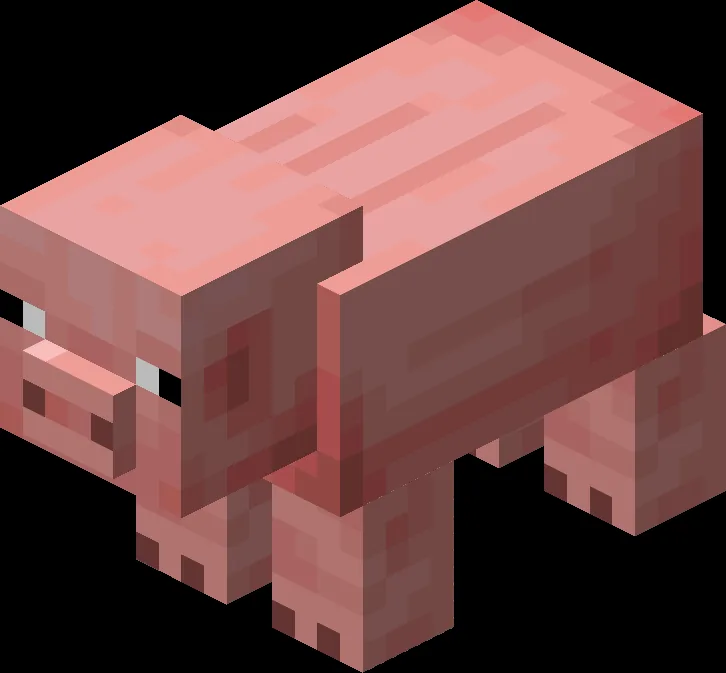
Here is the trap almost every new player falls into: they fill their hotbar with bread and apples, eat constantly, and still find themselves starving halfway through a mining trip wondering what they did wrong. The answer is a stat the game never shows you. Hunger — the ten drumsticks — is only half the system. Behind it sits saturation, an invisible reserve that empties before your visible hunger does and quietly controls whether you heal fast or slow. Once you understand saturation, you stop carrying bread and start carrying steak, and you basically never think about food again.
This guide breaks down the whole hunger system with the real numbers: what saturation is, how exhaustion drains it, the two different health-regeneration modes, and a ranked food list by what actually matters. It is all checked against the Minecraft Wiki, because food saturation values are exact and surprisingly easy to get wrong.
The stat you cannot see
Your hunger bar holds 20 points, shown as 10 drumsticks (each icon is 2 points). That part is visible. What is not visible is saturation: a separate hidden value that is capped at your current hunger level and sits on top of it like a buffer.

Think of it as two tanks. Saturation is the front tank, hunger is the back tank. Every action that costs energy drains the saturation tank first, and only once saturation hits zero does your visible hunger bar start dropping. This is why a player who just ate a steak can sprint for ages without the drumsticks moving — they are burning saturation, not hunger. When you eat, you refill both: the food's hunger value tops up the bar, and the food's saturation value refills that hidden reserve (capped at your current hunger). High-saturation food means a deeper buffer and longer between meals.
How hunger and saturation actually work
The mechanic that ties it together is exhaustion. Every energy-costing action adds a small amount of exhaustion to an accumulator. When that accumulator reaches 4.0, it resets to zero and removes 1 point of saturation — or, if saturation is already empty, 1 point of hunger (half a drumstick).
So the chain is: actions → exhaustion builds → at 4.0 it converts to −1 saturation → when saturation is gone, the same trigger starts eating hunger. Nothing drains your visible bar until the hidden reserve is dry. That single fact explains the entire feel of food management in Minecraft.
A fresh spawn or respawn starts you at full hunger (20) with only 5 saturation, which is why you feel hungry surprisingly fast right after death — your buffer starts almost empty.
Exhaustion: what drains the bar
Different actions cost different amounts of exhaustion. The ones worth knowing (per the wiki):
| Action | Exhaustion cost |
|---|---|
| Natural health regeneration | 6.0 per 1 HP healed |
| Sprint-jumping | 0.2 per jump |
| Sprinting | 0.1 per meter |
| Attacking a mob | 0.1 per hit |
| Taking damage (not fully absorbed by armor) | 0.1 per instance |
| Jumping | 0.05 per jump |
| Swimming | 0.01 per meter |
| Breaking blocks | 0.005 per block |
The headline: sprinting and regenerating health are your two big costs. Mining and walking are cheap. If you are constantly hungry, you are either sprint-jumping everywhere or taking enough damage that passive regen is eating your food to heal you.
Health regen: fast vs slow
Natural regeneration has two modes, and the difference is huge:
- Fast (saturation) regen: when your hunger bar is completely full (20) and you still have saturation above zero, you heal 1 HP every half-second (Java Edition). This is the burst-heal — eat a high-saturation food to full and you patch up almost instantly. It is why veterans top off before a fight.
- Slow (hunger) regen: when your hunger is 18 or above (9 drumsticks) but the bar is not full, you heal 1 HP every 4 seconds. Steady, but slow.
Below 18 hunger, you do not naturally regenerate at all (without effects like Regeneration potions or a beacon). And at 6 hunger or below, you lose the ability to sprint entirely.
The practical rule: to heal fast, eat a high-saturation food until the bar is fully topped — the saturation buffer drives the half-second regen. A high-hunger but low-saturation food (looking at you, pumpkin pie) fills the bar but gives a shallow buffer that drains quickly, so you slip out of fast-regen fast. For more on staying alive in fights where this matters, gear up via the best Minecraft enchantments and our survival guide for beginners.
The best foods, ranked by saturation
A food's true value is its saturation, not just how many drumsticks it refills. Saturation roughly equals hunger restored × the food's saturation modifier × 2, which is why two foods that both fill 4 drumsticks can leave you full for wildly different lengths of time. The standouts:
| Food | Hunger | Saturation | The catch / the appeal |
|---|---|---|---|
| Golden Carrot | 6 | 14.4 | The best saturation food in the game; cheap to mass-produce with a gold and carrot supply |
| Cooked Porkchop | 8 | 12.8 | Top-tier and easy — breed pigs, cook the chops |
| Steak (Cooked Beef) | 8 | 12.8 | Identical to porkchop; cows give leather too |
| Rabbit Stew | 10 | 12.0 | Highest raw hunger refill, but fiddly — one stew per bowl |
| Cooked Mutton | 8 | 9.6 | Excellent, and sheep double as wool |
| Cooked Salmon | 8 | 9.6 | Great if you fish; pairs with an AFK fishing setup |
| Bread | 5 | 6.0 | Early-game filler from a wheat farm — you will outgrow it |
If you only memorize one line: golden carrots and cooked meat (porkchop/steak) are the foods to live on. Everything else is a stopgap.

Foods to avoid or handle carefully
Some foods fill drumsticks but barely touch saturation, and a few are actively risky:
- Pumpkin Pie — 8 hunger, only 4.8 saturation. Refills the bar nicely but a shallow buffer, so you get hungry again quickly. Convenient, not efficient.
- Cookie — 2 hunger, 0.4 saturation and Melon Slice — 2 hunger, 1.2 saturation. Snack tier. You will eat a stack and still be hungry.
- Rotten Flesh — 4 hunger, 0.8 saturation, 80% chance of Hunger effect. Edible in an emergency but the Hunger effect drains you, partly defeating the point. Survival-only desperation food.
- Pufferfish — 1 hunger, 0.2 saturation, and gives Poison + Hunger + Nausea. Do not eat it for food. It is a brewing ingredient (Water Breathing potions), full stop.
- Spider Eye — 2 hunger but inflicts Poison. Also a brewing ingredient, not a meal.
- Suspicious Stew — 6 hunger, 7.2 saturation, but the effect depends entirely on the flower used to craft it; some flowers add Poison or Wither. Know your recipe before you eat it.
What to actually carry
For a normal survival run, your food loadout should be one of:
- Golden carrots if you have an iron/gold farm or a villager who trades them — best buffer, never think about food again.
- Cooked porkchops or steak from a basic animal farm — the realistic default for most players, near-best saturation with zero special ingredients.
Keep a stack of one of those in your hotbar, eat the moment you drop below full before a fight (to bank the saturation buffer for fast regen), and you are set. Skip the bread-and-apple hoarding. For setting up the farms that feed this, our best Minecraft farms to build first and the taming and breeding guide cover automated meat and crop supply.
Java vs Bedrock hunger notes
The hunger system is largely shared, with a couple of edition quirks:
- Saturation/fast regen. The full-bar 1-HP-per-half-second saturation regen is most precisely documented in Java; Bedrock's natural regen timing differs slightly but the principle — keep the bar full with high-saturation food to heal faster — holds on both.
- Difficulty and starvation. At 0 hunger, starvation deals 1 HP every 4 seconds. On Easy it stops at 10 HP, on Normal it stops near death (about 1 HP), and on Hard it can kill you. This is the same across editions; only the floor changes with difficulty.
- Peaceful. On Peaceful difficulty, hunger does not drain at all and health regenerates on its own — food is purely optional.
- Food values. Hunger and saturation values for foods are consistent across Java and Bedrock.
Quick Action Checklist
- Remember the hunger bar is 20 points (10 drumsticks) with a hidden saturation buffer on top
- Saturation drains before your visible hunger ever moves
- Sprinting (0.1/m) and healing (6.0 per HP) are your biggest food costs; mining is nearly free
- Eat high-saturation food: golden carrot (14.4), porkchop/steak (12.8) — not bread
- Top the bar fully before a fight to trigger fast saturation regen (1 HP per half-second)
- You stop regenerating below 18 hunger and stop sprinting at 6 or below
- Never eat pufferfish or spider eyes for food — they are brewing ingredients
- Treat pumpkin pie, cookies, and melon as snacks, not staples (shallow saturation)
- Build an animal or carrot farm so you always carry steak or golden carrots
Frequently Asked Questions
What is saturation in Minecraft?
What is the best food in Minecraft?
How does health regeneration work in Minecraft?
What drains hunger the fastest in Minecraft?
Why do I keep starving even though I eat a lot?
Keep Reading
Related Guides
Minecraft Cherry Grove Guide: Wood, Pink Petals, and Mobs
The cherry grove is the prettiest biome in Minecraft and one of the most underrated places to start a world. It's a meadow with pink trees on paper, but it quietly hands you a whole salmon-colored wood set, a renewable decoration block, emeralds in the hills, and bees on the branches.
Minecraft Villages Guide: Types, Golems & Defense
A village is the single best piece of free real estate in the game — beds, food, an iron golem bodyguard, and a 13-profession economy you didn't have to build. Here is how villages actually work: the biome types, every job-site block, golem spawning, raid defense, and the zombie-villager cure that quietly breaks trade prices.
Minecraft Fishing Guide: Loot Tables, Enchants & AFK Farms
Fishing looks like the most boring thing in Minecraft until you read the loot table. A maxed-out rod pulls enchanted books, saddles, name tags, and nautilus shells out of a pool you dug yourself. Here is exactly how the catch math works, how to keep treasure switched on, and what an AFK farm can and cannot catch.
How to Make a Saddle in Minecraft: Recipe and Loot Odds
Saddles have been craftable since June 2025: three leather and one iron ingot. Here is the recipe and what it really costs, every chest, trade and mob drop that still gives one with Java and Bedrock odds, the five chests that stopped, all eleven mobs it fits, and how shears take it back.
Minecraft Survival Guide for Beginners: Your First Days
You have about ten minutes of daylight before the sun sets and the world tries to kill you. Here is exactly what to do with them — punch a tree, build a tool chain, and get a roof over your head before the zombies arrive.

Best Minecraft Enchantments, Ranked — The Ones Worth Your XP
Mending is the enchantment that ends the grind — gear that repairs itself forever. Everything else is a fight over your XP and anvil uses. Here is what actually earns a slot, ranked, with the real max levels.