How to Tame and Breed Every Animal in Minecraft
Taming and breeding are two different systems, and confusing them is why people keep shoving wheat at a wolf. Here is every tameable and breedable mob, the exact food each one wants, and whether the payoff is worth your time.
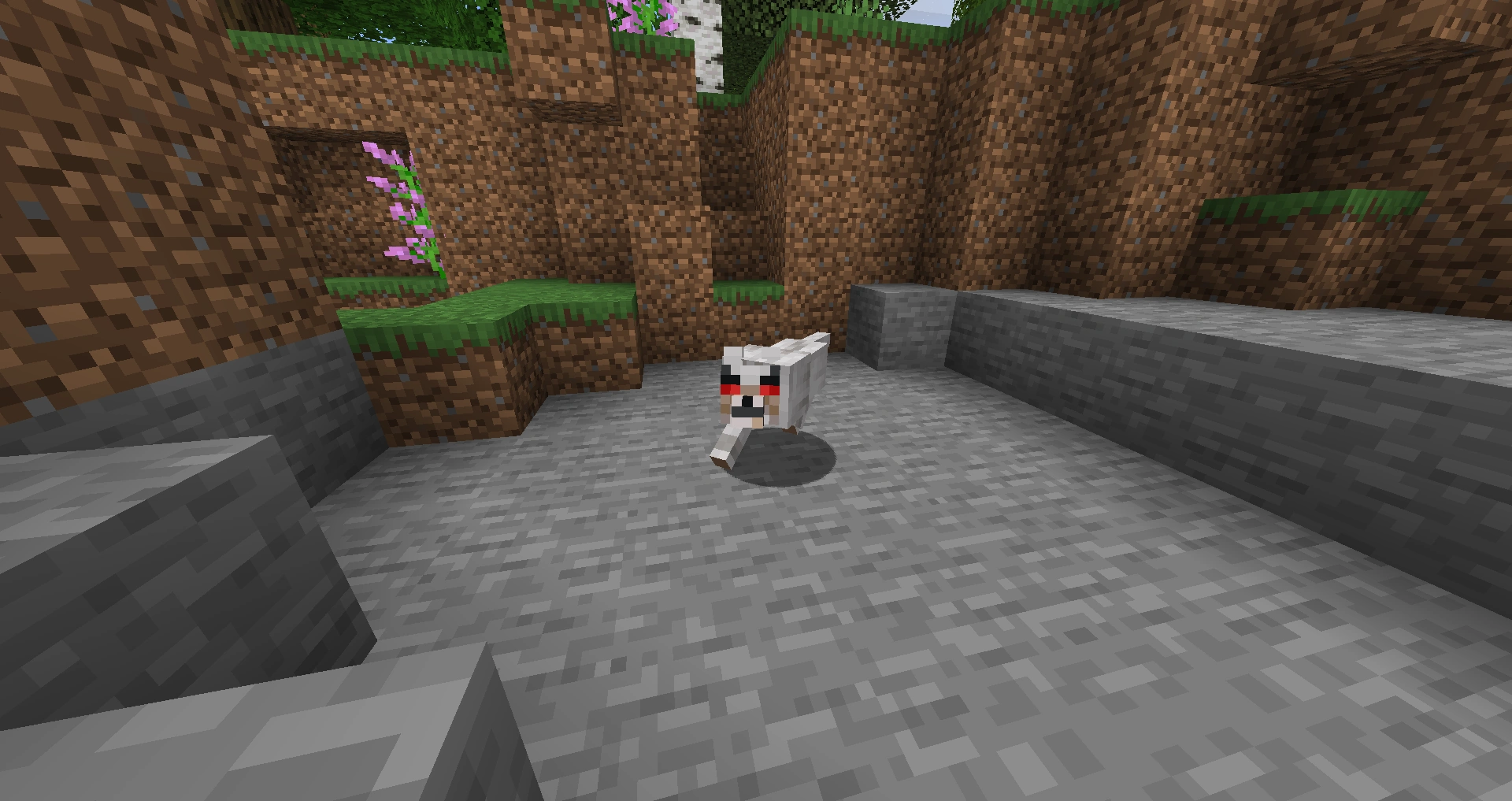
Taming and breeding are two different systems, and mixing them up is exactly why someone is, right now, shoving wheat at a wolf and wondering why nothing happens. Taming turns a wild mob into a creature loyal to you — a dog, a ridable horse, a cat that scares creepers. Breeding makes two animals produce a baby, which is how you build a renewable herd. Some mobs you can do both with; some you can only breed; and the food a mob eats to breed is often completely different from what tames it.
This guide goes mob by mob: what is tameable, what is only breedable, the exact items each one needs, and whether the payoff justifies the trip. Where Java and Bedrock differ in a way that bites you, I will call it out.
Taming vs breeding — they are not the same thing
The quick mental model before the mob list:
- Tameable mobs become yours and follow special rules — wolves, cats, parrots, horses, donkeys, mules, llamas, and nautiluses. Taming is usually a per-animal action (feed it, ride it, or use the right item until hearts appear).
- Breedable mobs enter "love mode" when you feed two of them their breeding food, and they spawn a baby. Almost every passive animal is breedable, including ones you can never tame, like cows, pigs, sheep, and chickens.
- Both applies to wolves, cats, horses, donkeys, llamas, nautiluses, and foxes — you tame them, then breed the tamed ones for more.
- Babies grow up over about 20 minutes of real time, and feeding a baby its breeding food speeds up the remaining growth.
One more universal rule: most animals follow a player holding their food, which is the trick to herding them home before you fence them in.
Wolves — your first and best companion
Wolves spawn in forests, taigas, and groves, and a tamed wolf is the best early-game bodyguard in the game — it attacks anything that hurts you (and most things you hit), which makes early nights far less lethal.
- Tame with: bones. Feed bones to a wild wolf until hearts pop and it gets a collar. It usually takes a few bones, and it is random per bone, so carry a stack.
- Breed with: any meat. Tamed wolves breed when fed meat — raw or cooked beef, pork, chicken, mutton, rabbit, even rotten flesh. (Raw chicken and rotten flesh are both safe: wolves do not get the Hunger effect from either.) Both wolves must be tamed and at full health.
- Heal with: meat. The same meat that breeds them also heals an injured wolf. Watch the tail — it droops as the wolf takes damage.
- Payoff: Real. A small pack clears mobs around your base and follows you into caves. Make them sit (interact with an empty hand) so they do not wander off a cliff or into lava chasing a skeleton.
Cats and ocelots
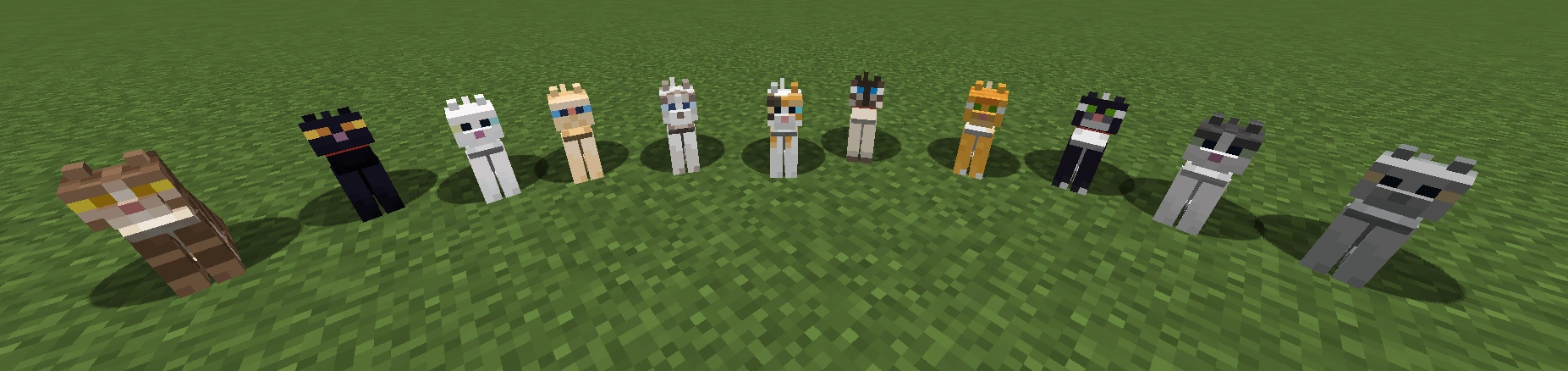
Cats and ocelots changed a lot over the years, and people still mix them up. They are now separate mobs.
- Cats spawn in villages (and as strays in swamp huts as the black cat). Tame with raw cod or raw salmon — approach slowly, stand still, and feed the fish until hearts appear and a collar shows up.
- Breed cats with raw cod or raw salmon — same fish that tames them.
- Ocelots spawn in jungles and cannot be tamed at all anymore. You can only gain their trust with raw cod or raw salmon (they stop fleeing), and you breed them with the same fish, but they will never wear a collar or follow you like a cat.
- Payoff: Cats scare away creepers and phantoms — a tamed cat near your bed is a soft anti-creeper field. They also occasionally drop "gifts" (string, feathers, rabbit's foot) on your bed when you wake up. Ocelots are mostly a trust-and-breed novelty.
Common mistake: trying to tame a jungle ocelot expecting a pet. Ocelots have not been tameable for years. If you want a pet feline, find a village cat or a swamp hut cat.
Horses, donkeys, and mules
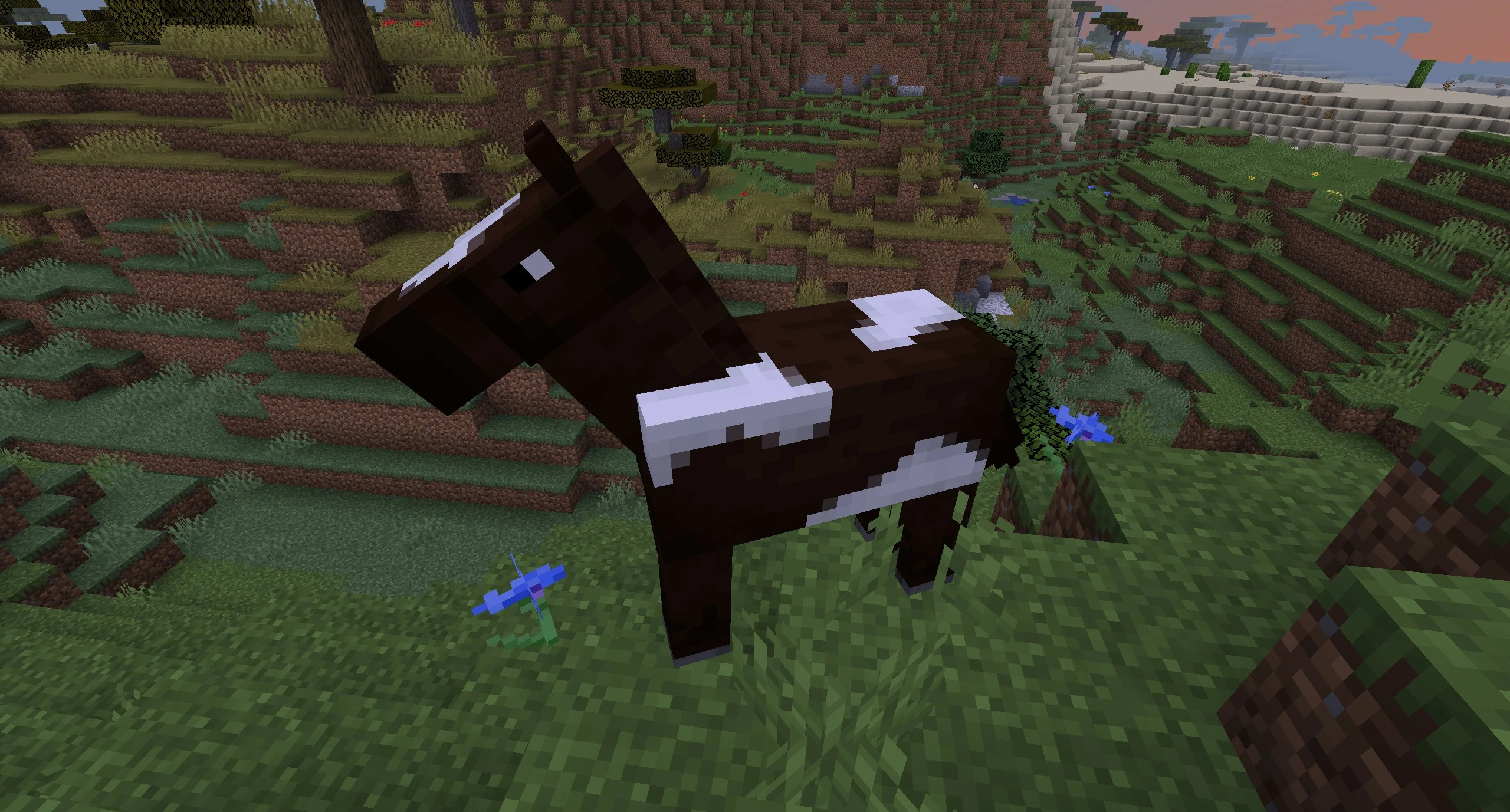
Horses are the big one, and taming them works differently from everything else — no food required to start.
- Tame a horse by riding it repeatedly. Mount the wild horse with an empty hand; it bucks you off. Keep remounting until hearts appear and it stops throwing you. Then you can put a saddle on it. Saddles have been craftable since Java 1.21.6 and Bedrock 1.21.90 (June 2025): 3 leather plus 1 iron ingot on a crafting table makes one, so a cow pen doubles as your saddle supply. You can still find them in chests (Nether fortresses, village tanneries and weaponsmiths, end cities), fish one up, or buy one from a master leatherworker for 6 emeralds — every master leatherworker offers it on Java, but only about half do on Bedrock.
- Golden apples and golden carrots speed taming and are required to breed. Feeding a horse golden food raises its temperament so taming sticks faster.
- Breed horses with golden apples or golden carrots (a tamed pair, fed the golden food, enters love mode). The baby's stats are a blend of the parents' speed, jump, and health — so breed your two best horses to roll a better foal.
- Donkeys tame and breed the same way (ride to tame, golden food to breed) and can wear a chest for portable storage — a mobile inventory on legs.
- Mules are the sterile offspring of a horse bred with a donkey. You cannot breed two mules together; you make a mule by crossing a horse and a donkey each time. Mules can also carry a chest.
- Payoff: A fast horse is the best non-Elytra travel in the Overworld. A chest-wearing donkey or mule is a pack animal for hauling. Saddle plus horse armor makes a combat-ready mount; the top tier is now netherite horse armor (Java 1.21.11 / Bedrock 1.21.130), made by upgrading diamond horse armor at a smithing table.
Llamas — the pack train
Llamas are the odd one out: you tame them like a horse but you never put a saddle on them.
- Tame by riding repeatedly, exactly like a horse — no food needed, just remount until hearts appear. Note: a tamed llama still cannot be steered or ridden as a mount; taming just lets you put a carpet and chest on it.
- Breed with hay bales. Two llamas fed hay bales make a baby.
- Equip a chest (up to 15 slots on a strong llama) and lead the whole train with a lead — leash the front llama and the rest follow in a caravan. Decorate them with colored carpets.
- They spit at things that anger them, including wolves and trader llamas, for minor damage.
- Payoff: A caravan of chest-wearing llamas is a moving warehouse for long expeditions. Not faster than a horse, but it hauls.
Nautiluses — the underwater mount
Nautiluses arrived in the Mounts of Mayhem drop — Java 1.21.11 and Bedrock 1.21.130, both released December 9, 2025 — and they break the mount pattern above: you do not ride one to tame it, you feed it, and the food is a pufferfish.
- Where: any ocean biome, in groups of 1-3, between Y 38 and Y 58. They count as water creatures, so an untamed one can despawn until a player interacts with it — feed it once and it becomes persistent.
- Tame with: pufferfish, or a bucket of pufferfish. Each fish you feed has a 1-in-3 chance of taming it, and there is no cap on attempts, so bring several. No other food works.
- Breed with: any fish or bucket of fish — cod, salmon, tropical fish, or pufferfish, raw or bucketed. Both adults must be at full health. The same fish heal an injured nautilus, and they follow a player holding any fish within 10 blocks, which is your herding trick.
- Babies take the usual 20 minutes to grow up. Feeding a baby fish speeds it: on Java each fish cuts the remaining time by 10%, on Bedrock a flat 10 fish takes it to adult.
- Ride it: saddle a tamed adult (babies cannot be saddled at all) and steer with the normal controls — up to 6.5 m/s underwater. Hold jump to charge a dash of up to roughly 12 blocks, reusable every 2 seconds. Riding grants Breath of the Nautilus, which pauses your oxygen bar while you are mounted.
- Payoff: an ocean mount that removes the drowning problem while you ride it. Keep it in the water — on land it crawls at 0.88 m/s and takes suffocation damage like most aquatic mobs. For the dash, armor tiers, and the zombie nautilus jockey, see our nautilus guide.
Parrots, foxes, and axolotls
These three are the "know the gotcha" mobs.
- Parrots (jungle) are tamed with seeds — wheat, melon, pumpkin, beetroot, or torchflower seeds. You cannot breed parrots at all. They perch on your shoulder, dance to nearby jukeboxes, and mimic mob sounds (a useful early-warning system). Never feed a parrot a cookie — it kills them. That is a deliberate, real mechanic.
- Foxes are not tamed by feeding an adult. Instead, you breed two foxes with sweet berries (or glow berries), and the baby fox trusts you and stays loyal — adults you feed will still wander off. Lead the baby home with a lead. Foxes hold items in their mouths and can be genuinely useful for picking up drops.
- Axolotls cannot be tamed, only bred — with a bucket of tropical fish (the actual bucketed fish, not raw fish). Scoop an axolotl in a water bucket to relocate it. They attack hostile aquatic mobs (drowned, guardians) and give you Regeneration when they "play dead" near you, so a few axolotls make ocean monument raids much safer.
Two facts that cost players their pets: cookies kill parrots, and you cannot tame an adult fox — you breed and raise the baby. Memorize both.
The breeding-only farm animals
Most passive animals can never be tamed, but breeding them is the backbone of a food and resource economy. Feed two of them their food and a baby appears.
| Animal | Breeding food | Why breed them |
|---|---|---|
| Cow | Wheat | Beef, milk (clears poison), and leather for books and saddles (3 leather + 1 iron ingot) |
| Sheep | Wheat | Renewable wool — shear, let grass regrow it, repeat |
| Pig | Carrots, potatoes, or beetroot | Pork; ride one with a saddle and a carrot on a stick |
| Chicken | Any seeds | Eggs, feathers, meat — throw eggs to spawn more chicks |
| Goat | Wheat | Horns and milk; rams the things that annoy it |
| Rabbit | Dandelions or carrots | Rabbit's foot, hide, and meat |
| Mooshroom | Wheat | Mushroom stew straight from the cow; shear for mushrooms |
| Turtle | Seagrass | Lay eggs; each hatchling drops a scute when it grows up, and 5 scutes make a turtle shell helmet |
| Panda | Bamboo | Slow to breed (needs nearby bamboo); mostly for fun |
| Bee | Flowers | Pollinate crops and produce honey; breed for bigger hives |
| Strider | Warped fungus | Ride across Nether lava with a saddle and warped fungus on a stick |
| Frog | Slimeball | Eats small mobs; different biomes make different frogs/froglights |
| Sniffer | Torchflower / pitcher seeds | Hatch from sniffer eggs; they dig up ancient plant seeds |
The two you will breed constantly: cows (food, plus leather for books and saddles) and sheep (renewable wool). A small fenced pen of each near your base solves food and bookshelf supply early. For turning all that food into automation, our best Minecraft farms guide covers the auto-versions.
Breeding foods cheat sheet
The single table to screenshot:
| Mob | Tame food / method | Breeding food |
|---|---|---|
| Wolf | Bones | Any meat |
| Cat | Raw cod or raw salmon | Raw cod or raw salmon |
| Ocelot | Cannot tame (trust only) | Raw cod or raw salmon |
| Horse | Ride repeatedly (golden food helps) | Golden apple or golden carrot |
| Donkey | Ride repeatedly | Golden apple or golden carrot |
| Mule | N/A (horse + donkey baby, sterile) | Cannot breed mules together |
| Llama | Ride repeatedly | Hay bale |
| Nautilus | Pufferfish or bucket of pufferfish (1-in-3 per fish) | Any fish or bucket of fish |
| Parrot | Seeds | Cannot breed |
| Fox | Cannot tame adult (raise the baby) | Sweet berries / glow berries |
| Axolotl | Cannot tame | Bucket of tropical fish |
| Cow / Sheep / Goat / Mooshroom | Cannot tame | Wheat |
| Pig | Cannot tame | Carrot, potato, or beetroot |
| Chicken | Cannot tame | Any seeds |
| Rabbit | Cannot tame | Dandelion or carrot |
| Turtle | Cannot tame | Seagrass |
| Panda | Cannot tame | Bamboo |
| Strider | Cannot tame | Warped fungus |
| Bee | Cannot tame | Flowers |
If you are still setting up a first base to keep all these animals safe at night, our survival guide for beginners walks through fencing and lighting a pen before you start a menagerie.
Quick Action Checklist
- Tame wolves with bones (carry a stack); breed and heal them with any meat
- Tame cats with raw cod/salmon from a village — they scare off creepers
- Do not try to tame ocelots; you can only earn their trust
- Tame horses, donkeys, and llamas by riding until hearts appear — no food needed to start
- Breed horses/donkeys with golden apples or golden carrots; breed llamas with hay bales
- Tame nautiluses in the water with pufferfish (1-in-3 per fish); breed them with any fish and saddle an adult to ride
- Tame parrots with seeds and never feed them cookies (it kills them)
- Raise the baby fox (breed adults with sweet berries) — adults will not stay
- Breed axolotls with a bucket of tropical fish; bucket them to relocate
- Keep wheat for cows/sheep/goats and seeds for chickens — your renewable food base
Frequently Asked Questions
How do you tame a wolf in Minecraft?
How do you tame a horse in Minecraft?
What foods do you need to breed animals in Minecraft?
How do you tame a nautilus in Minecraft?
Can you tame a fox in Minecraft?
Why does feeding a parrot a cookie kill it?
Can you tame an axolotl or an ocelot?
Keep Reading
Related Guides
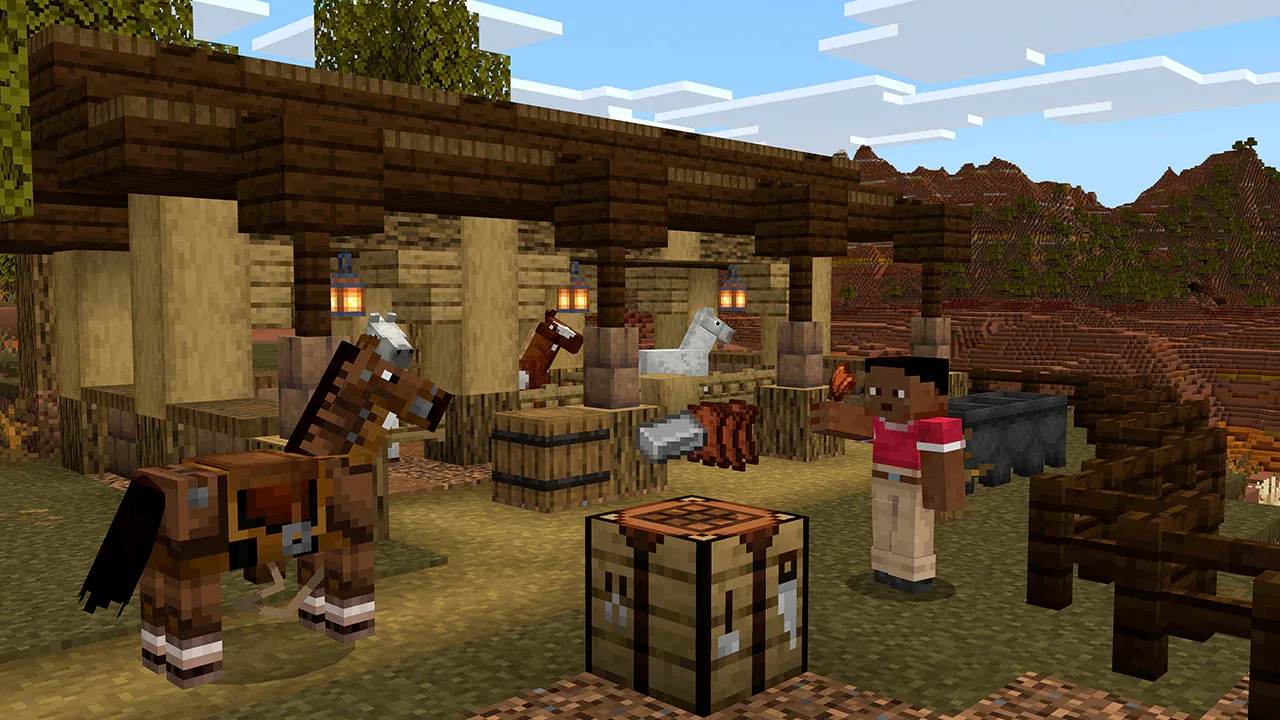
How to Make a Saddle in Minecraft: Recipe and Loot Odds
Saddles have been craftable since June 2025: three leather and one iron ingot. Here is the recipe and what it really costs, every chest, trade and mob drop that still gives one with Java and Bedrock odds, the five chests that stopped, all eleven mobs it fits, and how shears take it back.
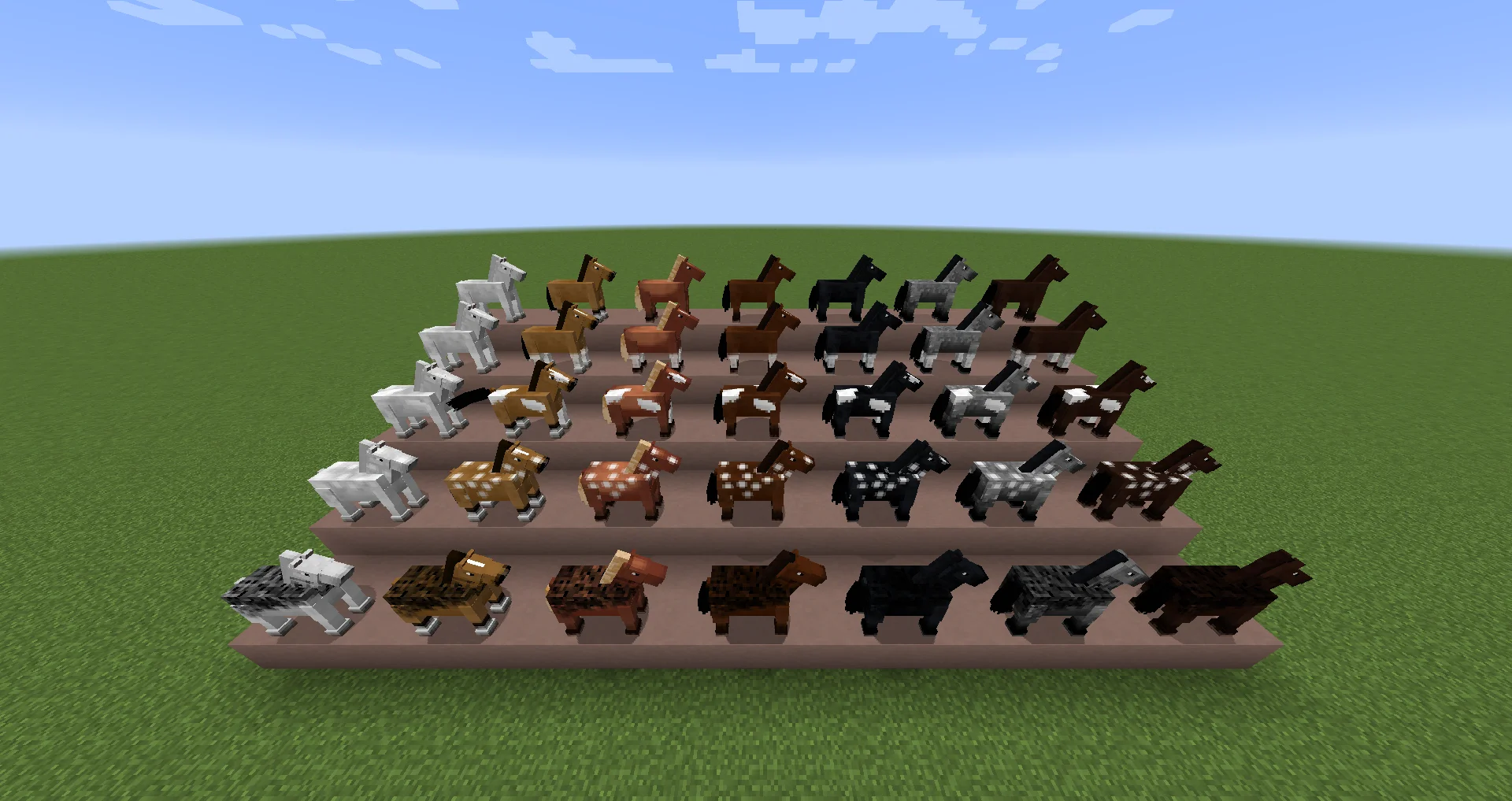
Minecraft Horses & Mounts Guide: Every Rideable Animal
Every rideable mob in Minecraft does one job better than the rest — horses for speed and fences, llamas for caravans, striders for lava, camels for two-up desert travel. Here is how to tame each one, what its real stats are, and how to breed a horse that actually clears a five-block wall.

Minecraft Transportation Guide: The Fastest Ways to Travel
Walking is for the first three days. After that, the game is a transport optimization problem, and the gap between the fastest and slowest methods is genuinely absurd — we're talking 1.7 m/s on foot versus 72 m/s on a blue ice boat road. Here's every real way to get around, with the actual speeds, so you can stop hoofing it.
Minecraft Bees & Honey Guide: Hives, Farms & Uses
Bees look like a cute side-feature and then quietly become one of the best renewable resources in the game. Here is how they actually work — pollination, hives, the campfire trick that stops the stinging, and what honey and honeycomb are really for.

Minecraft Survival Guide for Beginners: Your First Days
You have about ten minutes of daylight before the sun sets and the world tries to kill you. Here is exactly what to do with them — punch a tree, build a tool chain, and get a roof over your head before the zombies arrive.

Best Minecraft Enchantments, Ranked — The Ones Worth Your XP
Mending is the enchantment that ends the grind — gear that repairs itself forever. Everything else is a fight over your XP and anvil uses. Here is what actually earns a slot, ranked, with the real max levels.