Minecraft Piglin Bartering Guide: Best Trades & Odds
Trade one gold ingot to a piglin and you might get an ender pearl, a stack of obsidian, or eleven iron nuggets. The catch is the loot table is brutal RNG, and most of it is junk you already have. Here are the real odds and how to barter without getting your face caved in.

Throw a gold ingot at a piglin and one of two things happens: it hands you back an ender pearl that just saved you a stronghold expedition, or it hands you eleven iron nuggets like it's mocking you. Bartering is the only renewable source of ender pearls and crying obsidian in the game, which makes it genuinely important — but the loot table is a slot machine, and the house wins more than the YouTube clips suggest. The single most quoted number gamers get wrong: ender pearls are only about a 4.26% chance per barter in Java, and you get 2-4 at a time. Plan around that, not around the highlight reel.
This guide is built off the actual Java Edition bartering loot table, verified against the Minecraft Wiki, with the Bedrock differences flagged where they matter. No vibes, no "I think it's around 10%." Real weights, real quantities, and a clear answer to the only question that matters: is it worth your gold?
What bartering actually is
Bartering is the mechanic where an adult piglin takes a gold ingot from you and, after examining it, drops a random item in return. It is not a fixed-price trade like villager trading — you give one gold ingot and roll the loot table for whatever comes out. You cannot pick the item; the piglin picks it for you.
A few hard rules up front:
- Only adult piglins barter. Baby piglins will grab the ingot, examine it, and then run off without giving you anything — a pure scam.
- The piglin holds and examines the ingot for about 6 seconds in Java (8 seconds in Bedrock) before dropping the reward.
- You hand over gold either by dropping an ingot near the piglin or by using (right-click / use) a gold ingot while looking at it.

Piglins spawn in the nether wastes and crimson forest biomes, plus inside bastion remnants, which are also covered in the nether fortress and bastion guide. If you want a steady supply to barter with, those biomes are where you set up shop.
How to barter without getting killed
The cardinal rule of bartering: wear at least one piece of gold armor. Adult piglins are neutral toward a player wearing any single piece of golden armor — boots, leggings, chestplate, or helmet, any one will do. Take all of it off and nearby piglins turn hostile and swarm you.
So the standard bartering loadout is simple: enchant a pair of golden boots (gold takes enchantments easily and is the cheapest slot to dedicate), wear them, and keep your real armor on the other three slots. One gold boot is your safe-conduct pass through a piglin crowd.
Two more things that will get you killed if you ignore them:
- Do not break gold-related blocks near piglins. More on the full anger list below — but mining a single block of gold ore in front of a group will turn every piglin in sight hostile, gold boots or not.
- Do not open chests near them. Same deal. Loot the bastion's chests after you've cleared the piglins, or do it out of their line of sight.
The full bartering loot table
Here is the verified Java Edition bartering table — every possible result, its real drop chance, and the quantity you get. The chances are expressed as weight out of 459 total weight; the percentages are rounded.
| Item | Chance (Java) | Quantity per barter |
|---|---|---|
| Blackstone | ~13.6% | 8-16 |
| Gravel | ~13.6% | 8-16 |
| Spectral Arrow (Java only) | ~12.8% | 6-12 |
| Crying Obsidian / Fire Charge | ~8.5% each | 1-3 |
| Obsidian | ~8.5% | 1 |
| Nether Brick | ~8.5% | 2-8 |
| Soul Sand | ~6.2% | 2-8 |
| Nether Quartz | ~5.3% | 5-12 |
| Iron Nugget | ~4.9% | 10-36 |
| Ender Pearl | ~4.3% | 2-4 |
| String | ~4.3% | 3-9 |
| Leather | ~4.3% | 2-4 |
| Splash Potion of Fire Resistance | ~2.1% | 1 |
| Potion of Fire Resistance | ~2.1% | 1 |
| Water Bottle | ~2.1% | 1 |
| Iron Boots w/ Soul Speed | ~1.7% | 1 |
| Enchanted Book (Soul Speed) | ~1.1% | 1 |
A couple of things to internalize from that table. Over half your barters are blackstone, gravel, spectral arrows, and various nether building blocks — the bulk filler. The genuinely valuable rolls (ender pearls, crying obsidian, Soul Speed gear, fire-resistance potions) are the rare slices. Magma cream is no longer obtainable from bartering — it was removed back in snapshot 20w28a, so any old guide listing it is out of date.
The items worth bartering for
If you're farming piglins, these are the results you're actually praying for:
- Ender pearls (2-4, ~4.3%). The headliner. Bartering is the only renewable ender pearl source that doesn't require killing endermen, so it's the go-to method before you've built an enderman farm — and it's how speedrunners stock pearls for the End and ender dragon fight. Expect to spend a lot of gold per pearl on average.
- Crying obsidian (1-3, ~8.5%). Required to craft respawn anchors, the Nether's answer to a bed. If you live in the Nether at all, this is your supply line.
- Soul Speed gear (~1.1% book, ~1.7% boots). The Soul Speed enchantment — which only exists via bartering — makes you sprint across soul sand and soul soil instead of slogging through it. Combined with the best enchantments on your boots it transforms Nether traversal.
- Fire Resistance potions (~2.1% each for the splash and the drinkable). Effectively free fire-immunity, which is enormous in the Nether and clutch when you've fallen near lava.
- Obsidian (1, ~8.5%). Handy for portals and emergency builds without hauling a water bucket to a lava lake.
The honest read: bartering is an RNG resource pipeline, not a shopping list. You barter in bulk and take the good rolls as they come.
The items that are basically junk
Plenty of the table is stuff you'll watch pile up and sigh at:
- Gravel and blackstone (8-16 each, ~13.6% apiece). Combined, more than a quarter of all barters. Blackstone at least makes nice decorative blocks; gravel you'll mostly toss.
- Spectral arrows (6-12, ~12.8%, Java only). Genuinely useful for the glowing-outline effect on whatever you shoot, but rarely worth the gold.
- Nether brick, soul sand, nether quartz, string, leather. All things you can gather faster by hand than by feeding gold into a slot machine.
- Iron nuggets (10-36, ~4.9%). Ten to thirty-six nuggets is one to four iron ingots' worth — a slap in the face when an iron farm makes iron trivial anyway.
Knowing the junk matters because it tells you the true cost of the good stuff: most of your gold buys filler, so you need a real gold supply to fish out the pearls and crying obsidian.
What makes piglins angry
Gold armor only protects you from the "you're not wearing gold" aggression. Several actions anger piglins regardless of your armor, and these are the ones that turn a calm bartering session into a brawl:
- Attacking any piglin or piglin brute. Heavy, long-range aggravation — the whole nearby group comes for you.
- Opening or breaking a container near them: chest, trapped chest, ender chest, shulker box, barrel, or a chest minecart/boat.
- Breaking gold-related blocks: a block of gold, gold ore, deepslate gold ore, nether gold ore, gilded blackstone, or a block of raw gold.
That last category is the sneaky one. Gilded blackstone is everywhere in bastions, and mining it is a coin-flip to drop gold nuggets — but break it in front of piglins and they swarm. Either clear the area first or mine gold-bearing blocks out of their sight.
Piglins vs piglin brutes
Don't confuse the two. A piglin is the neutral, barter-able mob. A piglin brute is a different, always-hostile guard that spawns in bastion remnants — it carries a golden axe, ignores gold armor entirely, and cannot be bartered with or distracted by gold. Brutes are pure combat; they exist to wreck you while you loot a bastion.

The practical takeaway: in a bastion, deal with brutes as a fight (they're tanky and hit hard, so bring good armor from the armor guide), and treat the regular piglins as either bartering partners or threats depending on whether you're wearing gold. For the wider roster of things trying to kill you down there, the hostile mobs guide has the full list.
Zombification: the 15-second clock
Piglins are Nether mobs, and the Nether is the only place they're safe. Take a piglin into the Overworld or the End and it begins to convert — after 15 seconds it transforms into a zombified piglin, which is hostile and cannot barter. It keeps its equipment and any items it's holding, but it's no longer useful to you.
This matters if you ever try to drag piglins through a portal for a base-side bartering hall: you have a 15-second window, and any portal-based piglin transport farm has to keep them in Nether conditions or use the portal trick to interrupt the timer. The simplest answer is just to barter in the Nether, where the clock never starts.
Building a bartering setup
For casual play, you don't need a contraption — find a crimson forest, put on a gold boot, and start tossing ingots at adult piglins. But if you want bulk ender pearls and crying obsidian, the standard approach is a piglin bartering farm:
- A platform in the Nether (or a portal-fed system) that spawns piglins into a holding area.
- An automated dispenser dropping gold ingots to them on a timer.
- Hoppers and water streams collecting the dropped barter items into sorted chests, often using the wiring patterns from the redstone contraptions guide.
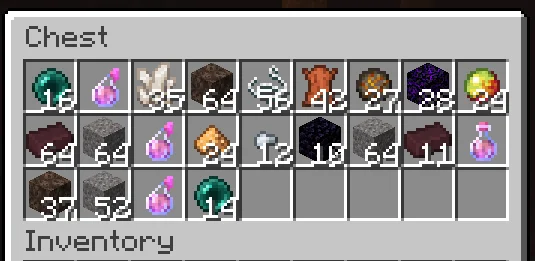
The bottleneck is always gold. A serious bartering farm pairs with a gold supply — bartering near a bastion (gilded blackstone), a gold farm, or zombified-piglin gold drops. Without a gold pipeline, you'll run dry long before the loot table gives you the pearls you want.
Java vs Bedrock differences
The mechanic is nearly identical across editions, but a few details differ:
- Examination time: ~6 seconds in Java, ~8 seconds in Bedrock before the item drops.
- Spectral arrows: Java drops spectral arrows; Bedrock drops regular arrows in that slot.
- Spawn light level: piglins spawn at light level 11 or below in Java, 7 or below in Bedrock — relevant if you're lighting an area to control spawns.
Beyond those, the gold-armor rule, the anger triggers, the 15-second zombification, and the overall "one ingot, random reward" loop are the same. Build your bartering plan around the Java odds above and you'll be in the right ballpark on either edition.
Quick Action Checklist
- Wear at least one piece of gold armor (golden boots are the cheapest slot) before approaching piglins
- Only barter with adult piglins — babies steal the ingot and give nothing
- Hand over one gold ingot at a time; wait ~6 seconds (Java) for the reward
- Target the valuable rolls: ender pearls (~4.3%, 2-4), crying obsidian (~8.5%, 1-3), Soul Speed gear, Fire Resistance potions
- Accept that gravel, blackstone, and spectral arrows make up over a third of all results
- Never break gold ore, gilded blackstone, or open chests near piglins — it angers them regardless of armor
- Treat piglin brutes as a fight — they ignore gold and can't be bartered with
- Barter in the Nether so the 15-second zombification clock never starts
- Secure a gold supply (bastion, gold farm) before committing to a bartering farm
Frequently Asked Questions
How do you barter with piglins in Minecraft?
What are the odds of getting ender pearls from piglin bartering?
Do you need gold armor to barter with piglins?
What angers piglins even if you wear gold armor?
What is the difference between a piglin and a piglin brute?
Keep Reading
Related Guides
Minecraft Speedrun Guide: The Any% Route to the Ender Dragon
Speedrunning Minecraft is a race from an empty spawn to a dead dragon in under ten minutes. Here is the actual route the world's fastest players run — wood to Nether to stronghold to bed bombs — and where beginners lose the run.

Minecraft Nether Fortress & Bastion Guide: Loot Safely
Two structures hold the keys to the late game: the fortress (blaze rods, wither skulls) and the bastion (netherite templates, gold to barter). Both will also delete you in seconds if you walk in blind. Here's how to clear them on purpose.
Minecraft Nether Guide: How to Survive and Thrive
The Nether is where Minecraft stops holding your hand. It is also where the best gear in the game lives. Here is exactly how to prep, which biome wants you dead, where blaze rods and netherite actually come from, and how to walk back out with your loot.
How to Find Netherite in Minecraft (Fast)
Netherite is not found in the ground as ingots — you have to dig ancient debris out of the Nether, and digging it the way you'd dig diamonds is brutally slow. Here is the best Y level, why bed-mining works, and how to turn debris into the best gear in the game.
Minecraft Survival Guide for Beginners: Your First Days
You have about ten minutes of daylight before the sun sets and the world tries to kill you. Here is exactly what to do with them — punch a tree, build a tool chain, and get a roof over your head before the zombies arrive.

Best Minecraft Enchantments, Ranked — The Ones Worth Your XP
Mending is the enchantment that ends the grind — gear that repairs itself forever. Everything else is a fight over your XP and anvil uses. Here is what actually earns a slot, ranked, with the real max levels.