Minecraft Hostile Mobs Guide: Threats and How to Beat Them
Most hostile mobs in Minecraft die to a stone sword and a little patience. A handful will end your run if you treat them the same way. This is the danger-ranked rundown of what each threat does and exactly how to shut it down — from the creeper that erases your house to the warden you should never fight at all.
Most hostile mobs in Minecraft are not a real threat once you have iron armor and a halfway-decent sword. You walk up, you swing, they die, you move on. The danger is not the average mob — it is the specific handful that punish you for fighting them the normal way. A creeper does not want a melee duel; it wants to delete your front door. An enderman ignores you completely until you make one mistake. The warden does not care how good your gear is.
This guide is about those mobs — the ones whose mechanics actually matter — ranked roughly by how badly they can ruin your day. For each one: what it does, and the specific counter that turns it from a problem into a non-issue. Java-versus-Bedrock differences are noted where they change your play.
How to read this list
A few ground rules that apply to almost everything below:
- Most hostile mobs spawn in darkness (light level 0 in current versions). Light your base and paths and the majority of this list never spawns near you in the first place.
- A shield is the single best defensive item in the game. It blocks melee hits, arrows, and most explosions if you raise it in time. If you take one lesson from this guide, it is carry a shield.
- Armor enchantments matter per threat. Blast Protection for creepers, Projectile Protection for skeletons, Feather Falling for the falls these mobs love to cause. General Protection IV covers most of it.
Now the actual roster, worst offenders first within each tier.
The creeper: your house's natural predator
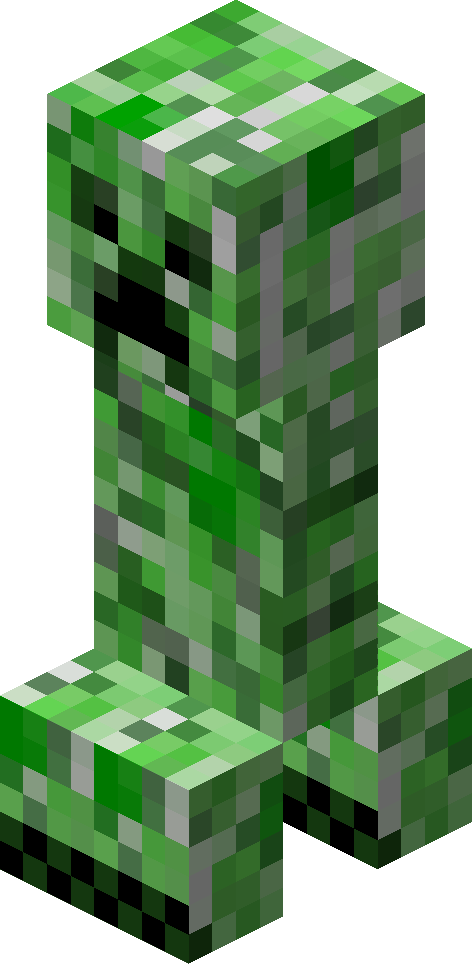
The creeper is the most famous mob for one reason: it explodes, and the blast destroys terrain — including whatever you built. A creeper sneaks up silently, starts hissing and swelling when it gets within about 3 blocks, and detonates after roughly 1.5 seconds. The explosion has a blast radius of about 3 blocks and can blow a crater in your base, wreck your chests, and one-shot you if you are underarmored.
How to beat it:
- Hit and back off. Melee it, then immediately retreat out of blast range so that if it does light up, you are not standing in it. Knockback on your sword helps shove it away.
- Use a bow. The clean answer. Shoot it from range and it never gets close enough to explode.
- Block with a shield. A raised shield negates most of the explosion damage even if it goes off in your face.
- Wear Blast Protection boots/leggings if you do a lot of creeper-adjacent work.
Creepers are also terrified of cats and ocelots — they will actively flee from them. A couple of cats around your base is a legitimate creeper deterrent. And the charged creeper (one struck by lightning) has a far bigger, more dangerous blast — rare, but lethal.
The skeleton: the best sniper in the game
Skeletons are dangerous out of all proportion to their gear because they shoot from range, lead their shots, and knock you back with every arrow — which is how players get pushed off ledges, into lava, or into a creeper. A pack of skeletons in the open is a genuine problem.
Counters:
- Close the distance fast or break line of sight. Their accuracy is the whole threat; remove the open sightline and they are easy.
- Raise your shield while you advance — it eats arrows completely.
- Projectile Protection on armor cuts arrow damage hard.
- Skeletons burn in daylight (unless they are in water, shade, or wearing a helmet), so morning often solves your skeleton problem for free.
The stray (snowy biome variant) shoots Slowness arrows; the bogged (swamp/trial variant) shoots Poison arrows. Same counters, just clear the debuff with milk if it stacks up.
Zombies and their many variants
Plain zombies are the tutorial enemy — slow, melee-only, and they burn in daylight. The thing that makes them dangerous is numbers: zombies can call reinforcements, so one zombie that hits you can summon more, and a horde can corner you. They also break down wooden doors on Hard difficulty, so do not rely on a wooden door as your only defense.
Counters are simple: armor up, swing, back-pedal so you are not surrounded, and fight in a doorway or one-block choke so only one can reach you at a time. Watch for the variants:
- Husk (desert): does not burn in daylight and inflicts Hunger on hit.
- Drowned (water): can carry a trident and throw it for ranged damage — the dangerous one. Keep a shield up near water.
- Zombie villager: curable with a Weakness potion + golden apple, which is its own whole strategy for cheap trades.
Spiders and cave spiders
Spiders climb walls, jump, and move fast, which makes them annoying rather than deadly — they have low health and a regular sword handles them. The catch: above light level 11 (roughly), spiders are neutral and will not attack you unprovoked, but in the dark they are hostile. Their jump-and-pounce can be startling in a cave.
Cave spiders are the real concern. They are smaller, fit through one-block gaps, and their bite inflicts Poison (Java; on Easy difficulty they do not poison). You find them swarming around the cobweb-filled spawners in abandoned mineshafts, and a swarm in a tight tunnel can chip you to death through Poison ticks. Counter: bring milk to clear the poison, fight them in a spot where only one or two can reach you, and break or light up the spawner as fast as you can.
The enderman: don't look it in the eye
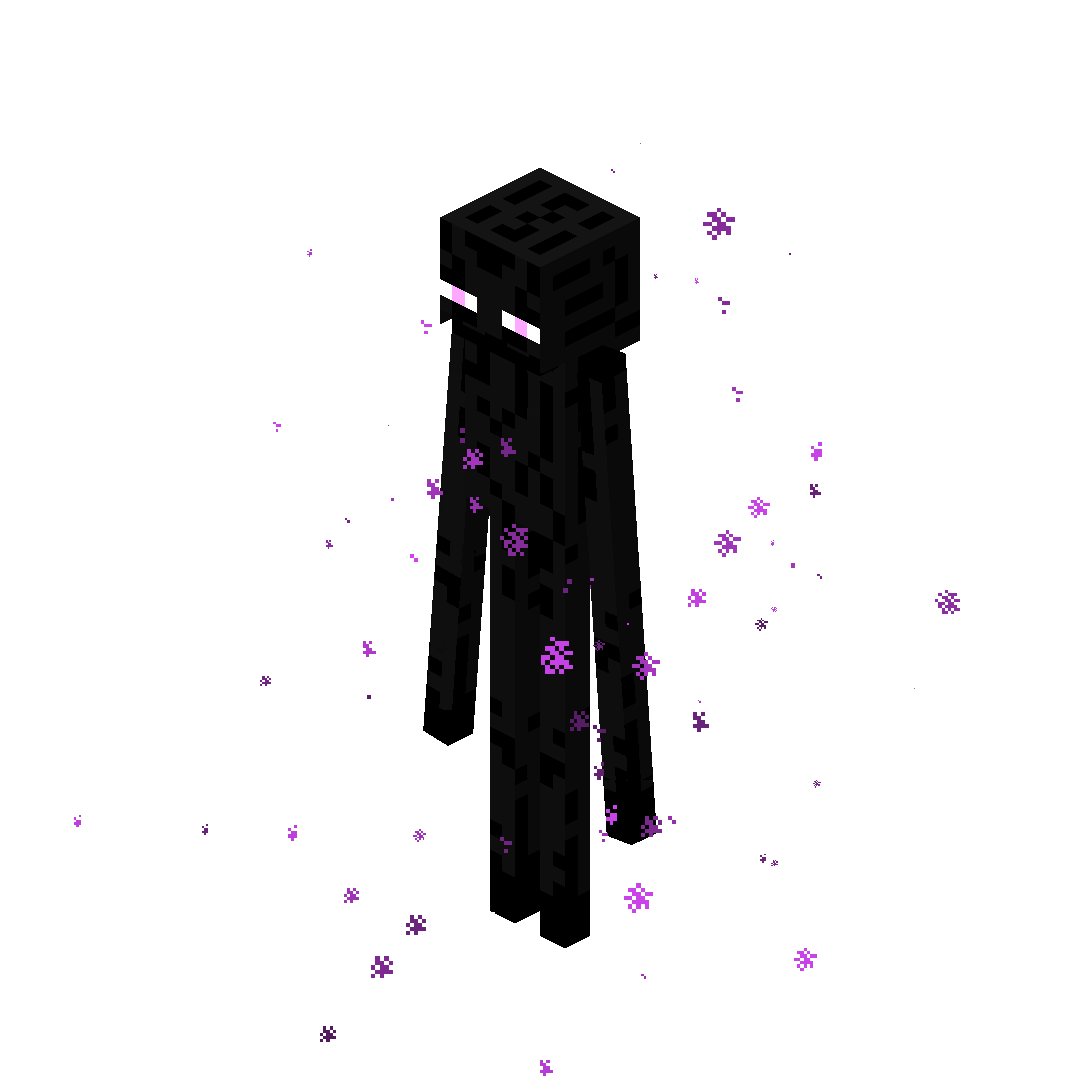
The enderman is neutral until you provoke it, and you provoke it by putting your crosshair directly on its head — looking it in the eyes. Do that and it screams, teleports to you, and hits hard enough to threaten even decent armor. They also teleport away from your attacks and out of water/rain, which makes chasing one a frustrating dance.
The counters are all about denying the teleport:
- Don't look at its head if you do not want a fight. Simple, and it saves you constantly.
- Fight under a 2-block-high ceiling — endermen are 3 blocks tall, so a low roof stops them from teleporting onto you, and you can hit their legs safely. This is the classic enderman-farm trick.
- Stand in water or fight in the rain — endermen take damage from water and will teleport away from it, so they avoid coming to you.
- A pumpkin on your head lets you look at endermen (including in the End) without aggroing them — invaluable when crossing the End.
Endermen drop ender pearls (for pearls and Eyes of Ender) so you do want to farm them eventually — just on your terms, under a low ceiling.
The witch: a walking potion rack
Witches are deceptively tough. They throw splash potions of Poison, Slowness, Weakness, and Harming at you, and they drink beneficial potions (Healing, Fire Resistance, Swiftness) to keep themselves alive, which makes them a slog to kill if you trade hits slowly. They are immune or highly resistant to their own potion types, so do not expect to poison a witch to death.
Counters:
- Burst them down. A witch that is mid-drink is wasting time; hit hard and fast with a Sharpness sword or a Power bow rather than chipping.
- Carry milk to instantly clear whatever debuff they land on you.
- Close the gap so they cannot keep lobbing splash potions from range.
Witches spawn naturally, in swamp huts, and as the dangerous final wave in raids — a raid full of healing, poison-throwing witches is one of the harder fights a mid-game player faces.
Phantoms: the punishment for not sleeping
Phantoms are the game telling you to go to bed. If you go three or more in-game days without sleeping (the "insomnia" condition), phantoms begin spawning at night, swooping down at you from above in dive-bomb attacks. They are not individually tough, but a swarm picking at you while you are trying to do something else is genuinely disruptive — and they can knock you around.
Counters, easiest first:
- Sleep. Sleeping resets the insomnia counter and stops them from spawning. This is the actual intended fix.
- Fight at their dive. They only attack on the swoop; raise a shield and counter as they pull up, or shoot them out of the air with a bow.
- Stay under cover at night — they cannot reach you under a roof or below ground.
- Cats scare phantoms away, same as creepers.
Phantoms drop phantom membrane, which you need to repair an elytra and to brew Slow Falling potions, so a few nights of insomnia can actually be useful farming.
Nether threats: blaze, piglin, and hoglin
The Nether has its own roster, and these three matter most:
- Blaze. Found at Nether fortresses, the blaze floats, shoots fireball volleys, and drops the blaze rods you need for brewing and for Eyes of Ender — so you have to fight them. Counters: Fire Resistance potion (makes their fireballs harmless), fight from cover or under an overhang, and use a bow, since closing on a floating, fire-spitting mob in the open is rough. Snowballs deal real damage to blazes specifically.
- Piglin. Neutral if you wear at least one piece of gold armor — without gold, they attack on sight, and opening or breaking chests/gold blocks near them angers the whole group even if you are wearing gold. They wield crossbows and golden swords. Counter: wear gold, do not loot in front of them, and bartering with gold ingots is the intended interaction.
- Hoglin. Aggressive boar-like mobs in crimson forests that charge and fling you with their tusks — dangerous near lava or ledges. They are afraid of warped fungus and nether portals, so a placed warped fungus zones them off. They drop porkchops, making them a Nether food source.
Also worth knowing: piglin brutes (in bastions) ignore your gold armor entirely and hit hard, and ghasts lob long-range explosive fireballs you can deflect back at them by punching/shooting the fireball.
The warden: the one you don't fight
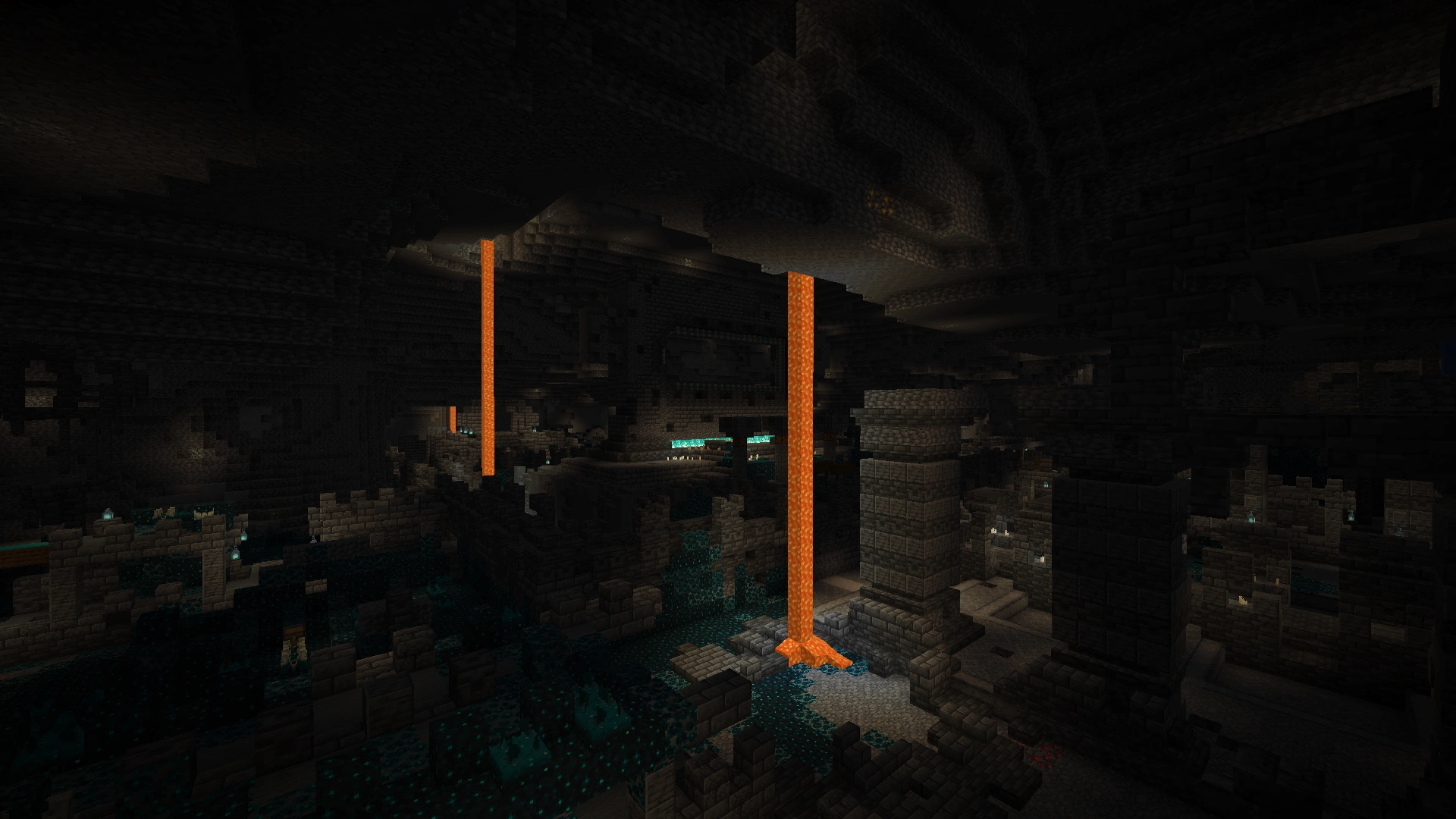
The warden is in a category by itself. It lives in the deep dark biome, specifically around ancient cities, and it is summoned by sculk shriekers when you make noise — walking, breaking blocks, fighting — near sculk sensors. It is blind and hunts entirely by vibration and smell, and it applies a Darkness effect that pulses your screen black so you cannot see it coming.
Here is the part people refuse to believe until it happens: the warden has 500 health, hits for enough to kill a netherite-armored player in roughly two hits, and its ranged sonic boom attack ignores armor and pierces shields entirely. You do not out-gear it. Fighting it is not a strategy; surviving it is.
How to actually handle the deep dark:
- Sneak everywhere. Crouch-walking produces no detectable vibration. Move slow, place blocks slowly, never sprint or jump near sculk.
- Avoid sculk sensors and shriekers. They are what summon it. Cover sensors with wool or carpet — wool blocks vibrations completely, so a wool path lets you move freely.
- Use snowballs / projectiles as decoys. Throwing a snowball or arrow makes a vibration over there, sending the warden to investigate the wrong spot while you slip past.
- If it spawns, leave. It emerges slowly and will dig back underground and despawn if it cannot detect a target for about a minute. Break line of detection, hide, and wait it out rather than trading blows.
The deep dark is a stealth zone, not a combat zone. Treat the warden like an environmental hazard — lava you can hear coming — and you can loot ancient cities (which hold some of the best loot in the game) without ever swinging at it.
Danger ranking and takeaways
The honest tier list, by how badly each can end an unprepared run:
- Warden — unkillable by design; pure stealth-avoidance.
- Creeper — the base-and-life destroyer everyone underrates.
- Witch / raid waves — sustained potion pressure that grinds you down.
- Skeleton — the knockback-into-hazards king.
- Enderman — harmless until you look, then suddenly very not.
- Blaze / hoglin / piglin — Nether-specific but lethal if you go in unprepared.
- Phantom — annoying swarm; fixed by sleeping.
- Drowned (with trident) — the only zombie variant that does ranged damage.
- Cave spider — Poison swarms in tight mineshaft tunnels.
- Everything else — light your area, carry a shield, and most of the roster is a non-issue.
The throughline: a shield, lit-up spaces, and knowing which mobs punish a head-on fight (creeper, enderman, warden) does more for your survival than another tier of armor.
Frequently Asked Questions
What is the most dangerous mob in Minecraft?
How do you kill a creeper without it blowing up your stuff?
Why do endermen attack me, and how do I stop it?
How do I stop phantoms from spawning?
How do you deal with a witch in Minecraft?
How do you avoid the warden in the deep dark?
Keep Reading
Related Guides

Minecraft Hardcore Mode Guide: How to Survive Permadeath
Hardcore mode locks you to Hard difficulty and gives you exactly one life. Die once and the world is over — you watch it as a ghost. Here is how the mode actually works, and the survival plan that gets you past the deaths that kill most runs.
Minecraft Ominous Vault Loot Table and Heavy Core Odds
The heavy core is a 7.5% roll on a single loot pool, and a trial chamber only holds six to eight ominous vaults — so a perfect clear of an entire chamber is still worse than a coin flip for one core. Here are both vault loot tables with the real numbers, what a key actually costs, and the item in the pool that is rarer than the heavy core.
Minecraft Speedrun Guide: The Any% Route to the Ender Dragon
Speedrunning Minecraft is a race from an empty spawn to a dead dragon in under ten minutes. Here is the actual route the world's fastest players run — wood to Nether to stronghold to bed bombs — and where beginners lose the run.
Minecraft Nether Portal Linking: The 1:8 Coordinate Math
Two portals, 200 blocks apart, both dumping you at the same Nether exit. That is not a bug — it is a search radius doing exactly what it was written to do. Here is the actual math behind portal linking and how to force the pairing you want.
Minecraft Survival Guide for Beginners: Your First Days
You have about ten minutes of daylight before the sun sets and the world tries to kill you. Here is exactly what to do with them — punch a tree, build a tool chain, and get a roof over your head before the zombies arrive.
Best Minecraft Enchantments, Ranked — The Ones Worth Your XP
Mending is the enchantment that ends the grind — gear that repairs itself forever. Everything else is a fight over your XP and anvil uses. Here is what actually earns a slot, ranked, with the real max levels.