Minecraft Villager Trading Guide: Best Trades and Setups
Villagers are the closest thing Minecraft has to a money printer. Done right, a few cured villagers hand you Mending books and enchanted diamond gear for a fistful of emeralds. Here is how professions, leveling, and the must-have trades actually work.
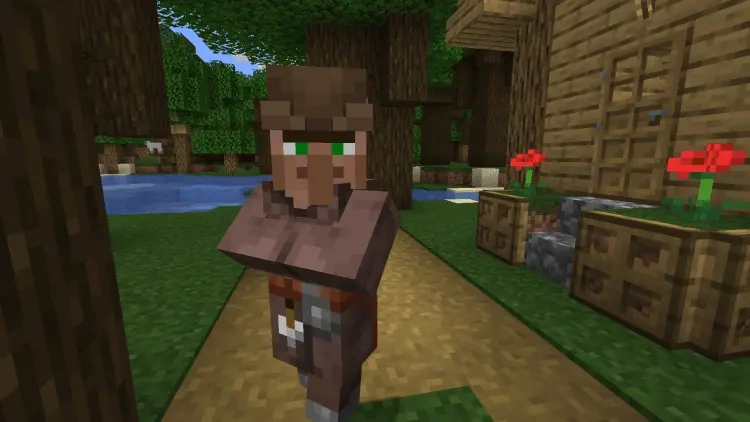
Villagers are the closest thing Minecraft has to a money printer. You can mine for diamonds for hours, or you can level one armorer and buy a full set of enchanted diamond armor for emeralds alone. You can gamble at the enchanting table for Mending, or you can cure one zombie librarian and buy Mending books for as little as a single emerald each.
This guide covers the whole loop: how professions and workstations work, how trades level up, the trades actually worth chasing, the librarian Mending trick, why curing zombie villagers is the single best economy move in the game, and how to build a trading hall that does not require a redstone degree. Where Java and Bedrock differ in ways that matter, I will flag it.
Why villagers are the real endgame
Emeralds are the villager currency, and once you have a working trade economy, emeralds become trivial to generate — a single farmer buying crops or a fletcher buying sticks turns your spare junk into stacks of green. Spend those emeralds back into the system and you are buying things that are otherwise a grind: Mending, Protection IV and Efficiency books, enchanted diamond gear, glass, redstone, and (from a cleric) the experience bottles that level up your other enchants.
The falsifiable claim that sells people on this: a cured librarian can sell a single enchanted book for as little as 1 emerald, including treasure enchantments like Mending that you literally cannot roll at a table. No mob farm, no fishing for hours. That is the whole pitch.
How professions and workstations work
A villager's job — and therefore its trades — is decided by the workstation block it claims. An unemployed adult villager (or a nitwit, which can never take a job) wanders until it finds an unclaimed station nearby, then locks into that profession. Break the station before it has traded, and you can reset it back to unemployed and re-roll a different job.
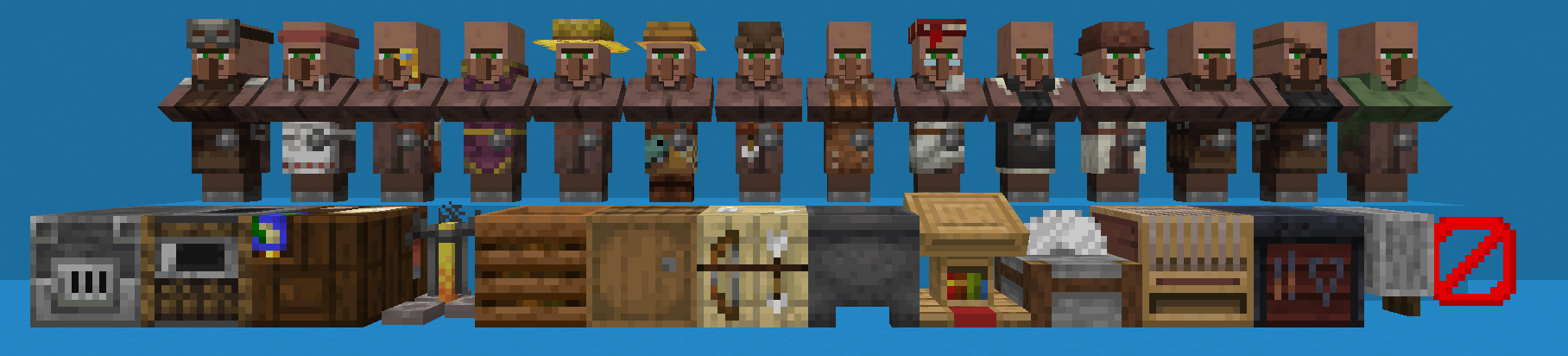
Here is the workstation-to-profession map you will actually use:
| Profession | Workstation block | Why you want them |
|---|---|---|
| Librarian | Lectern | Enchanted books (including Mending), bookshelves, glass; candles at Master |
| Cleric | Brewing stand | Buys rotten flesh; sells ender pearls, redstone, glowstone, XP bottles |
| Armorer | Blast furnace | Enchanted diamond armor for emeralds; buys coal and iron ingots |
| Toolsmith | Smithing table | Enchanted diamond tools; buys coal and iron ingots |
| Weaponsmith | Grindstone | Enchanted diamond swords and axes |
| Farmer | Composter | Buys crops for emeralds, sells bread/cakes/golden carrots |
| Fletcher | Fletching table | Buys sticks and flint; sells arrows and bows; swaps gravel + an emerald for flint |
| Fisherman | Barrel | Buys string/coal; sells enchanted fishing rods, cooked cod |
| Cartographer | Cartography table | Woodland/ocean explorer maps, banners |
| Leatherworker | Cauldron | Leather armor, dyed gear; a 6-emerald saddle at Master (every Master on Java, about half on Bedrock) |
| Mason / Stone Mason | Stonecutter | Polished stone, quartz, terracotta, glazed terracotta |
Two trade changes worth knowing. Name tags are no longer a librarian trade: Java 26.1 and Bedrock 26.10 (both 24 March 2026) replaced the Master librarian's name tag with candles at 3 emeralds each (both red and yellow on Java; one or the other on Bedrock, usually red). Name tags are now crafted from 1 paper plus 1 copper, iron, or gold nugget, and a small share of wandering traders (roughly 6–7%) sell them for 1 emerald. The leatherworker's saddle differs by edition: on Java the Master tier offers both of its trades, so every Master leatherworker sells the saddle; on Bedrock the Master tier picks one of saddle or leather cap, so only about half do. Saddles have also been craftable since Java 1.21.6 / Bedrock 1.21.90 (3 leather + 1 iron ingot), so you do not need a leatherworker to get one.
The two professions you build your early economy around are librarian (lectern) and farmer (composter). Librarians are the enchanted-book pipeline; farmers turn your auto-wheat into infinite emeralds.
How trade leveling works
Every villager starts at Novice and climbs through five tiers: Novice, Apprentice, Journeyman, Expert, and Master. You level them by trading — each trade fills an experience bar, and crossing a threshold unlocks the next tier of trades and badge (the colored gemstone on their belt, from stone at Novice up to diamond at Master).
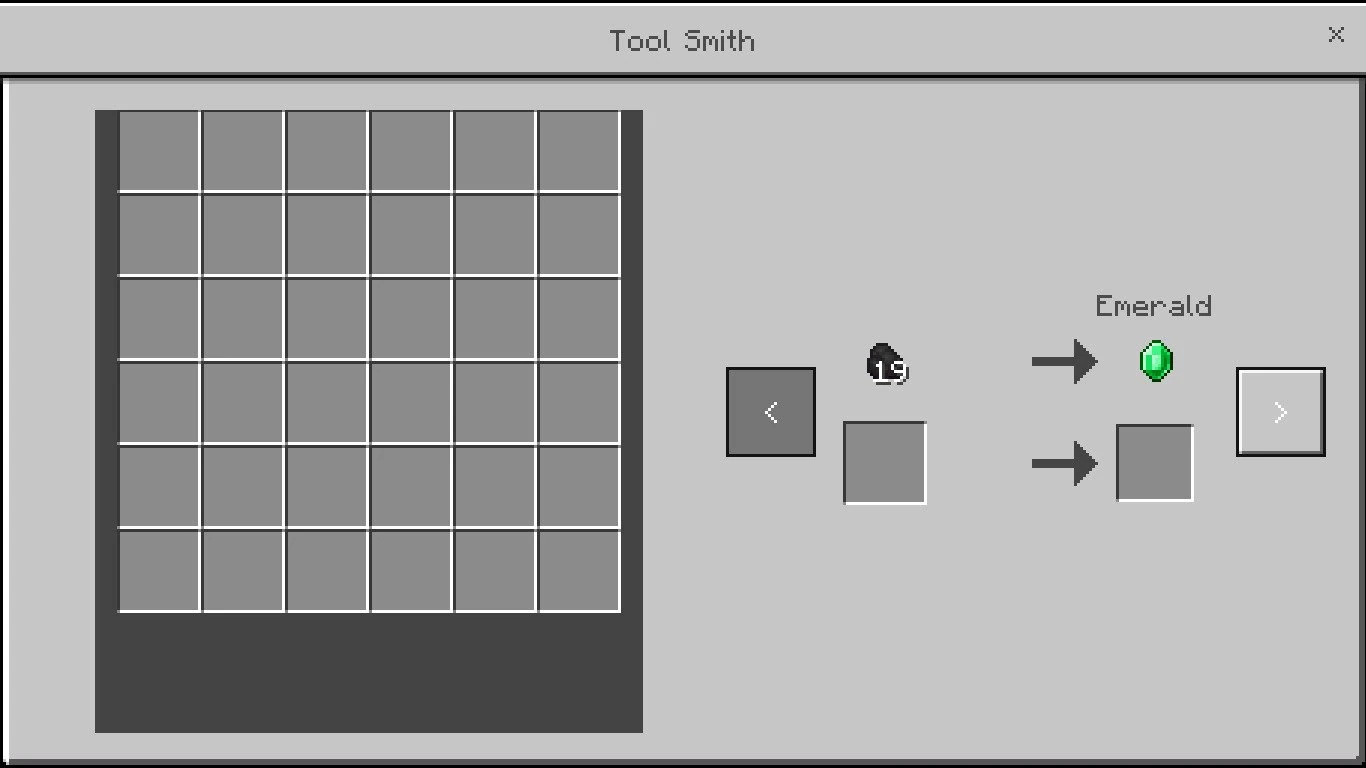
A few mechanics that trip people up:
- You unlock the better trades by buying the cheap ones. Each new tier adds offers, so you grind the paper-and-emerald basics to push a villager up. Librarians are the twist: an enchanted-book offer can appear at any tier from Novice through Expert (not at every tier, since each tier only shows some of its possible trades), and on Java every one of those book slots can roll Mending. That is why the lectern re-roll trick below works on a brand-new librarian. Master librarians add no book trade at all.
- Trades go out of stock and restock. A villager can only sell a given trade a limited number of times before it grays out. It restocks when the villager works at its station — so it needs access to its workstation at least once or twice a day.
- Prices float on demand and reputation. Buy the same trade a lot and the price creeps up. Cure a zombie villager or trigger Hero of the Village and prices crater. More on both below.
- Locked trades on first roll are not permanent... until they trade once. Break and replace a librarian's lectern before they have completed a single trade and you re-roll their entire offer list. The instant they trade once, their trades are locked for good.
The best trades worth chasing
Not every trade is worth your emeralds. These are the ones that change your game:
- Mending book (librarian, Novice to Expert). The headline. Treasure enchantment, table-impossible, and a cured librarian can sell it for as little as 1 emerald. Build a wall of these.
- Protection IV / Efficiency V / Unbreaking III / Fortune III books (librarian). Any high-level enchanted book a librarian offers beats gambling at the table because you get the exact enchant you want. Curing makes them dirt cheap.
- Enchanted diamond armor (armorer, Expert/Master). Emeralds only, 13 to 35 per piece before discounts: leggings and boots at Expert, helmet and chestplate at Master. The enchantments are random, but curing makes a full enchanted diamond set cheap.
- Ender pearls (cleric, Expert). A renewable pearl source without grinding endermen — huge for stocking up before an End trip.
- Glowstone and redstone (cleric). Otherwise glowstone means a Nether run, a witch farm, or a lucky wandering trader; buying it is a quality-of-life win for big builds.
- Glass (librarian, Journeyman) and emeralds-for-crops (farmer). The boring backbone. The farmer trade is your emerald faucet — pipe an auto-wheat or carrot farm into a farmer and you fund everything else.
- Explorer maps (cartographer). Woodland mansion and ocean monument maps save you hours of blind searching.
If you only build two trade lines early, make them a librarian for books and a farmer for emeralds. Everything else is gravy you can add later.
The librarian Mending trick
Mending is treasure-only — you cannot get it from an enchanting table no matter how many bookshelves you stack. Librarians are the reliable source, and the trick is in the re-roll:
- Make an unemployed adult villager (cure one, breed one, or grab one from a village).
- Place a lectern next to it. It becomes a librarian and rolls a random first set of trades.
- Check the trade list before trading anything. If the level-appropriate enchanted-book trade is not Mending, break the lectern and place it again to re-roll.
- Repeat until the librarian offers a Mending book, then trade once to lock it in.
That is it. You are not leveling it first — you are re-rolling its starting offer until Mending shows up, then locking it forever. One Mending librarian supplies your whole world; a row of them means you never craft replacement gear again. Pair this with the loadouts in our best Minecraft enchantments breakdown and your gear becomes effectively permanent.
Bedrock note: the same rule applies there (break the lectern before the first trade), but the odds per roll are worse. A Bedrock novice librarian shows an enchanted book only about half the time, against about two in three on Java, so expect more lectern breaks before Mending turns up.
Curing zombie villagers for discounts
This is the most overpowered, least-used mechanic in survival Minecraft. Cure a zombie villager and that villager permanently slashes its prices for you, while nearby villagers pick up a smaller cut. Do it to a librarian and Mending books can drop to a single emerald.
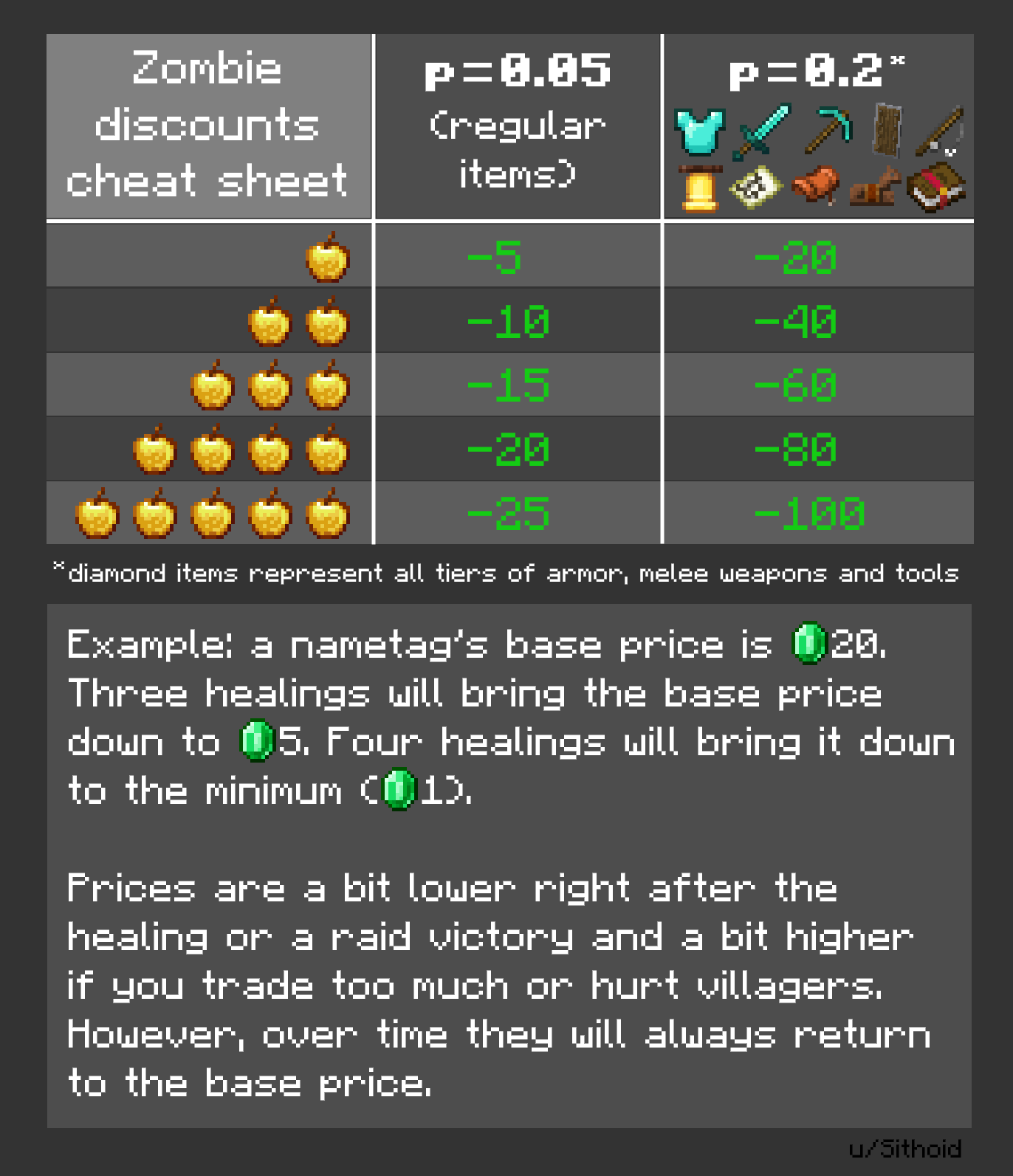
Here is the exact recipe:
- Find a zombie villager (they spawn naturally as a small fraction of zombies, and a villager killed by a zombie can convert: never on Easy, half the time on Normal, always on Hard). Trap it somewhere safe and lit so other zombies do not pile in.
- Throw or apply a Splash Potion of Weakness on it.
- Feed it a golden apple (the regular crafted one — eight gold ingots around an apple — not the enchanted version).
- The zombie villager shakes and shudders for a few minutes, then converts back into a normal villager with its profession ready to assign.
The cured villager gives you a deep, permanent discount on its trades, but only once: curing the same villager a second time adds nothing. Cure a librarian this way and its Mending book trade often drops to 1 emerald. Do it near other villagers and they also drop their prices for you, by less. This is why experienced players intentionally infect-and-cure their best traders.
Hero of the Village stacks with this. Win a raid (trigger Bad Omen, then enter a village) and the Hero of the Village effect gives every villager a temporary discount on top of curing. Combine a cured librarian with a fresh Hero of the Village buff and the prices are absurd.
Building a simple trading hall
You do not need a fancy build to make this work. A functional trading hall is just protected villagers, each next to its workstation, with you able to reach the trade UI.
The minimum viable hall:
- Light everything. Zombies that reach your villagers will kill or infect them. Walls, a roof, and torches — no spawn spots inside.
- Give each villager a 1-block pen with its workstation block adjacent, so it can reach the station to restock but cannot wander into a neighbor's job site.
- Keep a bed near breeders, not near your trade row. Beds plus food trigger breeding; you do not want random babies clogging your stalls. Separate your breeder pair from your traders. One Bedrock catch: there, a villager restocks only if it is linked to a bed nearby, so the trade row still needs beds of its own (just keep food away from it).
- Line up your librarians. A row of cured Mending librarians plus one or two book specialists (Protection, Efficiency, Fortune) and you have a one-stop enchant shop.
- Add a farmer fed by an auto-crop farm for the emerald faucet, and a cleric if you want renewable redstone, glowstone, and ender pearls.
If you want the food side handled automatically so your breeders never starve and your farmer always has crops to buy, the auto-farms in our best Minecraft farms guide plug straight into a trading hall. And if you are still establishing a base, our survival guide for beginners covers locking down a village before you start engineering it.
Java vs Bedrock trading notes
The core loop is identical across editions, but a few specifics differ:
- Lectern re-rolling works the same way on both, as long as the librarian has never traded. A Bedrock novice librarian shows a book about half the time against about two in three on Java, so it takes more re-rolls on average.
- Curing discounts work on both editions, but the exact discount math and how far it spreads to other villagers differs. The headline result — a deep, permanent discount on the cured librarian — holds on both.
- Restock behavior differs: on both editions a villager needs to reach its workstation to refill grayed-out trades, and on Bedrock it also has to be linked to a bed.
- Trade prices and demand float on both, so spreading purchases across several librarians keeps any single one from gouging you.
- Master leatherworker saddles are guaranteed on Java but roughly a coin flip on Bedrock, where the Master tier rolls either the saddle or a leather cap. Crafting a saddle (3 leather + 1 iron ingot) works on both.
Quick Action Checklist
- Assign professions by placing the right workstation: lectern (librarian), composter (farmer), brewing stand (cleric)
- Level librarians by buying cheap trades to unlock more book slots (book offers can appear from Novice through Expert)
- Re-roll a librarian's lectern (before its first trade) until it offers Mending, then lock it in
- Cure zombie villagers with a Splash Potion of Weakness + a regular golden apple for permanent discounts
- Cure your Mending librarian to get the book down toward 1 emerald
- Stack Hero of the Village on top of curing for the deepest prices
- Light and wall your trading hall so zombies cannot kill or infect your traders
- Feed a farmer with an auto-crop farm to make emeralds renewable
Frequently Asked Questions
How do you get Mending from villagers in Minecraft?
How do you cure a zombie villager?
What is the best villager profession to trade with?
How do villager trades level up?
Why are my villager trades grayed out?
Does curing a zombie villager discount other villagers too?
Keep Reading
Related Guides
Minecraft Speedrun Guide: The Any% Route to the Ender Dragon
Speedrunning Minecraft is a race from an empty spawn to a dead dragon in under ten minutes. Here is the actual route the world's fastest players run — wood to Nether to stronghold to bed bombs — and where beginners lose the run.
Minecraft Hardcore Mode Guide: How to Survive Permadeath
Hardcore mode locks you to Hard difficulty and gives you exactly one life. Die once and the world is over — you watch it as a ghost. Here is how the mode actually works, and the survival plan that gets you past the deaths that kill most runs.

Minecraft XP Guide: Fastest Ways to Level Up
XP is not points — it is the currency that runs your whole late game: enchanting, anvils, and Mending gear that repairs itself. Here are the fastest XP sources actually worth your time, ranked, with the real values.
Minecraft Beacon Guide: How to Build and Power One
A beacon is the closest Minecraft gets to a permanent buff station — stand near one and you get Haste, Speed, or Resistance for free, forever. The catch is everything in front of it: kill the Wither for a nether star, then stack up to 164 mineral blocks into a pyramid. Here is the whole build, tier by tier.

Minecraft Survival Guide for Beginners: Your First Days
You have about ten minutes of daylight before the sun sets and the world tries to kill you. Here is exactly what to do with them — punch a tree, build a tool chain, and get a roof over your head before the zombies arrive.

Best Minecraft Enchantments, Ranked — The Ones Worth Your XP
Mending is the enchantment that ends the grind — gear that repairs itself forever. Everything else is a fight over your XP and anvil uses. Here is what actually earns a slot, ranked, with the real max levels.