Pokopia Map Guide: All 5 Areas and the Kanto Cities They Were
Pokopia never shows you a Kanto map, but you are standing on one. All five areas are real Kanto cities after the catastrophe — dried out, flooded, buried in ash, or physically airborne. Here is the whole world, area by area, and how each one opens.
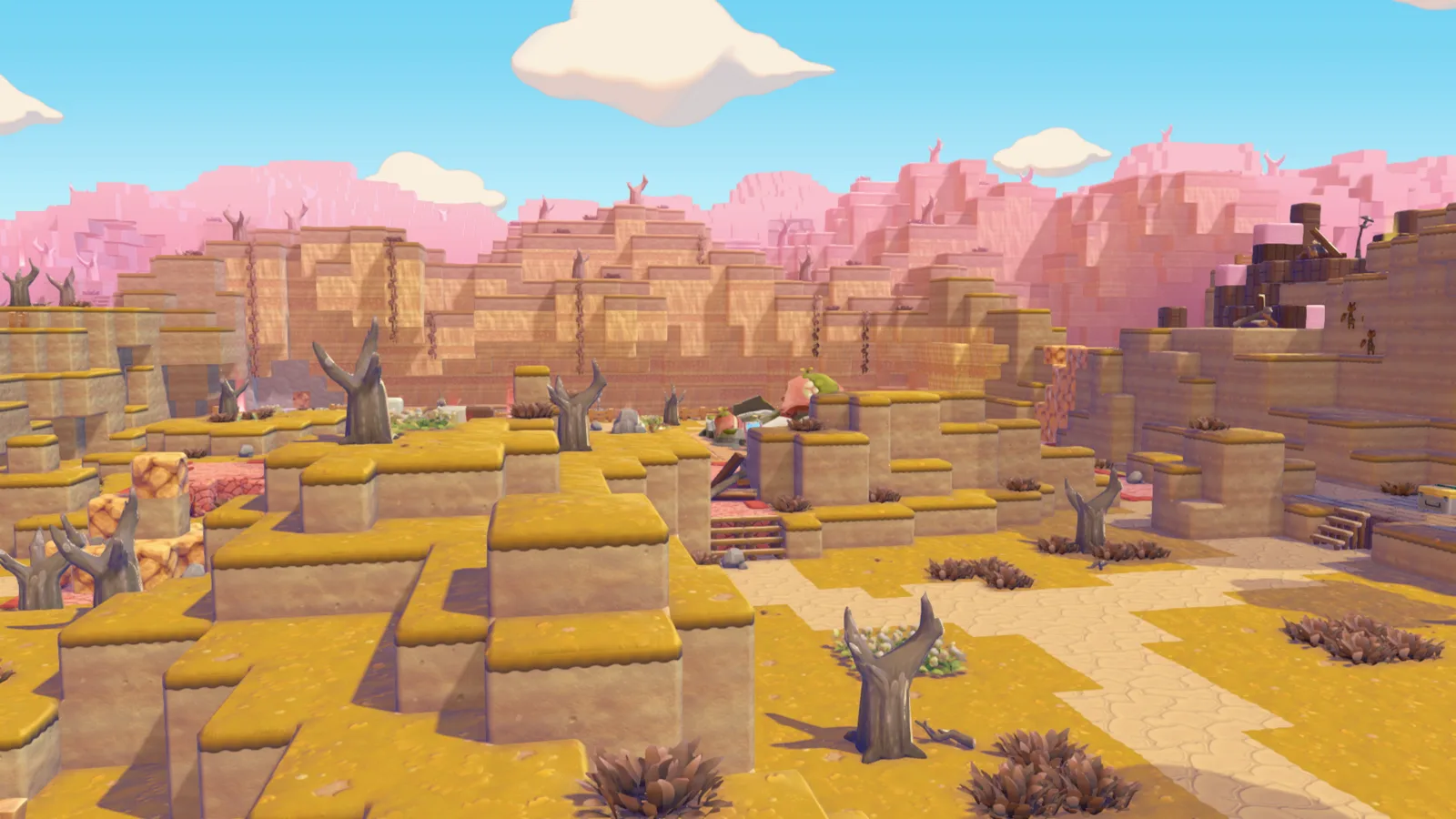
Deep into Pokopia's story, Mewtwo appears on a rooftop and mentions, almost in passing, that the wasteland where you woke up used to be a place called Fuchsia. That is the game finally saying the quiet part out loud: the map you have been terraforming for dozens of hours is Kanto. Not a Kanto homage, not a Kanto-flavored theme park — the actual region, an unspecified stretch of time after a chain of environmental catastrophes chased humanity off the planet entirely.
Every one of the game's five areas sits on the bones of a real Kanto settlement, and once you know which one is which, the details everywhere get louder. The wrecked ocean liner docked at Bleak Beach is the S.S. Anne. The huge building Tinkmaster wants rebuilt in the sky is Silph Co. The museum fused into a volcano in Rocky Ridges is the Pewter Museum of Science. Pokopia is a cozy builder wearing one of the quietest post-apocalypse settings Nintendo has ever shipped, and this guide walks the whole map: what each area was, what happened to it, how it unlocks, and what is actually worth doing there.
Fair warning: the last two sections touch story beats, including one late-game reveal. I flag it again before it lands.
The whole map is Kanto after the end
Here is the full picture, matched area by area to the city underneath it:
| Pokopia area | What it was | What happened |
|---|---|---|
| Withered Wasteland | Fuchsia City | Earthquakes reshaped the terrain; a years-long drought dried everything out |
| Bleak Beach | Vermilion City | Storms buried it in mud and sank a whole district into the sea |
| Rocky Ridges | Pewter City | A volcanic eruption consumed the city and coated the valley in ash |
| Sparkling Skylands | Saffron City | Dormant crystals under the city violently launched entire districts into the sky |
| Palette Town | Three vacant islands | Nothing — it is a blank canvas with no story content |
Palette Town is the odd one out twice over: it is not a ruined city, and despite the name it bears no visual resemblance to Pallet Town — the name is a wink, not a location. It is reached over the old Cycling Road west of the Wasteland, and it exists for building and for a specific set of Pokemon you cannot befriend anywhere else. More on that below.
If you are brand new and just want the first-hour priorities, start with our Pokopia beginner guide and come back when you are staring at your first locked gate.
How area unlocks actually work
Pokopia gates its map behind befriending, not battling. Your Pokedex carries a Trainer rank, and the big rank jumps come from befriending Legendary Pokemon at the climax of each area's story arc:
- Withered Wasteland is where you start, and Palette Town is reachable from the beginning over the bridge.
- Finish the Wasteland's rain arc and befriend Kyogre, and your rank rises enough to open the gates to Bleak Beach and Rocky Ridges — both at once, and you can do them in either order.
- Befriend Raikou in Bleak Beach and Volcanion in Rocky Ridges, and the rank rises again, opening the Sparkling Skylands.
One quirk worth knowing: the Skylands technically has a gate to the Withered Wasteland, but it is blocked from the Skylands side when you first arrive. Your actual entrances are the gates from Bleak Beach and Rocky Ridges, and you clear the Wasteland connection later from within.
None of the legendaries fight you, by the way. If you want the full catch list and what each one requires, our Pokopia legendary guide covers every one, including the Palette Town birds.
Withered Wasteland: Fuchsia City, dried out
You are released from a Poke Ball in a cave at the southern end of the map — Professor Tangrowth's home, complete with a wheelbarrow of scavenged human junk. Before you start building, the entire area has exactly five other residents: Professor Tangrowth, Onix, Drilbur, Magikarp, and Magnemite. Five. That emptiness is the whole pitch of the game in one image, and it is why watching the place fill up feels so good.
The area's story arc is about water. It has not rained in years, an Onix is trapped behind rock too hard to break, and the solution escalates beautifully: find a Slowpoke, get it yawning (yes, really — its yawns are said to summon rain), and the brief drizzle that follows is enough to wake Kyogre from the seafloor. Kyogre brings the real rain, the Onix goes free, and the map opens up.
Beyond the arc, the Wasteland hides two long-tail projects. The first is the mysterious mural — a wall tiled with every Unown form, with slots for mysterious slates you dig up using the Dowsing Machine. The second is a rusted structure near the coastline that looks like a derelict lighthouse and absolutely is not one. It belongs to Team R, it runs an eight-part initiation challenge that pays out replica Gym Badges, and what it turns out to be is one of the best story beats in the game. I am not spoiling it here; just do not ignore the challenge, because its final request asks for something you can only give if you have been playing with the camera.
Early-species note: the Wasteland's exclusive pool includes Bulbasaur, Charmander, Scyther, Pichu, and Slowpoke, mostly via cheap natural habitats. Blanket the area in tall grass variants early — our habitat and comfort guide explains why population is the real progression currency.
Bleak Beach: Vermilion City under permanent clouds
Vermilion took the storm apocalypse: mud everywhere, flattened buildings, and an entire district collapsed into the sea. It is still the most recognizable area in the game — streets and structures survive, and the distressed hulk of the S.S. Anne sits docked at the harbor. Climb aboard when a local Trubbish sends you to investigate; there is a Happiny on the second deck.
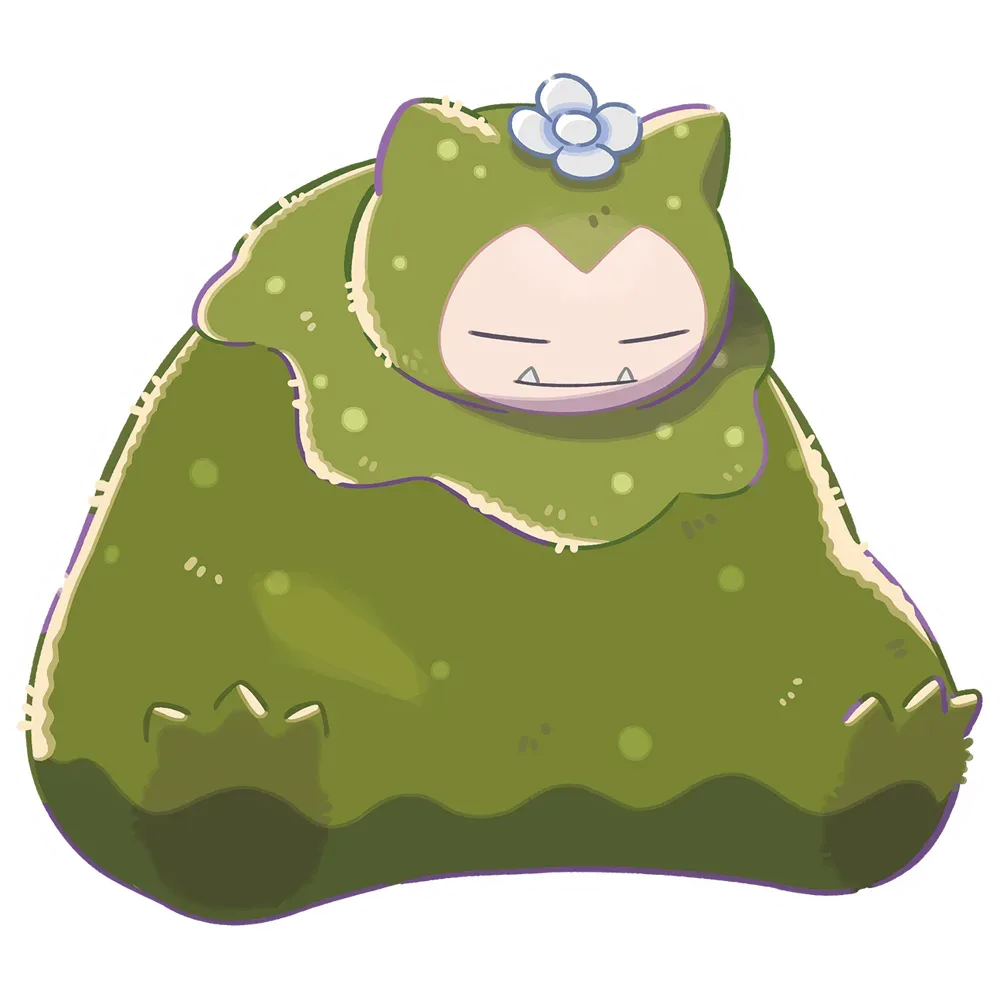
The gimmick here is darkness. The sky is permanently clouded over, so the area's project is light: repairing electricity sources, powering a central charging station, and feeding that charge to Peakychu — a pale Pikachu who lost the ability to generate electricity but can still absorb and release it. Light the place up and Raikou arrives with a thunderbolt dramatic enough to crack open a cave roof, scattering the clouds and waking the cave's occupant: Mosslax, a Snorlax that slept so long it turned into terrain. This arc is also the game's tutorial on the electricity system, which quietly matters for the rest of your playthrough — powered furniture is a comfort lever everywhere, not just here.
Bleak Beach is coastal in its habitat pool too — beach and water recipes dominate, and its documented exclusives include Piplup. If you were waiting for a reason to learn the water-moving skills, this is it; the Ditto transformations guide covers which residents teach them.
Rocky Ridges: Pewter City under the ash
Pewter City sat in a mountain valley, and the mountain won: an eruption consumed the city and left the valley coated in volcanic ash. Two landmarks survived. An old restaurant built into the cliffs, where you rescue Chef Dente — a Greedent hanging in a barrel — and in return learn to cook, which is how you power up Ditto's moves for the rest of the game. And the Pewter Museum of Science, now fully embedded in the volcano, reachable by smashing through the old mines or climbing the ash hills. Gimmighoul has moved into the museum and will trade you items for Rainbow Feathers, Silver Feathers, and appraised large relics, which makes it the best sink for the treasure you have been hoarding.
The story arc is a mood problem instead of a weather problem: the area is gloomy, DJ Rotom lives in a mine chamber with a stereo rig, and the fix is throwing a party loud enough to be heard inside a volcano. It works. Volcanion wakes up, skips the party, and closes it with fireworks anyway.
Practical notes: this is where cooking unlocks, so hit Rocky Ridges before you invest heavily in recipe farming — our cooking guide picks up from there. The area's documented exclusives lean Fighting and Rock — Machoke and Graveler among them, plus Scorbunny and Toxel.
Sparkling Skylands: Saffron City, airborne
The finale area, and the strangest one. Crystals dormant under Saffron City decided otherwise, and entire districts now float in the sky held up by mysterious stones. You arrive through Bleak Beach or Rocky Ridges to find six residents already living up here — including a Dragonite, a Gyarados, and a Gardevoir haunting a neighborhood of ruined high-rises — plus Tinkmaster, a Tinkaton who built herself a tower of human junk and greets you by getting blown out of it in an explosion.
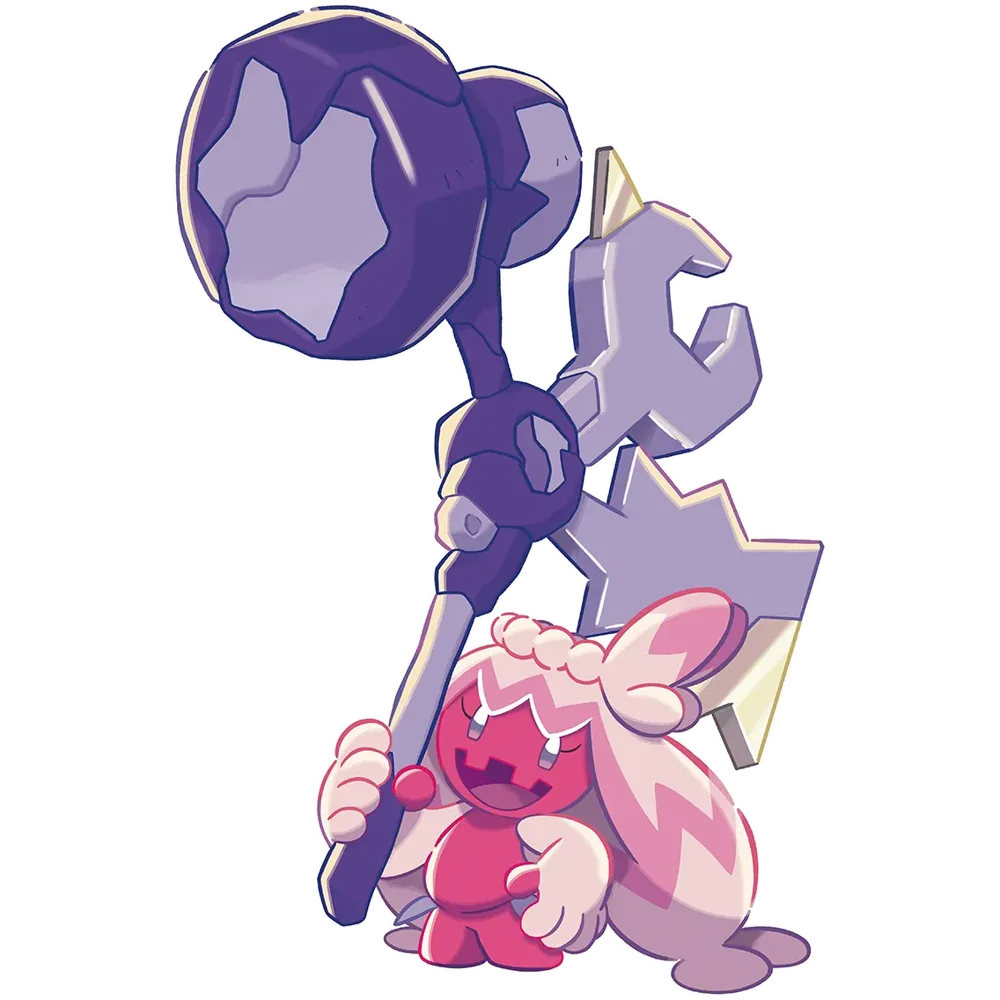
Tinkmaster's project is the biggest build in the game: restoring the ruined Silph Co. tower, with help called in from friends across every earlier area. Finishing it is the trigger for Mewtwo's rooftop appearance and the pointer back to the Wasteland for the endgame. The construction leans hard on building kits and Pokemon specialties, so if you have been ignoring those systems, the specialties and building kits guide is required reading before this arc.
One more thing hides up here for completionists: register every available Pokemon in your Pokedex and an underground office appears, containing a printer that produces an actual diploma — plus recipes for the shutter, card reader, and printer. A filing-cabinet reward for a filing-cabinet achievement, and I respect it.
Palette Town: the blank canvas
Three flat, vacant islands across the old Cycling Road, one resident Eevee, and zero story. Palette Town is Pokopia handing you an empty save file inside your save file, and the game is refreshingly direct about it — the official tip screen says outright that these islands have no story to pursue and exist to be built up however you want, solo or with friends via Link Play.
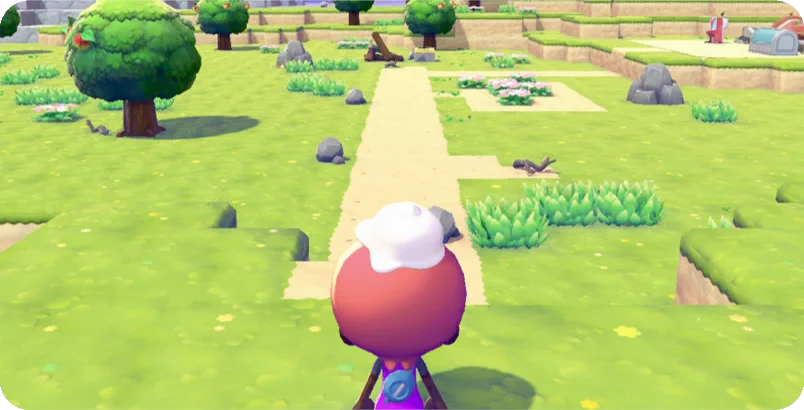
Do not write it off as a creative-mode sandbox, though, because it is mandatory for the Pokedex. Each island holds a mysterious pedestal with a kit for a structure tied to one of the Kanto birds — Freezing Chambers for Articuno on the eastern island, an Abandoned Power Plant for Zapdos on the southern one, an Altar of Flame for Moltres up north. And the community-documented exclusive pool here is the deepest in the game: the full Eeveelution set arrives via specific food habitats (Vaporeon wants a boundless blue beverage, Jolteon electrifying potatoes, Umbreon dark-chocolate cookies and only shows at night), alongside Snorlax, Munchlax, Pikachu at a picnic set, and a Mawile that moves in to work a cash register.
My honest advice: cross the bridge far earlier than the game suggests. The islands are flat, empty, and close — which makes them the cheapest place to farm habitat variety while your main areas are still mid-renovation.
The Human Records explain the whole game
Spoiler flag, for real this time: this section covers the game's background reveal.
Scattered across all five areas — including on the floor of every Pokemon Center you rebuild — are Human Records: newspapers, diaries, letters, magazines, photos. Some are pure flavor, and the flavor is excellent; there is a magazine breathlessly reintroducing the compact disc because music streaming servers became unaffordable, a Fuchsia record about Koga and Janine's ninja clan that unlocks a ninja outfit, and a Misty interview that unlocks mermaid hair.
But read together, they quietly explain the entire premise. Humanity did not vanish — it evacuated to space after cascading catastrophes threatened global famine. The Pokemon left behind were sealed into a modified PC Box system with a failsafe: an environmental scanner that automatically releases stored Pokemon when it detects stable habitats they could live in.
Sit with that, because it recontextualizes the core loop. The reason building a habitat makes a Pokemon appear is not cozy-game abstraction — it is the world's oldest machine noticing your work and deciding it is finally safe to let someone out. Every four-tile grass patch you slap down is pinging a scanner that has been waiting years for a yes. It is the rare life-sim where the lore and the mechanics are the same sentence, and it earns the game more melancholy than its pastel screenshots admit.
Bubbly Basin makes it six
The map is about to grow downward. A free update — dated August 5, 2026 on the official Pokopia site — adds the Dive move and opens underwater exploration and building for every player. Alongside it, the paid Expansion Pass Part 1 adds Bubbly Basin, a pre-built underwater town to develop, gated behind completing the environment level request in Bleak Beach and learning Dive. What is officially confirmed versus community guesswork is a whole topic on its own, and our Bubbly Basin DLC breakdown draws that line item by item.
If the pattern of this game holds — every area is a dead Kanto city with one environmental wound and one legendary alarm clock — the underwater town invites some obvious guesses about which city drowned. The official material does not say, and neither will I.
Quick Action Checklist
- The unlock chain is befriending, not battling: Kyogre opens Bleak Beach and Rocky Ridges together; Raikou plus Volcanion open the Sparkling Skylands.
- Cross to Palette Town early — it is available from the start, holds the three legendary bird kits, and has the deepest exclusive pool in the game, including every Eeveelution via food habitats.
- Enter the Skylands via Bleak Beach or Rocky Ridges; its Wasteland gate starts blocked from the far side.
- Do Rocky Ridges before deep recipe investment — cooking unlocks there via Chef Dente.
- Carry the Dowsing Machine in the Wasteland for mysterious slates, and start the Team R challenge early; its final step needs a photo you will not have on demand.
- Rebuild every area's Pokemon Center and grab the Human Record on the floor inside.
- Complete the Pokedex to reveal the Skylands underground office and its diploma printer.
- From August 5, 2026, learn Dive from the free update — the map grows underwater whether or not you buy the pass.
Frequently Asked Questions
How many areas are in Pokemon Pokopia?
What Kanto cities are the Pokopia areas based on?
How do you unlock Bleak Beach and Rocky Ridges in Pokopia?
How do you unlock the Sparkling Skylands in Pokopia?
What is Palette Town for in Pokopia?
Keep Reading
Related Guides
Pokopia Farming Guide: How to Grow All 5 Crops
A Pokopia crop is planted once: harvest it, water it and it grows back. Here is how Rototiller works, where the seeds for all five crops come from (and where the wikis disagree), the stage-a-day growth rule, and the 31 Pokemon with the Grow specialty.
Pokopia Magnet Rise: How to Unlock It and What It Can Move
Magnet Rise is the Ditto transformation Serebii ties to the post-game, and the one that lets you pick up trees, boulders and ore deposits whole. Here is the Factory Storage unlock, the controls, Replace mode, and the 102 trees, deposits, boulders and ruins Serebii lists as Magnet Rise pickups.
Pokopia Photo Ops: All 50 Highlight Reel Shots and Frames
Pokopia's Highlight Reel is a 50-shot photo checklist, and it is where most of the game's photo frames come from. Here is every photo op, the Pokemon and prop each one needs, the 15 that pay a frame, and where Serebii and Bulbapedia disagree on the setup.
Pokopia Paint Guide: All 18 Colors, Patterns and Smearguru
Pokopia's paint system runs through Smearguru, a Pokemon the story never makes you meet. Here is how to unlock it, which berry makes which paint, the recipe for all 18 colors, and where every one of the 116 patterns comes from.
Pokemon Pokopia Beginner Guide: What To Do In Your First Hours
Pokopia does not punish you for playing badly. It punishes you for building beautifully in the wrong place before you have the tools to move it. Here is the early-game order of operations that saves you a teardown.

Pokopia Halloween Event: Pumpkaboo's Sweet Surprises Guide
Pokopia's first Halloween event adds Pumpkaboo and Gourgeist from October 17 to November 1, 2026, and it has a gate the Feebas event did not: you need Camouflage from Zorua. Here is the confirmed schedule, the checklist to clear before it opens, and what is still unannounced.