PUBG Callouts and Terms Glossary for Squad Play
Your squad isn't yelling random words at you — they're using a shared language, and not knowing it gets you killed. Here's every PUBG callout and term that matters, in plain English, so you can actually communicate instead of guessing.
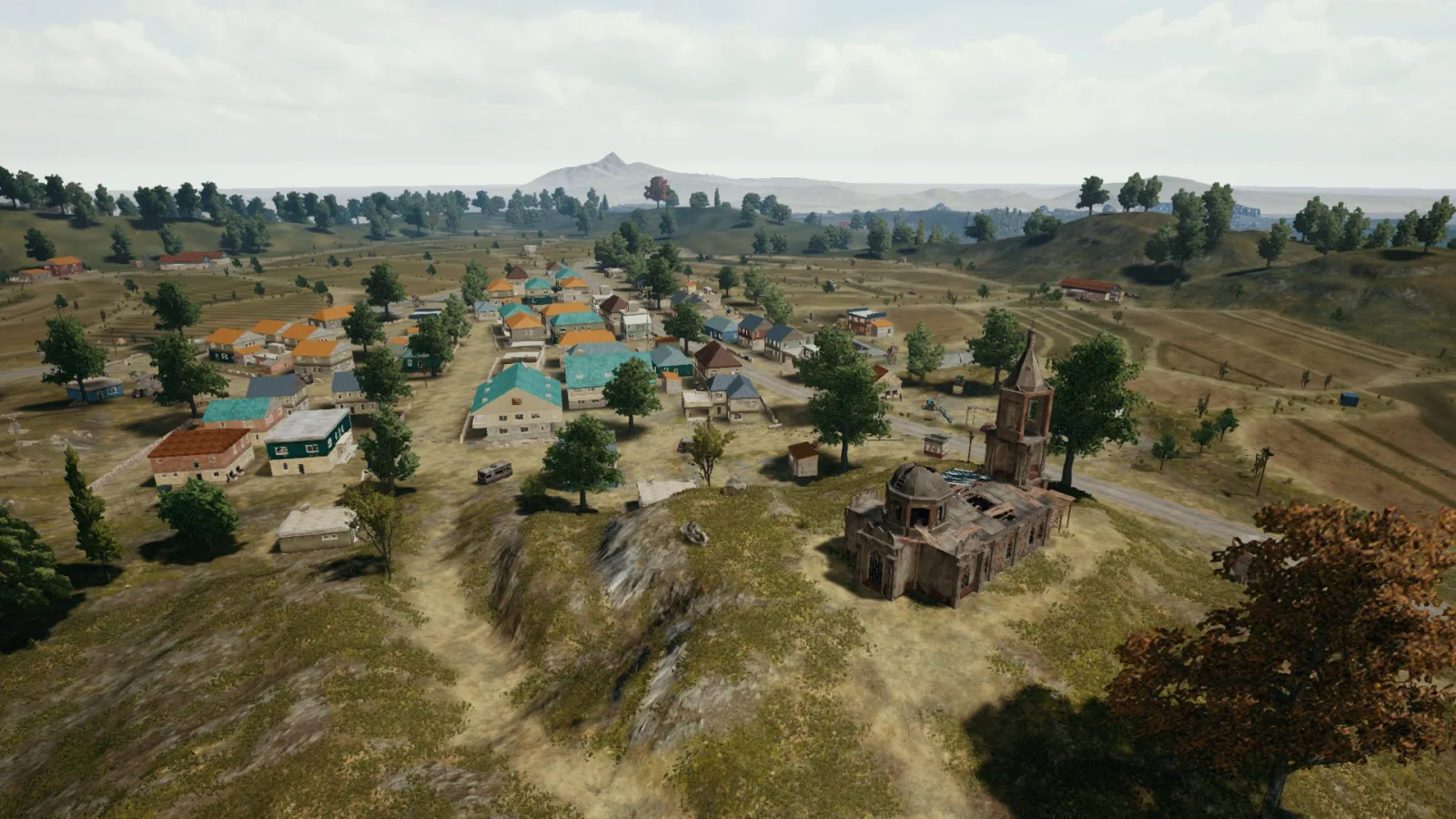
The first time you queue PUBG: Battlegrounds with a real squad, half of what your teammates say will sound like a foreign language. "Knocked one, north, 80, behind the rock — third party incoming from the school, push or fall back?" If you don't already know what every one of those words means, by the time you've figured it out you're dead, and so is the teammate who needed you to react.
None of it is complicated once someone translates it. PUBG squads run on a shared vocabulary — compass bearings, status words, and a handful of slang terms — that lets four people coordinate faster than they could ever describe in plain sentences. This is that vocabulary, organized so you can actually use it. Learn it and you stop being the player who answers "where?!" three times while the fight is already over. For the tactics that sit on top of this language, pair it with our PUBG squad strategy guide.
We're talking about the PC and console game here, where voice comms and the in-game compass are the backbone of squad play. The terms are universal across modes, but the compass bearings below are the specific tool PUBG gives you to make them precise.
Why callouts win more games than aim
A squad's real weapon isn't four sets of crosshairs — it's shared information. When your spotter sees an enemy you can't, a good callout puts that enemy in your head instantly: where they are, how far, and what they're doing. Bad comms ("he's over there!") give you nothing and waste the half-second that decides the fight.
The difference between a squad that climbs and a squad that feeds is almost never aim. It's whether all four players are looking at the same picture. A precise callout is the cheapest, fastest upgrade in the game, and unlike aim, you can install it in one match. The rest of this glossary is just the words that make that picture sharp.
If you take one habit from this whole guide: a useful callout is direction, distance, status — in that order, fast. "Enemy, north, 100, prone in the grass." That single sentence tells your squad everything they need to swing, hold, or reposition. Everything below is vocabulary for filling in those three slots precisely.
The compass: the only callout system that works
PUBG puts a compass bar across the top of your screen for one reason: so "north" means the exact same thing to all four players. This is the single most important callout tool in the game, and most new players ignore it.
- Bearings (0–360). The compass reads in degrees, from 0/360 (north) clockwise: 90 is east, 180 is south, 270 is west. A callout like "enemy, 045" points your whole squad at northeast precisely. You don't need to memorize every number — just glance at the bar, read the figure nearest the enemy, and say it.
- Cardinal and intercardinal directions. If you're not comfortable with numbers yet, "north," "northeast," "south-southwest" all map onto the same bar. They're less precise than a degree but still anchored to a shared reference, which is the whole point.
- Why "left/right/over there" fails. Your left isn't your teammate's left — you're all facing different directions. Relative directions are the number-one comms mistake. The compass exists specifically to kill that ambiguity, so use it.
The pro habit: when you call a contact, give the bearing first. "Two-seventy, two enemies" immediately spins everyone's attention west before you even finish the sentence. Combine the compass with shared landmarks (see below) and your callouts become unmissable.
Enemy and combat callouts
These are the words that fly during a fight. Know them cold.
- Contact / spotted. You see an enemy. Always pair it with a bearing: "contact, east, 60."
- Knocked / downed / DBNO. You've shot an enemy hard enough to put them on the ground (Down But Not Out) — they're crawling and a teammate can revive them. Knocked is not dead. "Knocked one, they can still get picked up." DBNO is the technical term; "knocked" is what everyone actually says.
- Finished / cracked / dead / out. That enemy is fully eliminated and can't be revived (in modes without recall). "He's finished, that's a 2v3 now."
- Trade. When an enemy knocks your teammate, you immediately punish the now-exposed enemy. "Trade him!" means shoot the guy who just downed our guy right now, before he backs off. Trading is the core squad-fight skill — more in our squad strategy guide.
- Third party / third-partying. A third squad rolls in on a fight already happening between two squads and cleans up the weakened survivors. "Third party from the north, disengage." It's both a warning ("we're about to get third-partied") and a tactic you'll use yourself.
- Pushing / peeking / holding. Pushing is actively advancing on an enemy position. Peeking is briefly exposing yourself around cover to shoot, then ducking back (see our peeking guide). Holding is staying put and watching an angle, waiting for the enemy to come to you. Call which one you're doing: "I'm pushing left," "holding the door."
- Cracked armor / broke their plate. Their armor's been damaged or destroyed, so the next hits land harder. "Cracked his vest, he's low."
- Free / clear / on me. "He's free" means no one's watching that angle, push him. "Clear" means an area has no enemies. "On me" means group up on the speaker's position.
- Reset. Disengage, regroup, heal, and re-take the fight on better terms instead of forcing a bad one. "We're losing this, reset."
Movement and positioning terms
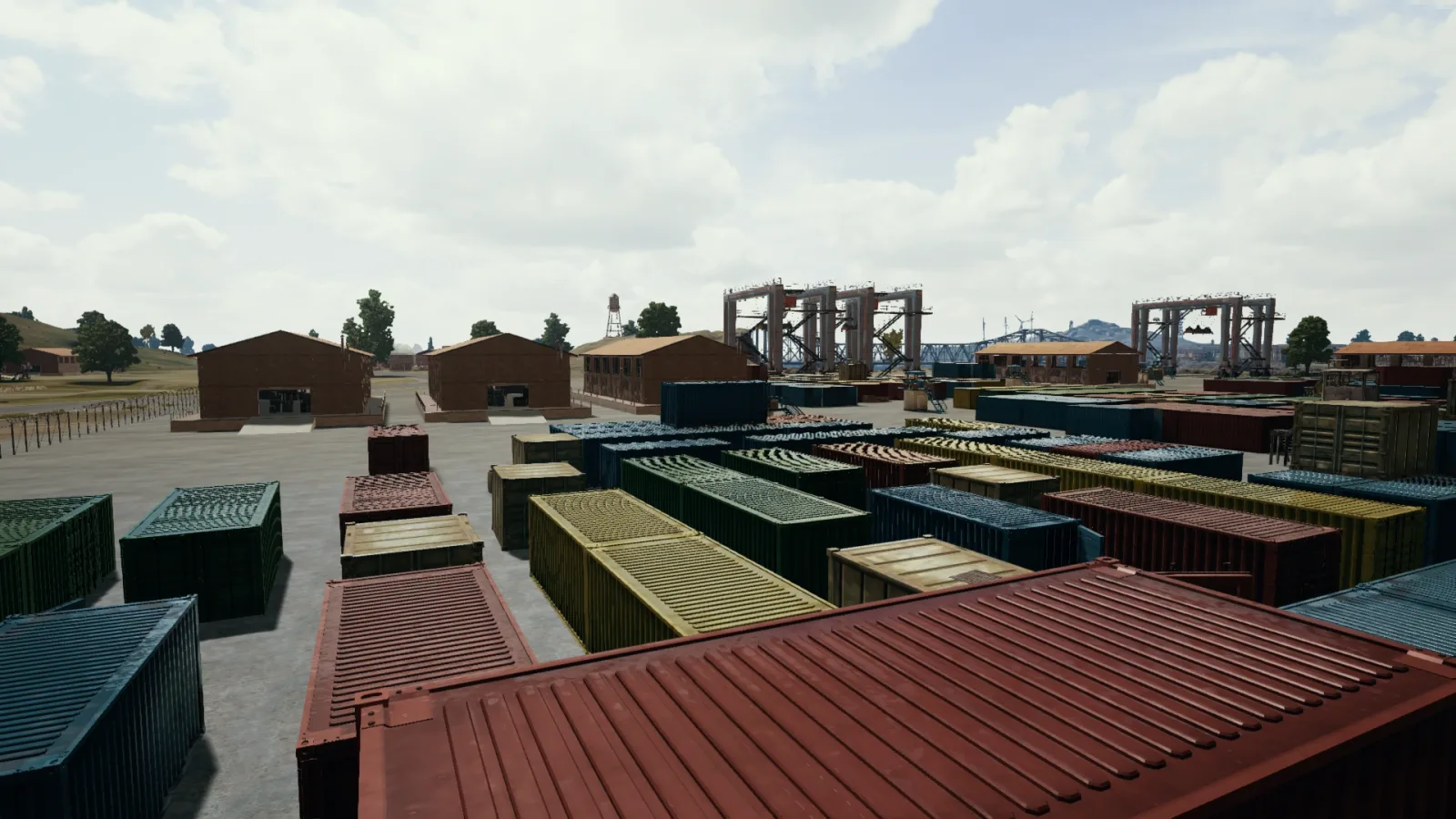
- Rotating / rotation. Moving from one position to the next safe zone, ideally early and through cover. "Rotating to the next circle, follow the treeline." A late rotation is how squads die in the open.
- High ground. Elevated terrain that gives you sightlines down onto enemies and cover from below. Holding high ground is one of the strongest positions in the game. "Take the high ground on that ridge."
- Compound. Any cluster of buildings you can fight in and around — a farm, a warehouse block, a walled lot. "Hold the compound, watch both gates."
- Angle / lane. The line of sight you're covering. "Watch the left angle." A crossfire is two teammates holding different angles on the same enemy so they can't safely face either — the winning squad shape.
- Pinch. Pressuring an enemy from two directions so they have nowhere safe to turn. "Pinch them, I'm coming from the east."
- Flank. Attacking from the side or behind instead of head-on. "I'll flank around the back."
- Off-angle / pre-aim. An off-angle is an unexpected position the enemy won't be watching. Pre-aiming is having your crosshair already on the spot an enemy will appear, so you win the first shot.
- Naked / kitted / geared. Naked means no armor or attachments (the opening of a match). Kitted or geared means you've got good armor, a scope, and attachments. "Don't push, they're kitted and we're still naked."
The drop and early-game slang
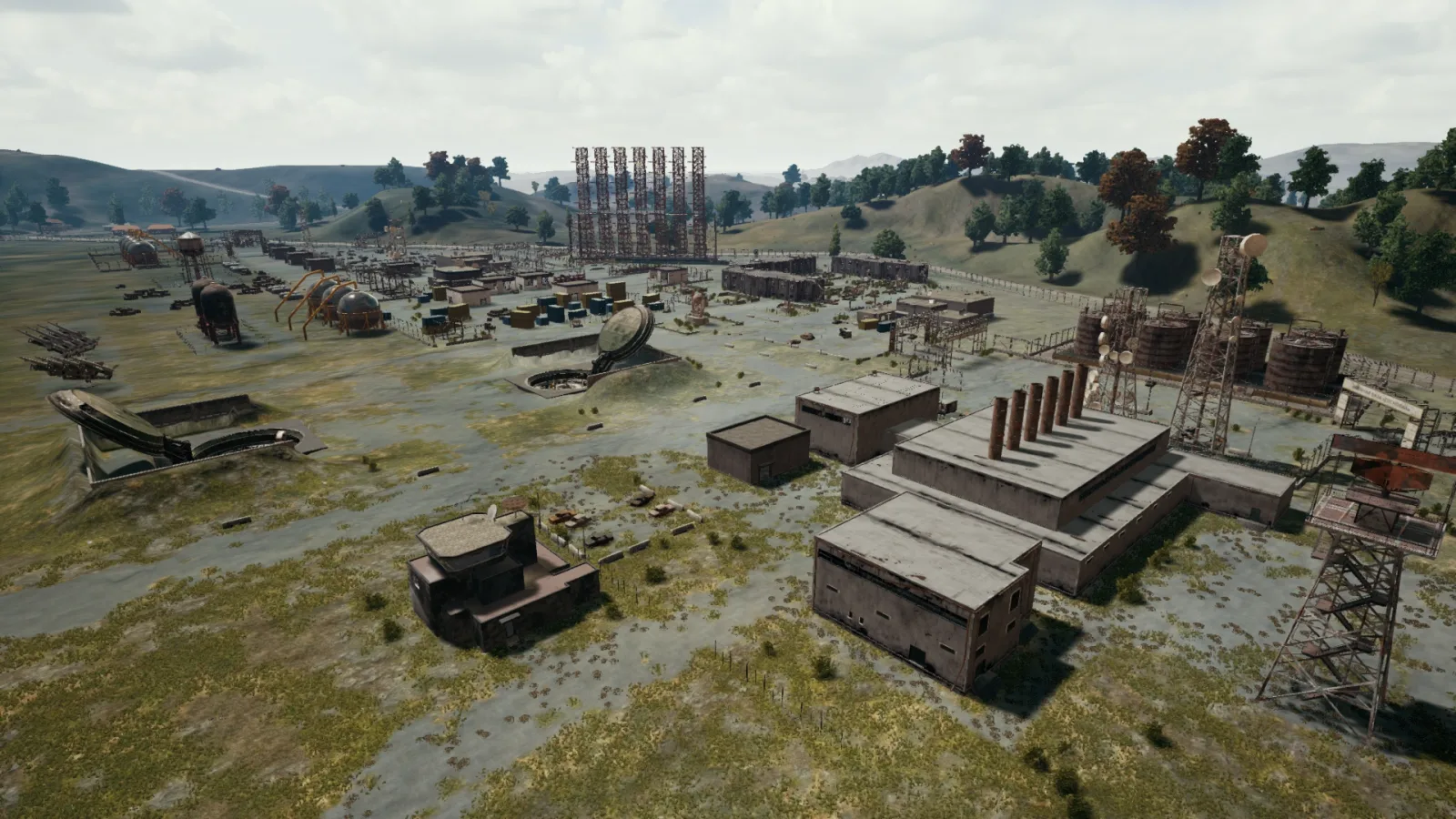
- Hot drop. Landing in a high-traffic, high-loot location where lots of squads land together — instant chaos. Pochinki, Georgopol, the Military Base on Erangel are classic hot drops. "Hot drop or play it safe?" The hot spots shift over time, so the term matters more than any one location.
- Cold drop. The opposite — a quiet, low-traffic spot where you loot in peace and rotate in. Safer, slower.
- Flight path / the plane. The line the plane flies across the map. You jump from it; where you jump decides everything. "Mark the plane, where are we dropping?"
- Marking / pinging. Placing a marker on the map or in the world that the whole squad can see. "I marked the drop." Pinging contacts and loot cuts your comms in half — a marker beats a sentence everyone has to interpret.
- Gunning up. Grabbing a weapon as your first priority on landing, before armor or backpacks. "Gun up first, loot the rest after." A squad with four guns and no helmets beats a squad with four backpacks and no guns in the first thirty seconds.
- Looting / over-looting. Picking up gear. Over-looting is wasting time grabbing things you don't need while the squad waits and the circle moves — a classic new-player time sink (see our looting guide).
Loot, gear, and zone terms
- The blue / blue zone. The shrinking wall of damage that forces players together. Standing in the blue hurts you over time, worse each phase. "I'm in the blue, need to rotate now." The white circle on your map is the next safe zone; the blue is everything outside it closing in.
- The circle / the zone / playing the edge. The circle is the next safe area. Playing the edge means hugging the boundary of the safe zone so enemies can only come at you from one side. "I'm playing the edge, watching inward."
- Crate / care package / airdrop. A supply drop with high-tier loot that falls from a plane during the match, marked by smoke. Powerful but bait — everyone can see it. "Crate landed north, it's a trap, watch it don't grab it."
- Heals / boost / pop a boost. Heals are bandages, first aid kits, and med kits that restore health. Boost items (energy drinks, painkillers, adrenaline) fill your boost bar for passive regen and a small speed bump. "Pop a boost before we rotate" (see our healing and boost guide).
- Attachments / kit it out. The grips, mags, scopes, and muzzles that turn a usable gun into a good one. "Found a 4x, kitting my AR."
- Blue Chip. On maps with recall, a fully-dead teammate drops a Blue Chip you can collect and use at a Blue Chip Transmitter to bring them back in a later phase. "Grab my Blue Chip, recall me next zone."
How to make a callout that actually helps
You don't need to use every word above in one breath. The discipline is simple and it's the same one every good squad runs:
- Direction first, using the compass. Bearing or cardinal — never "left" or "over there." This is the non-negotiable part.
- Distance second. Rough meters is fine: "60," "long, like 200." It tells teammates whether to swing, scope, or ignore.
- Status third. What are they doing and what's their state? "Prone, knocked one, behind the rock, cracked."
- One person talks during the push. Four people calling contacts at once is just noise. In a hot moment, whoever's in the fight gets priority; everyone else fills gaps.
- Call your own status loudly. "Reloading," "knocked, enemy west," "out of position." Your squad can't help with information you didn't give them. A knocked player who calls the enemy's exact spot turns their own down into a trade.
- Drop the storytelling. During a fight, the only words that matter are enemy locations, your status, and the plan. Save the play-by-play for the lobby.
Run those six and you'll be a more useful teammate than someone with twice your aim, because the squad that shares the clearest picture wins the fight before the first bullet lands.
Quick Action Checklist
- Use the compass bar for every enemy callout — bearing or cardinal, never "left" or "over there"
- Make callouts direction, distance, status — in that order, fast
- Learn the difference between knocked (revivable) and finished (dead) and call it
- Trade every knock — when a teammate goes down, shoot the enemy who just exposed themselves
- Watch for and call the third party — a fresh squad cleaning up your fight
- Say what you're doing: "pushing," "peeking," "holding," "rotating," "resetting"
- Gun up before grabbing gear on the drop, and ping the landing spot for the squad
- One person talks during the push; everyone else fills the gaps
- Call your own status loudly — reloading, knocked, low, out of position
Frequently Asked Questions
What does "knocked" mean in PUBG?
What is a third party in PUBG?
How do compass callouts work in PUBG?
What is the difference between pushing, peeking, and holding in PUBG?
What is a hot drop in PUBG?
What does "rotating" mean in PUBG?
Keep Reading
Related Guides
PUBG TPP vs FPP: Which Mode Should You Play?
TPP lets you see over a wall without exposing yourself. FPP makes you earn every look. That one camera difference reshapes how every fight in PUBG plays out — here's which mode to actually queue, and why.
PUBG Ranked Guide: How to Climb the Tiers
Ranked rewards the boring stuff: living to top 10, not your kill count. Here's how PUBG's tiers and RP really work, the playstyle that climbs, and the habits quietly tanking your rank.
Is PUBG Cross-Platform? Who You Can Play With
PUBG runs two separate crossplay systems that do not connect. One puts Steam and Epic Games Store on the same server; the other puts PlayStation and Xbox in the same matchmaking pool. Here is exactly who can queue with whom, why the PC-console gap is structural rather than stubborn, and which consoles can still launch the game at all.
Is PUBG Free to Play? Battlegrounds Plus Explained
PUBG stopped costing money in 2022, but the fine print — what a free account can and cannot do, and what the Battlegrounds Plus upgrade actually unlocks — quietly changed again this June. The cash price is gone; you can now buy your way into Ranked with BP you earned by playing.
Best Weapons in PUBG: Tier List
Every PUBG tier list is out of date the moment a balance patch drops. So here's the list, ranked by role, plus the durable logic to re-tier any gun yourself when the next patch shakes things up.
Best PUBG Loadouts & Attachments
A naked M416 and a fully kitted M416 are basically two different guns. Here's how to build the strongest two-gun loadouts in PUBG and the attachment priority that turns loot into recoil control.