PUBG Looting & Inventory Management Guide
Half the players who die in PUBG die rich — full of loot they never needed and short on the three things that actually keep you alive. Here's how to loot fast, carry smart, and stop hoarding garbage.
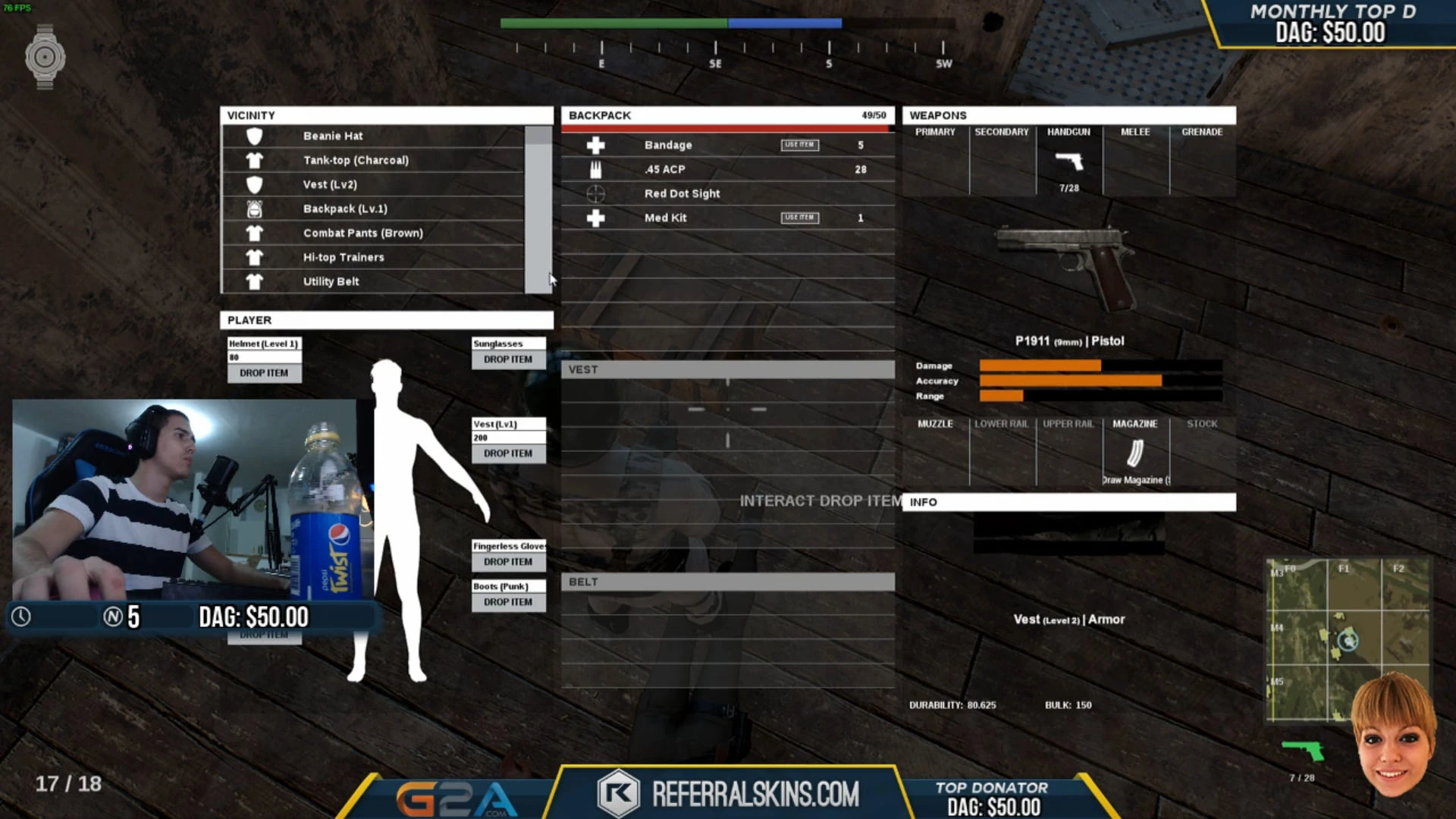
Watch a death cam and count how often the loser had a full backpack. It happens constantly: a player drops with two rifles, a stack of scopes, three smoke grenades, and exactly one first aid kit, because they spent the early game grabbing everything shiny and never built the kit that actually keeps a body alive. Looting in PUBG: Battlegrounds isn't about how much you carry. It's about carrying the right four or five things, fast, and not getting greedy.
This is a fundamentals guide, and fundamentals are where most plateaus break. You can have a great AR and clean recoil control and still lose because you ran out of heals in the third circle or were menu-diving in your inventory when someone pushed your house. Good looting is a skill, it's learnable in an afternoon, and it shows up in your placement immediately.
Why good looters win more fights
Two players land in the same compound. One is fully kitted and rotating within 90 seconds. The other is still in a building four minutes later, comparing two grips and debating a third scope. The first player isn't luckier — they have a priority order in their head and they execute it without thinking. That speed buys two things that win games:
- Time. Every second in a building is a second not rotating, not holding an angle, not getting to cover before the next circle. The fast looter is positioned; the slow looter is exposed.
- Survivability margin. The player who grabbed heals and ammo early can take a fight and recover from it. The player who grabbed a fourth scope is rich and brittle.
The whole skill is internalizing a checklist so you're not making decisions mid-loot — you're just executing. Here's that checklist.
The loot priority order
When you hit the ground, grab things in roughly this order. The first three are non-negotiable before you fight anyone.
- A gun — any gun. The single most dangerous moment in PUBG is the 10 seconds after landing with empty hands. Grab the first firearm you see, even a pistol or SMG, before you do anything else. You can upgrade later; you can't un-die.
- Ammo for that gun. A gun with no ammo is a paperweight. Scoop the matching rounds as you move.
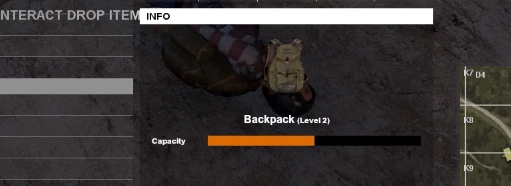
- Armor (vest and helmet) and a backpack. A Level 2 vest and helmet roughly double your survivability over going bare, and the backpack is what lets you carry everything after. Even a Level 1 backpack beats nothing.
- Healing items. Bandages first because they're everywhere, then first aid kits and the big heals. You want a stack before you take a real fight, not after.
- A better gun and core attachments. Now you upgrade — a real assault rifle, then the muzzle/grip/stock that tame it.
- Throwables and a scope. Useful, not urgent. A frag and a smoke earn their slots; a fifth grenade does not.
The rule that fixes most new players: gun, ammo, armor, heals — in that order, before you optimize anything. People die comparing scopes with no bandages in the bag. Get survivable first, get optimized second.
Managing your backpack space
Your backpack determines how much you can carry, and it's tiered. A Level 3 backpack holds dramatically more than a Level 1, which is why it's one of the best non-weapon upgrades on the map — grabbing a bigger pack the moment you see one is almost always worth the stop.
But here's the mistake even good players make: they treat a big backpack as permission to hoard. It isn't. Space is a budget, and your budget should go to the things that win fights — ammo, heals, and a couple of throwables — not to a museum of attachments you'll never put on. A few habits keep your inventory lean:
- Drop duplicate and downgrade attachments immediately. Found a compensator after you already have one on? Drop the spare unless you have a second gun that wants it. Don't let your bag fill with flash hiders you've outgrown.
- Don't carry two of the same caliber's gun "just in case." Two ARs that both eat 5.56 means you're double-spending one ammo pool. An AR plus a DMR, or an AR plus a shotgun/SMG, covers more range bands per slot.
- Dump heavy stuff you're not using. Excess ammo for a gun you dropped, that third scope, the spare vest — clear it. A lighter bag is a faster bag to navigate mid-fight.
The goal is a bag where every slot is pulling weight. If you can't say what a thing is for, it's taking the place of something that keeps you alive.
Attachment triage
Attachments matter enormously — a kitted AR is a different gun than a bare one, as we cover in the loadouts and attachments guide — but you can't carry all of them, so you triage. The priority for an assault rifle:
| Priority | Slot | Grab | Skip / drop |
|---|---|---|---|
| 1 | Muzzle | Compensator (biggest recoil cut) | Suppressor unless you want stealth; flash hider once you have a comp |
| 2 | Grip | Vertical (for spray) or angled (for burst) | Duplicate grips, niche grips you won't use |
| 3 | Magazine | Extended or extended-quickdraw | Spare mags once one's equipped |
| 4 | Stock | Tactical/AR stock on guns that take one | — (it's a quiet, always-worth-it pickup) |
| 5 | Scope | One mid-range (red dot/2x for close, 4x for mid) | A second long-range scope you're not using |
The triage rule: equip the upgrade, then drop what it replaced. The most common inventory bloat is carrying the old attachment after you've put on the better one. If a comp is on the gun, the flash hider in your bag is just clutter. One scope on each gun, the recoil kit equipped, and the rest left on the floor for someone else.
How much ammo to actually carry
More ammo isn't free — it's space and weight you could spend on heals. There's a sane middle between "ran dry in a fight" and "carrying 300 rounds you'll never fire." Rough targets per gun type:
- Assault rifle: around 120–180 rounds. Enough to win two or three sustained fights and reload without panic, not so much that you're hauling a brick.
- DMR or sniper: fewer — these are tap-fire weapons, so 40–60 rounds covers a lot of engagements.
- SMG/shotgun (early game): whatever you find; you'll usually swap off these before ammo becomes the limiting factor.
If you're consistently running out, the fix usually isn't more ammo — it's better recoil control so you land more of what you fire. If you're consistently full to bursting on ammo, you're spending budget that should be heals. Adjust toward whichever problem you actually have.
The heals vs throwables balance
This is the trade-off that decides late-game survival, so it gets its own section. Healing items keep you in fights; throwables let you take and break them. Both compete for the same finite space, and most players over-index on one.
Healing — know what each item is for:
- Bandages are your cheap, common top-off. They heal slowly and only up to 75% HP, but they're everywhere, so carry a healthy stack for between-fight chip damage.
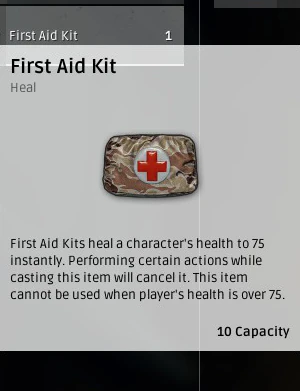
- First aid kits restore a big chunk of health fast (up to 75%) and are your workhorse mid-fight recovery. Prioritize carrying a few.
- Med kits take you to full (100%) but are slow and rare — save them for a safe moment, not mid-gunfight.
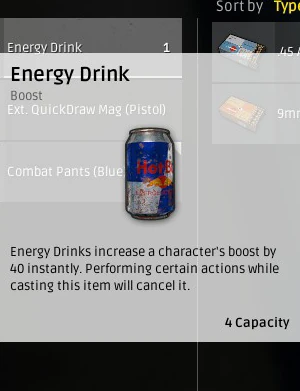
- Energy drinks and painkillers are boost items: they fill the boost bar, which gives you a regen-over-time effect and, when high, a small movement-speed bump. They're not instant heals — they're the steady passive recovery that keeps you topped between engagements.
Throwables — earn their slots, don't hoard them:
- A couple of frag grenades to flush a holder out of cover or finish a knocked enemy.
- A smoke grenade or two to cover a revive, a heal, or a rotation across open ground — arguably the most underused throwable in the game.
- A stun or molotov situationally. Don't carry five of everything; two or three useful throwables total is plenty. The deep dive lives in our throwables and utility guide.
The balance, in one line: heals keep you alive, throwables let you fight smart, and the late game punishes whoever skimped on heals. When space is tight, drop the fifth grenade before you drop a first aid kit.
Loot discipline: knowing when to stop
The hardest looting skill isn't grabbing the right things — it's stopping. Greed kills more players than bad aim. A few discipline rules:
- Looting a kill is the most dangerous moment in PUBG. A downed enemy's loot box is bait. Their squadmate is often watching it. Grab the essentials (ammo, heals, an upgrade), then break line of sight — don't stand over a box rummaging while a third party lines up your head.
- Stop looting when you're "good enough." Once you have a kitted AR, armor, a stack of heals, and ammo, additional loot has sharply diminishing returns. The marginal scope is not worth the time you spend exposed getting it.
- Let the circle set your clock. If the blue zone is closing toward you, the rotation is the priority, not that last building. Players who keep looting into a closing circle die to the zone or to people who already rotated and are holding the edge. Tie this into your endgame circle strategy.
Rich and dead is still dead. The player who loots fast, carries lean, and leaves while they're ahead wins more games than the one with the perfect bag and no time left to use it.
Quick Action Checklist
- Land and grab a gun first — any gun beats empty hands in the opening 10 seconds
- Loot in order: gun, ammo, armor + backpack, heals, then upgrades
- Grab the biggest backpack you see — carry capacity is a top non-weapon upgrade
- Equip the better attachment, then drop the one it replaced — don't hoard duplicates
- Carry roughly 120–180 AR rounds; less for DMRs and snipers
- Keep a real stack of heals (bandages + first aid kits) before taking fights
- Hold 2–3 useful throwables total — a frag and a smoke earn their slots; a fifth doesn't
- Loot a kill fast and break line of sight — the box is bait for a third party
- When you're "good enough," stop looting and let the circle set your rotation clock
Frequently Asked Questions
What should you loot first in PUBG?
How do you manage inventory space in PUBG?
How much ammo should you carry in PUBG?
How many heals and grenades should you carry in PUBG?
What is the difference between bandages, first aid kits, and med kits in PUBG?
When should you stop looting in PUBG?
Keep Reading
Related Guides
PUBG Peeking and Crosshair Placement Guide
Most PUBG fights are decided before either player fully sees the other — by who peeked smart and whose crosshair was already at head height. Here's how to lean-peek, pre-aim, jiggle-peek, and hold angles without feeding free kills.
PUBG Healing and Boost Items Guide
Half the players who die to the blue zone or lose a winnable fight got their healing math wrong. Here's every PUBG heal and boost item, the 75 HP cap nobody explains, and how to manage your boost bar like the good players do.
PUBG Movement and Positioning Guide
Most PUBG deaths aren't aim losses — they're positioning losses you took before the trigger pulls. Here's how to lean-peek, use cover, cross open ground, hold angles, and stop walking into third-parties.
PUBG Item Carrying and Instant Use, Explained
Update 43.1 gave PUBG two systems that skip the inventory screen entirely: carrying an item off the ground with no backpack cost, and using items — heals, a Folded Shield, even C4 — straight from where they're lying. Our Update 43.1 kick coverage gave this two rows in a summary table. Here is everything KRAFTON's patch notes actually say about it: which item categories qualify, what forces you to drop a carried item, and how a full bag stops being a real problem.
Best Weapons in PUBG: Tier List
Every PUBG tier list is out of date the moment a balance patch drops. So here's the list, ranked by role, plus the durable logic to re-tier any gun yourself when the next patch shakes things up.
Best PUBG Loadouts & Attachments
A naked M416 and a fully kitted M416 are basically two different guns. Here's how to build the strongest two-gun loadouts in PUBG and the attachment priority that turns loot into recoil control.