PUBG TPP vs FPP: Which Mode Should You Play?
TPP lets you see over a wall without exposing yourself. FPP makes you earn every look. That one camera difference reshapes how every fight in PUBG plays out — here's which mode to actually queue, and why.
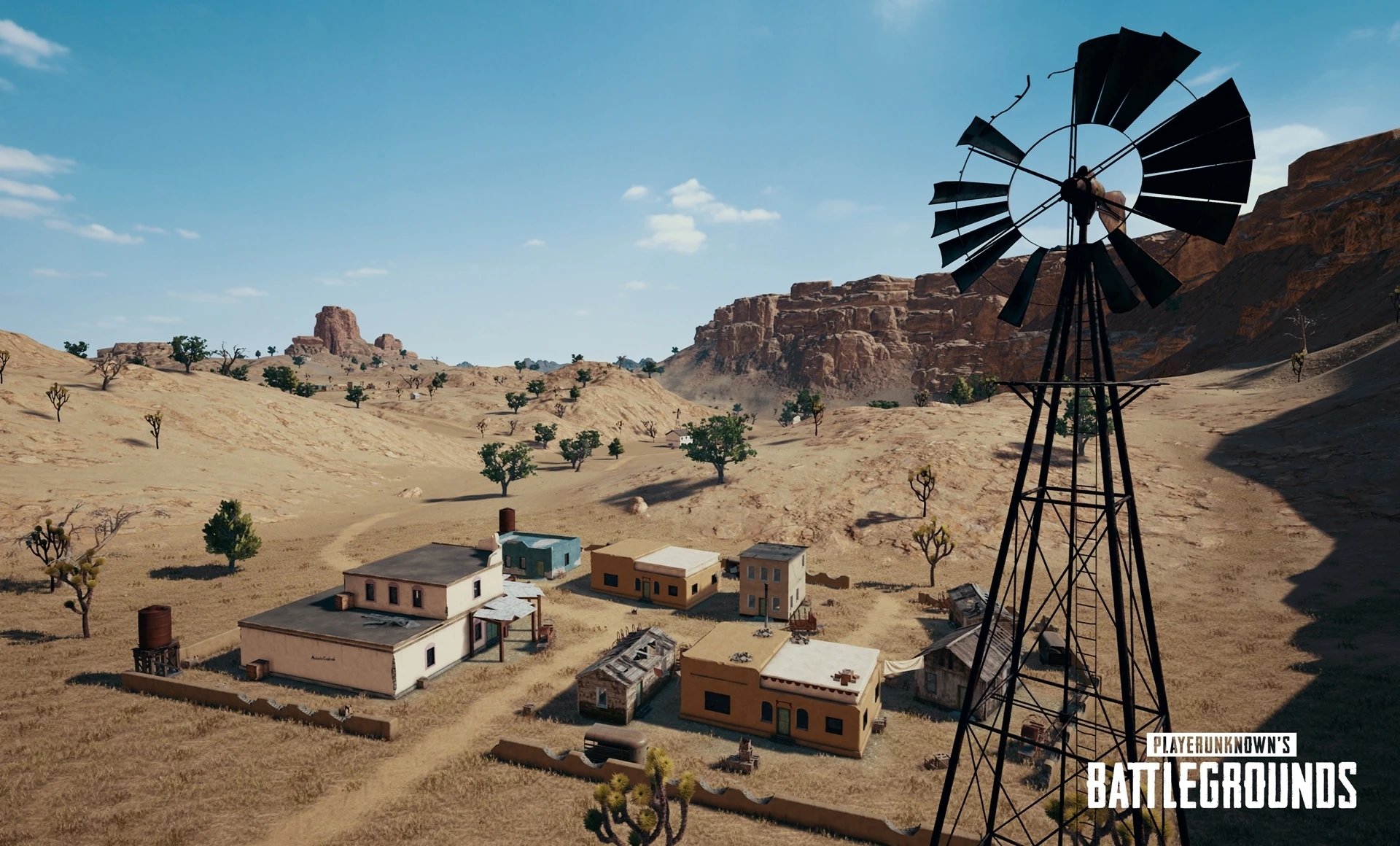
Two players hide behind the same low wall. In third-person, both can see each other coming — the camera floats up and over the wall, so they're reading each other's movement while their characters stay fully behind cover. In first-person, neither sees a thing until someone physically leans their head past the wall and exposes it. Same wall, same players, completely different fight. That single camera difference is the entire debate between PUBG: Battlegrounds' two big modes, and it reshapes everything from how you hold an angle to which mode the pros actually play.
If you're new and just picked "Squad" off the menu, you've almost certainly been playing TPP — third-person perspective — because it's the default. FPP (first-person perspective) is a separate set of queues you opt into, and a lot of players never realize it's there or why they'd want it. This guide is the honest breakdown: what the camera actually does to your fights, the corner-peeking meta that defines TPP, why FPP is the competitive standard, how the queues and regions shake out, and which one you should pick based on what you want out of the game.
The one difference that changes everything
Strip away the jargon and it comes down to where the camera lives.
TPP (third-person perspective) puts the camera behind and slightly above your character, like a drone trailing you. You see your own body, and crucially, you see around and over obstacles your character is hiding behind. Pressed flat against a rock with not a pixel of your character exposed, you can still watch the field beyond it, because the camera is floating above the rock looking out. Your character is safe; your eyes aren't limited to your character's eyes.
FPP (first-person perspective) locks the camera to your character's actual eyeline — you see down the gun, out of the soldier's head, and nothing more. If your character can't see over the wall, neither can you. To look, you have to physically move your character into a position where its eyes clear the cover, which means anyone watching that spot can see you too.
That's the whole thing. Everything downstream — the peeking meta, the pacing, the competitive scene — flows from this one fact: in TPP you can gather information without exposing yourself; in FPP, looking and being seen are the same action.
The clean mental model: TPP rewards positioning and patience because cover doubles as a free periscope. FPP rewards aim and honest information because every look costs you exposure. Neither is "easier" — they reward different skills.
The corner-peeking meta, explained
The defining habit of TPP — the one that drives FPP players up the wall — is corner-peeking (often called "third-person peeking" or "wall-peeking"). Here's how it works and why it dominates.
Because the camera sees past cover, you can stand completely hidden behind a wall, tree, or rock and rotate your view to watch the angle an enemy will come from, all without exposing your character at all. The defender holding that corner has a massive edge: they see the attacker approach, line up their shot, and only break cover at the exact instant they're ready to fire. The attacker, meanwhile, has to physically round the corner to do anything — and the moment they do, they're shot by someone who's been watching them the whole time.
The practical consequences shape every TPP match:
- Holding a corner is enormously strong. A patient defender with good cover can watch multiple approach angles and pick their moment, which is why TPP fights so often favor whoever's already in position.
- Pushing is dangerous. Aggressively rushing a held position means walking into someone who saw you coming. You don't get the element of surprise that FPP can give an attacker.
- It's a skill, not a glitch. Learning to peek the right way around cover — exposing only your gun side, never peeking the same spot twice, jiggle-peeking to bait shots — is the core mechanical skill of TPP. We break the technique down in our movement and positioning guide.
If corner-peeking sounds a little cheap, that reaction is exactly why FPP exists.
How FPP changes the whole game
Switch to first-person and the free periscope vanishes. You can't see over your cover, so you can't gather information for free — and that changes the rhythm of every engagement.
- Looking equals exposing. To check an angle, your character's eyes have to physically clear the cover, which puts you in someone else's sightline at the same time. There's no risk-free peek.
- Pushing becomes viable again. Because a defender can't watch around their corner without exposing themselves, attackers regain the element of surprise. Aggression and good timing are rewarded in FPP in a way they're punished in TPP.
- Aim and crosshair placement matter more. With no third-person camera to scout and pre-orient your view, your raw aim, your recoil control, and where you keep your crosshair carry far more of the fight.
- Awareness gets harder and more honest. You have a narrower field of view and no over-the-shoulder safety net, so sound and genuine map sense replace the camera as your information source.
The common verdict among players who've put time into both: FPP feels more immersive and more "fair," because nobody is seeing you through a wall, but it's also less forgiving. The crutch of the floating camera is gone, and what's left is your aim, your timing, and your discipline.
Which is more competitive
This one isn't really up for debate: FPP is the competitive standard. PUBG's official esports — the tournaments and the top-level ranked grind — are built around first-person precisely because it removes the corner-peeking information advantage and turns matches into a clean test of aim, positioning, and teamwork. When you watch a PUBG event, you're watching FPP.
That doesn't make TPP "casual" in a dismissive sense — it has a huge, dedicated player base and its own deep skill ceiling (mastering peeks, angles, and the patience the mode rewards is genuinely hard). But if your goal is to climb a leaderboard that the best players take seriously, or to play the same game the pros play, FPP is the mode. The over-cover camera is exactly the thing competitive play wants gone, because it lets information substitute for raw skill.
A useful way to hold both ideas at once: TPP is the more popular mode and a legitimate skill test of its own; FPP is the more competitive mode and the closer measure of pure mechanical skill.
Queues, regions, and finding a match
Here's the practical wrinkle a lot of newer players hit. FPP and TPP are separate queues — the game matches them independently, so a TPP Squad lobby and an FPP Squad lobby are entirely different pools of people. You pick the perspective when you pick the mode (Solo, Solo FPP, Duo, Duo FPP, Squad, Squad FPP, and so on).
That separation has real consequences:
- Region decides your FPP queue health. FPP is most popular in North America and Europe, where dedicated FPP queues pop quickly and fill with players who specifically want first-person. In several Asian regions, TPP is overwhelmingly the more popular mode, so FPP queues can be thinner — longer waits, fewer lobbies, sometimes higher latency if you get routed elsewhere to fill a match.
- Off-peak hours hurt the smaller queue. Whichever mode is less popular in your region will feel it most at odd hours. If your FPP queue is slow, it's usually a population-and-timezone problem, not a bug.
- Your matchmaking pool changes with your pick. Because the queues don't mix, your skill matching, lobby quality, and even who you run into are tied to the perspective you choose. Players sometimes switch to the more populated queue in their region simply to get faster, healthier matches.
None of this should scare you off FPP — in NA and EU it's perfectly healthy. Just know that if you're in a TPP-dominant region and your first-person queue is crawling, that's the reason.
Which should you pick, by goal
Match the mode to what you actually want out of PUBG:
- You're brand new and want to learn the maps and survive longer. Start with TPP. The over-cover camera gives you more information and more margin for error while you learn where things are and how fights start. It's the gentler on-ramp, and it's the default for a reason. Pair it with our beginner's guide.
- You want the most immersive, "honest" shooter experience. Go FPP. No seeing through walls, every look earned — it's the purest version of the gunfight.
- You care about aim and want to get mechanically better. FPP, hands down. Without the camera crutch, your aim and crosshair placement improve faster because they have to.
- You want to play the same game as the pros / climb serious ranked. FPP — it's the competitive standard, full stop.
- You love positional, patient, angle-holding play. TPP. The peeking meta is a genuine skill ceiling, and if outsmarting people on positioning is your idea of fun, this is your mode.
- You just want fast matches in a TPP-heavy region. Practically speaking, TPP, because the queue will be healthier — though it's worth queuing FPP at peak hours to try it.
Can you switch, and should you
Yes — nothing stops you from playing both, and many players do, treating them as almost different games. There's even a nuance inside TPP worth knowing: while you're in a third-person mode, you can momentarily toggle into a first-person view (holding the designated key) to aim down sights with the tighter first-person sightline, then drop back to the third-person camera. So TPP players already dip into first-person for precise shots; FPP just makes that view the only one you get.
Our honest recommendation: learn on TPP, then spend real time in FPP if you want to improve. TPP teaches you the maps, the loot, the circle, and positioning with a safety net. FPP then strips the net away and forces the mechanical skills — aim, timing, crosshair discipline — that make you genuinely dangerous in either mode. A player who's grinded FPP usually comes back to TPP a noticeably better shot. Whichever you settle on, the movement and positioning fundamentals carry across both.
Quick Action Checklist
- Understand the core split: TPP's camera floats over cover (free info), FPP locks to your eyes (looking = exposing)
- If you're new, start in TPP — more information, more margin for error while you learn the maps
- Learn to corner-peek correctly in TPP: expose only your gun side, never peek the same spot twice
- Try FPP to build raw aim and crosshair discipline — the camera crutch is gone, so your mechanics improve faster
- Queue FPP if you want the competitive standard — it's the mode PUBG esports is played in
- Expect healthier FPP queues in NA/EU and thinner ones in TPP-dominant regions, especially off-peak
- Remember TPP and FPP are separate matchmaking pools — your pick changes who you face
- In TPP, toggle to first-person for precise ADS shots, then drop back to the third-person camera
- Don't treat it as either/or — learn on TPP, sharpen on FPP, and let each make you better at the other
Frequently Asked Questions
What is the difference between TPP and FPP in PUBG?
Is FPP or TPP better in PUBG?
What is corner-peeking in PUBG?
Is PUBG esports played in FPP or TPP?
Why are FPP queues slower in some regions?
Can you switch between first and third person in PUBG?
Keep Reading
Related Guides
PUBG Callouts and Terms Glossary for Squad Play
Your squad isn't yelling random words at you — they're using a shared language, and not knowing it gets you killed. Here's every PUBG callout and term that matters, in plain English, so you can actually communicate instead of guessing.
Best PUBG Console Settings (PS5 & Xbox)
Default controller settings are why you keep losing gunfights you should win. Here's how to pick a controller layout, dial in three separate sensitivities, set your dead zones, and stop fighting your sticks on PS5 and Xbox.
PUBG Ranked Guide: How to Climb the Tiers
Ranked rewards the boring stuff: living to top 10, not your kill count. Here's how PUBG's tiers and RP really work, the playstyle that climbs, and the habits quietly tanking your rank.
Is PUBG Cross-Platform? Who You Can Play With
PUBG runs two separate crossplay systems that do not connect. One puts Steam and Epic Games Store on the same server; the other puts PlayStation and Xbox in the same matchmaking pool. Here is exactly who can queue with whom, why the PC-console gap is structural rather than stubborn, and which consoles can still launch the game at all.
Best Weapons in PUBG: Tier List
Every PUBG tier list is out of date the moment a balance patch drops. So here's the list, ranked by role, plus the durable logic to re-tier any gun yourself when the next patch shakes things up.
Best PUBG Loadouts & Attachments
A naked M416 and a fully kitted M416 are basically two different guns. Here's how to build the strongest two-gun loadouts in PUBG and the attachment priority that turns loot into recoil control.