PUBG Recall Guide: Blue Chips and Towers
A dead teammate in PUBG isn't a dead teammate. Grab the Blue Chip out of their deathbox, register it at a tower, and they parachute back in. Here's the full Recall system — flight timings, phase cutoffs, what you come back with, and how to deny the enemy the same favour.
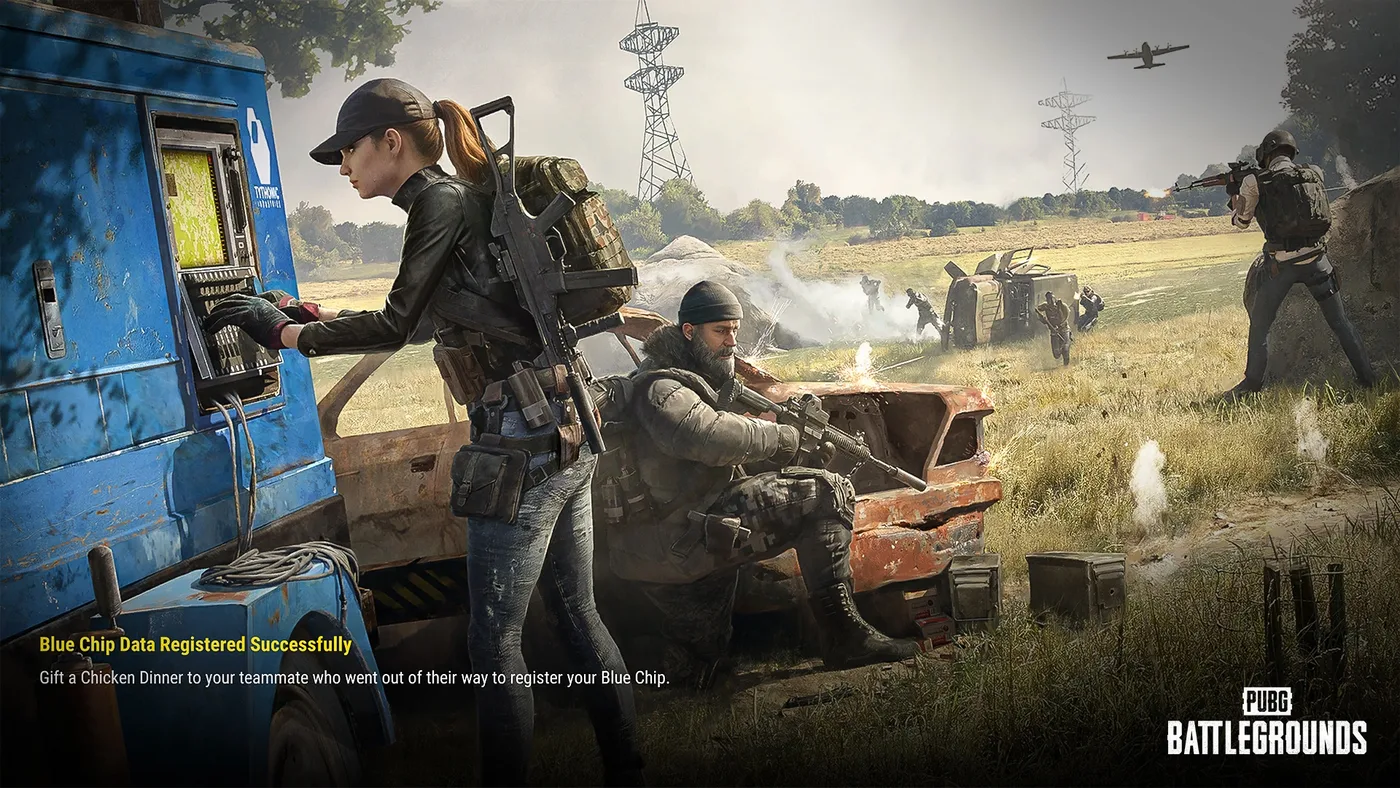
Your teammate got dropped ninety seconds into a Rondo match and is already typing "gg, next." He is wrong. Sitting in his deathbox is a hexagonal blue tile carrying his biometric signature, and if you can walk it to a blue trailer with antennas bolted to the roof and stand perfectly still for ten seconds, he parachutes back into the match on the next flight. PUBG has had a full respawn system since Update 23.2, it has run on every map in the game since Update 35.1, and it landed in Ranked with Update 36.1 — yet squads still throw away winnable games because nobody looted the chip off the body.
This is the system PUBG buried inside patch notes and never really taught anyone until Update 42.2 finally wrote it into the new Basic Training tutorial. It is the eliminated-teammate companion to the reviving and DBNO guide — that one covers the knocked state, where a teammate is down but still on the field. This one starts at the point most players treat as final: the deathbox.
What a Blue Chip actually is
Every player is carrying a Blue Chip from the moment they hit the ground. It's described in-game as "a special chip containing a player's biometric signature," it lives in a dedicated inventory slot (below the Helmet slot on PC, below the Shoes slot on console), and you cannot unequip your own. When you are fully eliminated, it drops into your deathbox for anyone to grab.
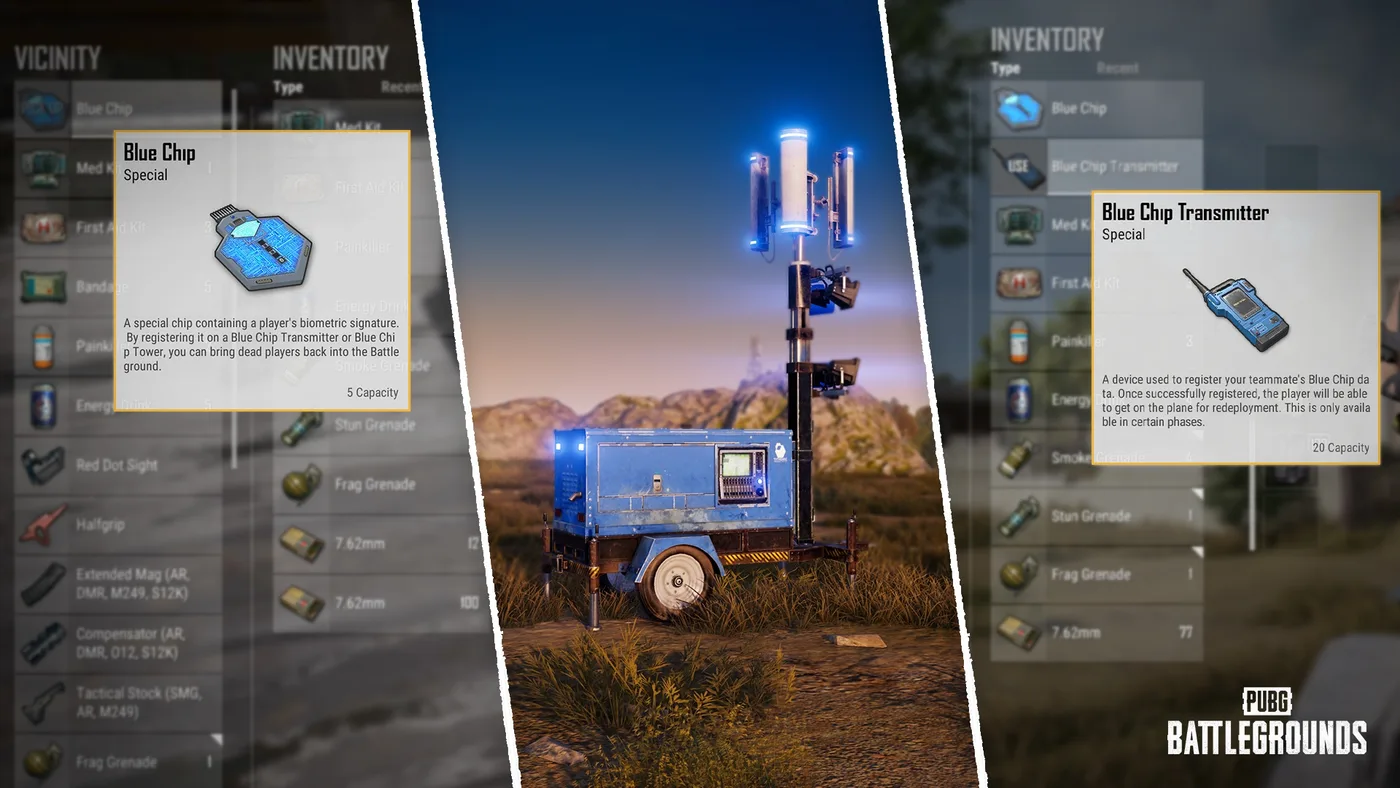
The details that matter in a live match:
- It weighs 5. That's cheap — roughly a couple of frag grenades' worth of space. There is no excuse for leaving one behind because your bag is full.
- Pickup is instant. Update 32.1 made all Blue Chips obtainable with no hold timer, so grabbing one off a body in the open costs you a fraction of a second instead of an exposed animation.
- Your teammates can see where your chip is. Since 32.1, a fallen player's chip location is marked for the surviving squad. That marker disappears the moment a teammate picks it up, or if the chip is destroyed or removed — meaning if the marker vanishes and nobody on your team touched it, an enemy has it.
- The owner's username is always displayed with the chip. You always know whose second life you're carrying, which matters when you're holding three of them and only have time to register one.
- Enemy chips cannot be registered for a recall. You can only bring back your own squad. Enemy chips still have a use, and it's a good one — that's further down.
The single habit that separates squads who use this system from squads who don't: when a teammate dies, someone calls "chip" before anyone calls "loot." A 5-weight item is worth more than the AR in the same box, because the AR doesn't bring a fourth gun back to the fight.
The two ways to register a chip
Holding a chip does nothing on its own. You have to register it, and there are exactly two devices that do it.
| Blue Chip Tower | Blue Chip Transmitter | |
|---|---|---|
| What it is | Fixed trailer-mounted structure | World-spawn item you loot |
| Availability | Spawns randomly each match, marked on your map | Random floor loot, weight 20 |
| Reusable | Yes, unlimited uses | No — consumed on use |
| Registration time | About 10 seconds, plus 5 seconds per extra chip | About 10 seconds |
| Noise | Loud | Audible |
| Cancels if | You move, get knocked, get killed, or press cancel | Same |
| Extra restrictions | None beyond standing still | Cannot be used while DBNO, in a vehicle, or swimming |
| After use | That tower goes on cooldown | Gone from your inventory |
Both let you register multiple teammates' chips at once, and Update 38.1 put a price on that: the tower's registration time now scales with the number of chips, adding five seconds each. Registering one teammate is a 10-second commitment. Registering three is 20 seconds of standing motionless next to a device that broadcasts a loud noise across the valley. That is a very long time to be a stationary target.
Towers tell you their state with a light, and reading it from range saves you a pointless cross-map trip:
| Light | What it means |
|---|---|
| Blue | Ready for use |
| Red | Currently in use — somebody is registering right now |
| Yellow | Temporarily unavailable (recently used) |
| Gray | Unusable — the recall system is switched off for this phase |
A red light is a free kill. Someone is standing next to that tower, immobile, unable to shoot back, and the animation cancels the instant you knock them. Learn what the lights mean and towers stop being map furniture and start being ambush sites.
The Transmitter solves the tower's biggest weakness — you don't have to travel. Pop it from your inventory anywhere, eat the 10-second activation, and the same recall process fires. Using it while prone or crouched automatically stands you up, which is exactly as loud and visible as it sounds, so break line of sight first.
The recall flight clock
This is the part most players get wrong, because the rules changed. Recall flights used to arrive once per phase. Since Update 32.1 they run on their own timeline: one every 2 minutes and 30 seconds from the start of the match, with a limited number per game.
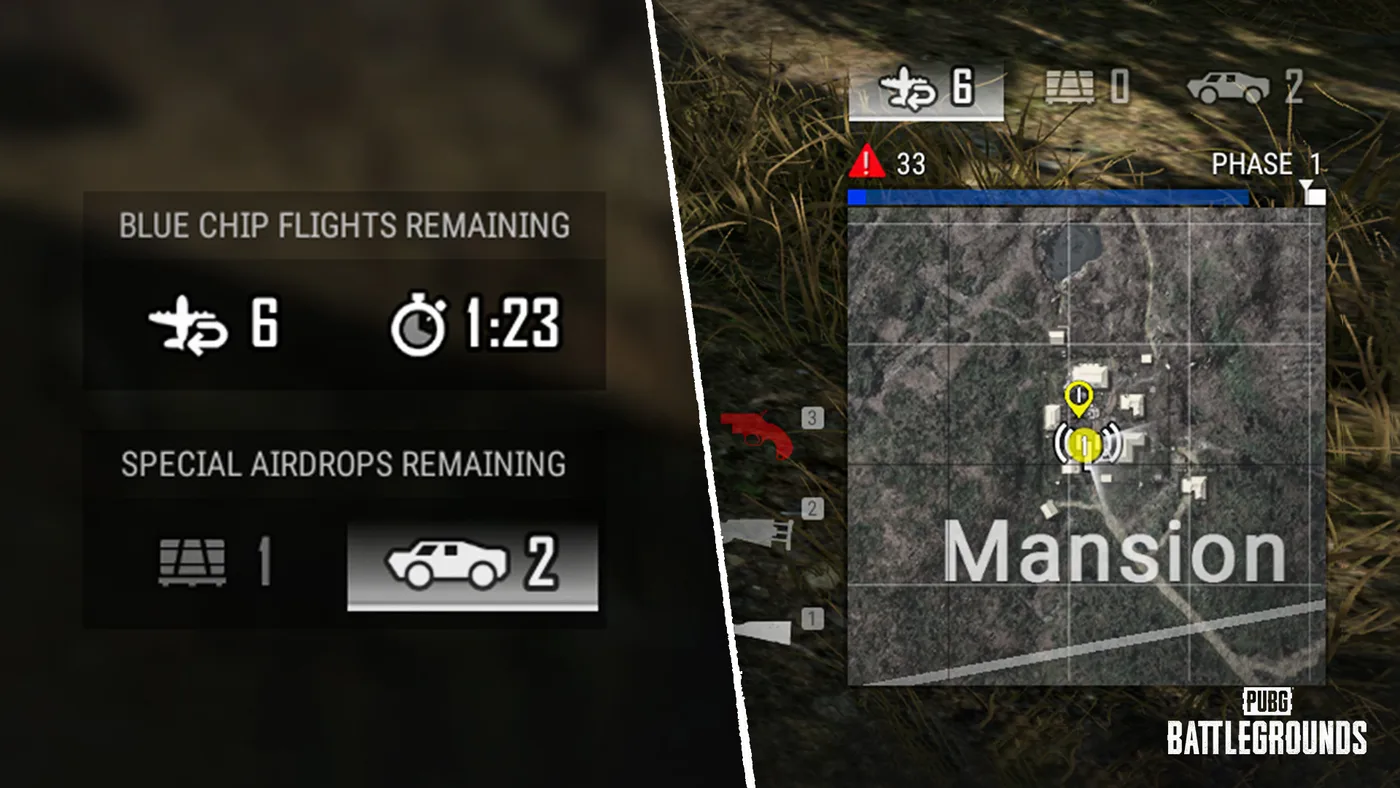
The game tells you where you stand. The remaining flight count and the time until the next one sit in the bottom-right of the World Map, and if you're carrying a friendly Blue Chip the counter also appears at the top of your minimap. Check it before you commit to a tower run — a chip registered thirty seconds after the last flight has left is a chip you carried for nothing.
Late-game cutoffs depend on map size:
| Maps | Recall flights stop appearing from |
|---|---|
| Erangel, Miramar, Taego, Deston, Rondo (8x8 km) | Phase 6 |
| Karakin, Paramo | Phase 5 |
| Remaining maps | Phase 7 |
Update 38.1 also cut one flight from the 8x8 maps' total, so the big maps are stingier than they used to be. And there's a hard edge nobody warns you about: the towers and transmitters deactivate once the final recall flight appears. The device does not politely tell you the plane has already gone. It just goes gray. If you want a teammate back, register before the last flight is in the air, not after.
One more thing changed with 38.1, and it cuts both ways: recall information is now surfaced through system messages and the Match Log. Enemy teams can see that a squad brought someone back. You get that intel about them too — a team that just went from two to three is a team whose new member has nothing in their hands.
What a recalled teammate comes back with
Nothing. That is not an exaggeration and it's the number one reason recalls get wasted.
A recalled player re-enters by parachuting from the recall plane with no weapons and no equipment. Health, boosts, DBNO stack and items are all reset, and they're issued a fresh Blue Chip. They are, mechanically, a naked player dropping into a mid-game lobby where everyone else has a kitted M416 and a level 3 vest.
Recall on your terms, not the game's. The right moment is right after you've won a fight and control a compound full of loot — your teammate lands on a stocked area with cover. The wrong moment is mid-rotation across open ground, where you've handed the enemy an unarmed target descending under a very visible parachute.
Two follow-on details worth internalising:
- The DBNO stack reset is quietly enormous. Bleed-out timers shrink every time you get knocked in a match, so a teammate who'd been knocked four times was on a nearly instant clock. Recall them and that counter goes back to zero. Sometimes the recall is worth more than the body it replaces.
- The last survivor has a job. If the final remaining teammate is eliminated before the recalled player boards the plane, the recall is cancelled and the match ends in defeat. Registering a chip and then immediately pushing a fight is how squads convert a comeback into a loss. Register, then play for time until the plane is in the air.
Calling in supplies with enemy Blue Chips
Update 41.1 (8 April 2026) gave enemy chips a purpose beyond denial, and Update 41.2 (12 May 2026) retuned it into its current shape. At an active Blue Chip Tower, press H to consume 2 enemy Blue Chips and call in a care package.
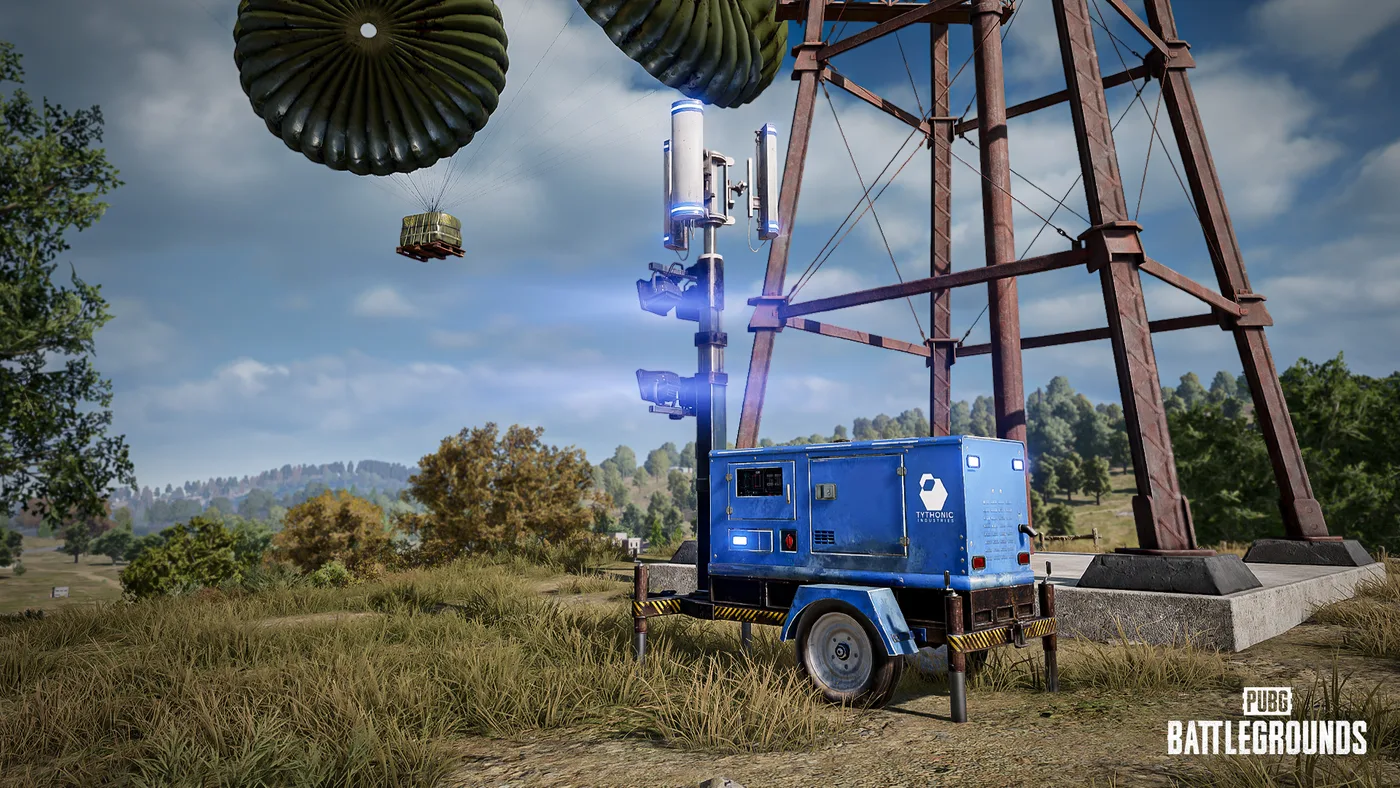
The current 41.2 rules:
- Cast time is 15 seconds — half again as long as a single-chip recall, with the same cancel-on-movement rule.
- The drop is mini-sized, matching the Emergency Support Flare care package rather than the big Flare Gun crate.
- It arrives instantly with no supply plane. No overhead engine noise announcing it, and a much tighter drop area, close to the tower rather than scattered.
- Item counts and drop rates were both reduced from the launch version, so treat it as a tactical top-up, not a guaranteed AWM.
The wrinkle that people miss: the enemy chips you spend are not destroyed. They stay in the tower, and while that tower is active, teammates of the chip's original owner can press F to retrieve them. Farming a wiped squad's chips into a supply drop conveniently tells their survivors exactly where to walk. If you're going to burn enemy chips, be ready to hold the ground around the tower, or accept that you just built the other team a waypoint.
KRAFTON has been visibly wrestling with this feature — the cost went from 2 chips at launch, to 4 on 15 April after it got spammed, then back to 2 in 41.2 with a longer cast and worse loot. Expect the numbers to keep moving; the mechanic itself is stable.
The chip war and how to deny a recall
Once you accept that a body is a resource, mid-game PUBG changes shape. The practical playbook:
- Loot the chip before the gun. Your own teammate's chip is the highest-value item in their deathbox, full stop. It weighs 5.
- Strip enemy chips off bodies you can safely reach. No chip, no recall — you have just permanently reduced a four-stack to a three-stack, and you've banked half a supply call.
- Treat a fallen enemy's deathbox as bait. Their squad can see that chip's marker, and they want it. If you can hold an angle on the box from cover, you're holding an angle on a player who has to walk to a fixed point.
- Watch tower lights when you rotate. A red tower means an immobile player. Approach it the way you'd approach a care package — from cover, with an angle already picked.
- Time your own registration to the flight counter. Register with 30-60 seconds left on the clock so your teammate boards the very next plane instead of standing around as a spectator while you defend a tower you no longer need.
- Bank enemy chips for the supply call. Two chips from a squad you wiped is a free crate at the next tower you pass, and you were carrying 10 weight anyway.
The strategic upshot is that Recall makes the mid-game more violent, not less. A squad that wipes another squad and grabs the chips gets stronger twice over — permanently down an opponent, up a supply drop. A squad that gets a knockdown and immediately rotates away leaves both of those on the ground.
Comeback BR is gone and Self-AED is not
If you learned PUBG a few years ago, you may still be waiting for the Comeback Arena. Don't. Taego's Comeback BR map was removed in Update 31.2 and Vikendi's followed in Update 32.1. Recall is what replaced it, and KRAFTON's stated reasoning was that Recall "demands cooperation and effort from surviving team members rather than just the fallen player" — an early death is now a problem for your squad to solve, not a 1v1 arena you fight your own way out of.
Here's the timeline of how Recall reached its current state, so you know which advice on the internet is stale:
| Update | What changed |
|---|---|
| 23.2 | Recall introduced on Erangel, Miramar and Deston only |
| 24.2 | Blue Chip Detector removed from Tactical Gear entirely |
| 30.1 / 30.2 | Tactical Gear's dedicated slot removed, then Deston's Drone Rooms switched off — the old "you can't use a tower while holding a Drone Tablet" rule went with the Drone |
| 31.2 / 32.1 | Comeback BR removed from Taego, then Vikendi |
| 32.1 | Flights moved to a 2m30s timeline; instant chip pickup; chip locations shown to teammates |
| 35.1 | Recall extended to every map, including Karakin and Paramo |
| 36.1 | Recall added to Ranked, and to Custom Match Esports Mode |
| 38.1 | +5s per extra chip at towers; one fewer flight on 8x8 maps; recalls surfaced in the Match Log |
| 41.1 / 41.2 | Blue Chip Tower Supply Call added, then rebalanced to 2 chips and a 15-second cast |
Note the 24.2 line especially: the Blue Chip Detector no longer exists. Old Deston guides that tell you to run a Detector to sniff out chips in deathboxes and vehicle trunks are describing a piece of Tactical Gear that was deleted for being too strong at revealing enemy positions.
What has survived all of it is the Self-AED — Taego's world-loot self-revive, which picks you up out of the DBNO state with no teammate required and works in both solo and squad. It solves a completely different problem from Recall: Self-AED is for the knocked state, Recall is for after you're dead. Carrying one does nothing for your chip, and holding your chip does nothing when you're bleeding out. See the Taego map guide for where they spawn.
Update 42.2's Basic Training tutorial now walks new players through retrieving a Blue Chip and recalling a teammate at a tower as steps 15 and 16 of 17. That's the clearest signal you'll get that PUBG considers this core knowledge rather than a map gimmick — and if you're still playing like death is permanent, you're the one playing the old game.
Quick Action Checklist
- Call "chip" before "loot" when a teammate dies — it weighs 5 and picks up instantly
- Check the flight counter on your minimap or World Map before committing to a tower run
- Register with 30-60 seconds left on the flight clock, not right after a plane has passed
- Remember the +5-second penalty per extra chip — a triple recall is 20 motionless, noisy seconds
- Read tower lights: blue is ready, red means an immobile player is standing there right now
- Recall after you win a fight, into loot you control — recalled players land with nothing at all
- Keep the last survivor alive until the plane is up, or the recall cancels and the match is lost
- Strip enemy chips off bodies to deny their recall, then spend two of them on a tower supply call
- Register before the final flight appears — towers and transmitters go gray after it
Frequently Asked Questions
How do you respawn a dead teammate in PUBG?
Which PUBG maps have the Recall system?
What do you get back when you are recalled in PUBG?
Can you use an enemy Blue Chip in PUBG?
Does Comeback BR still exist in PUBG?
How many recall flights are there in a PUBG match?
Is the Blue Chip Detector still in PUBG?
Keep Reading
- PUBG: BATTLEGROUNDS — Patch Notes, Update 23.2 (Recall system introduced)
- PUBG: BATTLEGROUNDS — Patch Notes, Update 32.1 (Recall flight timeline revamp)
- PUBG: BATTLEGROUNDS — Patch Notes, Update 30.1 (Tactical Gear slot removed)
- PUBG: BATTLEGROUNDS — Patch Notes, Update 30.2 (Deston's Drone Rooms disabled)
- PUBG: BATTLEGROUNDS — Patch Notes, Update 35.1 (Recall on all maps)
- PUBG: BATTLEGROUNDS — Patch Notes, Update 38.1 (Recall registration scaling)
- PUBG: BATTLEGROUNDS — Patch Notes, Update 41.2 (Blue Chip Tower Supply Call rebalance)
Related Guides
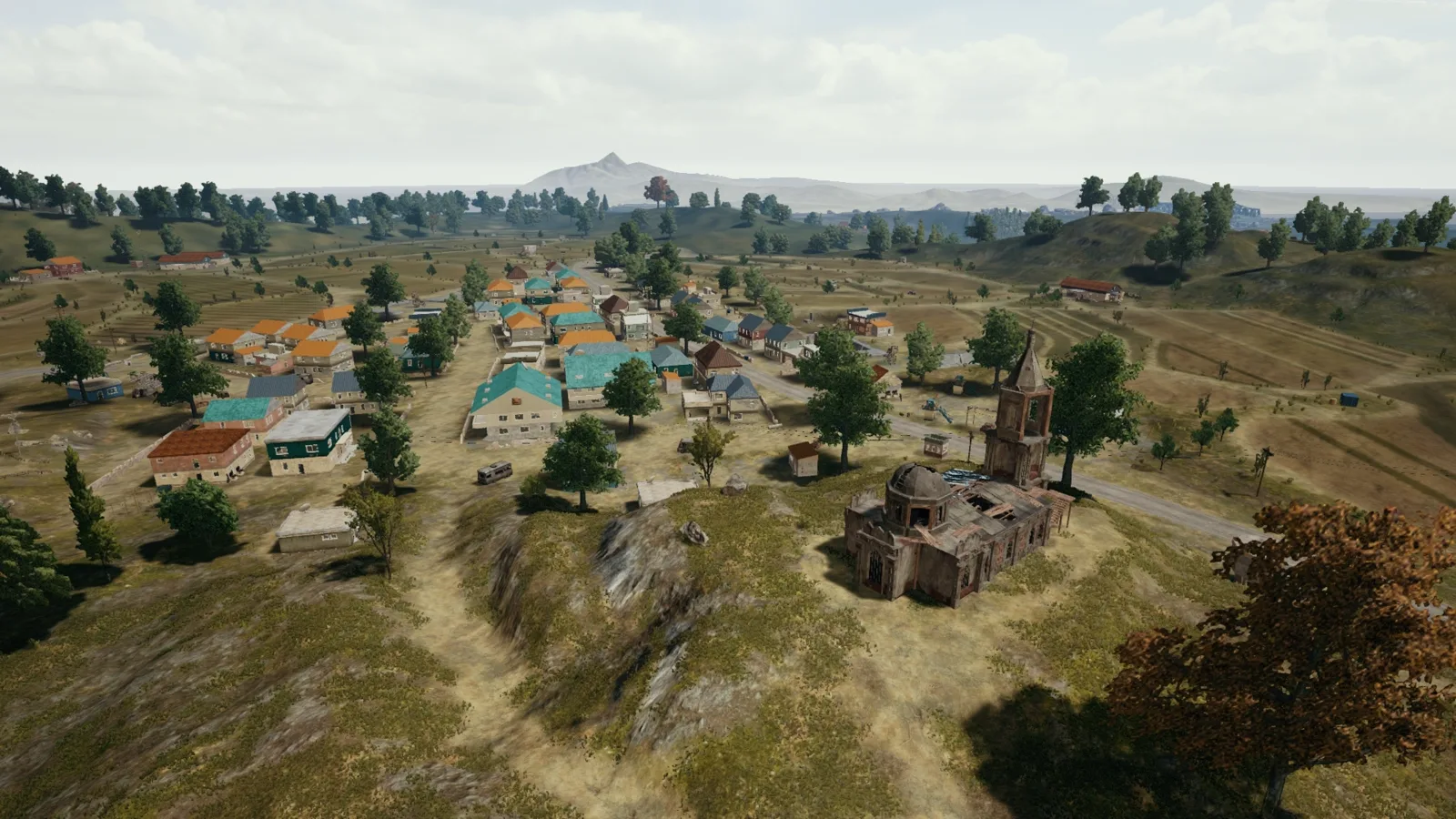
PUBG Duo Strategy Guide: How to Actually Win as Two
Duos is the least forgiving mode in PUBG and nobody talks about it that way. You get exactly one teammate, which means you get exactly one mistake — and the moment you're both down, the game ends instantly with no third player to clean up. Here's how two players actually win.
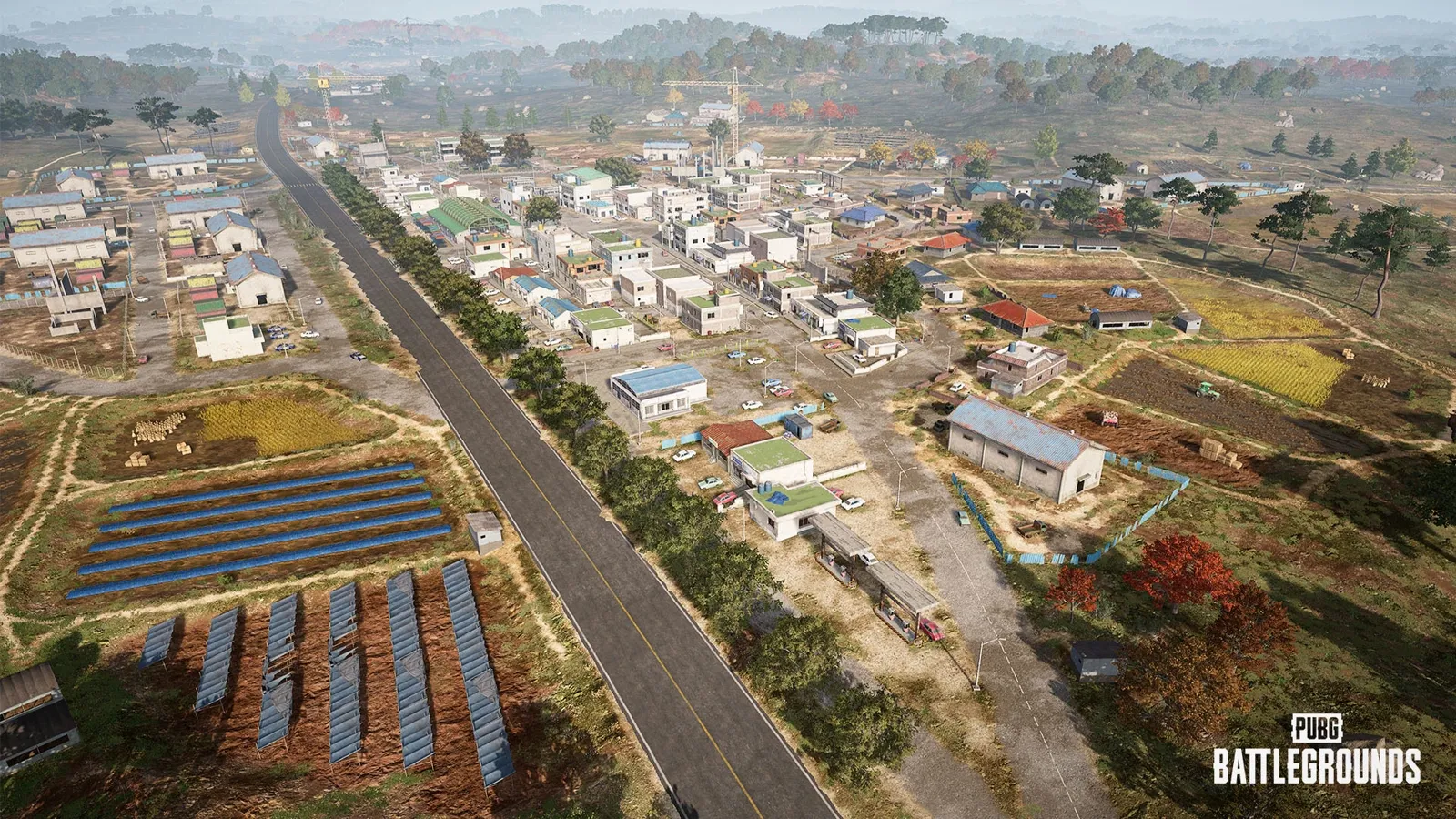
PUBG Team Communication Guide: Comms That Win Fights
Most squads don't lose fights because they got out-aimed — they lose because four people were playing four different games. Here's how to build comms that actually win fights: callout structure, info discipline, who talks when, and how to IGL without being insufferable.
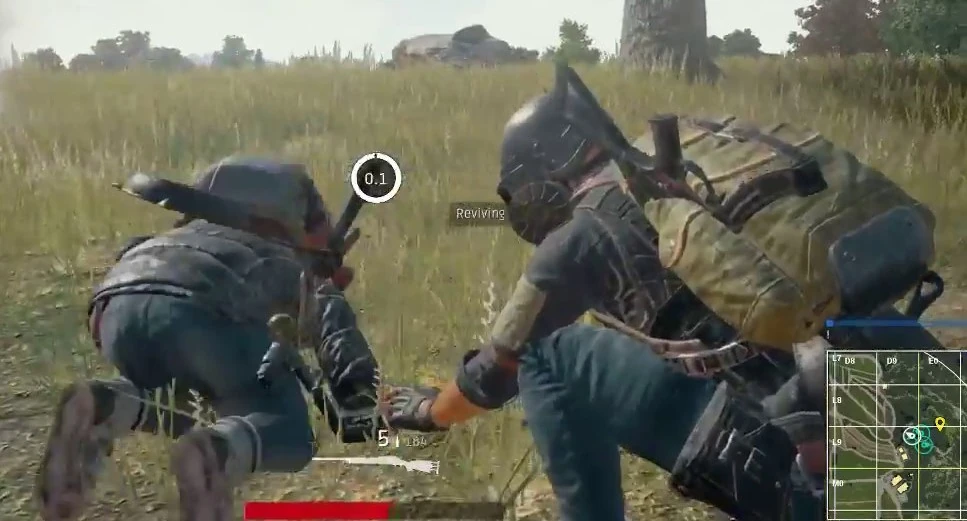
PUBG Reviving & DBNO Guide: Save Your Squad
A knock isn't a kill, and a panicked revive in the open is. Here's how the DBNO state actually works in PUBG — the shrinking bleed-out timer, carrying, smoke revives, and the hard calls about when to save a teammate and when to leave them.
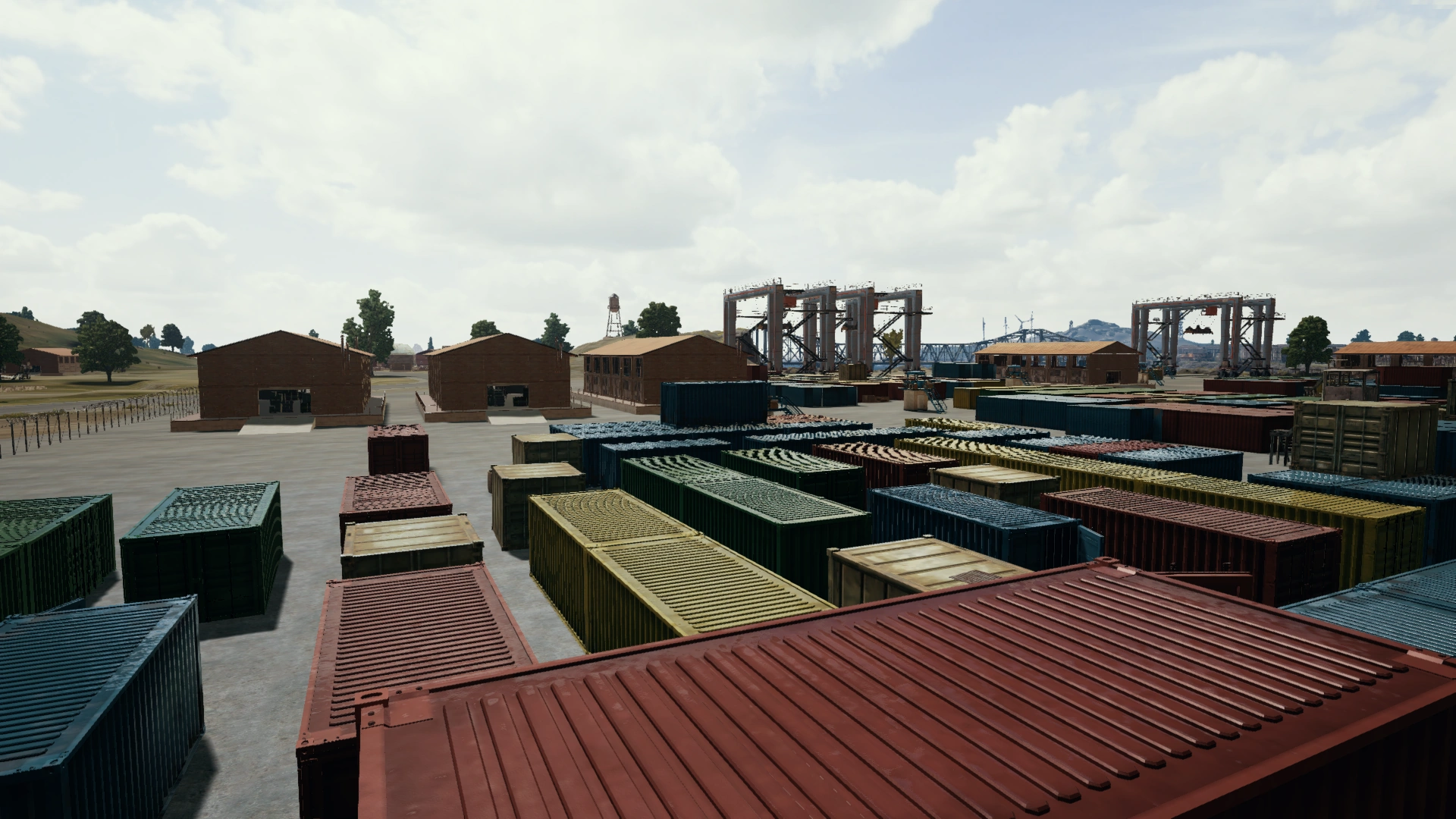
PUBG Squad Strategy: How to Win More Games as a Team
A squad of four randoms loses to a coordinated duo more often than anyone wants to admit. The difference is never aim — it's roles, comms, and moving as one unit. Here's how to actually play PUBG as a team instead of four solos in the same lobby.
Best Weapons in PUBG: Tier List
Every PUBG tier list is out of date the moment a balance patch drops. So here's the list, ranked by role, plus the durable logic to re-tier any gun yourself when the next patch shakes things up.
Best PUBG Loadouts & Attachments
A naked M416 and a fully kitted M416 are basically two different guns. Here's how to build the strongest two-gun loadouts in PUBG and the attachment priority that turns loot into recoil control.