PUBG Duo Strategy Guide: How to Actually Win as Two
Duos is the least forgiving mode in PUBG and nobody talks about it that way. You get exactly one teammate, which means you get exactly one mistake — and the moment you're both down, the game ends instantly with no third player to clean up. Here's how two players actually win.
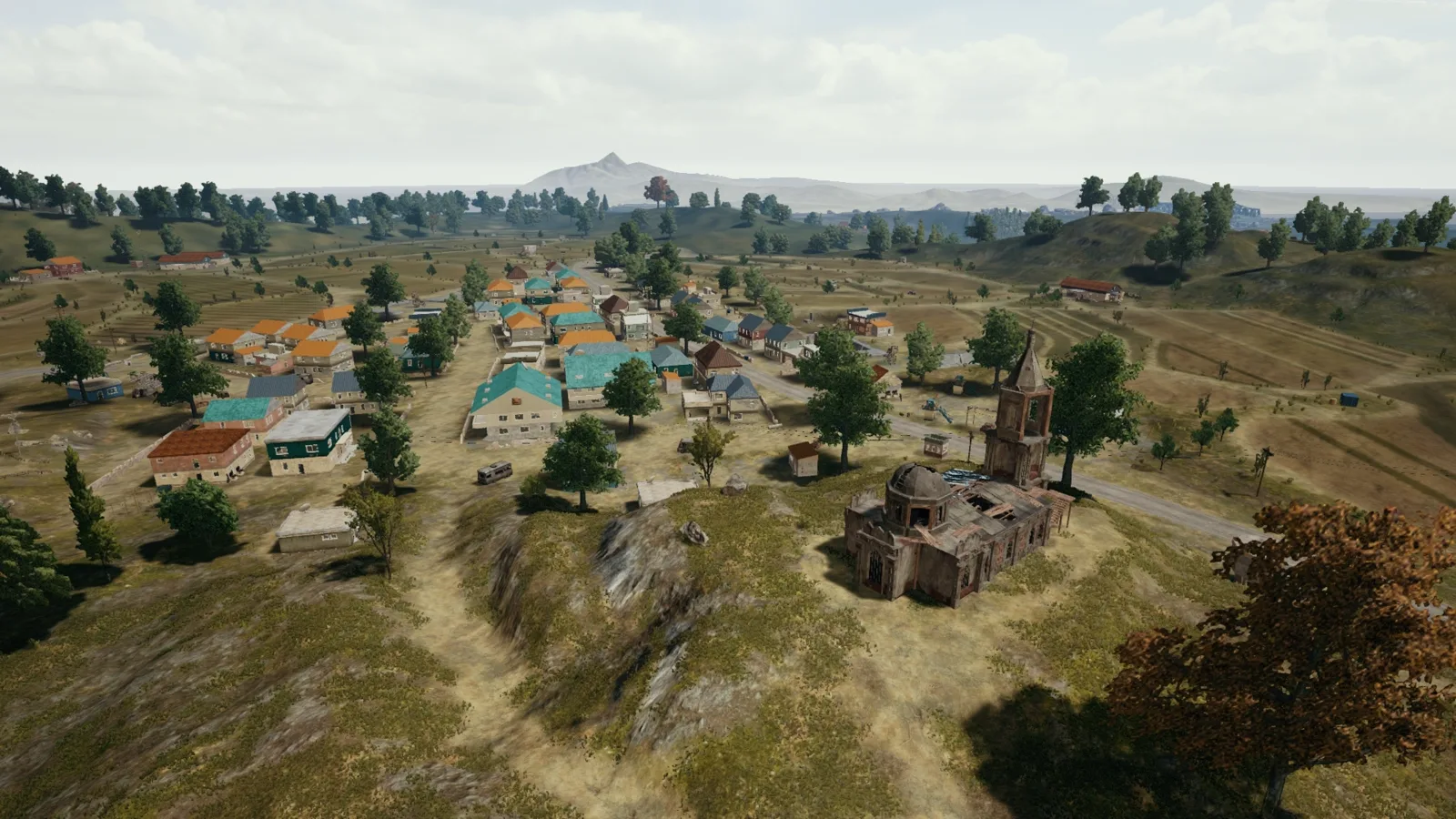
Your partner pushes a compound alone, gets knocked in a doorway, and starts crawling toward you. You sprint across forty meters of open field to pick him up because that is what teammates do. The guy who knocked him was watching his own handiwork the entire time. He drops you mid-revive, and because you were the last one standing, your partner dies on the floor the instant your health hits zero. Match over. Two players, one bad decision, no third teammate to fix it.
That is the entire mode in one paragraph. Duos gets treated like squads with two empty slots or solos with a friend along for company, and it is neither. It is its own thing with its own math, and the math is meaner than either. This guide covers the duo-specific stuff: the knock rules that punish you harder than they punish squads, trading, role discipline, rotating with half a squad's firepower, and when picking your partner up is the correct play instead of a double elimination.
Two players, zero slack
Duos pairs you with exactly one other person, and unlike squads, you cannot queue it alone — the mode requires a second player by design. That sounds obvious until you look at what it actually means for how much room you have to be wrong.
A squad of four has redundancy built in. One player can push badly, get knocked, and the remaining three still hold angles, trade the kill, and run the revive. The squad absorbs an individual mistake and keeps functioning. A solo has no redundancy at all, but it also has no obligations — nobody to save, nobody whose mistakes become yours.
A duo sits in the worst spot on that curve. You have a teammate, which means you inherit every one of his mistakes, but you only have one, which means there is no third player to cover for either of you. When your partner goes down, your team's firepower drops by fifty percent instantly. In a squad, that same knock costs twenty-five percent and three people are still shooting. That gap is why duo fights swing so violently: the first knock in a duo engagement is very close to the whole fight.
So the operating principle for the entire mode: you are not playing to get kills, you are playing to never be the team that takes the first knock. Everything below is downstream of that.
The knock math that defines duos
You have to understand the DBNO rules precisely, because duos punishes ignorance of them more than any other mode. When your HP hits zero with a teammate alive, you enter the DBNO ("Down But Not Out") state: you can crawl and drop items, but you cannot shoot and you cannot use items. A bleedout timer starts ticking down, and when it reaches zero you die for good — no revive for the rest of the match.
The details that actually matter:
- The timer pauses while a revive is in progress. It does not decrease while a teammate is actively reviving you. That means a partial revive is not wasted — it buys time even if he has to break off and fight.
- Every subsequent knock bleeds you out faster. The revive timer decreases at a faster rate for each additional DBNO state you enter that match. Your fourth knock gives your partner dramatically less time than your first. A player who keeps getting knocked becomes progressively less rescuable, which is a real reason to stop pushing after your second down.
- You can be carried. Your partner can pick you up and move you to cover instead of reviving you in the open — and carrying you to a safer spot before starting the revive is usually the right call.
- If the last player standing goes down, everyone already in DBNO dies instantly. This is the rule that defines duos. In a squad, you being knocked while a teammate is also knocked still leaves two players who can sort it out. In a duo there is no margin: if your partner is on the floor and then you get knocked, both of you die immediately. The bleedout timer becomes irrelevant.
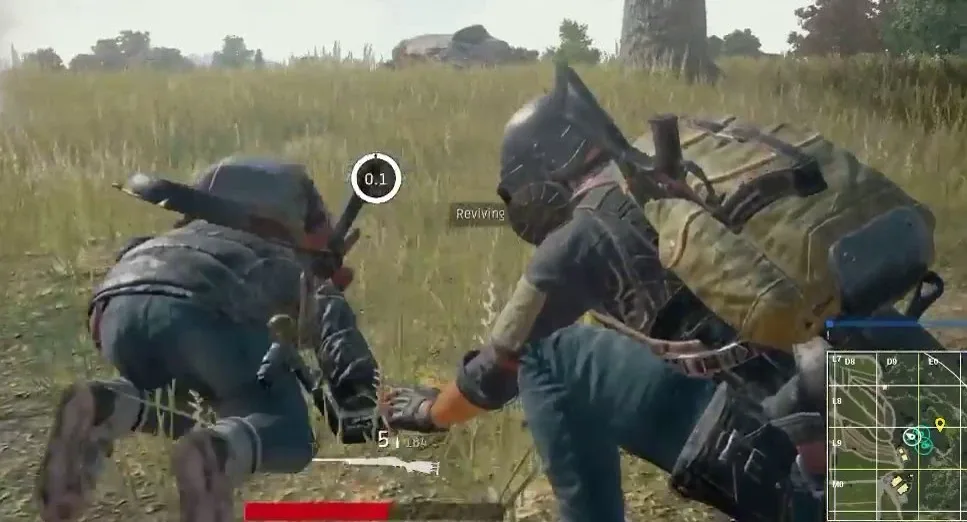
Read that last one again, because it reframes every revive you will ever attempt. A duo revive is never free. When your partner is down, you are the last player alive on your team, which means your own knock is not a setback — it is the end of the match for both of you. Squads can gamble on a risky pickup. Duos genuinely cannot, and the players who understand this win a lot of games against better shooters. Our PUBG reviving and DBNO guide covers the mechanics in full depth.
Drop together, loot apart
Duo drops split the difference between the solo and squad approach. Two guns can contest a small town outright, which a solo cannot — but two guns lose the floor scramble at a genuine hot drop, where squads land four-strong and simply out-body you.
The shape that works:
- Land close enough to trade, far enough to loot. Same cluster, different buildings — usually adjacent structures with line of sight between them. Close enough to punish anyone who jumps your partner, far enough that you are not splitting one floor's loot while a third party walks in.
- Pick a town you can actually own. Smaller Erangel towns like Zharki give a duo a full kit with little competition — guns, armor, and heals without flipping seven coins in the first two minutes. Our best PUBG landing spots guide ranks drops by loot quality versus contest level.
- Call your building before you land. Not after. The most common duo drop failure is both players sailing toward the same roof and splitting one building's loot while the pair next door kits up fully.
- Set a hard leave time. Duos rotate slower than squads because you have fewer eyes to clear ground, so you cannot afford a leisurely loot phase. Kit up, meet, move.
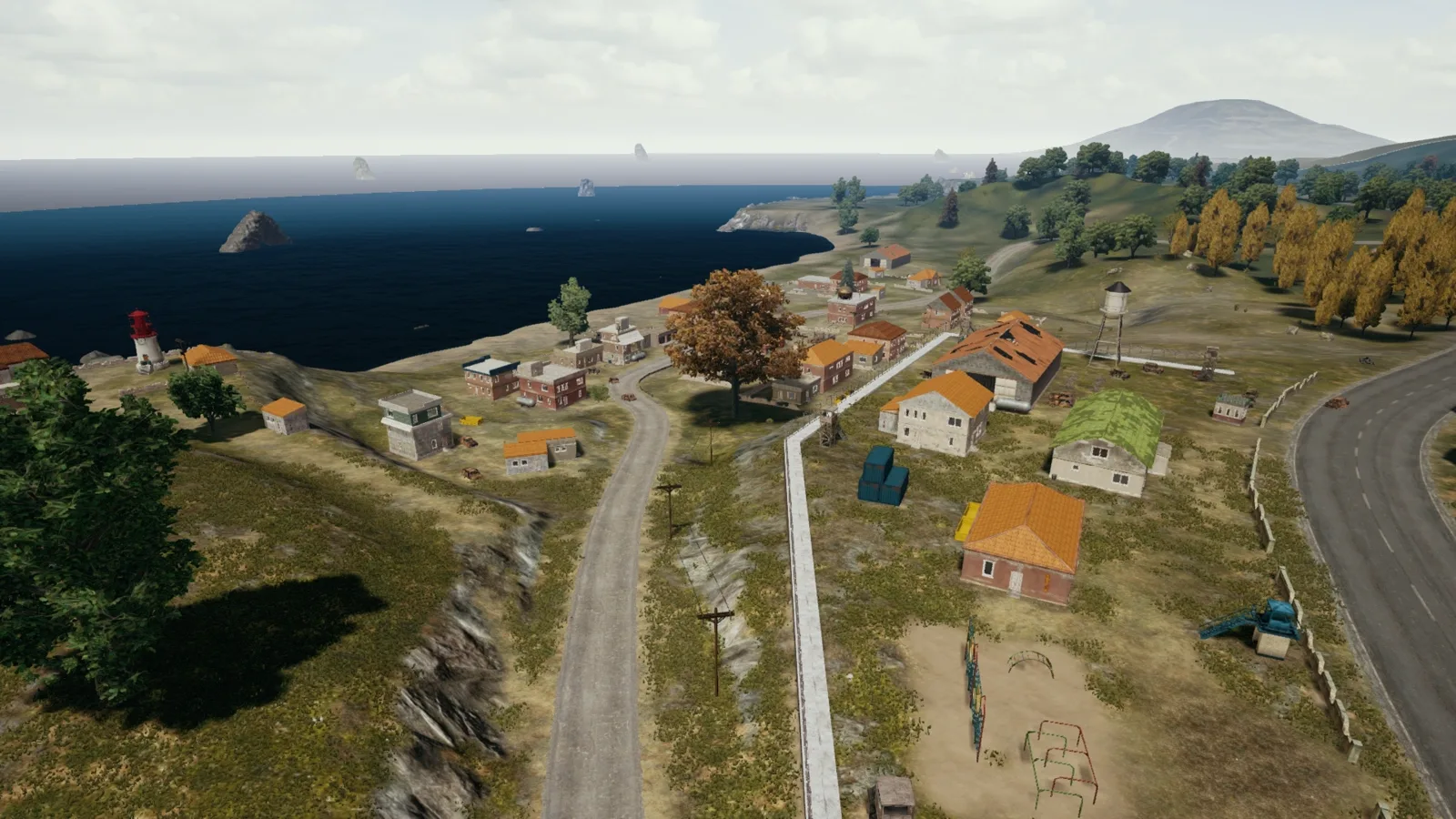
If you do contest a hot drop as a duo, land tight rather than spread — two players on the same roof can clear it together and then hold the stairwell.
Who pushes and who holds
Squads run dedicated roles because they have the bodies for it — an entry fragger, a support, a sniper, an in-game leader. A duo cannot afford fixed roles like that. You need both players capable of both jobs, switching based on position rather than preference.
The rule is simple: whoever has the better angle pushes, and the other one holds the angle he cannot see. Not "whoever is more aggressive." Not "whoever called it." Position decides.
In practice that looks like:
- One entry, one cover. When you clear a building, one player goes through the door and one holds the outside — the window the enemy might jump from, the treeline he might run to, the door on the other side. The person outside is not being lazy; he is the reason the entry survives. Our PUBG compound clearing guide breaks the entry down room by room.
- Never peek the same angle. The single most common duo error. Both players scoped on the same window means the enemy flanking from the left kills you both in sequence. If you are both looking at the same thing, one of you is redundant and the team is effectively a solo with a spectator.
- Swap roles by geometry, not ego. If your partner is stacked on the door and you are thirty meters back with a scope, he entries and you cover. If you rotate and the positions flip, so do the jobs. No arguing about it mid-fight.
- Stagger your reloads and your heals. Two players reloading simultaneously is a free push for the enemy. Same with healing. One of you is always able to shoot — call it out loud.
Trading: the skill that separates duos
Trading means that when your partner gets shot, you kill the shooter immediately. Not eventually — immediately, before the enemy can reset. It is the whole reason a duo beats two solos who happen to be standing near each other, and it is where most duos actually lose games.
You can only trade if you are in a position to trade, which imposes real constraints on how you move:
- Stay inside trade range. If your partner is eighty meters ahead and gets dropped, you are not trading, you are watching. The right distance depends on terrain, but the test is constant: if he gets shot right now, can I punish the shooter before he repositions? If no, close the gap or tell him to slow down.
- Trade first, revive second — always. The instinct when your partner drops is to run to him. Wrong order. The shooter is still there, still aiming at the body, waiting for exactly that. Kill him first. The bleedout timer gives you room to work; a bullet to the back while you are locked in a revive animation does not.
- The knock is information. Your partner going down tells you where the enemy is — a free positional read paid for in blood. Do not waste it by sprinting into the same line of fire that just produced it.
- Punish the enemy trade attempt. The other duo is trying to do this to you. When you knock one of theirs, their partner is about to peek to trade. Expect it and pre-aim the angle he has to come from.
Rotating as two
Rotation is where duos quietly lose more games than in gunfights. You have half a squad's ability to clear ground and half its ability to spot threats, but the same circle timer and the same map to cross. Erangel is an 8x8 km map where the distance between major landmarks makes vehicles close to mandatory, and that pressure hits a duo harder than a four-stack.
- Rotate earlier than you think. With two players you cannot fight through a contested rotation the way a squad can — so arrange not to have to. Leave early, arrive before the fight, and be the team already holding the good position. Our PUBG blue zone rotation guide covers the timing.
- A vehicle is two-thirds of your rotation plan. It is also a noise beacon. Park it away from where you intend to sit — a car dumped at your front door is a map marker pointing at you.
- One drives, one watches. The passenger is scanning, calling, and ready to bail to the correct side. Two players staring at the road is how duos get shredded in transit.
- Do not rotate through the middle of everything. Squads can bulldoze through a contested compound; a duo routes around it. Every fight on the way costs HP, ammo, and time with no third player to cover it.
The revive decision
Every duo game comes down to a handful of moments where your partner is on the floor and you have to decide. The bad players always revive. The good players decide. Here is the actual decision tree.
Revive when:
- You killed or drove off the shooter first. The area is clean, the threat is gone, and now it is just an animation. This is the only genuinely safe revive.
- You have smoke and the terrain to use it. A smoke grenade over the body is the classic tool for an open-ground pickup — throw it, get inside it, and revive under cover. Keeping one smoke for exactly this is one of the highest-value inventory slots in duos. Our PUBG throwables and utility guide has the deployment details.
- You can carry him out first. Drag him behind the wall, then revive. The carry costs seconds but removes the angle that knocked him in the first place.
Do not revive when:
- The shooter still has the angle on the body. You will be knocked mid-animation, and because you are the last one alive, your partner dies instantly with you. This is a double elimination dressed up as loyalty.
- You are low and he is at full bleedout with time to spare. Heal first, in cover. A revive performed at 15 HP just means two knocked players in ten seconds.
- The circle is about to make the position untenable anyway. Sometimes the answer is to break line of sight, let the timer run, and rebuild. Losing your partner is bad. Losing the match is worse.
The hard version of this: sometimes the correct play is to leave him. If he is knocked in the open, the shooter is holding the angle, and there is no smoke and no carry route, walking away and playing the 1v2 is genuinely better than gift-wrapping a double kill. It feels terrible. It also wins games. If it comes to that, our PUBG clutch and 1vX guide covers the math of the outnumbered fight.
Endgame as a duo
Late-game duos is where the mode's identity gets sharpest. Small circle, teams of two everywhere, and the first knock decides almost every engagement.
- Hold two angles, not one position. Your entire structural advantage over a solo is covering two directions at once. Split just far enough to cover a crossfire but stay in trade range. Standing shoulder to shoulder throws away the only thing that makes you a team.
- Do not both commit to the same fight. When another duo engages, one of you takes the fight and one watches for the third party — and in a final-three scenario there is always a third party. Our PUBG third-party guide covers the punish.
- A knock is a countdown, not a win. When you knock an enemy, his partner has a live revive timer. You do not have to rush. Hold the angle on the body, let the partner come to you, and win a fight where you know exactly where he has to appear.
- The last-player rule dominates the last circle. Once your partner is down in the endgame, you are playing a solo with a hostage — one knock and it is over instantly. Play tighter, slower, and behind more cover than feels necessary. Our PUBG endgame circle strategy covers holding the final zones.
Quick Action Checklist
- Remember the rule that defines duos — if your partner is down and you get knocked, you both die instantly
- Play to never take the first knock; one down cuts your firepower by half
- Land in the same cluster but different buildings, and call your building before you land
- Whoever has the better angle pushes; the other holds the angle he cannot see
- Never peek the same angle as your partner — two players, two directions, always
- Stagger reloads and heals so one of you can always shoot
- Trade first, revive second — kill the shooter before you touch the body
- Stay inside trade range; if you cannot punish the shooter, you are too far
- Carry to cover or smoke the body before reviving in the open
- Keep one smoke grenade reserved specifically for pickups
- Rotate earlier than a squad would, and park the vehicle away from your position
- In the endgame, hold two angles and never dump both players into the same fight
Frequently Asked Questions
What makes PUBG duos different from squads?
Should you always revive your partner in PUBG duos?
What is trading in PUBG duos and why does it matter?
How should a duo split roles in PUBG?
Does the DBNO bleedout timer get shorter each time you go down?
Keep Reading
Related Guides
PUBG Recall Guide: Blue Chips and Towers
A dead teammate in PUBG isn't a dead teammate. Grab the Blue Chip out of their deathbox, register it at a tower, and they parachute back in. Here's the full Recall system — flight timings, phase cutoffs, what you come back with, and how to deny the enemy the same favour.
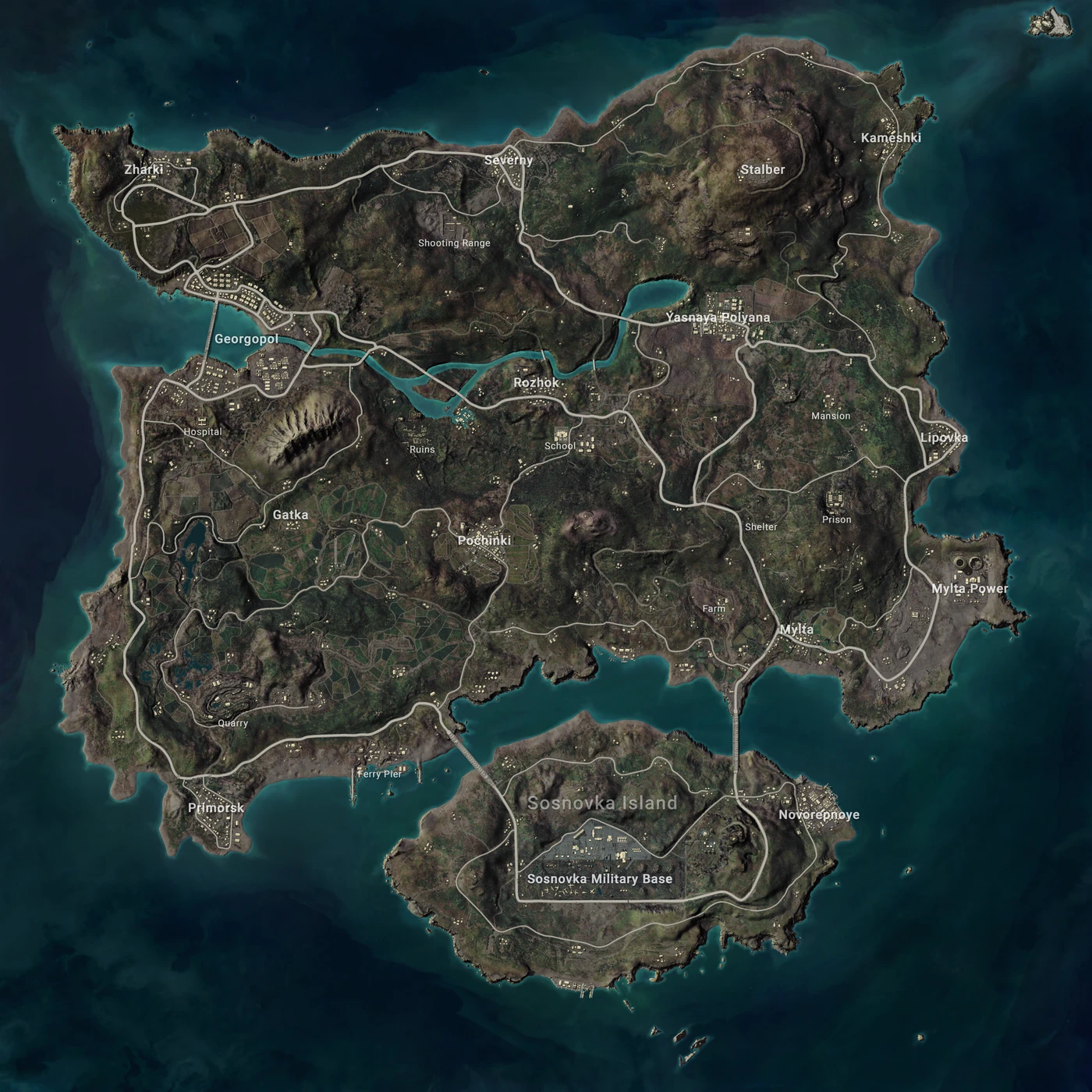
PUBG Mid-Game Guide: Own Phases 2 Through 5
You survived the drop and you'll survive the final ten — but the match is decided in the messy middle, phases two through five, where most players just react to the blue and hope. Here's how to turn the mid-game into a lead instead of a coin flip.
PUBG Flanking Guide: Win Fights From the Side
A head-on peek war between two decent players is a coin flip. A flank removes the coin. Here's how to get to an enemy's blind side, when it's worth it, and how to close the kill without handing it back.
PUBG Third-Party Guide: Avoid and Exploit the Third
The player who wins a PUBG fight and the player who wins the lobby are usually different people — and the difference is the third party. Here's how to stop getting jumped mid-fight and how to be the one doing the jumping.
Best Weapons in PUBG: Tier List
Every PUBG tier list is out of date the moment a balance patch drops. So here's the list, ranked by role, plus the durable logic to re-tier any gun yourself when the next patch shakes things up.
Best PUBG Loadouts & Attachments
A naked M416 and a fully kitted M416 are basically two different guns. Here's how to build the strongest two-gun loadouts in PUBG and the attachment priority that turns loot into recoil control.