Riftbound Sealed and Draft: The Limited Format Rules
Riftbound Limited is not constructed on a budget - it switches off most of the deckbuilding rules you learned. Sealed hands you six packs and a 25-card minimum, Draft hands you three packs and a 20-card minimum, and both let you run ten copies of the same card, ignore Unique, and play cards that are banned in Standard.
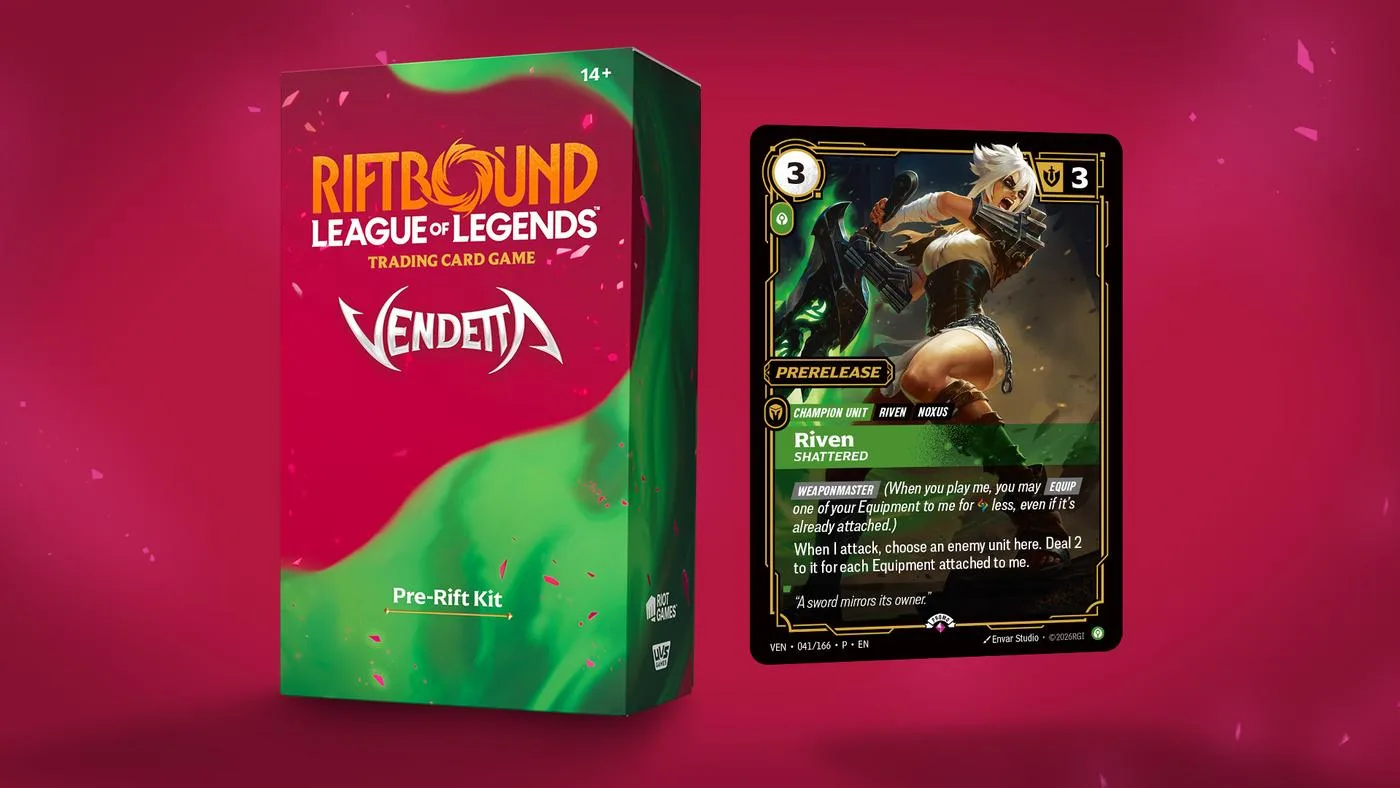
Six packs, and the deck you build out of them can be 25 cards, contain ten copies of the same Poro, ignore the word Unique, and legally run a card that is banned in Standard Constructed.
Riftbound Limited is not constructed play on a smaller budget. It is a different rules set, and it works by switching off most of the deckbuilding constraints you spent your first month learning. Most of it lives in section 602 of the official Tournament Rules - the same document that carries the penalty ladder. The version in force until 15 October is dated 16 July 2026 and runs 50 pages. Riot's 9 October update, 53 pages and effective from 16 October, adds two limited clarifications, flagged where they apply, and otherwise leaves the section 602 rules cited below unchanged.
If you have only ever built from your own collection, deckbuilding basics is the constructed half. This is the other one.
What Riftbound counts as a Limited event
Rule 602.1.a defines it in a single line: a limited competition is one where all product needed for play is provided during the competition. That is the whole test. Every Pre-Rift, every Sealed side event, every draft pod - if the store hands you the cards, you are in Limited.
Four consequences fall straight out of that definition:
- A card may only go in your deck if it was provided to you as part of the competition (602.1.a.1). Your binder stays shut. Some events also hand out promos that the head judge will specifically rule out of your pool.
- The Standard ban list does not apply. Rule 602.1.b: even if a card is banned in constructed, it is legal in a limited deck as long as it is not also banned in that limited format. Every entry on that list - seven cards and five battlefields since Riot's 18 September 2026 update - is fair game if you open it.
- Bad product gets replaced, not tolerated. 602.2 says there is no guarantee any specific sealed product is correctly collated. If the rarity or frequency in a pack looks wrong, you must call a judge, and the head judge may swap it.
- You keep what you opened, even if you drop. Rule 414.5: players who drop out of a limited tournament own the cards correctly in their possession at that moment, unopened packs included.
There is also a rule for events where the organizer cannot supply the product: officials may allow players to bring their own, but player-brought product must be pooled and redistributed randomly (602.2.d). You do not get to open the box you brought.
Sealed: six packs and a 25-card minimum
Sealed is the format a Pre-Rift runs on, so it is the one attached to every set launch.
You get 6 unopened boosters (602.4.a.1) and build from what is inside them. The rules that change from constructed are worth reading in full, because most of them are permissions rather than restrictions:
- Main Deck minimum is 25 cards, and you can play more (602.4.a.2). There is no maximum.
- Your domain identity is any three domains, or any one domain plus the domains of your Champion Legend (602.4.a.3). Riot's plain-English version, from its own Pre-Rift explainer: "Sealed decks can use up to three domains of cards and Runes. If you use a Legend or Signature card, that covers two of your domains."
- Your Chosen Champion does not have to match your Legend. Any Champion Unit inside your three domains qualifies, even one whose champion tag has nothing to do with the Legend you are running (602.4.a.3.a). Riot's example: Nasus, Ascended as your Chosen Champion, Lightning Rush in the deck, Shen, Eye of Twilight as your Legend - domains Calm, Chaos and Order.
- Signature spells work without their champion, as long as they fit fully inside your identity (602.4.a.3.b). The rulebook's example: a Fury/Body/Order deck can play Fury/Order or Body/Order signature spells, but not Fury/Mind or Body/Chaos ones.
- Copy limits are gone. 602.4.a.6 spells it out with a joke that is also a legal ruling: you may run 10 Pouty Poro if you opened 10. The Unique keyword does not apply in Sealed either.
- You can play with no Legend and no Chosen Champion at all. The deck is still legal. The compensation is written into 602.4.a.5.b: you draw an extra card at the start of your first Beginning Phase each game. If you are missing both, you still only draw one.
Your sideboard is not a curated ten cards - it is everything in your pool you did not start with (602.4.a.7). And between games you may change your domain identity, your Rune Deck, your Legend and your Chosen Champion (602.4.a.7.a). Constructed allows only the last of those: its Runes, Legend and Battlefields are locked once the deck is registered, though the Chosen Champion can still change while sideboarding (403.4.a, 403.4.b).
Riot's 9 October update also touches how many cards you swap. The Tournament Rules in force until 15 October word the general sideboard rule (403.4) as a 1-for-1 exchange with Main Deck cards, with no exception for limited. The update, effective 16 October, clarifies that the 1-for-1 exchange applies in constructed only: a limited Main Deck can change size between games, as long as it still meets the format's minimum after sideboarding (403.4.c).
Team play scales the pool rather than doubling it: in 2v2 Sealed the team shares a single pool of 8 packs for two decks (603.6), which the 2v2 rules guide covers in more detail.
Draft: three packs, eight players, 39 cards
Draft has been in the Tournament Rules since shortly after Origins, and it is the format Riot is now openly building sets around.
You get 3 boosters, and pods are seated randomly at "as close to eight players as possible" (602.4.b.1, 602.4.b.2). The procedure is precise enough to be worth memorising:
- Open one booster and remove the Rune or token first - you keep it, and it is not part of the draft.
- Check that the remaining pack holds thirteen undamaged cards with a correct rarity distribution. If it does not, call a judge.
- Pick one card onto a single unobscured facedown pile in front of you, then pass the rest facedown to your left. Repeat until the pack is empty.
- Pack two passes to the right. Pack three passes to the left again.
- A card that has hit your pile is selected and cannot go back.
Do the arithmetic and it lands exactly where the rules say it does: three packs of thirteen, drafted around a table, leaves each player 39 cards as their limited pool (602.4.b.2.c). Draft Main Decks must be at least 20 cards (602.4.b.3) - five fewer than Sealed, because a drafted pool is 39 cards against the 78 that six Sealed packs yield once each pack's rune-or-token slot is set aside.
Everything else matches Sealed: any three domains, any Chosen Champion inside them, signature spells without their champion, no copy limits, no Unique, legal with no Legend, sideboard equals the rest of your picks.
The etiquette rules are the part that carries teeth. At high Organized Play Level - Competitive and Professional - you may not use electronic devices as a strategic aid, may not take outside assistance, may not reveal or discuss what you have seen, and cannot look back at your own picks except during intervals a judge designates between packs. At Casual, the head judge can allow the first three, and looking back at your own picks is allowed outright as long as you are not holding other cards at the same time. And 602.4.b.2.g draws a hard line: trying to learn the fronts of cards another drafter is holding or has taken is cheating. Seeing card backs is explicitly fine.
Timing follows the same ladder. Professional drafts must be timed; Competitive drafts are timed at the head judge's discretion; Casual drafts are untimed but you still have to pick at a reasonable pace.
The constructed rules Limited switches off
Side by side, using Standard Constructed as the baseline from rule 601 and CR 103:
| Rule | Standard Constructed | Sealed | Draft |
|---|---|---|---|
| Card pool | Your collection, Standard-legal sets | 6 provided packs | 3 packs, drafted down to 39 cards |
| Main Deck size | Exactly 40 | At least 25 | At least 20 |
| Copies of one named card | Up to 3 | Unlimited within your pool | Unlimited within your pool |
| Signature cards | 3 total, matching your Legend's tag | Any that fit your domains | Any that fit your domains |
| Chosen Champion | Champion tag must match your Legend | Any Champion Unit in your domains | Any Champion Unit in your domains |
| Domain identity | Your Legend's domains | Any three domains | Any three domains |
| Playing with no Legend | Not legal | Legal, and you draw 1 extra card per game | Legal, and you draw 1 extra card per game |
| Unique keyword | Applies | Does not apply | Does not apply |
| Banned list | 7 cards and 5 battlefields (18 Sep 2026 list) | Legal unless banned in that limited format | Legal unless banned in that limited format |
| Rune Deck | 12 runes matching your Legend | Basic runes from any source, matching your identity | Basic runes from any source, matching your identity |
| Battlefields | 3, from your own cards | Your pool, or blanks | Your pool, or blanks |
| Sideboard | 10 or fewer registered cards | Your entire unused pool | Your entire unused pool |
| Changing Legend or runes between games | Not allowed after registration | Allowed | Allowed |
The row that changes how you build is the domain one. Constructed asks you to pick a Legend and accept the two colours it locks you into. Limited hands you three domains and lets the pool decide, so an off-domain bomb is a reason to move a domain rather than a reason to leave the card in the box.
Blank battlefields, and where your runes come from
Two supply problems get solved by rule rather than by product.
Runes. You may use any number of the six basic Runes from any source, whether or not you opened them (602.1.a.2). The event organizer supplies them. What you cannot do is play runes outside your declared domain identity.
Battlefields. Limited decks can use battlefields from the pool or any number of "blank" battlefields - and you may deliberately choose a blank over one you opened (602.3.d). A blank battlefield is a battlefield with no rules text and otherwise normal in every respect. At low OPL it can be represented by anything all players agree on. At high OPL it must be an official Riftbound card in an opaque sleeve, cardback facing out (602.3.d.2.a).
How you present them depends on match structure. In best-of-one you register three battlefields to randomly select from during setup, blanks included. In best-of-three you pick any battlefield from your pool or a blank at the start of each game - but a specific physical copy is usable only once per match, so a named battlefield is only repeatable as many times as you actually opened it (602.3.e.3, 602.3.e.4.a).
Riot's 9 October update, effective 16 October, adds one best-of-one line. New rule 602.3.g says the sideboarding step of the optional best-of-one setup procedure (406.1.h), which otherwise lets players sideboard before each game as if between games of a best-of-three, does not apply to best-of-one limited competitions.
Registering a pool without handing over a game loss
At high OPL the head judge must require registration of the Sealed pool before deck construction begins (602.4.a.8.a). The procedure in 602.4.a.8 is a cross-table system, and it is not the obvious one:
- Everyone receives unopened product at their seat.
- Players on one side of the table (A) open their product while the players opposite (B) watch, checking quantities and rarity distribution.
- Those opened cards are placed next to B.
- The sides swap: B opens, A observes, and B's cards end up next to A.
- Each player sorts and registers the pool sitting next to them - your opponent registers your cards, and you register theirs.
- Pools and registration sheets go back across the table, and each player verifies their own pool was recorded correctly.
- Deck construction begins. The starting configuration and sideboard get written on the same sheet as the pool.
Riot's recommended clock is 20 minutes for registration and 30 minutes for deck construction, extendable to 45 minutes at low OPL events where players are seeing the cards for the first time - which is exactly what a Pre-Rift is (602.4.a.8.k).
Step 6 is the one to take seriously. A decklist error in Riftbound is a flat Game Loss with no warning tier, so "I verified my own sheet" is not a formality, it is the last checkpoint before the error becomes your problem rather than the person who wrote it down.
One more carve-out: some events hand out preconstructed decks instead of packs. Those count as Sealed decks, you must play exactly what you were given, and any event addendum overrides the Sealed construction rules above (602.4.a.9).
What a Pre-Rift kit actually contains
A Pre-Rift is Riot's prerelease: a week-long window where stores let you play a set before it is on shelves. The Vendetta one opened on Friday 24 July 2026 and ran the week, with the set landing on 31 July.
The kit is where the six-pack Sealed rule stops being abstract. For Vendetta each player received:
- Five Vendetta boosters.
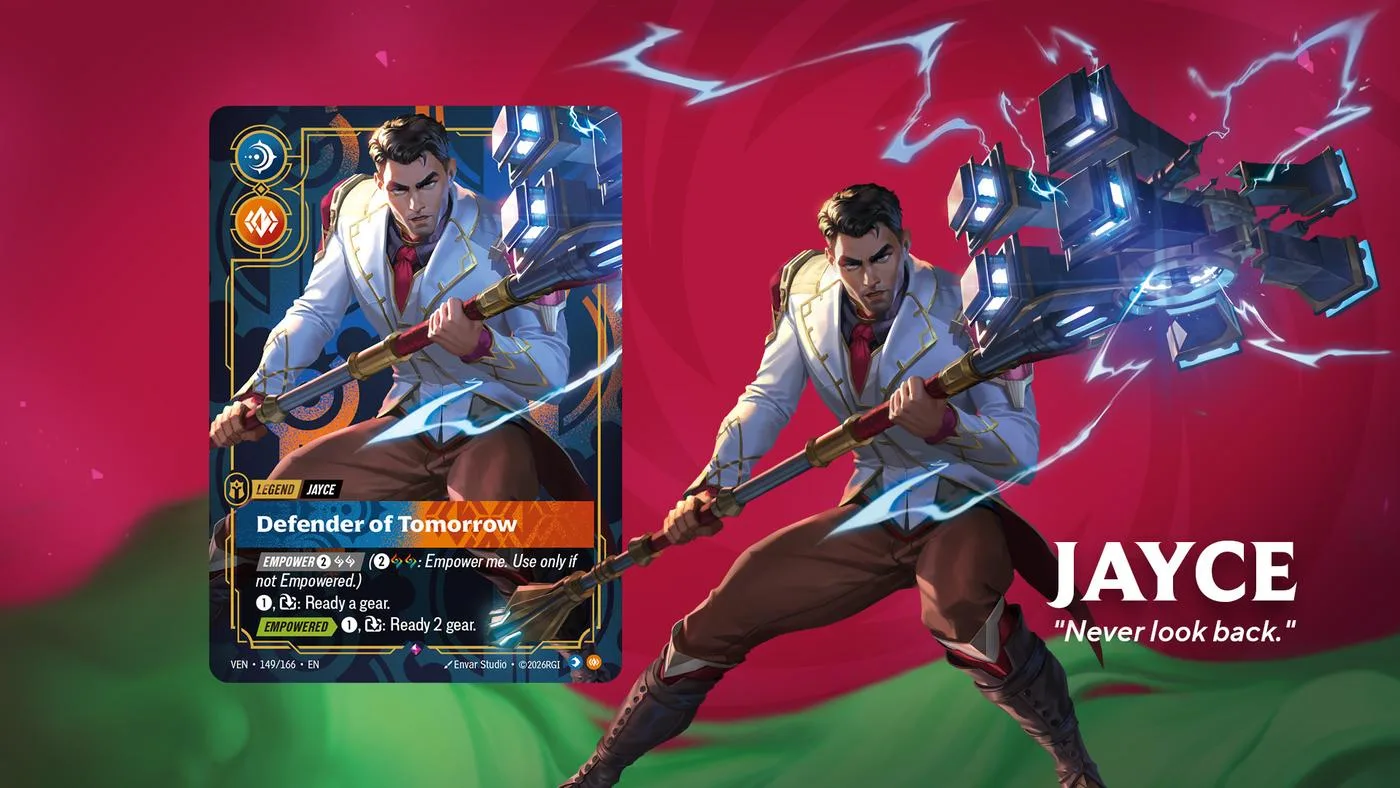
- One seeded Champion pack containing a Legend, a Rare Champion, a Battlefield and support cards for that champion. For Vendetta these were randomised across all nine new Legends - Jayce, Kennen, Akali, Ambessa, Nasus, Zed, Shen, Renekton and Mel.
- A Riven, Shattered promo with a Pre-Rift stamp, which Riot states you may not include in your Sealed deck.
Five plus one is six, which is the Sealed pack count in 602.4.a.1 - so the seeded pack is not a bonus on top of your pool, it is a sixth of it, and it is why a Pre-Rift pool arrives with a Legend, a rare Champion and a battlefield already matched to each other. Anything you open is yours to keep.
For what is inside a normal booster, Riot published the Vendetta distribution:
| Slot | Contents |
|---|---|
| 7 cards | Common |
| 3 cards | Uncommon |
| 1 card | Foil, which may be Common, Uncommon, Rare or Epic |
| 2 cards | Rare, Epic, Alt, Special Alt or Overnumber |
| 1 card | Token, Rune or Alt Rune |
| 1 insert | Informational, not a game card |
Riot notes that pack contents are randomised during manufacturing and that any stated rates are averages across a print run, not guarantees - which is the commercial version of the same warning rule 602.2 gives judges.
On building the thing, Riot's own Pre-Rift guidance is more concrete than a prerelease article usually gets: aim for at least 15 Units, with roughly five of them costing 2 Energy so you have turn-one and turn-two plays, and spread the rest across a range of costs. On Power, Riot's advice is to include some without "going overboard on the Runes you'll have to recycle" - which in practice means the Rune Deck gets built after the Main Deck, not before.
Sealed also travels well beyond prerelease week. Gen Con 2026 ran a 2v2 Sealed block on Friday 31 July from 5 PM to 9 PM ET and a Multi-Set Sealed event on Sunday 2 August from 9 AM to 5 PM ET, where the pool spans several releases at once.
Legacy is the first Riftbound set built for draft

On 3 August 2026 Riot published its 2027 set lineup, and the headline for Limited players is that Legacy, Set 6, is the first Riftbound set designed around drafting. Riot's wording: "Legacy is our first set that we're hanging our hat on as a Riftbound set built for drafting," and it concedes the reason plainly - the rules for drafting arrived early, but "the sets weren't yet designed really with drafting in mind."
The confirmed details:
| Field | Legacy |
|---|---|
| Set number | 6 |
| Three-letter code | LGC |
| Card count | 346, including 93 Showcase |
| Pre-Rift | 22 to 28 January 2027 |
| Release | 29 January 2027 |
| Named Legends | Ashe, Garen, Heimerdinger, Illaoi, Karma, Lux, Tryndamere, Vladimir, plus four unannounced |
Three of the changes Riot announced bear on Limited, and two of them alter it directly.
Booster packs change composition. Starting with Legacy, one Common slot is replaced by a slot that is either a Legend or a Battlefield, at roughly 50/50 frequency - so packs carry 6 Commons instead of 7. Riot's stated reason is that Legends are required to play the game, so opening your first one is "fantastic" while the second, third and fourth are copies "you don't immediately need" - and that pulling them out of packs altogether was never an option, because Riot "can't just completely remove them from the booster packs without directly impeding the ability for players to play limited formats with Riftbound." Showcase Legends and Battlefields still occupy an Overnumber slot rather than the new one. The total card count per pack does not change, which matters for draft: 6 Commons, 3 Uncommons, the foil slot, the two rare-or-better slots and one Legend-or-Battlefield still add up to the same thirteen cards the draft procedure asks you to verify.
Store Rune Kits gain a unit. Riot is adding a card called the Minion to the Rune Kits stores already use, available for players to take the same way they take runes, so a short draft pool can still be filled out to a legal deck.
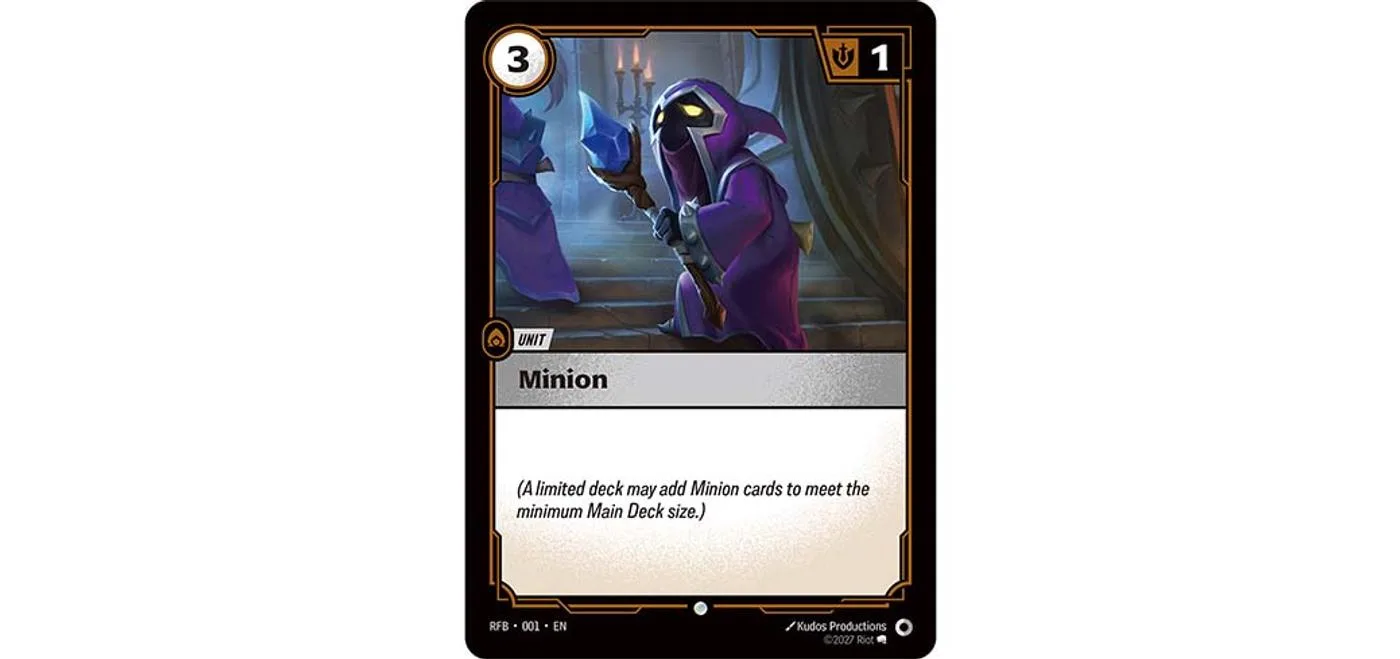
The card Riot showed is numbered RFB 001, printed as a 3-cost Unit with 1 Might, and its entire rules text is the reminder line: "A limited deck may add Minion cards to meet the minimum Main Deck size." That is a deliberately unexciting card whose job is to stop a short pool from producing an illegal deck.
Signpost commons. Riot says Legacy puts strategy-signalling cards at lower rarities specifically so drafters see them often enough to read the set's archetypes. That is a design promise rather than a rule, so treat it as a stated intention until the cards are public - previews start at Convergence Fest, 13 to 15 December 2026.
Quick reference
- Limited = the event provides the cards. Your own collection is not legal in it.
- Sealed: 6 packs, Main Deck 25+. 2v2 Sealed: 8 packs shared by the team.
- Draft: 3 packs, pods of about 8, 39 cards, Main Deck 20+. Pass left, right, left.
- Any three domains in both formats, and your Chosen Champion does not have to match your Legend.
- No copy limits, no Unique, and Standard-banned cards are legal unless banned in the limited format itself.
- A deck with no Legend is legal and draws one extra card at the start of your first Beginning Phase.
- Blank battlefields are available in any number, and you may use any number of the six basic Runes from any source, whether or not you opened them.
- Legacy (29 January 2027) is the first draft-designed set, and its packs drop to 6 Commons to make room for a Legend-or-Battlefield slot.
The pitch for Limited is that it is the version of Riftbound you can play without owning a single card. Six packs, three domains, a 25-card floor, and a rules set that spends most of its words telling you what you are allowed to do rather than what you are not. Read section 602 once before your next Pre-Rift and you will spend deck construction building instead of asking.
Frequently Asked Questions
How many packs do you get in Riftbound Sealed?
What is the minimum deck size in Riftbound Limited?
How does a Riftbound draft work?
Can you play banned cards in Riftbound Sealed and Draft?
What is a blank battlefield in Riftbound Limited?
Do you need a Legend to play Riftbound Sealed?
Keep Reading
- Riftbound Rules Hub (Riot Games, official) - Core Rules and Tournament Rules last updated 9 October 2026; ban lists last updated 18 September 2026
- Riftbound Tournament Rules, last updated 7/16/2026 (Riot Games, PDF) - the version in force until 15 October 2026; Limited formats at section 602
- Riftbound Tournament Rules, last updated October 9, 2026 (Riot Games, PDF) - effective 16 October 2026; Limited formats at section 602, sideboarding at 403
- October 2026 Tournament Rules Changelog (Riot Games, official) - in effect from the Radiance Pre-Rift on 16 October 2026; 602.3.g and 403.4 limited clarifications
- Riftbound Core Rules, last updated 2026-07-16 (Riot Games, PDF) - the version in force until 15 October 2026; deck construction at rules 101-103
- Riftbound Core Rules, last updated 2026-10-09 (Riot Games, PDF) - effective 16 October 2026; deck construction still at rules 101-103
- Radiance Patch Notes (Riot Games, official, 9 October 2026) - Core Rules update effective 16 October 2026
- Preparing for the Vendetta Pre-Rift (Riot Games, official) - Sealed explainer and Pre-Rift kit contents
- Products and Sets into 2027 (Riot Games, official) - Legacy draft design, pack contents change and the Minion card
- The Vendetta Overview (Riot Games, official) - booster pack rarity distribution
- Riftbound at Gen Con 2026 (Riot Games, official) - 2v2 Sealed and Multi-Set Sealed schedule
Related Guides

Riftbound Tournament Rules Explained - What Actually Gets You a Game Loss
Riftbound has two rulebooks, and the one that decides tournaments is not the Core Rules. The Tournament Rules define three enforcement levels, a round-end procedure that hands out draws, a penalty ladder with hard upgrade thresholds, and - as of 24 July 2026 - a Disciplinary Code that can reach your Riot account.

Riftbound Radiance Rules Update: Neeko Rulings and Errata
Riot published three Radiance rules documents on 9 October: Core Rules patch notes with ten official rulings, an errata article for four cards, and a Tournament Rules update. Together they settle how Neeko works, what happens to Equipment that Orianna turns into a unit, and what changes at your table from the 16 October Pre-Rift.
Riftbound Domains Explained: All 6 Colors and Their Legends
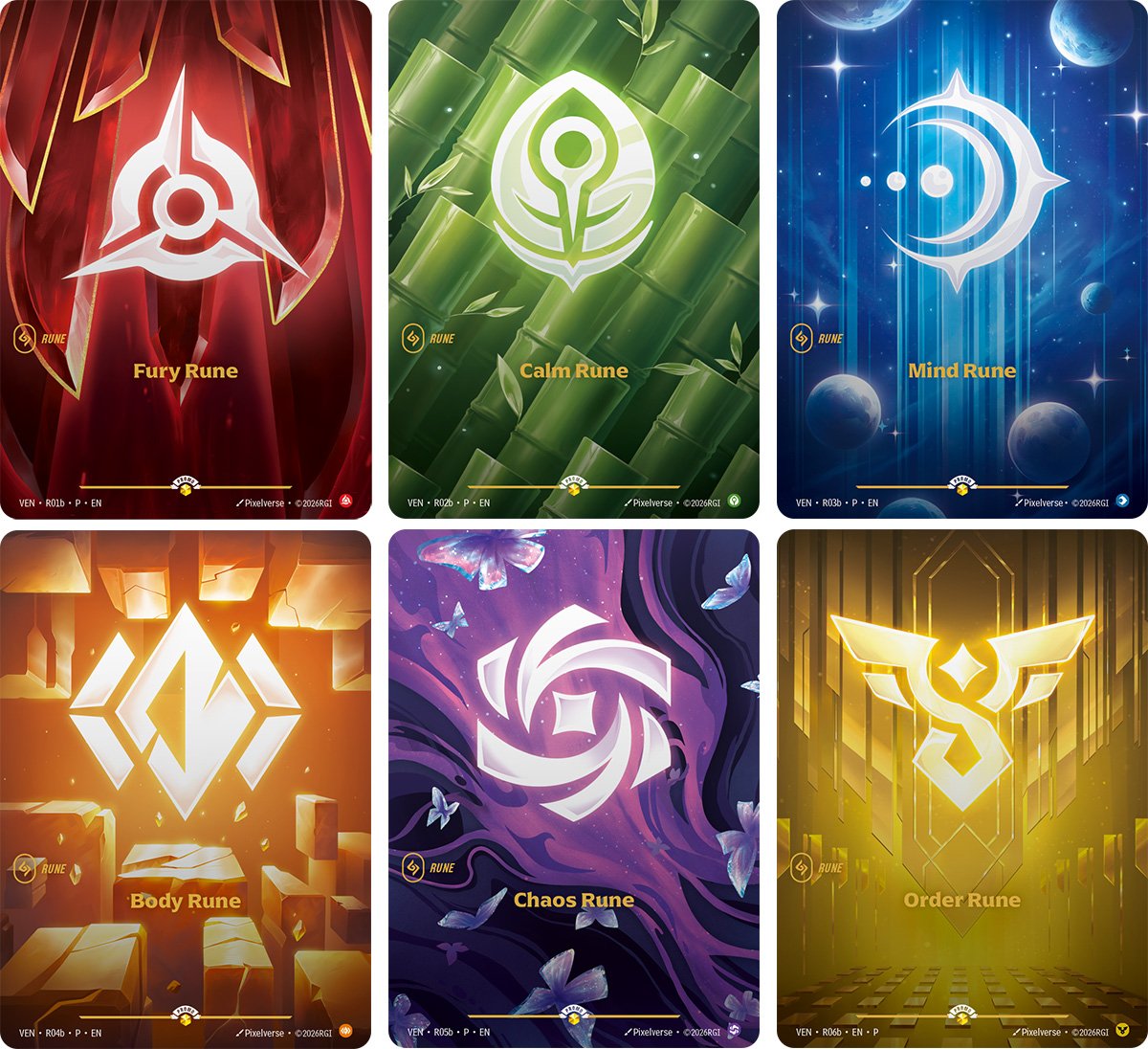
Riftbound has six domains, and your Legend picks two of them for you. Here is what each color actually plays like - its strengths, its blind spots, its signature mechanics - plus the full grid of all 49 Legend cards by domain pairing, and the three rival pairings that did not exist until Vendetta.

How to Play Riftbound — The League of Legends TCG Rules, Explained (2026)
Riftbound has no life total. You take objectives. Eight points ends it. Here is the whole rules set as Riot actually wrote it - runes, domains, battlefields, showdowns, deck construction, and the final-point rule that decides more games than any card does.
Riftbound Deckbuilding Basics - The Legal Rules, the Curve Math, and Fixing a Precon
A legal Riftbound deck is four separate stacks, and three of them are not the 40 cards you spent all your time on. Here is deck construction straight out of Riot's Core Rules and Tournament Rules, the rune math that decides your curve, the six mistakes new builders make, and how to upgrade a Showdown Deck without making it illegal.
Riftbound Multiplayer Rules - How 2v2, Skirmish and War Actually Work
Riftbound has five sanctioned modes and almost everyone plays one of them. The team format is called Magma Chamber, it wants 11 points instead of 8, your partner cannot reinforce your battlefield, and it has a ban list of its own containing exactly one Legend that is legal everywhere else.