The Witcher 3 Blood and Wine Guide: When to Start, Mutations, and the Good Ending
Blood and Wine is the rare expansion that outclasses the game it is attached to. It also quietly reworks your character sheet, hands you a house, and hides its best ending behind five requirements nobody tells you about.

Fourteen thousand lines of dialogue. That is what CD Projekt Red put into Blood and Wine, against six thousand in Hearts of Stone. It is the single cleanest number for explaining why this expansion does not feel like DLC — it feels like a sequel that happens to reuse your save file. Toussaint is a new region the size of Velen or Novigrad, stuffed with over 90 quests, more than 40 points of interest, over 20 new monsters, and roughly 30 hours of content that CD Projekt Red shipped on 31 May 2016 as Geralt's send-off.
Here is the part players get wrong: Blood and Wine is not just more Witcher 3. It bolts a second character-progression system onto Geralt, hands you a permanent home with real stat buffs, and gates its best ending behind five separate requirements that the game never spells out. Get the order wrong and you finish the story with two dead sisters and a shrug.
What Blood and Wine actually is
Toussaint is a duchy that sat out the war, which is the whole design pitch: after 100 hours of grey mud in Velen you ride into a place with sunlit vineyards, knight-errant tourneys, and a palace that looks like someone left the saturation slider on. Then the murders start.
Mechanically, the expansion carries a lot more than a new map:
- Mutations — 12 new abilities researched with ability points and greater mutagens.
- Corvo Bianco — your own vineyard, upgradeable, with buffs attached.
- Armour dyeing — every piece of witcher gear can be recoloured, and dyes only exist in Toussaint.
- Grandmaster witcher gear — a fourth and final tier for all the school sets.
- The Skellige Gwent deck — the fourth faction deck, if you still care about Gwent (you should; see our Witcher 3 Gwent guide).
- A raised New Game Plus ceiling — max level goes to 100.
Over 100 individual pieces of armour and more than 30 new weapons arrive with it, so the loot pool genuinely refreshes rather than reskinning what you already have.
When to start it, and when not to
The starting quest, Envoys Wineboys, is designed for level 34, and it fires when you read the notice or get ambushed by the ducal knights. The main chain scales up hard from there: The Beast of Toussaint at 35, Blood Run at 36, La Cage au Fou at 39, Wine is Sacred at 42, and everything from Capture the Castle onward at 47 to 49.
That spread is the real answer to "when should I play Blood and Wine." If you arrive at exactly 34, you will hit a wall around the midpoint because the last six main quests assume high forties. Show up at 35 to 38 and the pacing works — the Toussaint side content and contracts carry you up the curve naturally.
The bigger question is where in the story. The final quest, Be It Ever So Humble, will not appear at all unless you have completed Something Ends, Something Begins, the last main quest of the base game. So Blood and Wine technically slots in anywhere after level 34, but its epilogue only lands if the base game is finished. Play it as the actual ending. That is what it was built to be.
One warning if you are jumping in on a fresh save: the expansion is playable standalone, but the visitor waiting for you at the end changes based on your base-game romance, and a standalone run always gets Dandelion. Bring your real save.
Mutations are the real reward
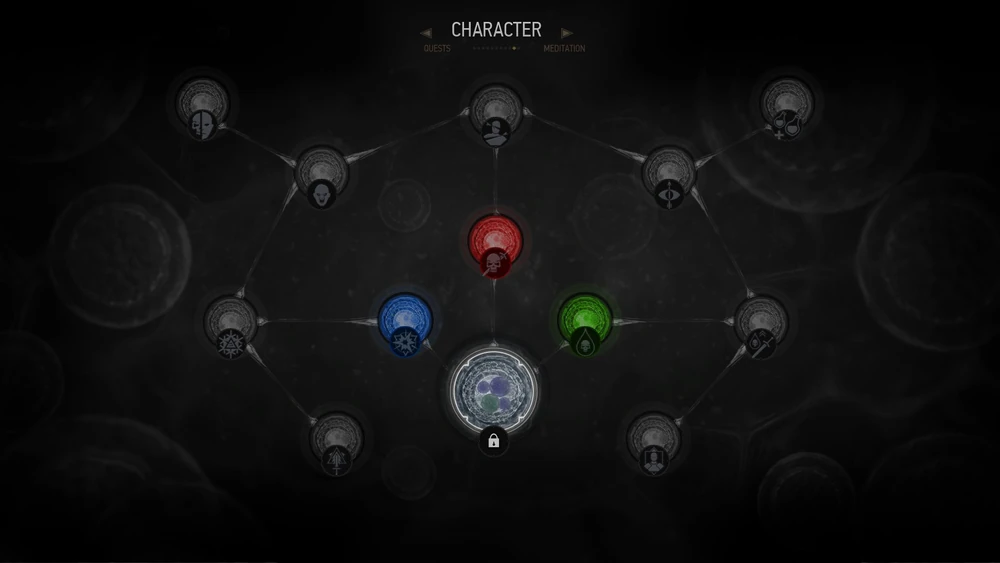
The mutation system is not handed to you. It unlocks by completing the secondary quest Turn and Face the Strange, which becomes available right after the main quest Blood Run, when a boy delivers a letter from Yennefer (or Triss, if you romanced her). The quest is designed for level 35 and pays 500 XP plus the entire system, which makes it the highest-value side quest in the expansion by a wide margin. Do it immediately. Do not save it for later.
Once unlocked, a circular icon appears in the middle of your character panel. Mutations cost ability points and greater mutagens — red, blue, green, or a mix — and they are laid out in three tiers, so you unlock upward through prerequisites. You can only have one mutation active at a time, which is the constraint that makes the system interesting instead of a free power dump.
The sneaky part is Strengthened Synapses, the node that grants extra ability slots on your character panel. It scales with how many mutations you have researched: 2 mutations for the first extra slot, 4 for the second, 8 for the third, and all 12 for the fourth. Those bonus slots are not linked to your mutagen sockets, so they do not multiply mutagen bonuses — they are raw extra skills.
One trap: a Potion of Restoration will refund your spent ability points, but it will not give back the mutagens. Greater mutagens are the genuinely scarce resource here, so plan the path before you commit.
The mutations worth taking first
Twelve options, one active slot, so the picks matter.
Euphoria is the famous one and it deserves the reputation. Sitting behind Toxic Blood on the alchemy branch, it costs 3 ability points and 3 greater green mutagens, and it grants 0.75% increased sword damage and Sign Intensity per point of Toxicity. The tooltip says "to a maximum of 75%", and that number is misleading: it is just 0.75% times the base 100-point Toxicity pool. Grow the pool with Acquired Tolerance, Metabolic Control or Manticore gear and the ceiling grows with it — the tooltip updates to show the new cap — and on the biggest post-4.0 pool of 234 Toxicity that works out to roughly 175.5% to both damage types. Run a heavy decoction loadout, sit at high Toxicity permanently, and the bonus runs well past the tooltip's 75% once the pool is built out. Nothing else in the game does that. If you have built alchemy at all — our Witcher 3 alchemy guide covers the decoction economy, and the Witcher 3 build guide does the full Toxicity-pool math — this is the endpoint.
Piercing Cold is the sign build's answer. Behind Magic Sensibilities on the blue branch, it gives Aard a 25% chance to freeze, and anything knocked down and frozen at the same time dies instantly, no health bar involved. Against packs of drowners and bandits it is close to a delete button.
Second Life is the panic button: when Vitality hits 0 you go briefly invulnerable and regenerate 100% of your health, once every 180 seconds. On Death March it is a free extra life every three minutes.
Two more worth knowing: Bloodbath stacks 5% Attack Power per melee hit up to 250%, but the whole stack drops the moment you take damage — a dodge-perfect fantasy that punishes sloppy play. And Conductors of Magic makes drawn magic, unique, and witcher swords add 50% of their own damage to your Sign damage, which is the bridge between a sword build and a sign build.
Corvo Bianco is not decoration
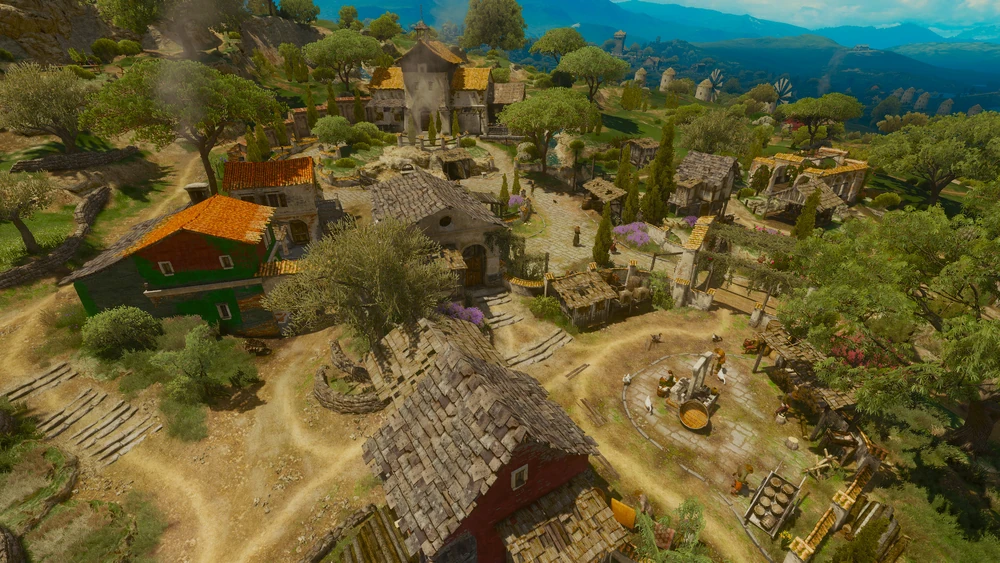
Anna Henrietta hands you the Corvo Bianco vineyard as a retainer for the Beast contract, before you have killed anything. It comes with a majordomo, Barnabas-Basil Foulty, and a repair list.
The first round costs 7,000 crowns total: 5,000 for the general house renovation (3 days), plus 1,000 each for an armour repair table and a grindstone (1 day each). Get the grindstone and repair table early — they are permanent free maintenance and a standing weapon-damage buff at your fast-travel point.
The second round unlocks after the house is done: the bed at 1,000 crowns, weapon racks and armour stands at 500 each, a guest room at 1,000, the stable at 2,000, and the garden at 2,000 — another 7,000, so the whole estate runs 14,000 crowns. The stable gives Roach a 100% Stamina boost for 60 minutes after sleeping; the royal bed grants 1,000 bonus Vitality for 120 minutes. The garden is the quiet MVP — it produces herbs, enables dyes, and feeds mutagen conversion.
Speaking of which: during the renovations the workers break into a cellar laboratory, and that lab unlocks mutagen conversion — the mechanic that turns lesser mutagens into greater ones. Given that greater mutagens are the bottleneck on the entire mutation tree, renovating Corvo Bianco is not a cosmetic side activity. It is your mutagen factory. Buying everything also earns the Playing House achievement.
Do it early for one more reason: the XP payout on the No Place Like Home quest drops off once you pass level 45.
Grandmaster gear and the level 40 wall

Grandmaster witcher sets are the fourth tier above mastercrafted, and they are locked behind two gates. First, you need the quest chain that starts with Master Master Master Master to meet Lazare Lafargue, the grandmaster smith in Beauclair. Second, every Scavenger Hunt in that series is designed for level 40.
That level gate is exactly why arriving in Toussaint underleveled hurts. If you show up at 34 and beeline the main story, you will reach the finale before you can wear the gear the expansion built for you. Clear contracts and the Toussaint scavenger hunts on the way up and you will hit 40 around the midpoint, which is the correct time to start swapping sets. Our Witcher 3 witcher gear guide covers which school set to commit to.
On New Game Plus, every grandmaster diagram is replaced by its grandmaster legendary version, and the level ceiling rises to 100, so a NG+ run is where the mutation tree and grandmaster gear actually get to breathe.
The ending most players miss
Mild spoilers, no names beyond what the quest log gives you.
Blood and Wine has multiple outcomes, and the good one — the one where both sisters survive — has five requirements, all of which happen before the final ceremony:
- Complete the quest Beyond Hill and Dale.
- Read the first two entries in the governess' journal.
- Agree to listen to Syanna's story while hunting the magic beans.
- Choose to investigate the fifth victim, then ask Syanna about it.
- Use the two correct dialogue lines when you confront her afterwards — the ones about her sister turning her back on her, and about forgiveness.
Miss any of them and the ceremony plays out the bad way, regardless of what you pick in the moment. There is also a hard lockout: if you visited the Unseen Elder, you cannot get the good ending at all, no matter how many of the five boxes you tick. That is a decision you make hours earlier with zero indication of the consequence, which is either brilliant design or deeply annoying depending on how many times you have replayed this.
Everything else in the finale — telling the duchess the truth, what you say to Damien — changes flavour text, not outcomes. The five requirements are the entire ending.
Quick Action Checklist
- Start Blood and Wine around level 35 to 38, not the minimum 34, and finish the base game first so the epilogue triggers.
- Do Turn and Face the Strange the moment it appears after Blood Run; it unlocks all 12 mutations for 500 XP.
- Renovate Corvo Bianco early — the cellar lab unlocks mutagen conversion, and the No Place Like Home XP drops after level 45.
- Budget 7,000 crowns for the first renovation round (14,000 for the whole estate) and grab the grindstone and armour repair table first.
- Push to level 40 before the midpoint so the grandmaster Scavenger Hunts open up.
- Take Euphoria for alchemy builds, Piercing Cold for sign builds, Second Life for Death March insurance.
- Do not drink a Potion of Restoration expecting your mutagens back; only ability points are refunded.
- For the good ending, hit all five requirements and skip the Unseen Elder entirely.
Frequently Asked Questions
What level should you be for Blood and Wine?
How do you unlock mutations in Blood and Wine?
What is the best mutation in The Witcher 3?
How much does it cost to fully upgrade Corvo Bianco?
How do you get the good ending in Blood and Wine?
When was Blood and Wine released?
Keep Reading
- Witcher Wiki — Blood and Wine expansion features and release details
- Witcher Wiki — all 12 mutations, costs and Strengthened Synapses
- Witcher Wiki — Euphoria, and why the 75% tooltip cap scales with the Toxicity pool
- Witcher Wiki — Corvo Bianco renovation costs and effects
- Witcher Wiki — the requirements for saving both sisters
Related Guides

The Witcher 3 Hearts of Stone Guide: When to Start, the Runewright, and Beating Gaunter O'Dimm
Hearts of Stone charges you 30,000 crowns before it gives you anything, hides its best sword behind a riddle, and locks the good ending behind a conversation most players walk past. Here is the order to do it in.
The Witcher 3 Endings Guide: How to Get the Best Ending for Ciri
Ciri lives or dies based on five conversations, and four of them are easy to fumble because they do not look like decisions at the time. Here is exactly which lines to pick, and what separates the witcher ending from the Empress ending.

The Witcher 3 Build Guide: Signs, Combat and Alchemy
There are three real builds in The Witcher 3 and one of them is so much stronger than the others that CD Projekt Red nerfed it and it is still the best. Here is how each one works, what it needs, and when to commit.

The Witcher 3 Remastered Skill Tree: What Unlocks What
CD PROJEKT RED described the Remastered skill overhaul in three bullet points and has published no skill list. The Witcher wiki has since filled in all four trees. Here is how unlocking works now, what every skill needs and does at rank 1 and rank 3, and which old skills are gone.

The Witcher 3 Beginner's Guide: Your First 20 Hours
Most people who bounce off The Witcher 3 do it in White Orchard, and it is almost always the same three reasons: they never learned Quen, they never applied an oil, and they treated the skill tree like a shopping list. Here is the fix.

The Witcher 3 Remastered PC Requirements: All Six Tiers
CD PROJEKT RED's Remastered patch notes carry a six-column PC spec table, from a GTX 1660 at 1080p on Low up to an RTX 5080 for path tracing at 4K. Here is every tier, which upscaler your graphics card actually gets, why CDPR's own storage figures disagree, and the PC settings its patches and support pages have touched since launch.