Gundam Card Game Rulings - Bandai Has Answered 425 Questions, and These Are the Ones That Change How You Play
Pair Char Aznable with a Unit that demands Amuro Ray and you have not wasted a card - Bandai says so in writing. That ruling is one of 425 the company publishes in an official FAQ database sitting one click off the rules page, and it is where the fine print of this game actually lives. I read all 425 of them, cross-checked every principle against Comprehensive Rules Ver. 1.8.0, and pulled out the resolution order, the priority exceptions, and the fifth zone that is not the trash.
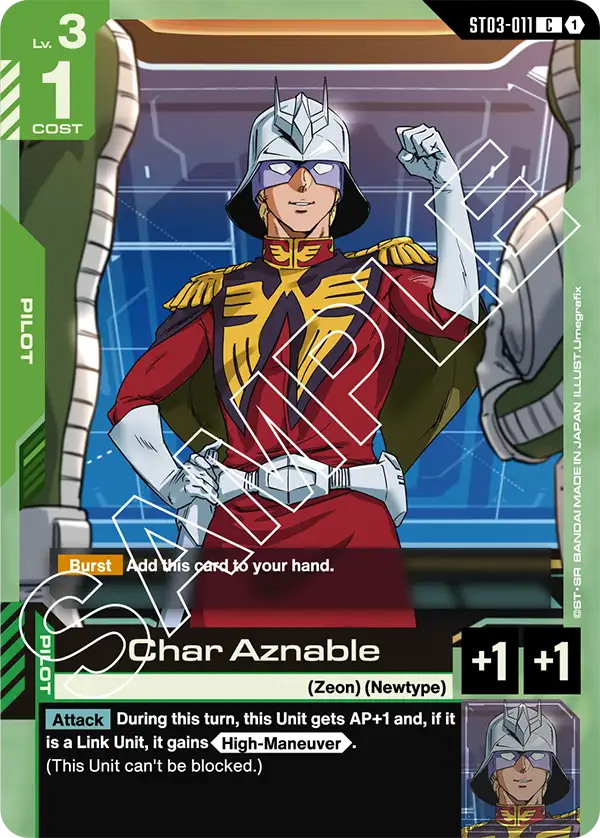
Pair ST03-011 Char Aznable onto a Unit whose link requirement reads [Amuro Ray] and you have not wasted a card. The Unit still gets the +1 AP and +1 HP printed on the Pilot, and the Pilot's 【Attack】 effect still fires. You just do not get the immediate attack.
That is not an interpretation. It is ruling Q89, published by Bandai, in the official FAQ database that sits one click off the rules page.
I read the whole thing on 14 August 2026 - all 33 general rules categories and every per-product page - and cross-checked the principles against Comprehensive Rules Ver. 1.8.0 dated 10 July 2026. What comes out is a layer of this game that the full rules walkthrough does not reach: what happens when four things fire at once, which one wins, and the dozen or so places where the intuitive answer is the wrong one.
A Pilot that misses its link is not a dead card
Start here because it is the ruling most likely to change a real decision.
Q89 asks it directly: pair Char Aznable with a Unit whose link requirement is [Amuro Ray], and are AP and HP still added, and can the 【Attack】 effect activate? The answer is yes to both, with the reasoning spelled out - link requirements "enable the Unit to attack immediately on the turn it is deployed. They do not prevent the addition of values and activation of effects when they are not fulfilled."
Look at what that means on this specific card. Char Aznable's 【Attack】 reads: during this turn, this Unit gets AP+1 and, if it is a Link Unit, it gains High-Maneuver. So on a mismatched Unit you keep the stat bump and you keep the AP+1 from the trigger. You lose the immediate attack, and you lose the High-Maneuver clause, because that one is separately gated on Link Unit status.
The practical version: an off-link Pilot is a +1/+1 pump with a trigger attached, playable for one Resource. That is a fine turn when the alternative is holding it. It is not the two-card blowout you were building toward, but "wrong Pilot, don't bother" is simply not what the rules say.
Where the rulings actually live
The FAQ is at gundam-gcg.com/en/rules/faqs/, and it is two databases wearing one coat.
The first is 117 general rulings sorted into 33 categories - phases, keyword effects, timing keywords, then a Detailed Rules block covering colour, AP, HP, damage, targets, tokens and each card type. The second is 308 card-specific rulings filed under the set that printed the card.
That is 425 published rulings. The numbering gives you a free check on that total: entries run from Q1 to Q426 with exactly one number, Q180, not currently published. The whole database was last updated on 10 July 2026.
The per-set split is lopsided in a way worth knowing before you go looking:
| Set | Rulings |
|---|---|
| Freedom Ascension [GD05] | 89 |
| Steel Requiem [GD03] | 49 |
| Phantom Aria [GD04] | 41 |
| Newtype Rising [GD01] | 35 |
| Eternal Nexus [EB01] | 25 |
| Dual Impact [GD02] | 24 |
| Generation Pulse [ST10] | 8 |
| Celestial Drive [ST07] | 7 |
| Heroic Beginnings [ST01], Zeon's Rush [ST03], Destiny Ignition [ST09] | 6 each |
| Flash of Radiance [ST08] | 4 |
| Wings of Advance [ST02], Iron Bloom [ST05] | 3 each |
| SEED Strike [ST04] | 2 |
GD05 alone carries 89 of the 308 card rulings - 29% of them, for the newest set on the list. Boosters generate the questions and starter decks barely register, which tracks with starter cards being deliberately simple: the six booster products - GD01 through GD05 plus the EB01 extra booster - account for 263 of the 308, and the nine starter decks with entries split the remaining 45. Sets with no entries at all do not appear on the FAQ product list.
The search box takes free text and searches the ruling bodies, so if a card is doing something strange, type its name in before you argue about it.
The resolution order that decides close games
This is the part the quick-start material skips, and it is four rules long.
Gundam has no stack. If you have come from Magic's stack and priority system, unlearn the last-in-first-out habit, because simultaneous triggers here resolve by ownership and then by choice.
Section 10-1-6 of the Comprehensive Rules, corroborated by rulings Q107 through Q112:
| Situation | Rule | What happens |
|---|---|---|
| Several of your own effects trigger together | 10-1-6-5, Q107 | You choose the order |
| Effects trigger for both players | 10-1-6-6, Q108 | All of the active player's resolve first, then all of the standby player's |
| A new effect triggers mid-resolution | 10-1-6-7, Q109 | The new effect gets priority and resolves immediately |
| A 【Burst】 is among the triggered effects | 10-1-6-8, Q110 | 【Burst】 goes first, ahead of everything |
| One effect negates another, or says it "can't" | 10-1-5-6, Q112 | The negating or "can't" effect wins |
Four of those five are ordering rules and one is a conflict rule, and together they answer most timing arguments you will have at a table.
The one that catches people is 10-1-6-7. Effects waiting in a queue do not form a sealed batch - a trigger that goes off while you are resolving that queue cuts in front of the effects still waiting. Combine it with 10-1-6-8 and you get genuine interrupt chains, because a Burst can go off mid-resolution and immediately take precedence.
One more that is easy to get wrong in the other direction. Rule 10-1-6-3: if several events that would satisfy the same trigger condition happen simultaneously, that effect still triggers only once. Two Units dying at the same moment does not double a "when a Unit is destroyed" trigger.
Burst jumps the queue
【Burst】 is the closest thing this game has to a free spell, and four general rulings plus one Comprehensive Rules line define its edges.
- Q80: when a Shield is destroyed and revealed, a 【Burst】 on it may be activated before the card goes to the trash.
- Q81: it is always optional. Decline and the card is simply trashed.
- Q82: unless the effect says otherwise, the card goes to the trash after the Burst resolves.
- Q83: a card with 【Burst】 that is added to your hand by an effect cannot have its Burst activated. Only destruction turns it on.
- 10-1-6-8: among simultaneous triggers, 【Burst】 resolves ahead of all of them.
Q83 is the one that costs games. Several cards read "add 1 of your Shields to your hand," and it is tempting to treat that as a way to cash in a Burst you know is sitting there. It is not - moving a Shield to hand skips the Burst entirely. Shields are worth more where they are.
Look back at Char Aznable's card above and you can see the interaction in one frame: its Burst reads "Add this card to your hand." Destroy that Shield and you may take the Pilot. Take that Shield to hand by some other effect and you get the card without the Burst ever mattering.
Breach beats Destroyed, and a trade still counts as a kill
Two clusters of rulings that both come down to the same instinct being wrong.
First, ordering. Q56: a Unit with <Breach> destroys an enemy Unit that has a 【Destroyed】 effect, using battle damage. Which resolves first? Breach - because the two trigger simultaneously and the active player's effects go first under 10-1-6-6. If that Breach damage kills a Shield with a 【Burst】, the Burst then takes priority over what is left in the queue (Q110). Three rules stacking in a specific order, and the whole chain is decided before your opponent's 【Destroyed】 effect gets to speak.
Second, trades. There are 17 rulings across the database asking some version of "does this still work if both Units are destroyed in the battle?" Fourteen answer yes, including <Breach> itself at Q55. Mutual destruction still counts as your Unit having destroyed an enemy Unit.
The three exceptions are worth naming, because they share one shape:
| Ruling | Card | Why it fails |
|---|---|---|
| Q201 | ST07-005 Gundam Dynames | Effect needs the Unit to recover HP and remain on the field |
| Q254 | GD03-125 Peacemillion | Same - recover and remain |
| Q387 | GD05-085 Amuro Ray | Same - recover and remain |
All three carry the same answer: if the Unit is destroyed, it is not on the field, so it cannot recover HP or remain there. So the rule of thumb is clean. Triggers that look backward at what your Unit killed survive a trade. Effects that need your Unit to still be standing do not.
Suppression is four rulings deep
<Suppression> damages the first two Shields at once, and it needed four separate rulings to pin down.
- Q165: both Shields are revealed simultaneously, and any 【Burst】 effects on them resolve.
- Q166: when both revealed Shields have a Burst, their owner chooses the resolution order and resolves them one at a time.
- Q167: if the opponent has only one Shield, the spare damage does not carry through to the player. It hits that one Shield and stops.
- Q195: if one destroyed Shield is a Base with a Burst that lets you add a Shield to your hand, you cannot grab the second Shield that Suppression is destroying. Both are destroyed simultaneously, so the one you may take is the first surviving Shield.
Q167 is the defensive read. Suppression does not close out a game any faster than a normal attack once the opponent is down to their last Shield - the extra damage evaporates. Q166 is the one that quietly matters, because the player being hit chooses the order their own Bursts resolve in, which is a real decision handed to the defender.
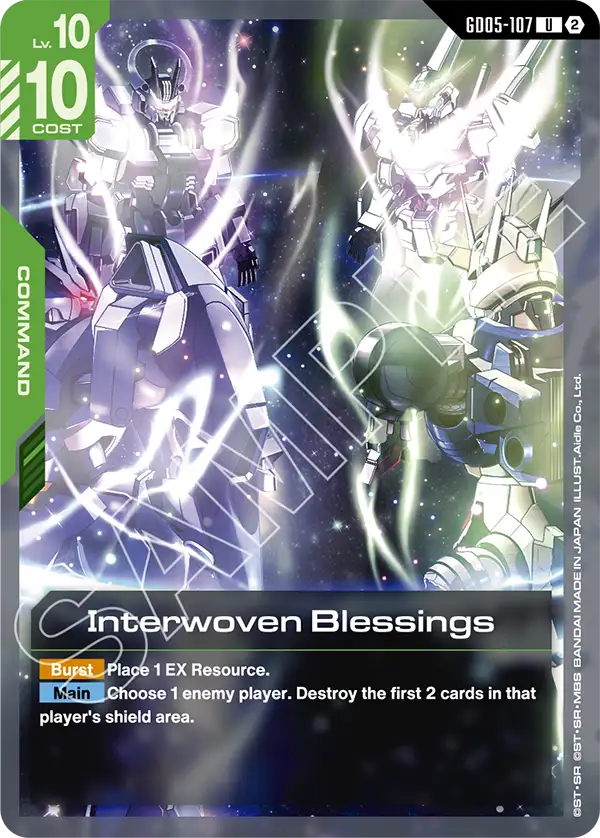
GD05-107 Interwoven Blessings, above, destroys the first two cards in a shield area outright, and it drew the same three answers on its own page - Q405 confirms the effect hits Bases too, Q406 the simultaneous reveal, Q407 the owner choosing Burst order. When two rulings on different cards say the same thing, that is the principle rather than a card quirk.
No target, no play
Fourteen rulings say the same thing: one general statement plus thirteen card-specific restatements spread across six sets.
Fourteen turns out to be a recurring number here. Three separate principles each drew exactly fourteen rulings - this one, the "do I pay the cost" cluster further down, and the fourteen definitions of "reduce". None of the three outranks the others.
The general statement is Q100: you cannot activate an effect or play a card if it requires choosing a target and no legal target exists. The Comprehensive Rules put it in two places - 10-2-2 for effects, and 10-1-8-1-1 for Command cards specifically, where it means the card cannot be played at all.
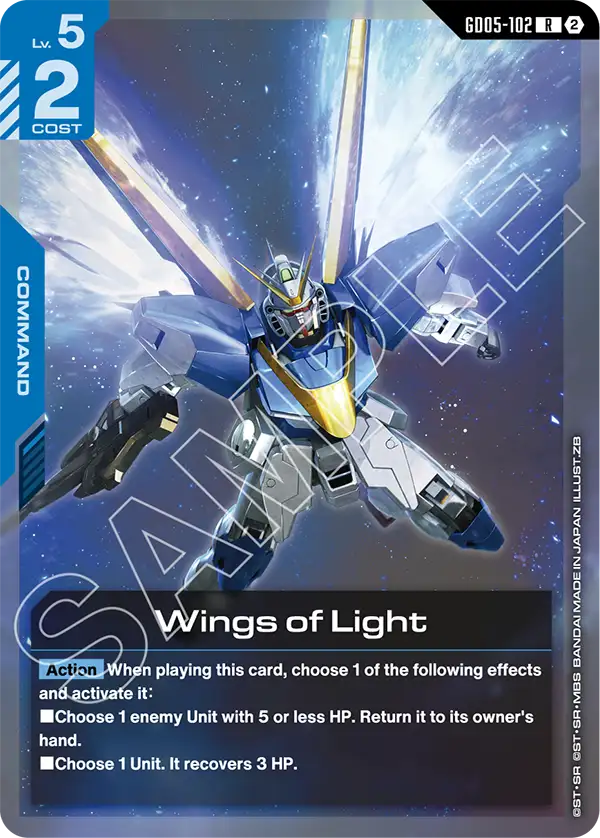
Wings of Light is the clearest example because it offers a choice and both halves are gated. Q401: with no enemy Unit at 5 or less HP, you cannot play it choosing the bounce mode. Q402: with no Units in play anywhere, you cannot play it choosing the recovery mode either. The card is stranded in your hand. Q404 does the same for GD05-106 Mutual Attraction with an empty trash, and Q412 and Q413 repeat it on GD05-117 Become a Shield and GD05-120 Shining Finger, where choosing only your own Unit is not permitted if the enemy half cannot be chosen. The pattern reaches back through the older sets too - Q168 on ST05-010 Mikazuki Augus, Q230 on GD03-056 Gundam Barbatos Adapt, Q265 on GD04-015 Gun EZ and Q327 on EB01-072 Yuu Kajima are the same question with the same answer.
Two refinements that are easy to miss:
- Partial targets do not rescue you. Q412 asks whether you can just choose one of your own Units when there are no enemy Units. No - it activates only if you can choose both.
- "Then" and "If you do" split the check. Rule 10-1-8-1-2 puts the playability test on the portion before those words. GD01-003 Unicorn Gundam 02 Banshee is the worked example at Q121: with only 10 cards in the trash you cannot activate an effect that needs 12 chosen, even though 10 is a lot of cards.
Contrast that with Q380 on GD05-070 Tallgeese III, which asks whether you have to choose when a legal target exists. Yes. Available targets are not optional.
There is a fifth zone, and it is not the trash
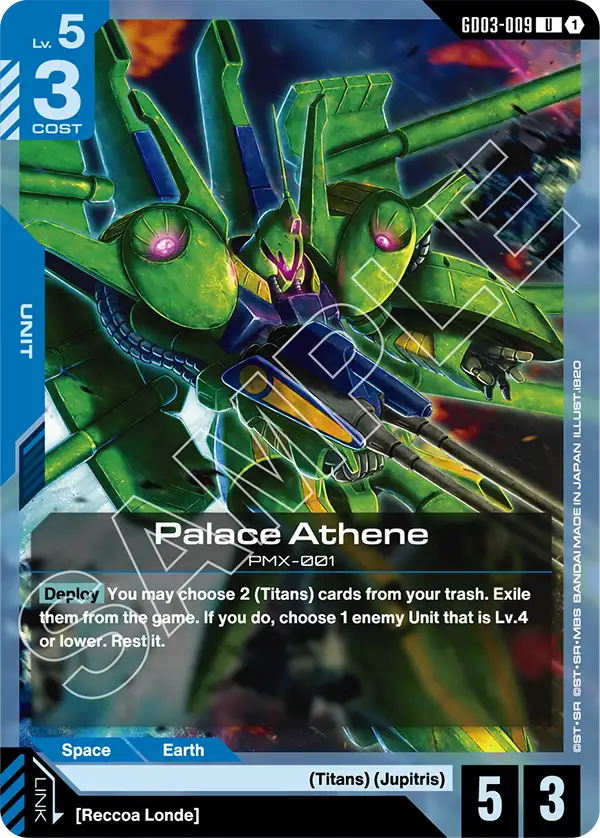
Seven rulings - one in GD02 and six in GD03 - all answer the identical question and all give the identical answer, which is how you know it is a zone and not a card quirk.
The question is where exiled cards go. The answer: "In the removal area. Since this is separate from the trash, set aside a location where only exiled cards are placed (not including tokens)."
So the playmat has an off-sheet zone. Palace Athene above is a clean case - its 【Deploy】 lets you choose 2 (Titans) cards from your trash and exile them from the game, and if you do, rest an enemy Unit that is Lv.4 or lower. Those two cards are gone in a way that trashed cards are not, which matters in a game where a real number of effects reach back into the trash to recur Pilots and Commands.
The seven rulings sit on GD02-111 Decisive Last Resort and, in GD03, Palace Athene, GD03-015 Baund Doc, GD03-035 GFreD, GD03-050 Gundam Barbatos Lupus, GD03-054 Zeydra and GD03-059 Zedas R. Steel Requiem is where exile as a mechanic arrived in volume.
The practical bit: physically keep it separate. If exiled cards land in your trash pile you will eventually recur one, and there is no way to prove which card was which after the fact.
Trashed is not destroyed
Deploy a seventh Unit into a full battle area and you choose one already there and put it in the trash. Play a second Base and the first goes to the trash. In both cases the card that leaves is explicitly not destroyed - rules 11-4-2-1 and 11-5-2-1, restated as rulings Q27 and Q29.
Nothing triggers. No 【Destroyed】 effect fires, no "when a Unit is destroyed" condition is met, and any payoff you were holding for that Unit's death does not happen.
This cuts both ways and both are worth planning around. You cannot use the cap as a free sacrifice outlet to trigger your own death payoffs. You also cannot be punished for clearing your own board this way, and neither can your opponent's revenge triggers get you.
Rule 11-4-2-2 adds the arithmetic: deploy several Units simultaneously into a full battle area and you trash an equal number.
Destroyed effects read the past
【Destroyed】 effects are resolved from the trash, which raises an obvious question - what state is the card in when the effect checks itself?
Q69 answers it: the effect activates in the trash, and when determining the card's state you refer to how it was in the battle area or shield area immediately before it hit the trash.
GD05-003 Waldfeld's Murasame is the worked example at Q340. Its 【Destroyed】 effect cares about (Orb) Pilots, and the ruling confirms it activates on the strength of the Pilot that was paired with it - even with no other (Orb) Pilot on your field - "since the 【Destroyed】 effect checks the card's last state prior to it leaving the field." Q353 runs the same logic on GD05-024 Gundam AGE-2 Normal (SP Ver.), where the green (Earth Federation) Pilot card you may add to hand can be the one that was paired with the destroyed Unit.
Remember that a paired Pilot follows its Unit to the trash (Q41), so both cards arrive together and the snapshot includes the pairing.
Effects outlive the cards that made them
Three rulings, one principle: once an effect is on the board, killing its source does not take it back.
- Q111 and rule 10-1-6-4. An effect that has triggered and is waiting to resolve still resolves even if the Unit that triggered it leaves the field first.
- Q106. A Unit uses an 【Activate・Main】 effect granting something "during this turn," then dies. The effect stays for the turn.
- Q374 puts it on the board: GD05-061 Geara Doga gains <Blocker> conditionally, blocks, and then loses the condition. The block is already established, so the two Units battle anyway.
The mirror image is the snapshot rule, and this one is a downgrade rather than a bonus. Q105: an effect reading "all your Units get AP+2 during this turn" applies only to the Units that were in the battle area when it resolved. Deploy a Unit afterwards and it gets nothing. So a board pump is a reason to deploy first and pump second, every time.
Q375 shows the same snapshot logic denying you something: GD05-067 Wing Gundam Zero (EW) gains <Suppression> while a rested enemy Unit is in play, and if that Unit leaves during the action step, the Suppression goes with it. Conditional keywords are checked continuously, not locked in at declaration.
Free deploys, and the fourteen times Bandai defined reduce
Fourteen rulings across GD01, GD02, GD05, ST03 and ST09 ask whether you pay a card's cost when an effect deploys it or activates it. All fourteen answer "No, you do not."
That is now a safe default: if an effect deploys a Unit or a Base, or activates a paired card's 【Main】, it is free unless the card says otherwise. Q394 and Q424 add the follow-up - a Unit or Base deployed this way still fires its own 【Deploy】 effect. Q363 and Q365 add another, on GD05-035 Dragon Gundam and GD05-044 Gundam Rose: activating a paired card's 【Main】 does not then trash that card. It stays paired.
Then there is the cluster that says something about the game's templating. Fourteen separate rulings - seven in GD04 and seven in GD05, on fourteen different cards - answer the question "What does 'reduce' mean?" with the same paragraph each time: it means decrease the damage received, so 3 damage told to reduce by 1 becomes 2.
My read is that publishing the same answer fourteen times is Bandai marking a word that was not carrying its meaning on its own. Either way the useful part is the definition: "reduce" is a damage-prevention word here, not a stat-lowering one. It does not touch AP or HP.
Small print worth memorising
Rapid-fire, each one a published ruling, each one capable of deciding a game:
- Shields load bottom-up. The top card of your deck becomes the bottom Shield (Q8).
- Shields have 1 HP each (rule 11-3-1-1), so any damage of 1 or more kills one - but a Unit with 0 AP deals no damage and destroys nothing (Q35, and Q367 on GD05-050 Gundam Exia Repair).
- You never choose which Shield. It is always the first one, and you cannot take a Shield instead of a Base (Q36, Q37).
- Damage does not wear off. It stays on the Unit as a counter across turns (Q99), and effects checking HP read the damaged current value (Q96).
- AP is plain arithmetic and floors at zero. A 1 AP Unit given AP-2 then AP+3 is a 2 AP Unit (Q95); anything at or below zero is treated as 0 AP (Q94).
- Tokens are colourless with Lv. 0 and cost 0 (Q101, Q102), they count against the six-Unit cap (Q104), and you can pair a Pilot onto a Unit token (Q103).
- 【Once per Turn】 is per copy, not per name. Two copies of the same card number each get their use (Q79).
- A Command with a Pilot effect is a Pilot only while paired in the battle area (Q163), and you cannot pair one as a Pilot during an action step even if it has 【Action】 timing (Q38).
- No hand size limit during play - but discard to 10 in your end phase (Q16).
- Start, draw and resource phase actions are all mandatory. You may not skip setting cards active (Q13), may not decline your draw (Q14), and may not decline to place a Resource (Q18).
- Mulligan once, returning the whole hand to the bottom, drawing five, then shuffling (Q10).
- A ban on activating <Blocker> is not undone by re-gaining <Blocker>. Q420: a Unit stopped from activating it by GD05-127 Girty Lue still cannot activate it after picking up <Blocker> from another card.
What the FAQ does not settle
Some honest limits on all of this.
The FAQ is a rulings database, not a strategy document. It tells you what happens; it does not tell you how often these interactions come up in a real match, and I have no tournament data to say which of them actually swing games most. The ordering rules in section 10 are the ones I would learn first purely because they apply every game.
The counts here are what was published on 14 August 2026, with the database last updated on 10 July 2026. GD06 Stardust Trails arrives 30 October 2026 and will add a set page of its own, so the 425 total and the per-set table both have a shelf life. The principles drawn from Comprehensive Rules Ver. 1.8.0 are the durable part.
And while I read all 308 card-specific entries, this piece only quotes the ones that demonstrate a general principle. Plenty of the rest are narrow answers about a single card's wording that generalise to nothing. If you are playing a card and something looks strange, search its number in the FAQ directly rather than trusting any summary, including this one.
If you want the layer underneath this, the rules walkthrough covers phases, combat and the six-Shield life total, and the deckbuilding guide covers the 50-card and colour rules these interactions sit on top of. For what a judge will actually enforce at an event, the tournament rules guide is the one to read.
Frequently Asked Questions
Does a Pilot still do anything if it does not match the Unit link requirement?
How many official Gundam Card Game rulings are there?
What order do simultaneous effects resolve in?
Can I activate a Burst effect on a Shield I add to my hand?
Does Breach still work when both Units die in the battle?
Where do exiled cards go in the Gundam Card Game?
Is a Unit trashed for exceeding the six-Unit cap treated as destroyed?
If I pump all my Units, do Units deployed afterwards get the bonus?
Keep Reading
Related Guides
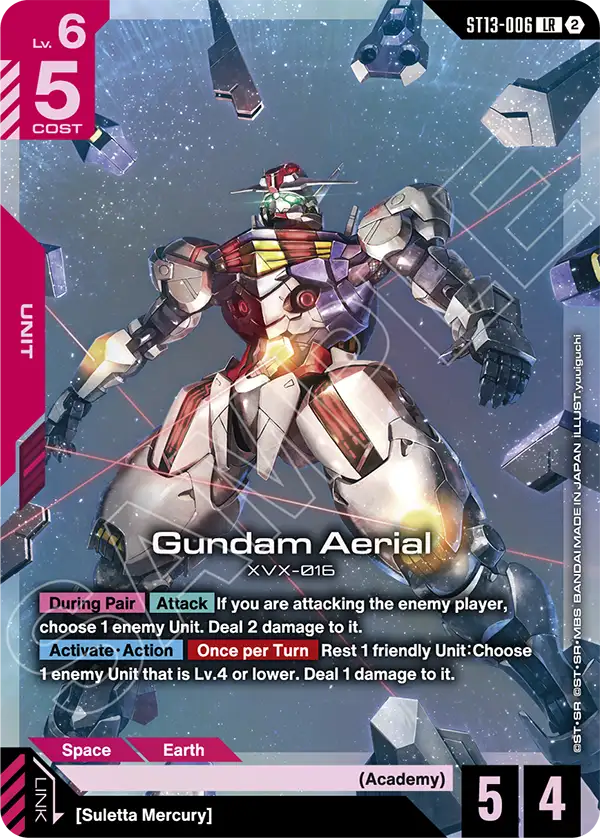
Gundam Card Game Timing Keywords: All 13 and When They Fire
Section 13-2 of the Gundam Card Game Comprehensive Rules defines 13 timing keywords, and 715 of the 956 main-deck cards open an effect with at least one. Here is what each one is, when it fires, how many cards print it, the colour it wears on the printed card, and the rulings that separate When Paired, During Pair, When Linked and During Link.
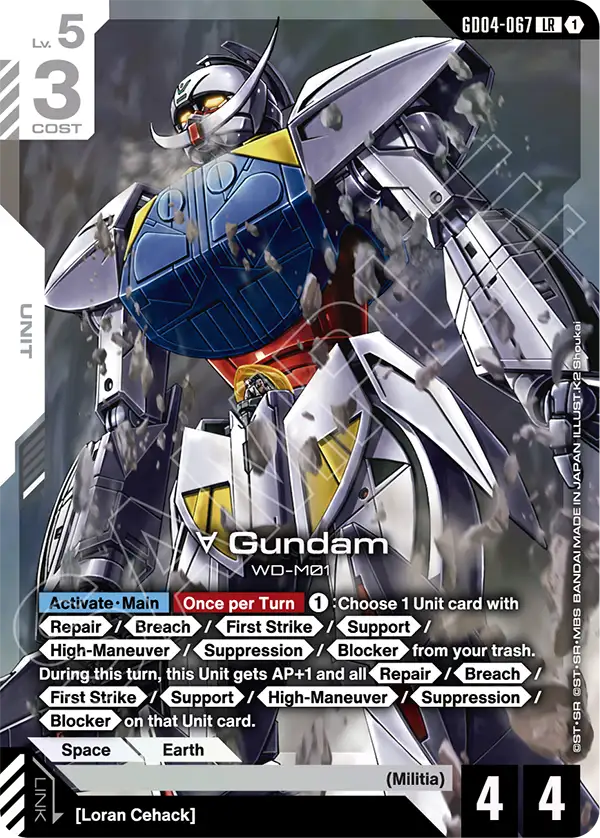
Gundam Card Game Errata and Comprehensive Rules Updates
Bandai has corrected the text of three Gundam Card Game cards, and on 30 September 2026 its own card database still shows the uncorrected wording on all three. Here is each errata and what it changes at the table, plus a version-by-version account of the Comprehensive Rules from 1.0 to 1.9.0, built by comparing every archived English PDF against the next - including three rules the official changelog never lists.
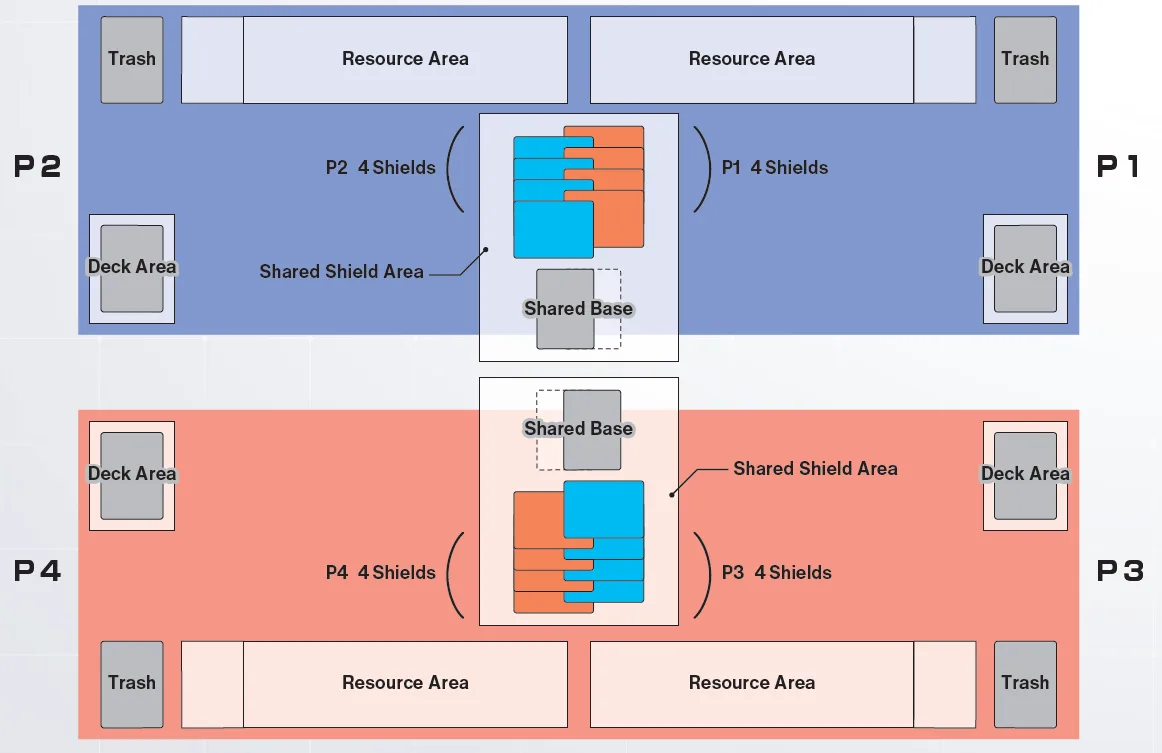
Gundam Card Game Multiplayer Rules - 2v2 and Battle Royale
On 25 September 2026 a store release event opened with a Battle Royale option and Bandai posted four decklist pairs built for 2v2 Team Battle. Most of the 1v1 game carries over, but a handful of rules change who gets EX Resources, whose hand a Shield lands in and what "friendly" means once your partner sits next to you - and Bandai's own two rules documents disagree on one of them. Here is every change, the 11 multiplayer rulings I found in Bandai's FAQ, the 35 cards whose text reads the size of the table, and what Bandai's 14 team decklists do differently.
Gundam Card Game Commands - All 145, and When to Play Them
Comprehensive Rules 9-2 makes Command the only card type in the Gundam Card Game you can play out of your hand on someone else's turn, and whether a given Command can is written on one line of the card: 84 of the 145 Commands in the game carry an Action effect, which Bandai's own FAQ says can be played during your action steps or your opponent's. I read the timing line off all 145 of them, then counted what Bandai actually puts in its own 41 decklists - and 15 of those lists run none of it at all.
How to Play the Gundam Card Game - Resources, Shields, Pilots, and the Six-Card Life Total
Your entire life total in the Gundam Card Game is six face-down cards with 1 HP each, plus a token base with 3 HP. This is the complete rules walkthrough - the separate resource deck, the Level and Cost split, setup, the five card types, pairing Pilots into Link Units, the five phases, and combat - checked line by line against Bandai's Comprehensive Rules Ver. 1.8.0.
![Official Bandai key visual for the Gundam Card Game starter deck Raging Onslaught [ST12], showing the crimson and black Gundam Epyon in its mobile suit form, wings spread and heat rod in hand, against a blue starfield.](/images/blog/gundam-tcg/gundam-card-game-st11-st14-card-lists/gundam-st12-raging-onslaught-key-visual.webp)
Gundam Card Game ST11-ST14 Card Lists - All 64 Cards
On 11 September 2026 Bandai put the ST11 through ST14 card lists into the official card database, two weeks before the decks reach shelves. That is 64 distinct cards, 2 Legend Rare and 14 Common per deck, all of them Block 2. It also shipped 62 new rulings and Comprehensive Rules Ver. 1.9.0 the same day. Here is every card, what the four decks are actually built to do, the ruling that changes cards you already own, and the one card whose database entry already disagrees with Bandai's own errata.