Minecraft Fuel Burn Times: Best Fuels and Items Smelted
A furnace smelts one item every 10 seconds, so every fuel in the game is just its burn time divided by ten. Coal is 8 items. A block of coal is 80, not 72. A lava bucket is 100. Here is the complete burn-time table, the eight ways to turn one log into fuel ranked by what you actually get back, and the kelp loop that turns 100 smelts into 220.
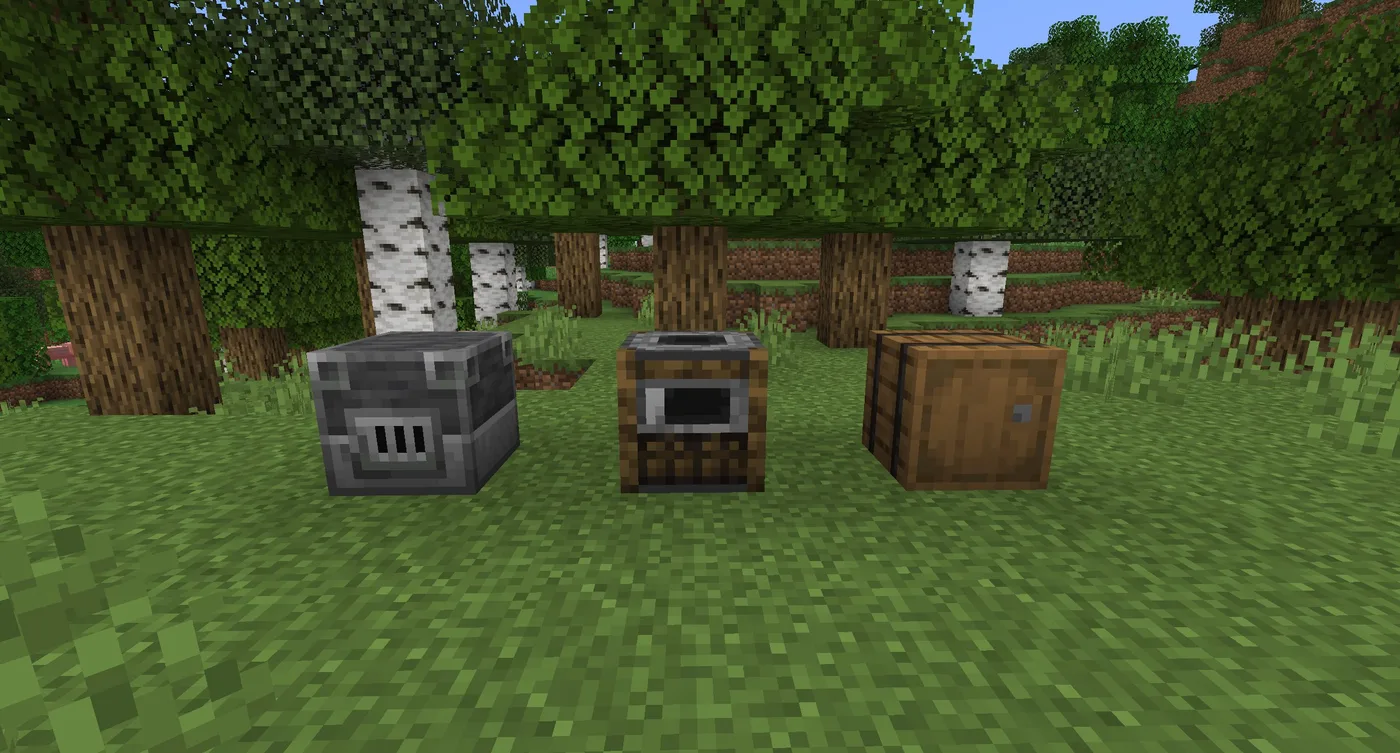
A furnace does exactly one thing with fuel: it converts burn time into smelting operations at a fixed rate. One item every 200 ticks — 10 seconds — six items a minute. Every fuel value in this guide is that fuel's burn time in seconds divided by ten, and once you have that rule, the whole fuel table stops being a list to memorise and becomes arithmetic.
The rule also settles two numbers that look like they should match and do not. Nine coal smelt 72 items. One block of coal, crafted from those same nine coal, smelts 80. And a blast furnace, which is twice as fast, does not smelt twice as much per coal — it burns the coal twice as fast to keep the ratio identical.
Here is the whole fuel system: the complete burn-time table, the eight ways to turn one log into fuel ranked by what you get back, the kelp loop that more than doubles a lava bucket, and the four places fuel quietly evaporates.
One item every ten seconds is the whole conversion rate
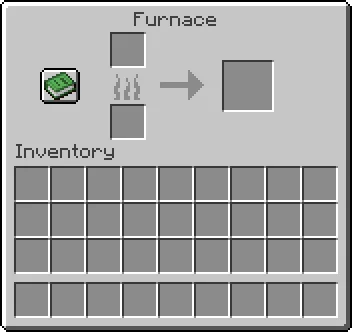
A furnace has three slots — input on top, fuel below it, output on the right — and a flame gauge that drains in real time whether or not there is anything to smelt.
The sequence matters, because it is where waste comes from:
- Put fuel and a smeltable item in. A fuel item is consumed immediately and the gauge fills.
- The furnace works through the input at 10 seconds per item.
- The fuel keeps burning until it is fully spent, input or no input.
- Only when the gauge empties and the input slot still has something in it does the furnace pull another fuel item.
Step 3 is the expensive one. Burn a piece of coal to smelt a single iron ore and the coal still burns for its full 80 seconds — you have thrown away seven items' worth of processing. Do it with a block of coal and you have thrown away 79.
Two more mechanics worth knowing before the table:
- A full output slot pauses smelting but not fuel consumption. If the output is a full stack, or holds the wrong item for what is in the input, the furnace stops producing while the flame keeps draining.
- Breaking a lit furnace loses the burning fuel item. It was already removed from the fuel slot when it started burning, so it is not in the drops.
- Unloaded chunks suspend smelting entirely, and pick it back up when the chunk loads.
Every fuel in the game and what it smelts
Burn times below are for a furnace. The items-per-fuel column is the number that actually matters, and it is the same in a blast furnace or smoker (see below).
| Fuel | Burn time | Ticks | Items smelted | Needed for a full stack (64) |
|---|---|---|---|---|
| Lava bucket | 1,000 s | 20,000 | 100 | 0.64 |
| Block of coal | 800 s | 16,000 | 80 | 0.8 |
| Dried kelp block | 200 s | 4,000 | 20 | 3.2 |
| Blaze rod | 120 s | 2,400 | 12 | 5⅓ |
| Coal | 80 s | 1,600 | 8 | 8 |
| Charcoal | 80 s | 1,600 | 8 | 8 |
| Boat, or boat with chest | 60 s | 1,200 | 6 | 10⅔ |
| Overworld log, wood, stripped variants | 15 s | 300 | 1.5 | 42⅔ |
| Overworld planks, stairs, fences, fence gates, trapdoors, pressure plates | 15 s | 300 | 1.5 | 42⅔ |
| Block of bamboo, block of stripped bamboo, bamboo mosaic, bamboo mosaic stairs | 15 s | 300 | 1.5 | 42⅔ |
| Chest, trapped chest, barrel, bookshelf, chiseled bookshelf, lectern | 15 s | 300 | 1.5 | 42⅔ |
| Crafting, cartography, fletching and smithing tables, loom, composter | 15 s | 300 | 1.5 | 42⅔ |
| Jukebox, note block, daylight detector, ladder, mangrove roots, shelf, banner | 15 s | 300 | 1.5 | 42⅔ |
| Fishing rod | 15 s | 300 | 1.5 | 42⅔ |
| Bow, crossbow (Java) | 15 s | 300 | 1.5 | 42⅔ |
| Overworld wooden door, sign, hanging sign | 10 s | 200 | 1 | 64 |
| Wooden pickaxe, shovel, axe, hoe, sword, spear | 10 s | 200 | 1 | 64 |
| Overworld wooden slab, bamboo mosaic slab (Java) | 7.5 s | 150 | 0.75 | 85⅓ |
| Stick, sapling, dead bush, azalea, leaf litter, short and tall dry grass | 5 s | 100 | 0.5 | 128 |
| Overworld wooden button, bowl (Java), wool (Java) | 5 s | 100 | 0.5 | 128 |
| Wool carpet (Java) | 3.35 s | 67 | 0.335 | ~191 |
| Bamboo, scaffolding | 2.5 s | 50 | 0.25 | 256 |
Nothing on that table burns longer than a lava bucket, and the wool carpet's 67 ticks is the strangest number in it — a Java-only value that works out to a third of an item per carpet.
Two more things the table implies rather than states. Fuel does not stack usefully if the item does not stack: a boat is 6 items of fuel and boats do not stack, so a boat in the fuel slot is 6 operations and no more. And a wooden tool burns for its full 10 seconds regardless of durability — a pickaxe with one use left is worth exactly as much fuel as a fresh one.
The four fuels worth carrying
Four fuels are worth a dedicated slot. Everything under 8 items per fuel is a stopgap, and the blaze rod at 12 is a trap: one rod crafts into two blaze powder, and one blaze powder fuels up to 20 batches of potions in a brewing stand, so burning a rod for 12 smelts costs you 40 brewing batches.
Lava bucket — 100 items. The longest burn in the game, and it hands the empty bucket back when it is done, so the bucket is reusable forever. The catch is the stack: buckets do not stack, so a full fuel slot of lava is one bucket, and it will happily burn 36 items' worth of nothing if you only feed it 64 ores.
Block of coal — 80 items, and it is free efficiency. Nine coal in a crafting grid smelt 72 items as loose coal. The block those nine make smelts 80. That is +11.11% for one crafting step, and the block un-crafts back into nine coal at any time, so there is no reason to store coal loose. The trade-off is granularity: one item smelted off a block wastes 79 operations, so blocks belong in bulk smelters, not in the furnace you use for four porkchops.
Dried kelp block — 20 items. The Minecraft Wiki notes it as the fuel with the highest operations per fuel below 64 items, and records the useful consequence: 60 items (three dried kelp blocks) is the most you can smelt in one sitting with no refills and no fuel wasted. Three blocks leave the last four of a 64-stack unsmelted; a fourth block finishes them and burns 16 operations into an empty furnace. It also stacks to 64, unlike lava. Its raw cost is covered below.
Coal and charcoal — 8 items each, and identical. They burn the same. The difference is renewability: charcoal comes from smelting a log, and one charcoal smelts eight logs into eight charcoal, so a single piece bootstraps a permanently self-feeding supply. Bedrock even hands you an achievement for it, Renewable Energy, for smelting a log using charcoal. Coal is the one that crafts into blocks, though — charcoal cannot be crafted into a block of coal, which is the reason to keep mining coal even with a tree farm running.
One log eight ways
A log burned raw is 15 seconds of fuel. That is the worst thing you can do with it. Every column below is the same single log, converted and then burned, and the values are the wiki's own seconds-per-log figures.
| What you do with one log | What you get | Fuel per log (Java) |
|---|---|---|
| Smelt it into charcoal | 1 charcoal, minus the 10 s it cost to smelt | 70 s net |
| Craft into planks | 4 planks × 15 s | 60 s |
| Craft into planks, then wooden slabs | 8 slabs × 7.5 s | 60 s |
| Craft into ladders | ~3.43 ladders × 15 s | ~51 s |
| Craft into stairs | ~2.67 stairs × 15 s | 40 s |
| Craft into sticks | 8 sticks × 5 s | 40 s |
| Craft into pressure plates | 2 plates × 15 s | 30 s |
| Craft into doors | 2 doors × 10 s | 20 s |
| Burn the log as-is | 1 log × 15 s | 15 s |
Charcoal wins by a distance: 4.7 times the fuel of the raw log, and about 17% more than planks, so a tree farm feeding a charcoal furnace pays for the extra smelt several times over. Planks are the no-extra-smelt option and only 10 seconds behind.
Sticks are the interesting loser. They are worth 40 seconds per log, the same as stairs, and at half a plank each they are the cheapest conversion in the table, which makes them the natural use for junk wood you were never going to build with.
Bamboo runs on the same logic. Raw bamboo sits at the bottom of the table above at 0.25 items each, level with scaffolding, but 9 bamboo craft into a block of bamboo and then 2 bamboo planks worth 15 seconds apiece, which turns 22.5 seconds of raw bamboo into 30 — the plank conversion is worth 3⅓ seconds per bamboo instead of 2.5. The automatic farms guide covers the farm that feeds it.
Nether wood is not fuel until you carve it up
Crimson and warped planks cannot be used as fuel at all. Neither can crimson or warped stems, or the hyphae. Every wood row in the table above is qualified as Overworld, and that qualifier is exactly what leaves the two Nether woods out.
The exception is the good part: sticks and wooden tools made from nether planks are fuel, because those items are not tracked by wood type for burning. So a stack of crimson planks is worthless in a furnace, and the sticks you craft from it are worth 5 seconds each.
Crimson and warped planks both carry the non-flammable wood tag in the game's own data, which is the one property doing both jobs: it is why they will not burn away in a build, and why they will not burn in a furnace either.
The kelp loop is the closest thing to free fuel
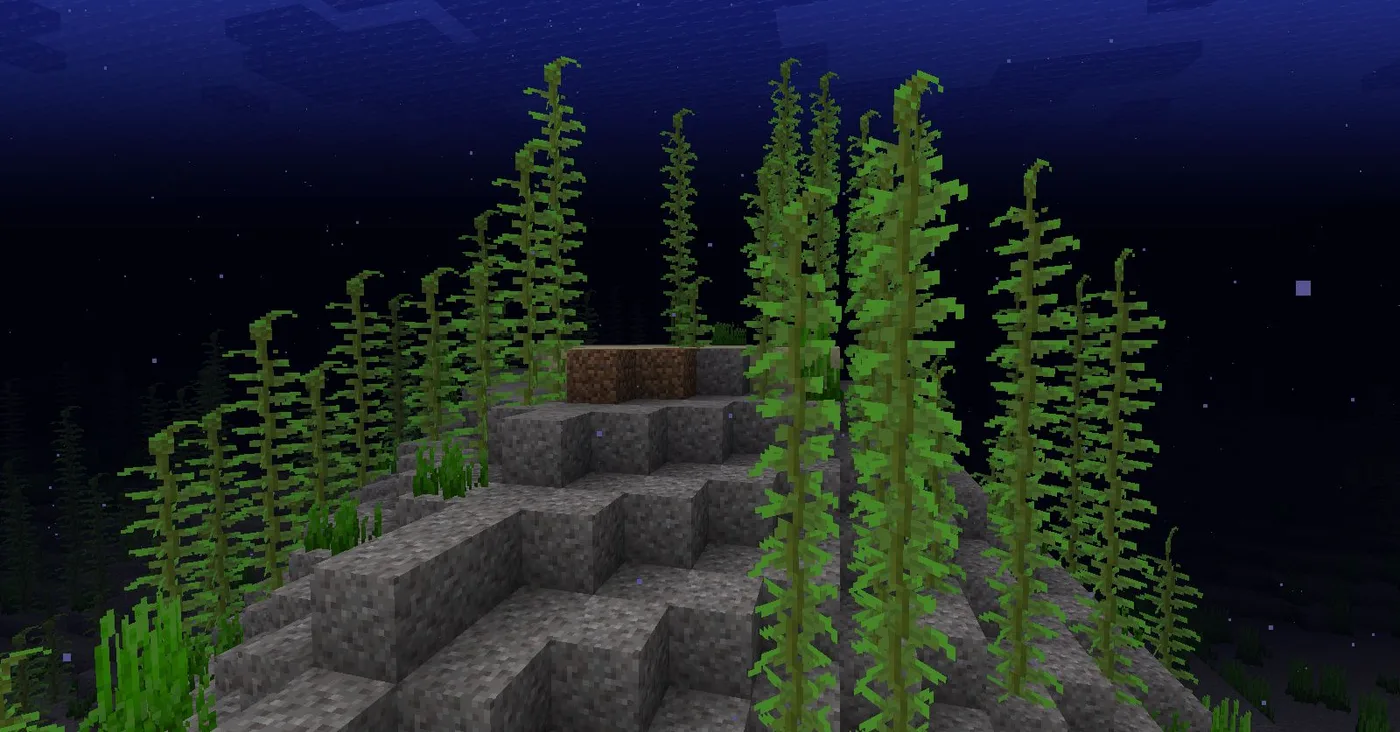
A dried kelp block smelts 20 items, but it costs 9 dried kelp, and each of those 9 costs one smelting operation. Made in a furnace, the block's net fuel value is 11 items, not 20.
That still makes it a multiplier rather than a fuel, and the multiplication is where it gets good. The wiki works the example through: use one lava bucket to smelt 100 kelp, craft those into 11 dried kelp blocks, and those blocks smelt 220 items. One lava bucket that would have smelted 100 items has smelted 220 instead — a net gain of 120 operations for nothing but crafting-grid time.
Then remove the fuel cost entirely. A campfire cooks kelp using no fuel whatsoever, and kelp is on its list of nine cookable items alongside the raw meats, cod, salmon and potatoes. A campfire cooks four items at once in 30 seconds each, which is 8 items a minute against a furnace's 6 — faster than a furnace and free.
| Cooker | Time per item | Items at once | Items per minute | Fuel cost |
|---|---|---|---|---|
| Campfire | 30 s | 4 | 8 | None |
| Furnace | 10 s | 1 | 6 | 1 operation |
| Smoker | 5 s | 1 | 12 | 1 operation |
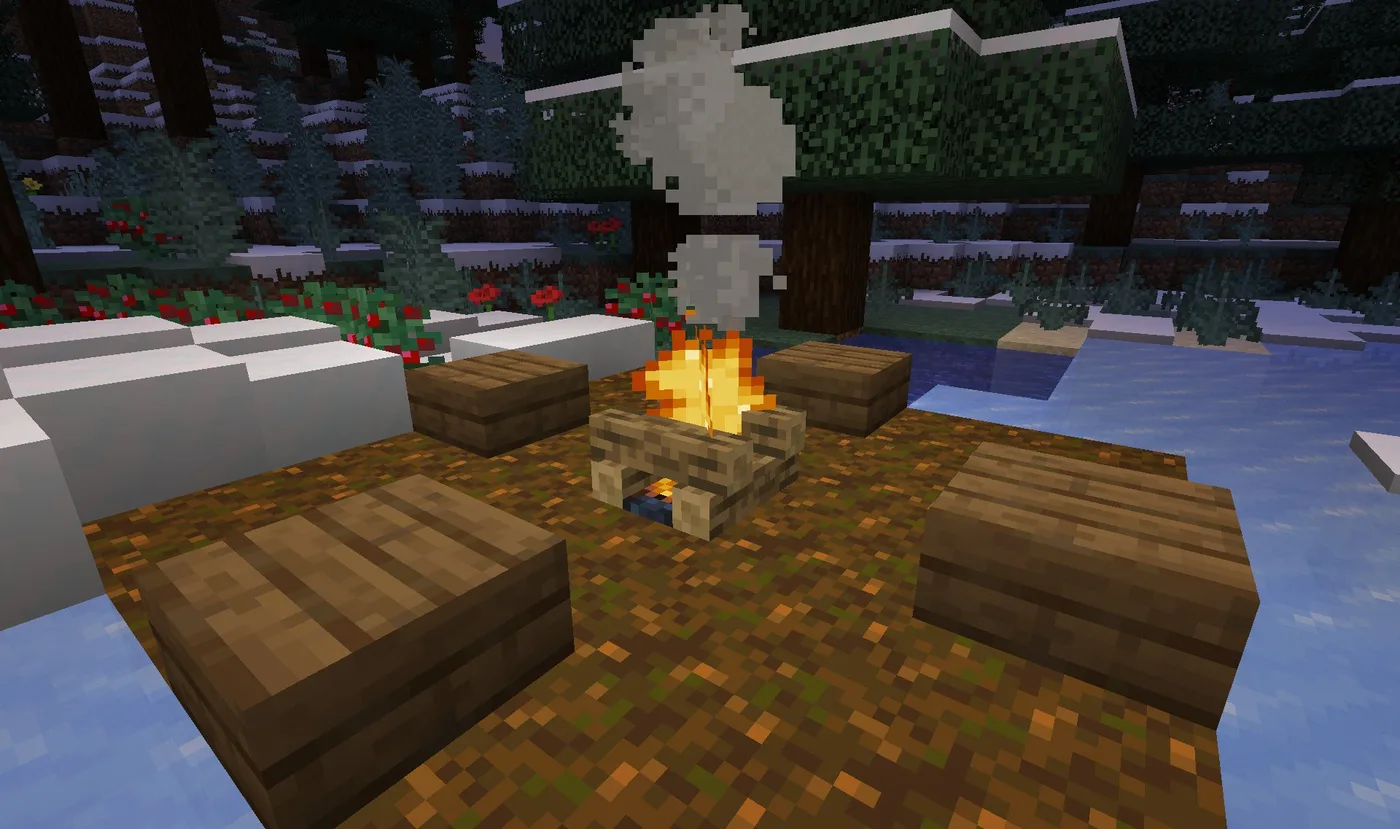
A kelp farm plus a bank of campfires produces dried kelp blocks at zero fuel cost, and each of those blocks is 20 full operations rather than 11 — a renewable fuel supply that needs no coal, no lava and no trees.
Blast furnaces and smokers do not change the fuel cost
A blast furnace smelts ores, raw metal, ancient debris and iron, gold, chainmail or copper gear at 5 seconds per item instead of 10. A smoker cooks food at the same doubled speed. Neither one will touch anything outside its category.
The part that matters for fuel: both burn fuel at double rate as well, so the number of items per fuel is unchanged. A piece of coal is 8 items in all three blocks. What changes is wall-clock time — 80 seconds of coal becomes 40 seconds in a blast furnace, smelting the same 8 ores.
| Furnace | Blast furnace | Smoker | |
|---|---|---|---|
| Seconds per item | 10 | 5 | 5 |
| Items per coal | 8 | 8 | 8 |
| Items per block of coal | 80 | 80 | 80 |
| Items per lava bucket | 100 | 100 | 100 |
| Accepts | Everything smeltable | Ores, raw metal, ancient debris, metal gear | Food only |
The practical read: build blast furnaces and smokers for throughput, not economy. Your coal bill for a stack of iron is exactly the same either way — 8 coal — you just get the iron twice as fast. Smelting metal gear in a blast furnace also returns a nugget rather than an ingot, so it is a recycling path, not a repair one.
Where the fuel actually goes missing
Four specific behaviours, all of them documented, all of them costing operations you paid for:
- Underfeeding the furnace. Fuel burns to completion whether or not there is input. One item smelted on one coal is 7 operations gone. Match the fuel to the job: 8 coal is exactly one stack of 64, 3 dried kelp blocks is 60, and 0.8 of a block of coal covers a stack.
- A blocked output slot. Smelting pauses, fuel consumption does not. A furnace whose output has filled to 64 while a lava bucket is running is burning through its 1,000 seconds for nothing.
- Breaking a lit furnace. The fuel item currently burning is already out of the slot and is not dropped. Let it burn out first.
- Running out of fuel mid-smelt. If the flame dies before the arrow fills, smelting progress unwinds at double speed and the item stays raw. Partial progress is not banked.
The one that is not a loss: fuel is decremented from the fuel slot only when the previous unit is spent and there is something to smelt. An idle furnace with a full fuel slot does not eat through it.
Java and Bedrock burn seven things differently
Most of the table is identical across editions. Seven entries are not, and one of them is significant enough to change what you do with a tree farm.
| Fuel | Java | Bedrock |
|---|---|---|
| Overworld wooden slab | 7.5 s (0.75 items) | 15 s (1.5 items) — bug MCPE-94368 |
| Bamboo mosaic slab | 7.5 s (0.75 items) | 15 s (1.5 items) — same bug |
| Bowl | 5 s (0.5 items) | 10 s (1 item) |
| Bow | 15 s (1.5 items) | 10 s (1 item) |
| Crossbow | 15 s (1.5 items) | 10 s (1 item) |
| Wool | 5 s (0.5 items) | Not a fuel |
| Wool carpet | 3.35 s (0.335 items) | Not a fuel |
The slab line is the one to act on. Wooden slabs on Bedrock burn for the same 15 seconds as a full plank because of a bug, MCPE-94368, and one log makes eight slabs. That is 120 seconds of fuel per log on Bedrock — better than charcoal's 70, and double what the same log gives a Java player. Of the nine options in the log table above, slabs are the highest-value one on Bedrock. On Java they are worth exactly the same as leaving the wood as planks.
Hoppers buckets and the XP that piles up
Three hoppers turn a furnace into a machine: one on top feeding input, one on the side feeding fuel, one underneath pulling output into a chest.
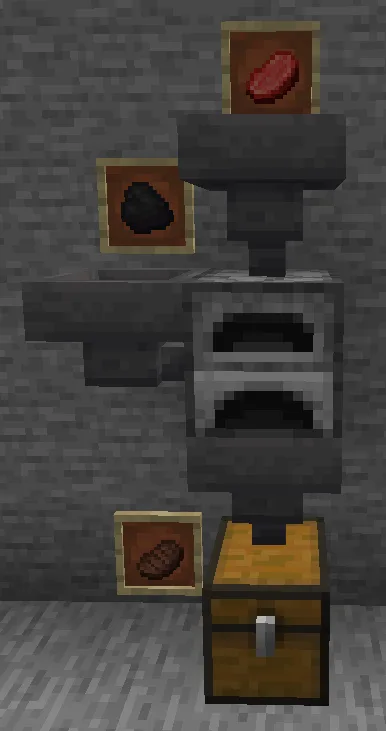
Two details make the side hopper worth building even for a single furnace:
- Empty buckets come out of the bottom hopper. Feed lava buckets in through the side and the spent buckets drop into the output chest with the smelted items, so a lava-fed smelter recycles its own buckets.
- Hoppers bank the XP instead of spending it. When a hopper pulls items out of the output slot, the experience those items earned is saved inside the furnace and awarded to whoever next breaks it or takes an item out by hand. An automated furnace that has run for hours is a stored XP orb waiting to be collected — the XP guide covers where that ranks against the other sources.
So: coal for the early game, charcoal the moment you have a tree farm and any wood to spare, blocks of coal once you are smelting in bulk, and a kelp farm with campfires if you want the fuel problem to go away for good.
Frequently Asked Questions
How many items does one coal smelt in Minecraft?
What is the best fuel in Minecraft?
Does a blast furnace use more fuel than a furnace in Minecraft?
Are dried kelp blocks good fuel in Minecraft?
Can you use crimson or warped wood as fuel in Minecraft?
Is it better to burn logs or turn them into charcoal in Minecraft?
Keep Reading
- Minecraft Wiki — Smelting: furnace timing, stop conditions, hopper automation and the full fuel table
- Minecraft Wiki — Furnace: 200-tick processing rate and fuel consumption behaviour
- Minecraft Wiki — Block of Coal: 800 seconds, 80 items, and the +11.11% figure over nine loose coal
- Minecraft Wiki — Dried Kelp Block: 20 operations, net 11, and the lava-bucket-to-220-items example
- Minecraft Wiki — Blast Furnace: double speed and double fuel rate, so items per fuel are unchanged
- Minecraft Wiki — Smoker: 5 seconds per food item, fuel used at double rate
- Minecraft Wiki — Campfire: cooks four items in 30 seconds each with no fuel, kelp included
- Minecraft Wiki — Planks: overworld planks are fuel, crimson and warped planks are not
- Minecraft Wiki — Carpet: 0.335 items per carpet, Java Edition only
Related Guides
Minecraft Wandering Trader Guide: Trades, Spawns and Llamas
Every wandering trader shows 9 offers drawn from a pool of 100 that is the same on Java 26.3 and Bedrock 26.50. Here is the full price list from the game's own trade files, the odds of seeing the offer you want, what the trader buys from you, how long one takes to spawn, and why a name tag will not keep it.

Minecraft on Switch 2: Free Upgrade, Price and Minecoins
Digital owners of Minecraft for Nintendo Switch get the native Switch 2 version free in most regions until January 31, 2027. Cartridge owners have been offered nothing so far. Here are the editions, the US prices, what the native version changes, and the Minecoins change that lands on the same day.
Minecraft Spear Guide: Jab, Charge Damage, and Lunge
A diamond spear jabs for 4 damage. Held low on an elytra at rocket speed, the same spear charges for 37. The spear's charge takes its damage from how fast you are moving, and the weapon breaks several rules the rest of Minecraft combat runs on. Here are the real numbers for every tier, both attacks, and Lunge.
Minecraft Game Rules List: Every Rule and Its New Name
Java 1.21.11 renamed every game rule: keepInventory is keep_inventory now, doDaylightCycle is advance_time, and doFireTick is gone entirely. Here is the full list for Java 26.3 and Bedrock 26.50, with old names, new IDs, menu labels, defaults, and the 19 Bedrock rules that switch your achievements off for good.
Minecraft Survival Guide for Beginners: Your First Days
You have about ten minutes of daylight before the sun sets and the world tries to kill you. Here is exactly what to do with them — punch a tree, build a tool chain, and get a roof over your head before the zombies arrive.

Best Minecraft Enchantments, Ranked — The Ones Worth Your XP
Mending is the enchantment that ends the grind — gear that repairs itself forever. Everything else is a fight over your XP and anvil uses. Here is what actually earns a slot, ranked, with the real max levels.