Minecraft Automatic Farms: Observer and Piston Designs
Observer-and-piston farms look identical in every tutorial and perform nothing alike. The difference is growth math, edition-specific observer timing, and whether the chunk is even loaded. Here are the numbers behind the builds.
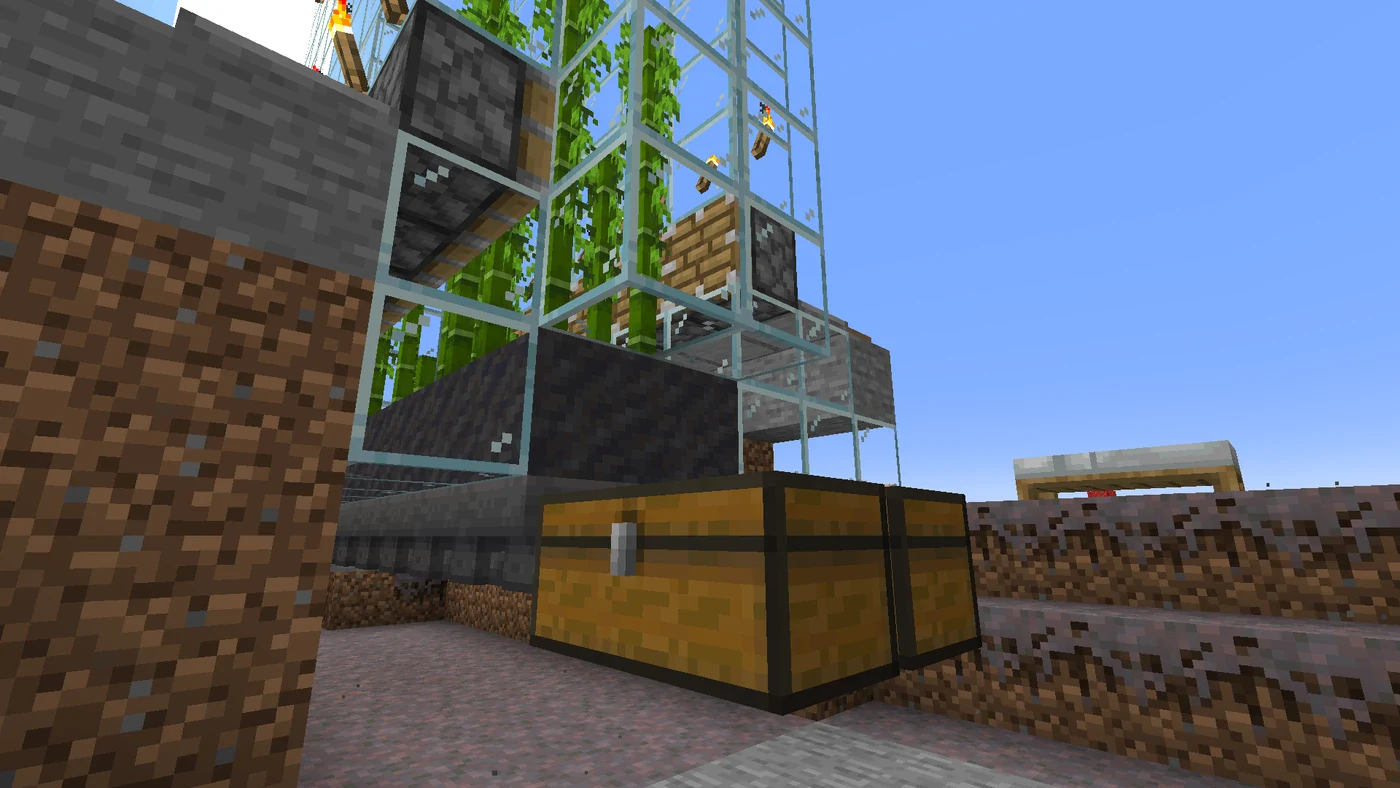
A single sugar cane plant grows one block roughly every 18 minutes in Java Edition — and roughly every 54 minutes in Bedrock. Same block, same build, three times the wait. That one number explains why the sugar cane farm your friend swears produces a double chest an hour produces a stack and a half on your world, and it is the sort of thing tutorials almost never mention.
Automatic farms are not really redstone projects. They are growth-rate projects with a redstone trigger bolted on. If you get the plant mechanics right, the circuit is trivial. If you get them wrong, no amount of clever wiring saves you. Here is what actually governs each of the classic designs.
Why observers changed automatic farming
Before observers, harvesting on growth meant block update detector circuits — janky, edition-specific contraptions that abused quasi-connectivity. You either built one and prayed, or you ran a redstone clock and accepted that your pistons fired thousands of times for every actual harvest.
The observer collapsed all of that into one block. It watches the block in front of its face, and when that block changes it fires a pulse out of its back. Crop grows, piston fires, item drops, hopper collects. Every farm below is a variation on that pattern — but the observer behaves differently across editions, and the plants it watches have wildly different clocks. Both matter more than the wiring.
The observer, precisely
An observer needs a pickaxe to mine or it drops nothing. It is placed like a piston — the observing face points at the block you want to watch, and the pulse comes out the opposite end.
It also behaves as both opaque and transparent: it blocks light and allows mob spawning on top, but it does not stop you opening a chest below it, does not cut redstone wire, and cannot conduct redstone power. That last point trips people up constantly. It only ever outputs its own pulse.
The pulse is 2 game ticks of strong power 15
When triggered, an observer emits a redstone pulse of strong power at level 15 for 2 game ticks, which is 1 redstone tick. That is short. It will drive redstone dust, a comparator, a repeater, or any mechanism at its output end, but it is a blink, not a signal you can chain casually.
In Java Edition the pulse comes out after a delay of 1 redstone tick. In Bedrock Edition it is supposed to be the same, but a long-standing bug (MCPE-15793) makes it actually 2 redstone ticks, because redstone delays are miscalculated when components are activated by world changes — which, for an observer, is the only way it ever activates.
Practically: Bedrock observer farms run one redstone tick slower per trigger than Java. It rarely breaks a farm, but it does break timing-sensitive designs copied from a Java tutorial. If a build feels "almost right" on Bedrock, this is usually why — the redstone basics guide covers the tick system underneath it.
One more property: an observer fires when it is moved by a piston, after the push rather than before. That is the entire basis of flying machines, and why observers appear in half the builds in the redstone contraptions guide.
Java detects block states, Bedrock detects block updates
This is the deeper split. In Java, an observer detects changes to its target block state — including things like crop age, which is exactly why crop farms work there. In Bedrock, an observer is a true block update detector: it fires on anything that causes a block update.
Each edition catches things the other misses. For farming purposes, the takeaway is simple — Java observers reliably see growth stages, Bedrock observers see the block appearing or changing. Both work for the farms below, but do not assume a design that keys off a subtle state change ports cleanly.
Sugar cane: the canonical observer farm
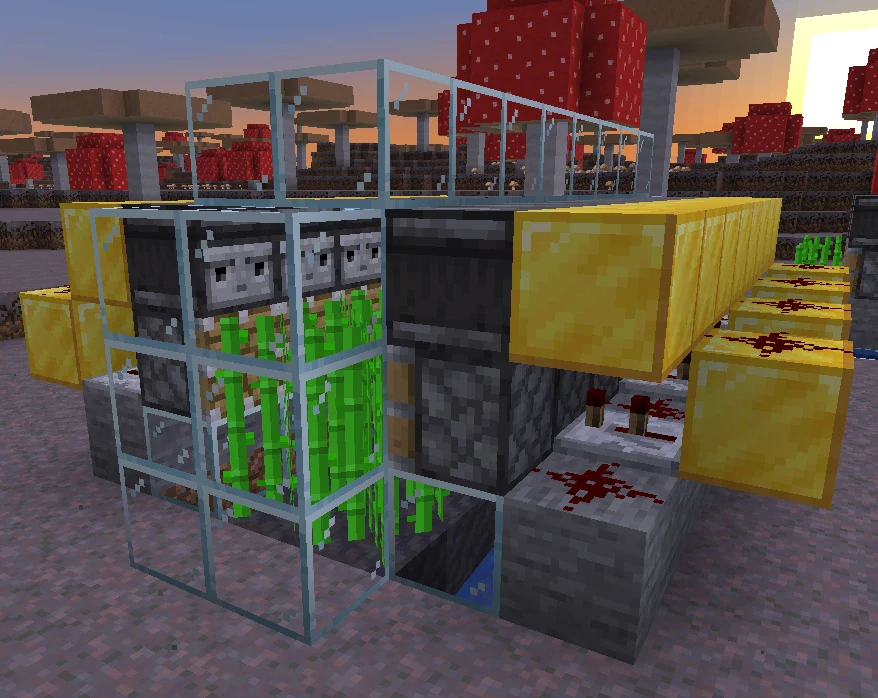
The build is four blocks tall and takes about a minute per column:
- Water channel, with a row of sand or dirt beside it.
- Sugar cane planted on that row.
- Observer on the second cane block, face pointing at the cane.
- Piston directly behind the observer output, pointed at that same second block.
- Hopper line or water stream underneath to sweep items into a chest.

Note the block above — that is a sticky piston, and it is the wrong tool here. Save the slimeballs.
The mechanics that make it work:
- Sugar cane grows only to 3 blocks tall. Watch the second block, break it when the third appears, and the plant regrows from the base forever.
- A sugar cane block drops itself as an item if a piston tries to push it. A regular piston is all you need. Trying to pull it does nothing, so sticky pistons are a waste here.
- Sugar cane grows at any light level, even total darkness. You never need lighting for growth — only to stop mobs spawning on the platform.
- It must be planted on grass, dirt, coarse dirt, rooted dirt, podzol, mycelium, sand, red sand, suspicious sand, moss, or mud that is directly adjacent to water, a waterlogged block, or frosted ice. Diagonal does not count. Above does not count.
- The adjacent water can be covered by another block, opaque or transparent, and the cane still grows. That is how you build a flush, walkable farm floor instead of an open canal.
The growth math nobody explains
Sugar cane adds a block of height when the top block has received 16 random block ticks. Random ticks are exactly that — random — so the actual rate varies widely around the average. A farm does not produce on a schedule, it produces on a distribution. Judging your build off ten minutes of observation is meaningless.
This is also why width beats cleverness in sugar cane farms. You cannot make an individual plant grow faster, so throughput is purely a function of how many plants you have inside a loaded chunk. A wider, dumber farm always outperforms a narrower, smarter one.
Java and Bedrock grow at different speeds
Those 16 random ticks land on an average of about 18 minutes in Java Edition and about 54 minutes in Bedrock Edition for a full three-block growth. Bedrock sugar cane farms need roughly three times the footprint for the same output. Plan accordingly rather than assuming your build is broken.
Bedrock gets one compensation: bone meal instantly grows sugar cane to three blocks, consuming only one bone meal. In Java, bone meal does nothing to sugar cane at all. If you are on Bedrock with a decent composter or bee setup feeding you bone meal, manual bone-mealing a cane wall is genuinely competitive with waiting.
Bamboo is the same build, only faster
Bamboo breaks in almost the same way sugar cane does, so a sugar cane farm converts to a bamboo farm with almost no changes — and bamboo does not need water at all.
The numbers are much friendlier. At the default random tick speed of 3, a bamboo plant grows on average every 4096 game ticks, about 204.8 seconds — call it three and a half minutes. Bamboo reaches 12 to 16 blocks tall, and bone meal grows it by 1 to 2 blocks in both editions.
Two rules to build around:
- The top of a bamboo plant needs light level 9 or above to grow. Unlike sugar cane, bamboo farms genuinely need lighting.
- Bamboo can be planted on moss, grass, dirt, coarse dirt, rooted dirt, gravel, mycelium, podzol, sand, red sand, suspicious sand, suspicious gravel, mud, a bamboo shoot, or itself.
Also useful: when first placed, bamboo is a non-solid shoot that flowing water destroys. After it grows one block it becomes solid and water no longer touches it. Place a second bamboo on top immediately if you are building near water.
What is it for? Fuel and scaffolding. Each raw bamboo item smelts only 0.25 items, which is terrible — but crafting 9 bamboo into 2 bamboo planks smelts 3 items instead of 2.25, a 33.3% efficiency gain, and Bedrock doubles that again via slabs. A bamboo farm feeding a plank crafter is a self-sustaining fuel supply.
Melon and pumpkin farms need a different trigger
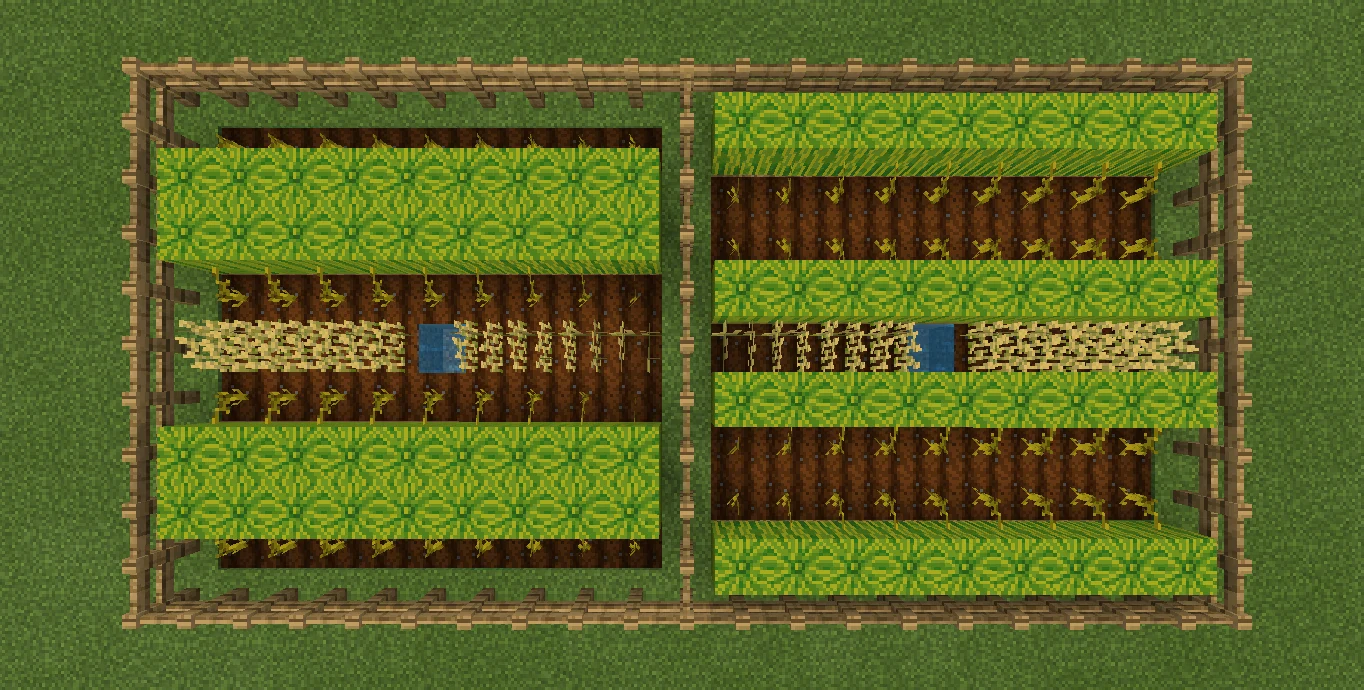
Melons and pumpkins do not grow taller — a mature stem generates a fruit block in one of the four adjacent spaces. So instead of watching a plant get taller, the observer watches the empty square where the fruit will appear.
The layout: farmland with the stem, a dirt or grass block beside it for the fruit to land on, an observer aimed at that landing block, and a piston behind it aimed at the same square.
The mechanics you need:
- Melons take 10 to 30 minutes to grow — 0.5 to 1.5 daylight cycles — and require light level 9 or higher.
- A stem will not produce another fruit until the existing one is harvested. This is the whole reason automation matters: an unharvested melon stalls that stem completely.
- A melon broken by hand, by a tool, or by being pushed with a piston drops 3 to 7 melon slices. Only Silk Touch drops the intact block — slices are what you want anyway.
- Placing a fruit fails if the chosen adjacent block is occupied or the block beneath is unsuitable (dirt, grass, farmland, podzol, mycelium, moss, mud, and similar all work). Leave the landing square genuinely clear.
Worth knowing on the economics side: journeyman-level farmer villagers buy 4 melons for an emerald, which makes a melon farm one of the better passive emerald engines if you have a trading hall running. The villager trading guide goes into how to lock those trades in.
Cactus farms need no redstone at all
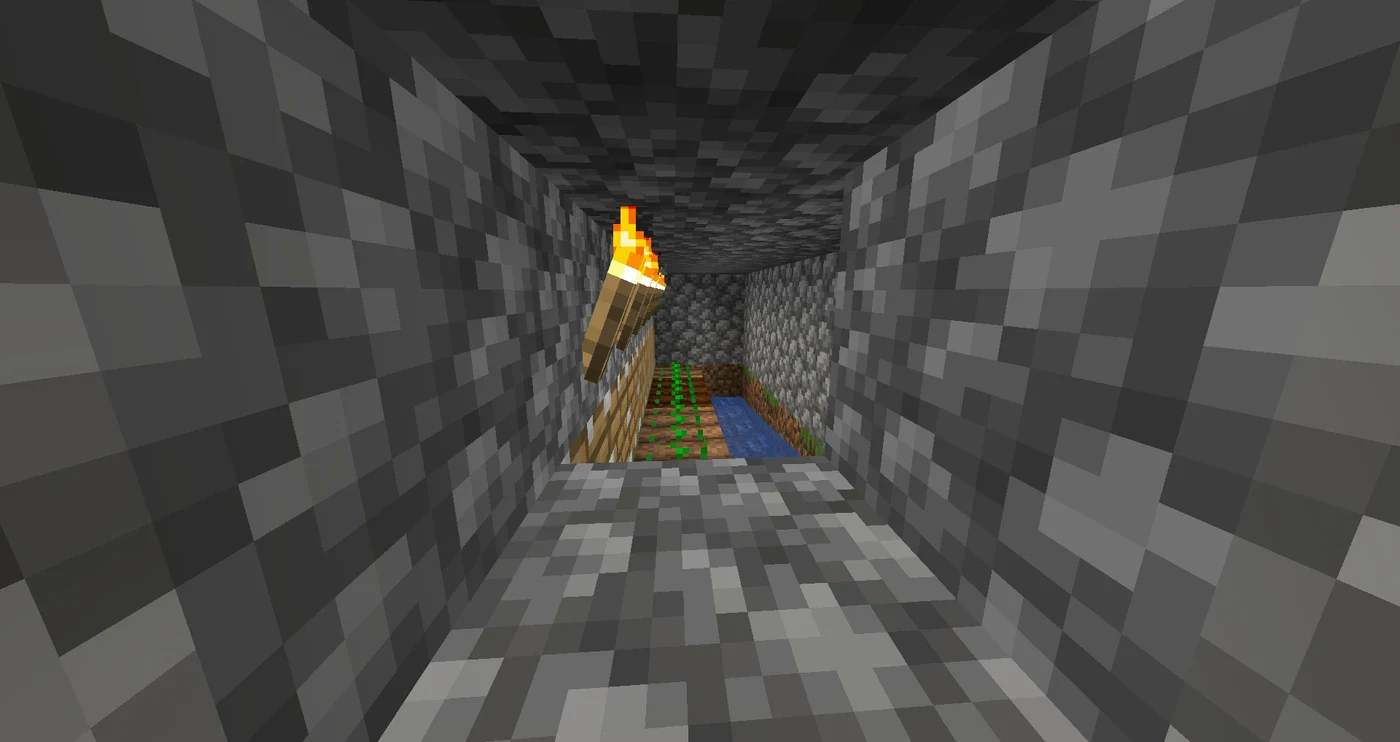
The cactus farm is the exception that proves the point — it is fully automatic with zero redstone, because cacti destroy themselves.
A cactus breaks itself and drops as an item if any solid block occupies any of the 4 horizontally adjacent blocks. Place cactus on sand, put a solid block diagonally adjacent one layer up, and the moment the cactus grows into that layer it self-destructs. Hopper underneath, done.
- Cacti grow to 3 blocks, adding height after 16 random ticks — the same roughly 18-minute average as sugar cane. Bone meal does not work on cacti.
- Cacti need no light and are non-flammable, and they grow even if the new block would immediately break. That is exactly the behavior the farm exploits.
- Critical warning: a cactus destroys any item that touches it, including other cactus items. Position hoppers so dropped items never brush a cactus, or the farm quietly eats its own output.
Collection, hoppers, and the despawn clock
Every farm above drops items on the ground, and ground items are on a timer. Get them into a container fast.
- Hopper lines are simple and reliable, but hoppers are a per-tick entity check and a long line of them is a common cause of self-inflicted lag. Use the shortest run you can.
- Water streams into a single hopper are far cheaper computationally and scale to enormous farms. For anything wider than a few columns, water is the right answer.
- A hopper minecart under a solid floor collects through the block above, which is handy when you cannot spare vertical space.
Chunk loading is the real bottleneck
Here is the thing that invalidates most "my farm is broken" reports: random ticks only happen in loaded chunks. Your sugar cane does not grow while you are 500 blocks away exploring. Every growth number quoted above assumes the farm is in a chunk the game is actively simulating.
That means building farms near where you actually spend time, clustering them so one loaded area covers several, and putting an AFK spot nearby — worth more throughput than any redstone optimization you can make. On a server, a farm nobody visits produces nothing regardless of how well it is built.
This is also why output feels so inconsistent in a fresh world. You are not unlucky and the build is not wrong — you simply were not standing near it. For what is worth building once you have a reliable loaded area, the best Minecraft farms rundown and the iron farm guide are the natural next builds.
Quick Action Checklist
- Use a regular piston on sugar cane, not sticky. Pushing drops the cane; pulling does nothing.
- Aim the observer at the second sugar cane block so the plant regrows from the base indefinitely.
- Sugar cane grows at any light level — light the platform for mob control, not growth.
- Plan for about 18 minutes per growth in Java and about 54 minutes in Bedrock. Widen the farm rather than blaming the build.
- On Bedrock, keep bone meal on hand — it instantly grows cane to 3 blocks for one item. It does nothing in Java.
- Convert a sugar cane farm to bamboo for roughly 3.5 minute cycles and no water, but light it: the plant top needs light level 9 or above.
- Craft bamboo into planks before burning it for a 33.3% fuel efficiency gain.
- For melons, aim the observer at the landing square, not the stem, and expect 3 to 7 slices per piston break.
- Build cactus farms with a diagonal solid block one layer up, and keep hoppers where dropped items cannot touch a cactus.
- Use water streams into one hopper instead of long hopper lines on anything wide.
- Build near where you actually play. Unloaded chunks do not tick, and that beats every other factor combined.
Frequently Asked Questions
How fast does sugar cane grow in Minecraft?
Do you need a sticky piston for an automatic sugar cane farm?
How does an observer work in Minecraft?
Why is my automatic Minecraft farm not producing anything?
Is a bamboo farm better than a sugar cane farm?
Keep Reading
Related Guides
Minecraft Spawner Guide: Mechanics, XP Farms, and Real Rates
A monster spawner is not a magic mob faucet. It is a timer with a hard mob cap, a spherical activation radius, and a spawn volume that is shaped differently in Java and Bedrock. Learn the actual numbers and you stop building farms that quietly run at half rate.

Minecraft Slime Farm Guide: Slime Chunks, Swamps, Slimeballs
Slimeballs are the one item you can't mine, trade, or craft your way around — sticky pistons, leads, and slime blocks all dead-end at them. Here's how to build a slime farm that buries you in the stuff, whether you go slime-chunk or swamp.

Minecraft Iron Farm Guide: Build an Iron Golem Farm
An iron golem drops 3 to 5 iron ingots every single time it dies, guaranteed, and your villagers will manufacture them for free if you set the scene right. Here is how to weaponize the panic mechanic into a farm that buries you in iron.
Minecraft Music Discs: Every Disc and How to Get It
Twelve of the 22 music discs come from a creeper killed by a skeleton or one of its variants. The other ten come from ten different places, and eight of those are a structure. Here is every disc, its composer, its length, its odds, and the comparator value it puts out — including the seven signal levels that two different discs now share.

Minecraft Survival Guide for Beginners: Your First Days
You have about ten minutes of daylight before the sun sets and the world tries to kill you. Here is exactly what to do with them — punch a tree, build a tool chain, and get a roof over your head before the zombies arrive.

Best Minecraft Enchantments, Ranked — The Ones Worth Your XP
Mending is the enchantment that ends the grind — gear that repairs itself forever. Everything else is a fight over your XP and anvil uses. Here is what actually earns a slot, ranked, with the real max levels.