Minecraft Dispenser Guide: What It Does With Every Item
A dispenser is a box that decides what to do based on what you put in it. Here is the full item-by-item list from the game data, what happens when the action fails, how it differs from a dropper, and what 26.4 Snapshot 9 changed.
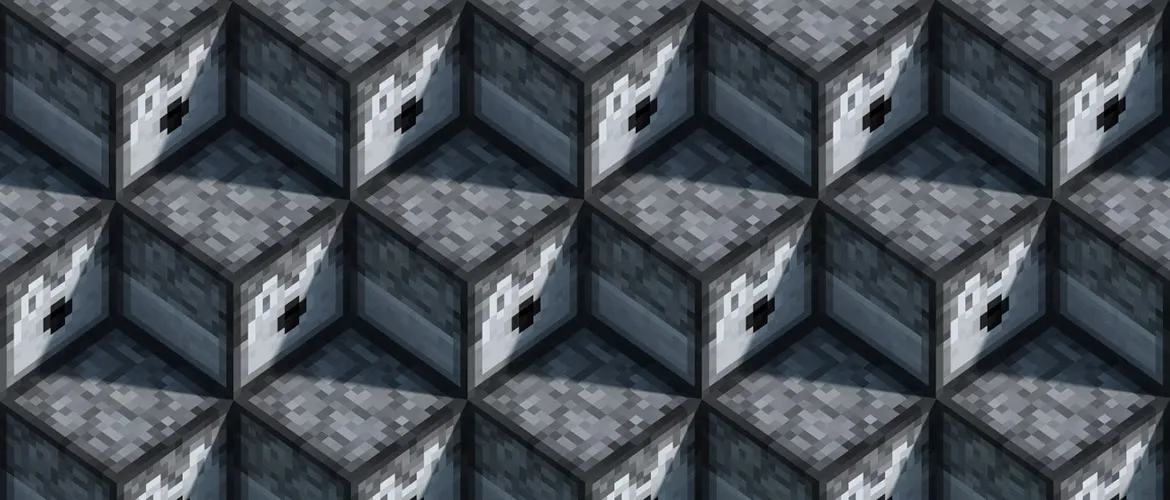
A dispenser is a nine-slot box that picks one item at random when you pulse it, then does whatever that item is wired to do: fire it, place it, equip it, use it on the block in front, or just spit it out. That last option is the default, and it covers far more items than the other four. This guide lists what a dispenser does with each item, what happens when that action fails, and how it differs from a dropper.
The item list comes from the game's own data. On 17 November 2026, Java Edition 26.4 Snapshot 9 moved every dispenser behavior out of hardcoded logic and into data files, so for the first time the full vanilla list is published as 27 files. The behaviors below match the Minecraft Wiki's description of the current release, Java 26.3; Snapshot 9's changelog lists no change to what a vanilla dispenser does.
Dispensers at a glance
| Dispenser | |
|---|---|
| Recipe | 7 cobblestone, 1 bow (any durability), 1 redstone dust |
| Slots | 9 |
| Per pulse | 1 item, from a random occupied slot |
| Delay | 4 game ticks (0.2 seconds) after activation |
| Facing | Any of 6 directions, toward you when placed |
| Mining | Any pickaxe; without one it drops only its contents |
| Natural generation | Jungle temples (2 each) and trial chambers |
| Java pistons | Cannot move it |
How to make a dispenser
Put 7 cobblestone around the edge of a crafting grid with a bow in the centre and redstone dust bottom-middle. The Java recipe takes plain cobblestone only, not blackstone or cobbled deepslate, and Mojang's Bedrock recipe file uses the same shape and the same three items. The bow can be any durability, and its enchantments do not carry over to the dispenser.
If you only need to eject items or feed a container, build a dropper instead: same shape, no bow, so it costs 7 cobblestone and 1 redstone dust.

How a dispenser fires
A dispenser acts on the rising edge of a signal: one pulse, one item. Holding it powered does nothing more; to fire repeatedly you need a clock. It can be activated by an adjacent power source, a powered block next to it, a repeater or comparator facing into it, or redstone dust pointing at it or lying on top of it. Dust next to it that points elsewhere does not count.
Four details from the wiki that explain most odd behavior:
- The slot is random, and chosen when the item leaves, not when the pulse arrives. A dispenser holding arrows and fire charges fires them in no fixed order.
- There is a 4-tick delay between the pulse and the item leaving, and inputs during that window are ignored.
- Java has quasi-connectivity. A dispenser can fire because something would power the block above it, but only once it gets a block update. That is why some Java dispenser builds misfire or wait for an unrelated update.
- It conducts power. Powering a dispenser directly can activate the mechanism next to it, including another dispenser.
What a dispenser does with each item
Snapshot 9 ships 27 behavior files. One is the dropper's own; every item a dispenser can hold points to one of the other 26. Here is that set, grouped by what they do. Anything not named in this table uses the default, which is to drop it.
| Item | What the dispenser does |
|---|---|
| Arrows (all kinds), eggs, snowballs, ice balls (a 26.4 snapshot item) | Fires it as a projectile |
| Splash potions, lingering potions, bottles o' enchanting | Throws it, faster and tighter than arrows |
| Fire charge | Launches a small fireball, which sets what it hits on fire |
| Wind charge | Fires a wind charge |
| Firework rocket | Launches it forward; star rockets deal damage |
| TNT | Spawns primed TNT in front (after first trying to feed a sulfur cube) |
| Flint and steel | Lights a fire in the empty space in front, ignites TNT, or relights a campfire |
| Bone meal | Fertilizes the block in front, if that block can be fertilized |
| Water, lava and powder snow buckets, plus buckets of fish, axolotls, tadpoles or sulfur cubes | Places the contents and keeps the empty bucket; mobs spawn with the water |
| Empty bucket | Scoops up a water or lava source or powder snow in front |
| Glass bottle | Fills with water from a source block, or with honey from a full beehive or bee nest |
| Water bottle | Turns dirt, coarse dirt or rooted dirt into mud |
| Shears | Shears a sheep, mooshroom, snow golem, bogged or sulfur cube, harvests honeycomb from a full hive, or unleashes a leashed mob |
| Honeycomb | Waxes a copper block in front |
| Brush | Brushes an armadillo for a scute |
| Glowstone | Charges a respawn anchor |
| Armor, elytra, shields, mob heads, saddles, harnesses, carpets, horse, wolf and nautilus armor | Equips it on a player, armor stand or eligible mob in front, if that slot is empty |
| Carved pumpkin | Completes an iron, copper or snow golem; otherwise equips it as a helmet |
| Wither skeleton skull | Completes a wither; otherwise equips it |
| Chest | Puts a chest on a tamed llama, donkey or mule |
| Boats, chest boats and rafts | Places the boat on water in front |
| Minecarts (all six kinds) | Places the minecart on rails in front |
| Shulker box | Places it as a block |
| Armor stand | Places it as an entity (Java) |
| Spawn eggs | Spawns the mob in front |
| Everything else | Drops it as an item, unless a sulfur cube in front can absorb it |
Three entries are easy to miss. Tridents are not on the list in Java, so a Java dispenser just drops them (Bedrock throws them). Only plain water bottles make mud; other drinkable potions are dropped (splash and lingering potions are thrown). And the default is not always a straight drop: in the Snapshot 9 data it first tries to hand the item to a sulfur cube in front, and only drops it if the cube cannot take it. TNT does the same, which is how you load an explosive cube from a dispenser instead of priming the TNT.
Projectiles: power and spread
The new data files publish the launch numbers for the first time. Higher power is a faster, longer shot; uncertainty is how much the shot wanders.
| Behavior | Items | Launch power | Uncertainty |
|---|---|---|---|
| Default projectile | Arrows, eggs, snowballs, ice balls | 1.1 | 6.0 |
| Thrown potion | Splash and lingering potions, bottles o' enchanting | 1.375 | 3.0 |
| Fire charge | Fire charge | 1.0 | 6.67 |
| Wind charge | Wind charge | 1.0 | 6.67 |
| Firework rocket | Firework rocket | 0.5 | 1.0 |
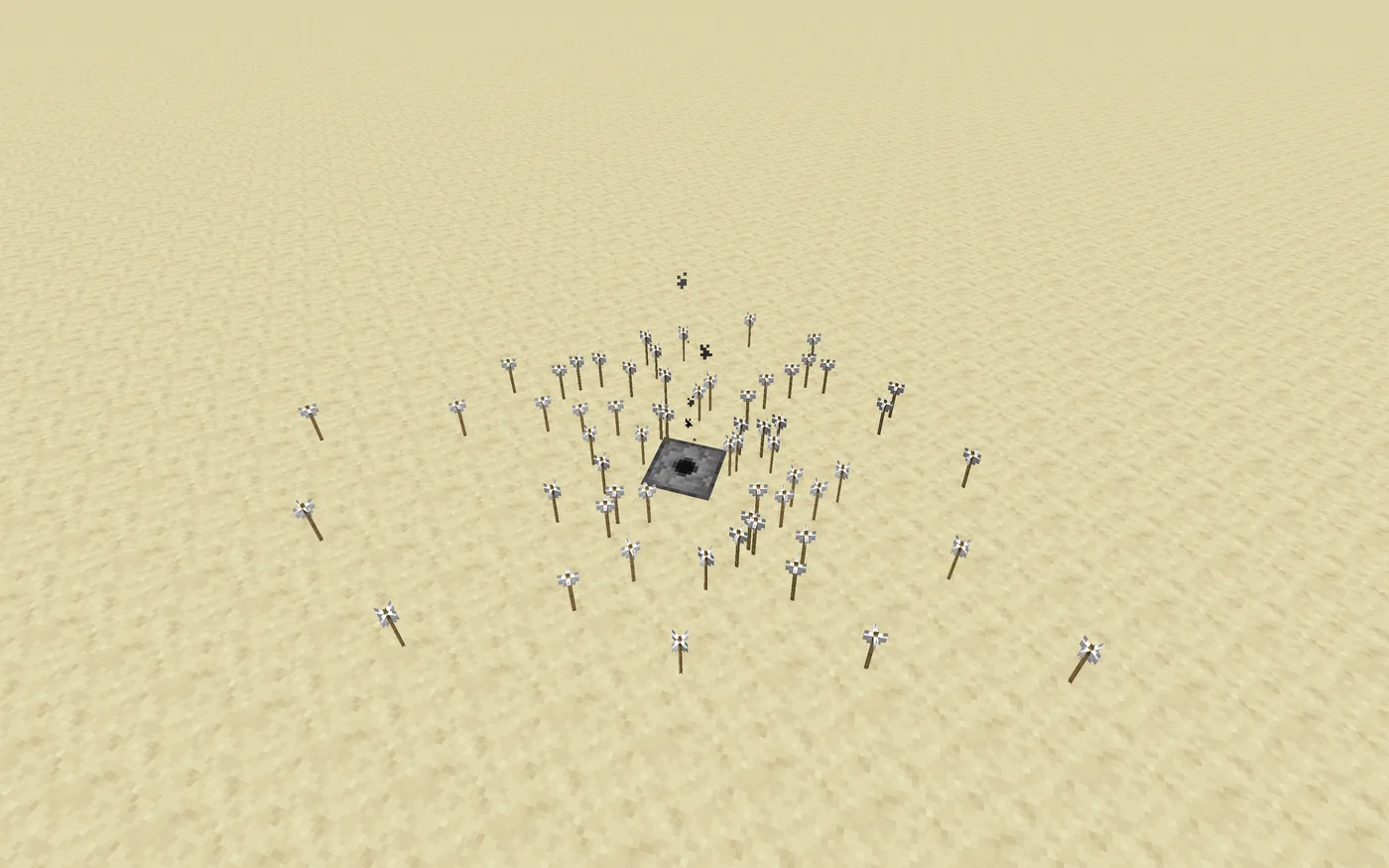
That table is the reason the wiki says dispensed potions fly farther: 25% more power and half the spread of an arrow. Fireworks are the most accurate thing a dispenser fires, by a wide margin, which matters if you are aiming a firework display. The screenshot below shows the default spread: arrows fired straight up land in a loose ring, not a stack.
When the action fails
The data files make the fallback order explicit: each behavior is a list, tried in order until one succeeds. That splits dispensable items into three groups, and the group tells you what a failed pulse will look like.
| If the action fails... | Items |
|---|---|
| It drops the item instead | Boats, minecarts, chests, empty and filled buckets, glass bottles, water bottles, honeycomb, glowstone, equipment, everything on the default list |
| Nothing else is tried | Bone meal, flint and steel, shears, brush, shulker box, armor stand, spawn eggs |
| It tries to equip, but never drops | Carved pumpkin, wither skeleton skull |
So a boat dispenser that is not facing water spits out a boat item, and a bucket dispenser with no source in front throws the empty bucket. Bone meal facing a block that cannot grow is not used up. Glowstone has one special case: facing a full respawn anchor, it stops without dropping anything; facing anything else, it is dropped.
One more catch for buckets. The wiki notes a dispenser cannot empty a bucket into a cauldron, and water dispensed in the Nether vanishes, leaving the empty bucket behind.
Dispenser vs dropper vs crafter
| Dispenser | Dropper | Crafter | |
|---|---|---|---|
| Recipe | 7 cobblestone, bow, redstone | 7 cobblestone, redstone | 5 iron ingots, crafting table, dropper, 2 redstone |
| Uses item behaviors | Yes, the 26 above | No, every item is ejected | No, it crafts |
| Pushes into a container in front | No | Yes, then drops if there is no container | Yes, its crafted result, then ejects it if the container cannot take it |
| Java quasi-connectivity | Yes | Yes | No |
The dropper has its own behavior file and it is two lines: insert into a container in front, otherwise drop. That makes it the item-elevator and sorter block, and the dispenser the "do something" block. If you want automatic crafting rather than dispensing, the Crafter guide covers the third block in the family.
Where dispensers generate
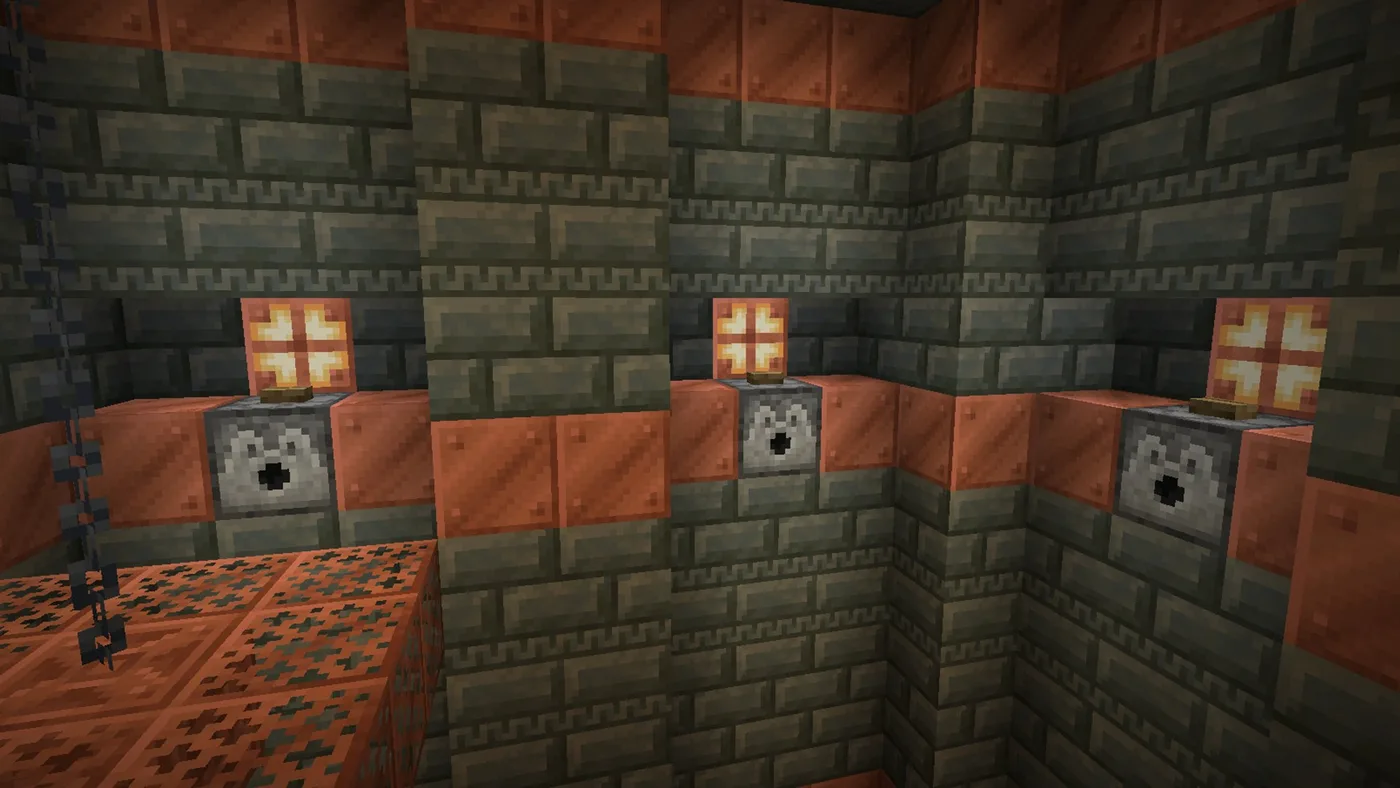
Free dispensers come with ammunition. The Java loot tables, unchanged between 26.3 and 26.4 Snapshot 9:
| Location | What is inside |
|---|---|
| Jungle temple (2 dispensers) | 1 or 2 stacks of 2 to 7 arrows each |
| Trial chamber corridor dispenser | 4 to 8 arrows |
| Trial chamber water dispenser | 1 water bucket |
| Trial chamber chamber dispenser | 1 roll, see below |
The chamber dispenser rolls once from a weighted pool of 29:
| Contents | Amount | Chance |
|---|---|---|
| Snowballs | 4 to 8 | 20.7% |
| Fire charges | 4 to 8 | 20.7% |
| Arrows | 4 to 8 | 13.8% |
| Water bucket | 1 | 13.8% |
| Eggs | 4 to 8 | 6.9% |
| Splash potion (Slowness, Poison or Weakness) | 2 to 5 | 3.4% each |
| Lingering potion (Slowness, Poison, Weakness or Healing) | 2 to 5 | 3.4% each |
Mining the dispenser with a pickaxe gives you the block and its contents. The trial chambers guide covers the rest of that structure, and the temples guide covers the jungle temple tripwire trap.
Seven builds worth making
Each of these uses one behavior from the table above.
- Bone meal farm booster. Face a dispenser at a sapling or crop and pulse it. Bone meal is only spent if the block reacts, so a misfire costs nothing.
- Water or lava on a button. Load one water bucket. The first pulse places the water; the next pulse scoops the source back up, because the bucket is now empty. It is the basis of retractable water walls and, with lava, a simple trap.
- Auto-armor stand. A dispenser facing where you stand equips armor into any empty slot. Line several up and one button kits you out.
- Golem builder. Build the iron or snow golem body, face a dispenser at the head spot with a carved pumpkin, and pulse. If you want a steady supply of iron rather than one golem, read the iron farm guide.
- Wither summoner. Place the soul sand and two skulls, then let a dispenser place the third, so you are not standing next to it when it spawns. It will not place the skull on Peaceful or underwater. See the Wither guide before you press the button.
- Hive harvester. A dispenser with glass bottles fills honey from a full hive; one with shears takes honeycomb. Covered properly in the bees guide.
- Copper waxer and anchor charger. Honeycomb in a dispenser waxes the copper block in front (copper guide); glowstone in one charges a respawn anchor (spawn point guide).
For the logic around these (clocks, observers, item sorters), the redstone contraptions guide picks up where this one stops.
Java vs Bedrock: the delta list
| Behavior | Java | Bedrock |
|---|---|---|
| Trident | Dropped | Thrown |
| Armor stand | Placed as an entity | Not placed |
| Equipping a villager | Yes | No |
| Saddling a skeleton horse | Yes | No |
| Quasi-connectivity | Yes | No |
| Activation timing | No tick restriction noted | Only on the redstone input (C) tick |
| Achievement | None | Dispense With This (craft a dispenser, 20 Gamerscore) |
The recipe is identical on both editions.
What 26.4 Snapshot 9 changed
Snapshot 9 released on 17 November 2026, with Snapshot 10 following the same day to fix a crash in the multiplayer screen. For dispensers the change is under the hood, and it matters mostly to data pack makers:
- A new
dispense_behaviorregistry. Each of the 27 vanilla files is a list of steps, tried in order. There are 24 step types, fromshoot_projectileandplace_blocktocharge_respawn_anchorandbrush_armadillo. - A new
minecraft:dispense_behavioritem component. Any item can point at a registry entry or carry its own inline list, so a data pack can give an item a dispenser action without code. - Boats and minecarts now carry
minecraft:entity_databy default, which decides which entity they place. - A
minecraft:honeycombblock transformer now handles waxing, and for now only dispensers use it.
The data pack version is now 128.0. 26.4 is still a snapshot series, so the file format could change again before release. The vanilla behaviors in this guide are the stable part: apart from ice balls and the Snapshot 9 fallback details, they describe 26.3 as it plays today.
Quick Action Checklist
- Craft one from 7 cobblestone, a bow and redstone dust; skip the bow and you have a dropper.
- Pulse it, do not hold it. One rising edge, one item, from a random slot, 0.2 seconds later.
- Check the table before you blame the redstone: tridents (Java), non-water drinkable potions and most blocks are simply dropped.
- Know the fallback. Boats, buckets and bottles drop when they fail; bone meal, shears and flint and steel do nothing.
- Use a dropper when you need to push items into a chest or hopper.
- Loot the free ones: jungle temple and trial chamber dispensers come loaded with arrows, snowballs, fire charges or potions.
Frequently Asked Questions
What does a dispenser do in Minecraft?
How do you make a dispenser in Minecraft?
What is the difference between a dispenser and a dropper in Minecraft?
Can a dispenser shoot tridents in Minecraft?
Why does my dispenser drop items instead of using them?
What changed for dispensers in Minecraft 26.4?
Keep Reading
- Minecraft.net — Minecraft 26.4 Snapshot 9 (and Snapshot 10 hotfix): data-driven dispense behaviors, 27 vanilla entries, behavior types
- Minecraft Wiki — Dispenser: activation, 4-tick delay, random slot, item behavior table, Java vs Bedrock notes
- Java Edition 26.4 Snapshot 9 vanilla data (misode/mcmeta): the 27 dispense_behavior files with fallback order and projectile power and uncertainty
- Java Edition 26.4 Snapshot 9 item components (misode/mcmeta): which dispense_behavior each item uses (trident uses default)
- Java Edition 26.3 vanilla data (misode/mcmeta): dispenser recipe, cobblestone, bow and redstone
- Java Edition 26.4 Snapshot 9 vanilla data (misode/mcmeta): dropper recipe, 7 cobblestone and redstone
- Mojang bedrock-samples: Bedrock dispenser recipe (same shape and items as Java)
- Java Edition 26.3 vanilla data (misode/mcmeta): trial chamber chamber-dispenser loot table
- Java Edition 26.3 vanilla data (misode/mcmeta): trial chamber corridor dispenser, 4 to 8 arrows
- Java Edition 26.3 vanilla data (misode/mcmeta): jungle temple dispenser, 1 to 2 stacks of 2 to 7 arrows
- Java Edition 26.4 Snapshot 9 vanilla data (misode/mcmeta): TNT is the explosive sulfur cube block
- Minecraft Wiki — Achievement: Dispense With This (construct a dispenser, 20 Gamerscore)
Related Guides
Minecraft Desert and Jungle Temples: Traps and Loot Odds
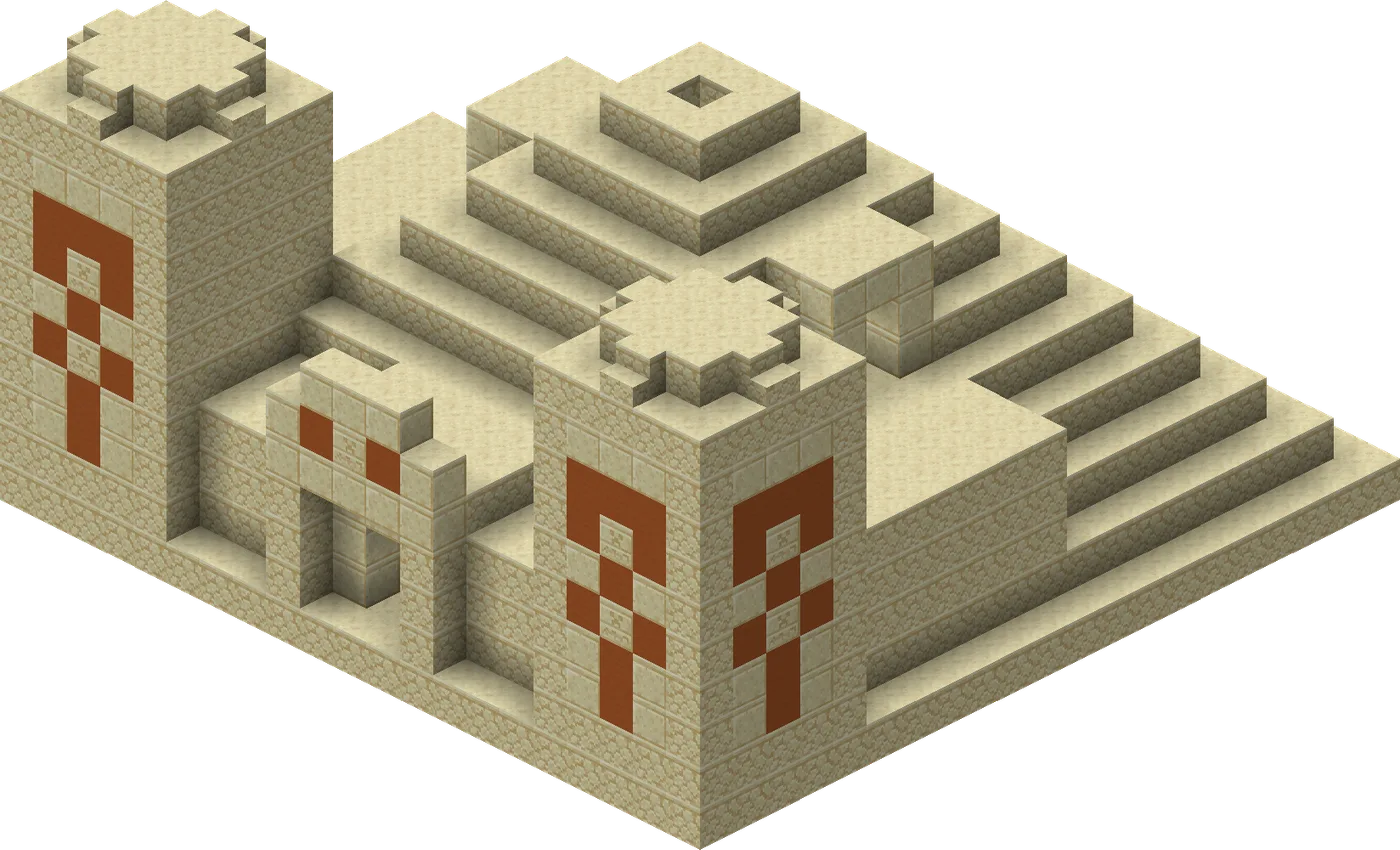
A desert temple has four chests sitting on nine TNT, and a jungle temple has two chests behind arrow traps and a lever puzzle. Here is how to find each one, get in without blowing up the loot, and what the chests actually hold, with the numbers from the game data.
Minecraft Music Discs: Every Disc and How to Get It
Twelve of the 22 music discs come from a creeper killed by a skeleton or one of its variants. The other ten come from ten different places, and eight of those are a structure. Here is every disc, its composer, its length, its odds, and the comparator value it puts out — including the seven signal levels that two different discs now share.
Minecraft TNT Guide: Blast Mechanics, Fuses, and Real Uses
TNT can look like a party trick — light it, run, giggle. But the explosion is a precisely defined system with a power value, 1,352 rays, and a fuse that changes length depending on how you set it off. Learn the actual numbers and TNT stops being a gag and starts being a tool.
Minecraft Ruined Portals: Loot Table and How to Fix One
A ruined portal is a half-built Nether portal with a chest beside it. Here is what that chest actually rolls, where each variant generates, and how to finish the frame and light it, including what to do about crying obsidian.

Minecraft Survival Guide for Beginners: Your First Days
You have about ten minutes of daylight before the sun sets and the world tries to kill you. Here is exactly what to do with them — punch a tree, build a tool chain, and get a roof over your head before the zombies arrive.

Best Minecraft Enchantments, Ranked — The Ones Worth Your XP
Mending is the enchantment that ends the grind — gear that repairs itself forever. Everything else is a fight over your XP and anvil uses. Here is what actually earns a slot, ranked, with the real max levels.