Minecraft Nautilus Guide: Taming, Riding, and the Dash
Nine months after Mojang shipped the first mount you tame with a fish instead of a carrot, the site still has no dedicated guide to it — just scattered mentions across the armor drop table, the trident guide's jockey mechanic, and the status effects list. Here is the whole pipeline: taming odds, the dash mechanic, breeding, and the effect that stops you from drowning while you ride one.
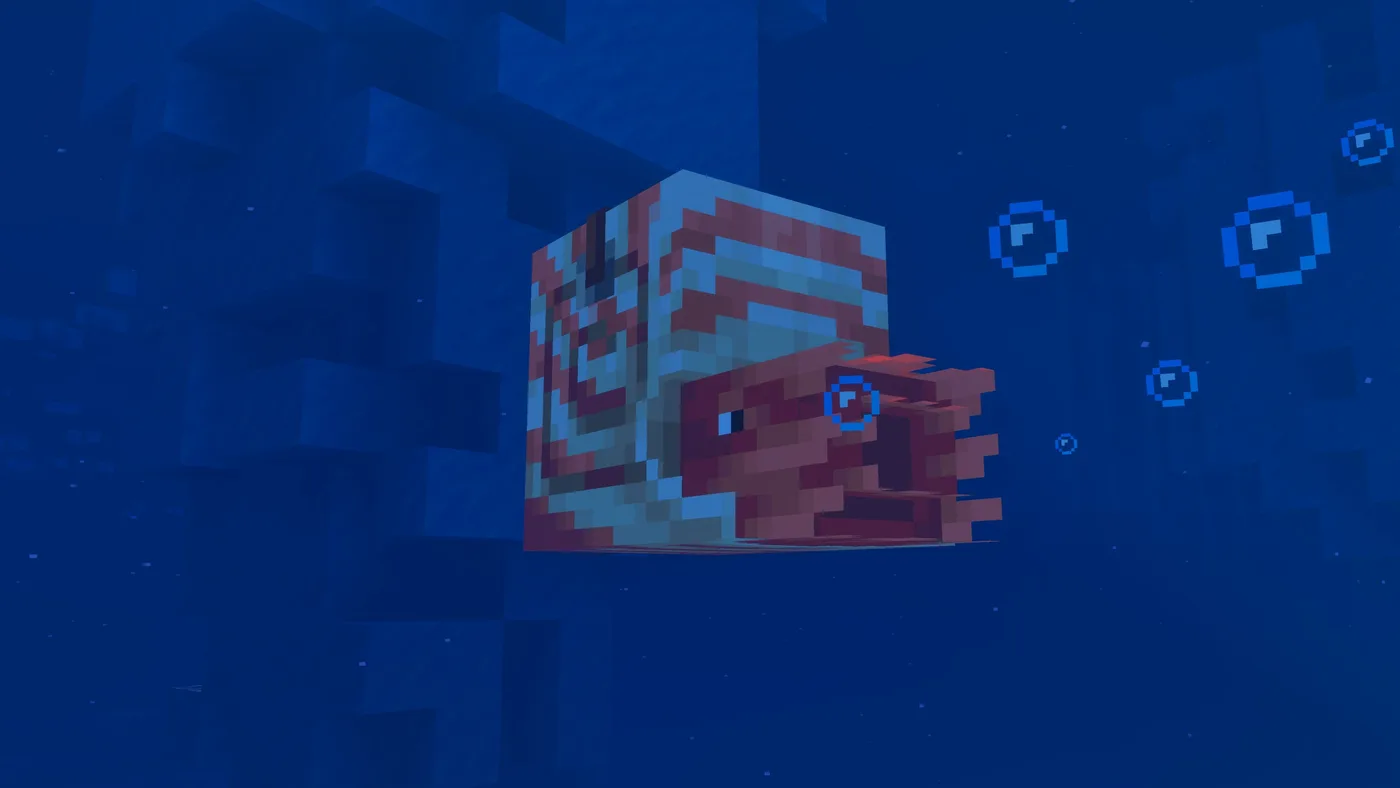
Mojang shipped Minecraft's first tameable mount that lives entirely underwater on December 9, 2025, in the Mounts of Mayhem drop — Java Edition 1.21.11, Bedrock Edition 1.21.130. You tame it by feeding it a fish that poisons you if you eat it raw, it dashes instead of galloping, and riding one grants a status effect that did not exist before that update. Nine months later, the site's own taming guide still lists wolves, cats, horses, llamas, parrots, foxes and axolotls and says nothing about it. What nautilus numbers do exist here are scattered across other posts and partial: the armor drop odds in the treasure chest guide, the zombie nautilus jockey mechanic in the trident guide, and a one-line mention of Breath of the Nautilus in the status effects list. None of them is a guide to the animal itself.
Here is the whole animal: where it spawns, the exact taming math, the dash mechanic, breeding, the armor it wears, the effect it grants its rider, and the undead version that rides drowned around instead of the other way around.
Where to find one, before you can tame anything
Nautiluses spawn in every ocean variant — regular, cold, lukewarm, warm and frozen — in groups of 1 to 3, with frozen ocean capped at a single spawn per group. They generate between Y 38 and Y 58, which puts them in the same water column as most ocean floor terrain rather than deep off the seabed, so a normal ocean swim is enough to run into one without hunting a specific depth.
They are a water creature for mob-cap purposes, which means an untamed nautilus can despawn like any other water mob — but only until a player interacts with it for the first time. Feed one, right-click it, or hit it once, and it stops being cap fodder and starts being a candidate for a permanent pet. That interaction rule matters more here than it does for most animals, because the entire taming loop below is built on repeated feeding.
One hazard worth knowing before you start: a nautilus is an aquatic mob and takes suffocation damage on land, the same as a dolphin or an axolotl. Do not lure one out of the water to tame it somewhere convenient — do the whole process in the water it already lives in.
Taming: one in three pufferfish, no cap on tries
The recipe is one ingredient: a pufferfish, or a bucket of pufferfish, fed directly to the nautilus. Each feeding has an independent 1-in-3 (33.3%) chance of taming it, with no cap on how many times you can try and no penalty for a failed attempt beyond the cost of the fish itself. Feed it enough pufferfish and the odds catch up — expected value puts the median at two to three feedings, though a genuinely unlucky run can eat through a stack before it lands.
There is no shortcut item and no alternative food that works. If you do not already keep pufferfish on hand from a fishing loop or a bucket collection, that is the one prerequisite to sort out before you start.
Saddling and riding: the controls and the two speeds
A tamed adult nautilus can be saddled the same way a horse or a pig can — use a saddle on it directly, or, since a Java patch late in the 1.21.11 release candidates, fire one from a dispenser. Mount it and standard directional controls apply: point where you want to go and it accelerates smoothly up to a maximum swimming speed of 6.5 m/s.
That number only applies underwater. On land, a mounted nautilus moves at a crawling 0.88 m/s — slower than a walking player — because it is dragging an aquatic body across dry ground rather than swimming. Riding one onto a beach is a way to watch it suffer suffocation damage in slow motion, not a way to travel.
The dash: how far, how often, and the breach
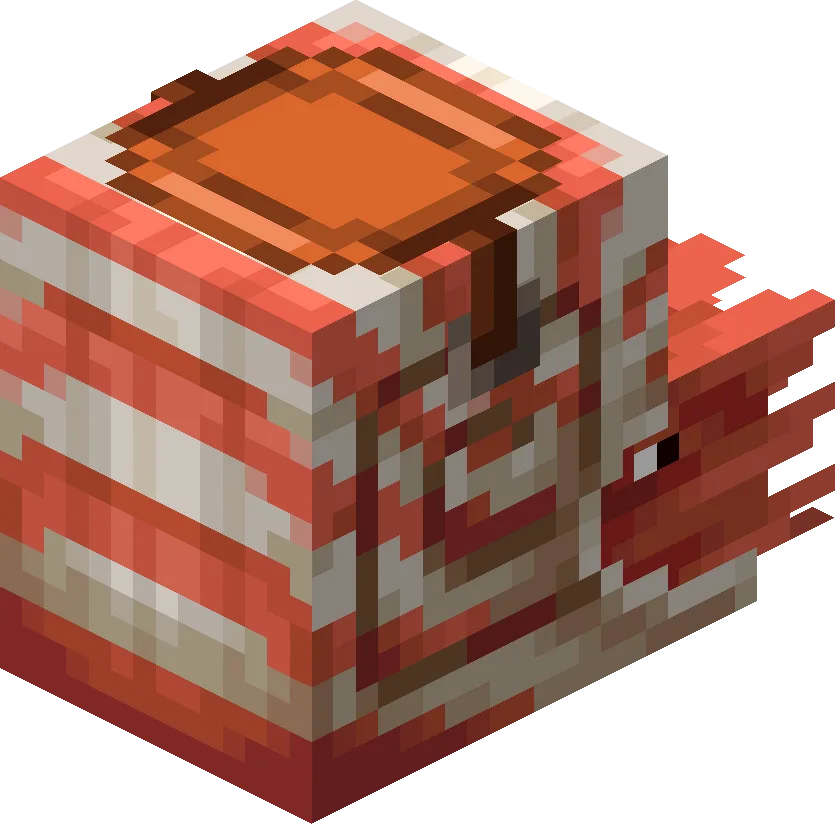
The nautilus's actual identity as a mount is the dash, not its cruising speed. Hold the jump control while riding and it charges; release it and the nautilus launches forward — the longer the charge, the longer the dash, up to roughly 12 blocks at full charge. It can dash again every 2 seconds, so a ridden nautilus is closer to a series of controlled lunges than a smooth glide.
Dash near the surface while aimed upward and the momentum carries the nautilus clear out of the water — a breach of about 6 blocks into open air before gravity takes back over. It is not a flight mechanic, but it is enough to clear a reef wall, a shipwreck's mast, or a school of hostile guardians without surfacing and swimming around them the slow way.
Breeding: full health, and the same split as the ghastling
Two adult nautiluses breed the ordinary way, fed any fish item or bucket of fish — cod, salmon, tropical fish, pufferfish, all of it counts — but only when both are at full health. A nautilus mid-fight or still recovering from suffocation damage will eat the fish without entering love mode.
The resulting baby takes 20 minutes (24,000 ticks) to mature on its own, and the two editions speed that up in exactly the same divided way the happy ghast's ghastling does:
- Java Edition: each fish fed to the baby cuts its remaining growth time by 10%, so it is a diminishing-returns curve rather than a flat count.
- Bedrock Edition: 10 fish, flat, takes a newly spawned baby straight to adult.
Mojang has now shipped that identical split twice in the same year, on two unrelated mobs, which is worth knowing if you have already internalized one of them.
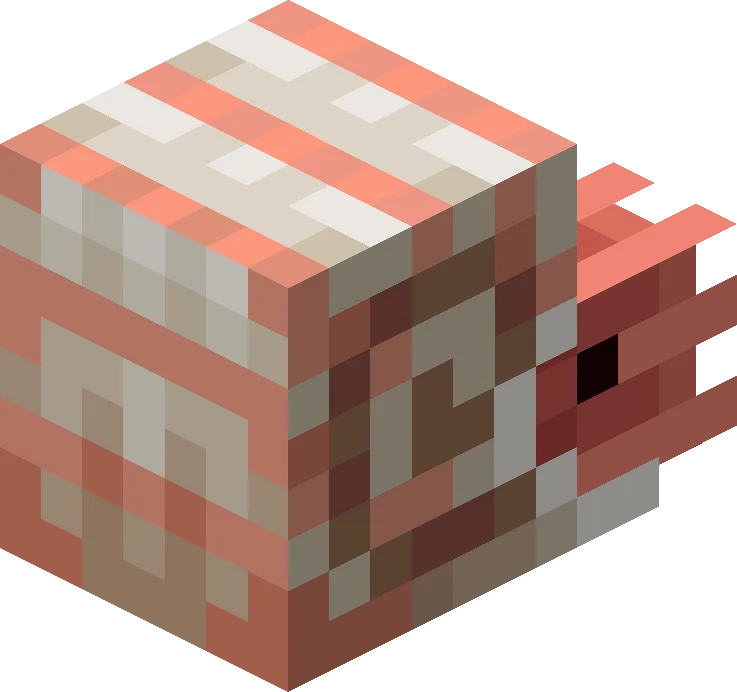
One hard rule with no workaround: a baby nautilus cannot be saddled or armored, because it cannot be ridden at all. Both equipment slots only unlock once it finishes growing up. There is no way to speed-run a rideable baby.
Nautilus armor: what riding one actually protects
Once tamed and adult, a nautilus carries two equipment slots — a saddle slot and a separate nautilus armor slot — and the armor comes in five tiers: copper (4 armor points), iron (5), golden (7), diamond (11, plus 2 toughness) and netherite (19, plus 3 toughness and 1 knockback resistance). The buried treasure guide has the full drop-odds table for where each tier generates in shipwreck, ocean ruin and buried treasure chests, so this post will not re-run those numbers — the short version worth repeating here is what the armor actually does.
It protects the nautilus, not you. The armor reduces damage taken by whichever creature is wearing it — the same rule horse armor follows — and there is no rider-facing benefit from a heavier tier beyond your mount surviving longer. It also cannot be crafted at any tier below netherite: copper, iron and golden nautilus armor exist only as generated loot, and the netherite version is made by smithing diamond nautilus armor with a netherite ingot, the same upgrade path as netherite gear. None of it has durability and none of it can be repaired — a piece of nautilus armor is either on the mount or it is not, permanently, until something kills the mount wearing it.
Breath of the Nautilus: why you cannot drown mounted
Riding either a tamed nautilus or its undead counterpart grants Breath of the Nautilus, a status effect that did not exist before this update. Mechanically it freezes your air bubbles in place — you neither drown nor regain oxygen — and it is applied in 2-second pulses that continuously renew for as long as you stay mounted. Dismount and the effect stops renewing immediately; whatever air you had banked when you left the saddle is what you are working with.
It is a narrower tool than a full conduit or a Water Breathing potion, both of which keep working after you get off, but it means a nautilus commute never costs you oxygen while it lasts, on top of the dash getting you there faster than swimming unassisted.
The zombie nautilus: the drowned's jockey coin flip
Every adult nautilus has an undead counterpart, and it is not simply a reskin fighting you back. The zombie nautilus carries the same 15 HP as the living version but swims faster, at 7.15 m/s against the tamed nautilus's 6.5, and it attacks by dashing directly into its target. It is technically a neutral mob, not a hostile one — it will not come after you unprovoked, with one standing exception: it occasionally dashes at nearby pufferfish on its own. It spawns in every ocean biome — regular, cold, lukewarm, warm and frozen, including their deep variants — plus dripstone cave water and ocean ruins, with a coral-textured variant unique to warm oceans that differs only in looks.
The jockey pairing is the part worth planning around if you are farming tridents: any adult drowned that spawns outside a river biome holding a trident has a 50% chance of spawning mounted on a zombie nautilus as a jockey. On Bedrock only, a second jockey path exists — roughly 15% of nearby gurgles (the baby drowned variant) can mount an untamed zombie nautilus of their own. A dead jockey's mount does not despawn with it; it reverts to neutral and keeps swimming on its own, and if you do kill it drops 0 to 3 rotten flesh at 75% (more with Looting) plus 1 to 3 XP, along with any saddle or armor it was wearing.
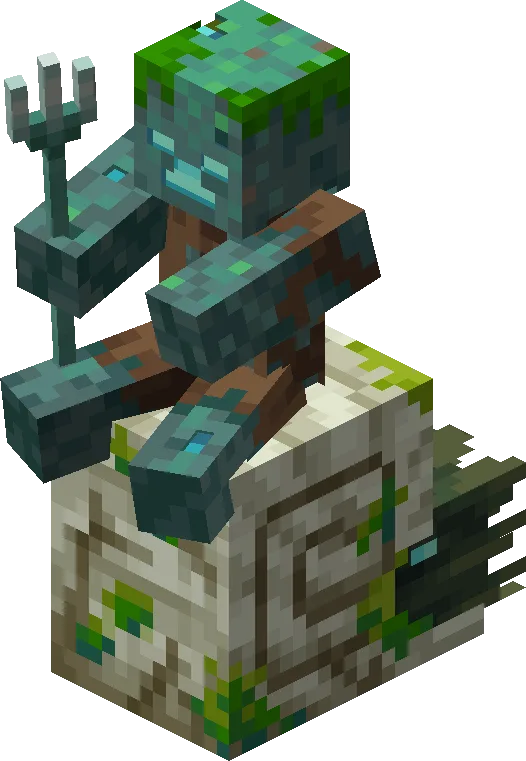
Once separated from its rider, a zombie nautilus becomes tamable by the same method as the living one — pufferfish, 1-in-3 per feeding — which makes an undead mount a legitimate, if slightly grim, backup plan if a real nautilus never turns up.
Java vs Bedrock: the delta list
The core loop — pufferfish taming, the dash, breeding at full health — is identical on both editions. The differences sit around the edges:
| Thing | Java Edition | Bedrock Edition |
|---|---|---|
| Baby growth acceleration | Each fish cuts remaining time by 10% | 10 fish, flat, to adulthood |
| Zombie nautilus jockeys | Only drowned-holding-trident spawns, 50% | Same 50% path, plus ~15% of gurgles can ride one |
| Saddle from dispenser | Added in a 1.21.11 release candidate | Not called out separately in the version history |
| Baby hitbox | 0.475 blocks tall, 0.4375 wide | 0.5 blocks tall, 0.44 wide |
| Golden dandelion age-lock | Added Java 26.1 | Added Bedrock 26.10 |
Nothing in that table changes the taming or riding strategy — the pufferfish odds and the dash numbers are shared — but the jockey math and the growth split are worth knowing on the edition you actually play.
Quick Action Checklist
- Search any ocean biome between roughly Y 38 and Y 58 for a group of 1-3 nautiluses; frozen ocean groups cap at 1.
- Tame it in the water with pufferfish or a bucket of pufferfish — 1-in-3 per feeding, no cap on attempts.
- Saddle the tamed adult (babies cannot be equipped at all) and expect 6.5 m/s swimming, a crawling 0.88 m/s on land.
- Hold jump to charge a dash up to ~12 blocks, usable again every 2 seconds; aim up near the surface for a ~6-block breach.
- Breed two full-health adults with any fish; Java cuts remaining growth 10% per fish fed, Bedrock takes a flat 10 fish to adulthood.
- Gear it with nautilus armor if you have it — copper through netherite, protecting the mount only, not you — see the buried treasure guide for where each tier drops.
- Ride it to keep Breath of the Nautilus renewing every 2 seconds; it stops the moment you dismount.
- Treat any trident-holding drowned outside a river as a 50% jockey risk — its zombie nautilus reverts to neutral and keeps swimming after the drowned dies, and can itself be tamed once alone.
Frequently Asked Questions
How do you tame a nautilus in Minecraft?
How does the nautilus dash work in Minecraft?
How do you breed nautiluses in Minecraft?
What does Breath of the Nautilus do in Minecraft?
What is a zombie nautilus jockey in Minecraft?
Does nautilus armor protect the rider in Minecraft?
Keep Reading
- Minecraft Wiki — nautilus taming, riding, dash, breeding, and spawning
- Minecraft Wiki — zombie nautilus stats, jockey formation, and drops
- Minecraft Wiki — nautilus armor tiers, crafting, and protection scope
- Minecraft Wiki — Breath of the Nautilus status effect
- Minecraft Wiki — Java Edition 1.21.11 "Mounts of Mayhem" release notes
Related Guides
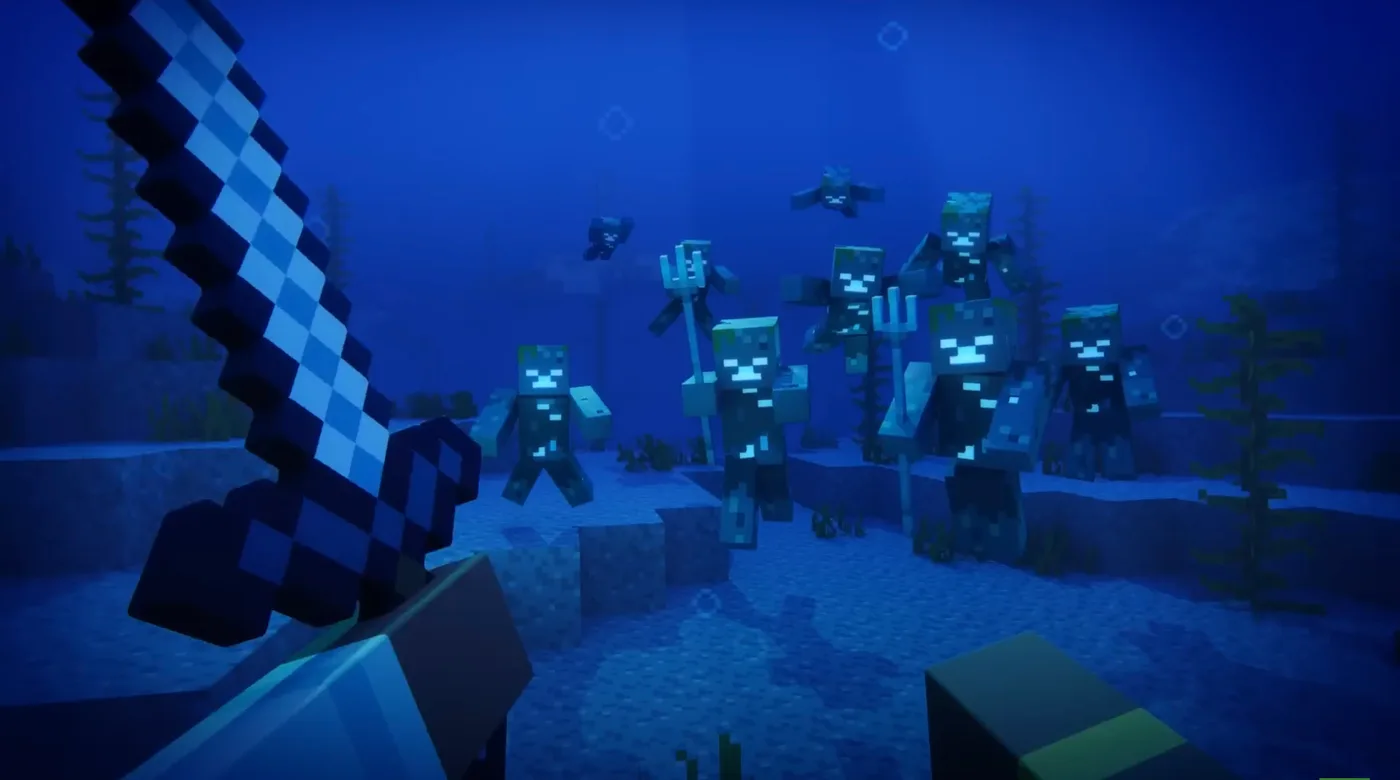
Minecraft Trident Guide: Drop Rates, Riptide, Channeling
The trident is the only weapon in Minecraft with no crafting recipe, and the drop chain behind it is worse than most players think — roughly one trident per 188 drowned. Here is the real math, the farm rules that actually produce tridents, and every Java-versus-Bedrock number that matters.
Minecraft Conduit Guide: Build and Power the Ocean Beacon
A conduit is the ocean version of a beacon — it hands you unlimited underwater breathing, night vision, and faster mining, then punches nearby drowned to death on its own. The catch is the prismarine frame and the nautilus shells. Here is the whole build, block by block.
How to Make a Saddle in Minecraft: Recipe and Loot Odds
Saddles have been craftable since June 2025: three leather and one iron ingot. Here is the recipe and what it really costs, every chest, trade and mob drop that still gives one with Java and Bedrock odds, the five chests that stopped, all eleven mobs it fits, and how shears take it back.
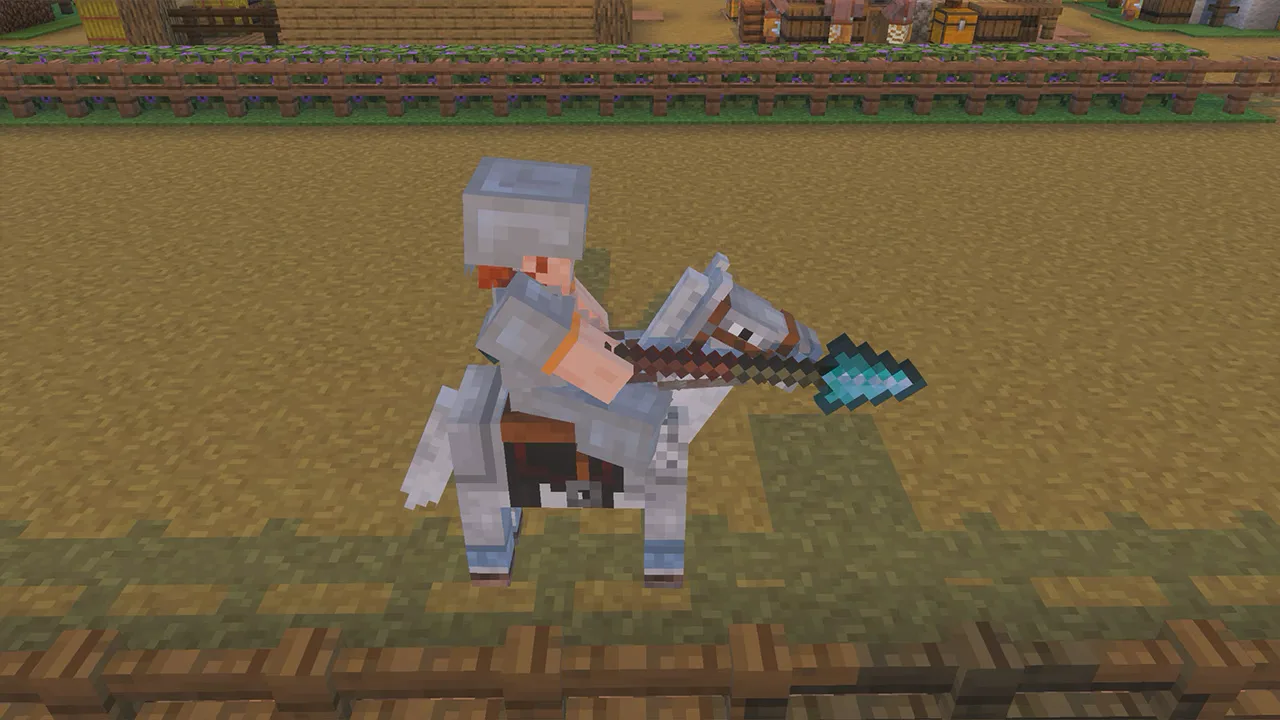
Minecraft Spear Guide: Jab, Charge Damage, and Lunge
A diamond spear jabs for 4 damage. Held low on an elytra at rocket speed, the same spear charges for 37. The spear's charge takes its damage from how fast you are moving, and the weapon breaks several rules the rest of Minecraft combat runs on. Here are the real numbers for every tier, both attacks, and Lunge.
Minecraft Survival Guide for Beginners: Your First Days
You have about ten minutes of daylight before the sun sets and the world tries to kill you. Here is exactly what to do with them — punch a tree, build a tool chain, and get a roof over your head before the zombies arrive.
Best Minecraft Enchantments, Ranked — The Ones Worth Your XP
Mending is the enchantment that ends the grind — gear that repairs itself forever. Everything else is a fight over your XP and anvil uses. Here is what actually earns a slot, ranked, with the real max levels.