Minecraft Ominous Vault Loot Table and Heavy Core Odds
The heavy core is a 7.5% roll on a single loot pool, and a trial chamber only holds six to eight ominous vaults — so a perfect clear of an entire chamber is still worse than a coin flip for one core. Here are both vault loot tables with the real numbers, what a key actually costs, and the item in the pool that is rarer than the heavy core.

"The heavy core only drops from ominous vaults" is the half of the sentence that gets repeated. The half that decides how long you are underground is the rate. The heavy core is a 3-in-40 roll — 7.5% — on one of the three pools an ominous vault draws from, and a trial chamber generates roughly six to eight ominous vaults in total.
Multiply that out and a perfect run — every ominous trial cleared, every ominous vault in the structure opened — comes to about a 42% chance at one heavy core. A whole chamber, emptied, is still worse odds than a coin flip.
Below are both vault loot tables in full, with the real per-item percentages, what an ominous key costs in spawner clears, and the item in the ominous pool that is rarer than the heavy core and blocks a finished mace far harder. If you want the walkthrough half — finding a chamber, surviving the waves, the smash-attack maths — that is the trial chambers guide. This is the economics.
Ominous vaults are not normal vaults gone ominous
Start here, because it changes how you walk a chamber. Ominous vaults generate in their own places, and they are already there before you ever get Trial Omen. Trial spawners convert — a normal spawner within 15 blocks of a Trial Omen player, with line of sight, immediately flips ominous and skips its cooldown. Vaults do not. The ominous ones sat in the walls the whole time, locked.
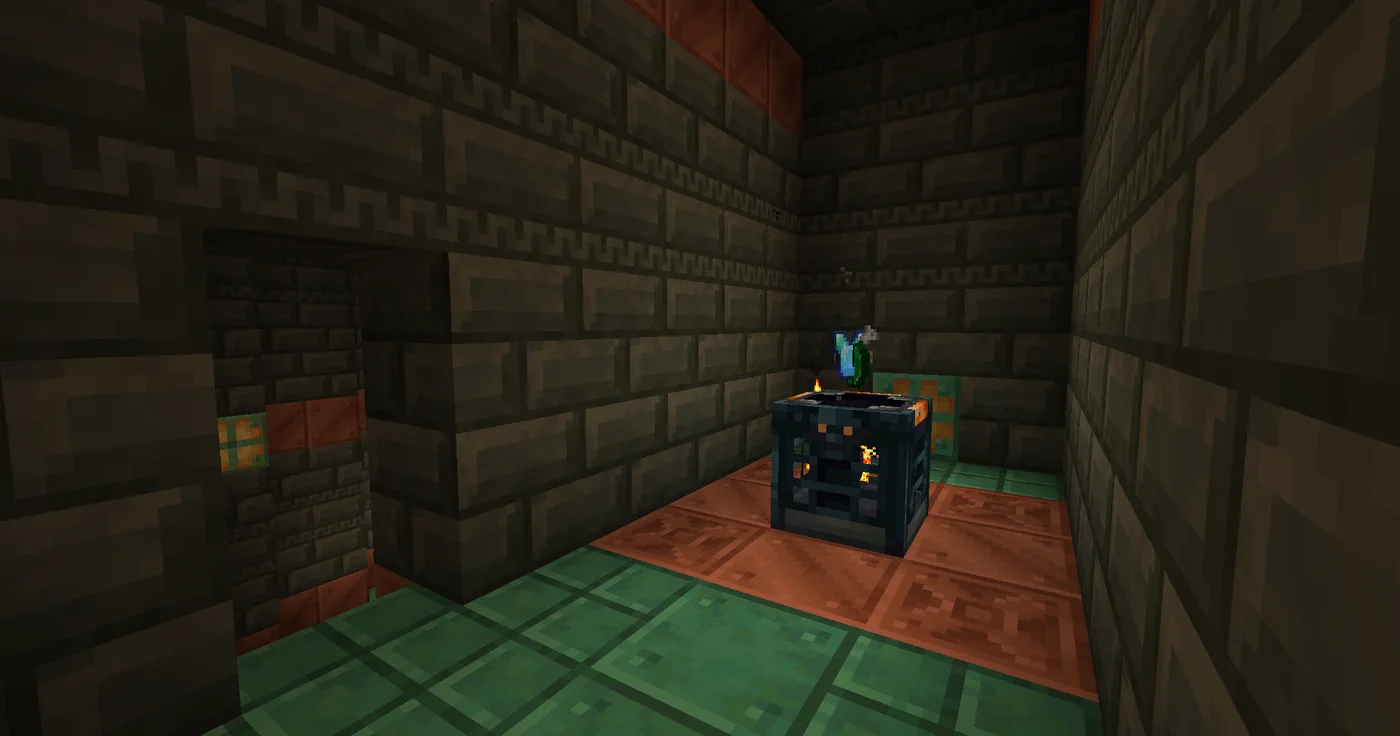
They are also trivially identifiable once you know the tell. A normal vault sits on a small pedestal of waxed cut copper and tuff bricks. An ominous vault is built into an altar: seven red candles — four on the left, three on the right — plus two blocks of red glazed terracotta, polished tuff and waxed oxidized copper grates. The red candle is the giveaway; the ominous vault altar is the only piece in the chamber's structure list that places one.
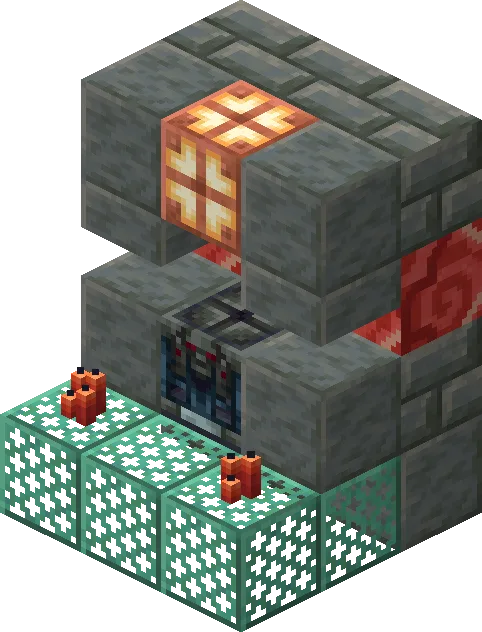
Where they generate is fixed by the structure, not by chance:
- Every combat chamber contains one ominous vault.
- More generate at the end of both corridors, and in two of the three intersection types.
- The working total is six to eight ominous vaults per trial chamber structure.
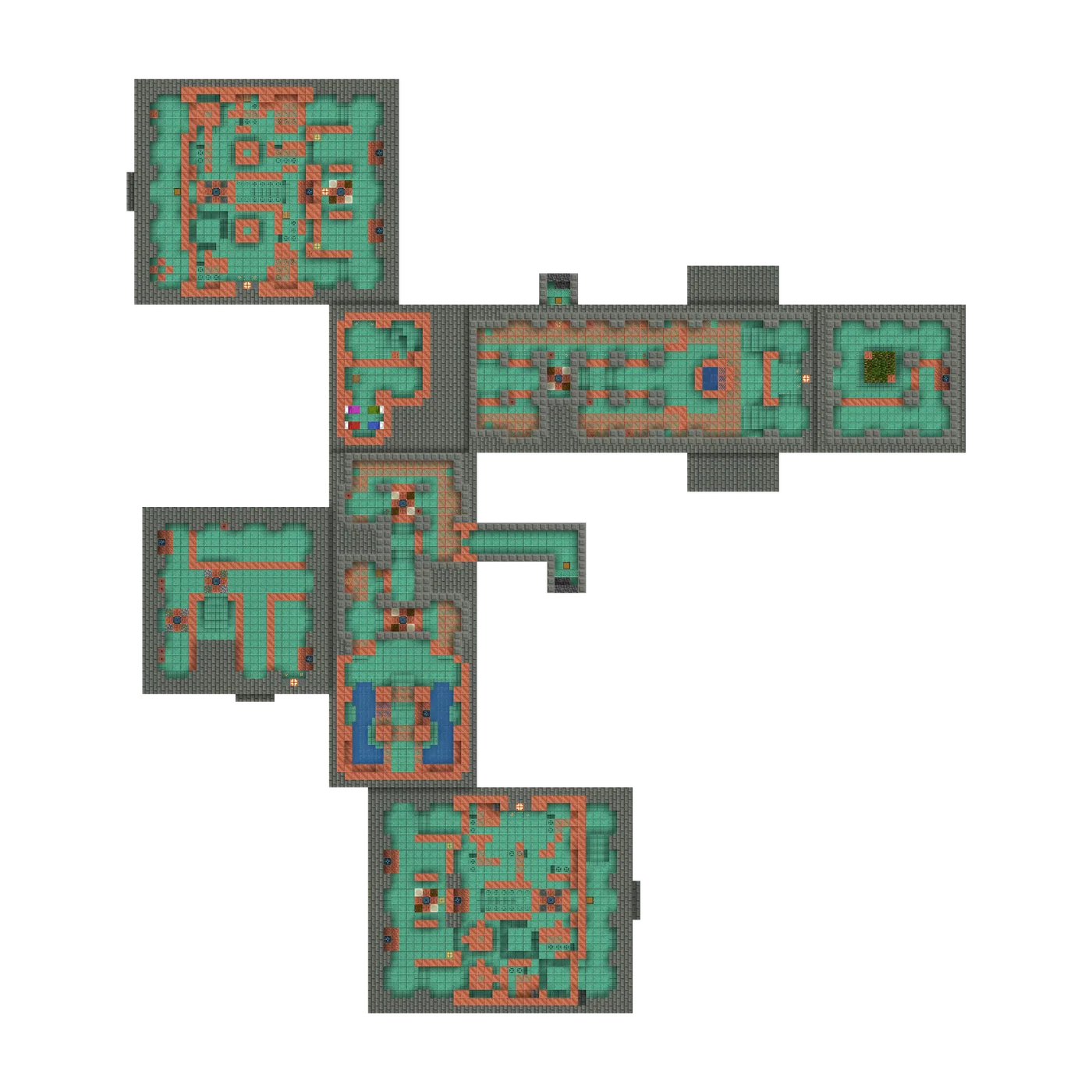
And chambers themselves are not scattered randomly. Generation follows a grid of 34×34 chunk regions centred on the world origin, with exactly one trial chamber per region unless a deep dark biome cancels it, the starting room landing between Y=-40 and Y=-20. That is your supply: one structure, six to eight ominous vaults, per 544-block-square region of the Overworld.
One more rule that matters more on a server than it looks. A vault records the players who have opened it, up to 128 of them. When the 129th player opens it, the first is forgotten and can loot it again — which is why vault-exclusive items count as renewable on a populated server. On a solo world it is a hard once-per-vault limit; on a big SMP it is a queue.
The ominous vault loot table
An ominous vault ejects 2 to 5 stacks, one stack at a time, drawn from three separate pools:
- A rare pool (15 items, total weight 2,175) with an 80% chance of being included at all.
- A common pool (5 items, total weight 15) rolled one to three times — four if the rare set did not fire.
- A unique pool (total weight 40) rolled once, with a 75% chance of producing something. Unique loot is always ejected first.
Java and Bedrock run the same ominous table. Every percentage below is the chance of seeing at least one of that item from a single ominous vault:
| Item | Stack | Chance per ominous vault | Avg. vaults per drop |
|---|---|---|---|
| Emerald | 4–10 | 56.2% | 1.8 |
| Wind charge | 8–12 | 47.4% | 2.1 |
| Arrow of Slowness IV | 4–12 | 37.5% | 2.7 |
| Diamond | 2–3 | 26.4% | 3.8 |
| (unique pool rolls nothing) | — | 25.0% | — |
| Flow armor trim smithing template | 1 | 22.5% | 4.4 |
| Enchanted golden apple | 1 | 22.5% | 4.4 |
| Flow banner pattern | 1 | 15.0% | 6.7 |
| Ominous bottle III–V | 1 | 13.9% | 7.2 |
| Block of emerald | 1 | 13.8% | 7.2 |
| Enchanted crossbow | 1 | 11.0% | 9.1 |
| Block of iron | 1 | 11.0% | 9.1 |
| Golden apple | 1 | 8.3% | 12.1 |
| Enchanted diamond axe | 1 | 8.3% | 12.1 |
| Enchanted diamond chestplate | 1 | 8.3% | 12.1 |
| Music disc (Creator) | 1 | 7.5% | 13.3 |
| Heavy core | 1 | 7.5% | 13.3 |
| Enchanted book — Breach or Density | 1 | 5.5% | 18.1 |
| Enchanted book — Knockback, Punch, Smite, Looting or Multishot | 1 | 5.5% | 18.1 |
| Enchanted book — Wind Burst I | 1 | 5.5% | 18.1 |
| Block of diamond | 1 | 2.8% | 36.2 |
The heavy core and the Creator music disc share a slot weight — they are equally rare, which is a strange thing to learn about the item gating an entire weapon. Note also that the flow armor trim at 22.5% is three times more common than the core, and ominous vaults are where it generates; once you own one it duplicates in a crafting grid with a breeze rod and seven diamonds.
Heavy core odds, per vault and per chamber
Two numbers do all the work here. 7.5% per ominous vault, and six to eight ominous vaults per chamber. Everything below is those two figures, compounded:
| Question | Answer |
|---|---|
| Chance of a heavy core from one ominous vault | 7.5% |
| Ominous vaults opened per core, on average | 13.3 |
| Chance of at least one core from a 6-vault chamber | 37% |
| Chance of at least one core from a 7-vault chamber | 42% |
| Chance of at least one core from an 8-vault chamber | 46% |
| Expected cores from fully clearing one chamber | 0.45 – 0.60 |
| Can two cores come from one chamber? | Yes — each vault rolls independently |
| Can a normal vault drop one? | No |
So: no, a heavy core is not guaranteed in a trial chamber. Nothing about the structure promises one. And yes, two cores from a single chamber is entirely possible, because the vaults are independent rolls — on a full seven-vault clear it is about a 9% outcome, against the 58% chance of walking away with none.
The practical read: budget two chambers per mace, and treat the first one as likely to fail. That is not a grind you fix by playing better. It is a grind you fix by mapping a second chamber before you finish the first.
Wind Burst is the real bottleneck
The core is a one-time cost. Wind Burst is not, and it is rarer.
Wind Burst is the mace enchantment that launches you back into the air after a smash attack so you can chain the next one, and it has exactly one source: enchanted books ejected by ominous vaults, at 5.5%, and only ever at level I. Enchanting tables cannot produce it — it is explicitly excluded from the treasure enchantments the vault's book pool draws from, alongside Soul Speed and Swift Sneak.
The enchantment caps at III. On an anvil, two books of equal level combine into one level higher, so III takes four Wind Burst I books: two combine into II, two IIs combine into III. At 18.1 ominous vaults per book, that is roughly 72 ominous vaults, or about ten fully cleared trial chambers, for a maxed Wind Burst mace.
For scale, here is what the levels buy:
| Wind Burst level | Knockback multiplier | Approx. launch |
|---|---|---|
| I | 1.2× | 8 blocks |
| II | 1.75× | 16 blocks |
| III | 2.2× | 24 blocks |
Breach and Density, by contrast, share a single 5.5% book slot in the same pool but are both obtainable at an enchanting table (and from a librarian, and from fishing), so neither gates anything — Density caps at V, Breach at IV, and they are mutually incompatible anyway. Plan a farming run around books, not cores. Which enchantments to actually put on the thing is covered in our best enchantments guide.
The normal vault loot table
Worth publishing next to it, because the comparison answers the other question people ask: a normal vault cannot drop a heavy core, cannot drop a mace, and cannot drop a Wind Burst book. Not at a low rate — those items are not in the pool.
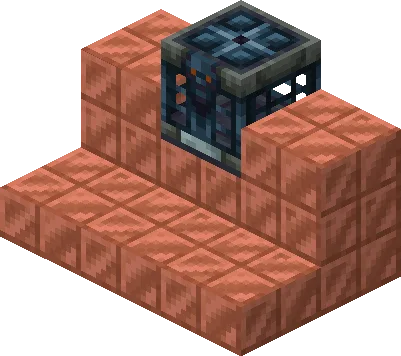
The structure is the same — 2 to 5 stacks from three pools — but the unique pool is a 75% chance of nothing instead of 25%, which is why standard vaults feel so much flatter:
| Item | Stack | Chance per vault (Java) |
|---|---|---|
| (unique pool rolls nothing) | — | 75.0% |
| Emerald | 2–4 | 38.4% |
| Arrow | 2–8 | 31.0% |
| Arrow of Poison | 2–8 | 31.0% |
| Iron ingot | 1–4 | 24.0% |
| Wind charge | 1–3 | 24.0% |
| Honey bottle | 1–2 | 24.0% |
| Ominous bottle I–II | 1 | 16.5% |
| Damaged shield | 1 | 10.4% |
| Enchanted bow | 1 | 10.4% |
| Wind charge | 4–12 | 8.5% |
| Diamond | 1–2 | 8.5% |
| Golden apple | 1 | 8.3% |
| Golden carrot | 1–2 | 7.0% |
| Enchanted book — Mending, Riptide, Loyalty, Channeling or Impaling | 1 | 7.0% |
| Enchanted book — Sharpness, Bane of Arthropods, Efficiency, Fortune, Silk Touch or Feather Falling | 1 | 7.0% |
| Enchanted crossbow | 1 | 7.0% |
| Enchanted iron axe | 1 | 7.0% |
| Enchanted iron chestplate | 1 | 7.0% |
| Bolt armor trim smithing template | 1 | 6.2% |
| Music disc (Precipice) | 1 | 4.2% |
| Guster banner pattern | 1 | 4.2% |
| Enchanted diamond axe | 1 | 3.5% |
| Enchanted diamond chestplate | 1 | 3.5% |
| Trident | 1 | 2.1% |
Two rows deserve a second look. The trident at 2.1% matters because a trident cannot be crafted and has exactly two sources: vaults, and trident-wielding drowned (6.25% of naturally spawned drowned carry one, dropping it 8.5% of the time). For a landlocked world, the vault is the trident plan. And the 7.0% book slot — the first of the two, rolling Mending, Riptide, Loyalty, Channeling or Impaling — is a genuinely useful early route to Mending, given a chamber holds a stack of normal vaults and trial keys are cheap.
One edition split lives in this table. The rare set — the damaged shield, the enchanted bow, the golden carrot, both enchanted-book slots, the enchanted crossbow, and the enchanted iron and diamond gear — is included 80% of the time on Java but only 20% of the time on Bedrock. Those items therefore appear roughly four times less often on Bedrock, and the missing rare set is replaced by another roll of the common pool. The percentages above are Java's. The unique pool sits outside that split entirely, so the golden apple, the bolt trim, the disc, the banner pattern and the trident roll the same on both editions. Ominous vaults do not carry the split at all — Bedrock's ominous vault probabilities were aligned with Java's in 1.21.2.
What a key actually costs
Both vault types are gated by keys, and the two keys are priced very differently.
| Source | Drop | Chance | Avg. clears per key |
|---|---|---|---|
| Trial spawner completed | Trial key | 50.0% | 2.0 |
| Ominous trial spawner completed | Ominous trial key | 30.0% | 3.3 |
| Trial chamber entrance chest | Trial key | 6.8% | 14.7 |
| Trial chamber decorated pot | Trial key | 2.8% | 35.1 |
When a spawner rolls a key, the key drops for every player present; the other outcomes are rolled per player. The non-key half of a normal spawner's table is bread (15%), cooked chicken (15%), baked potato (10%), and a Potion of Regeneration or Swiftness at 5% each. An ominous spawner's is better food — baked potato and steak at 21% each, golden carrot 14%, Regeneration and Strength at 7% each.
Do the arithmetic on a full ominous clear. Seven ominous vaults means seven ominous trial keys, and at 3.3 spawner completions per key that is roughly 23 ominous trial spawners defeated to empty one chamber's ominous vaults. Spawners go on a 30-minute cooldown after they eject — a timer that keeps ticking even when the chunk is unloaded, so leaving and coming back is genuinely how you re-run a chamber rather than a workaround.
Bad Omen level changes the clock, not the loot
Worth stating flatly: the level of your Bad Omen has no effect on ominous trial difficulty and no effect on ominous vault loot. It changes exactly one thing — how long you get.
The chain itself is also a step longer than the shorthand suggests. Drinking an ominous bottle gives you Bad Omen for 100 minutes, not Trial Omen. Bad Omen converts to Trial Omen only when a non-ominous trial spawner sees you — 14-block detection range, line of sight required. At that moment the conversion sets your Trial Omen duration to 15 minutes multiplied by the Bad Omen level, regardless of how much time was left on the Bad Omen.
| Ominous bottle level | Trial Omen granted | Source |
|---|---|---|
| I | 15 minutes | Normal vault (16.5% for I–II), raid captain |
| II | 30 minutes | Normal vault (16.5% for I–II), raid captain |
| III | 45 minutes | Ominous vault (13.9% for III–V), raid captain |
| IV | 60 minutes | Ominous vault (13.9% for III–V), raid captain |
| V | 75 minutes | Ominous vault (13.9% for III–V), raid captain |
Raid captains are the reliable tap: a pillager or illusioner carrying the banner always drops one ominous bottle of level I–V, provided it is not currently in a raid, which makes pillager outposts the pre-run stop rather than a distraction.
Then the rule that costs keys: Trial Omen must still be active on you at the moment you unlock an ominous vault. The key alone is not enough. Trial Omen is an ordinary status effect, so milk, a totem of undying firing, or dying all strip it — and a bagful of ominous trial keys with no omen left is dead weight until you drink another bottle and get spotted by a spawner again. On a level I bottle you have fifteen minutes.
Five things the loot tables disprove
- You cannot time a vault. An active vault cycles a display item once per second, and those items are rolled from the same table — but the sequence is generated independently of what actually gets ejected. Ejected loot is determined by the world seed, not by when you press the button.
- Waiting for a "better" display item does nothing. Same reason. The item shown while the vault idles is decoration.
- A normal vault holds no heavy core and no Wind Burst book. Neither item is in its pool at any rate — the full table is above. (Breeze rods, the mace's other half, come from Breezes, not from any vault.)
- Bad Omen V does not make ominous trials harder or richer. It buys you 75 minutes instead of 15.
- The heavy core is not the rarest thing in the pool. Three enchanted-book slots at 5.5% each sit below it, and one of them — Wind Burst — has no other source in the game.
A clean ominous run, in order
- Kill a raid captain first and pocket the highest-level ominous bottle you can get — the level is your run timer, 15 minutes per level.
- Walk the chamber before you drink anything and count the red-candle altars. Six to eight is normal; that number is your key budget.
- Clear normal trial spawners for trial keys (50% each) and open standard vaults while you are still un-omened — the flow of ominous bottles I–II at 16.5% funds the next run.
- Drink the bottle, then step into a normal spawner's line of sight to convert Bad Omen into Trial Omen. Spawners on cooldown convert too.
- Clear ominous spawners for ominous trial keys at 30% each — expect about 3.3 clears per key.
- Open ominous vaults while the omen is still running. No omen, no unlock, key wasted on nothing.
- Never drink milk mid-run, and remember a totem popping strips the omen with everything else.
- Log the chamber's coordinates. At 7.5% per vault you are coming back, and the spawners reset in 30 minutes.
Two chambers for a core, ten for Wind Burst III. The mace is not a drop, it is a subscription — and the sooner you plan around the book instead of the core, the shorter it gets.
Frequently Asked Questions
What is the heavy core drop rate from an ominous vault in Minecraft?
How many heavy cores can you get from one trial chamber?
Can you get a mace or a heavy core from a normal vault?
Does the level of Bad Omen affect trial chamber loot?
How do you get an ominous trial key in Minecraft?
Where does the Wind Burst enchantment come from in Minecraft?
Can you time an ominous vault to get better loot?
Keep Reading
- Minecraft Wiki — Ominous Vault generation and loot table
- Minecraft Wiki — Vault loot table, player limit and unlocking
- Minecraft Wiki — Trial Chambers generation and container loot
- Minecraft Wiki — Ominous Trial Spawner conversion and key drop rate
- Minecraft Wiki — Trial Omen causes, duration and effect
- Minecraft Wiki — Wind Burst obtaining and launch power per level
Related Guides
Minecraft Speedrun Guide: The Any% Route to the Ender Dragon
Speedrunning Minecraft is a race from an empty spawn to a dead dragon in under ten minutes. Here is the actual route the world's fastest players run — wood to Nether to stronghold to bed bombs — and where beginners lose the run.

Minecraft Nether Portal Linking: The 1:8 Coordinate Math
Two portals, 200 blocks apart, both dumping you at the same Nether exit. That is not a bug — it is a search radius doing exactly what it was written to do. Here is the actual math behind portal linking and how to force the pairing you want.
Minecraft Enchanting Setup Guide: Build a Level 30 Room
Most enchanting rooms are built wrong. Here is the exact bookshelf geometry for level 30, what the three offers actually cost you, why you should enchant books instead of gear, and how to stop hitting Too Expensive on the anvil.
Minecraft Hardcore Mode Guide: How to Survive Permadeath
Hardcore mode locks you to Hard difficulty and gives you exactly one life. Die once and the world is over — you watch it as a ghost. Here is how the mode actually works, and the survival plan that gets you past the deaths that kill most runs.

Minecraft Survival Guide for Beginners: Your First Days
You have about ten minutes of daylight before the sun sets and the world tries to kill you. Here is exactly what to do with them — punch a tree, build a tool chain, and get a roof over your head before the zombies arrive.

Best Minecraft Enchantments, Ranked — The Ones Worth Your XP
Mending is the enchantment that ends the grind — gear that repairs itself forever. Everything else is a fight over your XP and anvil uses. Here is what actually earns a slot, ranked, with the real max levels.