Minecraft Trial Chambers Guide: Loot, Mobs & the Mace
Trial Chambers are the best loot-per-minute the 1.21 update added, and they're also where the Mace lives — the only weapon that can one-shot most mobs if you fall on them right. Here's how to find a chamber, beat the spawners, crack the vaults, and walk out with a heavy core.
The 1.21 update — Tricky Trials — dropped one structure that's actually worth the trip and one weapon that's borderline broken, and they live in the same place. Trial Chambers are underground arenas full of spawners that throw waves of mobs at you, and the payoff is some of the best loot-per-minute in the game. Tucked inside the hardest version of those arenas is the heavy core, the single ingredient you need to build the Mace — a weapon that can flat-out delete most mobs if you drop on them from high enough.
This is the full run: how to find a chamber, what trial spawners do and how to survive the waves, how vaults and trial keys turn into loot, what changes when you trigger an ominous trial, and the two new mobs (Breeze and Bogged) you'll meet down there. Then the part everyone's actually here for — exactly how to get a heavy core and craft the Mace.
What Trial Chambers actually are
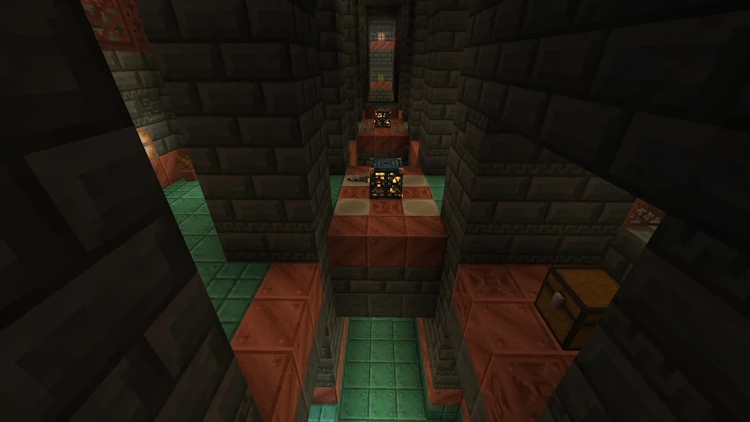
A trial chamber is a large structure that generates naturally underground in the Overworld, built out of copper and tuff — copper blocks, copper bulbs, chiseled copper, copper doors, copper grates and trapdoors, plus tuff bricks and chiseled tuff. The copper-bulb lighting is the dead giveaway you've stumbled into one: lit corridors deep underground where there shouldn't be any.
Inside, the chamber is a network of rooms and corridors containing trial spawners (the mob-wave generators), vaults (the loot boxes), corridors with chests and decorated pots, and the occasional reward room. Difficulty scales with the biome the chamber generated under — a chamber under a swamp throws Bogged at you, while a chamber under a snowy biome leans on Strays, which a player with a shield handles easily.
Crucially, this is midgame content, not endgame. You don't need netherite to clear a chamber — decent iron or diamond gear, a shield, and some potions are plenty. It's designed as a loot-and-XP loop you can run repeatedly, because the spawners reset.
How to find a trial chamber
There are two reliable ways:
- Buy a trial explorer map. A cartographer villager sells one once they reach Journeyman (level 3). This is the legit survival method — the map points you straight at the nearest chamber, the same way ocean explorer maps point at monuments. Level up a cartographer (lecterns in their workstation, trade with them to push their level) and you'll get the map option.
- Use
/locate structureif you play with cheats on or on a server where it's allowed./locate structure minecraft:trial_chambersspits out the coordinates.
Beyond that, they spawn underground at a range of depths, so the old-fashioned method works too: cave and mine around, and watch for copper bulbs glowing in the dark. If you see worked copper and tuff underground, you've found one. If you've already built a base and explored your caves (see our survival guide for beginners), there's a real chance one is closer than you think.
Trial spawners and how the waves work
The trial spawner is the heart of the chamber. Walk into range and it activates, glowing orange and spitting out a wave of mobs. Clear that wave and it spawns the next. After you defeat all the waves, the spawner dispenses a reward (items pop out of it) and then deactivates for 30 real-world minutes before it can be used again.
A few things that make trial spawners smarter than the old dungeon spawners:
- They scale with the number of players. More players nearby means more mobs per wave — so a chamber is harder, and more rewarding, with friends.
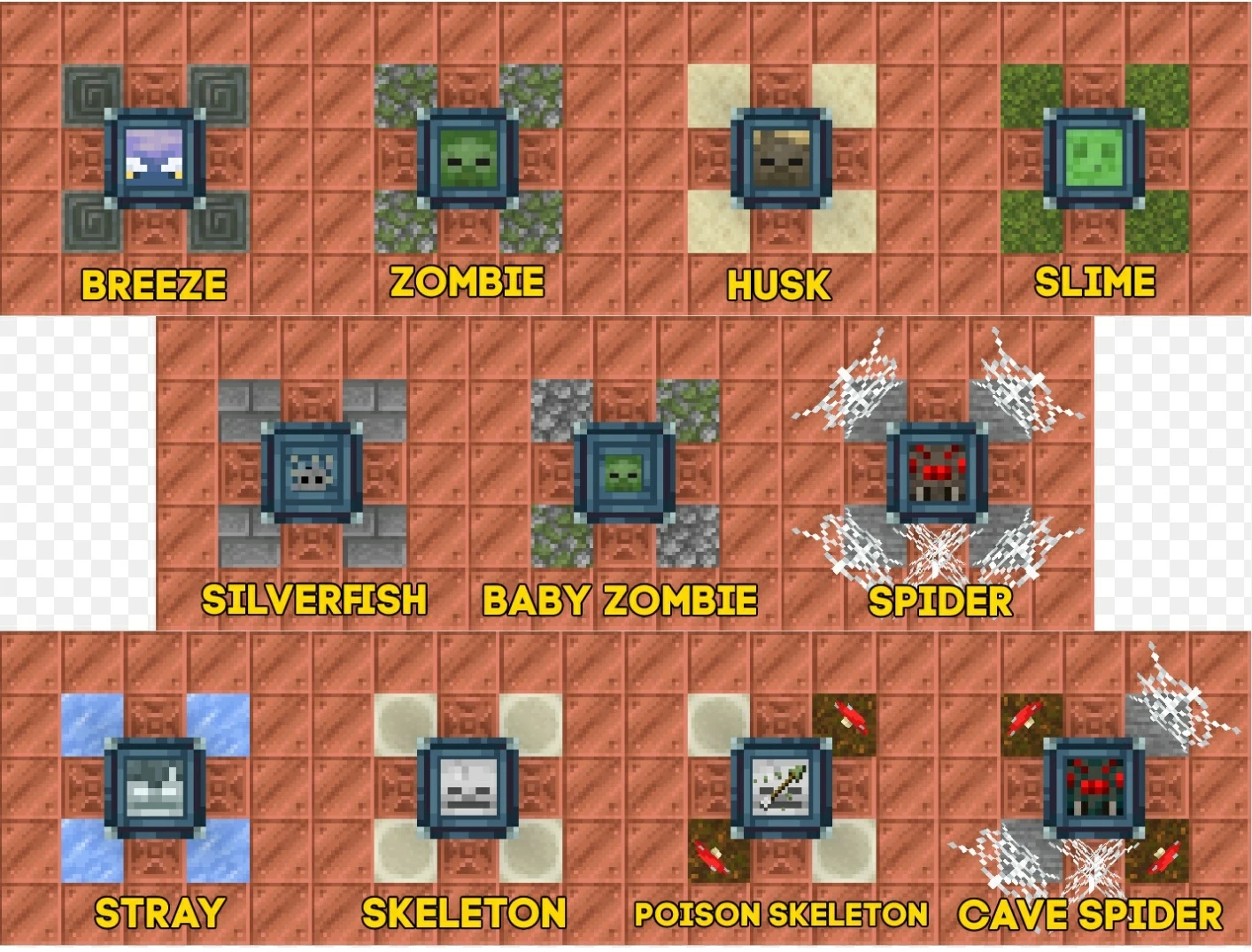
- The mob type is fixed per spawner and telegraphed by the blocks around it. A spawner ringed with chiseled tuff is a Breeze spawner; other arrangements spawn melee mobs (zombies, husks, spiders, silverfish, slimes) or ranged mobs (skeletons, strays, bogged).
- You can't mine them. Trial spawners drop nothing even with Silk Touch, and take forever to break, so don't bother trying to harvest one — the loot comes from beating the trial, not the block.
Tactically: bring a shield for the ranged spawners, keep moving so melee waves don't surround you, and use the corridors to funnel mobs into a line. The reward the spawner dispenses is decent on its own, but the real prize is the trial keys it drops — which you spend on vaults.
Vaults, trial keys, and the loot
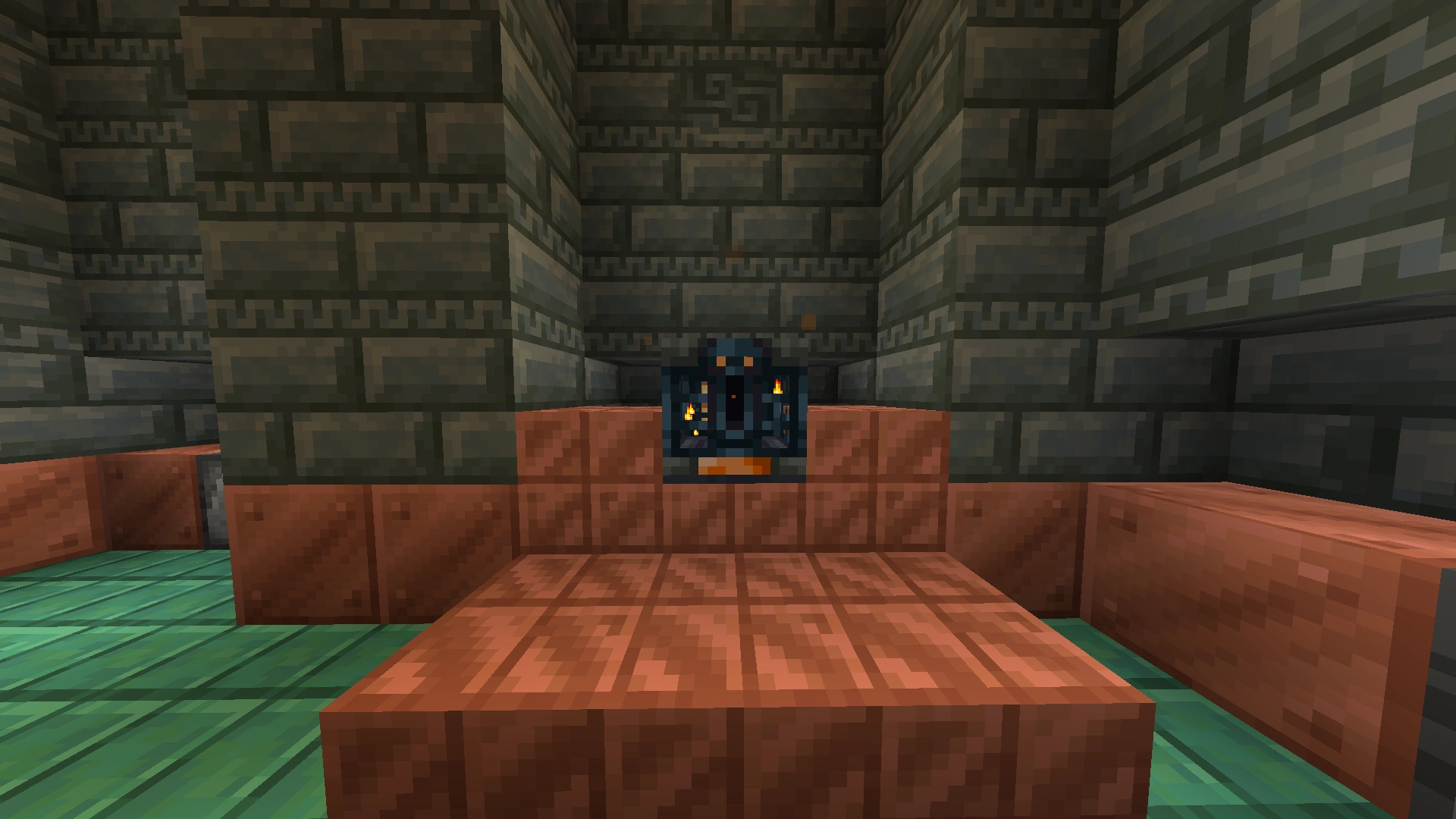
A vault is an indestructible copper-faced block set into the chamber's rooms. You open it by walking up to it holding a trial key and interacting — the key is consumed, the vault opens, and it dispenses loot.
Two rules make vaults different from a normal loot chest:
- One open per player. A vault registers your player ID when you open it, so you personally can't loot the same vault twice — but on a server, every player gets their own pull from the same vault. That's why chambers are great group content: one vault, full loot for each of your friends.
- Trial keys are the currency. You get trial keys from trial spawners (50% chance as part of the reward) and, less often, from the chamber's chests and decorated pots (around 8%). Beat trials, collect keys, spend keys on vaults.
Vault loot is genuinely strong for the midgame: enchanted gear, diamonds, emeralds, crossbows, wind charges, ominous bottles, and more. The standard vaults are the bread and butter. But the best stuff — including the heavy core for the Mace — comes from the ominous version, which is its own thing.
Ominous trials: the hard mode that's worth it
Here's where it gets spicy. You can crank a chamber into a harder, higher-reward state called an ominous trial.
The trigger is the Ominous Bottle — a stackable potion-like item you get as a reward from vaults (a normal vault has roughly an 18.6% chance to contain one; raid captains at pillager outposts also drop them). Drink an ominous bottle inside the chamber and you gain Trial Omen (the Trial Chambers' flavor of the Bad Omen effect). With Trial Omen active, nearby trial spawners — including deactivated ones — reactivate as ominous trial spawners, swapping their orange particles for an eerie soul-blue glow.
What changes when a trial goes ominous:
| Normal trial | Ominous trial | |
|---|---|---|
| Spawner glow | Orange particles | Eerie soul-blue glow |
| Waves | Standard mobs for the spawner type | Tougher, better-equipped mobs — more pressure |
| Keys | Trial keys (50% chance in the spawner reward) | Ominous trial keys (uncommon) |
| Vaults they open | Normal vaults in the trial rooms | Ominous vaults, scattered more widely through the chamber — the best loot |
The entire reason to bother with ominous trials, for most players, is that the heavy core only comes from ominous vaults — there's no other source in survival. So if you want the Mace, you're running ominous. Bring better gear and potions before you drink that bottle; ominous mobs hit hard.
The new mobs: Breeze and Bogged
Tricky Trials added two mobs you'll fight in the chambers, and one of them is a key crafting source.

Breeze — the headline new mob, and exclusive to trial chambers. It's a floating, leaping wind elemental that attacks at range by firing wind charges (knockback projectiles that deal a few damage and shove you around). Two things make it annoying: it's immune to projectiles (it deflects your arrows right back) and immune to fall damage, and it bounces all over the arena. Fight it in melee, corner it, and watch your footing near ledges and lava because the knockback is the real threat. The payoff: a Breeze drops 2–4 breeze rods on a player kill (only player kills count — environmental deaths drop nothing). Breeze rods craft into wind charges and are half the Mace recipe, so you'll be farming these.
Bogged — a skeleton variant that shoots arrows of Poison. It spawns naturally in swamps and from the chamber's ranged trial spawners. Two quirks: it has 4 less health than a regular skeleton, but it reloads slower (3.5 seconds versus a skeleton's 2.0), so it's squishier but its poison arrows make every hit sting longer. A shield shuts it down — block the arrows, close the gap, and it folds fast. Don't tank the poison if you can avoid it; bring milk or just play around the shield.
Crafting the Mace from a heavy core
The Mace is the reason the sweaty players are down here. It's a slow melee weapon with a unique trick: the smash attack. If you attack a mob while falling more than 1.5 blocks, you negate all your own fall damage AND deal massive bonus damage that scales with how far you fell. The numbers are brutal — on top of the Mace's 5 base damage, the smash bonus scales with the fall:
| Fall distance | Bonus smash damage |
|---|---|
| First 3 blocks | +4 per block |
| Next 5 blocks | +2 per block |
| Every block after that | +1 per block |
Fall on something from high enough and you simply delete it. It also knocks back everything nearby on impact.
Crafting it takes exactly two ingredients:
- A breeze rod (the bottom slot) — dropped by Breezes, 2–4 per player kill.
- A heavy core (the top slot) — the rare block that only drops from ominous vaults, at roughly a 7.5% chance per ominous vault.
That's it — breeze rod under, heavy core on top, and it fits in your 2x2 inventory crafting grid (no table needed). The heavy core is the bottleneck: you have to run ominous trials, collect ominous trial keys, open ominous vaults, and hope for the 7.5% drop. Expect to crack several ominous vaults before a core falls.
Once you've got the Mace, lean into the smash mechanic — pair it with wind charges (also crafted from breeze rods) to launch yourself up before slamming down, or fight from elevated terrain. The Mace also takes its own enchantments: Density boosts smash damage per block fallen, Breach cuts through armor, and Wind Burst bounces you back up after a smash for chain attacks. Note that Density and Breach conflict with the Sharpness family, so the Mace is a dedicated build — not a drop-in replacement for your enchanted sword. We cover that tradeoff in our best enchantments guide. Repair it with more breeze rods at an anvil.
Java vs Bedrock notes
Trial Chambers and the Mace shipped in 1.21 on both Java and Bedrock, and the systems are the same across editions:
- Chamber generation, trial spawners, vaults, and trial keys work identically on both.
- The ominous trial flow (ominous bottle to Trial Omen, ominous spawners, ominous keys, ominous vaults) is the same on both editions.
- Breeze, Bogged, wind charges, and the Mace all exist on both, with the same drops and recipes.
- The Mace's smash attack mechanic is shared, though tiny damage-math and attack-cooldown differences exist (Java has the attack-cooldown timer; Bedrock does not), as with all melee weapons.
- Finding chambers via a cartographer's trial explorer map works on both;
/locate structureis the cheats/command method.
Wherever you play: find a chamber, beat the trials for keys, go ominous for the heavy core, and farm Breezes for breeze rods to build and repair the Mace.
Quick trial chamber checklist
- Find a chamber via a Journeyman cartographer's trial explorer map (or
/locate structure) - Watch for copper bulbs glowing in the dark while caving — that's a chamber
- Bring a shield, potions, and iron/diamond gear — this is midgame, not endgame
- Clear trial spawner waves to earn rewards and trial keys (50% drop)
- Spend trial keys on vaults — one open per player, so groups all get loot
- Drink an Ominous Bottle inside to trigger Trial Omen and ominous spawners
- Ominous trials drop ominous trial keys → open ominous vaults for the best loot
- The heavy core ONLY drops from ominous vaults (~7.5%) — run ominous for it
- Kill Breezes for breeze rods (2–4 per player kill); they craft wind charges and the Mace
- Craft the Mace: breeze rod + heavy core, then abuse the smash attack from height
Frequently Asked Questions
How do you find a Trial Chamber in Minecraft?
What is an ominous trial in Minecraft?
How do vaults and trial keys work?
How do you craft the Mace in Minecraft?
What does the Mace do in Minecraft?
What are the Breeze and Bogged mobs?
Keep Reading
Related Guides

Minecraft Ominous Vault Loot Table and Heavy Core Odds
The heavy core is a 7.5% roll on a single loot pool, and a trial chamber only holds six to eight ominous vaults — so a perfect clear of an entire chamber is still worse than a coin flip for one core. Here are both vault loot tables with the real numbers, what a key actually costs, and the item in the pool that is rarer than the heavy core.
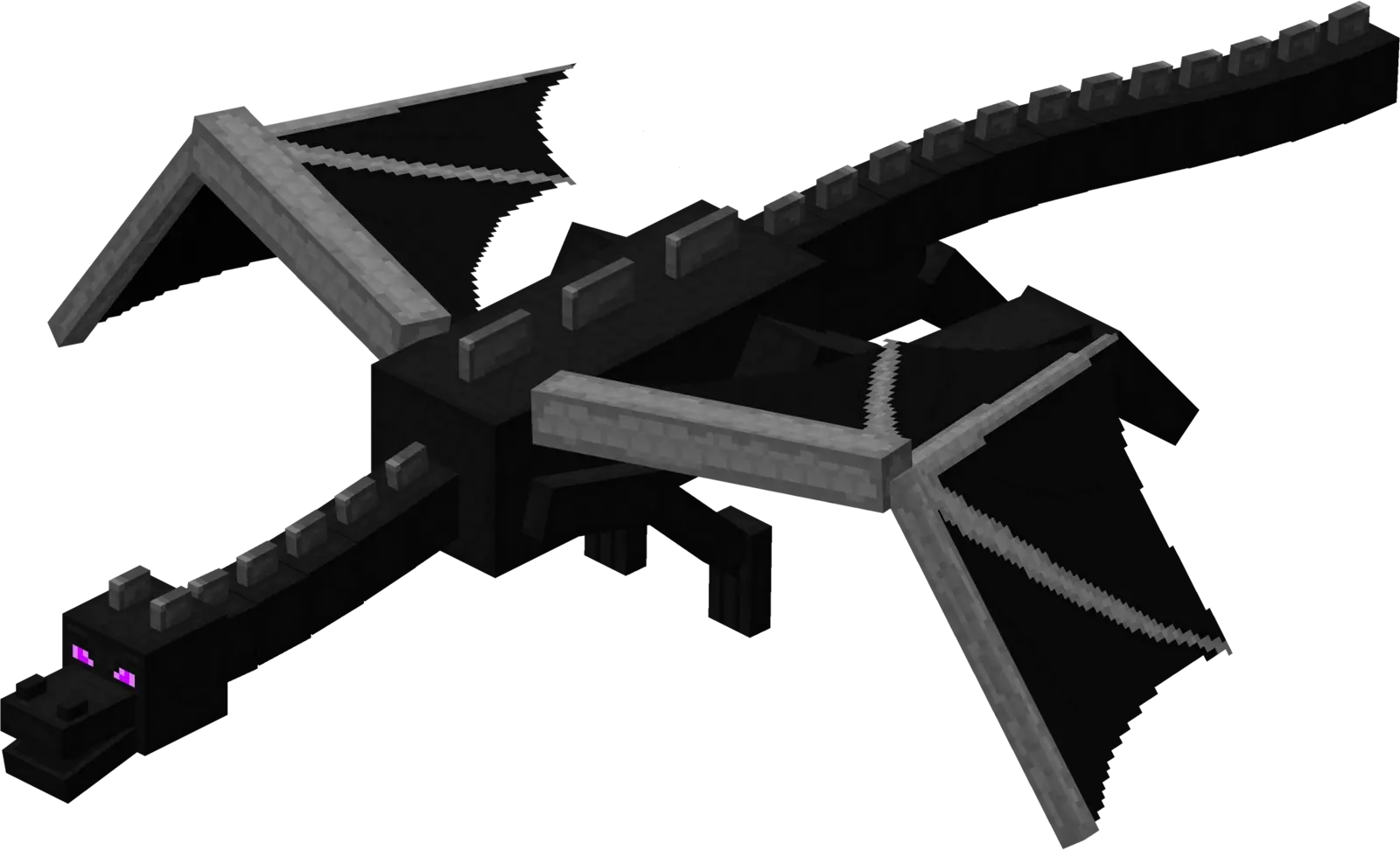
Minecraft Speedrun Guide: The Any% Route to the Ender Dragon
Speedrunning Minecraft is a race from an empty spawn to a dead dragon in under ten minutes. Here is the actual route the world's fastest players run — wood to Nether to stronghold to bed bombs — and where beginners lose the run.

Minecraft Nether Portal Linking: The 1:8 Coordinate Math
Two portals, 200 blocks apart, both dumping you at the same Nether exit. That is not a bug — it is a search radius doing exactly what it was written to do. Here is the actual math behind portal linking and how to force the pairing you want.
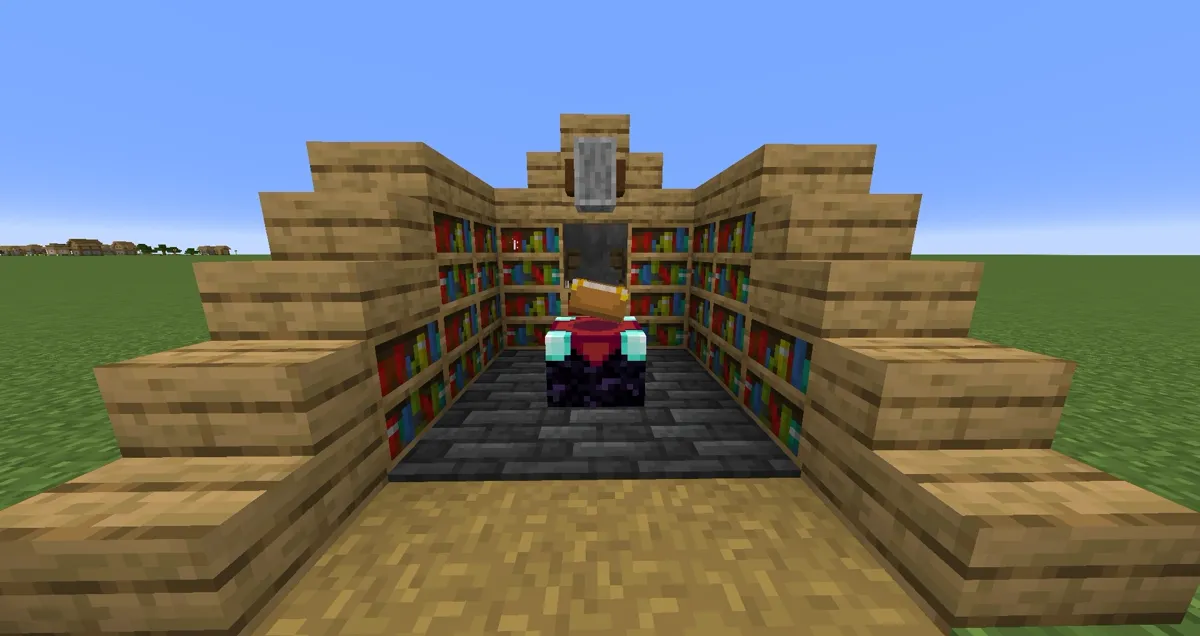
Minecraft Enchanting Setup Guide: Build a Level 30 Room
Most enchanting rooms are built wrong. Here is the exact bookshelf geometry for level 30, what the three offers actually cost you, why you should enchant books instead of gear, and how to stop hitting Too Expensive on the anvil.
Minecraft Survival Guide for Beginners: Your First Days
You have about ten minutes of daylight before the sun sets and the world tries to kill you. Here is exactly what to do with them — punch a tree, build a tool chain, and get a roof over your head before the zombies arrive.
Best Minecraft Enchantments, Ranked — The Ones Worth Your XP
Mending is the enchantment that ends the grind — gear that repairs itself forever. Everything else is a fight over your XP and anvil uses. Here is what actually earns a slot, ranked, with the real max levels.