Minecraft Transportation Guide: The Fastest Ways to Travel
Walking is for the first three days. After that, the game is a transport optimization problem, and the gap between the fastest and slowest methods is genuinely absurd — we're talking 1.7 m/s on foot versus 72 m/s on a blue ice boat road. Here's every real way to get around, with the actual speeds, so you can stop hoofing it.
Sprinting in Minecraft moves you about 5.6 m/s. A boat on a blue ice road moves you at 72.73 m/s. That's roughly thirteen times faster, and it's the kind of gap that quietly defines your whole midgame: the base you build, the bases you can build, how far you'll bother exploring. Get your transport sorted and the world shrinks. Don't, and you'll spend more time holding W than actually playing.
This is the full menu — every method that matters, with the real speeds the Minecraft Wiki lists, so you can pick the right tool instead of the first one you craft. We'll cover minecarts, boats and ice roads, Nether highways, the rideable mobs, ender pearls, and the king of them all, the elytra. No invented numbers, no "it feels fast." Actual values.
The speed tier list
Here's the whole field, ranked by top speed, so the rest of the guide has context:
- Elytra diving — up to ~78 m/s in a steep dive (situational, altitude-dependent)
- Boat on blue ice — 72.73 m/s (the fastest practical, sustained method)
- Boat on regular or packed ice — 40 m/s
- Elytra + firework rockets — 33.5 m/s sustained horizontal flight
- Ender pearl — ~23 m/s projectile travel (short hops, not sustained)
- Fastest-bred horse — up to 14.57 m/s (average horse ~9.49 m/s)
- Minecart on powered rails — 8 m/s flat cap
- Camel sprinting — 8 m/s
- Boat on water — ~7 m/s
- Strider on lava (boosted) — ~7.34 m/s average
- Sprinting on foot — ~5.6 m/s
Notice two things. One: the elytra and ice boats aren't just better, they're a different category. Two: the Nether multiplies all of this — but more on that below, because it's the single biggest free speed boost in the game.
Minecarts and powered rails
Minecarts are the classic answer, and they're better for infrastructure than for raw speed. A minecart on powered rails is hard-capped at 8 m/s on flat ground — slower than a good horse, way slower than ice. What they're good at is being automatic, hands-free, and immune to terrain once the track is laid.
The mechanics that matter:
- Powered rails are crafted from 6 gold ingots + 1 stick + 1 redstone, yielding 6 rails. Gold-hungry, which is why long minecart lines are a commitment.
- They need a redstone signal to activate — a redstone torch, lever, button, or block next to the rail. An active powered rail accelerates you; an inactive one brakes you, stopping a cart within about a block.
- You don't pave the whole track with powered rails. On flat ground you only need them periodically to top your speed back up — roughly one powered rail every ~30-something blocks of regular rail keeps you near the 8 m/s cap. On the flat, a single powered rail off a standstill can carry you dozens of blocks before friction wins.
Use minecarts for fixed routes you ride often — a base-to-mine commute, a connection between rooms, an AFK trip you don't want to steer. For raw cross-country distance, the other methods bury them. If you're wiring the redstone for stations and brakes, our redstone basics guide covers the signal logic.
Boats and ice roads
A boat on open water sits around 7 m/s — fine, nothing special, basically sprinting that doesn't drain hunger. The trick that breaks the game is putting a boat on ice.
Here's the hierarchy, straight from the wiki:
- Boat on regular ice or packed ice: 40 m/s.
- Boat on blue ice: 72.73 m/s.
That blue ice number is the fastest sustained travel in the entire game, elytra dives aside. Blue ice is the slipperiest block there is, so a boat barely loses speed — you just hold forward and rocket across the surface. Build a one-block-wide channel of blue ice with a wall on each side (so you don't slide off), drop a boat in, and you've got a highway that humiliates every horse and minecart.
The cost is the blue ice itself. You get it by trading with villagers, raiding ocean ruins/icebergs, or crafting it (9 packed ice → 1 blue ice, and 9 regular ice → 1 packed ice — so 81 regular ice per blue ice block). It's a grind, which is why ice roads are a "settled base" project. But once it's down, it's permanent, free to use, and faster than anything that isn't strapped-on wings. Pro move: build your ice road in the Nether and you stack the speeds — keep reading.
Nether highways
This is the one that changes everything, and it costs nothing but a portal. One block traveled in the Nether equals 8 blocks in the Overworld. Walk 100 blocks in the Nether, step back through a portal, and you've moved 800 blocks at home.
That 8:1 ratio means the Nether is a fast-travel layer for the whole map. The standard setup:
- Build a portal at your base and at your destination (or just explore out from one).
- Dig a tunnel through the Nether between the two linked points. Because of the ratio, the Nether tunnel is one-eighth the length of the Overworld trip.
- Light it, wall it off from ghasts and lava, and travel it however you like — on foot, on a strider, or best of all, on a blue ice road laid through the tunnel.
A blue ice boat road inside a Nether highway is the meta long-distance system in Minecraft: 72.73 m/s on the boat, multiplied by the 8:1 Nether ratio, gives an effective Overworld speed in the hundreds of blocks per second. Nothing else comes close for crossing thousands of blocks. The catch is the Nether is dangerous to build in — bring fire resistance and read our Nether guide before you start tunneling, because ghasts and lava ruin highway projects fast.
Horses, camels, and striders
For the early-to-mid game, before you've got ice roads or wings, a mount is your best friend.
- Horses are the go-to land mount. An average horse runs about 9.49 m/s — already faster than sprinting and a minecart — and the fastest individuals, bred up over generations, hit 14.57 m/s. Horse stats (speed, jump, health) are randomized, so breed two fast horses to push your stable toward the cap. They also jump, which lets you clear obstacles a boat or cart can't. Taming and breeding details are in our taming and breeding guide.
- Camels sprint at 8 m/s, the same as a minecart, but they seat two players, are tall enough that most mobs can't reach you, and can dash over gaps. They're a desert find — slower than a good horse but built for hauling a friend and shrugging off mobs.
- Striders are lava-only. A boosted strider averages about 7.34 m/s across a lava lake (steer it with a warped fungus on a stick). Niche, but they're the clean way to cross the Nether's lava oceans without dying.
If you're playing on foot and don't want to commit to infrastructure yet, tame a fast horse. It's the highest speed-per-effort ratio in the early game.
Ender pearls
Ender pearls aren't a "road," they're a teleport. Throw one and you're instantly relocated to wherever it lands — projectile travel works out to about 23 m/s when thrown at a good arc, but the real value is vertical and gap-crossing: clearing ravines, scaling cliffs, escaping a bad spot, or hopping across the void on the outer End islands.
The cost is fall damage — you take 5 hearts' worth on arrival (reducible with Feather Falling boots, or negated entirely if you land in water or on a slime/honey block). Pearls are a tactical tool, not a commute: keep a stack for emergencies and tight traverses. They're also how you reach the outer End islands in the first place, which we cover in the End cities guide.
Elytra and rockets
The elytra is the endgame answer to "how do I get anywhere," full stop. Equipped in your chestplate slot, it lets you glide — and with firework rockets, it lets you fly under power at 33.5 m/s of sustained horizontal speed. Stack rockets back-to-back and you cruise indefinitely; point the nose down and a dive pushes you up toward 78 m/s at the cost of altitude.
What makes it the king isn't just speed, it's freedom: no roads, no rails, no terrain. You fly straight-line over oceans, mountains, and ravines that would force every other method to detour. The trade-offs:
- It only comes from an End ship — there's exactly one source in Survival. Our End cities guide is the trip to get it.
- It burns durability (432 total, 1 point per second of gliding) and eats rockets, so you'll want a gunpowder farm and Mending on the wings.
- You need takeoff height — launch from a tower or a hill, or kick off with a rocket from the ground.
Once you have it, you basically stop using everything else for general travel. The ice roads and Nether highways still win for AFK mega-distance, but for "go there now," nothing beats wings and a pocket of rockets.
Which method for which job
Match the tool to the trip:
- Exploring an unknown map, mid-game: a fast horse. Cheap, flexible, jumps obstacles.
- A fixed daily commute (base ↔ mine): a minecart line. Hands-free and automatic, even if it's only 8 m/s.
- Crossing oceans before you have wings: a boat — and if you've settled, a blue ice channel.
- Connecting far-apart bases: a Nether highway, ideally with a blue ice boat road inside it. This is the long-haul meta.
- Crossing a Nether lava lake: a boosted strider.
- Emergency escapes and vertical traverses: ender pearls.
- Everything, once you're endgame: the elytra with a stack of rockets.
The honest summary: get a horse early, build a Nether highway when you've got a second base, and chase the elytra as your real endgame goal. After that, the map is small.
Quick Action Checklist
- Tame and breed a fast horse early (up to 14.57 m/s) — best speed-per-effort before endgame
- Use minecarts + powered rails (8 m/s cap) for fixed, hands-free commutes
- Lay a blue ice boat channel for 72.73 m/s — the fastest sustained travel in the game
- Build Nether highways to exploit the 8:1 distance ratio for long hauls
- Put a blue ice road inside the Nether highway for the absolute fastest long-distance system
- Keep a strider for crossing Nether lava lakes (steer with a warped fungus on a stick)
- Carry ender pearls for gap-crossing and emergency escapes (mind the ~5 hearts fall damage)
- Get the elytra from an End ship; fly at 33.5 m/s with firework rockets
- Put Mending on the elytra and farm gunpowder so rockets and durability never run out
- Match the method to the trip — horse to explore, Nether for distance, wings for everything endgame
Frequently Asked Questions
What is the fastest way to travel in Minecraft?
How fast does a minecart go on powered rails?
How do you build a Nether highway in Minecraft?
How fast is the fastest horse in Minecraft?
How fast does the elytra fly with rockets?
Keep Reading
Related Guides
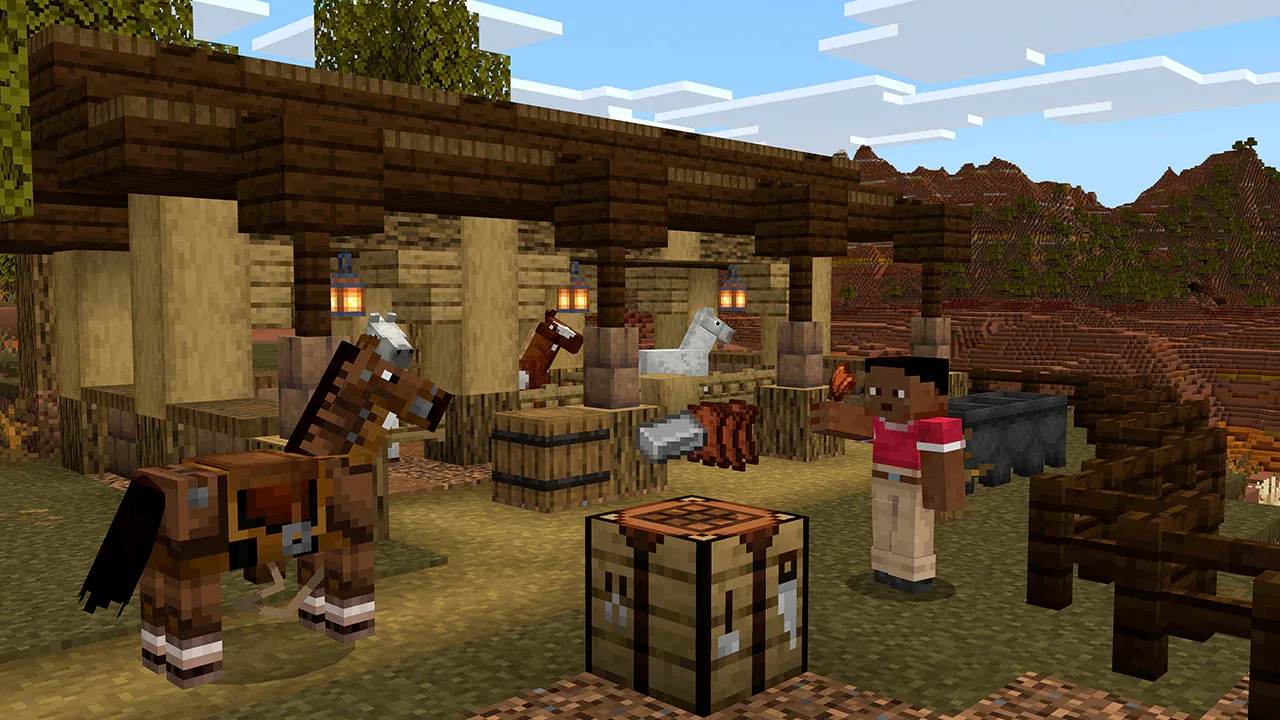
How to Make a Saddle in Minecraft: Recipe and Loot Odds
Saddles have been craftable since June 2025: three leather and one iron ingot. Here is the recipe and what it really costs, every chest, trade and mob drop that still gives one with Java and Bedrock odds, the five chests that stopped, all eleven mobs it fits, and how shears take it back.
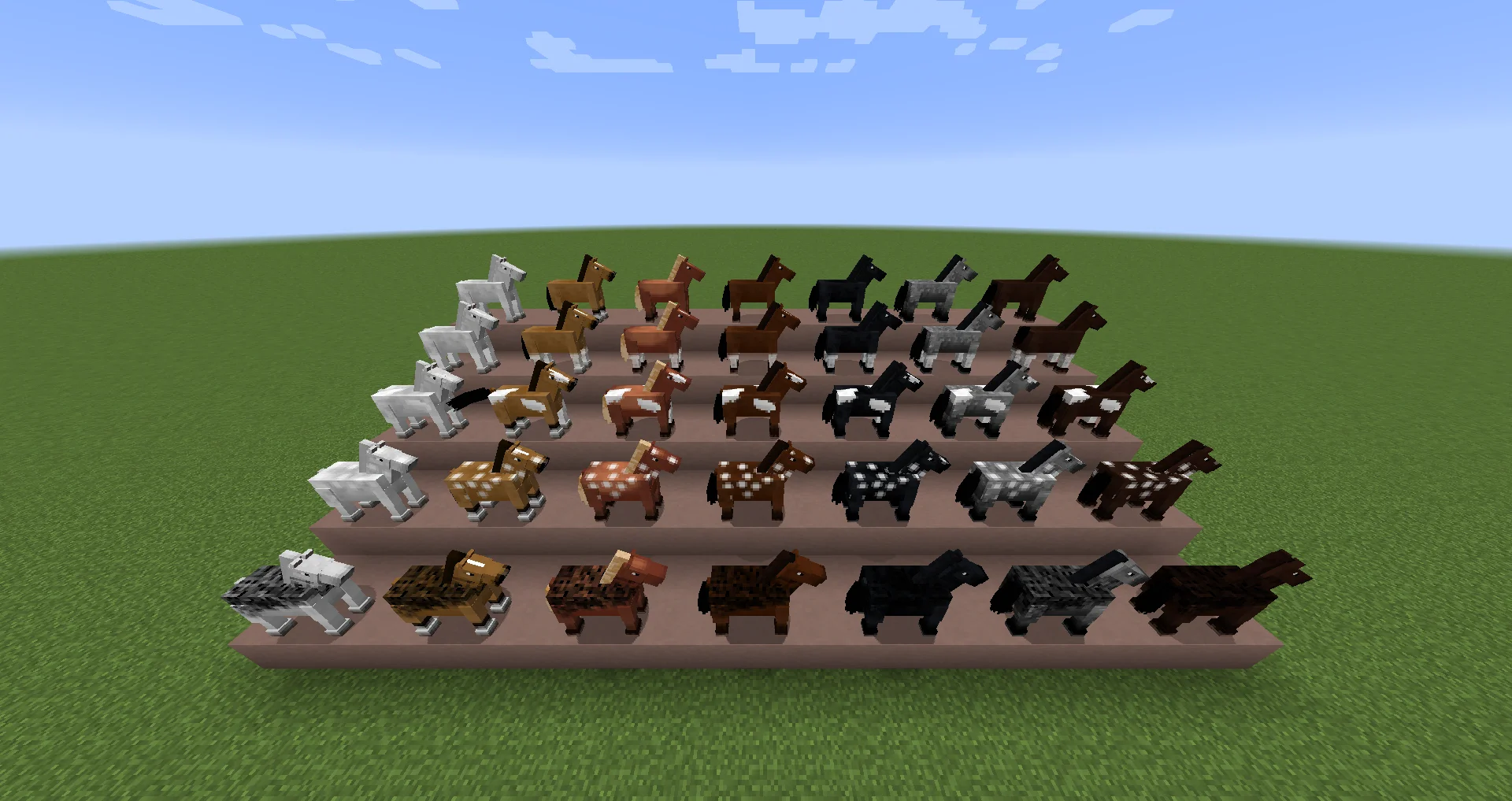
Minecraft Horses & Mounts Guide: Every Rideable Animal
Every rideable mob in Minecraft does one job better than the rest — horses for speed and fences, llamas for caravans, striders for lava, camels for two-up desert travel. Here is how to tame each one, what its real stats are, and how to breed a horse that actually clears a five-block wall.
How to Tame and Breed Every Animal in Minecraft
Taming and breeding are two different systems, and confusing them is why people keep shoving wheat at a wolf. Here is every tameable and breedable mob, the exact food each one wants, and whether the payoff is worth your time.
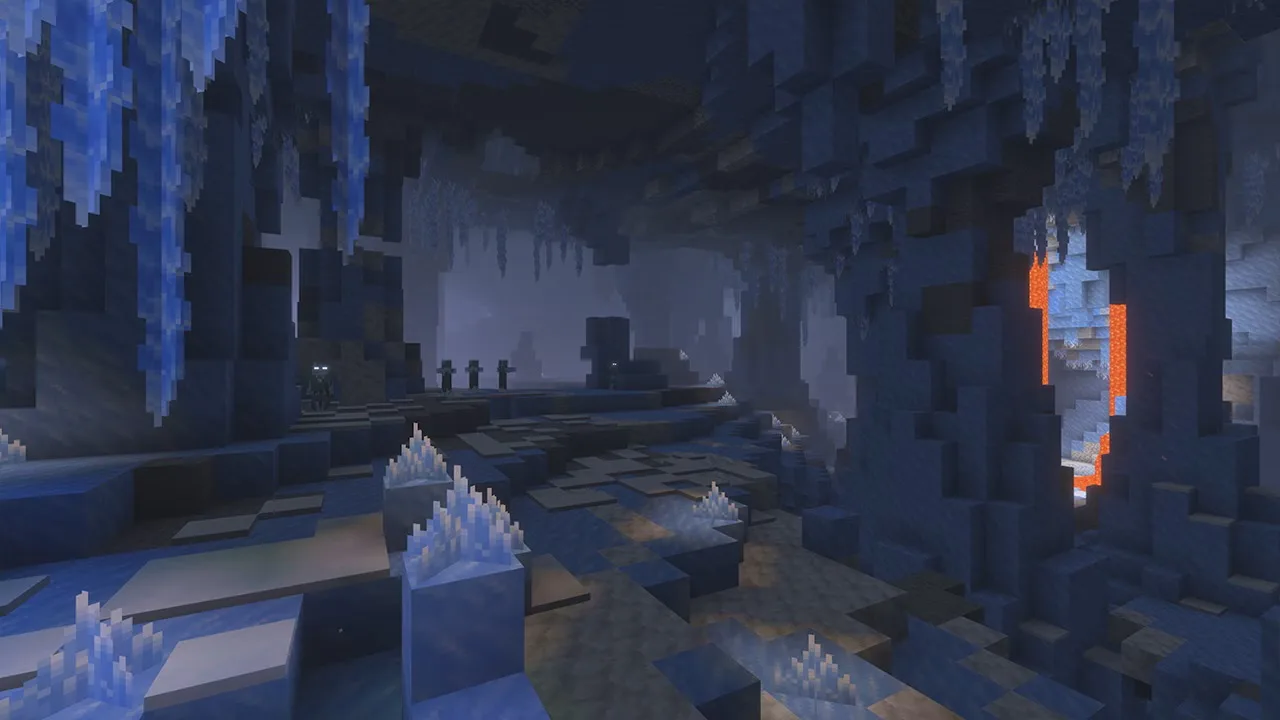
Minecraft Ice Caves Guide: Frostbite, Icicles and Freezing
Minecraft's fifth cave biome is mostly packed ice, its icicles drop when you light them, and its new zombie variant applies a brand-new Freezing effect with its melee hits. The ice caves drop is playable today in Bedrock Preview 26.60.29 and not yet in Java. Here is what is in it, with the numbers, and what could still change.
Minecraft Survival Guide for Beginners: Your First Days
You have about ten minutes of daylight before the sun sets and the world tries to kill you. Here is exactly what to do with them — punch a tree, build a tool chain, and get a roof over your head before the zombies arrive.
Best Minecraft Enchantments, Ranked — The Ones Worth Your XP
Mending is the enchantment that ends the grind — gear that repairs itself forever. Everything else is a fight over your XP and anvil uses. Here is what actually earns a slot, ranked, with the real max levels.