Minecraft Pale Garden Guide: Creaking, Resin, and Pale Oak
The pale garden is the only biome in Minecraft that turns your music off on purpose, and it guards the only mob in the game you cannot damage. Here is how the creaking staring contest actually works, how to turn its heart into a renewable resin farm, and every Java/Bedrock number that matters.

Every other scary place in Minecraft telegraphs danger with sound — the deep dark has its sculk pulses, the Nether has ghast screams echoing off netherrack. The pale garden does the opposite. Walk in with music playing and the game fades the track to silence and refuses to start another one. No ambient loop, no disc, nothing. Mojang built a horror biome where the jump scare is that your headphones stop earning their keep.
It shipped in The Garden Awakens drop on December 3, 2024 — Java Edition 1.21.4 and Bedrock Edition 1.21.50, after a stint as a Java experiment in 1.21.2 — and it is the densest little package of new mechanics the Overworld has gotten in years: the only unkillable mob in the game, a block that acts as that mob's literal life source, a renewable crafting material with its own armor trim color, and a full wood set. This guide covers all of it, with the numbers checked against the wiki.
A dark forest gone quiet
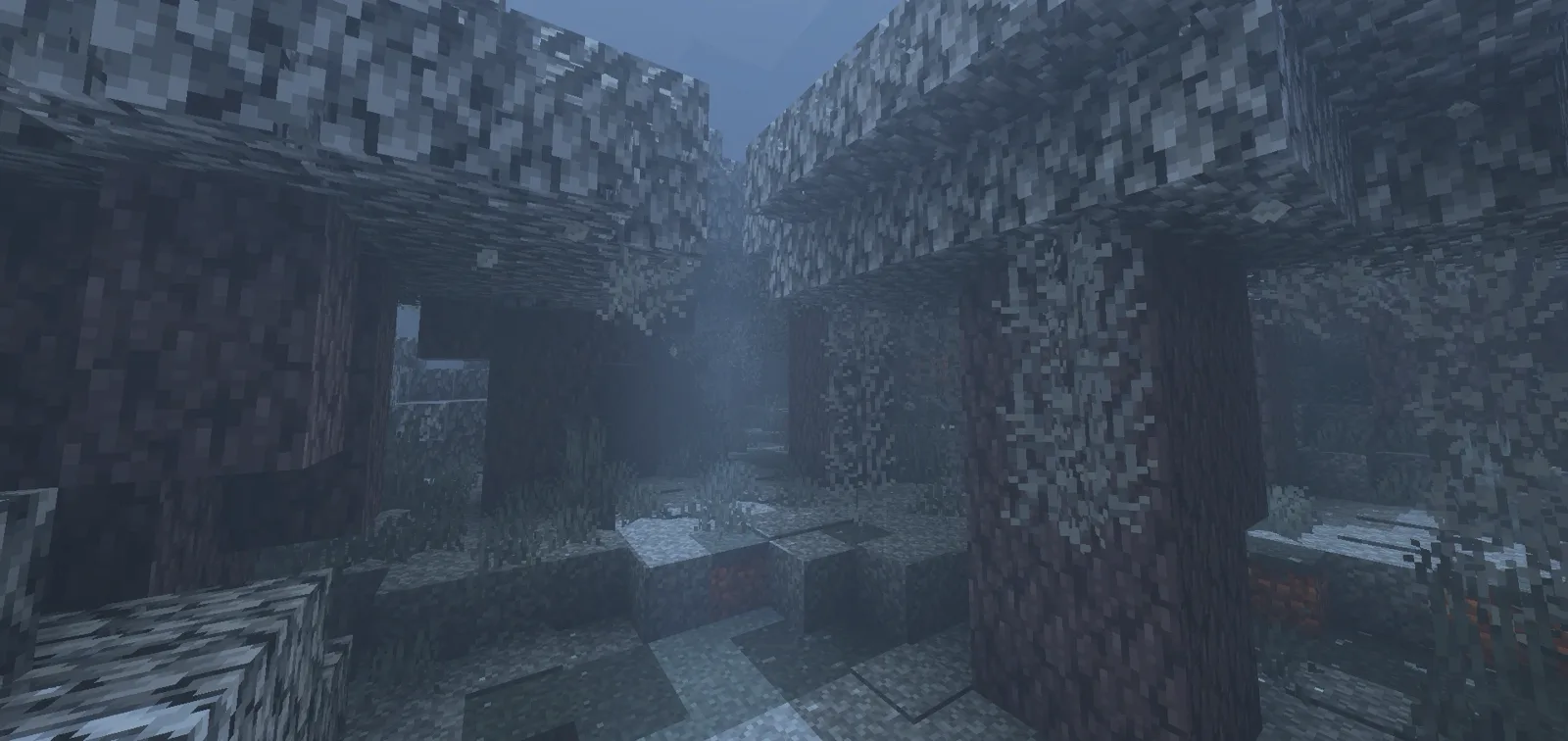
The pale garden is a rare variant of the dark forest. It generates adjacent to dark forests in areas of high continentalness and weirdness, always on plateaus or mountain slopes in medium-temperature, maximum-humidity regions. In practice: if you want one, find dark forests and sweep their edges. Meadows and groves are its most common neighbors, so pale gray woods bordering bright meadow flowers is a classic sighting.
You can skip the hiking entirely with /locate biome minecraft:pale_garden, which works on both editions. Legit hunters should look for the color shift: everything here is desaturated on purpose. Grass renders at a washed-out sage (#778272), foliage at a grayed olive (#878D76), the water goes slate blue (#76889D), and even the sky drains to a flat gray. The whole biome looks like someone turned the saturation slider down, and that's before the fog rolls in.
Two ambience facts worth knowing before you camp there. First, the music silence is a real mechanic, not a bug — ambient tracks do not play, and an in-progress track fades out when you cross the border. Second, no passive mobs spawn here. No sheep, no cows, nothing to eat. Hostile mobs spawn just fine, and the canopy is thick enough that they can sometimes hang around in shaded spots during the day, same trick the regular dark forest pulls in our biomes guide. Bring food and torches.
What actually generates here
The headline flora is the pale oak — a thick, dark-oak-style 2x2 trunk with gray-white leaves and pale hanging moss dangling off the branches. The floor is carpeted in pale moss blocks and pale moss carpet, dotted with eyeblossoms (more on those below, they are weirder than they look). Buried inside roughly one in five naturally grown pale oaks is a creaking heart, which is the block this whole biome revolves around.
One structure note that surprises people: woodland mansions can generate in pale gardens, since the biome is a dark forest variant. A mansion looming out of gray fog is genuinely one of the best vistas in the game, and if you're already raiding one, our woodland mansion guide covers the interior — plus mansion chests are one of the only places resin clumps generate as loot (2-4 clumps, in about 54% of chests on Java and 17% on Bedrock).
The creaking: a mob you can't kill
At night, the garden wakes up. Active creaking hearts spawn creakings — gnarled, tree-limbed stalkers with three glowing orange eyes — anywhere within a 33x17x33 box centered on the heart. And here is the stat line that breaks every combat instinct you have: a naturally spawned creaking is completely invulnerable. Not "tanky." Invulnerable. It technically has 1 HP and ignores every damage source in the game except the void and /kill. Netherite axe, end crystal, TNT cannon — nothing puts it down.
It hits for 2.5 HP on Easy, 3 on Normal, and 4.5 on Hard, which is zombie-tier damage, but zombies die when you hit them back. The creaking's actual threat is attrition: it cannot be removed, it does not knock back, and while agitated it moves faster than an attacking vindicator.

How the staring contest works
The creaking only moves when nobody's looking, Weeping Angel style, and the detection rules are more specific than most players realize:
- A creaking within roughly 12 blocks of your field of view becomes alerted — its eyes flare a brighter orange and it plays an activation sound.
- It freezes when your facing direction (pitch and yaw both) is within 60 degrees of it, with no blocks in the way. Frozen means fully immobile: no movement, no attacks, no knockback from your hits.
- Peripheral vision counts. You do not need your crosshair on it — just keep it inside that 60-degree cone.
- Changing your FOV setting or going third-person does not cheat the check, and a carved pumpkin actively hurts you: wear one and creakings inside your view keep right on moving.
Frozen is not the same as anchored, though. Water, lava, explosions, pistons, and wind charges all shove a frozen creaking around just fine — and that matters, because a creaking that ends up more than 32 blocks (straight-line) from its heart dies on the spot. A well-aimed wind charge is a legitimate delete button.
Two more quirks worth exploiting. Illagers want nothing to do with these things — pillagers, vindicators, and evokers all flee when a creaking gets within 8 blocks, which makes a pale garden border weirdly decent raid cover. And creakings despawn at daybreak, so the garden is strictly a night-shift problem. If you'd rather manage spawns than stare at trees all night, the standard rules in our mob spawning guide still apply to everything else in the biome.
Creaking hearts: the real target
Since the puppet is invulnerable, you cut the strings. Every naturally spawned creaking is linked to a specific creaking heart, and breaking that block kills its creaking instantly — the mob twitches and collapses, and the game even credits you with the kill.
Finding the heart is the fun part: punch the creaking. Every hit makes it sway and emit a trail of orange and gray particles that streams back toward its linked heart. Follow the breadcrumbs, find the pale oak with the glowing block buried in the trunk, and chop. Hearts are slow to mine (hardness 10, axe is the right tool), so expect the creaking to get free hits in while you work — face away at your peril.
How common are they? The wiki's pale garden and pale oak pages both put it at a 20% chance per naturally generated tree, while the creaking heart page still says 10% — the pages disagree as of this writing, so treat it as "check a handful of trees, not one." Two things are certain: hearts only generate buried in the trunk, never exposed to air, and trees you grow from saplings never contain one.
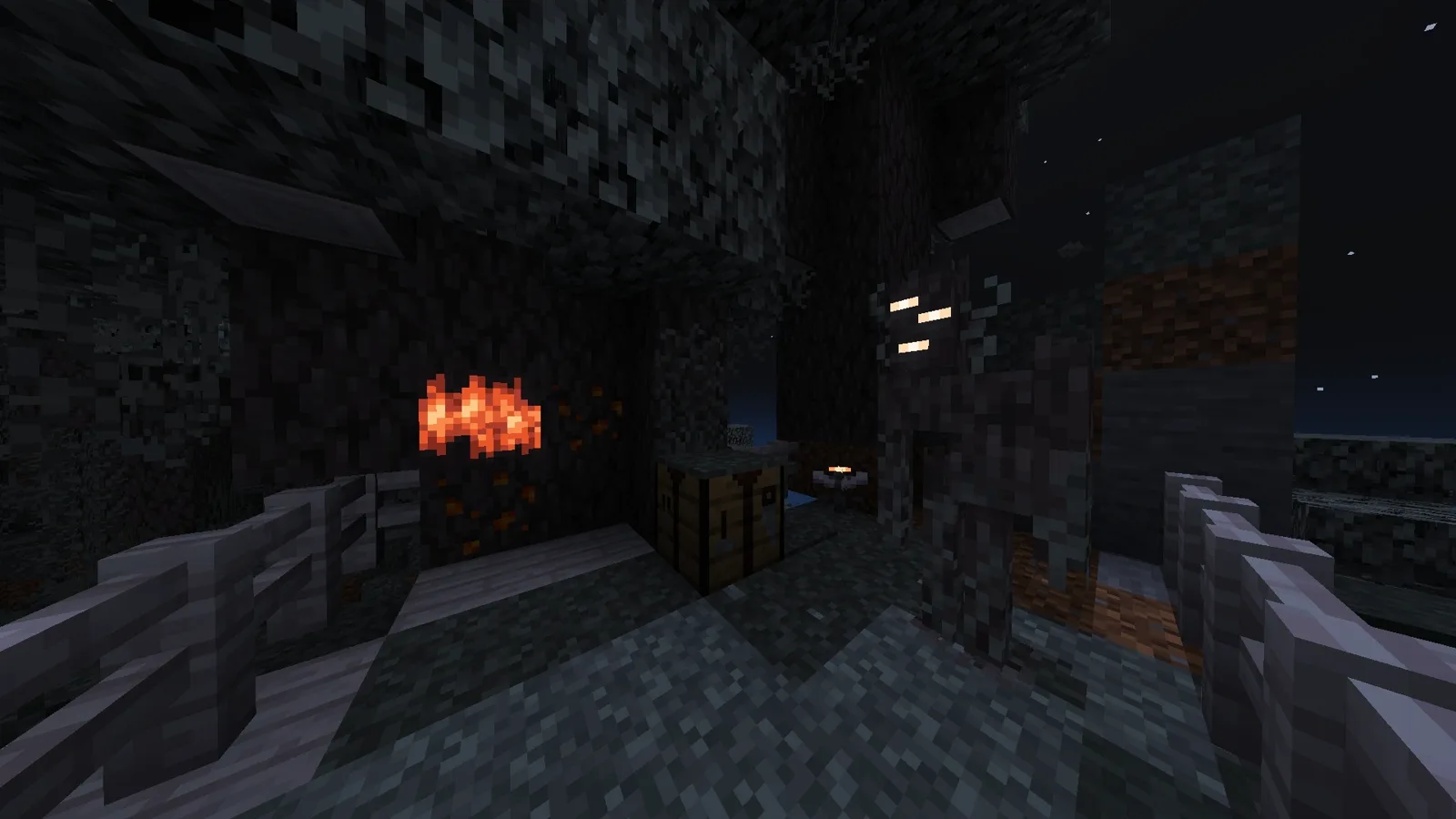
Breaking a natural heart pays out 20-24 XP plus 1-3 resin clumps (Fortune adds one per level, capping at 6 with Fortune III). Want the block itself? That takes Silk Touch — and you should want it, because a placed heart is a machine, not a trophy.
A heart has three states. Uprooted is the dead default. Sandwich it between two pale oak logs, stripped logs, or wood blocks that share its axis alignment, and it becomes dormant by day and awake at night — specifically between ticks 12600 and 23400, the same window The Garden Awakens patch notes describe as night (thunderstorms wake hearts too). Awake hearts spawn a creaking, and a redstone comparator behind one reads how close that creaking is: signal 15 with the mob on top of it, scaling down as it wanders toward its 32-block limit. That's a proximity alarm for an invisible-until-lit monster, built into the block. Mojang knew exactly what they were doing.
You can also craft a creaking heart: one block of resin between two pale oak logs, stacked vertically. Nine resin clumps make the resin block, so the whole thing is farmable — which brings us to the loop.
Resin farming: the renewable loop
Here is the elegant bit of design most guides bury: hitting a creaking is how you harvest resin. When a creaking gets attacked at night by a player, a player's tamed wolf, or a player-caused explosion, its linked heart responds by sprouting 2-3 resin clumps on the faces of pale oak logs or wood connected to the heart, within 2 blocks' taxicab distance. There's a 5-second cooldown between payouts, and the clumps break instantly by hand — every clump on the same block pops off in one punch.
So the mob that cannot be killed is also the resource dispenser, and the "attack" that yields nothing is actually the farm input. A working setup looks like this:
- Silk Touch a heart (or craft one) and rebuild its tree at your base: heart in the middle, aligned pale oak logs above and below, plus extra logs touching the heart to give clumps more surfaces to grow on.
- Wait for night. The heart wakes and spawns its creaking.
- Whack the creaking on cooldown — roughly every 5 seconds — and let the particle trail amuse you.
- Harvest the logs, sleep, repeat. The creaking despawns at dawn; the heart just goes dormant and does it all again tomorrow.
The creaking cannot be hurt and you're the only one in danger, so armor up and keep your back to a wall. It's the only farm in the game where the livestock fights back and wins.

What resin is actually for
Resin is its own little material tree, and it fills a color slot nothing else touches:
- 9 resin clumps → 1 block of resin, the bright orange decorative block (and the crafting ingredient for hearts).
- Smelt a clump → 1 resin brick (0.1 XP a pop), and 4 bricks craft into a resin bricks block with the full stairs/slabs/walls/chiseled family.
- Resin bricks are an armor trim material. Feed one into a smithing table with any trim template and you get orange detailing — the only orange trim source in the game. If your trim collection is missing that slot, our smithing templates guide covers the template side of the recipe.
Orange terracotta builders, pumpkin-patch decorators, anyone doing autumn palettes: this is your block family, and unlike copper it never oxidizes into a different mood. It slots beautifully next to the copper set without the aging anxiety.
Eyeblossoms: the flowers that watch back
The white flowers scattered across the moss are eyeblossoms, and they run on the same nocturnal schedule as everything else here. By day they're closed white buds. At night they open into gray-petaled flowers with an orange eye at the center — and they coordinate. When one eyeblossom changes state, it signals other eyeblossoms in a 7x5x7 area around it to follow, so the change ripples across the forest floor in a wave. Planted on pale moss, an open eyeblossom even emits faint eerie sounds. It's the best set dressing Mojang has ever done with a flower.
They're not just decorative:
- Bees get poisoned by open eyeblossoms — 1.25 seconds of Poison on contact (any difficulty except Peaceful). They'll still pollinate them, which makes eyeblossoms the one flower your bee farm is better off without.
- Suspicious stew made from an open eyeblossom inflicts Blindness — 11 seconds on Java, 7 on Bedrock. A closed one gives 7 seconds of Nausea. Both are troll food; label your stew chests.
- Dye output depends on state: closed eyeblossoms craft into gray dye, open ones into orange. Same flower, two dyes, time-gated. If you're bone-mealing for more on Bedrock, note they always generate closed regardless of time — a known edition quirk.
Pale oak wood: the gray set builders wanted
Strip out the horror mechanics and the pale garden still earns a visit for the wood alone. Pale oak is a full wood set — planks, stairs, slabs, fences, doors, trapdoors, signs, hanging signs, boats — in a gray-white tone that finally gives builders a proper desaturated wood without resorting to stripped birch or bleached terracotta workarounds.
Growing it works exactly like dark oak: four saplings in a 2x2 grid, or nothing. Single saplings never grow. The tree also demands real clearance — figure at least 7 blocks of open height above the planting site, widening near the canopy. Plant your farm outdoors. And remember the heart rule from earlier: farmed pale oaks are guaranteed heart-free, which makes them the safe renewable log source for your resin builds, no surprise roommates included. For layout ideas that flatter a monochrome palette, our building tips piece has a section on limited-palette builds this wood was born for.
Java vs Bedrock: the delta list
The editions agree on the big mechanics — invulnerable creaking, 60-degree freeze cone, heart states, resin loop — but the edges differ:
| Thing | Java Edition | Bedrock Edition |
|---|---|---|
| Pale garden added | 1.21.4 (experimental in 1.21.2) | 1.21.50 |
| Eyeblossom stew (open) | Blindness 11s | Blindness 7s |
| Bone-mealed eyeblossoms | Match time of day | Always generate closed |
| Mansion resin clump loot | 2-4 clumps, ~53.8% of chests | 2-4 clumps, ~17.2% of chests |
| Command/egg-spawned creakings | Keep full invulnerability | Not immune to fire and lava |
| Biome fog | Standard desaturated sky | Distinct fog colors, Vibrant Visuals support (1.21.90) |
None of these change your strategy; the stew numbers and loot odds are the only ones you'd feel in play.
Quick Action Checklist
- Find a pale garden on the edges of dark forests (plateaus and mountain slopes; meadows and groves next door), or run
/locate biome minecraft:pale_garden. - Go in stocked: no passive mobs spawn, so pack food, and expect hostile mobs — occasionally even in daytime shade.
- At night, keep every creaking inside your 60-degree view cone within ~12 blocks. Back away facing it. Never wear a carved pumpkin here.
- Don't waste swings trying to kill one — it's invulnerable. Hit it once and follow the orange particle trail to its creaking heart, then axe the heart (or shove the mob 32+ blocks from home with a wind charge).
- Natural hearts sit in ~1 in 5 wild pale oaks (the wiki also cites 10% on one page — either way, check several), always buried in the trunk. Sapling-grown trees never have them.
- Take hearts with Silk Touch; without it you get 1-3 resin clumps (up to 6 with Fortune III) plus 20-24 XP.
- Farm resin: place a heart between two aligned pale oak logs, add extra connected logs, then hit the night-spawned creaking every 5 seconds for 2-3 clumps per payout.
- Smelt clumps into resin bricks for the game's only orange armor trim, or block them up for orange builds; 9 clumps also craft a block of resin for making more hearts.
- Grab eyeblossoms for time-gated dye (closed = gray, open = orange), and keep them away from your bees.
- Take pale oak saplings home and plant them 2x2 with 7+ blocks of clearance for renewable heart-free logs.
Frequently Asked Questions
How do you find a pale garden in Minecraft?
How do you kill a creaking in Minecraft?
How do you get resin in Minecraft?
What does the creaking heart do?
What are eyeblossoms used for in Minecraft?
Is the pale garden dangerous during the day?
Keep Reading
- Minecraft Wiki — pale garden generation, ambience, and mob spawning
- Minecraft Wiki — creaking behavior, freeze mechanic, and stats
- Minecraft Wiki — creaking heart states, crafting, and drops
- Minecraft Wiki — resin clump generation mechanics and uses
- Minecraft Wiki — eyeblossom states, stew effects, and bee interaction
- Minecraft Wiki — pale oak growth requirements and creaking heart chance
- Minecraft Wiki — The Garden Awakens drop, versions, and release date
Related Guides

Minecraft Ice Caves Guide: Frostbite, Icicles and Freezing
Minecraft's fifth cave biome is mostly packed ice, its icicles drop when you light them, and its new zombie variant applies a brand-new Freezing effect with its melee hits. The ice caves drop is playable today in Bedrock Preview 26.60.29 and not yet in Java. Here is what is in it, with the numbers, and what could still change.
Minecraft Wilderness Bound Guide: Dappled Forest and Camps
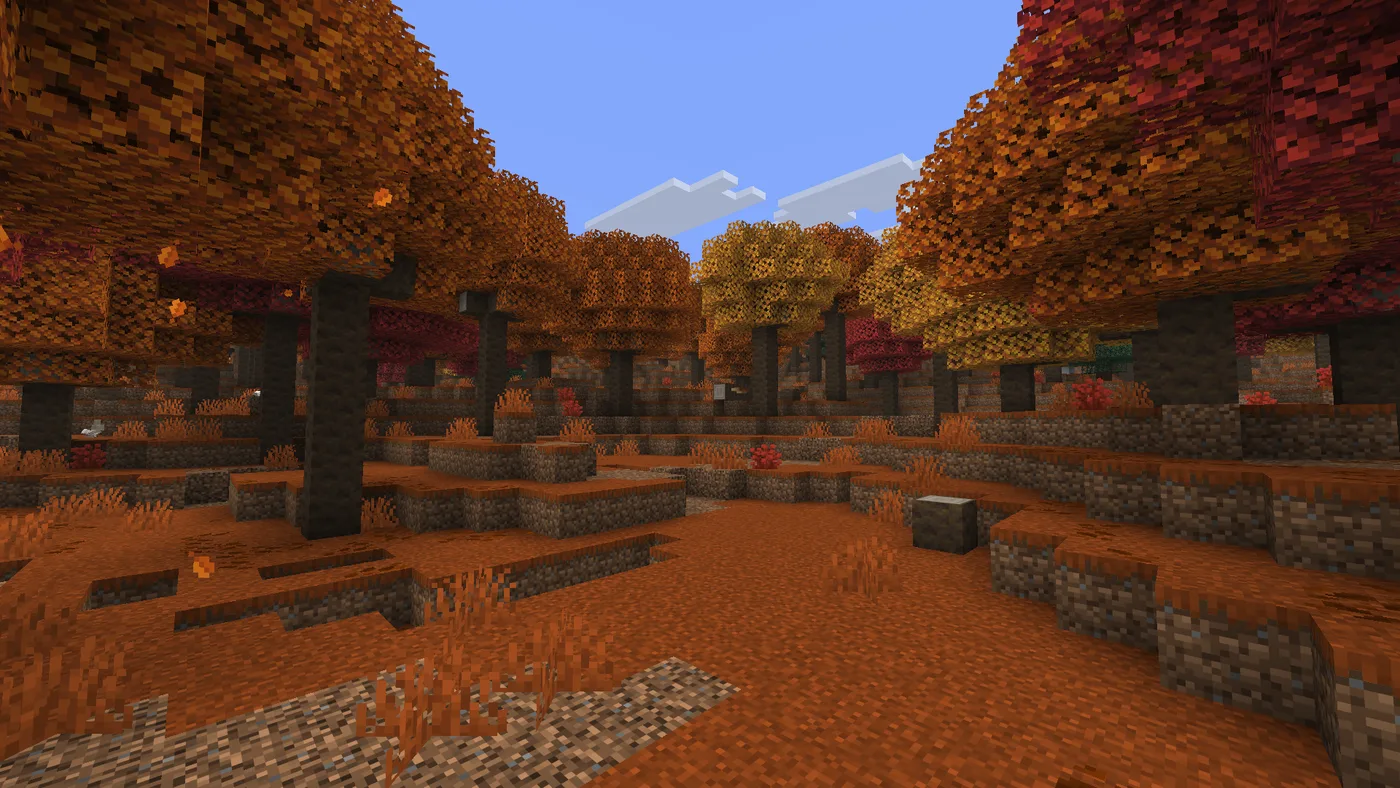
Minecraft quietly swapped its whole version-numbering scheme and shipped a full content drop the same week — a new autumn biome, camping structures with a chest that hides in a different spot every time, and the game's first real sit-down furniture. Here is every number from Wilderness Bound, checked against the wiki the day after launch.
Minecraft Sulfur Caves: Geysers, Cinnabar, and Sulfur Cubes
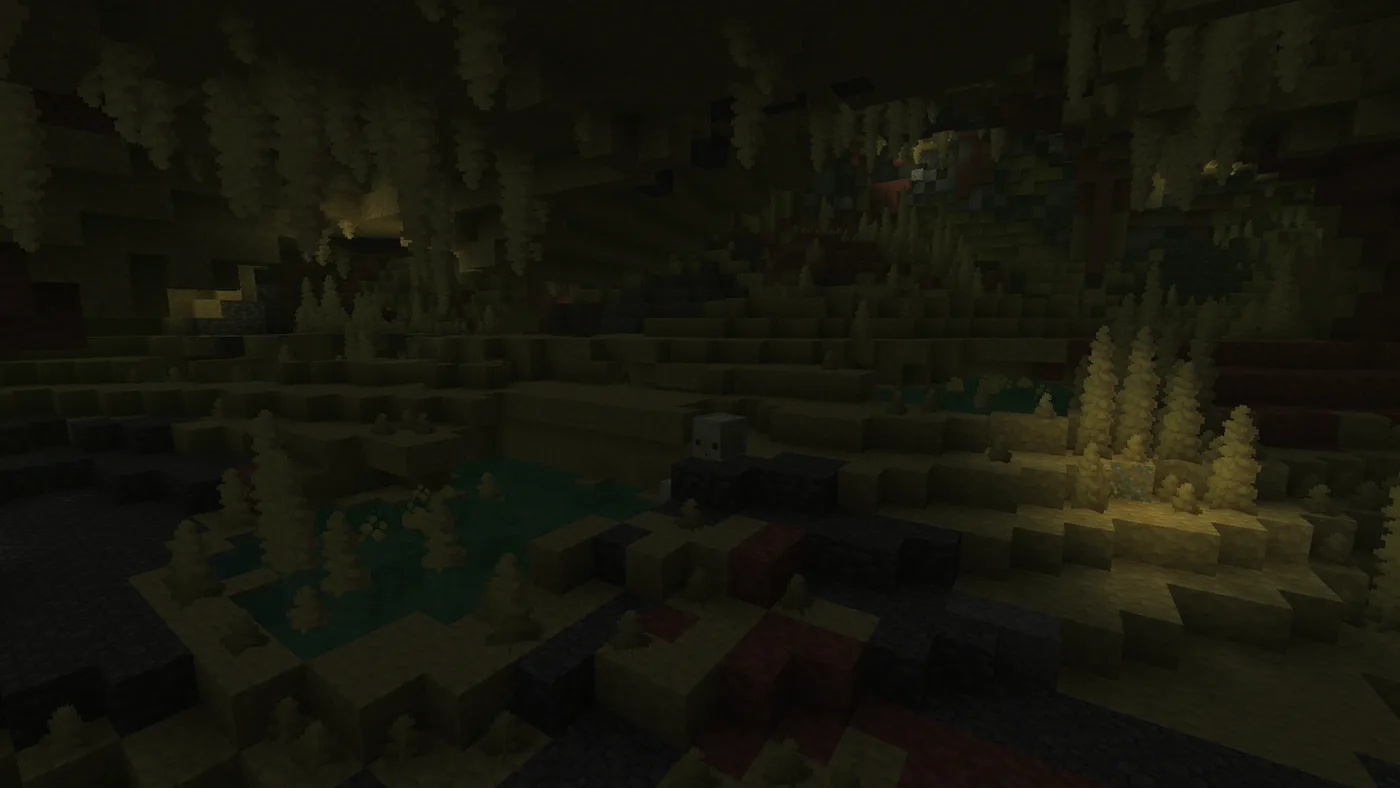
Java 26.2 dropped a cave biome that does not reward you with a mob you fight, or loot you carry home. It rewards you with a ball. The sulfur cube takes on the physics of whatever block you feed it, and the game ships twelve different physics profiles to choose from — bounciness, friction and air drag, all published numbers. Here is the whole biome, including the geyser maths.
Minecraft Cherry Grove Guide: Wood, Pink Petals, and Mobs
The cherry grove is the prettiest biome in Minecraft and one of the most underrated places to start a world. It's a meadow with pink trees on paper, but it quietly hands you a whole salmon-colored wood set, a renewable decoration block, emeralds in the hills, and bees on the branches.
Minecraft Survival Guide for Beginners: Your First Days
You have about ten minutes of daylight before the sun sets and the world tries to kill you. Here is exactly what to do with them — punch a tree, build a tool chain, and get a roof over your head before the zombies arrive.

Best Minecraft Enchantments, Ranked — The Ones Worth Your XP
Mending is the enchantment that ends the grind — gear that repairs itself forever. Everything else is a fight over your XP and anvil uses. Here is what actually earns a slot, ranked, with the real max levels.