The Original Naruto CCG (2006-2013) — How Bandai's First Naruto Card Game Actually Worked
Before Kayou and before the NARUTO CARD GAME launching in 2027, Bandai shipped a full competitive Naruto TCG that ran 28 expansions and died in 2013. It had 40-card decks, a turn counter that gated what you could play, and a win condition that literally milled your opponent. Here is how it worked, pulled from the original Bandai rulebook and the card database — and what carried over into the new game.
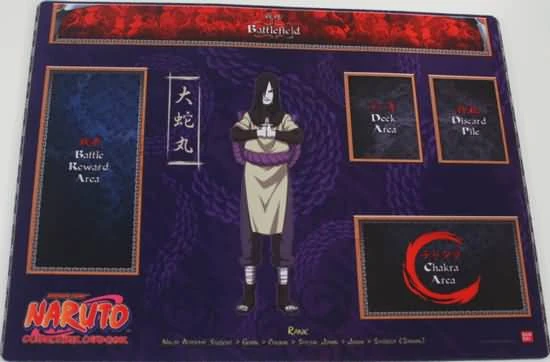
Somebody in every Naruto card thread has the same shoebox: ten-card packs with a grey Naruto printed on the front, a small stainless steel coin, a folded play mat with Orochimaru on it, and a few hundred cards nobody has been able to explain to them in a decade.
That box is Bandai's original NARUTO Collectible Card Game. It ran from 2006 to 2013, shipped 28 expansions, had a sanctioned tournament circuit, and then Bandai switched it off. It is not the Kayou collectibles sitting in Target right now. It is not the NARUTO CARD GAME Bandai demoed at Gen Con this week. It is a third, separate, dead product — and mechanically it was much weirder than either of them.
I went through Bandai's original 21-page rulebook and the community card database instead of trusting anybody's memory. Here is what those cards actually do.
What the Naruto CCG actually was
A two-player competitive TCG published by Bandai, with a real rulebook, a real errata process, and a real organised play program. Anime News Network reported in December 2005 that Bandai had slotted the Naruto CCG for a hobby-only March 2006 launch, with the first expansion in July, a second in October and a gift set in November, and that sanctioned tournaments would run through Bandai's Meijin program alongside casual leagues.
The first set was The Path to Hokage. It sold out nationally on arrival, badly enough that Bandai had to push an unlimited-edition reprint of the whole set roughly six months later to stop shops charging above-market for packs of a starter product.
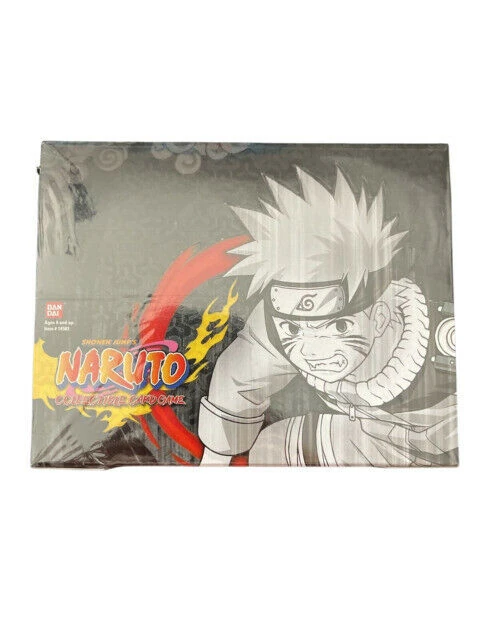
Boosters were ten cards: six commons, two uncommons, one foil of a random rarity, and one rare with foil lettering on the name. Starter decks came with a preconstructed deck, a sideboard, a paper game mat, a turn counter, and the stainless steel Ninja Blade coin. Booster boxes held 24 packs.
Three Naruto card products, and only one is this one
Worth nailing down before anything else, because search results smear all three together:
- The Naruto CCG (2006-2013) — Bandai, competitive TCG, out of print, this article.
- Kayou NARUTO Smriti cards (2025-present) — a Chinese collectible card line, on North American shelves since October 2025. No rulebook, no format, no organised play. They are art on cardstock and Kayou does not claim otherwise.
- NARUTO CARD GAME (Summer 2027) — Bandai again, a brand-new competitive TCG, world debut at Gen Con 2026, confirmed for a simultaneous global release in Summer 2027. Not purchasable or playable as of August 2026.
Old CCG cards are not legal in the 2027 game, are not compatible with Kayou cards, and Bandai has never described the new game as a continuation of the old one.
The rulebook in the box says 40 cards
Straight out of the original rulebook, section II:
- Your deck is exactly 40 cards.
- No more than 25 Ninja cards in it.
- No more than 3 cards with the same name.
Each player needs their own game mat, and the two mats are pushed together so the Battlefield strips touch. That is the play space: your Village, your Deck area, Discard Pile, Chakra Pile, Battle Reward area, a Turn Indicator, and the shared Battlefield.
Mulligans were generous and brutal at the same time. Draw six. Hate it? Shuffle, have your opponent shuffle, draw five. Hate that too? One more time, draw four. That is the whole ladder.
That 40-card number is specifically the 2006 format. The game grew. By the late sets, cards like Naruto Uzumaki (Sage Mode), card number SLN-1395 from Sage's Legacy, carry a Reinforcement characteristic — a card that lives in a second zone the 2006 rulebook has no concept of. Narutopedia and the community comprehensive rulebook both put the mature format at a 50-card deck plus a Reinforcement Deck of up to 15. So if you find a rulebook in an old starter and the numbers do not match a tournament list you read online, you are not confused, you are just holding an early printing.
The turn counter was the mana system
This is the design decision that makes the game feel unlike anything currently on shelves. There are no lands, no energy, no ramp. There is a Turn Marker that starts on 0 and moves up by exactly 1 at the end of your turn, forever.
Every Ninja has an Entrance cost. You can deploy it only when your Turn Indicator is at that number or higher. Iruka at Entrance cost 2 is uncastable until your third turn, on turn three, on turn thirty, no exceptions. Nobody gets a fast start and nobody gets mana-screwed. The curve is the clock.
The second cost is the interesting one. Hand cost is paid by sending that many cards from your hand — matching the Ninja's element symbol — into your Chakra area. So expensive Ninja are not gated by resources you accumulate, they are gated by how much of your hand you are willing to convert into fuel, and only cards of the right element count.
There are five elements: Fire, Water, Earth, Wind and Lightning. Because the game launched in 2006, several characters were assigned elements the manga later contradicted.
You also get exactly one Ninja deployment per turn, plus one Mission card, plus one Client. Board development is rationed by rule, not by cost.
The win condition is the meanest thing in the game
Two ways to win, per the rulebook:
- Collect 10 Battle Rewards.
- Your opponent runs out of cards in their deck.
Here is the part people forget. Battle Rewards are not counters. When one of your Teams attacks and is not blocked, you draw cards off the top of your opponent's deck and stack them face down in your Battle Reward area. Team Power 4 or lower gets you one card. Team Power 5 or higher gets you two.
So the two victory conditions are the same resource. Every point you score is a card your opponent will never draw, and every unblocked swing pushes them toward decking out. There is no separate mill archetype, because attacking is milling. Twenty successful small attacks and ten fat ones do the same thing to their library from opposite directions.
The tiebreakers are clean: if both players hit 10 rewards, the current Attacker wins. If both decks are empty, the current Attacker loses. And if you are simultaneously out of cards and sitting on 10 rewards, you win, because the rulebook checks the reward condition first.
Combat itself is Team versus Team. The Attacker sends out up to three Teams a turn; the Blocker can send out at most as many Teams as the Attacker did. Each Team picks a Head Ninja and stacks the rest behind as Back Ninja. Team Power equals the Head Ninja's Combat plus every Back Ninja's Support. Beat the other team by 1 to 4 and their Head takes one damage. Beat them by 5 or more and their Head takes two and every Back Ninja takes one. Tie and both Heads take one.
Damage is tracked by rotating the card. Vertical is healthy, horizontal is injured, two damage kills. An injured Ninja loses its effect text entirely unless that text is prefixed with Valid:.
Four card types, and what each one did
Ninja are the bodies. Entrance cost, Hand cost, Characteristics, a Combat Attribute, and two separate stat lines.
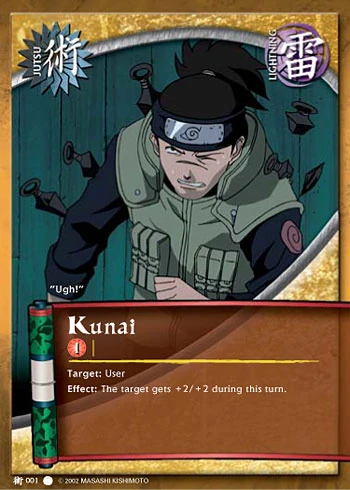
Jutsu are the interaction layer, played during the Exchange of Jutsu step, and they build a Chain that resolves last-in-first-out — a proper stack, in a 2006 anime licence game. If a Jutsu's target or requirement has become invalid by the time it resolves, it fails, goes to your Chakra area anyway, and you do not get the cost back. Kunai, card number PTHJ-001 from the first set, is the baseline: Jutsu cost 1, target the user, plus 2 Combat and plus 2 Support for the turn. That is the pump spell the rest of the game is priced against.
Mission cards are one-per-turn effects, and the good ones are pure flavour. Ichiraku Noodle Shop, PTHM-001, costs one card from hand and heals one of your injured Ninja. Naruto's ramen stand is, correctly, a healing card.
Client cards were not in the first wave — the original rulebook flags them as "will appear in upcoming Booster releases." They sit in your Village, cannot fight, and carry two element symbols that are interchangeable when you charge them as Chakra, though they still only count as one.
Chakra was a face-up pile you paid out of
Chakra in the 2006 game is not a resource that ticks up. It is a zone, and everything you throw into it is public.
During your Mission Phase you can charge Chakra — move cards from your hand into the Chakra area face up. Hand costs dump cards there too. Used Jutsu and Mission cards end up there. Then, to fire a Jutsu, you discard cards out of the Chakra area matching the symbols in its Jutsu cost.
Both players can read each other's Chakra area at any time. That means your opponent can see exactly which elements you can pay for, and you are constantly deciding whether to bank a card you might want to draw into later. Every card in the deck is potentially a spell, a body, or fuel, and it can only be one of them.
Naruto gets stronger when you hurt him
Here is my favourite piece of design in the whole game, and the easiest thing in this article to check.
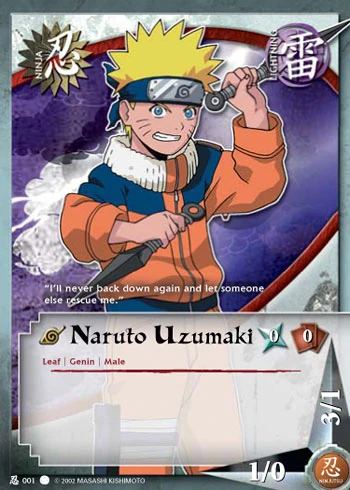
Every Ninja carries two stat lines: healthy on the bottom edge, injured up the right edge. The rulebook notes that in most cases the injured numbers are lower. Pull four Naruto Uzumaki cards from across the run and that pattern inverts every single time:
| Card | Set | Healthy | Injured |
|---|---|---|---|
| Naruto Uzumaki, PTHN-001 | The Path to Hokage | 1/0 | 3/1 |
| Naruto Uzumaki, QFPN-235 | Quest for Power | 1/0 | 3/0 |
| Naruto (Tailed Beast Form), TP3N-1184 | Tournament Pack 3 | 7/0 | 8/2 |
| Naruto (Sage Mode), SLN-1395 | Sage's Legacy | 7/3 | 8/2 |
Now check the control group. The 1st Hokage on STN-1162 goes from 8/3 healthy to 7/0 injured. Ino Yamanaka on TGSN-1039 goes from 1/3 to 1/1. Those cards degrade exactly the way the rulebook describes.
Naruto does not. PTHN-001 is a 0-cost, 0-hand-cost common with a Combat of 1 that triples to 3 after you knock him down. Bandai turned "I never back down" into a stat line and then held that line for seven years of card design. Every game has flavour text. This one had flavour maths.
The dots on the bottom edge are the rarity
The thing everyone with a shoebox actually wants to know. Look at the bottom edge of the card, next to the card number.
- No dots — Common.
- One dot — Uncommon.
- Two dots — Rare. On many 1st Edition printings the name is also in gold foil.
- Three dots — Super Rare, usually with a gold foil sheen across the card.
- One red dot — a starter-deck-only card, not obtainable from packs.
- PR in the card number — a promo.
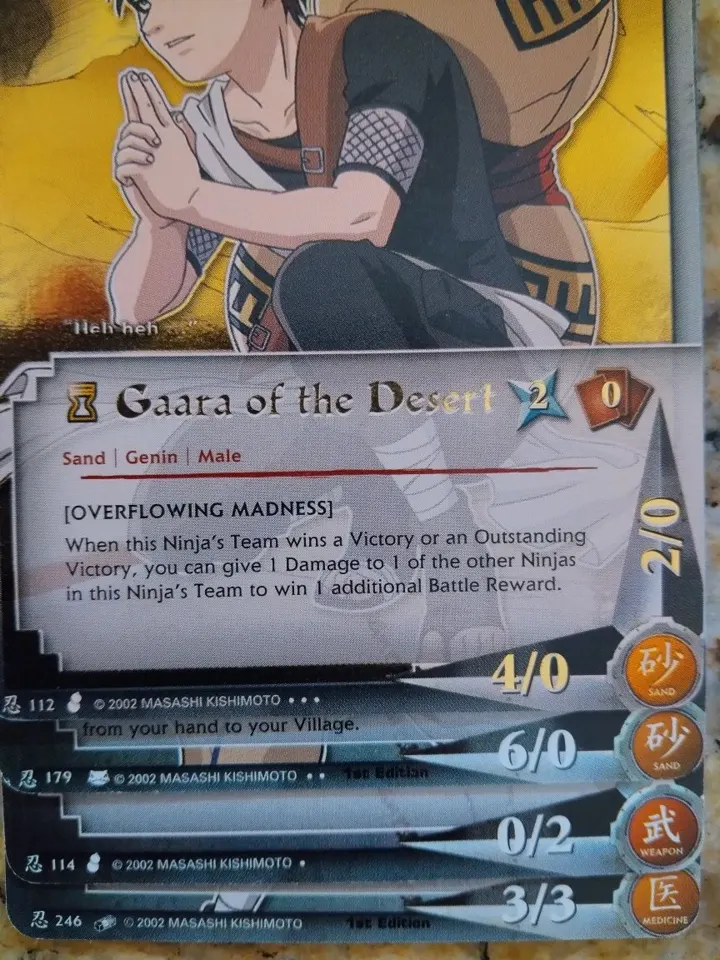
Pull rates changed as the game went on. Super Rares ran about one per twelve packs across the first four sets, then roughly doubled to one per six after Revenge and Rebirth.
And then there is the collation bug, which is my favourite piece of Naruto CCG trivia. In the first three sets, every booster box contained exactly two Super Rares — and they were always the bottom pack of each of the two stacks in the box. Anyone who knew could walk into a shop, buy two specific packs out of a freshly opened box, and leave the rest of the box picked clean for everybody else. Bandai randomised the distribution in later sets after player backlash. Twenty years on, that is still one of the worst mapped collations any TCG has shipped.
Twenty-eight sets in seven years, then nothing
Twenty-eight numbered expansions plus four Tournament Packs, tracking the anime's English broadcast rather than the manga — which is why the Japanese card pool ran years ahead and unofficial translation threads got locked on Bandai's own forums.
The run ends at set 28, Ultimate Ninja Storm 3. Bandai USA cancelled the game in 2013, seven years in, and community writers were openly discussing the game's demise by that summer.
What replaced it was not a TCG. Cryptozoic put out the Naruto Shippuden Deck-Building Game on its Cerberus engine in 2014 — a boxed deck-builder, a completely different genre, and not a replacement in any competitive sense. From 2013 to now, there has been no Naruto trading card game you could actually build a deck for and take to a tournament. That is a thirteen-year gap, which explains a lot about how loud the Gen Con reveal was.
What survived into the 2027 game
Bandai has published the general rules for the NARUTO CARD GAME arriving Summer 2027, and lining them up against 2006 is genuinely interesting.
| Naruto CCG (2006) | NARUTO CARD GAME (2027) | |
|---|---|---|
| Deck | Exactly 40 cards | 51 cards, plus 5 Chakra cards and 1 Summon card |
| Anchor card | None | A Leader card the deck is built around |
| Win by | 10 Battle Rewards, or opponent decks out | Reducing the opponent Leader's Life to 0 |
| Casting engine | Turn Marker ticks up 1 per turn | Rest your Summon card to play Characters |
| Chakra | A face-up zone you charge from hand | A dedicated 5-card set used to activate face-down supports |
| Card types | Ninja, Jutsu, Mission, Client | Leader, Character, EX Character, Chakra, Summon |
The word Chakra survives, but it means something structurally different — a fixed five-card resource set rather than a growing pile of your own deck. Ninjutsu survives as the interrupt layer, which is the direct descendant of Jutsu and the Chain. And the roster gets bigger: the new game's lineup spans Naruto, Shippuden and Boruto, where the old one stopped where the anime stopped.
What did not survive is the thing that made 2006 distinctive. Battle Rewards drawn off your opponent's deck were a genuinely elegant idea, tying score and clock into one resource. Life totals on a Leader are the modern Bandai house style — it is how One Piece and Dragon Ball Fusion World work — and it is a safer, more legible design. Fair trade, probably. Slightly sad.
Should you dig the box out of the closet
If you want to play: you can. Nothing stops two people with 40-card decks and the rulebook from running a game tonight, and the ruleset holds up better than its 2006 packaging suggests. Just accept that there is no support, no errata authority, and no scene beyond whoever you can talk into it.
If you want to sort and sleeve: start with the dots. Separate three-dot Super Rares, then two-dot Rares with foil lettering, then everything else. Card numbers carry a set prefix, so PTHN-001 is Path to Hokage, Ninja, number 001 — you can rebuild a set list from the codes alone.
If you are hoping the cards are a retirement plan: I am not going there, and neither should anyone selling you a price guide. Out-of-print anime TCGs move on nostalgia cycles, and a franchise getting a brand-new Bandai card game in 2027 is exactly the kind of event that moves an old market in an unpredictable direction. Sleeve them because they are nice, not because a chart told you to.
And if you got here because you bought Kayou packs and expected a game in the box: that is the wrong product, and it is an easy mistake to make. The playable one is thirteen years dead and the other playable one is a year out.
Frequently Asked Questions
What was the original Naruto card game?
How do you play the Naruto CCG?
What do the dots on the bottom of a Naruto CCG card mean?
Why did the Naruto CCG end?
Are old Naruto CCG cards usable in the new Bandai Naruto Card Game?
Is the Naruto CCG the same thing as Kayou Naruto cards?
What came between the Naruto CCG and the 2027 Naruto Card Game?
How many Naruto CCG sets are there?
Keep Reading
- NARUTO Collectible Card Game official Bandai rulebook (PDF) — deck construction, turn flow, victory conditions
- Narutopedia — Naruto Collectible Card Game (set list, North American distribution, cancellation)
- Naruto CCG Wiki — game overview and card database
- Naruto CCG Wiki — rarity dots, starter-only cards and the booster box collation issue
- Anime News Network — Bandai to Release Naruto CCG in March (2 December 2005)
- NARUTO CARD GAME Official Site — card types, general rules and Summer 2027 release
- ICv2 — Naruto Shippuden Deck-building Game (Cryptozoic, 2014)
- KAYOU Official — NARUTO Smriti Heaven Scroll Series 1 (the separate collectible line)
Related Guides
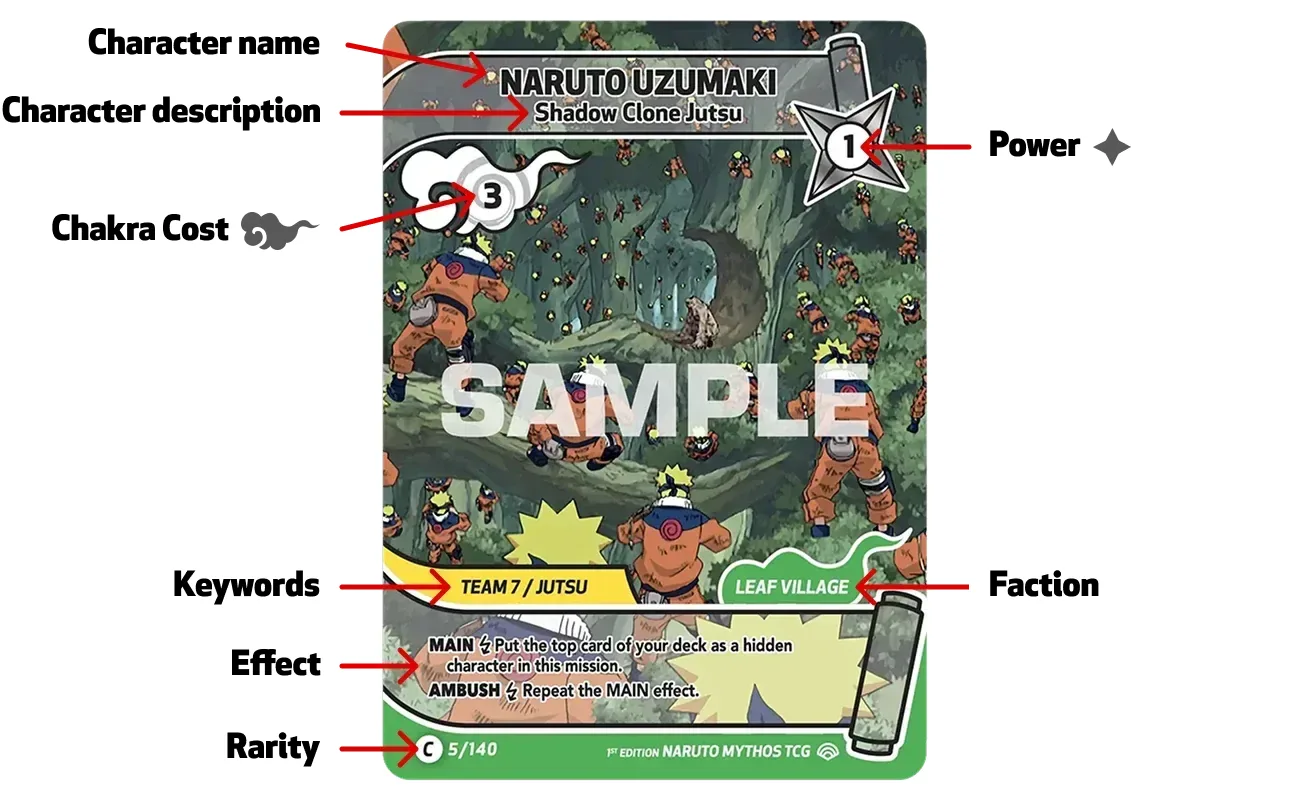
How to Play NARUTO Mythos TCG: Rules, Decks and Scoring
Our NARUTO Mythos TCG explainer covers the rules in a handful of bullets. This is the full walkthrough, built only from Cicaboom's rulebook, Tournament Rules, FAQ and Game Mechanics pages: the 30-card, two-per-number deck rules, how the coin flip decides whose Missions land where, the four ways to put a card on a Mission, why a hidden card pays for itself, how Set 2's Attachments work, and why the first Mission revealed can be scored four times while the last is scored once.
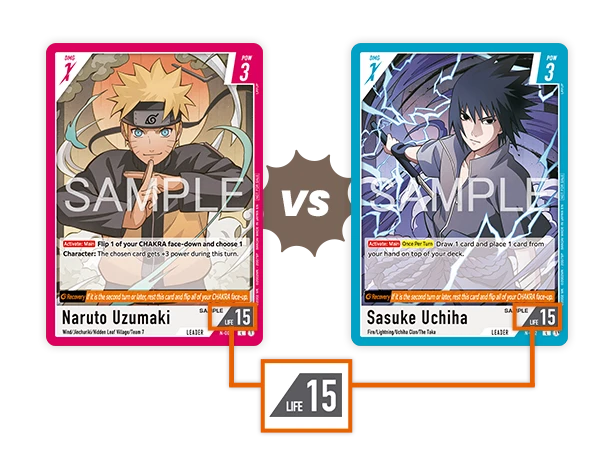
Naruto Card Game Rules Text: 15 Life, 4 Card Backs
The NARUTO CARD GAME sample cards that circulated around Gen Con were full-art showcase pieces with no text box, and the honest summary at the time was that Bandai had published no card text at all. That is no longer the case. Bandai's own ABOUT page carries seven cards with printed rules text, sitting in the card-type and how-to-play blocks rather than the showcase gallery, and between them they cover three of the gaps our launch coverage listed as unknown: the Leader's starting Life, how a Chakra cost is notated, and what the keyword vocabulary looks like.
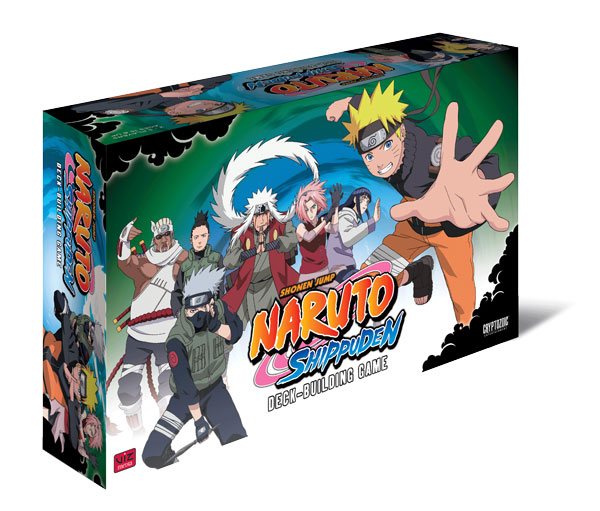
Naruto Shippuden Deck-Building Game — How It Actually Plays
Every Naruto card conversation right now is about a Bandai game that ships in Summer 2027, a Kayou product with no rulebook, or Cicaboom's NARUTO Mythos TCG, a two-player collectible game that is on shelves and already running Regionals. Meanwhile there is a complete, self-contained Naruto card game that Cryptozoic put out in 2014, seats up to five players in 45 minutes, and does something genuinely clever with Chakra. It was printed once and never reprinted. Here is how it actually works — setup, turn, Chakra Points, Hand Signs and the four-level Archenemy ramp — pulled from the official rulebook, the retailer solicitation sheet and the designer previews.
Naruto Card Game Premier Demo Events: Dates and Prices
Bandai published its NARUTO CARD GAME Premier Demo Event pages on 13 October, and its four regional sites describe three different versions of the event. English-site stores run two waves from 5 February to 5 March 2027, Japan names 11 stores from 16 January, and the Asia pages plan early January behind a face-photo check. Here are the dates, how to apply, the two demo decks, and what the $20 CHAKRA Set and $40 playmat actually contain.
Naruto Card Game Explained: Bandai, Kayou or Mythos?
Search "Naruto cards" and you get three unrelated products stacked on top of each other: a competitive TCG from Bandai that nobody can buy until Summer 2027, a line of Chinese-made collectible cards from Kayou that has been in Walmart since 2025, and a third game — Cicaboom's NARUTO Mythos TCG — that has been on European shelves since March 2026 and is already running sanctioned tournaments. Here is exactly what each one is, what each publisher has actually confirmed, and which one the person asking the question actually wants.
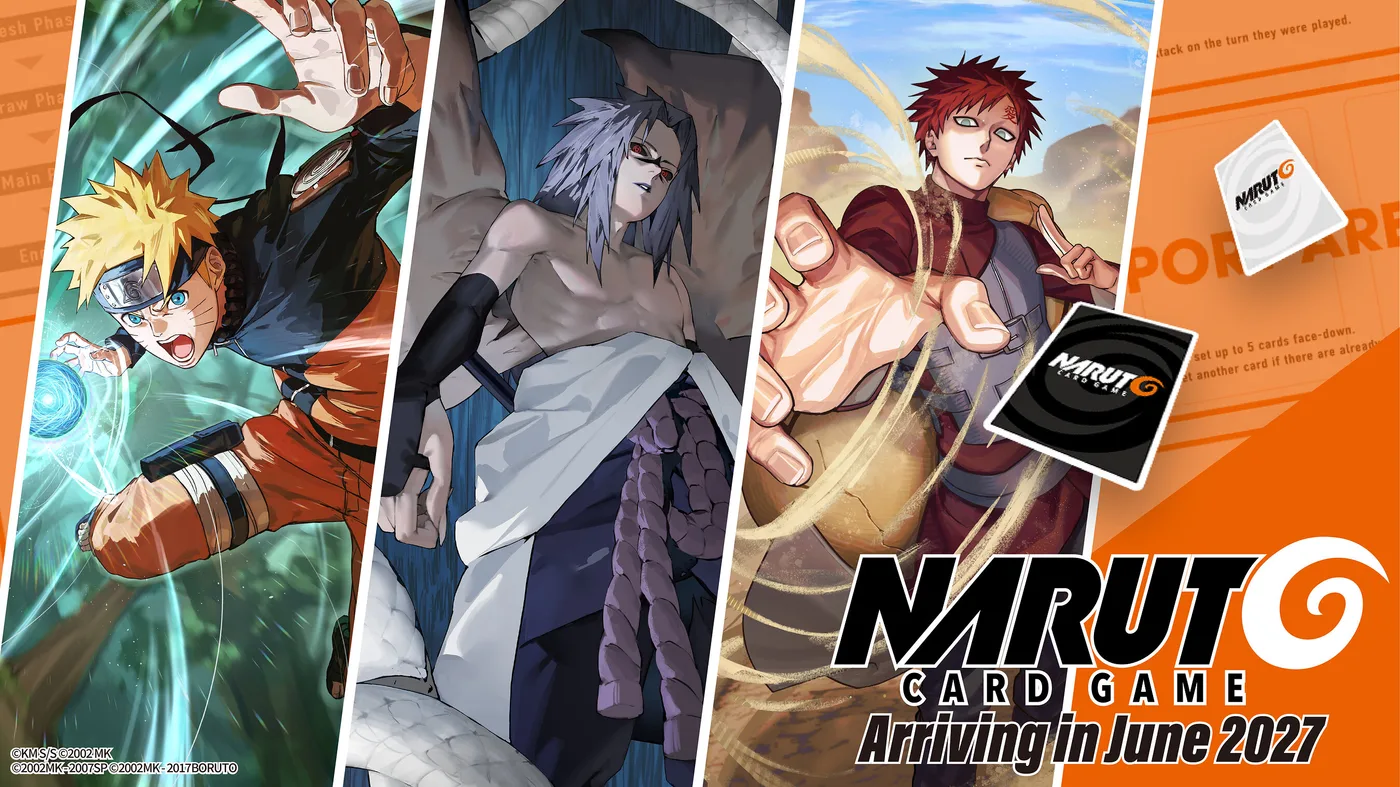
Naruto Card Game Release Date: June 2027, 3 Starter Decks
Bandai used New York Comic Con to put a month on its NARUTO CARD GAME: June 2027, with three Starter Decks led by Naruto, Sasuke and Gaara and a first booster called "Enter: Naruto Uzumaki!". It also announced in-store demo events from February, a million Demo Decks from spring, and two products you can only buy at those events or selected BANDAI CARD GAMES Fest stops. Here is what was announced, what changed from the July roadmap, and what is still missing.