Pokopia Trade Guide: What Your Items Are Actually Worth
Pokopia hands you a scale instead of a price tag. A Pokemon with the Trade specialty stands behind a powered cash register, puts out stock based on how big your countertop is, and asks you to match a number using up to four different items out of your bag. Which items you pick decides whether that number costs you a morning or two Lumber.
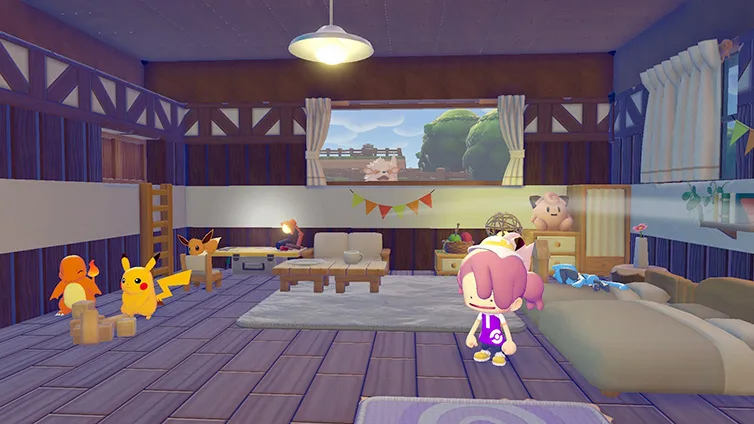
Pokopia has a second currency, and it is not Life Coins. Furniture, rare materials and items you cannot craft reach you through a Pokemon standing behind a cash register, weighing your bag against a number on a scale.
The rules behind that scale are published, and they are worth knowing before you empty a bag into one: a stock list sized by your own countertop, a four-slot payment limit, and a 50% markup you can trigger on purpose by reading a Pokedex entry first.
The shop is a Pokemon, not a menu
Worth clearing up before anything else, because the word is misleading. Trading in Pokopia is bartering for goods. It is not Pokemon-for-Pokemon trading, and it has nothing to do with the Link Play features in our multiplayer guide — you cannot trade Pokemon with another player at all.
What you get instead is a shopkeeper who accepts payment in stone. Trade is one of the specialties covered in our specialties guide, and a resident carrying it can run a counter for you once you give it somewhere to stand.
Building a counter a trader will stand at
Serebii's requirement is short: a table and a powered cash register. Nintendo Life's build is more specific — two long tables, the Cash Register placed on top, and power reaching it from a generator, Utility Poles or Wireless Power Transmitters. Our habitat and comfort guide covers the electricity side if your grid does not reach that far yet.
The shortcut is the Pokemon Center. Game8 points out that a rebuilt Pokemon Center's register does not need its own power supply, which removes the whole wiring problem, and Nintendo Life notes a Trade Pokemon brought inside will staff that register and stock it. Serebii adds the PokeMart to the list of valid venues once you have built one.
Three rules govern what happens next:
- Countertop size sets stock size. Serebii is explicit that the amount of goods put out depends on how big the available countertop is. Game8 makes the same point from the other side — the Pokemon Center displays more items because its table is longer. A one-table shop is a small shop.
- Events evict your trader. Serebii lists the Pokemon Center as a trading venue only when no special event is running; Game8 says the same thing plainly, that regular traders disappear while event shops take over. If your counter is bare during a limited-time event, that is why.
- You can close a shop but not open one. Per Serebii you can tell a Pokemon at a register to stop trading, but you cannot force one to start.
Who actually has Trade
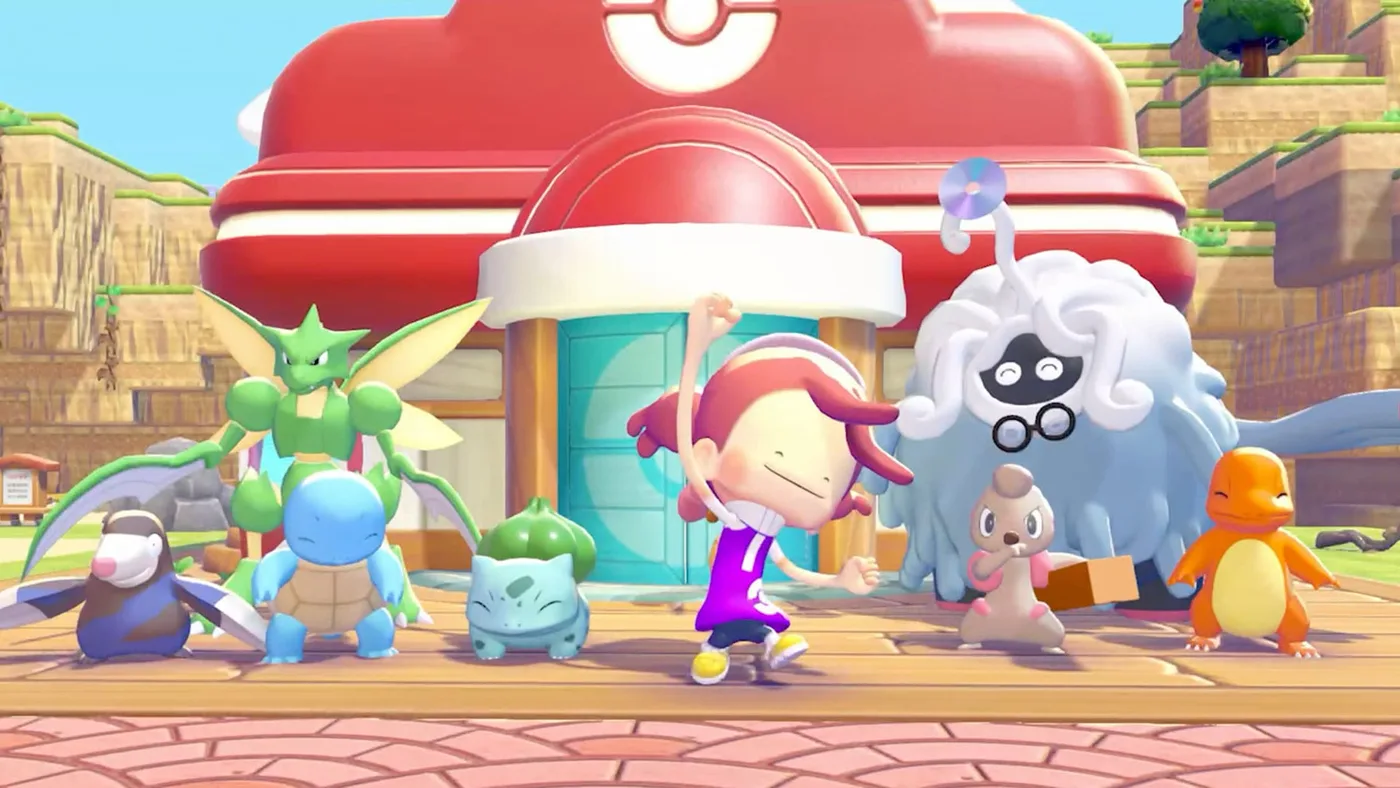
You will not be hunting for a shopkeeper. Counting the specialty column on Serebii's main available-Pokemon list, 49 rows carry Trade, form splits included — Tatsugiri's three forms and both Gastrodon forms each get their own row. Nintendo Life's shortlist of early-game traders is Hitmonlee, Hitmonchan, Hitmontop, Slowbro, Hoothoot, Gastrodon, Meowth, Happiny and Zorua.
Who you install matters for one reason beyond decoration: each trader brings something of its own to the stock. Serebii's examples are Lum Berry with Zorua and Rawst Berry with Chansey, with Pokemetal appearing frequently across traders generally. The rest of the shelf can be materials, crafted goods, and — the part that makes the counter worth building — items that are otherwise only found as Lost Relics.
The scale and the four-slot rule
Pick something off the shelf and the game shows you a scale rather than a price. Serebii describes the mechanic precisely: the Pokemon assigns the item a weighted value based on what it is and how many you are buying, and your job is to match or exceed that value using up to four different items from your bag. Four different items, not four items — you can pile more than four of any single one into a slot.
Nintendo Life adds the half that saves you materials: you do not need to go over, just hit the number exactly. Padding a 1,000-point ask out to 1,400 points of goods is 400 points of inventory you did not have to hand over.
What your stuff is worth
This is the table to memorise, because what you pay with matters far more than how much of it you own.
| Item | Trade value | Where it comes from | Source |
|---|---|---|---|
| Castform weather charm | 1,500 | Game8 lists it as a free daily Dream Island pickup | Game8 |
| Eevee Doll | 1,000 | Serebii's worked example | Serebii |
| Wooden post | 100 each | 10 posts from 2 Lumber; recipe unlocks at 80 Pokedex entries | Game8 |
| CD | 500 | Serebii's worked example | Serebii |
| Crouton Salad | 500 | Leaf x1 + Bread x1 | Game8 |
| Honey | 100 | Flower patches | Game8 |
| Beans and vegetables | 50 | Farm plots | Game8 |
| Fresh carrot | 20 | — | Game8 |
| Most block items | 10 | Terrain you dug up anyway | Nintendo Life |
One conflict to flag rather than paper over: Game8 puts honey at 100, while Nintendo Life groups honey with vegetables at 50. Treat honey as the uncertain row and lean on the ones both sources agree about.
The arithmetic that falls out of the table is the actual tip. Two Lumber crafts ten Wooden Posts, and ten Wooden Posts is 1,000 points on Game8's numbers, once the recipe is yours — Game8 puts it behind 80 Pokedex entries, so it is a mid-game lever rather than a day-one one — the same as an Eevee Doll, out of two units of a material a Pokemon with Chop makes for you from small logs. Compare that to paying in block items at 10 apiece, where the same 1,000 points costs you a hundred blocks and most of your bag space. Crafted goods carry value; raw terrain barely does.
Cooked food is the other cheap lever, and it is why the cooking guide pays for itself twice. Crouton Salad is a Leaf and a Bread on the cutting board and Game8 values it at 500. Healthy Soup is Fresh Water, a Bean and a Leaf in a pot, with no specialty requirement at all.
Favorites are a 50 percent discount hiding in the Pokedex
Serebii's favorites page describes a tagging system: every item in the game fits into several characteristic categories, and every Pokemon has a set of them it likes. The same tag then does three separate jobs:
| What you do with a favorite item | What it changes |
|---|---|
| Give it as a gift | The Pokemon's friendship with you rises faster |
| Place it in their home or habitat | Their Comfy Level rises faster, with a bigger sparkle on placement |
| Offer it as payment in a trade | It is worth 50% more to that Pokemon |
Serebii's worked example is Chansey, which likes fluffy things and round things among others. An Eevee Doll normally worth 1,000 points counts as 1,500 when Chansey is the one behind the register, and a CD worth 500 counts as 750. The game marks the boosted values in orange on the scale, so you can see the bonus applying rather than having to trust the maths.
Paying in items the shopkeeper likes is therefore up to a third cheaper than paying the same value in things it does not care about, and the lookup takes seconds. It lives on the Specialties & Likes tab, next to the specialty and the ideal habitat:
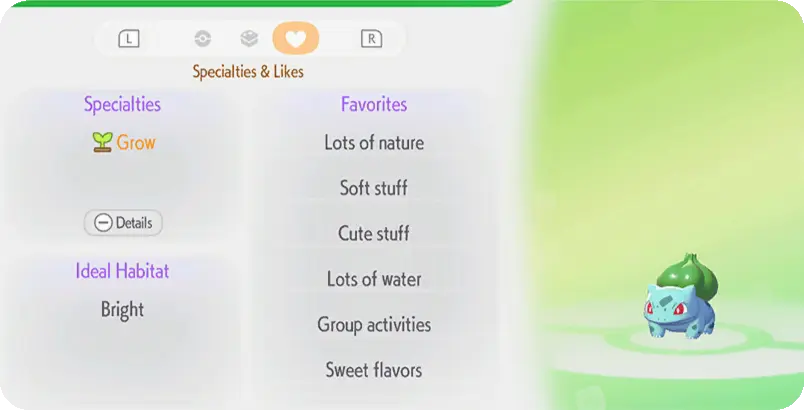
Bulbasaur's entry reads: specialty Grow, ideal habitat Bright, and favorites Lots of nature, Soft stuff, Cute stuff, Lots of water, Group activities and Sweet flavors. Six tags. Read the same panel on a Pokemon that carries Trade and you know exactly which items count for 50% more at its register — and which items to place in its habitat while you are there.
Serebii's favorites page lists 43 categories: Blocky stuff, Cleanliness, Colorful stuff, Complicated stuff, Construction, Containers, Cute stuff, Electronics, Exercise, Fabric, Garbage, Gatherings, Glass stuff, Group Activities, Hard stuff, Healing, Letters and words, Looks like food, Lots of dirt, Lots of fire, Lots of nature, Lots of water, Luxury, Metal stuff, Nice breezes, Noisy stuff, Ocean vibes, Play spaces, Pretty flowers, Rides, Round stuff, Sharp stuff, Shiny stuff, Slender objects, Soft stuff, Spinning stuff, Spooky stuff, Stone stuff, Strange stuff, Symbols, Watching stuff, Wobbly stuff and Wooden stuff. The per-category item lists on that page are still marked work-in-progress with counts to be determined, and the panel above shows Bulbasaur liking Sweet flavors, which is not one of those 43 — so treat the list as the vocabulary rather than a finished index. The reliable direction of travel is Pokemon-first: read the resident's tags, then look for items that match.
What is worth buying
Not everything on the shelf is worth your Wooden Posts. Game8's shortlist of things genuinely better bought than farmed:
- Rare Pokemetal and Rare Pokemetal Fragments. These feed the 3D printer, and the printer is how you duplicate things you own exactly one of.
- Furniture with a pattern you cannot make. Owning a single copy is the requirement for printing more, so one purchase turns into a supply.
- Berries and plants your save does not grow. This one is structural rather than convenience. Serebii's flowers page explains that each save file gets the standard plant plus one random berry and one random color of each plant variant as its natives, against five colors of each plant in the game. Everything else has to be imported — by photographing plants on another player's island or a Cloud Island and 3D printing them, from the Daily Shop at the PC, from a Pokemon that occasionally offers to trade a specific berry, or from seeds a Pokemon gives you. Game8's angle is the one that matters at the counter: if you are playing solo and not visiting other players' islands, trading is how the other berries reach you.
- Anything a request or habitat is currently blocking. For a single missing material, buying it is worth more than standing up a supply chain for one item.
Gimmighoul runs the other counter
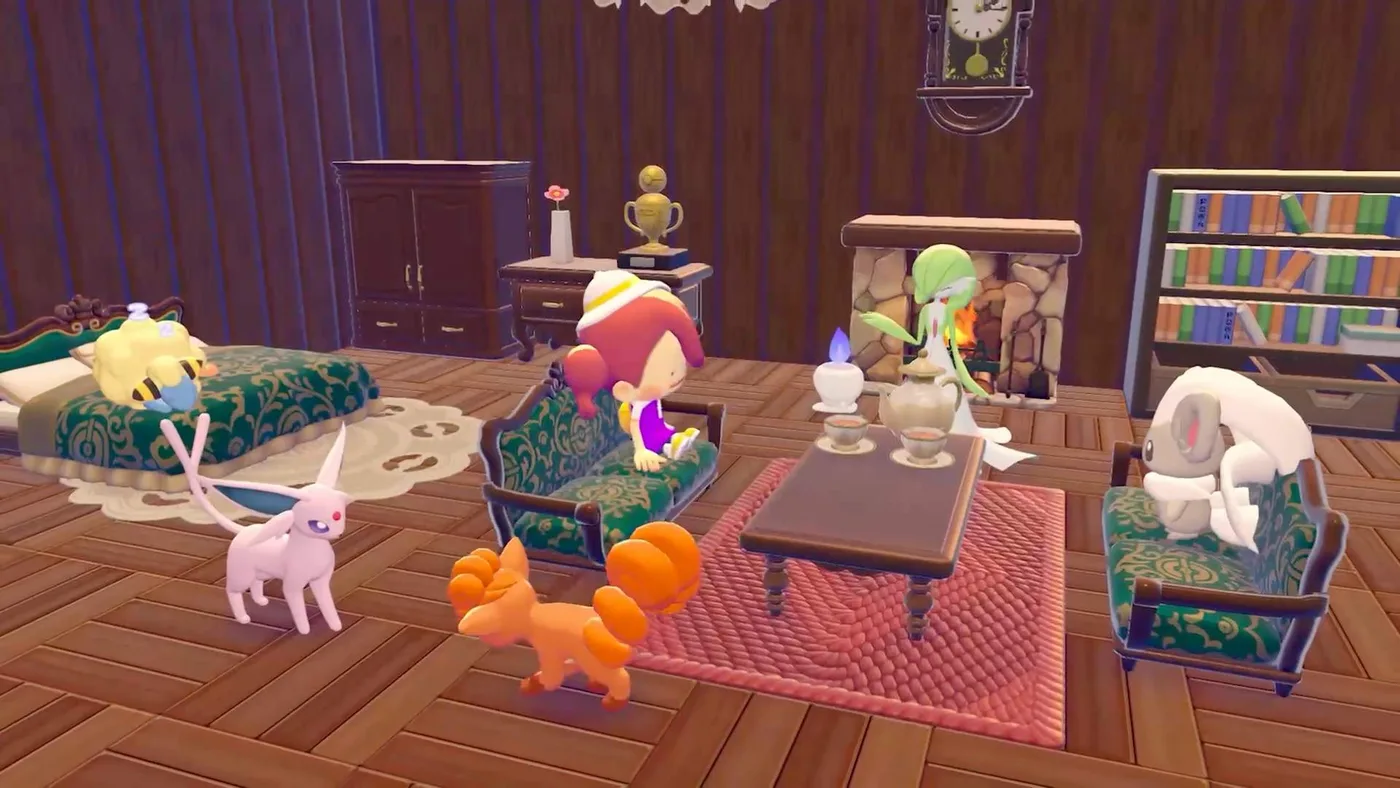
There is a second barter system with a different currency, and it does not use a register at all. Collect is a specialty carried by Gimmighoul and Gholdengo, and it exists to give your leftover feathers a job.
After you have crafted the Clear Bell and the Tidal Bell — the summoning items behind the sky legendaries in our legendary guide — Serebii notes there is not usually much else to do with the Rainbow and Silver Feathers you keep finding. Hand them to a Collect Pokemon and Serebii's return list is Gamer, Luxury, Poke Ball, Cute and Antique items, Music mats, and rare materials including Strange strings. Appraised Lost Relics you have no intention of displaying can go the same way.
Two Ver. 2.0.0 changes made this less tedious than it used to be, per Nintendo Life's patch notes: Collect can now be performed multiple times in the same interaction (alongside Paint and Gather Honey), and Lost relics can now be appraised in batches of up to 10. If a guide written before August 5 tells you to talk to Gimmighoul repeatedly for each item, it is describing the old behaviour. Our update history has the rest of that patch.
Quick Action Checklist
- Put a powered cash register on a table, or skip the wiring and use a rebuilt Pokemon Center, whose register needs no separate power.
- Build the longest countertop you can — stock size scales with it.
- Do not expect a trader in the Pokemon Center while a special event is running.
- Check the Specialties & Likes tab before you trade. Matching a favorite is +50% value, shown in orange on the scale.
- Pay with crafted goods, not blocks: 10 Wooden Posts from 2 Lumber is worth about 1,000 points, the same as an Eevee Doll.
- Keep a stack of Crouton Salad (Leaf + Bread) as portable value at around 500 points each.
- Match the number, do not beat it. Nintendo Life's line is that you never need to go over.
- Remember the four different items limit, and that you can stack more than four of any one of them.
- Buy Rare Pokemetal and any furniture pattern you cannot craft — one copy unlocks 3D printing more.
- Trade for berry and flower colors your save does not grow natively; Serebii's other routes are 3D printing from another island or a Cloud Island, the Daily Shop and gift seeds.
- Dump spare Rainbow and Silver Feathers and unwanted appraised relics on Gimmighoul or Gholdengo for rare Antique, Luxury and Gamer items.
Frequently Asked Questions
How does trading work in Pokemon Pokopia?
What do you need to set up a trade shop in Pokemon Pokopia?
Which items are worth the most in Pokopia trades?
What do Pokemon favorites do in Pokopia?
Do you have to match a Pokopia trade value exactly?
How do you get Gimmighoul to trade in Pokemon Pokopia?
Keep Reading
- Serebii — Trade (powered cash register and table, countertop size sets stock, match or exceed with up to four different items, 50% favorite bonus, Eevee Doll 1,000 to 1,500 and CD 500 to 750)
- Serebii — Favorites (43 favorite categories; the same tags drive friendship gain, Comfy Level gain and the 50% trade bonus; item lists marked work in progress)
- Serebii — Collect (Gimmighoul and Gholdengo, Rainbow and Silver Feathers after the Clear Bell and Tidal Bell, Gamer/Luxury/Poke Ball/Cute/Antique items, Music mats, Strange strings, appraised Lost Relics accepted)
- Serebii — Pokemon Specialties (Collect: Pokemon with the specialty trade you rare things for certain items)
- Serebii — Available Pokemon (specialty column; 49 rows on the main list carry Trade, form splits included)
- Serebii — Flowers and Plants (each save gets the standard plus one random berry and one random color of each plant natively; others come from 3D printing, the Daily Shop and Pokemon trades)
- Serebii — Patches and Updates (Ver. 2.0.0, August 5 2026, is the newest listed version)
- Game8 — Trade Specialty Guide (cash register on a table with its own power; Pokemon Center registers need no separate supply)
- Game8 — Best Items to Trade (Wooden Post 100 each from 2 Lumber, Castform weather charm 1,500, Crouton Salad 500, honey 100, vegetables 50, fresh carrot 20; buy Rare Pokemetal, unique furniture patterns and berries you do not own; traders vanish during events)
- Nintendo Life — Trade Guide (two long tables plus Cash Register and power; block items 10, honey and vegetables 50; hit the number without going over; early traders Hitmonlee, Hitmonchan, Hitmontop, Slowbro, Hoothoot, Gastrodon, Meowth, Happiny, Zorua)
- Nintendo Life — Ver. 2.0.0 patch notes (Paint, Gather Honey and Collect can be performed multiple times in one interaction; Lost relics appraise in batches of up to 10)
Related Guides
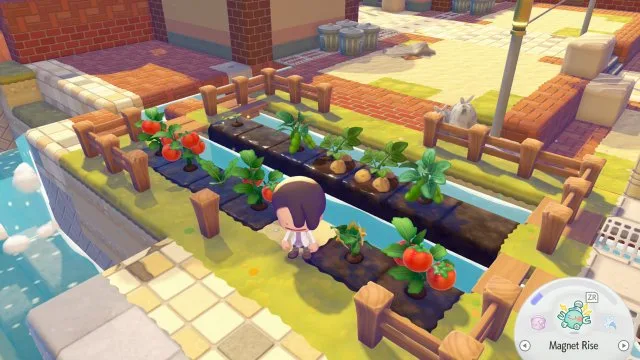
Pokopia Farming Guide: How to Grow All 5 Crops
A Pokopia crop is planted once: harvest it, water it and it grows back. Here is how Rototiller works, where the seeds for all five crops come from (and where the wikis disagree), the stage-a-day growth rule, and the 31 Pokemon with the Grow specialty.
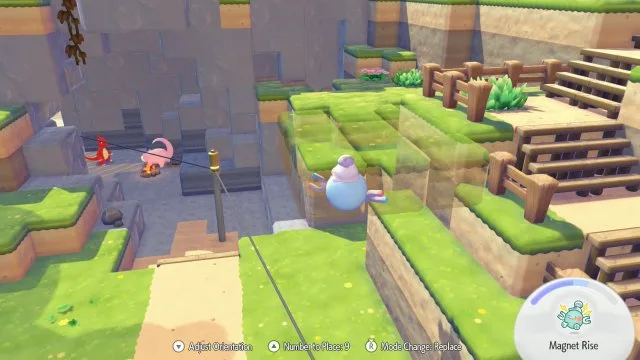
Pokopia Magnet Rise: How to Unlock It and What It Can Move
Magnet Rise is the Ditto transformation Serebii ties to the post-game, and the one that lets you pick up trees, boulders and ore deposits whole. Here is the Factory Storage unlock, the controls, Replace mode, and the 102 trees, deposits, boulders and ruins Serebii lists as Magnet Rise pickups.

Pokopia Photo Ops: All 50 Highlight Reel Shots and Frames
Pokopia's Highlight Reel is a 50-shot photo checklist, and it is where most of the game's photo frames come from. Here is every photo op, the Pokemon and prop each one needs, the 15 that pay a frame, and where Serebii and Bulbapedia disagree on the setup.
Pokopia Paint Guide: All 18 Colors, Patterns and Smearguru
Pokopia's paint system runs through Smearguru, a Pokemon the story never makes you meet. Here is how to unlock it, which berry makes which paint, the recipe for all 18 colors, and where every one of the 116 patterns comes from.
Pokemon Pokopia Beginner Guide: What To Do In Your First Hours
Pokopia does not punish you for playing badly. It punishes you for building beautifully in the wrong place before you have the tools to move it. Here is the early-game order of operations that saves you a teardown.
Pokopia Halloween Event: Pumpkaboo's Sweet Surprises Guide
Pokopia's first Halloween event adds Pumpkaboo and Gourgeist from October 17 to November 1, 2026, and it has a gate the Feebas event did not: you need Camouflage from Zorua. Here is the confirmed schedule, the checklist to clear before it opens, and what is still unannounced.