Pokémon TCG Pocket Rules vs the Pokémon TCG, Explained
Pokémon TCG Pocket looks like the Pokémon TCG and uses the same cards, but it is not the same game with a phone screen bolted on. Half the deck is gone, Energy cards do not exist, mulligans cannot happen, and the player who goes first gets the opposite restriction from the paper game. Here are the confirmed core rule differences Pocket made, sourced against Bulbapedia's maintained differences list and The Pokémon Company's own deck-building guide.
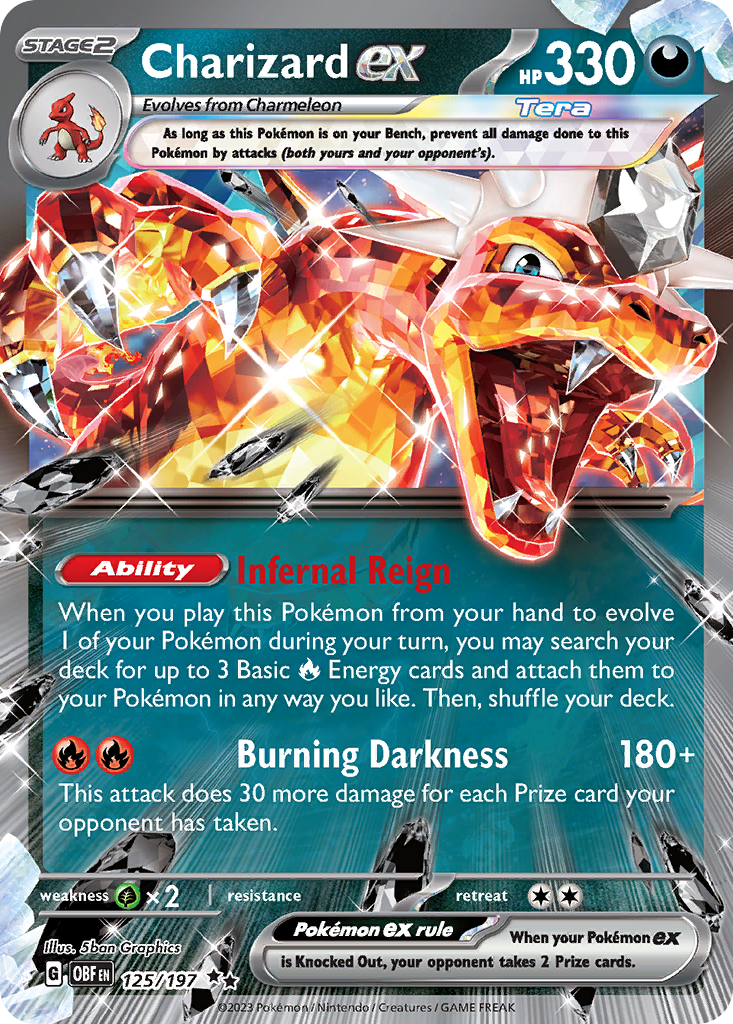
Pokémon TCG Pocket shipped worldwide on October 30, 2024, built by Creatures Inc. and DeNA — Creatures Inc. is the same studio that has built the physical Pokémon TCG since 1996 — and it uses recognizable Pokémon TCG cards, Pokémon ex included. That similarity is exactly why the rules differences catch people off guard. This is not the paper game with a touchscreen. Deck size is a third of normal, Energy cards were deleted from the game entirely, and the player who goes first has the opposite restriction from the one they'd know from a kitchen-table game.
None of this is a wiki guess. Bulbapedia maintains a sourced "Differences from the TCG" list on its Pokémon TCG Pocket page, and The Pokémon Company's own deck-building strategy article confirms the deck-construction rules directly. Every rule below comes from one of those two places.
Every rule that changed, in one table
| Rule | Pokémon TCG (paper) | Pokémon TCG Pocket |
|---|---|---|
| Deck size | 60 cards | 20 cards |
| Copies of one card name | Up to 4 | Up to 2 |
| Energy | Energy cards, drawn and attached from hand | Energy Zone auto-generates 1 per turn — no Energy cards exist |
| Starting hand | 7 cards; no Basic means a mulligan | 5 cards; always contains a Basic, so mulligans never happen |
| Max hand size | None | 10 |
| Bench size | 5 | 3 |
| Win condition | Take all your Prize cards (6 Constructed / 4 Limited) | Score 3 points |
| Pokémon ex payout | 2 Prize cards | 2 points |
| Mega Evolution ex payout | 3 Prize cards | 3 points |
| Weakness | Usually ×2 in the current era | Flat +20, always |
| Resistance | Exists on some cards, usually −30 | Does not exist |
| Player going first, Supporters | Barred from playing one on turn 1 | Allowed to play one on turn 1 |
| Player going first, Energy | May attach normally | Cannot manually attach from the Energy Zone |
| Turn limit | None built into the rules | 30 turns in versus battles, 50 in solo battles |
| Trainer subtypes | Item, Supporter, Stadium, Tool | Item, Supporter, Tool, and Stadium (added Jan 29, 2026) |
That is fourteen rules, and the shared card pool is doing a lot of work to hide all of them.
Twenty cards, not sixty, and only two copies of anything
A legal Pokémon TCG Pocket deck runs exactly 20 cards, with no more than two copies of any card sharing a name, and it must include at least one Basic Pokémon. The paper game's 60-card deck allows up to four copies of a name. The Pokémon Company's own deck-building guide states the floor plainly: "your deck must contain 20 cards, including no more than two copies of any card with the same name and at least one Basic Pokémon," and recommends five or six Basics as a baseline because losing your only Pokémon in play is an instant loss.
That 3-to-1 deck-size ratio is the reason a Pocket deck reads as a tight, single-attacker build almost every time, where a 60-card Constructed list can support two or three game plans in the same 60 slots.
The Energy Zone replaces the Energy card entirely
There is no Energy card in a Pokémon TCG Pocket deck — not Basic, not Special. Instead, the Energy Zone generates one Energy automatically every turn, which either player can attach to any of their own Pokémon. By default the Energy Zone rotates through every type your deck's attacks actually need, but you can manually restrict which types it generates while building your deck — locking it down to the one or two types your attackers actually use trades flexibility for guaranteeing the right color shows up when it matters.
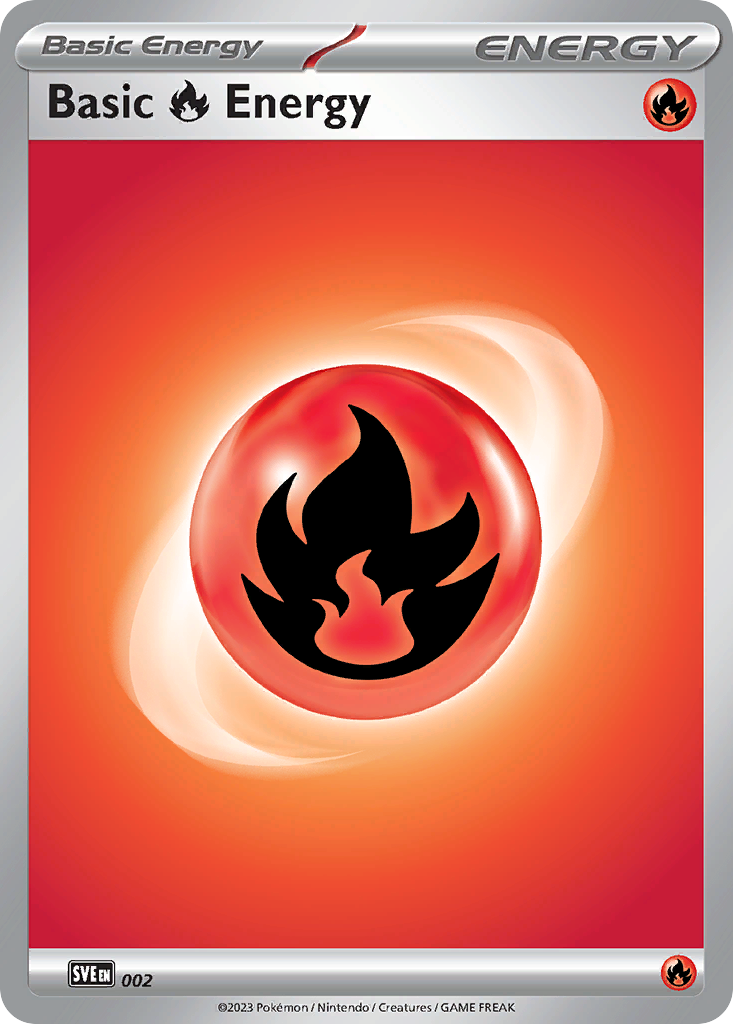
This kills off an entire category of paper-game deckbuilding decisions — how many Basic Energy to run, whether Special Energy is worth the deck slot — and replaces it with a single toggle in the deck editor.
Your starting hand always has a Basic, so mulligans cannot happen
In the paper game, each player draws seven cards and has to take a mulligan — reveal the hand, shuffle back in, redraw seven — if there's no Basic Pokémon among them, which also hands the opponent extra draws for every mulligan you take. Pokémon TCG Pocket sidesteps the entire mechanic: each player draws five cards to start, and that hand is guaranteed to contain at least one Basic Pokémon by design, so a Pocket mulligan is not a rare bad-luck event — it is a rule that cannot trigger, full stop.
Three Benched Pokemon, not five
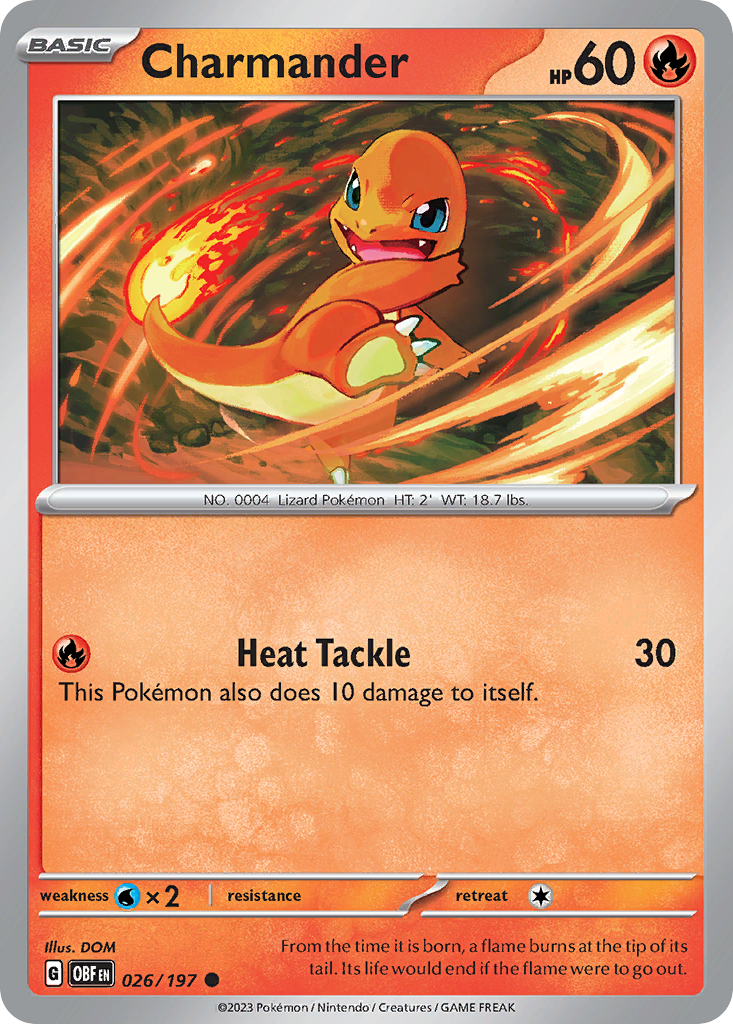
A Pocket player can have their Active Pokémon plus up to three more on the Bench — four Pokémon in play at once, maximum. The paper game allows five Benched Pokémon alongside the Active Spot, six total. That's a real strategic difference, not a cosmetic one: a Pocket deck built around one primary attacker and a small support cast has almost no room to also carry a backup game plan, because there's nowhere on the Bench to put it.
Points instead of Prizes — but the ex math is identical
The paper game's win condition is Prize cards: take all six in Constructed (four in Limited) by Knocking Out opposing Pokémon, and most Knock Outs are worth one Prize. Pocket deletes the Prize-card zone entirely and replaces it with a running point total — first to three points wins.
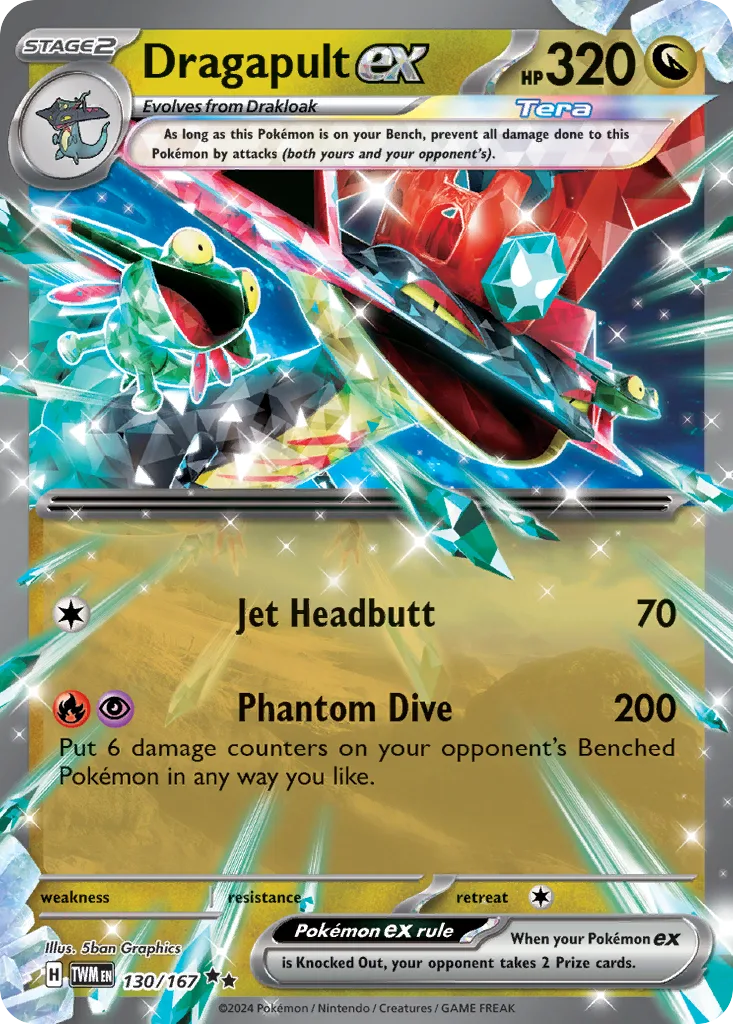
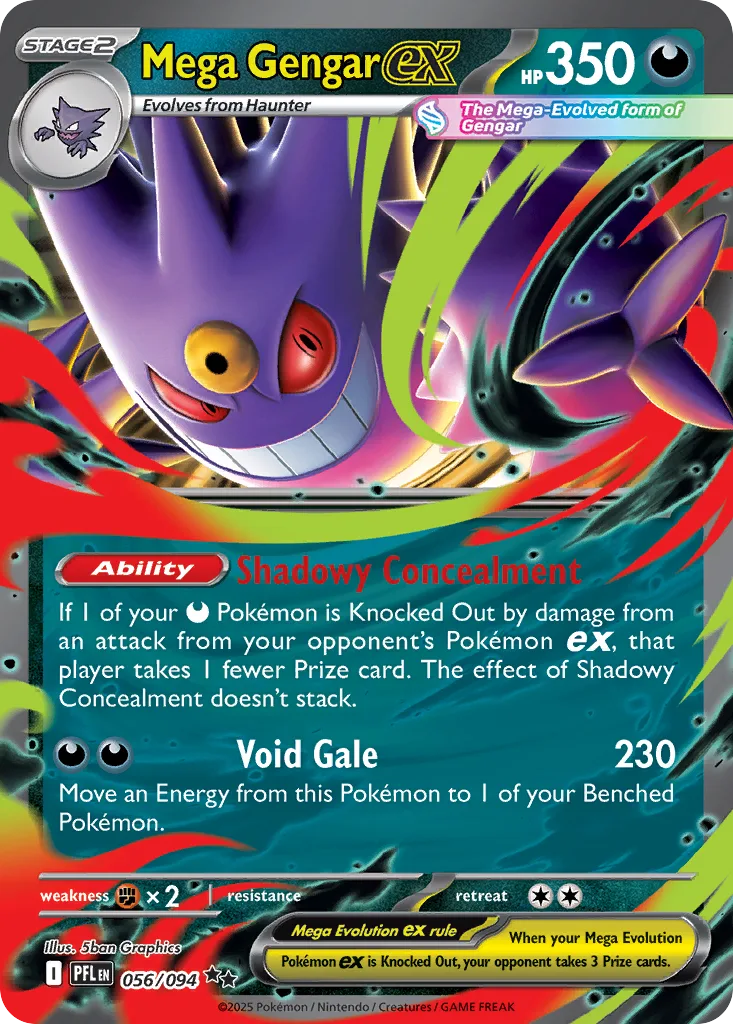
Where the two games line up exactly is the ex math. A Pokémon ex Knock Out is worth 2 Prize cards in the paper game and 2 points in Pocket. A Mega Evolution Pokémon ex is worth 3 Prize cards on paper and 3 points in Pocket — the same 1/2/3 scaling, just measured in a different currency. If you already know how Prize cards work in the paper TCG, the payout table transfers over with the units relabeled.
Weakness got simpler; Resistance is gone
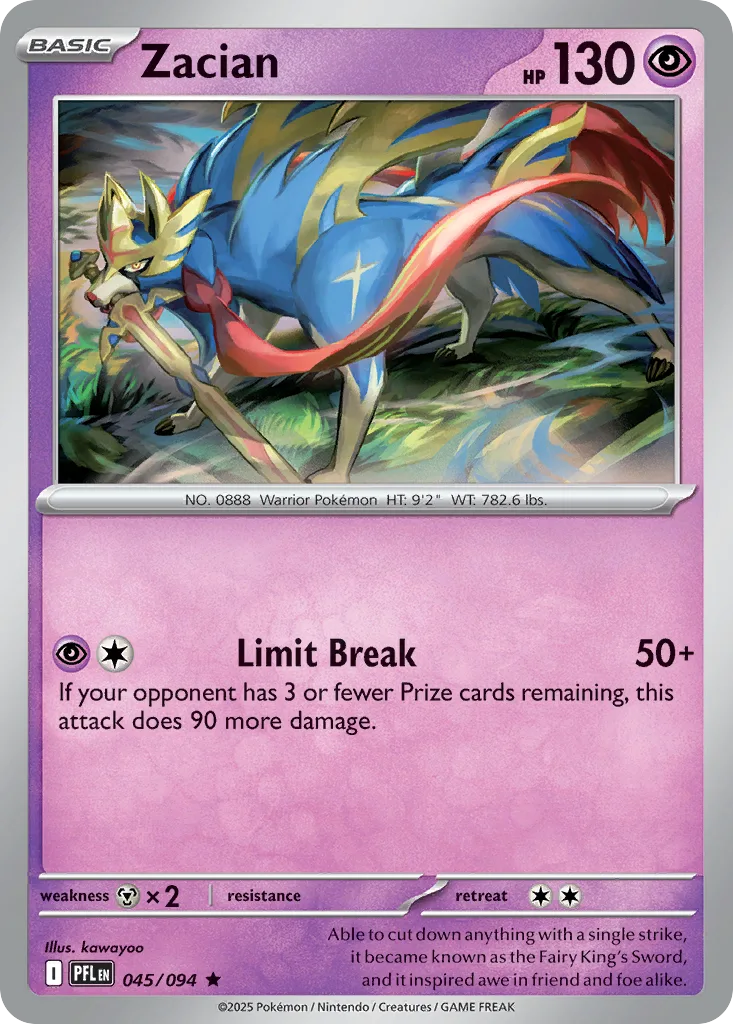
Paper Pokémon TCG cards print a Weakness (usually ×2 damage in the current era) and, on some cards, a Resistance that subtracts a flat amount. Pokémon TCG Pocket cards have no Resistance stat at all, and Weakness is a flat +20 to the attack's damage rather than a multiplier — so a 60-damage attack into Weakness becomes 80 in Pocket, not the 120 it would deal on paper. It's a small enough change that a paper player can miss it entirely and just misjudge whether an attack finishes off the Active Pokémon.
The going-first restriction is backwards
This is the one that trips up paper players hardest. In the physical Pokémon TCG, the player going first is barred from playing a Supporter card on their very first turn — our full rules guide covers that restriction in the turn-structure breakdown. Pokémon TCG Pocket flips it: the player going first is barred from manually attaching Energy from the Energy Zone on turn one, but they are free to play a Supporter card — including a Supporter that attaches Energy as its effect. They can even attack on turn one, provided a Supporter or an Ability gets enough Energy onto their Active Pokémon to pay for it.
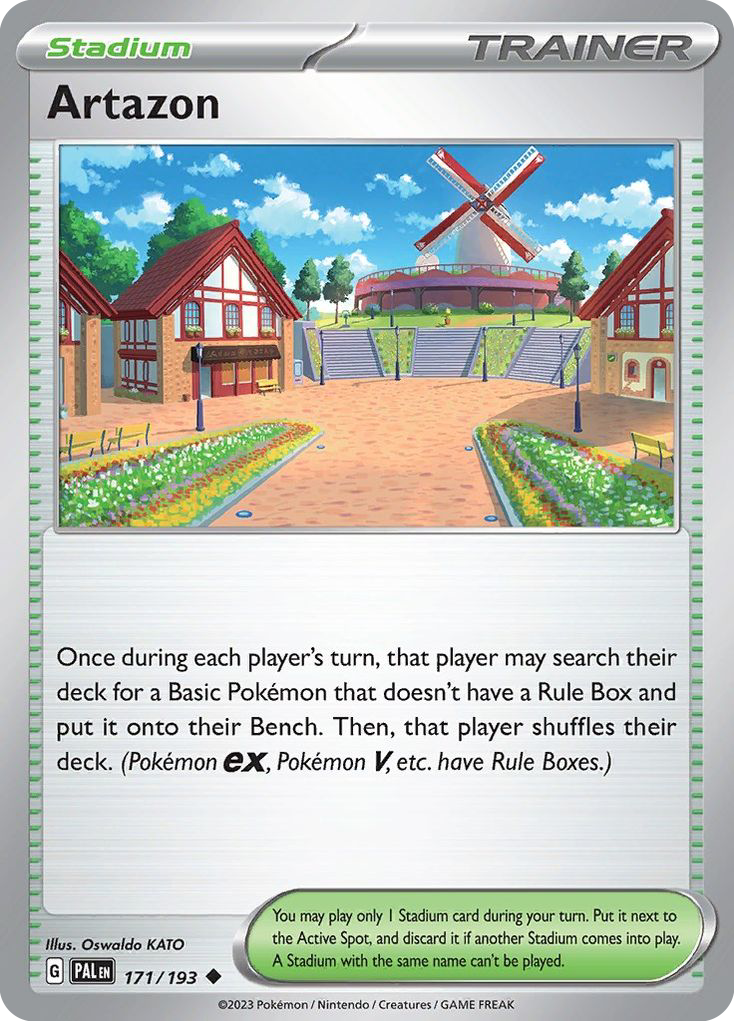
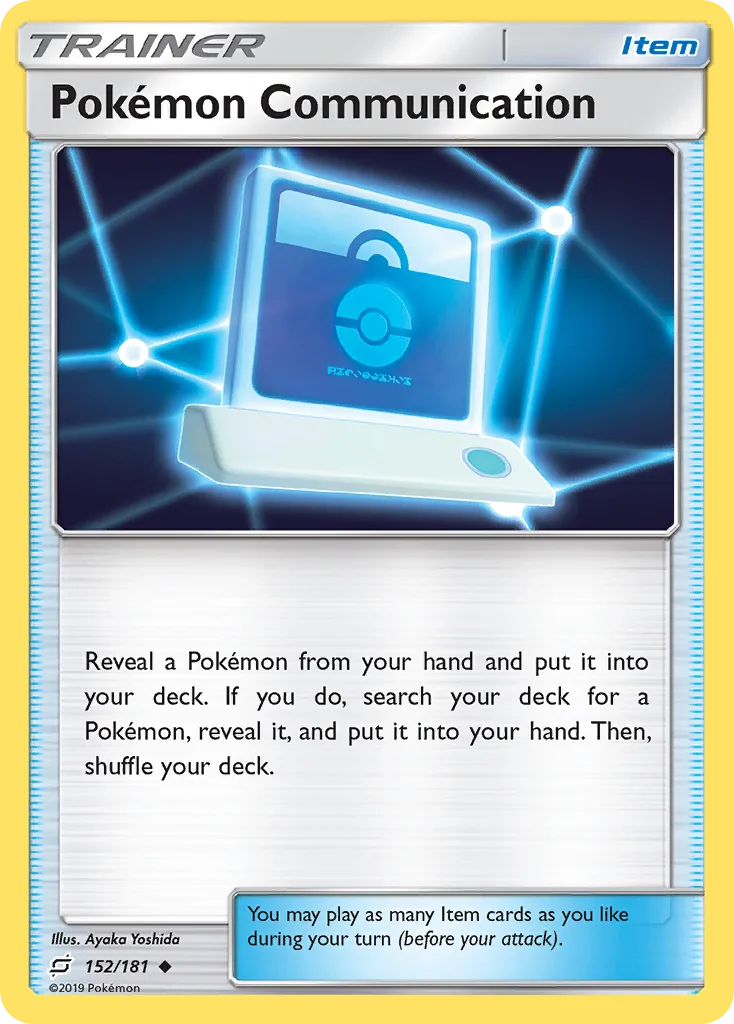
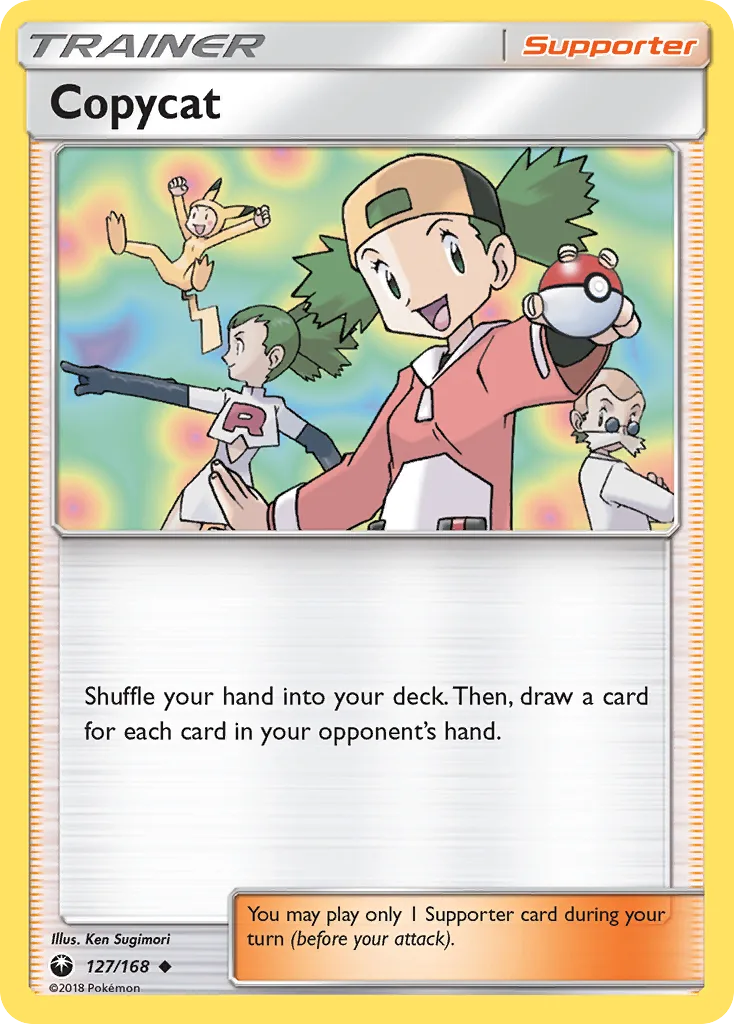
That Stadium card above is also a small piece of convergence worth knowing: Pocket launched without Stadium cards as a Trainer subtype and only added them with the Fantastical Parade expansion on January 29, 2026. Between Item, Supporter, Tool, and now Stadium, Pocket's Trainer subtypes finally match the paper game's four — it just took over a year to get there.
Matches have a turn cap; the paper game never did
The Pokémon TCG's own rules carry no turn limit — tournament play adds a 50-minute round clock plus three more turns once time is called, but that's a Play! Pokémon tournament policy layered on top of a game with no built-in cap. Pokémon TCG Pocket bakes a hard limit directly into the app: versus battles end automatically at 30 turns, and solo battles at 50, independent of whether anyone is on a game-winning clock.
Quick Action Checklist
- Bring five or six Basic Pokémon, minimum, when you build a 20-card Pocket deck — losing your only Pokémon in play loses the match instantly.
- Lock your Energy Zone to one type while editing a deck unless you're deliberately running a multi-type strategy — the default rotates through every type your attacks need, which dilutes what you actually draw each turn.
- Don't expect a mulligan in Pocket. Your five-card starting hand always has a Basic; that entire rule from the paper game simply cannot come up.
- Remember the Bench cap is three, not five — a Pocket deck usually can't run two separate game plans at once the way a 60-card list can.
- Weakness in Pocket is +20 flat, not the ×2 multiplier from the paper game, and Resistance doesn't exist at all — recheck your damage math before you assume a KO.
- If you're going first in Pocket, you can still play a Supporter — including one that attaches Energy — you just can't pull from the Energy Zone by hand that turn.
- Versus battles cap at 30 turns and solo battles at 50 — a stalled-out board doesn't run forever the way an untimed paper game technically could.
Frequently Asked Questions
Is Pokémon TCG Pocket the same game as the Pokémon TCG?
How big is a Pokémon TCG Pocket deck?
Does Pokémon TCG Pocket have Energy cards?
Can you get a mulligan in Pokémon TCG Pocket?
How many Benched Pokémon are allowed in Pokémon TCG Pocket?
How do you win a Pokémon TCG Pocket battle?
Does Weakness work the same way in Pokémon TCG Pocket as in the paper TCG?
Keep Reading
- Bulbapedia — Pokémon Trading Card Game Pocket: sourced "Differences from the TCG" list covering deck size, Energy Zone, starting hand and mulligans, hand-size cap, points vs Prize cards, turn limits, Bench size, Weakness/Resistance, and going-first restrictions
- The Pokémon Company (Pokemon.com) — "Learn How to Build a Deck in Pokémon TCG Pocket": official confirmation of the 20-card deck, 2-copy limit, at-least-one-Basic requirement, and Energy Zone type-locking
- Bulbapedia — Stadium card (TCG Pocket): confirms Stadium cards debuted in the Fantastical Parade expansion, released January 29, 2026
- Pokémon Support — Pokémon TCG Pocket Gameplay FAQ: official statement that "the rules of Pokémon TCG Pocket are different from the Pokémon Trading Card Game"
Related Guides
Pokémon TCG Live: Code Cards, Credits, and Free Packs
Pokémon TCG Live is free, runs the paper ruleset, and hands you a collection you then have to grow. The redemption limits are published — 400 booster codes per expansion, 25 Build & Battle codes, four per preconstructed deck. So is the rule that turns your fifth copy of a card into currency. Here is the whole acquisition economy, from The Pokémon Company's own documentation.
Pokémon TCG Bench Rules: Can You Attack the Bench?
The Bench looks like a safe zone. It is not. The 2026 Web Rulebook gives each player five Bench slots and says only the Active Pokémon can attack — but 90 card names in the Standard-legal pool have an attack that reaches past it, Weakness and Resistance are switched off when they land, and the format's blanket Bench immunity has a hole in it big enough for five specific cards to walk through.
Pokémon TCG Prize Cards Explained: 1, 2, and 3-Prizers
The Prize count is the only score the Pokémon TCG keeps. Here is what each Pokémon actually costs you when it goes down — one, two or three — measured across all 2,947 Standard-legal printings, plus the 44 Standard-legal card names whose text reads the Prize count or changes what a Knock Out pays.
Pokémon TCG Prerelease: Build & Battle Box, 40-Card Decks
A Prerelease is the one Pokémon TCG event where the entry fee is the deck. It is also a different game to the one on the Championship Series circuit: 40 cards, no copy limit, four Prize cards. Here is what the Tournament Handbook and the Play! Pokémon organizer guide actually say about Limited play, and what the maths does when you cut two Prizes out of the game.
How to Play the Pokémon TCG — Full Rules and Turn Structure (2026)
Two players, 60 cards each, six face-down Prize cards, and a coin flip. That is the whole skeleton of the Pokémon TCG. Here is every rule that actually matters on turn one, from setup through the three ways to win.
Pokémon TCG Tournament Rules: Deck Lists, the Clock, and Penalties
The rules that decide your first League Cup are not in the rulebook. They are in three separate Play! Pokémon documents, revised on a quarterly cycle, and they cover sleeve colour, how a die has to be numbered, what happens to your match when the clock hits zero, and the two penalties that exist in the Pokémon TCG and nowhere else in the program.