PUBG Clutch Guide: How to Win 1vX Fights
Your whole squad is down and three enemies are pushing. Most players panic-spray and feed. The clutch player slows down, isolates one enemy at a time, and walks out with the chicken dinner. Here's how to actually win when you're outnumbered.
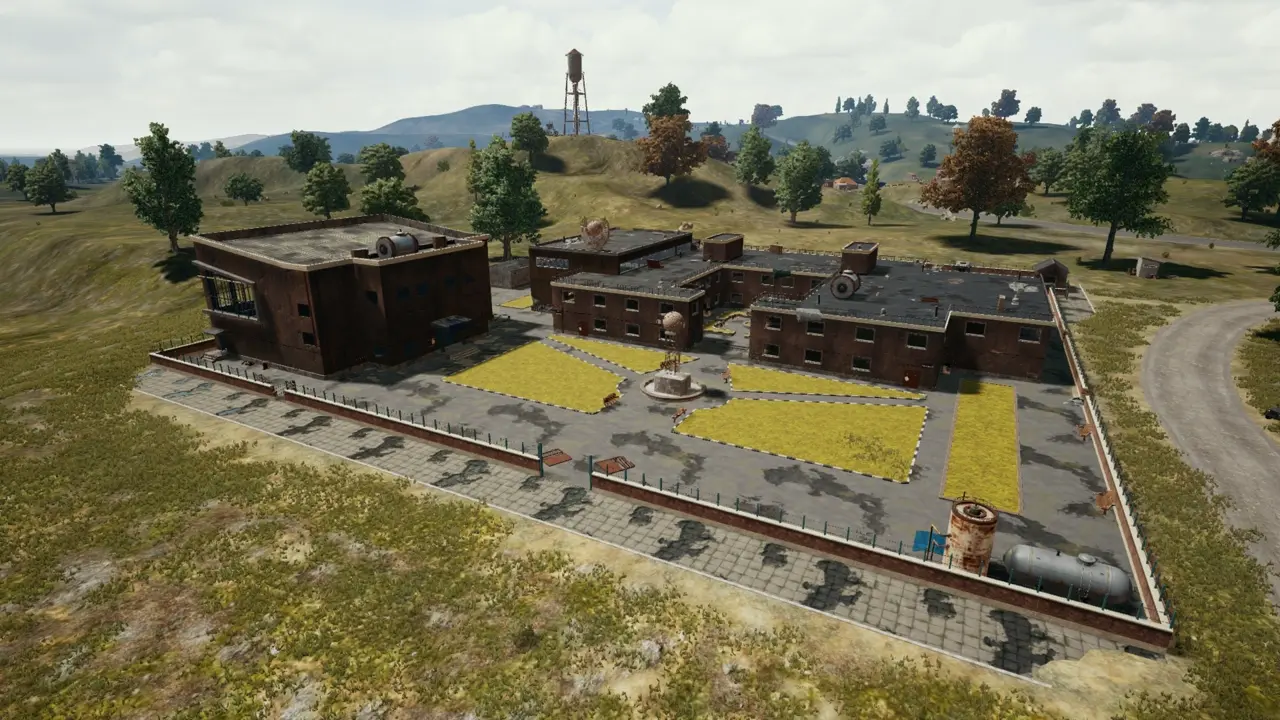
Your last teammate just got knocked. Three enemies are pushing your building, you can hear footsteps on two sides, and the part of your brain that should be making decisions has been replaced by static. Most players, in this exact moment, do the worst possible thing: they panic, spray at the first body they see, give away their position to all three enemies at once, and die in a 1v3 they were never going to win that way.
The clutch player does the opposite. They slow down. They make the fight not a 1v3, but three separate 1v1s, fought on their terms, one at a time. Winning outnumbered in PUBG: Battlegrounds is not about godlike aim — it's about refusing to fight the fight the enemy wants. This guide is the whole framework: the mindset, isolating enemies, using cover and utility, winning the info war, trading knocks when you're the one doing the trading, and how a 1v2 is a genuinely different problem from a 1v4.
The fight that defines a player
Here's the uncomfortable truth: most players are fine in a fair fight and useless in an unfair one. They've practiced 1v1 aim and never practiced the decisions that make an outnumbered fight winnable. So when the numbers go against them, they default to the only thing they've trained — point and shoot — and that's exactly what loses 1vX.
An outnumbered fight is a decision problem first and a mechanics problem a distant second. The enemy squad's entire advantage is being able to bring more guns to the same moment. Everything you do in a clutch is aimed at one thing: denying them that. If you can keep making it 1v1 over and over, their three-player advantage evaporates and you're just winning duels. The players who clutch consistently aren't out-aiming the lobby. They're out-thinking the panic.
The 1vX mindset: stop playing the whole squad
The first mental shift: you cannot fight three enemies. Nobody can. So stop trying. Your job is not to win a 1v3 — it's to win a 1v1, three times, with the other two unable to help. Every decision flows from that.
That means patience is a weapon and aggression is usually a trap. When you're outnumbered, time is mostly on your side if you don't waste it — the enemy has to commit, push, and expose themselves to dig you out, and the moment they do, they make mistakes. Sitting tight in good cover and forcing them to come to you one at a time is almost always stronger than swinging out and showing yourself to all of them.
It also means you decide when each fight happens. The instant you can see two enemies, you've lost the initiative — back off, break the line of sight, and reset until you can catch one alone. Don't take the fight the enemy is offering. Take the one you set up.
Isolate enemies one at a time
Isolation is the whole game in 1vX, and it's mostly about geometry and timing. You want to position so that only one enemy can shoot you at a time — using a corner, a doorway, a wall, or a single staircase as a funnel.
The principles:
- Use chokepoints as force-equalizers. A doorway, a single staircase, the gap between two crates — anywhere only one enemy can come through at once turns a 1v3 into three 1v1s. Hold the angle where the enemy has to file in single-file, and punish the first one through.
- Make them split up. Enemies stacked together are a problem; enemies spread out are three separate fights you can pick off. Movement, repositioning, and utility all push the squad to scatter — and a scattered squad is one you can isolate.
- Punish the over-eager pusher. In every squad there's one player who pushes too hard, too early, ahead of his teammates. He's your free kill. Now it's a 1v2, and you did it by letting him make the mistake.
- Reset the fight when two angles open up. If you peek and see two enemies who can both hit you, that's the signal to disengage — drop back behind hard cover, break line of sight, and force them to come find you one at a time instead of trading with you on their terms.
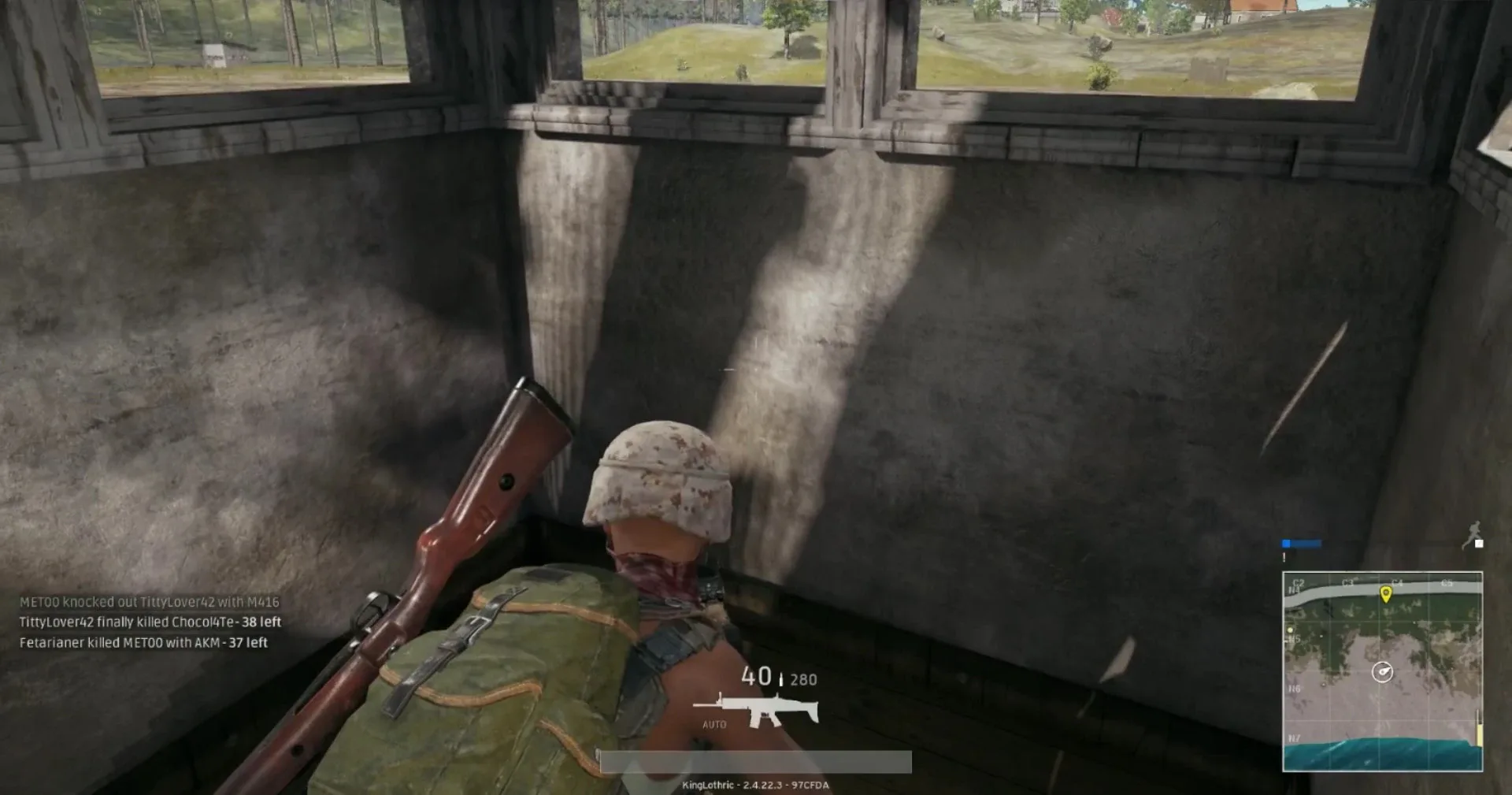
The compound fight on the right of this section is the textbook arena: tight buildings, corners, and interiors where a calm solo can route a whole squad by never letting more than one of them shoot at once.
Cover is your extra teammate
When you're down a player (or three), cover does the job your missing teammates would. The difference between hard cover and soft cover decides clutches: hard cover (rocks, concrete walls, building corners) stops bullets; soft cover (bushes, wooden fences, tall grass) only hides you and gets shredded the moment they spray it.
How to use it when outnumbered:
- Always know your next piece of cover. Before you commit to any angle, know exactly where you're going if it goes wrong. The clutch dies the instant you peek with no retreat and three guns find you in the open.
- Peek for one, not for all. Position so the cover you peek from only exposes you to a single enemy. If a peek shows you two, that cover is wrong for this moment — find a better angle.
- Don't get pinned against a wall with one exit. Cover that protects you from one direction but boxes you in is a coffin against a squad that can flank. You want cover you can rotate around, not hide behind.
- Use the environment to deny their numbers. Buildings, compounds, and rocky terrain let you keep walls between you and most of the squad while you fight one. Open ground is where being outnumbered actually means three guns on you at once — avoid it in a clutch unless you're forced by the circle.
Utility evens the numbers
Throwables are the great equalizer in a 1vX, and most players hoard them and die with five grenades in the bag. When you're outnumbered, your utility is worth more than an extra magazine.
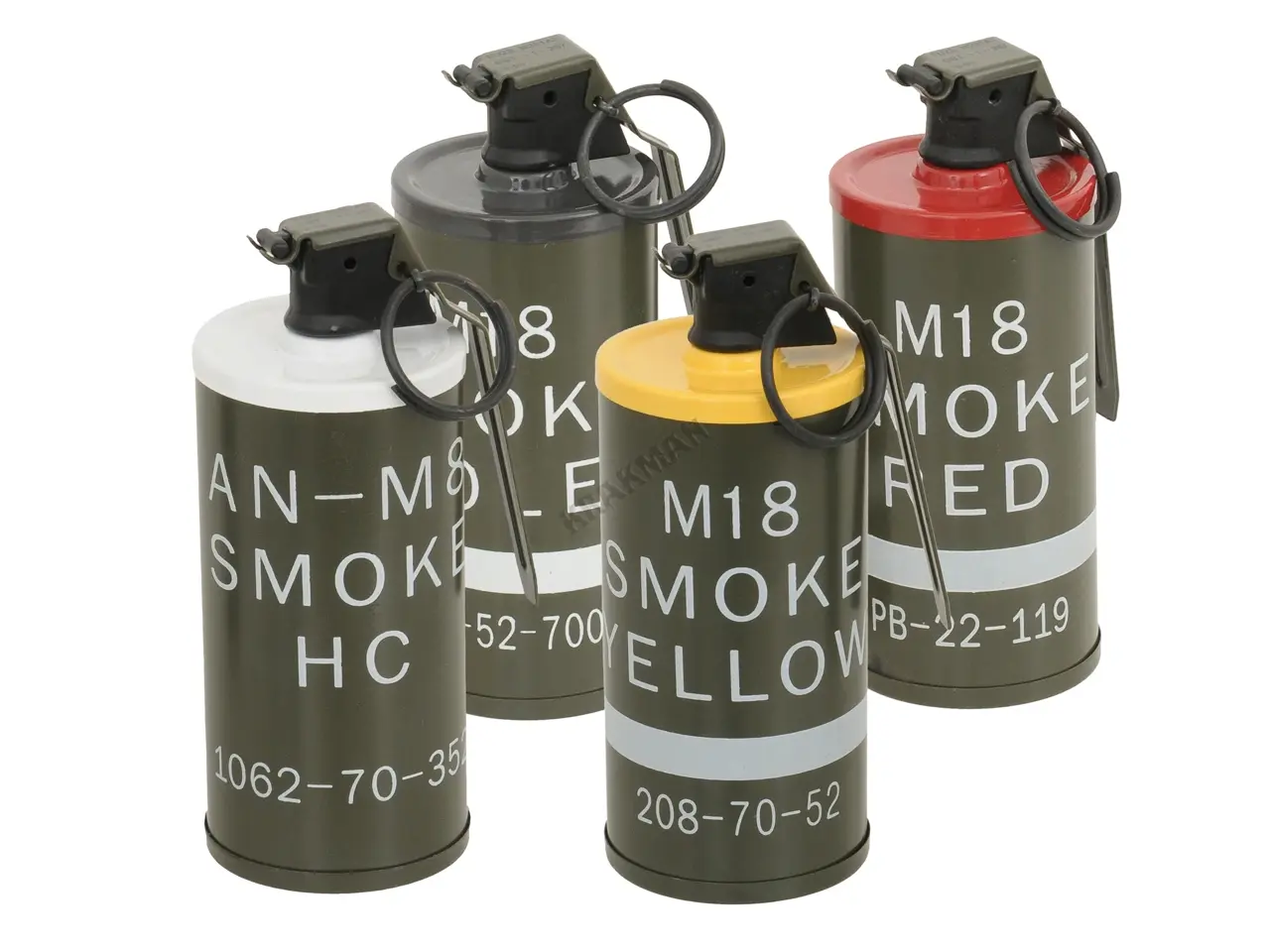
- Smoke cuts their numbers. A smoke wall between you and the squad means they can't all shoot you at once — it forces them to push through the smoke one at a time, right into the angle you're holding. Smoke is also how you reposition, revive (if you somehow have a teammate left), or break a losing angle without eating three guns on the way out.
- Frags force committed enemies out of cover. A squad holding a tight spot is a problem; a frag landing in that spot makes them move, and moving enemies are exposed enemies. Use frags to flush a stacked squad and break their position, not just for chip damage.
- Stuns buy you the half-second that wins peeks. A stun (flashbang-style) grenade around a corner disorients the enemy holding it, turning a 50/50 peek into a free one. In CQC clutches, that bought half-second is the whole fight.
- Throw to deny, not just to damage. The point of utility in a clutch isn't kills — it's control. You're using it to dictate where the enemy can be and when they can push, which is exactly how you keep the fight 1v1. For the full breakdown of each throwable and its timings, see our PUBG throwables and utility guide.
The info war you have to win
Outnumbered fights are won and lost on information, and here's the asymmetry that's secretly in your favor: you don't have to track teammates, but they do. A three-player squad has to coordinate, comm, and avoid shooting each other — that's overhead you don't carry. Every footstep, every gunshot, every revive animation is information you can use, and you can act on it instantly with no one to clear it with.
- Sound is your radar. Footsteps, reloads, healing, and the distinct sound of a revive tell you exactly where enemies are and what they're doing. A revive is gold: one enemy is locked in an animation and another is down — for a few seconds it's effectively a 1v1, take it. Our PUBG audio guide covers how to read the soundscape.
- Count the guns. Track how many enemies you've seen, knocked, and killed. Knowing it's "1v2, both north" instead of "an unknown number, somewhere" is the difference between a plan and a panic.
- Deny them your information. Don't fire unless the shot is worth your position. Every bullet that doesn't connect just told three enemies exactly where you are. Silence is how you stay the one with more information.
Knock-trading when you're the one trading
In a normal squad fight, trading means punishing the enemy who just knocked your teammate. In a 1vX, you're the one who has to convert knocks into a winnable fight — there's no teammate to trade for you, so every knock you land has to do double duty.
- A knock isn't a kill — finish it or pressure it. A knocked enemy can be revived. If you have the time and the angle, finishing the knock removes a gun permanently. If you don't, the knock at least forces a decision on the squad: revive (and expose a player) or abandon (and stay down a gun).
- Bait the revive. A downed enemy is bait. The squad's instinct is to pick him up, which means a teammate crawls into the open to do it. Hold the angle on the knocked body and punish the revive — that's a free second knock, and now it's a real 1v1.
- Don't trade your position for greed. The classic clutch-loss is pushing to finish a knock and walking into the other two guns. If finishing means exposing yourself to the rest of the squad, leave the knock, hold your cover, and let the timer work. The full mechanics of knocks, bleed-out, and revives are in our PUBG reviving and DBNO guide.
- Stack your knocks. The dream sequence in a 1v3: knock one, the second pushes to trade and you knock him too, the third panics. You don't have to kill all three cleanly — you have to keep landing the knock that turns three guns into two, then one.
Reading 1v2, 1v3, and 1v4 differently
These are not the same fight, and treating them the same is a mistake.
- 1v2 — you're basically even. Two enemies isn't really "outnumbered" in PUBG; it's a fight you can win straight up if you isolate even slightly. Be confident, hunt the split, and don't play so passive that the circle does their job for them. A 1v2 is the most winnable clutch by a wide margin.
- 1v3 — patience and isolation, hard. This is the signature clutch. You cannot brute-force it. Funnel them through chokepoints, smoke to deny their numbers, win the info war, and pick the over-pusher first. Every knock makes the next fight dramatically easier — get it to a 1v2 and you've basically won.
- 1v4 — change the question entirely. Against a full squad, "win the fight" is usually the wrong goal. The better question is often "do I even have to fight all of them?" Use the circle, use cover, and use time — sometimes the clutch is avoiding the squad until the zone or a third party thins them out, then cleaning up the survivors. If you must engage, you need a near-perfect chokepoint, full utility, and the discipline to never show yourself to more than one gun. A clean 1v4 is rare and earned; don't throw a winnable game chasing the highlight.
The thread through all of it: outnumbered fights are won by the player who keeps making it 1v1, stays calm enough to use information, and treats utility and cover as the teammates they've lost. Aim helps. Decisions win.
Quick Action Checklist
- Stop trying to fight the whole squad — make it three separate 1v1s on your terms
- Hold chokepoints (doorways, stairs, single lanes) so only one enemy can shoot you at a time
- Reset the fight the instant two enemies can both hit you — break line of sight and isolate again
- Always know your next piece of hard cover before you peek; never peek with no retreat
- Smoke to deny their numbers, frag to flush stacked enemies, stun to win the corner peek
- Win the info war: read sound, count guns, stay quiet, punish revive animations
- Bait the revive and stack knocks — turn a 1v3 into a 1v2 into a 1v1
- Play 1v2 confidently, 1v3 with patience and isolation, and 1v4 by using time, circle, and cover instead of brute force
Frequently Asked Questions
How do you win a 1v3 in PUBG?
What is the most important skill for clutching in PUBG?
How do you use grenades when outnumbered in PUBG?
Should you play aggressive or passive when outnumbered in PUBG?
How is a 1v4 different from a 1v2 in PUBG?
Keep Reading
Related Guides
PUBG Mid-Game Guide: Own Phases 2 Through 5
You survived the drop and you'll survive the final ten — but the match is decided in the messy middle, phases two through five, where most players just react to the blue and hope. Here's how to turn the mid-game into a lead instead of a coin flip.
PUBG Duo Strategy Guide: How to Actually Win as Two
Duos is the least forgiving mode in PUBG and nobody talks about it that way. You get exactly one teammate, which means you get exactly one mistake — and the moment you're both down, the game ends instantly with no third player to clean up. Here's how two players actually win.
PUBG Flanking Guide: Win Fights From the Side
A head-on peek war between two decent players is a coin flip. A flank removes the coin. Here's how to get to an enemy's blind side, when it's worth it, and how to close the kill without handing it back.
PUBG Third-Party Guide: Avoid and Exploit the Third
The player who wins a PUBG fight and the player who wins the lobby are usually different people — and the difference is the third party. Here's how to stop getting jumped mid-fight and how to be the one doing the jumping.
Best Weapons in PUBG: Tier List
Every PUBG tier list is out of date the moment a balance patch drops. So here's the list, ranked by role, plus the durable logic to re-tier any gun yourself when the next patch shakes things up.
Best PUBG Loadouts & Attachments
A naked M416 and a fully kitted M416 are basically two different guns. Here's how to build the strongest two-gun loadouts in PUBG and the attachment priority that turns loot into recoil control.