PUBG Water Play Guide: Swimming, Diving, and Boats
Water in PUBG is where confident players go to drown themselves. A swimmer is down to a sidearm they can only fire while holding still, boats are loud, and the coast is a death trap when the circle pulls seaward — but each of those facts is also a weapon if you know the rules. Here's the whole waterlogged playbook, revised for Update 43.1.
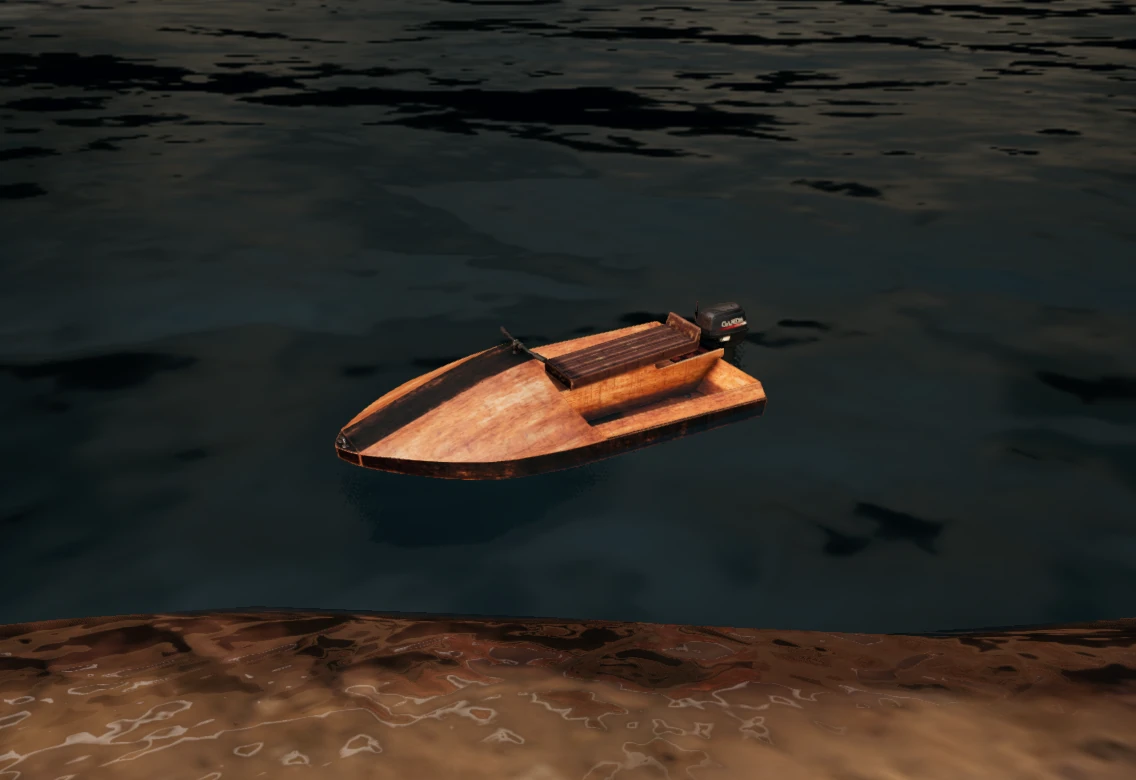
Count the players who die in open water in a given Erangel lobby and it's a short list — because most people treat the sea like the edge of the map and never go near it. That instinct is half right and half a wasted opportunity. Water is genuinely dangerous: the moment you swim, your primary weapons stow and you become a slow dot with a sidearm you can only fire while holding still — a dot anyone on shore with a rifle can pick apart. But that same dead-zone reputation is why a diver can vanish mid-fight, why an Aquarail can flank a whole coast nobody's watching, and why the confident squad rotating along the shoreline is often the easiest kill on the server.
Water play in PUBG isn't about swimming for fun. It's about knowing exactly what water takes away from you — and from the other guy — and using the asymmetry on purpose. This is the full playbook: the mechanics that punish you, the crossings that don't have to be suicide, the dive that breaks a losing fight, and the boats that are worth their weight in engine noise.
Revised 12 September 2026 for Update 43.1. KRAFTON's Update 43.1 patch notes changed the rule this guide was originally built on: sidearms and throwables now work on the water surface, swimming and diving are 25% faster, and boats are tougher. Those changes went live on PC with the 10 September maintenance. The console maintenance is scheduled for 17 September 2026 (01:00–09:00 UTC, which KRAFTON notes is subject to change), so a console player reading this before then is still playing the old rules, where entering deep water stowed everything.
Water isn't a dead zone, it's an approach
The single most common water mistake isn't drowning — nobody drowns. It's rotating along a coastline on foot, in the open, because the map looks empty out there. The sea reads as safe precisely because it's a place people avoid, and that's the trap: an empty-looking shoreline is a long, coverless lane that any squad holding the high ground behind the beach gets to farm.
Flip the framing. Water is not a place you go to be safe; it's an approach vector most of the lobby forgets exists. The whole coast is an angle nobody's watching because everyone assumes nobody uses it. A diver surfacing behind a shoreline compound, a jet ski cutting in from open sea, a swimmer breaking contact into a river — these work because your opponents have mentally deleted the water. Use it as a route, not a resting spot, and it becomes one of the strongest flanking tools on maps like Erangel and Miramar. It pairs directly with the flanking guide: the best flank is the one the enemy doesn't believe is possible.
What water actually does to you
Before you use water offensively, respect what it costs you, because the costs are brutal. The moment you enter deep water and start swimming, PUBG stows your primary weapons — you cannot shoot a rifle, an SMG, or a sniper while swimming. What you keep, since Update 43.1, is your sidearm and your throwables, and only on KRAFTON's terms: the patch notes state they "can be used while stationary," that "bullet spread is higher than on land," and that "moving while holding a weapon or diving will automatically stow the weapon." So for the duration of any swim you are a slow target with a pistol you have to stop to use. That's the core rule that makes water dangerous — and, as 43.1 showed, it is a rule KRAFTON can rewrite, so check the current patch notes before trusting any guide, this one included.
The mechanics that matter:
- Swimming stows your primaries. On the surface you can't fire a rifle, SMG, sniper, or shotgun. Since 43.1 you can hip-fire or ADS a sidearm, and the notes add that "you can use not only handguns but also items equipped in the 3rd slot" — but only while stationary, with more spread than on land, and the moment you move again the weapon stows. Throwables work too, overhand only. Anyone on land with a rifle still has the better of you; your real answers remain cover or the dive.
- You can dive under the surface. Pressing the dive input takes you underwater, where you're much harder to see and where bullets lose their lethality almost immediately — a body underwater is nearly untouchable by gunfire. Diving stows whatever you were holding; the 43.1 surface-combat rules apply on the surface only.
- Underwater runs on a breath meter. You can't stay down forever; an oxygen meter drains while submerged and, once it's empty, your health starts draining instead. You surface to refill it, and surfacing is the vulnerable moment.
- Deep water erases fall damage. Dropping into deep water from a height — a cliff, a bridge, a building on the coast — deals no fall damage, which turns a lot of "impossible" escape routes into free ones.
- Swimming got faster in 43.1. KRAFTON raised swimming and diving movement speed by 25% and added a new surface swimming animation. Faster is still slow: it shortens a crossing, it does not make one safe.
- The blue zone doesn't care. Water is not a safe haven from the playzone; the blue damages you in the sea exactly as it would on land, and you can't out-swim it. Getting caught offshore in a late circle is a death sentence twice over.
Internalize these and every water decision gets simple: on the surface you're slow and down to a sidearm you must stop to use, underwater you're hidden but on a timer, and the blue ignores all of it.
Crossing open water without dying
Sometimes the circle, the loot, or the flank genuinely requires a swim. Do it deliberately and it's survivable; do it on autopilot and it's a highlight reel for someone else. The goal is to minimize the time you spend as a slow surface target with nothing bigger than a pistol.
The rules for a clean crossing:
- Pick the shortest exposed line. Cross where the water is narrowest and where you enter and exit near cover, not at the widest, most scenic point. Every extra second on the surface is another second of free shots for anyone watching.
- Cross when the coast is quiet, not when it's convenient. If you heard shots on the far shore, the crossing waits. You cannot win a rifle fight from the water, so only swim into water you've cleared with your eyes and ears first — the spotting and audio habits that keep you alive on land matter double here.
- Dive if you get shot at mid-crossing. The instant rounds start hitting the water around you, submerge. Underwater you're a far worse target, and you can cover real distance below the surface before surfacing near cover.
- Never cross in a late circle. If the blue is already biting, an open-water crossing is a bet you lose — the zone damage plus a sidearm that only fires while you hold still compounds fast. Solve the rotation on land or don't solve it. Broader circle timing is in the blue zone rotation guide.
Diving to break a fight
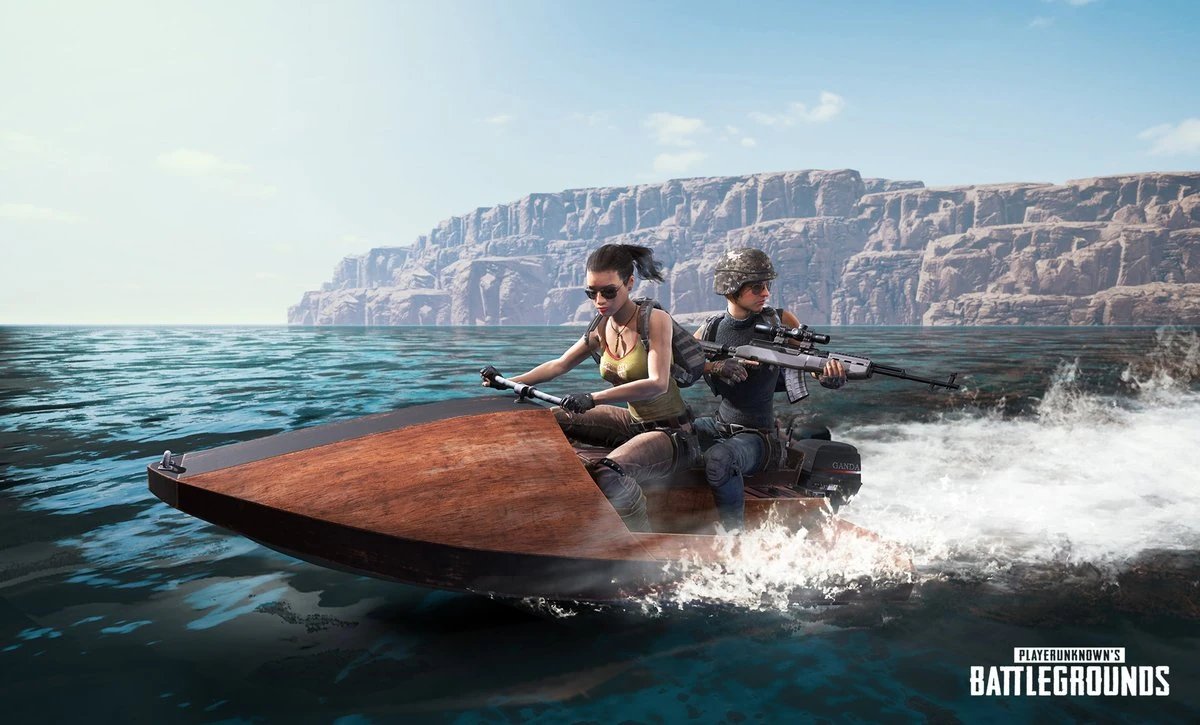
Here's the offensive use of that breath meter: diving is one of the only true "disappear" buttons in PUBG. If you're losing a fight near deep water, going under breaks the enemy's line of fire in a way no bush or smoke fully does — bullets don't reach you underwater, and a submerged player is genuinely hard to spot from shore.
How to use it without drowning yourself:
- Dive to reset, not to hide forever. The breath meter is your clock. Go under to break contact and reposition underwater, then surface near cover you picked before you dove — not wherever you happen to run out of air.
- Use it against pushes you can't win on the surface. Caught swimming and taking fire is normally a death; diving turns it into a coin flip. It won't save you against a squad that spreads to cover every exit, but against one careless shooter it's often a clean escape.
- Combine it with smoke on exit. Surfacing is the dangerous moment. Since 43.1 you can throw from the surface itself — stationary, overhand only — so pop the smoke toward your exit while you tread water, then climb out behind it, covering the transition from pistol-in-water to rifle-on-land. The throwables guide covers smoke timing.
- Remember the tradeoff. You come out of the water with your primary still stowed and slow for a beat. Diving buys you distance and concealment, but you have to convert it into cover immediately — a dive that ends in another open swim just delayed the death.
Boats are loud, fast, and worth it
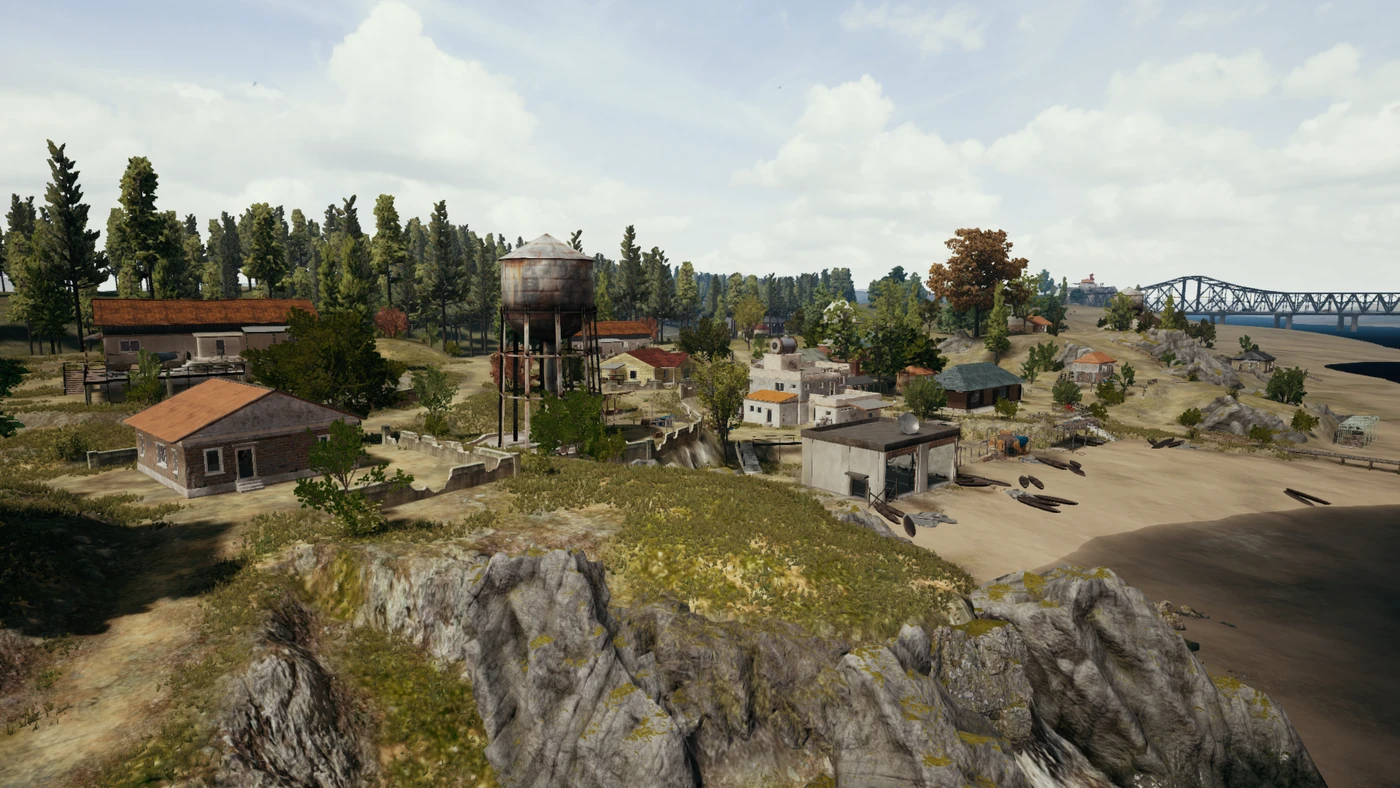
Water vehicles are the answer to "swimming stows my rifle": a boat carries you across the same water at speed with your squad's guns still up. PUBG gives you two, and they play very differently.
- The Aquarail is the jet ski — a two-seat watercraft that's significantly more maneuverable than the standard boat, hitting roughly 74–81 km/h when you hold the boost (left shift by default). It's small, nimble, and perfect for a fast two-player coastal flank, but its light frame gets thrown around more by waves and it offers no protection.
- The PG-117 is the speedboat — faster in a straight line at about 86–91 km/h boosted and able to carry a full squad, but with zero cover. It's excellent for beating a constricting circle along the coast and terrible anywhere it can be shot at, because everyone aboard is fully exposed.
Use them like the loud tools they are:
- Treat the engine as a broadcast. A boat motor carries across open water and tells every coastal squad you're coming. Use that noise early, when the lobby's dense and nobody can pin one sound — not in a quiet late circle where it paints a target.
- Dismount before the beach, not on it. Ride the boat to near your destination, then swim or wade the last stretch quietly, exactly like you'd ditch a car short of a compound in the vehicle combat guide. Beaching a loud boat right under an occupied building is how squads get wiped on the sand.
- Don't take a boat fight you can leave. Update 43.1 made the boat itself tougher — KRAFTON states that "the durability of boats has been increased overall," that "all boats receive 50% damage from firearms," and that you can repair one on the surface with an All-in-One Repair Kit (not underwater). None of that armours the people aboard: everyone is exposed and the driver can't shoot. If you're spotted on the water, the play is still to reach shore and cover rather than trade — the hull outlasting the exchange doesn't help if the crew doesn't.
Fighting people who are in the water
The flip side of every rule above: when someone else is the dot in the water, you're holding a lopsided matchup. Since 43.1 a swimmer can shoot back, but only with a sidearm, only while holding still, and with worse spread than you have on land — they are slow, and they have nowhere to hide on the surface. If you catch a squad mid-crossing, it's close to target practice — as long as you play it right and respect the pistol.
- Take the shots from cover on land. You have a rifle and they have a pistol at best. Stay behind cover on the shore, let them come into the open water, and open up when they're committed and can't quickly reach either bank. A swimmer who stops to return fire has also stopped moving, which is exactly when they're easiest to hit.
- Expect the dive, watch the surface. A smart target will submerge the moment you fire. Don't dump your whole mag at bubbles — hold, watch where the ripples move, and catch them when they surface to breathe. The breath meter is on your side; they can't stay down forever.
- Cut off the exits. Against a squad in the water, a duo or squad should split to cover both likely exit points rather than all watching one. A swimmer who surfaces to a second gun on the far bank is finished. The coordination is the same as the squad strategy collapse.
- Don't chase them in. The one way to throw this matchup is to jump in after them — now you're both down to sidearms and it's a wet coin flip. Stay dry, keep the rifle, and let the water do the work.
When the circle pulls you into the sea
Every so often the playzone forms half over water, and the coast becomes the whole game. This is where casual water knowledge turns into placement. The players who packed a boat, know where the shallows sit, and understand that the blue drowns them just the same are the ones left standing.
- Solve the water circle on land first. If the final circles are pushing coastward, get to the shore early and claim the last real cover — the beachfront compound, the pier, the rocks — before the lobby is forced to swim for it. Arriving late means swimming in while armed players hold the sand.
- Keep a boat as circle insurance. If you're playing a coastal endgame, a stashed Aquarail or PG-117 is a rotation you can't get on foot. It's the difference between reaching the last sliver of land and drowning in the blue offshore.
- Know the shallows. Water you can stand in doesn't stow your gun — wading in shallows keeps your rifle up while a swimmer next to you is down to a pistol they must stop to fire. In a water endgame, the shallow line is prime real estate.
- Play it like any other endgame, plus a stowed rifle. The circle discipline from the endgame circle strategy still rules; water just adds one brutal wrinkle — anyone forced off land and into a swim has already half-lost.
Quick Action Checklist
- Remember the core rule: swimming stows your primaries, and the sidearm you keep only fires while you hold still — treat any surface swim as a slow, exposed crossing
- On console, the 43.1 water rules arrive with the 17 September 2026 maintenance; until then, swimming still stows everything
- Use coastlines and rivers as flanking approaches, never as safe resting spots — the water is an angle nobody watches
- Cross open water at the narrowest, quietest line, near cover on both banks, and never in a late circle
- Dive to break a losing fight near deep water, then surface at cover you picked before you went under
- Watch the breath meter — underwater hides you but drains oxygen, then health, once it's empty
- Ride boats loud and early, dismount before the beach, and leave any boat fight you can — 43.1 toughened the hull, not the crew
- When enemies are in the water, shoot from land cover, respect the pistol, watch for the dive, and never chase them in
- In a coastal endgame, claim shore cover early, stash a boat as insurance, and hold the shallows where your rifle stays up
Frequently Asked Questions
Can you shoot while swimming in PUBG?
Can you throw grenades while swimming in PUBG?
How does diving underwater work in PUBG?
What is the difference between the Aquarail and the PG-117 in PUBG?
Do you take fall damage landing in water in PUBG?
Does the blue zone damage you in the water in PUBG?
Keep Reading
- PUBG: BATTLEGROUNDS — Patch Notes, Update 43.1 (9 Sep 2026): "Water Surface and Underwater Actions" (sidearms and throwables on the surface, stationary-only, higher bullet spread, overhand-only throwables, weapon stow on move or dive, 25% swim and dive speed increase) and "Boats" (durability increase, 50% firearm damage, All-in-One Repair Kit surface repair), plus the PC/console live maintenance schedule
- PUBG: BATTLEGROUNDS patch notes index — checked 12 September 2026; Update 43.1 (9 Sep 2026) is the most recent patch notes entry
- PUBG: Battlegrounds — official site
- Aquarail — official PLAYERUNKNOWN'S BATTLEGROUNDS Wiki
- PG-117 — official PLAYERUNKNOWN'S BATTLEGROUNDS Wiki
Related Guides
PUBG Vehicle Combat Guide: Driving, Drive-Bys, Cover
A vehicle in PUBG is a weapon, a wall, and a coffin depending on how you use it. Here's how to drive under fire, land drive-bys, use the engine block as cover, and bail before the thing cooks off underneath you.
How to Kick in PUBG: Update 43.1's New Melee Action
Update 43.1 gave PUBG a kick button. Right-click while unarmed and you can shove a player off a heal, boot a wooden door off its frame, or shake loot out of a vending machine faster than the interact prompt would. Here is exactly what KRAFTON's patch notes confirm about it — inputs, the destructible list, the vending machine cost — and the parts they left unstated.
PUBG Spotting Guide: See Enemies Before They See You
The player who spots first wins most PUBG fights before a shot lands, and spotting is a trainable skill — not eyesight. Scanning patterns, muzzle flash, scope glint, sound reads, and the environmental tells most players sprint straight past.
PUBG Crosshair Placement Guide: Pre-Aim, Win First
The guy who killed you didn't aim faster — he aimed earlier. Crosshair placement is the cheapest aim upgrade in PUBG: keep the dot at head level, park it where enemies appear, and most of your duels are over before they start.
Best Weapons in PUBG: Tier List
Every PUBG tier list is out of date the moment a balance patch drops. So here's the list, ranked by role, plus the durable logic to re-tier any gun yourself when the next patch shakes things up.
Best PUBG Loadouts & Attachments
A naked M416 and a fully kitted M416 are basically two different guns. Here's how to build the strongest two-gun loadouts in PUBG and the attachment priority that turns loot into recoil control.