The Witcher 3 Crafting Guide: Diagrams, Craftsmen and Gear
Crafting in The Witcher 3 is not one system, it is three tiers, four craftsman ranks and a diagram supply that is deliberately capped by your level. Here is who can actually make what, where the one Grandmaster in the game is hiding, and whether any of the 49 Relic-tier diagrams are worth the trip.
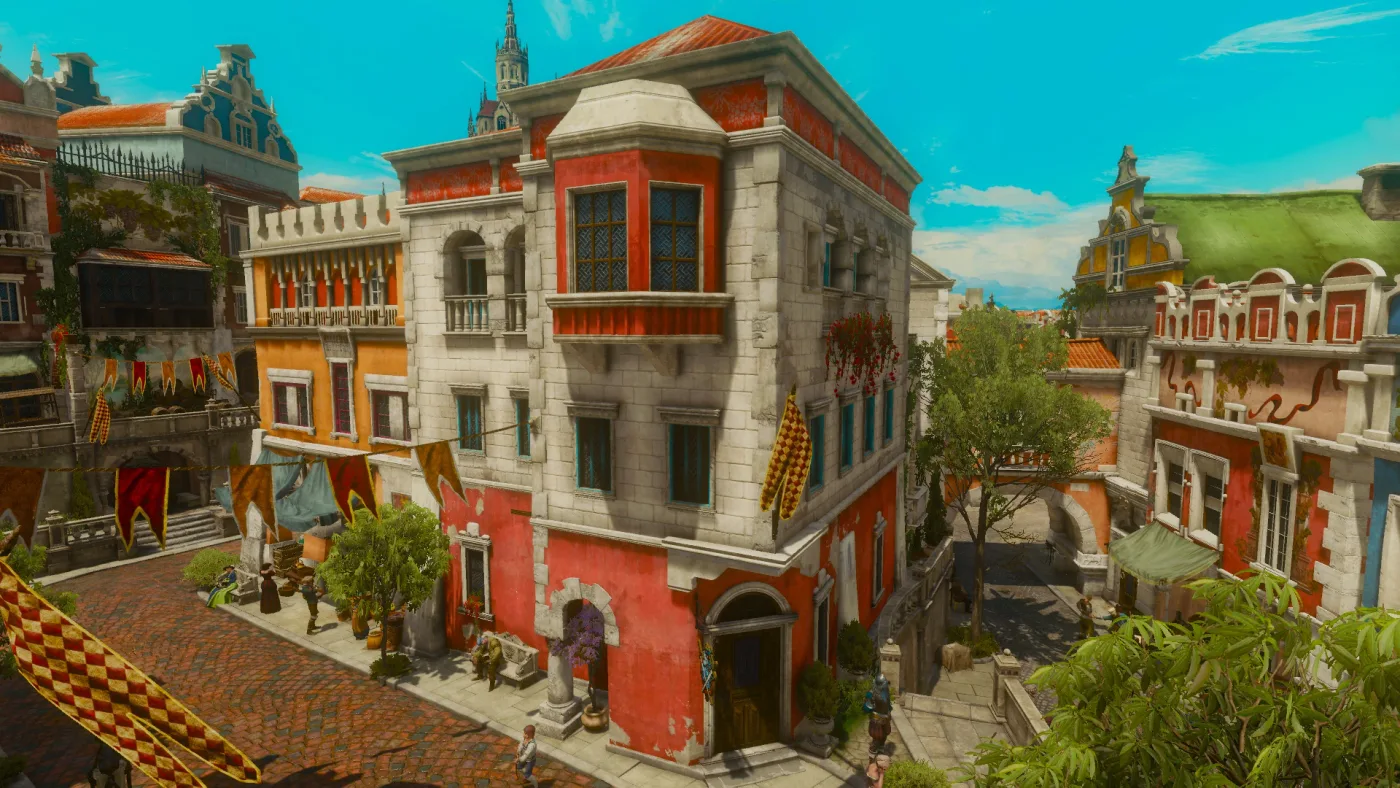
Right-click a sword diagram at an armorer's stall and nothing happens. No error message, no "wrong craftsman" pop-up — the game just quietly declines to show it as an option. That is the entire crafting system compressed into one interaction: two trades, zero crossover, and the assumption that you already know which one you are standing in front of. That split is easy to leave unmapped, which is how a level 40 Geralt ends up hauling half a dozen diagrams around that nobody he has met can actually turn into gear.
This is not about Witcher School gear — our Witcher 3 witcher gear guide already ranks every Griffin, Cat, Bear, Wolf, Manticore and Viper set piece by piece. This is everything else: the ordinary Common, Magic and Relic weapons and armor that a plain blacksmith or armorer builds from a diagram, who in the game can actually rank up far enough to make the good stuff, and whether any of it is worth the trip once you already own a Witcher School set.
Why only two tradesmen can make anything
The rule is absolute and the wiki states it in one line: only an armorer can craft armor, and only a blacksmith can forge a true weapon. Bring a steel sword diagram to an armorer and it will not appear in their crafting menu at all, not even greyed out. The two trades are look-alikes on the map — matching hammer-and-anvil icons, same dialogue wheel — but they are running completely separate inventories of what they know how to make.
One quality-of-life fix is worth knowing about: since Patch 1.20, if you are short a component mid-craft, right-clicking it lets you buy the missing piece straight from the craftsman on the spot, instead of backing out, hunting down a merchant, and starting the whole conversation over. It will not save you from a rank you do not have, but it ends the era of walking away over one missing chunk of dimeritium ore.
The three tiers that are not Witcher gear
Forget Witcher School gear for a second — that runs its own separate ladder of Enhanced, Superior, Mastercrafted and Grandmaster, and it is covered in full in the gear guide. Every other weapon and piece of armor in the game, the ones a regular blacksmith or armorer can build without a school's Scavenger Hunt attached, sits on one of three tiers instead:
- Common — the baseline. Cheap, low-level, usually buildable at the very first Amateur smith you meet.
- Magic — the mid-game workhorse tier. Most of the named swords and regional armor sets you find on merchants' racks in Velen, Novigrad and Skellige live here.
- Relic — the rare tier. Named, usually one-off items with real bonus effects, and mostly not for sale at all.
The naming collides with Witcher gear's own color-coded quality, but the two systems never actually overlap. A Relic-tier sword and a Witcher School sword are built through completely different unlock chains, and nothing you read in this guide changes how the school sets work.
Four ranks, and the one Grandmaster in the game

Craftsmen rank up through four tiers — Amateur, Journeyman, Master, and Grandmaster — and each rank gates which diagrams that person is able to complete, no matter how many components you hand over. An Amateur simply cannot build a Journeyman-rated item, full stop.
There is exactly one Grandmaster in the entire game: Lazare Lafargue, who works out of his own shop in Hauteville, Toussaint, and — unusually — is both a Grandmaster blacksmith and a Grandmaster armorer at once, trained by a legendary elven smith named Tyen'sail. He does not start that way. You unlock his top rank through Master Master Master Master!, a level 40 Blood and Wine secondary quest, and clearing it is also the gateway into every Grandmaster Witcher School Scavenger Hunt (Feline, Griffin, Manticore, Ursine and Wolven), which is where that content actually lives in our gear guide.
Two earlier Master unlocks are worth planning a route around, and both land at the same level:
- Master Armorers (level 24, Velen/Skellige) promotes Yoana at Crow's Perch to Master armorer — already the base-game's cheapest master-rank dismantler, per our money guide.
- Of Swords and Dumplings (level 24, Novigrad) promotes Éibhear Hattori on Glory Lane to Master blacksmith.
Toussaint adds two more Masters without a quest attached: Trentin, a blacksmith in Hauteville available as soon as you reach the region, and the blacksmith at Belgaard Vineyard, unlocked simply by rescuing him during Blood and Wine.
The craftsmen actually worth walking to
Every region has two to four Amateur-rank blacksmiths and armorers scattered through minor villages — fine for Common-tier builds and cheap dismantling, and not worth naming individually here. The ranks that change what you can actually build are these:
| Region | Craftsman | Type | Rank | How to reach them |
|---|---|---|---|---|
| Velen | Fergus Graem, Crow's Perch | Armorer | Journeyman | Available from the start |
| Velen | Yoana, Crow's Perch | Armorer | Master | Complete Master Armorers (level 24) |
| Novigrad | Fish Market blacksmith / Oxenfurt blacksmith | Blacksmith | Journeyman | Available from the start |
| Novigrad | Éibhear Hattori, Glory Lane | Blacksmith | Master | Complete Of Swords and Dumplings (level 24) |
| Skellige | Yanne, Kaer Trolde citadel / smith at Kaer Muire | Blacksmith | Journeyman | Available from the start |
| Toussaint | Blacksmith, Arthach Palace Ruins / Tourney Grounds / Ardaiso Quarry | Blacksmith | Journeyman | Available once you reach Toussaint |
| Toussaint | Blacksmith, Belgaard Vineyard | Blacksmith | Master | Rescue him during Blood and Wine |
| Toussaint | Trentin, Hauteville | Blacksmith | Master | Available once you reach Toussaint |
| Toussaint | Lazare Lafargue, Hauteville | Both | Grandmaster | Complete Master Master Master Master! (level 40) |
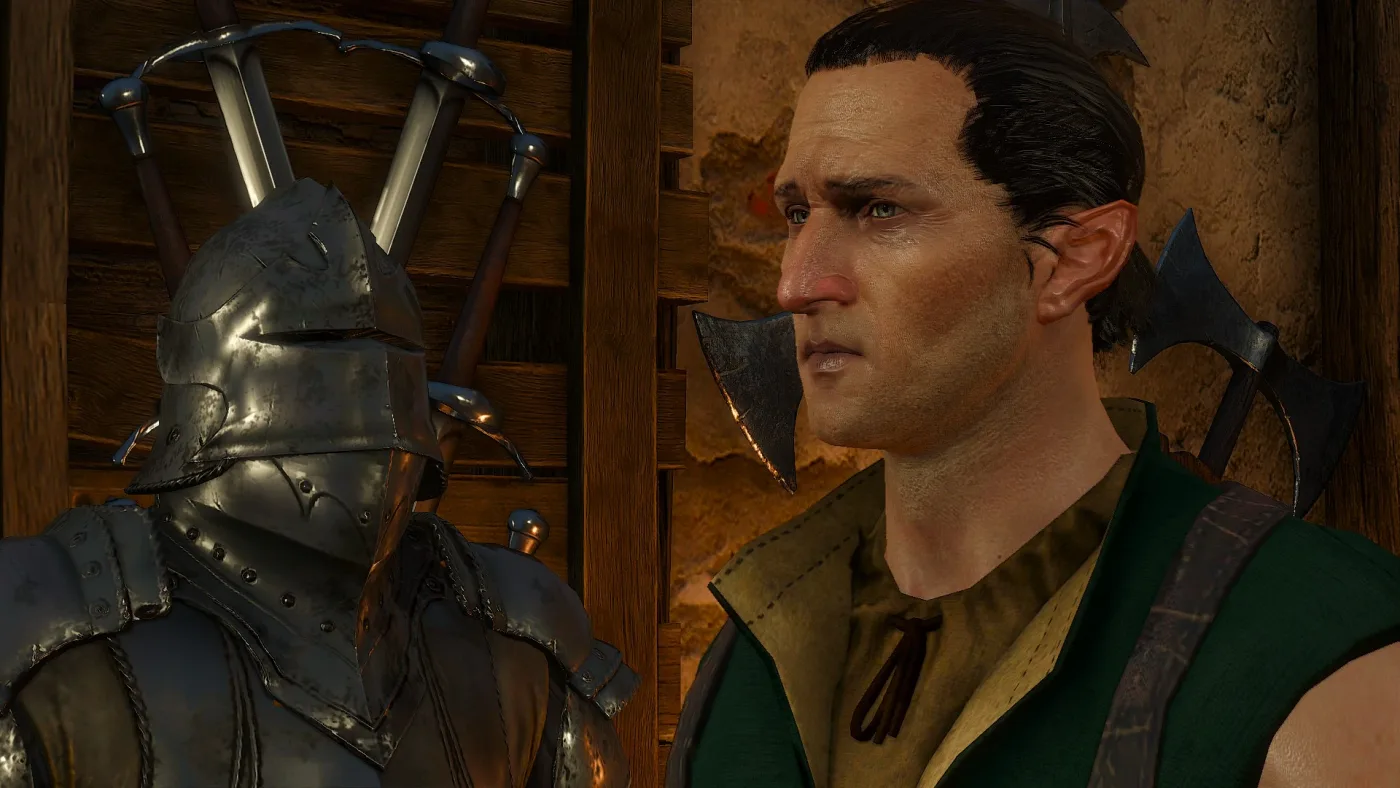
Skellige is the odd region out — it never gets its own Master craftsman, base game or expansion. If you want Master-rank work done from Skellige, you are sailing to Velen or Novigrad, or waiting for Toussaint.
How diagrams actually enter your inventory
Diagrams reach you two ways: buying them from a correctly-ranked merchant, or finding them as loot. Common and Magic-tier diagrams are sold openly — most blacksmiths carry a stack of them alongside their usual wares. Relic-tier diagrams are the opposite; the large majority are loot-only or tied to a specific chest or quest reward, not something you can walk up and buy.
The loot side has a mechanic the game never explains on screen: the number of diagrams you can find is capped by Geralt's level, on purpose. According to the wiki's own breakdown of the system, roughly 90 diagrams become available starting around level 10 (on top of the handful you already start with or earn through quests), about 30 more open up by level 20, another five or so by level 25, and the cap is removed entirely at level 30 — after that point, every remaining diagram in the game can spawn. Leveling up also resets some containers that were already looted empty, so a level-up is genuinely worth a return trip to a chest that gave you nothing useful the first time. If a bandit chest keeps handing you a diagram you already own, that is the level wall talking, not bad luck.
The 49 Relic diagrams, and what they are worth
By the wiki's own diagram categories, the game carries 49 Relic-tier diagrams that are not Witcher School gear — 9 in the base game, 9 more in Hearts of Stone (the Ofieri set and the Order of the Flaming Rose set), and 31 in Blood and Wine (mostly Toussaint guard and knight's armor, plus a handful of named blades). A curated look at what they actually produce, at their level in the regular game:
| Item | Expansion | Level | Stats | Craftsman |
|---|---|---|---|---|
| Weeper (silver sword) | Base game | 31 | 369-451 damage, 3 slots, +75% crit damage, +20% bonus XP from monsters | Journeyman smith |
| Negotiator (silver sword) | Base game | 35 | 405-495 damage, 3 slots, +50 armor piercing, +15% crit chance | Journeyman smith |
| Black Unicorn (steel sword) | Base game | 46 | 360-440 damage, 3 slots, +10% Aard intensity, +10% bleed chance | Master smith |
| Ofieri saber (steel sword) | Hearts of Stone | 38 | 315-385 damage, 3 slots, +20% Igni / +10% Aard / +10% Axii intensity | Master smith |
| Viroledan blade (steel sword) | Blood and Wine | 46 | 371-454 damage, 3 slots, +75% crit damage, +15% bleed and poison chance | Master smith |
| Toussaint knight's tourney armor | Blood and Wine | 48 | 275 armor, 3 slots, +500 Vitality, +25% chance to deflect projectiles with Quen | Master armorer |
Here is the honest take: most of this is not actually an upgrade over a Witcher School set, and the numbers say why. Our gear guide shows that Superior-tier School chest armor already reaches three rune slots by level 26-30, and Mastercrafted swords hit three by level 34 — earlier than most of the table above — and School sets stack a 3-piece and 6-piece bonus on top that a single Relic item never gets. Relic gear is a stepping stone at best, not an endgame answer.
The exceptions are the pieces with an effect no School set offers outright. Weeper's +20% bonus experience from monster kills is genuinely unique utility for a lower-level alt run, and the Aard/Igni sign-intensity bonuses on Black Unicorn and the Ofieri saber suit a hybrid sign-and-blade build in a way that a School set — built around one signature Sign — usually does not.
The four material tiers, and where dimeritium comes from
Crafting components run their own four-tier ladder — Common, Magic, Master and Relic — and yes, the game recycles the word "Master" three separate times (a craftsman rank, a material tier, and nowhere near a gear tier, since there is no such thing as "Master-tier" armor or weapons) without ever flagging that it is doing it.
Relic-tier materials are mostly monster byproducts — monster blood, bone, brain, claw, eye, feather, hair, heart, saliva and tongue all carry a base value of 15 crowns and drop straight off the beasts covered in our monster weaknesses guide — plus a short list of refined metals topped by dimeritium. Dimeritium ingot (base value 324) can be crafted by a Journeyman from two Dimeritium ore, or one Dimeritium ore plus a Glowing ore ingot, bought for 872-1,468 crowns from a short list of merchants — mostly Skellige traders plus Toussaint's own craftsmen (Lazare Lafargue, Trentin and the Belgaard Vineyard blacksmith among them) — or picked up for free as guaranteed loot in bandit camps, guarded treasures, and Toussaint's own treasure hunts — the exact locations our question marks guide already maps out.
Repair kits, the mechanic almost nobody uses
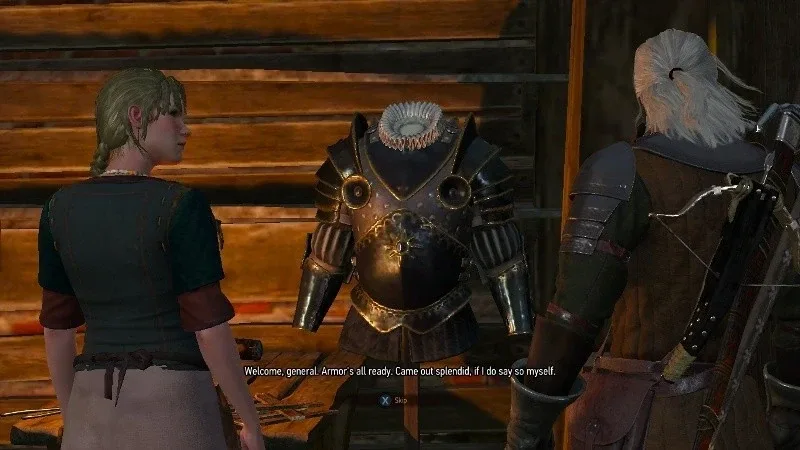
Weapons and armor in The Witcher 3 carry a durability stat that quietly degrades with use, and almost nobody notices it because the game never puts a warning on screen. Repair kits fix it: drag one onto the damaged item in your inventory, or right-click the kit and pick the item. An Amateur's kit restores 15% of durability, a Journeyman's restores 40%, and a Master's restores 90%. They are Master-tier tools that any Amateur craftsman can make regardless, so there is no reason to carry a worn-down blade into a boss fight when a cheap kit fixes most of the problem.
Quick Action Checklist
- Match the diagram to the trade: blacksmiths make weapons, armorers make armor, and neither will touch the other's schematic.
- Get Yoana (Master Armorers, level 24) and Éibhear Hattori (Of Swords and Dumplings, level 24) unlocked early — they are the cheapest reliable Master-rank work outside Toussaint.
- Save any Relic diagram you cannot yet craft; Lazare Lafargue in Hauteville is the only Grandmaster in the game and the only one who can eventually finish everything.
- Do not panic-loot for diagrams before level 30 — the game caps how many you can find until then, and re-checking emptied chests after a level-up can turn up something new.
- Buy dimeritium ingots from Toussaint's own craftsmen or Skellige's traders, or just loot it — it is guaranteed in bandit camps, guarded treasures and Toussaint's treasure hunts.
- Before committing materials to a Relic weapon, check whether an equivalent Witcher School piece already beats it — most do, once you account for the set bonus.
- Keep a Master's repair kit in your stash; 90% durability restored for a handful of common components is the cheapest insurance in the game.
Frequently Asked Questions
Can armorers craft weapons in The Witcher 3?
Where is the only Grandmaster craftsman in The Witcher 3?
What is the difference between Common, Magic and Relic gear in The Witcher 3?
Is crafting Relic gear worth it in The Witcher 3?
How do you get more crafting diagrams in The Witcher 3?
What do repair kits do in The Witcher 3?
Keep Reading
- Witcher Wiki — the blacksmith/armorer split and the Patch 1.20 component-buy feature
- Witcher Wiki — every blacksmith in the game listed by region and rank
- Witcher Wiki — every armorer in the game listed by region and rank
- Witcher Wiki — the level-gated diagram loot cap mechanic
- Witcher Wiki — full crafting component list with tiers and base values
- Witcher Wiki — the quest that unlocks the game's only Grandmaster craftsman
Related Guides
The Witcher 3 Runestones and Glyphs: What Every Upgrade Slot Is Worth
Two greater runestones sit side by side in the same shop. Both say five percent. One costs 440 crowns and the other 980. Here is the full stat table, the crafting maths behind that gap, and which slots are worth filling.
The Witcher 3 Console Commands: How to Enable Them
Type additem('Aerondight',1) into a hidden text box and Geralt is holding one of the best swords in the game before he has left White Orchard. CD Projekt Red has never put that box in a menu, never written a support article about it, and never published a full list of what it accepts. Here is how to open it, what to type, and what nobody can quite agree it costs you.
The Witcher 3 General Skills: Which Ones Deserve a Slot
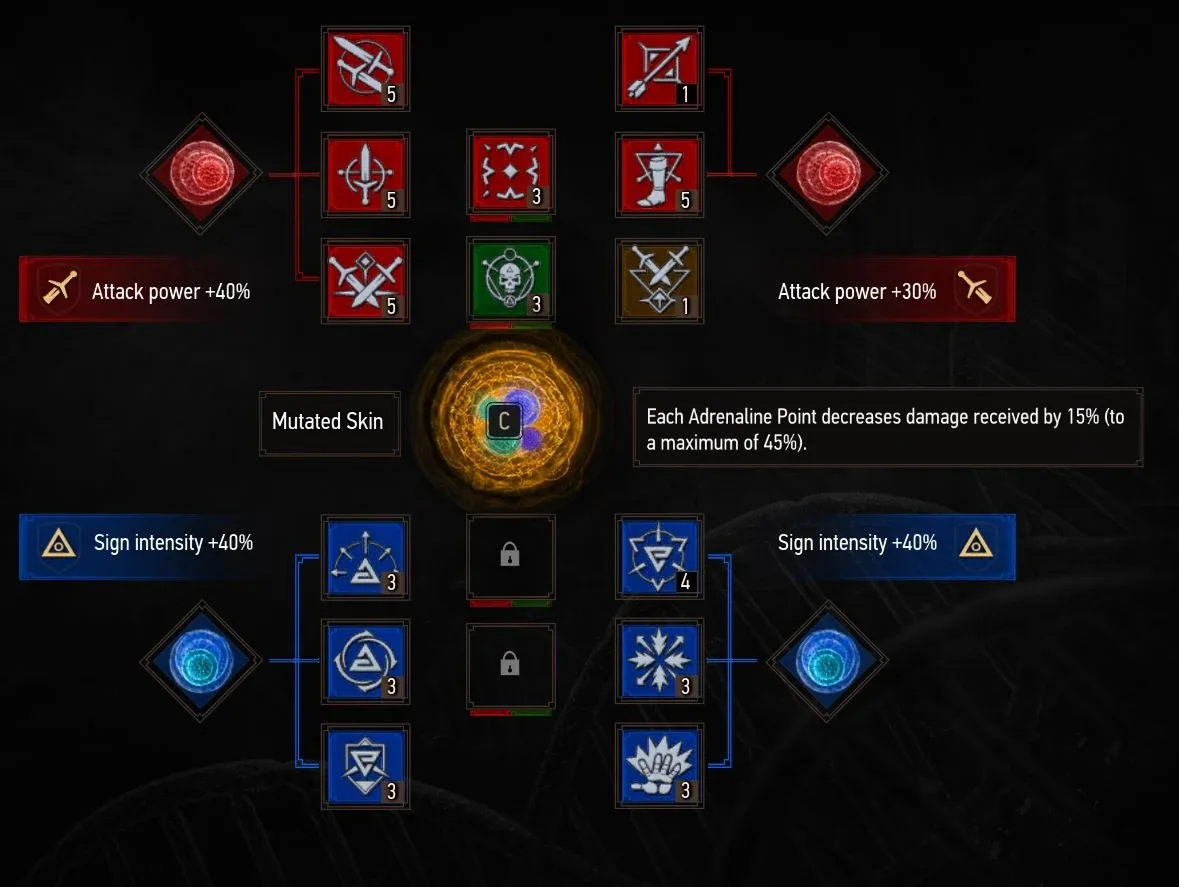
Two red mutagens on the same character panel, three slots each, and one reads +40% Attack power while the other reads +30%. The difference is a single brown icon. Here is the full General tree, the exact price of slotting one, and the four abilities that pay it back.
The Witcher 3 Alchemy Guide: Oils, Potions, Decoctions and Toxicity
Alchemy is the single most under-used system in The Witcher 3, and it is also the one that turns Death March from a wall into a routine. Here is what every oil, potion, decoction and bomb actually does, with the numbers.

The Witcher 3 Beginner's Guide: Your First 20 Hours
Most people who bounce off The Witcher 3 do it in White Orchard, and it is almost always the same three reasons: they never learned Quen, they never applied an oil, and they treated the skill tree like a shopping list. Here is the fix.
The Witcher 3 Songs of the Past: What CDPR Has Confirmed
Songs of the Past brings Geralt out of retirement in 2027 to find a missing Dandelion in Letten. Here is what CD PROJEKT RED and the storefronts have actually confirmed: platforms, the Remastered requirement and PC spec, the chain weapon, the new monsters, the Diablo IV skin and the 31 October Lucca panel, plus the gaps, starting with the price.