The Witcher 3 Question Marks: Which Ones Are Worth It
Half the question marks on the Witcher 3 map really are a chest with something angry standing on it. The other half are ability points, unlockable merchants and witcher gear diagrams. Here is the full taxonomy, counted region by region off the wiki location pages, with what the game actually hands you for clearing each type.
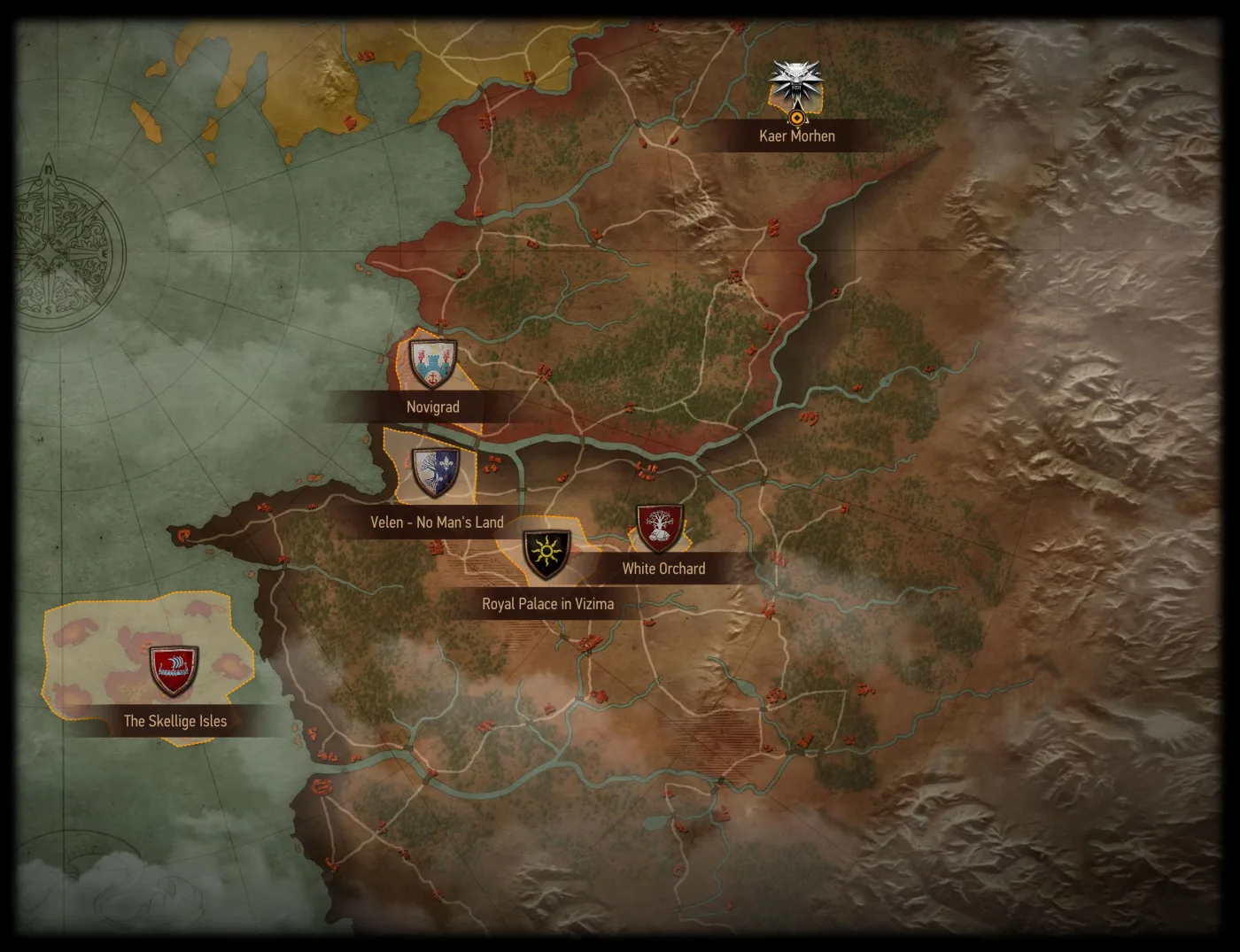
Our own beginner guide tells you the map question marks are mostly loot piles you can ignore guilt-free. By volume that is fair. Add up what the Witcher wiki location pages actually enumerate and 139 of the 276 marked points of interest listed are, mechanically, a container: 74 guarded treasures, 53 bandit camps and 12 shipwrecks.
The other 137 are not. Some of them hand you things a fight and a chest do not: a permanent ability point, a blacksmith who was not on your map an hour ago, the run-up to a witcher school armour set. The map does not tell you which is which until you have already ridden there, which is why "clear everything" and "clear nothing" are both bad plans.
So here is the taxonomy. Eight marker types, counted region by region, with what the game actually gives you for clearing one.
Eight types, not one
The wiki files the marked points of interest in The Witcher 3 under eight location types: guarded treasure, bandit camp, monster nest, abandoned site, Place of Power, monster den, person in distress, and Spoils of War. Blood and Wine adds a ninth that is really a sub-type, the vineyard infestation, which is a monster nest that happens to sit in a vineyard.
That split matters more than the icons suggest, because the eight do not behave alike. Some end in a container. Two of them permanently change the world by putting a person in it. One of them is a skill point. And one type appears in the base game only and never once in either expansion.
The full count, region by region
| Marker type | Base game | Hearts of Stone | Blood and Wine | Total | What clearing it gives |
|---|---|---|---|---|---|
| Guarded treasure | 58 | 4 | 12 | 74 | Higher-quality loot, relic gear in particular |
| Bandit camp | 34 | 8 | 11 | 53 | Whatever is in the camp chest |
| Monster nest | 29 | 6 | 10 | 45 | Monster parts, sometimes runestones and glyphs |
| Abandoned site | 17 | 6 | 11 | 34 | 120 to 170 XP, 50 crowns, usually a merchant |
| Place of Power | 25 | 0 | 5 | 30 | One permanent ability point each |
| Monster den | 10 | 0 | 5 | 15 | A fixed chest, often on a Scavenger Hunt route |
| Person in distress | 7 | 1 | 5 | 13 | Unlocks that craftsman or merchant back home |
| Spoils of War | 12 | 0 | 0 | 12 | Shipwreck loot |
| Total | 192 | 25 | 59 | 276 |
Two caveats on those numbers, because they are the kind that rot quietly.
The wiki's own section headers disagree with its own lists in three places, and always in the same direction — the header claims more than the bullets underneath it deliver. The guarded treasure page heads its Toussaint section "13 locations" and lists twelve. The bandit camp page heads its Velen-and-Novigrad section "30 locations" and lists twenty-two. The abandoned site page heads its Velen-and-Novigrad section "16 locations" and lists ten. Every figure in the table above is a count of entries that are actually written down, which is why the totals are a floor: take the headers at their word instead and the grand total rises to 291. Take the shape of the distribution, not the last digit.
The Blood and Wine count also excludes the five vineyard infestations, which the wiki treats as their own location type. Add them and Toussaint carries 64 markers.
Guarded treasures: where the relics are
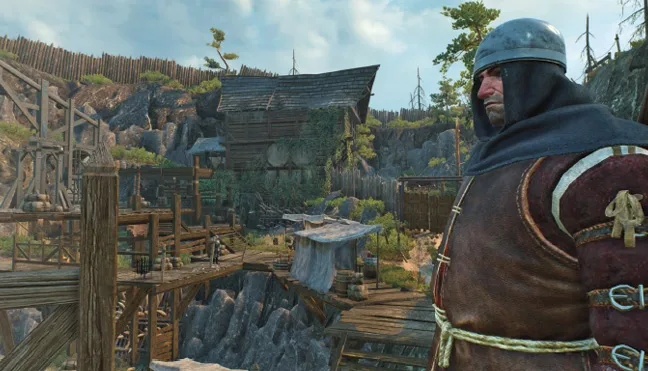
Seventy-four of them, the largest single category, and mechanically they are a bandit camp with a monster instead of a person. One powerful enemy, or a few weak ones, standing between you and a cache. A handful invert the order and spawn the enemy only after you loot.
The reason to care about the distinction: the wiki is explicit that guarded treasures carry higher-quality loot than bandit camps, and relic equipment in particular. If you are chasing crowns rather than gear, our money guide has better routes. If you want relic-tier kit before the witcher school diagrams open up, this is the marker to ride toward.
The catch is that a lot of them are randomised. The wiki says some have at least partially fixed loot, and lists all Blood and Wine locations among those — so Toussaint is the region where a guarded treasure is least likely to be a pure lottery, though "partially fixed" is as far as the source goes.
The distribution is lopsided in a way the map hides. Velen carries 22 and Skellige carries 22, Novigrad only 7, Kaer Morhen 2. If you sail to Skellige and immediately feel buried in question marks, that is why.
Abandoned sites are the only ones that pay a wage
Thirty-four abandoned sites, and they are the only one of the eight types with a stated cash-and-experience payout on its wiki page: 120 to 170 XP depending on the region, plus 50 crowns. Kill everything occupying the site — bandits or beasts — and civilians move back in. More often than not one of them is a merchant, which is a permanent addition to your shopping options in that corner of the map.
There is one exception worth knowing before you count on it. Every abandoned site in Blood and Wine is part of a quest, and liberating those yields neither XP nor coin. Toussaint gives you eleven of them and pays for none.
Persons in distress are shopping infrastructure
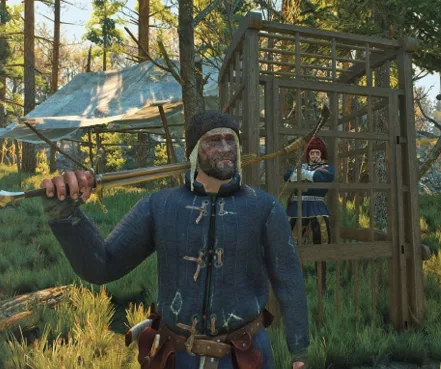
Thirteen locations, and the only reason they are on this list is that the reward is not loot. Cut the cage open or kill the bandits, and the person walks home on foot. Once they arrive, their services unlock for you permanently.
The wiki names who each of the thirteen is, and the list is heavy on high-value targets: a swordsmith, a barber, two blacksmiths, an armorer, two herbalists, a clerk and several merchants. That is a working craftsman appearing in a settlement that did not have one, which is a change to the map you cannot buy back if you ride past the cage.
The wiki adds that some of them, at least in the base game, hand over a small reward on top. It attaches no such note to the Blood and Wine rescues, so treat the Toussaint five as service unlocks and nothing more.
Monster dens are the witcher gear route
Fifteen locations, and the wiki calls them a marked treasure hidden inside a monster-infested dungeon rather than a fight in the open. Usually a cave, usually more elaborate than the other marker types, and usually tied to a quest.
That last part is the useful bit. Nine of the fifteen are annotated on the wiki as visited during a Scavenger Hunt: Griffin School Gear and its part-four upgrade leg, Cat School Gear upgrade diagrams parts three and four, Bear School Gear upgrade part one, and Grandmaster Feline. If you are working through the witcher gear guide, you will be standing in most of these caves whether you planned to or not.
One quirk that saves time on a re-run: a monster den greys out the moment its designated chest is opened, even if you sprinted past everything in the cave without drawing a sword. The kill is optional. The chest is not.
Monster nests cost a bomb and refund it
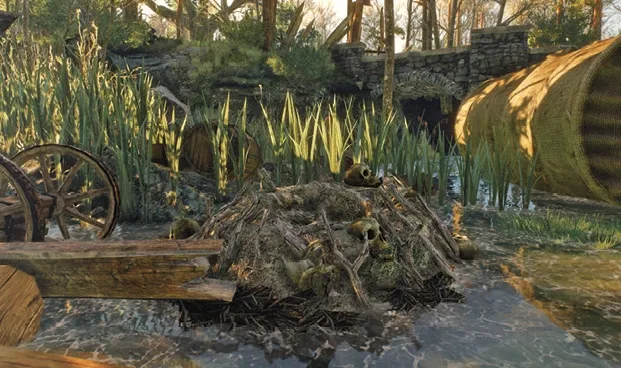
Forty-five nests, plus five vineyard infestations in Toussaint. They are the one marker type that asks you to bring a tool: the wiki says a nest typically requires a bomb to destroy, names Dancing Star, Grapeshot and Samum as the ones that do it, and allows for "other force on some occasions". That is the mechanical argument our alchemy guide makes for carrying bombs on a build that otherwise ignores them.
Destroying the nest usually spawns a stronger version of whatever was living in it as a closing fight. The loot is mostly parts from that monster, and the wiki lists nests as a source for random runestones and glyphs — the reason our runestones and glyphs guide treats clearing them as a no-cost supply line rather than a chore.
The regional split is the surprise here. Velen and Novigrad hold 21 of the 45 between them. Skellige, which feels like it is drowning in markers, has five. White Orchard has three, all of them ghouls.
Bandit camps: the marker is the chest
Fifty-three bandit camps, populated by deserters, renegades, pirates, cannibals, Scoia'tael, Nilfgaardians, and in Hearts of Stone by Fallen Knights of the Order of the Flaming Rose, who get their own set of eight.
The mechanical detail that changes how you clear them: the map marker points at the camp's chest, and looting that chest is what marks the location cleared. Killing everyone does not. If a camp is still lit after a fight, you missed a container, not a bandit.
Cleared camps near populated areas often get occupied by civilians afterwards, much like an abandoned site, but the wiki is clear that this happens without rewards. No XP line, no coin. You get the chest and nothing else, which is why 53 of them is a lot of riding for a category whose entire reward is the container.
Toussaint complicates its eleven. Almost all Toussaint bandit camps sit under a hanse base, and if you discover one after killing the relevant hanse leader, monsters replace the bandits — and the icon flips to a guarded treasure if the camp was undiscovered at that point. Same location, different marker, depending on the order you did things in.
Spoils of War: twelve wrecks, none in the expansions
Twelve locations, and the only one of the eight types that never appears outside the base game. Neither expansion adds one. Eight of the twelve are in Skellige, three in Velen and Novigrad, one in White Orchard.
They are also the thinnest category on documentation. The wiki names exactly one fixed item across all twelve: the relic silver sword Moonblade. The two wiki pages that mention it give different landmarks for which wreck holds it, so treat the sword as findable in a Velen Spoils of War and do not trust a specific pin.
If you are in Skellige and wondering why the sea is covered in markers, these eight are part of the answer and the 22 Skellige guarded treasures are most of the rest.
What to skip, and when
The honest version, from the table rather than from vibes:
Clear on sight. Places of Power, because they are the only one of the eight types that hands you an ability point outright, and there are only 30 of them — the general skills guide has the full regional breakdown and what Gorged on Power does with them. Persons in distress, because thirteen rescues is thirteen permanent service unlocks. Abandoned sites, because they are the only markers with a stated wage attached.
Clear when convenient. Monster nests, because you are carrying the bomb anyway and the runestone drops compound. Monster dens, because nine of the fifteen are on a gear route you were walking regardless.
Clear only if you want the loot. Guarded treasures, which at least aim at relic gear. Bandit camps and Spoils of War, which are 65 markers between them with no clearing reward beyond a container.
One more piece of arithmetic before you commit to a completionist sweep: New Game Plus deletes all map exploration and every point of interest, so a second run puts all 276 back on the board. The Places of Power reset too, and the ability points you already banked from them carry over — which is the one type where re-clearing pays as well as the first sweep did, and the reason our New Game Plus guide treats them as compounding progression.
Quick Action Checklist
- Sweep Places of Power in every region. Thirty exist and each gives one ability point, but they are not all sitting on a hillside: several are gated behind quests and one is inside the main quest Through Time and Space, where it is missable.
- Free every person in distress you pass. Thirteen of them, each unlocking a smith, armorer, herbalist, barber or merchant back in their home settlement.
- Take abandoned sites when they are on your route. 120 to 170 XP plus 50 crowns each, except in Toussaint where all eleven are quest content and pay nothing.
- Keep Dancing Star, Grapeshot or Samum in your bag for the 45 monster nests, and expect a stronger monster to spawn when the nest goes down.
- Loot the chest to clear a bandit camp or a monster den. The marker tracks the container, not the kills.
- Ride to guarded treasures if you want relic gear. The wiki puts all the Toussaint ones among the locations with at least partially fixed loot, where a lot of the rest are randomised.
- Skip the 12 Spoils of War unless you are hunting Moonblade or already sailing past one.
Frequently Asked Questions
Are the question marks in The Witcher 3 worth doing?
What is a guarded treasure in The Witcher 3?
How do you destroy a monster nest in The Witcher 3?
What do you get for clearing an abandoned site in The Witcher 3?
Do points of interest reset in Witcher 3 New Game Plus?
Keep Reading
- Witcher Wiki — all guarded treasures by region, the relic-loot note, and the fixed loot in Blood and Wine
- Witcher Wiki — bandit camp counts by region, the Fallen Knight camps, and the rule that the marker tracks the chest
- Witcher Wiki — every monster nest by region, the three bombs that destroy one, and what the loot contains
- Witcher Wiki — the five Blood and Wine vineyard infestations and their locations
- Witcher Wiki — abandoned site counts, the 120 to 170 XP and 50 crown reward, and the Blood and Wine exception
- Witcher Wiki — all fifteen monster dens, the Scavenger Hunt annotations, and the chest-not-kills clear condition
- Witcher Wiki — every person in distress, who each one is, and the service unlock on their return
- Witcher Wiki — the twelve Spoils of War locations and the Moonblade reference
- Witcher Wiki — Places of Power by region, one ability point each, and the New Game Plus reset
- Witcher Wiki — New Game Plus wipes all map exploration and points of interest
- Witcher Wiki — the six open-world regions the markers are distributed across
Related Guides
The Witcher 3 Remastered Skill Tree: What Unlocks What
CD PROJEKT RED described the Remastered skill overhaul in three bullet points and has published no skill list. The Witcher wiki has since filled in all four trees. Here is how unlocking works now, what every skill needs and does at rank 1 and rank 3, and which old skills are gone.

The Witcher 3 Remastered PC Requirements: All Six Tiers
CD PROJEKT RED's Remastered patch notes carry a six-column PC spec table, from a GTX 1660 at 1080p on Low up to an RTX 5080 for path tracing at 4K. Here is every tier, which upscaler your graphics card actually gets, why CDPR's own storage figures disagree, and the PC settings its patches and support pages have touched since launch.
The Witcher 3 Fist Fights: Every Circuit and Brawl Master
Skellige's fistfighting champion is a bear, the Champion of Champions is a rock troll, and before the troll will fight you at all you have to lose a fight to a ghost on purpose. Here is every fistfighting circuit opponent across Velen, Novigrad, Skellige and Toussaint, what each one pays, and the single loss that makes Brawl Master unobtainable.

The Witcher 3 Remastered Mods: How to Install, What Broke
Remastered put a Mods button on The Witcher 3's main menu, and CD PROJEKT RED says the same update stopped mods carrying script, XML or w3strings files from working. Here is how the mod.io menu works on PC and console, what broke and who fixes it, which Steam branch actually gets your old build back, and what a mod does to your trophies and your cross-save.

The Witcher 3 Beginner's Guide: Your First 20 Hours
Most people who bounce off The Witcher 3 do it in White Orchard, and it is almost always the same three reasons: they never learned Quen, they never applied an oil, and they treated the skill tree like a shopping list. Here is the fix.
The Witcher 3 Kaer Morhen Allies: Full Crew Checklist
Whether Lambert survives the Battle of Kaer Morhen is decided in a level-8 Velen side quest about plague notes. Here is every ally you can bring, the exact quest chain each one needs, what they change once the Hunt arrives, and the quests that fail the moment you sail for the Isle of Mists.