The Witcher 3 Money Guide: How to Make Crowns Without Cheesing It
Witcher 3 trading has real, knowable numbers behind it, and almost nobody reads them. Merchants pay between 20% and 41.5% of face value depending on who and where they are, dismantling beats selling more often than you think, and the game literally taxes you for exploiting it.

Kill six cows in White Orchard and a level 27 chort walks out of the treeline to kill you. It is not a contract, it is not a boss, and it is not scripted into any quest. CD Projekt Red patched it into the game in 1.05 as a punishment, because players had worked out that cows respawn when you meditate and cow hide sells for actual money.
The joke got better than the fix. Chort hide carries a base value of 324 crowns against cow hide's 148, so for a while the penalty paid better than the crime, and higher-level players just farmed the punishment instead. That has since been trimmed back — only one chort spawns at a time now, and it will not return until you leave White Orchard and come back — but the whole episode tells you what you need to know about this economy. The numbers behind trading are real, specific and knowable, the game is quietly aware of what you are doing with them, and almost nobody reads them.
So here they are: how merchants actually price your loot, when dismantling beats selling, which quests pay properly, and the one exploit that got its own tax audit.
Why you are broke
Geralt is not poor because contracts pay badly. He is poor because the three biggest things you want in this game are priced like a mortgage.
- The Runewright wants 30,000 crowns across three payments before he will sell you his full menu of runewords and glyphwords. That is the single largest bill in the game, and our Hearts of Stone guide breaks down which enchantments are worth it.
- Corvo Bianco costs 14,000 crowns to fully renovate. The general house refurbishment alone is 5,000, then 1,000 each for the grindstone, the armor repair table and the bed, 500 each for weapon racks and armor stands, 1,000 for the guest room, and 2,000 each for the stable and the garden.
- Gwent is a money pit with a smile. Cards cost crowns, and the High Stakes tournament charges a 1,000 crown entry fee before you sit down.
Add grandmaster gear crafting on top and you are looking at a five-figure lifetime spend. Which is fine — the money is there. You are just leaving most of it in the wrong pockets.
The pricing rules the game never shows you
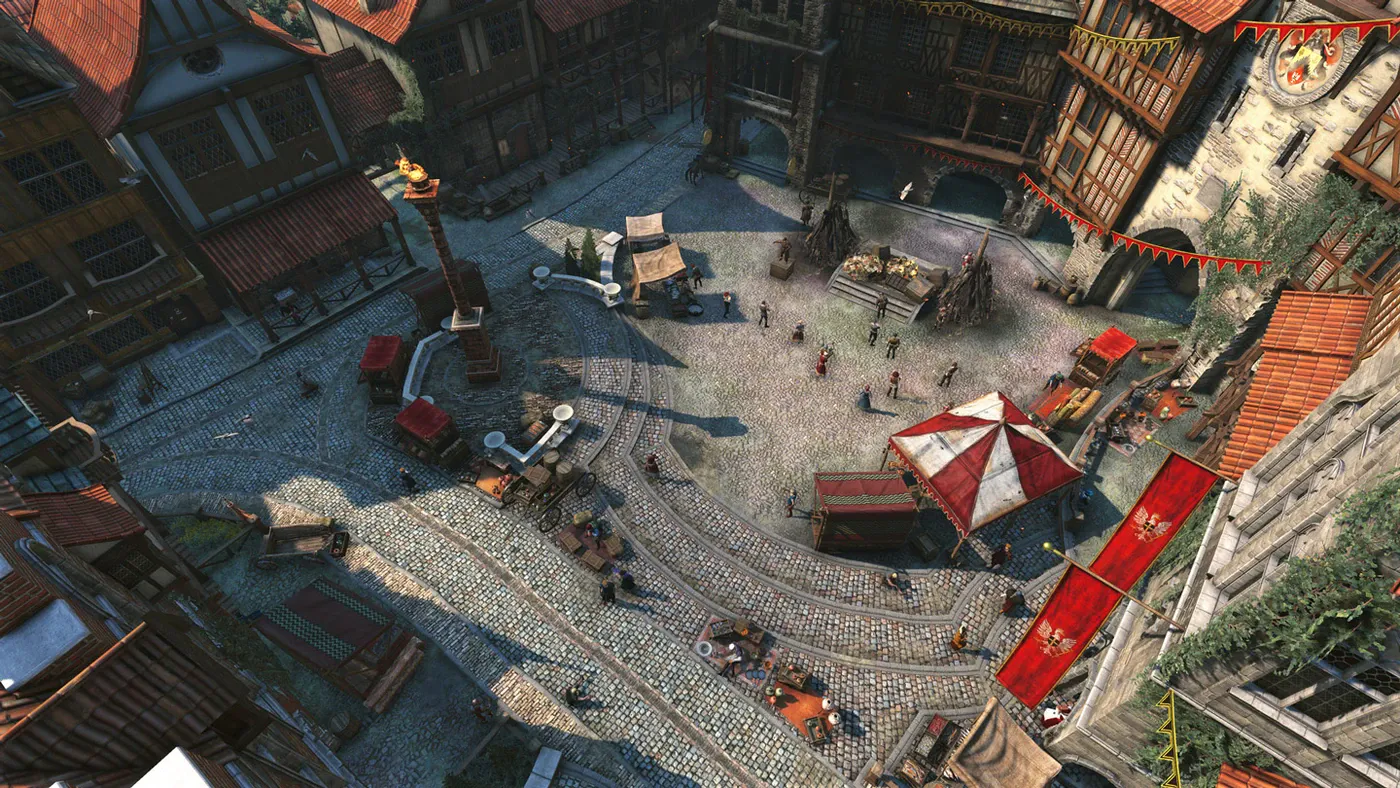
Every shopkeeper is not the same shopkeeper. Merchants of the same type sit on a handful of set purchasing tiers, and those tiers range from 20% of an item's face value up to roughly 41.5%. That is a two-to-one spread on identical loot depending purely on who you walk up to.
The geography is broadly predictable. Village merchants out on the continent pay the least. The big cities — the ones you cannot gallop inside — pay the most. Skellige merchants typically land at 35% of face value, which makes the isles a decent place to offload a full saddlebag even though they are not the peak.
Then there are the specialist bonuses, which are the part most players never exploit:
| Sell this | To this shop | Bonus over other shop types |
|---|---|---|
| Weapons, weapon upgrades, horse equipment | Blacksmith | +20% |
| Armor and armor upgrades | Armorer | +20% |
| Food and drink | Innkeeper | +5-12% |
| Junk | Innkeeper | Usually 5-15%, occasionally far more |
Innkeepers are the surprise. They are the best junk buyers in the game by a comfortable margin, and on some items the gap over other shop types is enormous. They are also the worst-capitalised, so they tend to run out of crowns halfway through your inventory.
That leads to the last rule, and it is the one that changes how you play: merchants have a finite cash supply, and waiting or meditating five whole days refreshes it. If a shopkeeper tells you he cannot afford your relic sword, that is not a hard no, it is a five-day no. Sell what he can cover, meditate, sell the rest.
Dismantle or sell
Dismantling costs roughly 20% of the price that armorer or blacksmith would charge you for the same item, plus regional modifiers. Velen craftsmen are the cheapest to dismantle at, Skellige sits in the middle, and Novigrad is the most expensive in the base game. Craftsmen added by the expansions are pricier still, in progressive order.
Whether it is worth paying depends entirely on the rank of the person swinging the hammer:
- Amateurs extract exactly 1 of each possible component.
- Journeymen extract a random amount between 1 and the maximum minus one. If the maximum is under 3, you always get 1.
- Masters — and the grandmaster in Toussaint — always extract the full possible amount.
That rank gap is the entire game. Take the gold pearl necklace, a junk item with a base value of 330 crowns that sells whole for somewhere between 46 and 125. Dismantled, it yields 1-3 gold nuggets and 1-3 pearls, and a single pearl sells for 23 to 89 on its own. A master pulling three pearls out of one necklace clears the best whole-item price before you have even counted the nuggets. An amateur pulling one pearl and one nugget does not.
Yoana at Crow's Perch is the cheapest master-rank craftsman in the game, available once you finish Master Armorers, and she should be doing all of your bulk dismantling. Before she unlocks, Fergus Graem — also at Crow's Perch — is the earliest cheap journeyman you will reach. Armorers generally charge slightly less than blacksmiths for anything that is not a weapon, which matters in the early game when 2 crowns feels like 2 crowns.
One caveat worth its own line: do not dismantle armor and weapons you might upgrade later, and never assume components are always worth more. The necklace math works because pearls are absurdly valuable relative to their source. A ladle is still a ladle.
The honest money makers
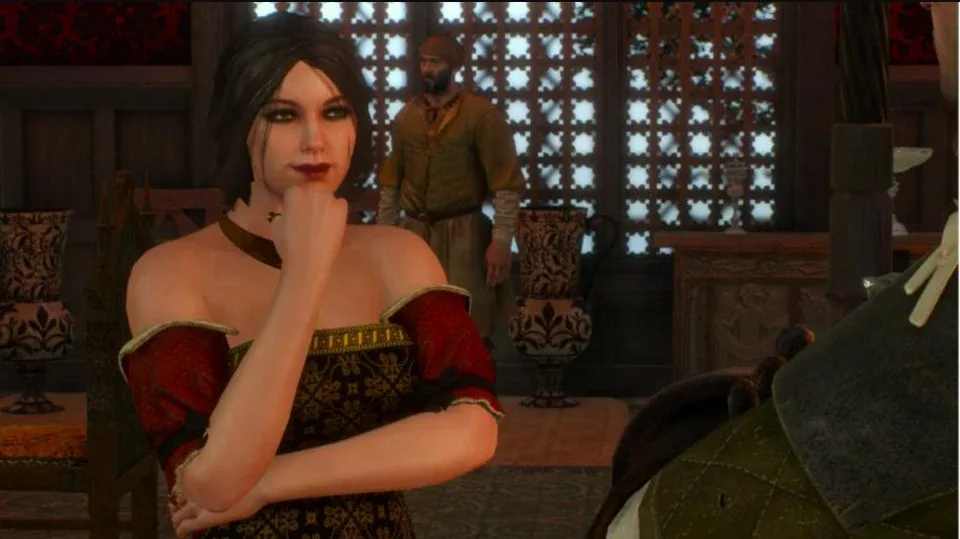
High Stakes is the best single payday in the base game. You pay 1,000 crowns to enter the gwent tournament at the Passiflora, and if you hear out Sasha's proposal after your first match, win every game, and then help her track down the thief who lifts the prize money, you walk out with 4,500 crowns plus four leader cards. Net 3,500. Two warnings the game does not give you: you must at least listen to Sasha's offer, and if you decline it and then lose a match, the quest fails outright.
Contracts are the reliable salary, and haggling is free money. Most contract givers will go up to around 300 crowns, high-level hunts stretch past 375, and one of them can be talked into paying double. The full breakdown lives in our contracts guide.
Trophies are a liquid asset you are probably hoarding. The earth elemental trophy from Contract: Doors Slamming Shut has a base value of 1,000 crowns. The ekimmara trophy is 500. Arachas, archgriffin and chort trophies are 250 apiece. That said, they all carry a passive buff while mounted on Roach's saddle, so sell your duplicates and your dead-weight effects, not your XP heads.
Chort farming is real, if you are high enough level. The White Orchard punishment chort drops chort hide with a base value of 324 that sells for 47 to 264, and dismantles into monster hide — itself base 147, selling 32 to 131 — plus monster hair. Kill it, ride out of White Orchard, ride back, repeat. It is slow, but it is a genuine mechanic rather than a bug.
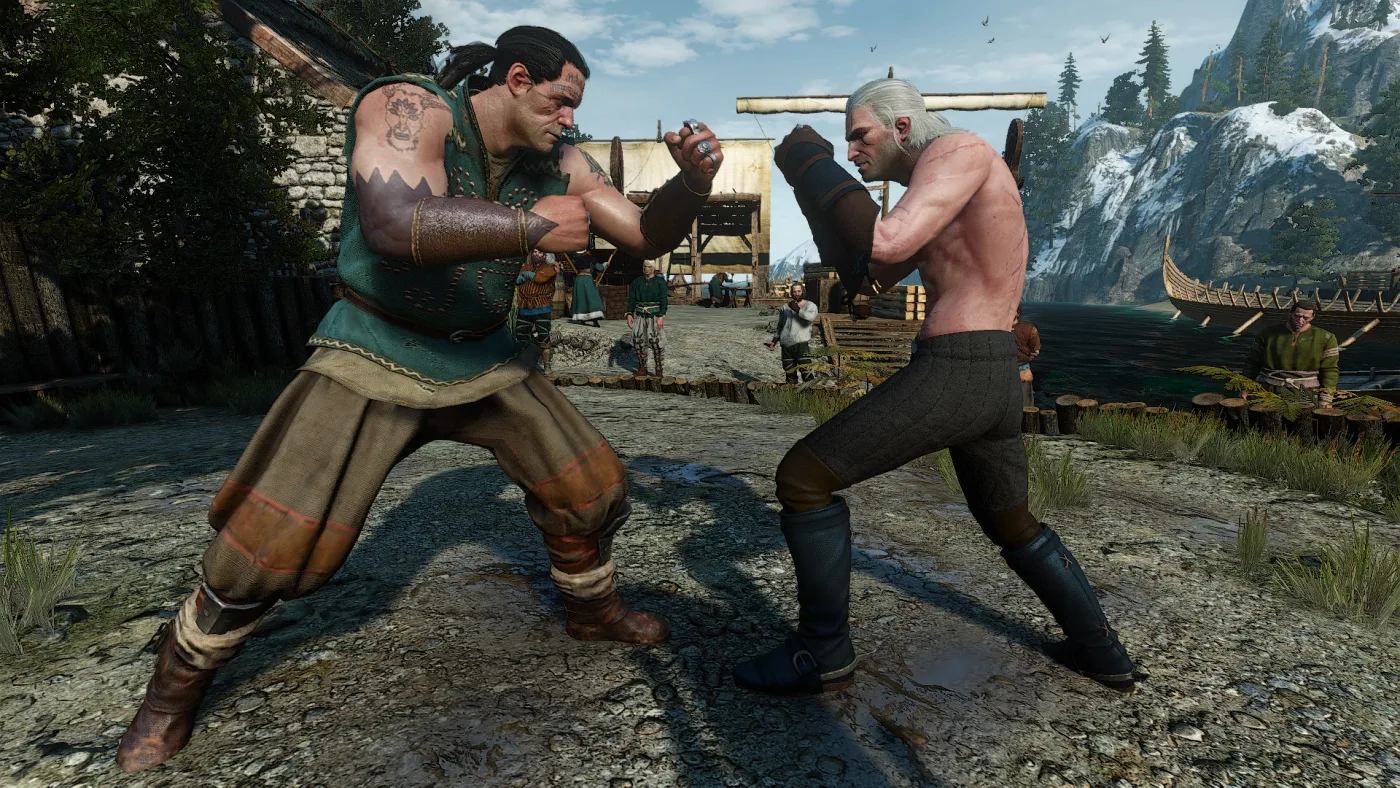
And a thing that is not a money maker, because someone always asks: fistfighting. The Skellige circuit pays 70 crowns per opponent, and beating Olaf the bear on An Skellig gets you 50 XP, 90 crowns and the Gwestog sword. That is not income, that is a story about punching a bear. Do it for the bear.
The shell trick and the taxman who exists because of it
Here is the exploit, stated plainly so you can decide for yourself. Armorers and blacksmiths sell shells for 8 crowns. A shell dismantles into exactly one pearl. A pearl has a base value of 100 and sells for 23 to 89. Sea shells cost 15 and dismantle into a black pearl, base value 130, selling for 30 to 115. Buy the cheap thing, pay pennies to break it, sell the expensive thing, repeat until the merchant is out of crowns and then meditate five days.
It works. It is also boring, and CD Projekt Red thought it was funny enough to write a quest about it.
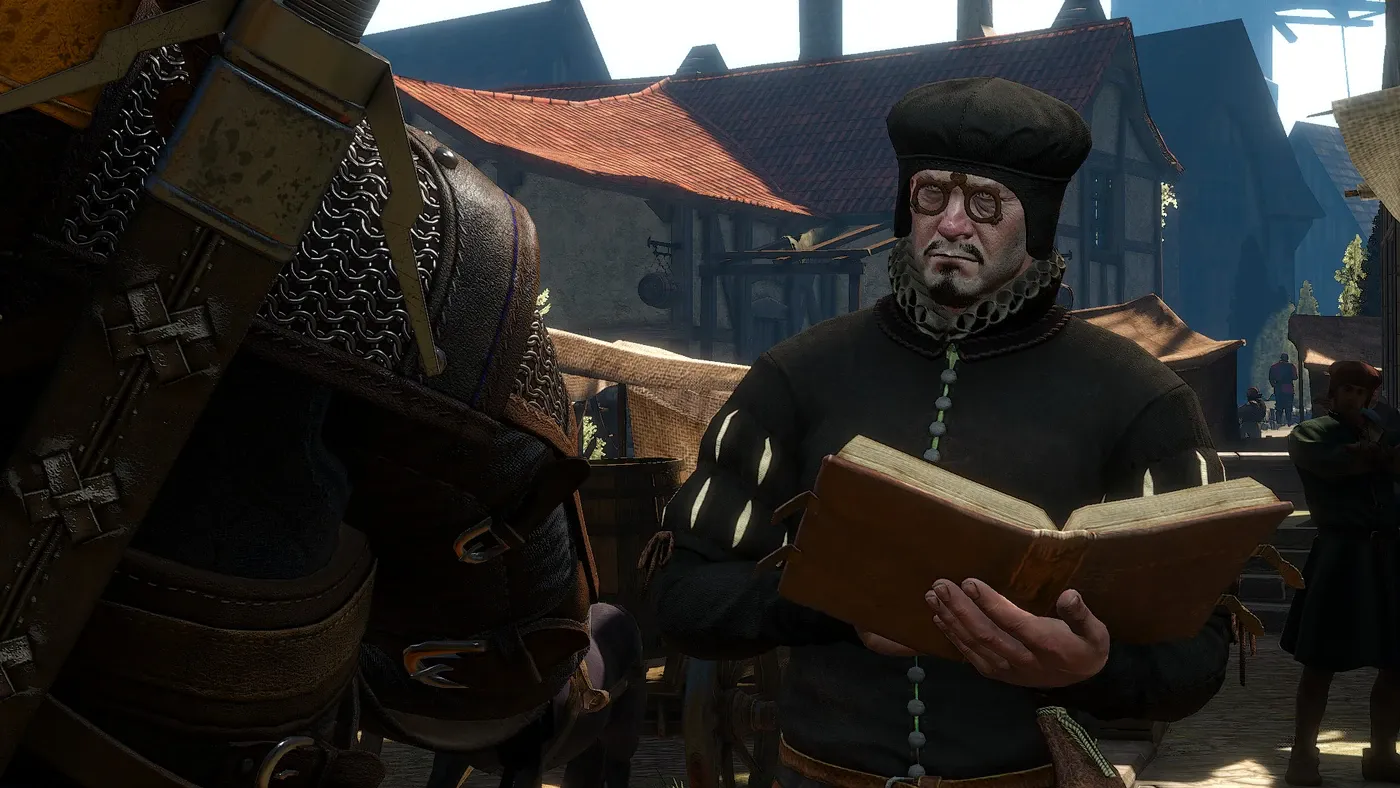
Once you own Hearts of Stone and are carrying 35,000 crowns or more, Deputy Tax Enumerator Walthemor Mitty will stop you in the Oxenfurt markets for a level 32 secondary quest called The Taxman Cometh. He asks three questions. Have you engaged in the wholesale trade of rawhide in the White Orchard area. Have you acquired bivalves with the express intention of selling the pearls therein. Have you ever walked into someone's home and taken something without permission.
Answer no to two or more and he hands you a Taxpayer in Good Standing diploma and suggests you hang it at Kaer Morhen. Answer yes to two or more and you get a summons: report to the Vivaldi Bank in Novigrad and pay 1,000 crowns in back taxes, which at least comes with 100 XP. Until you pay it, Vimme Vivaldi refuses to deal with you at all — no trading, not even a hand of gwent. The quest pays 50 XP either way, and it can fire mid-chase during Contract: The Oxenfurt Drunk, where it interrupts the pursuit but does not affect the outcome.
It is the best joke in the game's economy, and it is worth triggering deliberately once.
Check your stash for orens and florens
Open your inventory and look for coins that are not crowns. Orens are the old Temerian currency from the first two games; florens are Nilfgaardian. Both drop as loot throughout the game, neither is spendable, and a lot of players carry them for eighty hours without realising they are money.
- 1 oren = 1 crown
- 1 floren = 3 crowns
There are exactly two places to convert them: Vimme Vivaldi at the Vivaldi Bank in Novigrad, and Giacomo Cianfanelli at the Cianfanelli Bank in Beauclair if you have Blood and Wine. Florens tripling in value makes a full Nilfgaardian stash worth a detour on its own.
Which produces a genuinely stupid failure state worth avoiding: if you took the taxman's summons and have not paid it, Vivaldi will not exchange your coins either. In the base game, that is your only exchange window shut over a 1,000 crown grudge.
Quick Action Checklist
- Sell weapons and horse gear to blacksmiths, armor to armorers, food and junk to innkeepers — each pays a bonus over generic shopkeepers.
- Sell in big cities where you cannot gallop; village merchants pay as little as 20% of face value.
- When a merchant runs out of crowns, meditate five whole days and come back.
- Do bulk dismantling with Yoana at Crow's Perch once Master Armorers is done — master rank always yields the maximum components.
- Dismantle gold pearl necklaces rather than selling them whole; pearls alone sell for 23 to 89 each.
- Bank the 4,500 crowns from High Stakes by listening to Sasha before the tournament resumes.
- Haggle every contract, and sell duplicate trophies while keeping the ones whose saddle buff you actually use.
- Cash orens and florens at Vivaldi in Novigrad or Cianfanelli in Beauclair; florens are worth three crowns each.
- Budget 30,000 for the Runewright and 14,000 for Corvo Bianco before you buy a single gwent card you do not need.
Frequently Asked Questions
What is the fastest way to make money in The Witcher 3?
Which merchants pay the most in The Witcher 3?
Should I dismantle or sell items in The Witcher 3?
How do you exchange orens and florens in The Witcher 3?
Why does a chort attack me when I kill cows in White Orchard?
What triggers the taxman quest in The Witcher 3?
Keep Reading
- Witcher Wiki — merchant purchasing tiers, regional pricing and cash refresh
- Witcher Wiki — junk values, dismantling costs and craftsman yield ranks
- Witcher Wiki — the patch 1.05 cow exploit fix and chort hide values
- Witcher Wiki — The Taxman Cometh trigger conditions and outcomes
- Witcher Wiki — crown, oren and floren exchange rates and bank locations
Related Guides
The Witcher 3 Runestones and Glyphs: What Every Upgrade Slot Is Worth
Two greater runestones sit side by side in the same shop. Both say five percent. One costs 440 crowns and the other 980. Here is the full stat table, the crafting maths behind that gap, and which slots are worth filling.

The Witcher 3 Remastered Rewards: Fire Horse, Scarlet Crest
Ninety minutes of Twitch buys Roach a 90-Stamina saddle that only one saddle in the game beats, and you can loot it before the prologue ends. Here is every Remastered reward in the Vizima chest, how to claim each one before the Twitch drops close on 27 October, and what the Fire Horse and Scarlet Crest sets are actually worth.

The Witcher 3 Remastered Skill Tree: What Unlocks What
CD PROJEKT RED described the Remastered skill overhaul in three bullet points and has published no skill list. The Witcher wiki has since filled in all four trees. Here is how unlocking works now, what every skill needs and does at rank 1 and rank 3, and which old skills are gone.

The Witcher 3 Remastered PC Requirements: All Six Tiers
CD PROJEKT RED's Remastered patch notes carry a six-column PC spec table, from a GTX 1660 at 1080p on Low up to an RTX 5080 for path tracing at 4K. Here is every tier, which upscaler your graphics card actually gets, why CDPR's own storage figures disagree, and the PC settings its patches and support pages have touched since launch.

The Witcher 3 Beginner's Guide: Your First 20 Hours
Most people who bounce off The Witcher 3 do it in White Orchard, and it is almost always the same three reasons: they never learned Quen, they never applied an oil, and they treated the skill tree like a shopping list. Here is the fix.
The Witcher 3 Fist Fights: Every Circuit and Brawl Master
Skellige's fistfighting champion is a bear, the Champion of Champions is a rock troll, and before the troll will fight you at all you have to lose a fight to a ghost on purpose. Here is every fistfighting circuit opponent across Velen, Novigrad, Skellige and Toussaint, what each one pays, and the single loss that makes Brawl Master unobtainable.