Ocarina of Time 3D vs N64: Every Difference That Actually Matters
Ocarina of Time 3D is not a texture pack with a price tag. Grezzo doubled the frame rate, put the Iron Boots on a button, signposted the Water Temple, and shipped a mirrored double-damage Master Quest. Here is every difference that changes how you actually play — and the one thing the N64 version still does better.
Every time someone asks which version of Ocarina of Time to play, the thread turns into a purity contest. Half the replies say the N64 cartridge is the only real experience. The other half say the 3DS remake is objectively better and the first group is doing nostalgia cosplay. Both camps mostly argue about textures, which is the least interesting difference between these two games.
The actual gap is mechanical. Grezzo did not just repaint Hyrule for the 3DS in 2011 — they changed how you equip gear, how you read a dungeon, how you aim, and what the hardest mode in the game even is. Some of those changes are straight upgrades. One of them quietly removes a layer of the game. Here is the full accounting.
The remake nobody argues about correctly
Start with the number that settles the "it just looks nicer" claim: the N64 original runs at 20 frames per second, and Ocarina of Time 3D runs at a locked 30. That is a 50% increase, and it is not a cosmetic stat. Every sword swing, every backflip, every Deku Nut panic-dodge reads faster because there are more frames of it. If you play them back to back, the N64 version feels like it is wading.
Grezzo also rebuilt the areas that used pre-rendered background art — the shop interiors, the Temple of Time entryway — as real-time polygonal 3D. That is why the camera in the remake can move in rooms where the N64 camera was welded to one angle.
What Ocarina of Time 3D actually is
The original shipped on Nintendo 64 on November 21, 1998 in Japan and November 23, 1998 in North America, and went on to sell more than seven million copies. The remake, developed by Grezzo with support from Nintendo EAD Tokyo, hit the 3DS in June 2011 — June 16 in Japan and Europe, June 19 in North America.
It sold about 6.44 million copies worldwide as of December 2022, which makes it the 13th best-selling 3DS game. Point being: this is not an obscure side release. For a huge chunk of players under 30, the 3DS version is Ocarina of Time.
The changes that alter how you play
Ignore the resolution bump. These are the differences you will feel inside the first hour.
Iron Boots became an item
On N64, the Iron Boots live in the equipment menu. Every single time you want to sink, you pause, tab over, select, unpause. Every time you want to walk normally again, you do it in reverse. In a dungeon built around raising and lowering water, that is dozens of menu round-trips.
In the 3DS version you assign the Iron Boots to an item button and toggle them like a Hookshot. That one change removes more friction from the Water Temple than every map marker Nintendo added on top of it.
The Water Temple got signposted
Grezzo added color-coded markings on the walls leading to each water-level switch, so the geometry itself tells you where the triforce sigils are instead of making you re-scan three floors from memory. They also added a short camera cutaway that hints at the location of the small key players missed most often — the one under the block in the central tower.
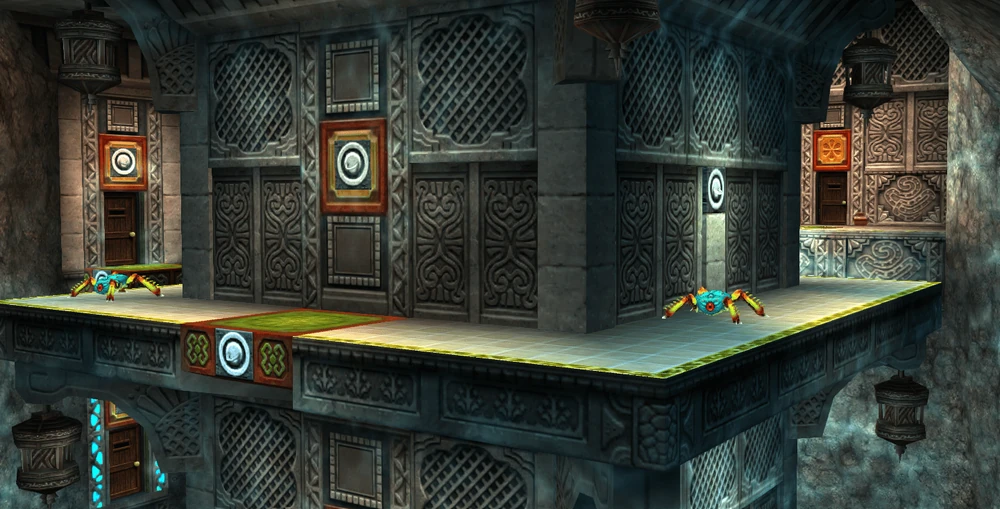
Purists call this hand-holding. I would call it correcting a legibility bug. The Water Temple was never hard in a combat sense — it was hard because the game refused to communicate its own state. Signposting the switches does not make the puzzles trivial, it makes them readable. If you want the unassisted version, the N64 cartridge is right there.
Touchscreen menus and gyro aiming
The bottom screen holds your inventory, equipment, and map at once. You tap to swap tunics, boots, and swords without a single pause-menu detour, and you drag items onto the item buttons to remap on the fly. Bottle juggling in the middle of a boss fight stops being a chore.
Gyro aiming is the other addition: tilt the handheld to fine-tune first-person aim with the Bow, Slingshot, Hookshot, Longshot, and Boomerang. It is optional and you can turn it off, but for precision shots — the Gerudo target range, Skulltulas tucked in ceiling corners — it is genuinely more accurate than the N64 analog stick ever was.
Sheikah Stones are a built-in walkthrough
Two Sheikah Stones sit in the world: one outside Link's house in Kokiri Forest, one in the Temple of Time. Talk to either and you can crawl inside to watch Vision clips that show you how to solve upcoming content. They are placed at the two spots where a loaded save drops you, which is not an accident.
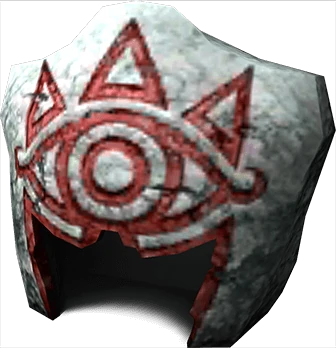
You can also just never talk to them. Nothing forces a hint on you. And here is the detail almost nobody mentions: both Sheikah Stones are absent from Master Quest. The hard mode does not come with training wheels.
The Stone of Agony became the Shard of Agony
On N64, the Stone of Agony buzzes your controller near hidden secrets, and it only works if you have a Rumble Pak jammed in the back of the pad. The 3DS has no rumble motor at all, so the remake renames the item the Shard of Agony and swaps the vibration for an audio cue. Same function, different sense. If you were the kid who never owned a Rumble Pak, the 3DS version is the first time this item does anything for you.
Master Quest is the real headline feature
Master Quest originally arrived as a GameCube bonus disc in 2003, handed out with Wind Waker pre-orders, and it redesigned the dungeon layouts and puzzles without touching the overworld or the story. Rare disc, good mode, most people never played it.
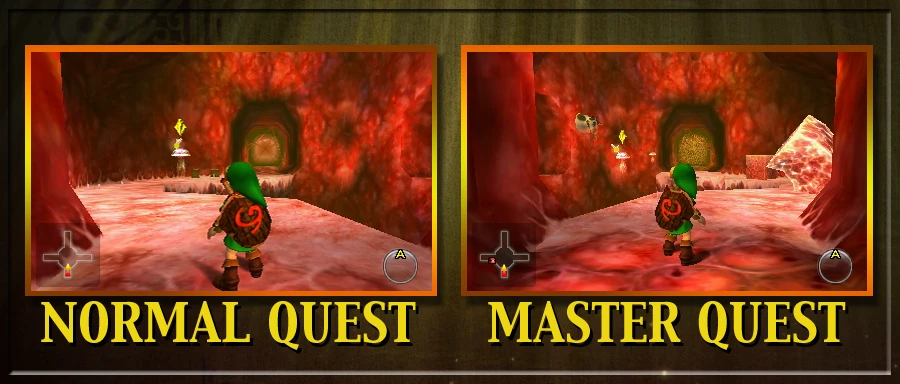
The 3DS version goes further in two specific ways. First, the entire game is mirrored — the overworld, the dungeons, and Link himself, who now looks right-handed. Muscle memory from a hundred playthroughs becomes actively hostile, which is the point. Second, every enemy and boss deals double damage. A Stalfos that used to chip you now genuinely threatens a three-heart file.
Mirrored plus double damage plus redesigned dungeons plus no Sheikah Stones is a legitimately different game, and it unlocks the moment you finish the main quest. If you have beaten Ocarina of Time enough times that you can autopilot to the Forest Temple, this is the version that makes you stop and think again.
Boss Challenge and the post-game
The remake also adds Boss Challenge. Once you reach adult Link and Sheik points you back home, you can rest in Link's house to refight any boss you have already beaten. Clear them all and you unlock a gauntlet run of every boss back to back. Master Quest gets its own double-damage version of the same mode.
It is a small feature, but it is the closest Ocarina of Time has to a practice mode — useful if you are learning routes or just want to fight Bongo Bongo eleven times without replaying the Shadow Temple.
What the 3DS version gives up
Two things, and they are both about access rather than design.
The first is rumble. The Rumble Pak sat in the N64 controller and turned the Stone of Agony into a physical sensation. The audio cue on 3DS works, but it is a downgrade in feel.
The second is a bigger problem. Ocarina of Time 3D has never been ported off the 3DS, and the 3DS eShop closed for new purchases on March 27, 2023. There is no legitimate digital way to buy it anymore. You need a physical cartridge and a 3DS. Meanwhile the N64 original has been on Nintendo Switch Online's Expansion Pack tier since October 25, 2021, which is a subscription away for anyone with a Switch. The better remake is the harder one to get.
Which version should you actually play
If it is your first playthrough and you own a 3DS: play the remake. Higher frame rate, readable Water Temple, no menu tax on the Iron Boots, and a hint system you can ignore. Nothing about it dumbs down the puzzles.
If you only have a Switch: play the N64 version on the Expansion Pack and stop feeling bad about it. It is the game that earned the reputation, and the 20fps stops registering after about twenty minutes.
If you have already beaten it and want a reason to return: the 3DS Master Quest is the only version of this game that will surprise you again. Mirrored world, double damage, no Sheikah Stones, redesigned dungeons. That is the actual case for buying a used cartridge in 2026.
Quick Action Checklist
- Assign the Iron Boots to an item button immediately on 3DS — do not use the equipment menu.
- Follow the color-coded wall markings in the 3DS Water Temple instead of memorizing floor layouts.
- Turn gyro aiming on for the Bow and Slingshot, off if you play in bed or on a bus.
- Skip the Sheikah Stones entirely if you want an unassisted first run; they never interrupt you.
- Beat the main quest to unlock Master Quest, then expect a mirrored map and double damage.
- Playing on Switch instead? The N64 version needs the Nintendo Switch Online Expansion Pack tier, not the base plan.
Frequently Asked Questions
What is the difference between Ocarina of Time 3D and the N64 version?
Is the Water Temple easier in Ocarina of Time 3D?
How is Master Quest different on the 3DS?
Does Ocarina of Time 3D have the Stone of Agony?
Can you still buy Ocarina of Time 3D?
Which version of Ocarina of Time is best for a first playthrough?
Keep Reading
Related Guides
Ocarina of Time Remake: Switch 2 Release Date and Changes
The 1998 original never gave you a jump button. The Switch 2 remake puts jumping on one, adds a Breath of the Wild item scroll, fully voices its cutscenes and lets you hum Zelda's Lullaby into the console. Here is everything Nintendo has confirmed about the November 5 release, the editions and amiibo, and the questions it still has not answered.
Ocarina of Time Hyrule Castle: Sneak In and Meet Zelda
Young Link's trip to meet Princess Zelda runs on three rules that are easy to miss: Malon is not at the castle on your first visit, her egg only hatches at dawn, and the drain is a daytime-only door. Here is the whole route, how the guards actually spot you according to the game's code, and what the visit unlocks.
Ocarina of Time Lost Woods: Route, Upgrades and Hearts
Take the wrong doorway in the Lost Woods and the game just puts you back in Kokiri Forest. Here is the seven-turn route to the Sacred Forest Meadow, how to find it by ear instead, and everything the route walks past: two Pieces of Heart, five capacity upgrades, four Gold Skulltulas and two shortcuts out.
Ocarina of Time Gerudo's Fortress: Free All 4 Carpenters
The Gerudo do not want you dead. They want you in a cell. Here is how to cross Gerudo Valley, get through the fortress, beat the four Gerudo Thieves guarding the carpenters, and walk out with the Gerudo Token — plus the collectibles on the grounds.
Ocarina of Time Dungeon Order: The Full Route, Explained
Ocarina of Time looks like an open adventure and plays like a corridor. Eight required dungeons, three side dungeons, and exactly one place where the game genuinely lets you pick. Here is the whole route with the reasons behind each lock.
Ocarina of Time Ice Cavern Walkthrough: Every Room
Skip the Ice Cavern and the Water Temple becomes uncrossable — the Iron Boots live nowhere else in the game. It's also a genuinely strange dungeon: per Zelda Wiki, it's tied with the Gerudo Training Ground as the smallest in Ocarina of Time, and every room but the mini-boss chamber connects by open hallway instead of a door. Here's the room-by-room route: the Ice Scythe hub and its five Silver Rupees, all three Gold Skulltulas, the White Wolfos fight, and the underwater shortcut on the way out.