Baldur's Gate 3 High Ground: It's Not Advantage
The standard beginner tip in this game is "take the high ground" — and it leaves it there, as if it works the same way a Prone target or an unseen attacker does. It does not. High ground is a flat, separately tracked +2 or -2 bolted onto the attack roll, and bg3.wiki's own numbers show it does things the "it's advantage" version of the rule never predicted.
The standard beginner tip for this game is: take the high ground. Our own beginner guide says it, too. What almost nothing says is what "high ground" actually does to the roll — and the assumption that fills the gap is usually wrong. Players read it as the same advantage a Prone target or an unseen attacker gives you: roll twice, take the higher. It isn't. High ground in Baldur's Gate 3 is a flat, separately tracked +2 or -2 modifier added straight to the attack roll, and that single distinction changes how it interacts with everything else on the battlefield.
bg3.wiki's breakdown of the system — pulled from the game's own combat tooltips and targeting UI, not community guesswork — lays out the exact threshold, the exact number, and a range-extension rule that produces a genuinely counterintuitive trap for anyone chasing the maximum possible shot.
It is a flat +2, not advantage
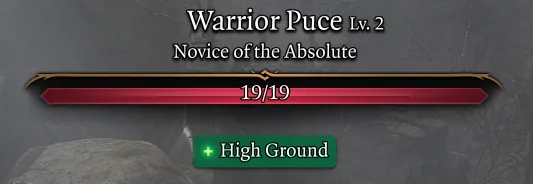
When there is enough elevation difference between attacker and target, the game applies an elevation modifier to the attack roll — displayed right under the target's HP bar when you're aiming at them, the same place Advantage and Disadvantage icons show up. But it isn't one of those icons.
| Your position relative to target | Modifier to your attack roll |
|---|---|
| 2.5m or more above the target | +2 "High Ground" bonus |
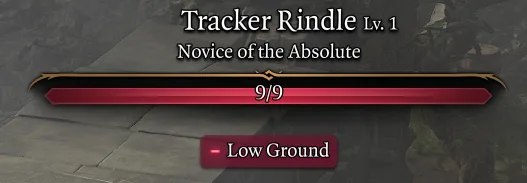
| 2.5m or more below the target | -2 "Low Ground" penalty |
| Under 2.5m difference either way | No modifier |
That is a flat number, added before the die is rolled — mechanically identical to a proficiency bonus or a +1 weapon, not to advantage. Advantage and disadvantage change how many dice you roll and which result you keep; High Ground changes the number you add to whatever you rolled. They are different systems that happen to occupy the same corner of the screen, and conflating them is where most of the bad high-ground folklore comes from.
The 2.5-metre threshold
The bonus and penalty are binary, not scaling — there is no bigger number for standing on a taller tower. Cross 2.5 metres (about 8 feet) of elevation difference and the full +2 or -2 applies; stay under it and nothing happens at all. Most single-storey interior stairs, wagon beds, and low rooftops in the game sit right around or just under that line, which is why "get up high" sometimes visibly does nothing — you found a ledge, not one tall enough to trip the modifier.
The rule technically applies to every attack roll in the game, melee included. In practice it almost never touches melee combat, for a reason covered next.
Melee almost never qualifies — four exceptions that do
Melee weapons don't have the range to reach a target 2.5m above or below you and still land a hit, so the high ground modifier sits unused on the vast majority of melee attack rolls. bg3.wiki names the handful of exceptions where a melee attack's range is long enough for it to matter:
- Thorn Whip — a melee spell attack with 9m of range.
- Fangs of the Fire Snake — a melee unarmed attack with 6m of range.
- Diving Strike — inherently requires jumping down from a higher elevation to use at all.
- Charger — the weapon action for charging up or down a slope, when the elevation change along the charge is large enough.
One thing that does not extend the modifier's melee reach: weapons with the Extra Reach property, like halberds and quarterstaves. That property only extends how far you can hit horizontally — the wiki is explicit that it does not extend how far you can hit vertically, so a reach weapon on its own does not let you land High Ground hits a dagger couldn't.
Sharpshooter cancels the penalty, it does not grant the bonus

Sharpshooter's Low Ground rider is specifically worded to remove the Low Ground penalty on ranged weapon attack rolls — not spell attacks, and not the High Ground bonus in the other direction. That distinction is easy to miss and worth being precise about, because the two effects read like mirror images and are not:
- Standing 2.5m below an enemy with Sharpshooter: your -2 Low Ground penalty is cancelled. You fire at a neutral roll, the same as if there were no elevation difference at all.
- Standing 2.5m above an enemy without Sharpshooter: you still get the full +2 High Ground bonus regardless of the feat, because there's no penalty for it to cancel.
Sharpshooter does not put you on equal footing with a character actually standing on the ledge — it only stops your own position from actively working against you. If the goal is the +2, someone still has to physically be the one standing higher.
The hidden range extension when you are shooting down
Elevation does one more thing most ranged-ability tooltips never mention: it extends how far the shot can reach, but only in one direction. Most ranged abilities gain bonus horizontal range against a lower target, equal to the elevation difference between you and them.
Work it through with bg3.wiki's own example: a ranged weapon attack with an 18m base range, fired at a target sitting 9m below you. The maximum horizontal range against that target extends to 27m — the base 18m plus the 9m of elevation. Factor in the vertical drop and the true straight-line distance covered by that shot works out to roughly 28.4 metres, well past what an 18m weapon should reach on flat ground.
That extension only runs downhill. Firing up at a higher target gets no matching range penalty, but it also gets no bonus — the base range applies exactly as if the target were level with you.
Extended range is not extended effective range
Here is the part the tooltip does not warn you about, and where the "maximise your range" instinct actively backfires. A ranged weapon's maximum attack range — the distance the game lets you target and fire at all — is not the same number as its maximum effective range, the distance beyond which you eat a "Target outside normal range" penalty that applies Disadvantage to the roll.
The High Ground range extension only stretches the first number. The effective-range threshold stays fixed at the weapon's unextended base range, and it is measured using the true 3D distance between you and the target, not the horizontal-only distance the extension is calculated from.
Run the same 18m weapon, 9m-below example back through that filter: the true distance is 28.4m, and the weapon's effective range is still 18m. The shot is legal — the game will let you click the target and fire — but because true distance exceeds effective range, that attack rolls with Disadvantage the entire time. Chasing the far edge of a High Ground-extended shot routinely means firing at Disadvantage without any on-screen warning that you've crossed the line. Spell attacks are the one clean exception: they carry no maximum effective range at all, so a spell fired from the same ledge never triggers this penalty regardless of distance.
Because it is not advantage, it stacks with the real thing
Our status effects and surfaces guide covers a rule worth repeating here: advantage never stacks. Two separate sources of real advantage on the same roll still collapse down to a single roll-twice-take-higher — the second source is wasted.
High Ground doesn't live in that bucket at all, because it was never advantage to begin with. That means it fully stacks alongside a genuine advantage source instead of competing with it. Land a ranged attack from a ledge against a target lit up by Faerie Fire, or against one that's Prone, or against one you're attacking while unseen, and you get the entire +2 and the entire advantage roll — nothing gets discarded the way it would if you'd tried to layer two advantage sources on top of each other. Positioning for High Ground is one of the few tactical investments in the game that never has a chance of being wasted effort against an already-buffed roll.
Quick reference
- High Ground is a flat +2 to the attack roll; Low Ground is a flat -2. Neither is advantage or disadvantage, and neither scales past that single number.
- The threshold is 2.5 metres of elevation difference, either direction. Under that, no modifier applies at all.
- It technically applies to all attack rolls, including melee, but melee range is almost always too short to reach it — Thorn Whip, Fangs of the Fire Snake, Diving Strike, and Charger are the named exceptions.
- Extra Reach weapons do not get extended vertical reach — that property only extends horizontal range.
- Sharpshooter cancels the Low Ground penalty on ranged weapon attacks only. It does not grant the High Ground bonus, and it does nothing for spell attacks.
- Shooting down extends your maximum attack range by the elevation difference — shooting up does not.
- That extended range is not matched by your effective range, which is measured by true 3D distance and stays fixed at the weapon's base value. Firing at the far edge of an elevation-extended shot can mean firing at Disadvantage without any warning.
- Because it isn't advantage, High Ground stacks cleanly with real advantage from Faerie Fire, Prone targets, or unseen attacks — unlike two advantage sources, which never stack with each other.
Frequently Asked Questions
Does high ground give advantage in Baldur's Gate 3?
How much elevation counts as high ground in BG3?
Does the Sharpshooter feat give you high ground in BG3?
Does high ground affect melee attacks in Baldur's Gate 3?
Does high ground extend your attack range in Baldur's Gate 3?
Can high ground stack with advantage in Baldur's Gate 3?
Keep Reading
- BG3 Wiki — High ground rules: the 2.5m elevation threshold, the flat +2/-2 attack roll modifier, the range-extension formula, and the effective-range Disadvantage penalty
- BG3 Wiki — Sharpshooter feat page, confirming the Low Ground rider removes the penalty on ranged weapon attack rolls only
- BG3 Wiki — Thorn Whip, a 9-metre melee spell attack named as one of the rare melee attacks with enough range for High Ground rules to apply
- BG3 Wiki — Diving Strike, a melee weapon action that inherently requires attacking from a higher elevation
Related Guides
Baldur's Gate 3 Concentration: Why Your Spell Dropped
Baldur's Gate 3 ends concentration in more ways than the tabletop rules do: a natural 1 fails the save whatever your bonus, falling Prone ends it with no roll, and casting a second concentration spell after Haste on yourself costs you both. Here is what breaks it, temporary hit points and Rage included, the gear and feats that hold it, and the spells BG3 stopped making you concentrate on.
Baldur's Gate 3 Stealth: Where You Stand Beats the Roll
Baldur's Gate 3 only rolls a hiding character's Stealth in one of its three obscurity states; the other two decide whether you are found before Dexterity gets a vote. Here is how obscurity and darkvision work, why Fog and Darkness are different tools, what breaks Hiding, and the gear that switches on in the dark.
Baldur's Gate 3 Death Saves: What Actually Kills You
Baldur's Gate 3 keeps the tabletop shape of death saving throws and rewrites the details: no massive-damage deaths, no natural-20 comebacks, and failures that survive stabilising. Here is what kills a Downed character, what stops it, and what each way back from the dead costs.
Baldur's Gate 3 Initiative and Surprise: How to Go First
Tabletop D&D rolls initiative on a d20. Baldur's Gate 3 rolls it on a d4, which turns a +5 from Alert from a nudge into something close to a guarantee. Here is how turn order is built, what Surprised takes away, and the line-of-sight rule that decides whether your ambush gets a surprise round at all.
Baldur's Gate 3 Beginner Guide: What Nobody Tells You
The tutorial teaches you to move and attack. It does not teach you that advantage is worth more than any weapon you will find in Act 1, or that Withers will rebuild your entire character for 100 gold. Here is the actual onboarding.
Baldur's Gate 3 Wild Shape: It Can Kill You With No Save
An Owlbear form shows 65 hit points on a bar that looks nothing like your character sheet. That number is a mask, not a shield — bg3.wiki's own Wild Shape page spells out exactly what happens when it runs out, and it is not a knockdown. Here is the charge economy, what carries over and what shuts off, and the overflow rule that can end a character with no down-and-dying phase at all.