Minecraft Wolf Armor Guide: Scutes, Variants, and Taming
Wolf armor finally made dogs viable in Minecraft. Here is how to farm armadillo scutes, how the 64-durability damage absorption actually works, how to repair and dye the armor, and where all nine wolf variants spawn.
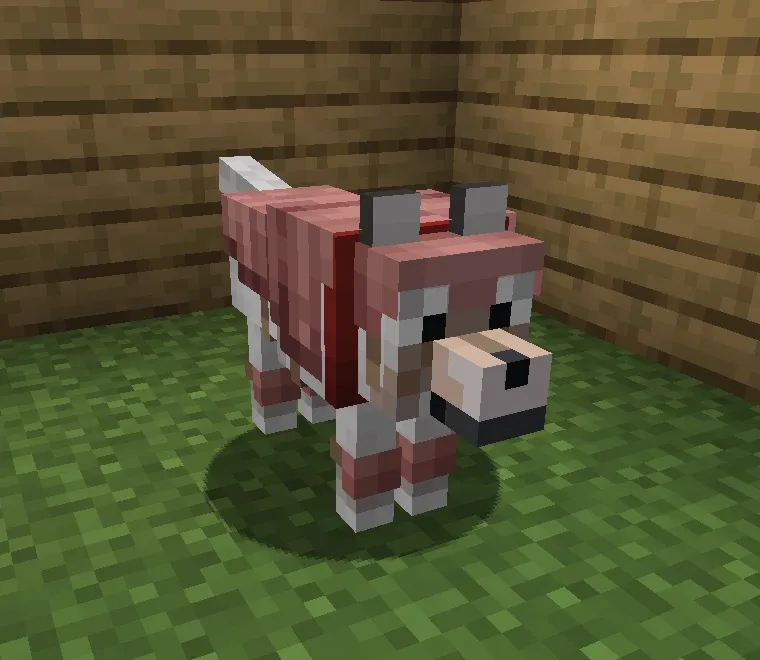
For over a decade, taking your dog on an adventure in Minecraft was a death sentence. One skeleton with decent aim, one creeper you did not hear, one careless swing near a cliff — and the pet you tamed in your first week was gone. So players left their wolves sitting at home forever, which defeated the entire point of having them. The 1.20.5 update (Java, with Bedrock 1.20.80 alongside it) fixed this with a triple buff: tamed wolf health doubled to 40 HP, wolf armor arrived, and eight new wolf variants gave you a reason to travel for your next companion.
The result is that wolves went from decorative to genuinely viable expedition partners almost overnight. This guide covers the whole system: farming armadillo scutes without hurting a single armadillo, the crafting recipe, exactly how the armor's damage absorption works (it is nothing like player armor, and misunderstanding it gets dogs killed), repair and dye mechanics, and a biome-by-biome map of all nine wolf variants.
Why wolves finally matter again
Three changes landed together in 1.20.5, and it is the combination that matters:
- Tamed wolf health doubled from 20 to 40 HP (20 hearts). Wild wolves still have a fragile 8 HP, but the moment you tame one it becomes twice as durable as it was for the previous thirteen years.
- Wolf armor absorbs damage on the wolf's behalf until the armor breaks — a renewable, repairable damage shield.
- Nine visual variants now spawn across different biomes, so a wolf from a sparse jungle looks nothing like one from a snowy taiga.
Stack the first two and an armored wolf effectively has a 64-point damage buffer sitting on top of 40 HP. That is enough to survive multiple creeper blasts or a sustained skeleton fight — the exact scenarios that used to be instant funerals.
Armadillos: your scute source
Wolf armor is crafted from armadillo scutes, and armadillos (added in the same update) spawn in two biome families: savannas (regular, plateau, and windswept) and badlands (regular, eroded, and wooded). If your world map is mostly forest and ocean, check our biomes guide for how to hunt down a savanna efficiently.
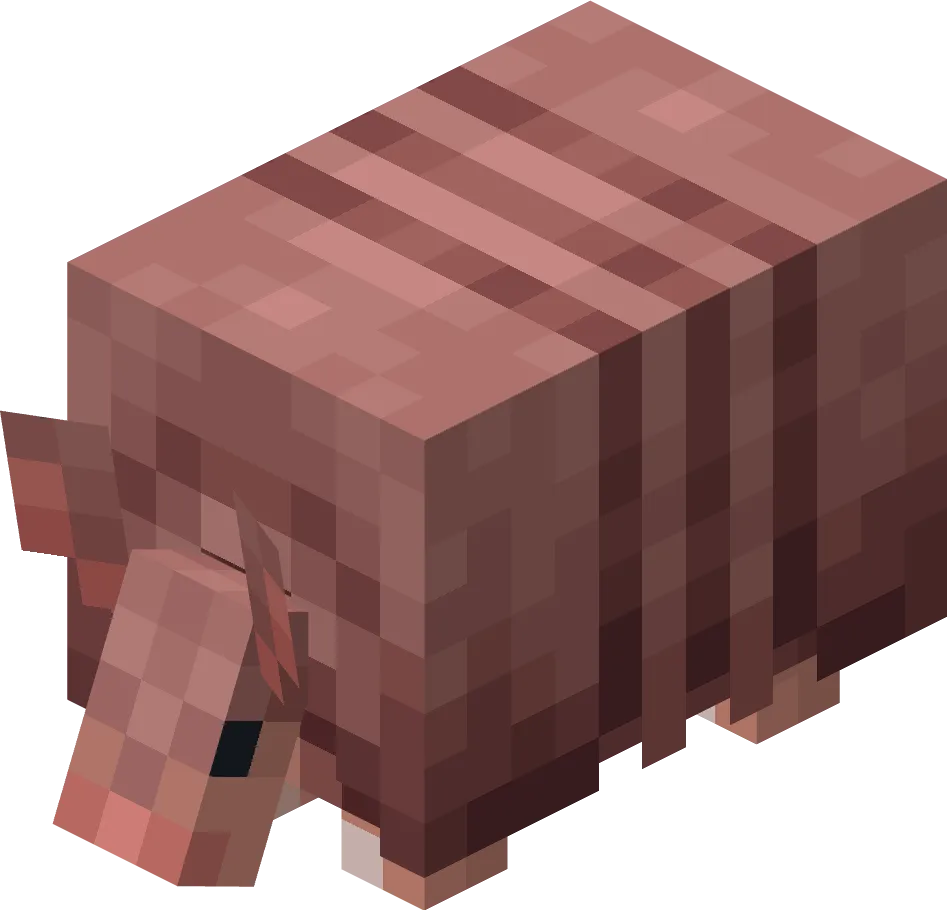
Here is the part I genuinely like: you never harm the armadillo. Scutes come two ways, both peaceful:
- Passive shedding: an armadillo drops one scute roughly every 5-10 minutes, on its own, just by existing near you.
- Brushing: use a brush (the archaeology tool — feathers, copper ingot, stick) on an armadillo and it pops a scute immediately. Each brushing costs 16 durability, so an unenchanted brush yields 4 scutes on Java or 5 on Bedrock before it breaks. Unbreaking helps a lot here.
Armadillos breed with spider eyes — a rare case of a junk hostile drop having a real use. And know their panic behavior: an armadillo rolls up into its shell when hurt, when undead mobs are near, or when a player sprints at it or approaches riding anything. A rolled-up armadillo cannot be brushed, so walk, do not sprint, when you come in for a scute.
The efficient play is a scute farm that is really just a pen: catch two armadillos (they follow spider eyes), breed a small herd at your base, and let passive shedding plus a daily brushing round fill a chest. Six scutes per armor piece means even a four-armadillo pen keeps a whole wolf pack armored.
Crafting wolf armor
One piece of wolf armor costs six armadillo scutes, arranged in the crafting grid in a bootlike shape (the recipe fills the left column and bottom rows — the game's recipe book shows it, and you almost certainly have it unlocked the moment you pick up a scute). There is no smithing table step, no other material tier: scute armor is the only wolf armor in the game.
Equipping is one click: use the armor on a tamed wolf and it snaps on. It only works on tamed wolves — wild wolves and other players' wolves refuse it. On Java, only the owner meaningfully manages the wolf anyway, since sit/stand and shears also answer to you.
How wolf armor actually works
This is where players carry over player-armor intuition and get it wrong. Wolf armor is not a percentage damage reduction. It is a damage sponge:
- The armor has 64 durability.
- While worn, it absorbs all damage dealt to the wolf, with specific exceptions listed below. The wolf takes zero damage from an absorbed hit.
- Every point of damage absorbed costs one point of durability. A hit for 7 damage costs 7 durability.
- When durability runs out, the armor breaks and is destroyed, and the wolf is bare again. The armor shows visible cracks as it wears down, with heavier cracking the closer it gets to breaking — if the armor on your wolf looks shattered, it is nearly gone.
The exceptions matter for planning. Wolf armor does not absorb drowning, freezing, suffocation, magic damage (potions), Thorns damage, the wither effect, or the void. It does absorb fall damage and even ender dragon breath — categories that player armor famously ignores. So an armored wolf can miss a jump and shrug it off, but a witch's splash potions or a powder snow drift will hurt it straight through the plate.
Practical read: against the standard overworld threat list — skeletons, zombies, creepers, spiders, and everything else in our hostile mobs guide — wolf armor is effectively a second, disposable health bar bigger than the wolf's own. Against magic and environmental damage it is decoration. Plan your expeditions accordingly.
Repairing, removing, and dyeing
The maintenance loop is cheap and does not even require an anvil:
- Field repair: use an armadillo scute directly on a wolf wearing damaged armor and it restores 8 durability per scute, on the spot, mid-fight if you have to.
- Anvil repair: combining the armor with scutes on an anvil restores 16 durability per scute — double the value, at the cost of a trip home and a little XP.
- Removal: the owner uses shears on the wolf and the armor pops off as an item, ready to re-equip. No shears, no removal — you cannot just click it off.
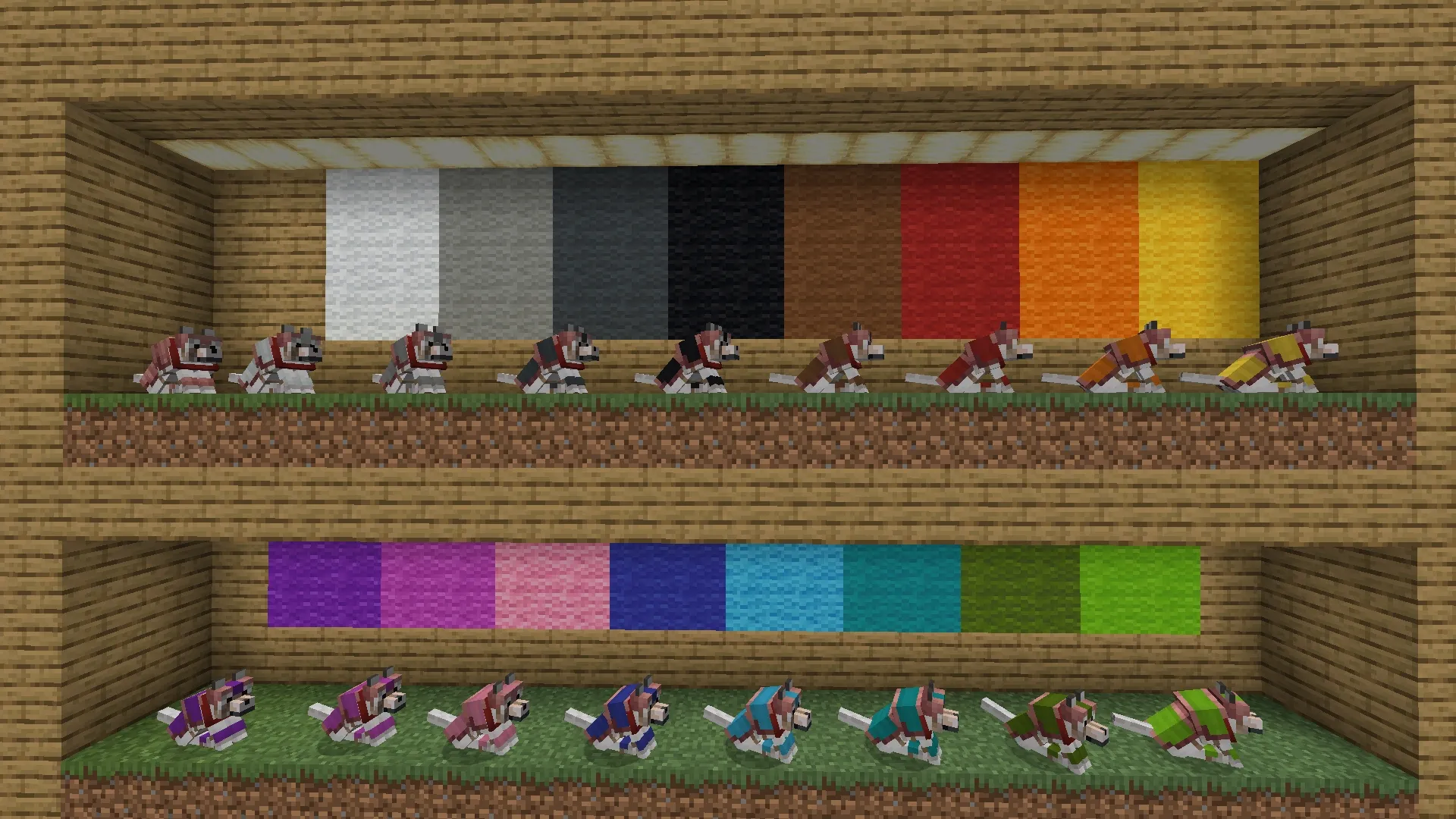
Dyeing works like leather armor: 16 colors, applied via the crafting grid on Java or a cauldron on Bedrock. Color your armor by role — red for the fighting pack, blue for the travel dog — or just match your base palette. It is pure cosmetics, but multi-wolf households genuinely benefit from the visual sorting.
The nine wolf variants and where to find them
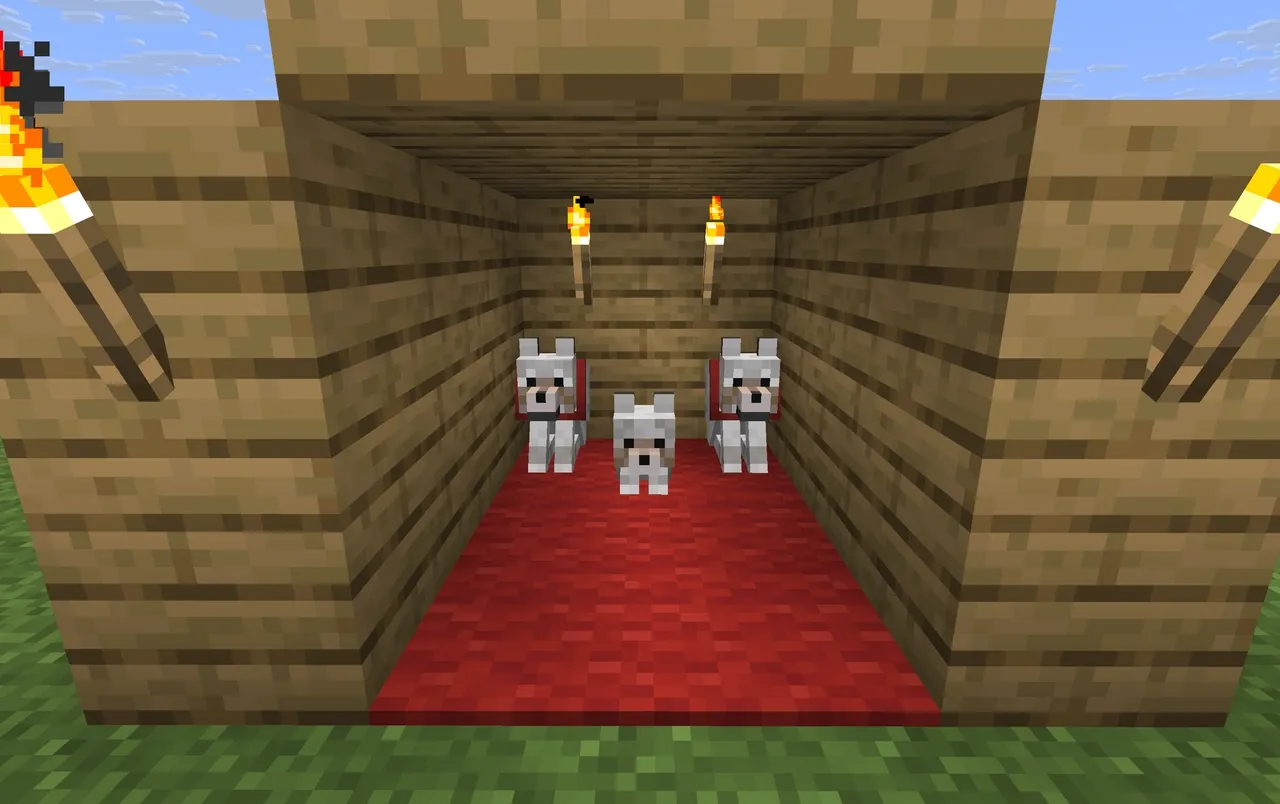
The 1.20.5 update split wolves into nine visual variants, each tied to spawn biome. The variant is permanent — it does not change when tamed or bred elsewhere — so the coat you want determines where you go recruiting:
| Wolf variant | Spawn biome |
|---|---|
| Pale | Taiga (the classic wolf everyone has known since 2011) |
| Ashen | Snowy taiga |
| Black | Old growth pine taiga |
| Chestnut | Old growth spruce taiga |
| Snowy | Grove (the mountain biome; snowy wolves are loners, spawning solo) |
| Woods | Forest |
| Rusty | Sparse jungle |
| Spotted | Savanna plateau |
| Striped | Wooded badlands |
Notice the overlap with armadillo country: spotted and striped wolves live exactly where scutes come from. A single trip to a savanna plateau or wooded badlands can come home with a new wolf variant, a pair of armadillos, and the scutes to armor everyone. That is the most efficient wolf-armor errand in the game.
Pack sizes vary by variant — snowy wolves spawn alone while spotted and striped packs can run four to eight strong — so savanna recruiting trips tend to fill out a whole roster at once.
Taming, healing, and keeping wolves alive
The fundamentals are unchanged, and worth restating with the current numbers:
- Taming: feed bones to a wild wolf; each bone has a 1 in 3 chance to tame. Carry a stack margin — RNG streaks happen. More detail in our taming and breeding guide.
- Healing: feed a tamed wolf meat. Healing scales with the food — from 2 HP for a pufferfish up to 20 HP from rabbit stew — and since 1.20.5 wolves accept a much wider menu of foods than the old raw-meat-only days. Keep cheap meat in a hotbar slot on every trip; a stack of cooked chicken from your food supply is a full pack heal many times over.
- Breeding: two tamed wolves at full health breed when fed meat. Pups inherit a parent's variant.
- Combat behavior: your wolves attack whatever you hit or whatever hits you, and they naturally hunt sheep, rabbits, foxes, and skeletons. The skeleton aggression is ancient and still useful — a wolf escort trivializes skeleton encounters at night.
The one discipline that still matters: sit your wolves before doing anything stupid. Armor does not absorb the void, lava is a mixed bag once the armor breaks, and a teleporting wolf can follow you off an elytra launch tower. Armor made wolves durable, not immortal.
Java vs Bedrock notes
The system is nearly identical across editions, with a few edges:
- Brush yield: an unenchanted brush gets 4 scutes on Java, 5 on Bedrock, due to durability handling differences.
- Dyeing method: crafting grid on Java, cauldron on Bedrock — same 16 colors either way.
- Damage edge cases: the absorb-everything-with-exceptions model is shared, but Bedrock has historically had minor differences in which oddball damage sources ping through. The headline exceptions (drowning, freezing, magic, wither, void) match on both.
- Versions: wolf armor, armadillos, and the variant system landed in Java 1.20.5 and Bedrock 1.20.80 — any world updated past spring 2024 has all of it.
Quick Action Checklist
- Find a savanna or badlands biome and locate armadillos
- Craft a brush and collect scutes by brushing (walk, never sprint at them) plus passive drops
- Breed armadillos with spider eyes for a permanent scute pen
- Craft wolf armor from 6 scutes per piece and equip it on a tamed wolf
- Remember: armor absorbs all damage into 64 durability, except magic, drowning, freezing, wither, and void
- Field-repair with scutes (8 durability each) or anvil-repair (16 each); remove with shears
- Recruit spotted or striped wolves in savanna plateaus and wooded badlands while scute-farming
- Keep meat stocked for healing and sit your wolves before cliff dives and boss fights
Frequently Asked Questions
How do you make wolf armor in Minecraft?
How does wolf armor work?
How do you repair wolf armor?
What are all the wolf variants in Minecraft?
How much health does a tamed wolf have?
Keep Reading
Related Guides
Minecraft Wandering Trader Guide: Trades, Spawns and Llamas
Every wandering trader shows 9 offers drawn from a pool of 100 that is the same on Java 26.3 and Bedrock 26.50. Here is the full price list from the game's own trade files, the odds of seeing the offer you want, what the trader buys from you, how long one takes to spawn, and why a name tag will not keep it.

Minecraft on Switch 2: Free Upgrade, Price and Minecoins
Digital owners of Minecraft for Nintendo Switch get the native Switch 2 version free in most regions until January 31, 2027. Cartridge owners have been offered nothing so far. Here are the editions, the US prices, what the native version changes, and the Minecoins change that lands on the same day.
Minecraft Spear Guide: Jab, Charge Damage, and Lunge
A diamond spear jabs for 4 damage. Held low on an elytra at rocket speed, the same spear charges for 37. The spear's charge takes its damage from how fast you are moving, and the weapon breaks several rules the rest of Minecraft combat runs on. Here are the real numbers for every tier, both attacks, and Lunge.

Minecraft Game Rules List: Every Rule and Its New Name
Java 1.21.11 renamed every game rule: keepInventory is keep_inventory now, doDaylightCycle is advance_time, and doFireTick is gone entirely. Here is the full list for Java 26.3 and Bedrock 26.50, with old names, new IDs, menu labels, defaults, and the 19 Bedrock rules that switch your achievements off for good.

Minecraft Survival Guide for Beginners: Your First Days
You have about ten minutes of daylight before the sun sets and the world tries to kill you. Here is exactly what to do with them — punch a tree, build a tool chain, and get a roof over your head before the zombies arrive.
Best Minecraft Enchantments, Ranked — The Ones Worth Your XP
Mending is the enchantment that ends the grind — gear that repairs itself forever. Everything else is a fight over your XP and anvil uses. Here is what actually earns a slot, ranked, with the real max levels.