Palworld TCG Pal Cards - Power and Strike by Cost
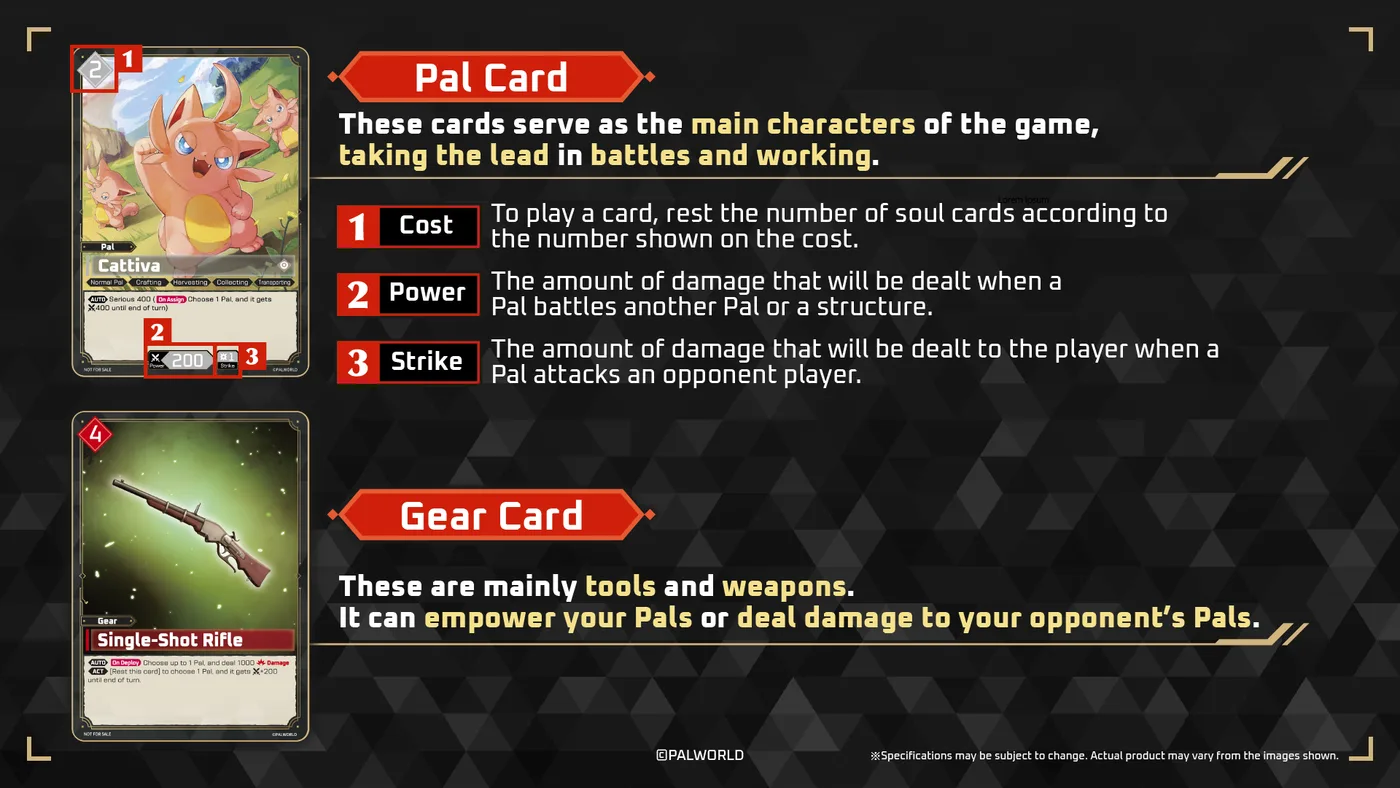
Pals are 100 of the 166 distinct cards in the Palworld TCG launch pool, and the two numbers along the bottom of each one are most of what they do. Sorting all 91 unique Pal designs by cost turns up a ladder: Strike is not a design lever at all, it is a straight function of cost, with three exceptions in the whole set. Power is the only stat Bushiroad negotiates, and the textless Pal at each cost sets the price.
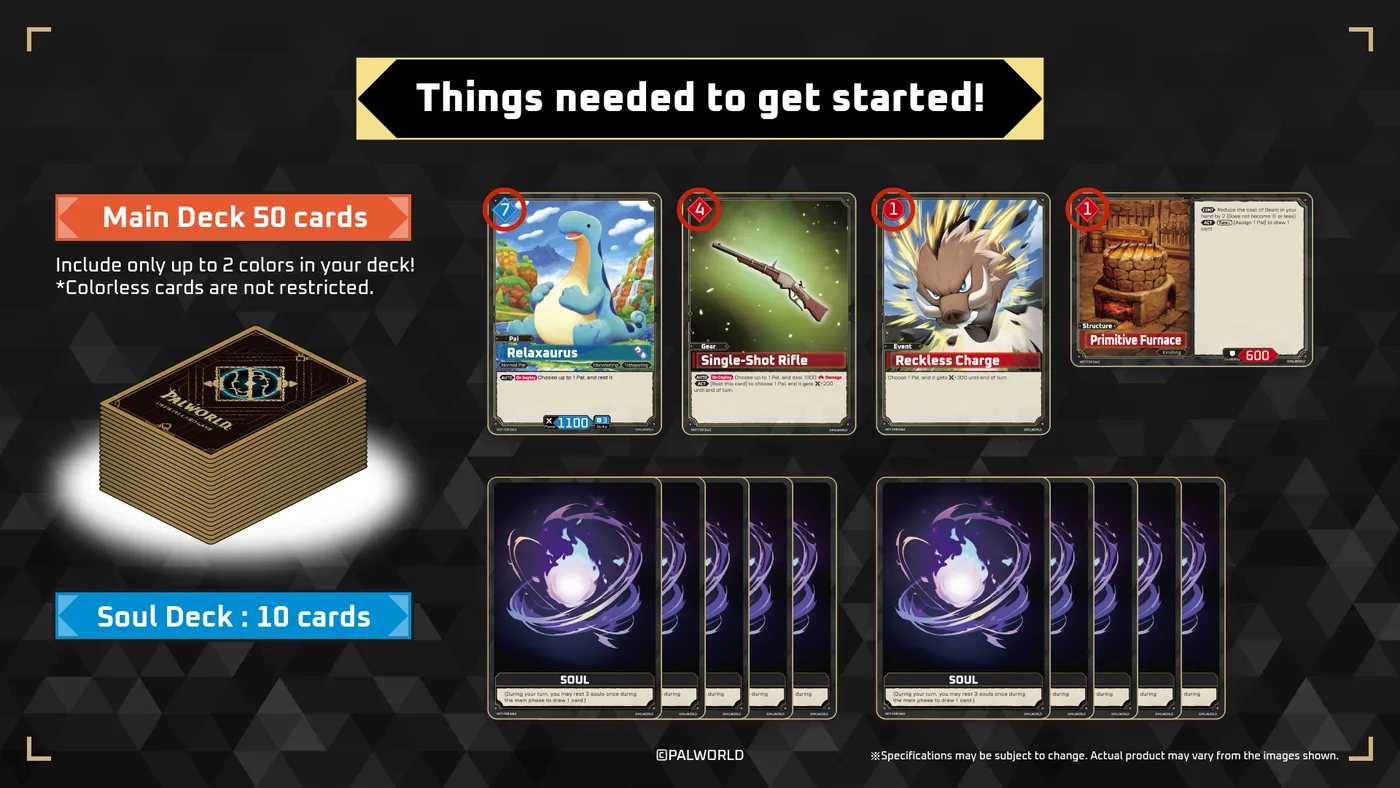
Sixty per cent of this card game is Pals. One hundred of the 166 distinct cards in the launch pool are Pal cards, and for most of them the two numbers along the bottom edge, Power and Strike, are the whole card. So the question every deckbuilder ends up asking is whether the thing in their hand is paying rate.
I pulled all 256 rows out of Bushiroad's card database on 20 August 2026, collapsed the parallel printings and the nine promo reprints, and sorted the 91 unique Pal designs by soul cost. The pool answers more bluntly than I expected. Strike is barely a design lever at all: it is a straight function of cost, with three exceptions in the entire set. Power is the only stat Bushiroad negotiates, and it negotiates in increments of 100.
What is actually in the Pal pool
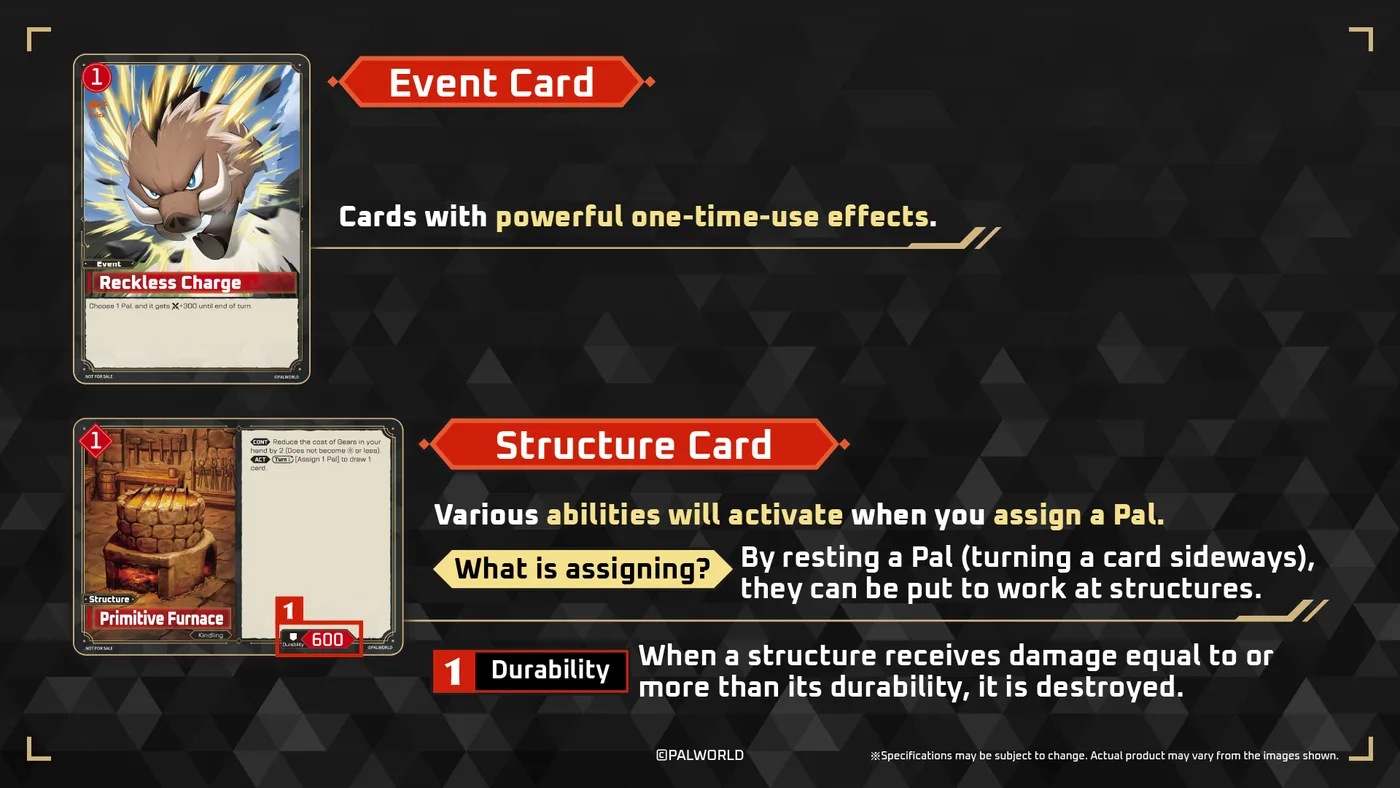
The 166 distinct cards break down as 100 Pals, 26 structures, 17 events, 14 gear and 9 souls. Nine of those Pals are PR2026 promos, and the promo set is reprints field for field, so the number that matters for deckbuilding is 91 unique Pal designs: 67 Normal Pals and 24 Lucky Pals.
Two things about the edges of the cost range are worth having before anything else.
No Pal costs 1. The cheapest Pal in the game costs 2 souls. Three structures cost 1 (Stone Pit, Berry Plantation and Antique Mirror), and they are the only 1-cost cards in the set, so a turn-one play on 2 souls is a 2-cost Pal, a cheap structure, or nothing.
No Pal costs more than 8, even though your souls climb to 10. That ceiling matters more than it looks, and I come back to it below.
Cost decides Strike, and there are three exceptions
Here is the whole ladder. Every one of the 91 unique Pal designs, grouped by what it costs.
| Cost | Pals | Strike | Power range | Textless benchmark |
|---|---|---|---|---|
| 2 | 16 | 1 on all 16 | 100 to 300 | 300 |
| 3 | 13 | 1 on all 13 | 200 to 500 | 500 |
| 4 | 13 | 2 on all 13 | 300 to 700 | 700 |
| 5 | 13 | 2 on all 13 | 400 to 900 | 900 |
| 6 | 12 | 2 on all 12 | 700 to 1200 | 1200 |
| 7 | 12 | 3 on 11, 4 on 1 | 700 to 1600 | none printed |
| 8 | 12 | 3 on 10, 4 on 2 | 1200 to 2000 | none printed |
Eighty-eight of the 91 sit exactly on that ladder. Strike 1 across the cheap half of the curve, Strike 2 through the middle, Strike 3 at the top. There is no 2-cost Pal that hits a player for 2, and no 8-cost Pal that hits for 1.
The three cards that break it are Grizzbolt (Rumbling Tank) at cost 7 with 1600 Power and Strike 4, and at cost 8 both Jormuntide Ignis (Savage Lava Dragon) at 1700 Power and Mammorest (Roar of the Wilds) at 2000. All three are Lucky Pals, a pattern the Lucky Pal guide already picked up inside that subtype. What the full sort adds is the other half of the sentence: because Strike is welded to cost everywhere else, those three are the only Pals in the set that are ahead of the curve on the stat that actually moves a life total.
The practical version is that you cannot buy a faster clock by paying more souls inside a band. A 5-cost Pal and a 6-cost Pal both hit the player for 2. Choosing between them is a choice about Power and text, never about speed.
The textless Pal sets the Power ceiling
Thirteen of the 91 Pals have no rules text at all. Not one of them costs more than 6, and each is the highest-Power card at its cost in the entire pool.
| Cost | Textless Pals | Power | Best Normal Pal with text | Gap |
|---|---|---|---|---|
| 2 | Gumoss (Dreamy Seedling), Hoocrates (Embodiment of Wisdom), Jolthog (Shocking Yet Innocent), Jolthog Cryst (Stoic Yet Innocent) | 300 | 200 | 100 |
| 3 | Direhowl (Proud Fang), Kelpsea Ignis (Balmy Magma), Lifmunk (Promising Newbie), Nox (The Silent One), Pengullet (Frequent Flyer) | 500 | 400 | 100 |
| 4 | Surfent (Swift Swimmer) | 700 | 600 | 100 |
| 5 | Incineram (Lurking Stalker), Mossanda (Guard Captain) | 900 | 800 | 100 |
| 6 | Pyrin (Cinder Steed) | 1200 | 1100 | 100 |
Five costs, five times the same gap. The best-statted Normal Pal that has an ability sits exactly 100 Power below the blank-text body at the same cost. That is the price list, and it is unusually tidy for a first set.
Two cards take the benchmark body and an ability anyway, and both are Lucky Pals: Chillet (Dragon Whisperer) at cost 5, 900 Power, with a top-of-deck Dragon cheat, and Azurobe (Water Dragon Waltz) at cost 6, 1200 Power, with a card draw and a rest on deploy. Nothing else at costs 2 to 6 reaches the ceiling while carrying text.
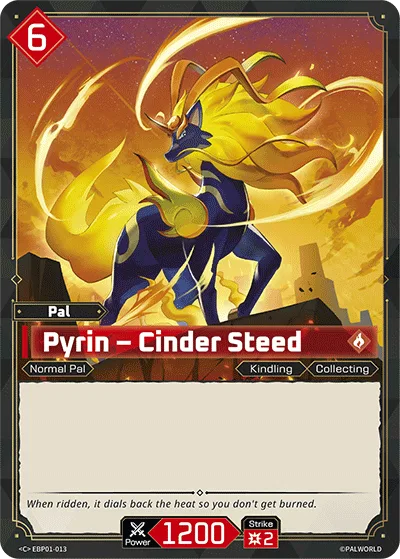
Pyrin (Cinder Steed) is the cleanest single card for this. Blank text box, 1200 Power at cost 6, and it is a Common. All 13 textless Pals are Commons or trial-deck cards, five of the former and eight of the latter, with no rare among them. The cards that set the rate are the cheapest in the game to acquire, which was not a given.
Text is worth 100 Power, until it is worth 900
The median Pal at each cost lands exactly one step below the benchmark for the first four rungs, then the discount widens fast.
| Cost | Benchmark Power | Median Power | Median discount |
|---|---|---|---|
| 2 | 300 | 200 | 100 |
| 3 | 500 | 400 | 100 |
| 4 | 700 | 600 | 100 |
| 5 | 900 | 800 | 100 |
| 6 | 1200 | 900 | 300 |
| 7 | 1600 | 1200 | 400 |
| 8 | 2000 | 1600 | 400 |
At the bottom of the curve an ability costs a single 100-point step and the bodies stay bunched. From cost 6 upward the spread blows open, and a top-end Pal can be less than half the size of the biggest card at its own cost.
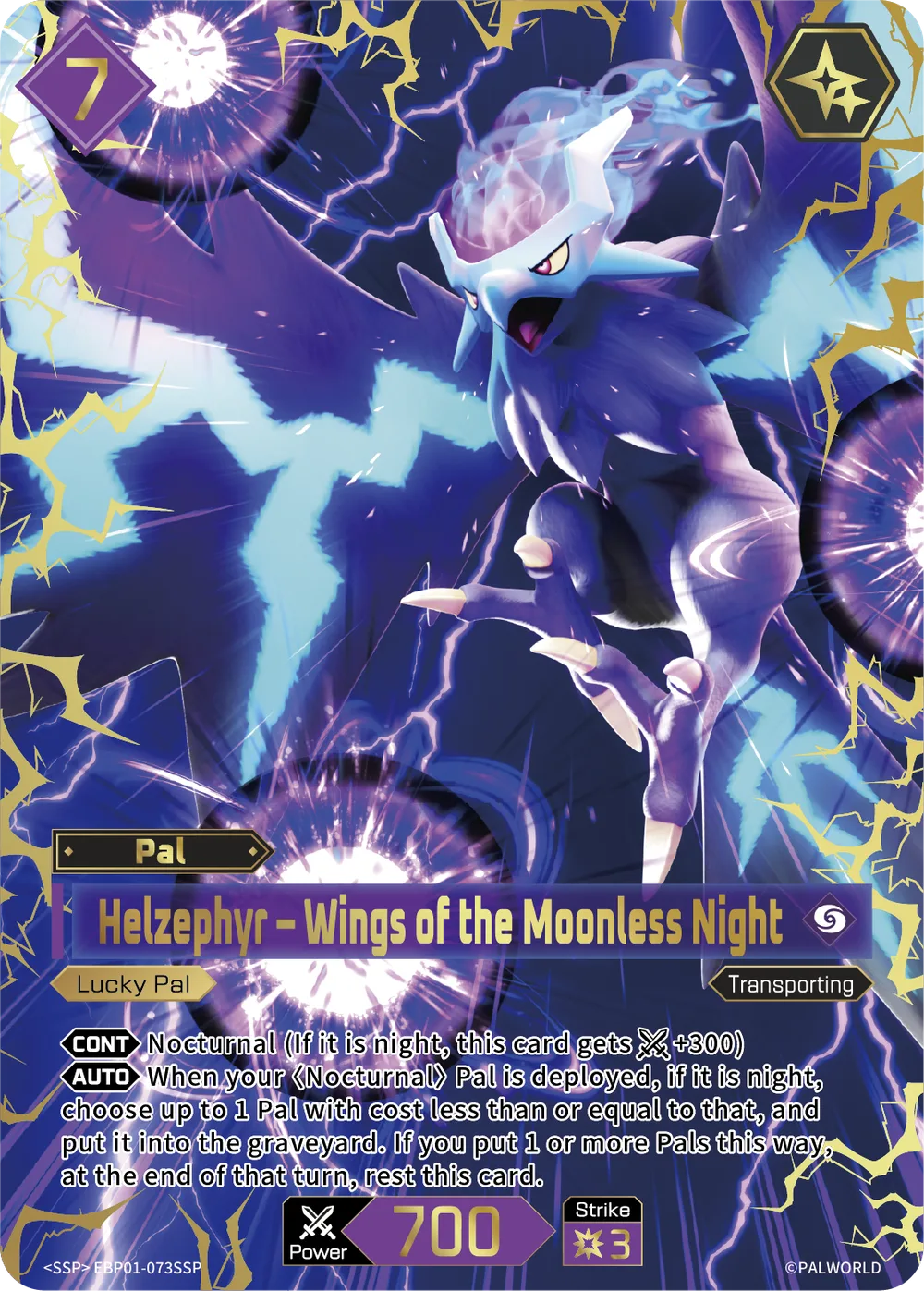
The furthest below rate in the pool is Helzephyr (Wings of the Moonless Night): cost 7, 700 Power, 900 short of the 1600 ceiling at that cost, paying all of it for Nocturnal and a removal trigger on your Nocturnal deploys. Astegon (Aegis Wyvern of Death) and Reptyro Cryst (Glacial Devourer) each give up 800 at cost 8.
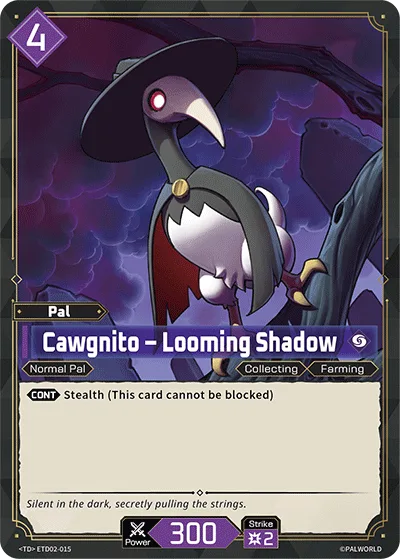
The one to hand a new player is Cawgnito (Looming Shadow), because it is the clearest exchange rate in the set. Cost 4, Strike 2 like every other 4-drop, and one line of text: Stealth, meaning it cannot be blocked. That keyword costs 400 Power measured against Surfent (Swift Swimmer) at the same cost. Whether an unblockable 2 a turn is worth being the smallest body on the board is a genuine question, and Bushiroad has priced it as though the answer is yes.
The Pal that beats its own cost
Every printed Power above is at or under the benchmark for its cost. Conditional text is the only way past it, and the clearest case is a 2-drop.
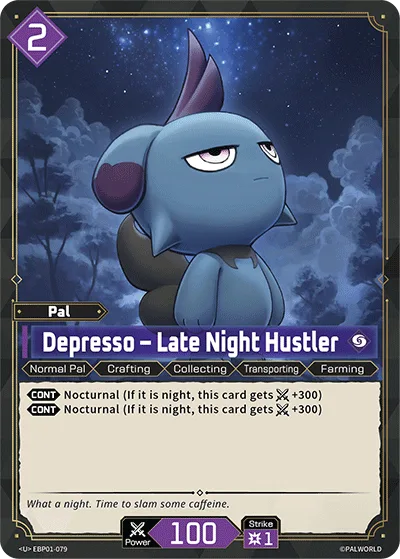
Depresso (Late Night Hustler) is a 2-cost Purple Normal Pal with 100 Power, the smallest body in the game. Its entire text box is the Nocturnal keyword printed twice, each instance reading "if it is night, this card gets Power +300". Official Q&A #91 confirms that both instances apply: at night, Depresso receives a total of Power +600.
That makes it a 700-Power 2-drop. The benchmark at cost 2 is 300, so Depresso at night is 400 clear of the best blank-text Pal at its own cost, and level with Surfent (Swift Swimmer), the benchmark 4-drop.
The condition is the cost. Night is a named game state under rule 5.3, but the rules never switch it on by themselves - cards do, and there are six of them in the launch pool: Shadowbeak (Seed of Despair) and Maraith (Twilight Messenger) while they are resting, plus the structures Lamp and Shoddy Bed, the gear Daedream's Necklace and the event Black Marketeer. Every one of the six is Purple, and so is every card in the set that mentions night at all. The colours guide covers what committing to that colour costs you. As an Uncommon in a 2-cost slot, Depresso is the clearest evidence that Bushiroad is willing to break its own price list, but only behind a deckbuilding tax.
What your souls actually buy, turn by turn
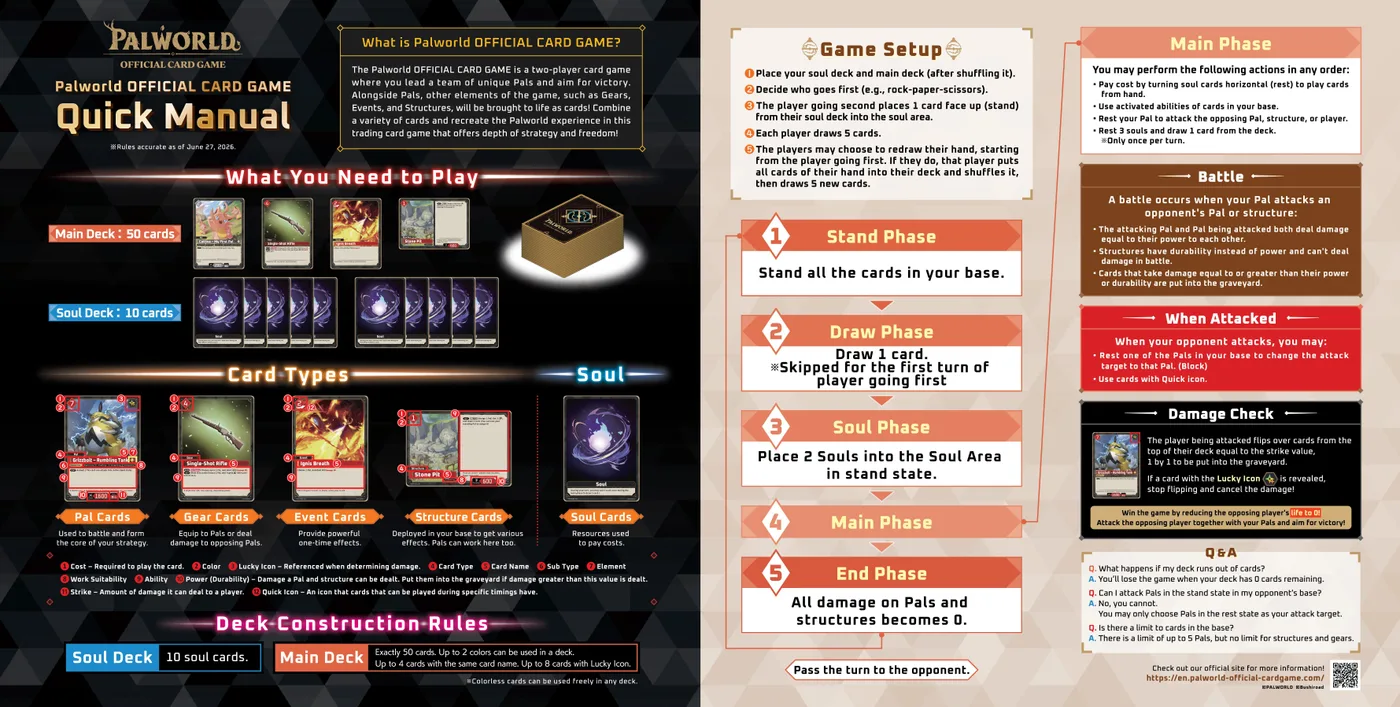
Souls are the reason the cost ladder stops at 8. Your soul deck holds 10 cards (rule 6.1.2.1), the soul phase moves 2 of them into your soul area every turn (7.4.2.1), the stand phase stands the whole soul area again (7.2.1) so nothing is ever spent permanently, and the player going second places 1 soul before the game starts (6.2.1.5). Official Q&A #76 confirms 10 is a hard cap no effect can push past.
That gives a fixed, public schedule. No ramp, no screw.
| Your turn | Souls on the play | Souls on the draw | Highest Pal cost deployable |
|---|---|---|---|
| 1 | 2 | 3 | 2 on the play, 3 on the draw |
| 2 | 4 | 5 | 4 on the play, 5 on the draw |
| 3 | 6 | 7 | 6 on the play, 7 on the draw |
| 4 | 8 | 9 | 8 either way |
| 5 | 10 | 10 | 8 either way |
Read that against the cost ladder and the odd numbers do all the work. The player on the draw reaches every odd cost a full turn before the player on the play: a 3-drop on turn one, a 5-drop on turn two, a 7-drop on turn three. That, plus the extra card from not skipping a draw phase (rule 7.3.1 skips it only for the player going first), is the entire compensation package for going second.
The other consequence sits at the top. Because no Pal costs more than 8 and both players reach 8 souls on their fourth turn, souls nine and ten never buy a bigger Pal. They buy a second card in the same turn, or they go into the rules-level draw any player can use by resting 3 souls once per main phase. Exactly one card is built to notice: Digtoise (Seismic Drillback) gets Power +1000 and Strike +1 while you have 10 or more souls, the only card in the pool that turns a full soul area into Power and Strike. One structure, Feed Box, also checks the 10-soul mark, but it pays out in standing souls rather than stats.
Strike is a clock, and almost nothing moves it
Both players start on 10 life (rule 6.2.1.8) and lose at 0 or below (11.3.1). Strike is the damage a Pal deals to a player and nothing else (rule 2.9.1), so each Strike value is a number of connections.
| Strike | Unblocked connections to take a player from 10 to 0 | Pals at this Strike |
|---|---|---|
| 1 | 10 | 29 |
| 2 | 5 | 38 |
| 3 | 4 | 21 |
| 4 | 3 | 3 |
Those are floor numbers, not expected numbers, because Strike is also how many cards the defending player mills in Player Damage Resolution, and any Lucky icon among them cancels the hit outright. The Lucky Pal guide has the cancel maths; the short version is that a bigger Strike gets checked against more cards, so the division above always flatters the attacker.
What is surprising is how immovable the number is. Across the 150 unique non-promo cards in the launch pool, only nine modify a Strike value at all: five Pals (Ragnahawk, Wumpo, Digtoise Seismic Drillback, Katress and Mammorest Cryst, every one of them a Lucky Pal), two structures (Weapon Workbench, Antique Dresser) and two events (Crystal Breath, The Adventure Begins). Everything else in the set fights over Power.
Strike can be pushed below zero, and official Q&A #64 says what happens. With Wumpo (Frostpeak Sentinel) resting, opposing Pals get Strike -1, and if damage would be dealt to a player while Strike is 0 or less, that damage is not dealt. That switches off a 29-card slice of the pool, every Strike 1 Pal in the game, for as long as the card stays sideways.
Power is a threshold, not a hit point pool
Power does two jobs at once (rule 2.8.1): it is the damage a Pal deals to other Pals and structures, and it decides whether the Pal survives damage it receives. It is not a pool that drains.
Rule 11.4.1 sets the removal condition. A Pal goes to the graveyard when it has taken greater than 0 damage and that damage is equal to or greater than its Power. Damage on every Pal resets to 0 in the end phase (7.6.3), so a 1200-Power body is never worn down across two turns. You clear the bar this turn or you achieved nothing.
That is why the three Power-reduction effects in the Pal pool are worded the way they are. All three are Purple, and all three print the same bracketed reminder:
- Astegon (Aegis Wyvern of Death), cost 8, on deploy: one Pal gets Power -1000 until end of turn.
- Vanwyrm (Marauder of the Skies), cost 4, on deploy: one Pal gets Power -300 until end of turn.
- Maraith (Twilight Messenger), cost 6: if it is night, all opposing Pals get Power -200.
Each says the Pal is not put into the graveyard even if its Power becomes 0 or less, and official Q&A #92 confirms the rule underneath: a Pal is not removed simply because its Power hit 0. Q&A #93 completes it from the other side. If a Pal has already taken damage and an effect drops its Power to at or below that damage, it goes immediately. Q&A #74 applies the same logic when a continuous buff stops applying.
So Power reduction is not removal in this game. It is a discount on removal, and it only cashes out if you have damage on the board in the same turn.
Three Pals per colour per cost, almost
One more thing falls out of sorting the pool this way. Deck construction allows up to two colours plus colourless cards (official Q&A #17), so the curve you actually get to build is two of these columns.
| Colour | 2 | 3 | 4 | 5 | 6 | 7 | 8 | Total |
|---|---|---|---|---|---|---|---|---|
| Red | 3 | 3 | 3 | 3 | 3 | 3 | 3 | 21 |
| Blue | 3 | 3 | 3 | 3 | 3 | 3 | 3 | 21 |
| Green | 3 | 3 | 3 | 3 | 3 | 3 | 3 | 21 |
| Purple | 3 | 3 | 3 | 4 | 3 | 3 | 3 | 22 |
| Colourless | 4 | 1 | 1 | 0 | 0 | 0 | 0 | 6 |
Red, Blue and Green each get exactly three Pals at every cost from 2 to 8. Purple gets the same plus one extra 5-drop. The Lucky Pal guide found the same mirroring inside the 24 Lucky Pals; it holds across the whole Pal pool.
Colourless is the exception that shapes early turns: six Pals, four of them 2-drops, nothing above cost 4. Any deck can play them, none of them will carry a game, and that matches what the colours guide says about treating colourless as filler.
Worth knowing before you plan a curve: nothing forces you to run other card types. Official Q&A #3 says you may build a deck of 50 Pal cards if you want, subject only to the 50-card total, the four-copies-per-name limit (which counts across artworks and rarities, per Q&A #2) and the eight Lucky icons. The Pal limit of 5 in your base (rule 4.4.5.2) is not a hard stop on deploying either: Q&A #11 lets you deploy a sixth Pal and then bin down to five afterwards.
Every Pal in the launch pool, by cost
All 91 unique Pal designs from Booster Pack "Dawn of Palpagos" and both launch trial decks, read off the official card database on 20 August 2026. Promo reprints are left out because they duplicate entries already here, and parallel treatments (SR, SP, SSP, OSR, TSR, TSP) are collapsed into their base card because they do not change a stat line.
| Cost | Pal | Colour | Power / Strike | Sub-type |
|---|---|---|---|---|
| 2 | Depresso – Late Night Hustler | Purple | 100 / 1 | Normal |
| 2 | Cattiva – My First Pal | Colourless | 200 / 1 | Normal |
| 2 | Chikipi – My First Pal | Colourless | 200 / 1 | Normal |
| 2 | Daedream – First Slumber | Purple | 200 / 1 | Normal |
| 2 | Foxparks – Light of Courage | Red | 200 / 1 | Normal |
| 2 | Fuack – Manic Wave Ripper | Blue | 200 / 1 | Normal |
| 2 | Lamball – My First Pal | Colourless | 200 / 1 | Normal |
| 2 | Ribbuny – Little Princess | Colourless | 200 / 1 | Normal |
| 2 | Rooby – Brave Sparks | Red | 200 / 1 | Normal |
| 2 | Rushoar – Reckless Destruction | Green | 200 / 1 | Normal |
| 2 | Tanzee – Cheerful Worker | Green | 200 / 1 | Normal |
| 2 | Teafant – Fountain of Cheer | Blue | 200 / 1 | Normal |
| 2 | Gumoss – Dreamy Seedling | Green | 300 / 1 | Normal |
| 2 | Hoocrates – Embodiment of Wisdom | Purple | 300 / 1 | Normal |
| 2 | Jolthog Cryst – Stoic Yet Innocent | Blue | 300 / 1 | Normal |
| 2 | Jolthog – Shocking Yet Innocent | Red | 300 / 1 | Normal |
| 3 | Leezpunk – Treasure Bandit | Purple | 200 / 1 | Normal |
| 3 | Beegarde – Knight of the Flower Garden | Green | 400 / 1 | Normal |
| 3 | Celaray – Loop De Loop | Blue | 400 / 1 | Normal |
| 3 | Daedream – Deep Slumber | Purple | 400 / 1 | Normal |
| 3 | Flambelle – Scorching Tears | Red | 400 / 1 | Normal |
| 3 | Flopie – Snack Lover | Green | 400 / 1 | Normal |
| 3 | Mau Cryst – Harbinger of Riches | Blue | 400 / 1 | Normal |
| 3 | Sparkit – Hazardous Contact | Red | 400 / 1 | Normal |
| 3 | Direhowl – Proud Fang | Colourless | 500 / 1 | Normal |
| 3 | Kelpsea Ignis – Balmy Magma | Red | 500 / 1 | Normal |
| 3 | Lifmunk – Promising Newbie | Green | 500 / 1 | Normal |
| 3 | Nox – The Silent One | Purple | 500 / 1 | Normal |
| 3 | Pengullet – Frequent Flyer | Blue | 500 / 1 | Normal |
| 4 | Cawgnito – Looming Shadow | Purple | 300 / 2 | Normal |
| 4 | Dinossom – Radiant Fragrance | Green | 400 / 2 | Normal |
| 4 | Foxparks – A Toasty Hug | Red | 400 / 2 | Normal |
| 4 | Gobfin Ignis – Blazing Hothead | Red | 400 / 2 | Normal |
| 4 | Dumud – Mellow Bounty | Green | 500 / 2 | Normal |
| 4 | Loupmoon – Glinting Moonlight | Purple | 500 / 2 | Normal |
| 4 | Elphidran – Gentle Radiance | Colourless | 600 / 2 | Normal |
| 4 | Gumoss – Curious Sprout | Green | 600 / 2 | Normal |
| 4 | Hangyu Cryst – Frigid Wanderer | Blue | 600 / 2 | Normal |
| 4 | Pengullet – Yearning for the Sky | Blue | 600 / 2 | Normal |
| 4 | Univolt – Valiant Thunderclap | Red | 600 / 2 | Normal |
| 4 | Vanwyrm – Marauder of the Skies | Purple | 600 / 2 | Normal |
| 4 | Surfent – Swift Swimmer | Blue | 700 / 2 | Normal |
| 5 | Kitsun – Wyrmbane Fangs | Red | 400 / 2 | Normal |
| 5 | Penking – Mighty Warrior of the Deep | Blue | 600 / 2 | Normal |
| 5 | Reindrix – Icy Gaze | Blue | 600 / 2 | Normal |
| 5 | Tombat – Out of Nowhere!? | Purple | 600 / 2 | Normal |
| 5 | Elizabee – Queen of the Flower Garden | Green | 700 / 2 | Lucky |
| 5 | Menasting – Darkness-Dwelling Scorpion | Purple | 700 / 2 | Lucky |
| 5 | Arsox – Burning Spoils | Red | 800 / 2 | Normal |
| 5 | Bushi – Ephemeral Blade | Red | 800 / 2 | Lucky |
| 5 | Digtoise – Keen Needleback | Green | 800 / 2 | Normal |
| 5 | Lovander – Heartstealer | Purple | 800 / 2 | Normal |
| 5 | Chillet – Dragon Whisperer | Blue | 900 / 2 | Lucky |
| 5 | Incineram – Lurking Stalker | Purple | 900 / 2 | Normal |
| 5 | Mossanda – Guard Captain | Green | 900 / 2 | Normal |
| 6 | Petallia – Sweet Blessings | Green | 700 / 2 | Normal |
| 6 | Eikthyrdeer Terra – Guardian of Nature | Green | 800 / 2 | Normal |
| 6 | Blazehowl Noct – Darkflame Defender | Purple | 900 / 2 | Normal |
| 6 | Cryolinx – Arctic Ordeal | Blue | 900 / 2 | Normal |
| 6 | Digtoise – Seismic Drillback | Green | 900 / 2 | Lucky |
| 6 | Elphidran Aqua – Gentle Ripples | Blue | 900 / 2 | Normal |
| 6 | Katress – Abyssal Sorcerer | Purple | 900 / 2 | Lucky |
| 6 | Maraith – Twilight Messenger | Purple | 900 / 2 | Normal |
| 6 | Ragnahawk – Emberwing Striker | Red | 1000 / 2 | Lucky |
| 6 | Mossanda Lux – Vanguard Captain | Red | 1100 / 2 | Normal |
| 6 | Azurobe – Water Dragon Waltz | Blue | 1200 / 2 | Lucky |
| 6 | Pyrin – Cinder Steed | Red | 1200 / 2 | Normal |
| 7 | Helzephyr – Wings of the Moonless Night | Purple | 700 / 3 | Lucky |
| 7 | Lyleen – Blessing of the Goddess | Green | 900 / 3 | Lucky |
| 7 | Felbat – Lifestealer | Purple | 1000 / 3 | Lucky |
| 7 | Pyrin Noct – Steed of Azure Flames | Purple | 1100 / 3 | Normal |
| 7 | Blazehowl – Hellflame Defender | Red | 1200 / 3 | Normal |
| 7 | Relaxaurus – Hungry Gunner | Blue | 1200 / 3 | Normal |
| 7 | Suzaku Aqua – Way of the Current | Blue | 1200 / 3 | Lucky |
| 7 | Suzaku – Hellfire Wings | Red | 1200 / 3 | Lucky |
| 7 | Wumpo Botan – Tropical Sentinel | Green | 1200 / 3 | Normal |
| 7 | Broncherry – Brimming Adoration | Green | 1500 / 3 | Lucky |
| 7 | Wumpo – Frostpeak Sentinel | Blue | 1500 / 3 | Lucky |
| 7 | Grizzbolt – Rumbling Tank | Red | 1600 / 4 | Lucky |
| 8 | Astegon – Aegis Wyvern of Death | Purple | 1200 / 3 | Lucky |
| 8 | Reptyro Cryst – Glacial Devourer | Blue | 1200 / 3 | Normal |
| 8 | Shadowbeak – Seed of Despair | Purple | 1300 / 3 | Lucky |
| 8 | Reptyro – Ore Gorger | Red | 1500 / 3 | Normal |
| 8 | Warsect – Iron Fortress | Green | 1500 / 3 | Normal |
| 8 | Blazamut – Molten Sovereign | Red | 1600 / 3 | Lucky |
| 8 | Jormuntide – Surging Sea Serpent | Blue | 1600 / 3 | Lucky |
| 8 | Vaelet – Bewitching Blossom | Green | 1600 / 3 | Lucky |
| 8 | Jormuntide Ignis – Savage Lava Dragon | Red | 1700 / 4 | Lucky |
| 8 | Lyleen Noct – Providence of the Goddess | Purple | 1700 / 3 | Normal |
| 8 | Mammorest Cryst – Roar of the Tundra | Blue | 1700 / 3 | Lucky |
| 8 | Mammorest – Roar of the Wilds | Green | 2000 / 4 | Lucky |
What Bushiroad has not published
Everything above describes one set. The 166-card pool is Booster Pack "Dawn of Palpagos", the two launch trial decks and the promos, and nothing beyond it is public.
Booster Pack "Legends Awaken" is dated 30 October 2026, and on 19 August 2026 Bushiroad opened preorders for two further trial decks, Eternal Ascent Red-Green and Eternal Ascent Blue-Purple, releasing 18 December 2026 with the same 60-card contents as the launch decks. No stat line from any of them is public. A second 8-cost Pal at Strike 4, or the first 1-cost Pal, would change the shape of the ladder above, and there is no way to know from here.
Bushiroad has also not said whether the cost-2 floor and cost-8 ceiling are a permanent design constraint or a first-set decision, and there is no restricted or banned list beyond the deck construction limits in rule 6.1.1.
Quick reference
- 91 unique Pal designs in the launch pool: 67 Normal Pals, 24 Lucky Pals. Nine further Pal cards are PR2026 promo reprints.
- Cost sets Strike. Strike 1 at costs 2 and 3, Strike 2 at costs 4, 5 and 6, Strike 3 at costs 7 and 8. Eighty-eight of 91 Pals sit on that ladder.
- Three Pals break it, all Lucky and all Strike 4: Grizzbolt (Rumbling Tank) at cost 7, Jormuntide Ignis (Savage Lava Dragon) and Mammorest (Roar of the Wilds) at cost 8.
- The textless Pal is the benchmark: 300 at cost 2, 500 at 3, 700 at 4, 900 at 5, 1200 at 6. All 13 are Commons or trial-deck cards, and no Pal in the pool exceeds the benchmark for its cost.
- An ability costs exactly 100 Power at the top of every band from cost 2 to cost 6. The median discount widens to 300 at cost 6 and 400 at costs 7 and 8.
- No Pal costs 1 or more than 8. Three structures cost 1; souls nine and ten buy a second play, not a bigger one.
- The player on the draw hits every odd cost a turn early, at 3 souls on turn one, 5 on turn two and 7 on turn three.
- Only nine cards in the 150-card non-promo pool touch a Strike number, five of them Lucky Pals, and Q&A #64 confirms Strike 0 or less deals no damage to a player.
- Power is a threshold (rule 11.4.1): damage must be above 0 and at or above Power in the same turn, and Q&A #92 confirms a Pal on 0 Power with no damage on it lives.
The set is still small enough that the price list is visible inside it, and that will not survive contact with a second booster. Learn the benchmark at each cost now, and every card in "Legends Awaken" grades itself the moment you read it.
Frequently Asked Questions
How many Pal cards are in the Palworld TCG?
What is the difference between Power and Strike in the Palworld TCG?
What Strike does a Palworld TCG Pal have at each cost?
How much Power should a Palworld TCG Pal have for its cost?
What is the highest Power Pal in the Palworld TCG?
How many souls do you have on each turn in the Palworld TCG?
Does reducing a Pal Power to 0 destroy it in the Palworld TCG?
What is the cheapest Pal in the Palworld TCG?
Keep Reading
- Palworld Official Card Game - Official Card List
- Palworld Official Card Game Comprehensive Rules (Bushiroad, PDF, 30 July 2026)
- Palworld Official Card Game - Rules Q&A
- Palworld Official Card Game - For Beginners and Quick Manual
- Trial Decks Eternal Ascent Red-Green and Blue-Purple Preorders (Bushiroad, 19 August 2026)
Related Guides
Palworld TCG Gear Cards - All 14, and the Attack-Proof Rule
There are 14 gear cards in the Palworld TCG launch pool, and the rules never give your opponent a way to attack one. Rule 9.2.3 lists the legal attack targets - the player, structures, rested Pals - and gear is simply not in the sentence. I read all 14 off the official card database, checked every card in the 166-card pool for an answer to a deployed gear, and found exactly one. Here is what each gear does, when the rules let you use it, and why the safest card type in the game still is not an auto-include.
Palworld TCG Event Cards - All 17, and the Quick Timing Rule That Costs Games
There are 17 event cards in the Palworld TCG launch pool and exactly five of them carry Quick. Three of those five are trial-deck cards, which means a booster box hands you almost no instant-speed interaction. Worse, there is one moment on your own turn where a Quick card is illegal - and it is the moment you will most want it. Here is all 17, the timing rules from Comprehensive Rules ver. 1.00, and the official rulings that decide the edge cases.
Palworld TCG Recommended Decks: All 4, and Which One Wins
Bushiroad recommends four decks to build from Dawn of Palpagos: Material, Dragon, Ingredient and Nocturnal. Its English site posted all four on 1 October, and on 7 October it posted the first tournament lists played with English cards, from the Grand Challengers Cup at Bushiroad EXPO 2026 in Kuala Lumpur. Here are all four recommended lists, card for card, and what happened when I checked each one against the 49 tournament lists in Bushiroad's own databases.
Palworld TCG Structures and Assigning, Explained
Assigning a Pal to a structure is the base-building half of the Palworld TCG, and it costs you more than most new players notice. Here is every one of the 26 structures in the launch pool, the exact rules text behind assigning, the eight Work Suitabilities and how little they currently do, and the Material versus Ingredient split - all checked against Comprehensive Rules ver. 1.00 and Bushiroad's official Q&A.
How to Play the Palworld TCG - Souls, Power vs Strike, and How You Actually Win
Bushiroad's Palworld card game launched 30 July 2026, and its comprehensive rules landed the same day. Here is the full walkthrough - the four colours plus colourless, the soul deck, the Power and Strike split that decides every attack, structures and Pal labour, and the Damage Check that turns your own deck into your life total. Everything here is sourced from the official rules, and I flag what Bushiroad has not published.
Palworld TCG Lucky Pals - All 24 in the Launch Pool, and How Many to Run
The Lucky Pal icon is the single most important number in Palworld TCG deck-building, and almost nobody has counted the pool. I pulled every card from Bushiroad's own card database and found 24 Lucky Pals across the three launch products - six per colour, at costs 5, 6, 7, 7, 8 and 8, in all four colours, identically. Not one of them is a Common. Here is the full list, the real cancel probabilities, and why raising your Strike is the worst way to beat them.