Pokémon TCG Abilities Explained: Triggers, Ability Lock, and Damage Math
An Ability is not an attack, and almost every rules argument about Abilities comes from someone forgetting that one line. Here is what the 2026 Web Rulebook says about when Abilities fire, where they work from, why a Paralyzed Pokémon still uses them, and what the parenthetical at the end of a damage-reduction Ability is really telling you.
Shuckle heals a Pokémon and it costs you nothing. Mantine calls a Basic out of the deck for zero damage and it ends your turn. Both cards are doing roughly the same amount of work, and the Web Rulebook uses exactly that pair to draw the most consequential line in the game: one of them is an attack, and one of them is an Ability.
Almost every rules argument about Abilities collapses back to that line. Everything below is checked against The Pokémon Company's 2026 Web Rulebook, last updated July 2026, and against live card text pulled from the Pokémon TCG API for the three regulation marks that are Standard-legal right now — H, I, and J.
Abilities are not attacks, and that is the entire rule
The glossary definition is one sentence: "An Ability is an effect on a Pokémon that is not an attack. Some will be active all of the time, while some you will need to choose to use."
The rulebook gives you a mechanical test for telling them apart, and it is not vibes. Every attack has a cost and a name, and it might have base damage and damage text. Anything else printed on the card is an Ability or something else. Damage is irrelevant to the classification — the rulebook's example is that Mantine's Call for Family does no damage and is still an attack, while Shuckle's Fermented Juice heals and is not one.
That distinction is load-bearing because the two are locked separately. A card that stops your opponent from attacking does nothing to their Abilities. A card that switches off Abilities does nothing to their attacks. The rulebook's own example uses Sandslash's Sand Attack, which affects Call for Family but not Fermented Juice.
The turn action reads: "Use Abilities (as many as you want)," and the rulebook follows it with the line most new players need tattooed somewhere: "Remember, Abilities aren't attacks, so you can still attack if you use an Ability!" There is no cost, no tempo trade, and no per-turn budget across your board. Using six Abilities and then attacking is a completely normal turn.
They are also not rare. Of the 2,481 Pokémon printings carrying a Standard-legal regulation mark, 555 have an Ability — a bit over one in five. Another eight Standard-legal Trainer cards carry one too, because the Antique Fossil Items are played as Basic Pokémon and bring their Ability with them.
Where an Ability works: Active, Bench, and off the board
The default is broad: "You can use Abilities from both your Active and Benched Pokémon." That single line is why most Ability engines live on the Bench rather than in the Active Spot — attacks are aimed at the Active Pokémon, so reaching a Benched engine takes either an attack that specifically names Benched Pokémon or a card that drags it into the Active Spot first.
The exceptions are printed, not implied. Across Standard-legal Pokémon printings, 73 gate their Ability on being in the Active Spot and 13 gate it on being on your Bench. If the card does not name a location, it does not care about one.
| Where the Ability says it works | Standard-legal printings | Example |
|---|---|---|
| No location named (Active or Bench) | The default | Toucannon, Aerial Draw: "Once during your turn, you may use this Ability. Draw a card." |
| "if this Pokémon is in the Active Spot" | 73 | Rampardos ex, Destructive Headbutting |
| "on your Bench" | 13 | Bastiodon, Ancient Bulwark |
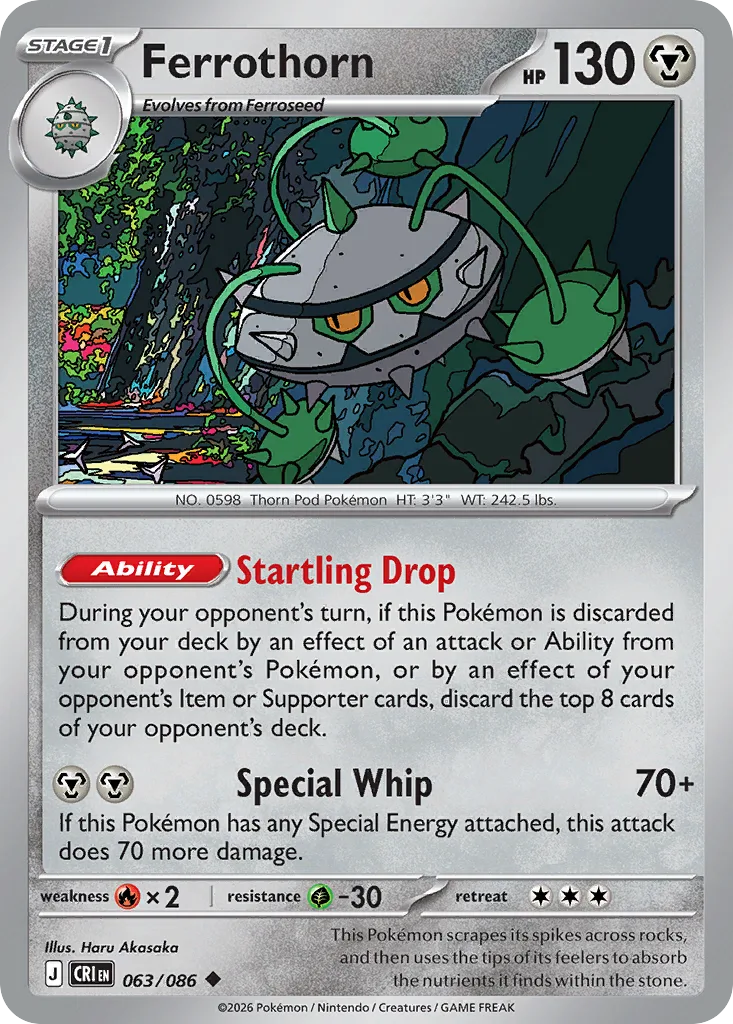
| Not in play at all | Rare, printed explicitly | Ferrothorn, Startling Drop |
That last row is the one worth knowing about, because it breaks the mental model entirely. Ferrothorn from Chaos Rising reads: "During your opponent's turn, if this Pokémon is discarded from your deck by an effect of an attack or Ability from your opponent's Pokémon, or by an effect of your opponent's Item or Supporter cards, discard the top 8 cards of your opponent's deck." That Ability does its work from inside your deck, on your opponent's turn, on a card neither player chose to interact with.
The five trigger types, and how to read one in three seconds
Ability text is templated. Once you know the five openings, you can sort any Ability by how it fires without reading past the first clause.
| Trigger type | Tell | Standard-legal printings | Example |
|---|---|---|---|
| Manual, once per turn | "Once during your turn, you may use this Ability" | 199 | Erika's Vileplume ex, Lovely Fragrance |
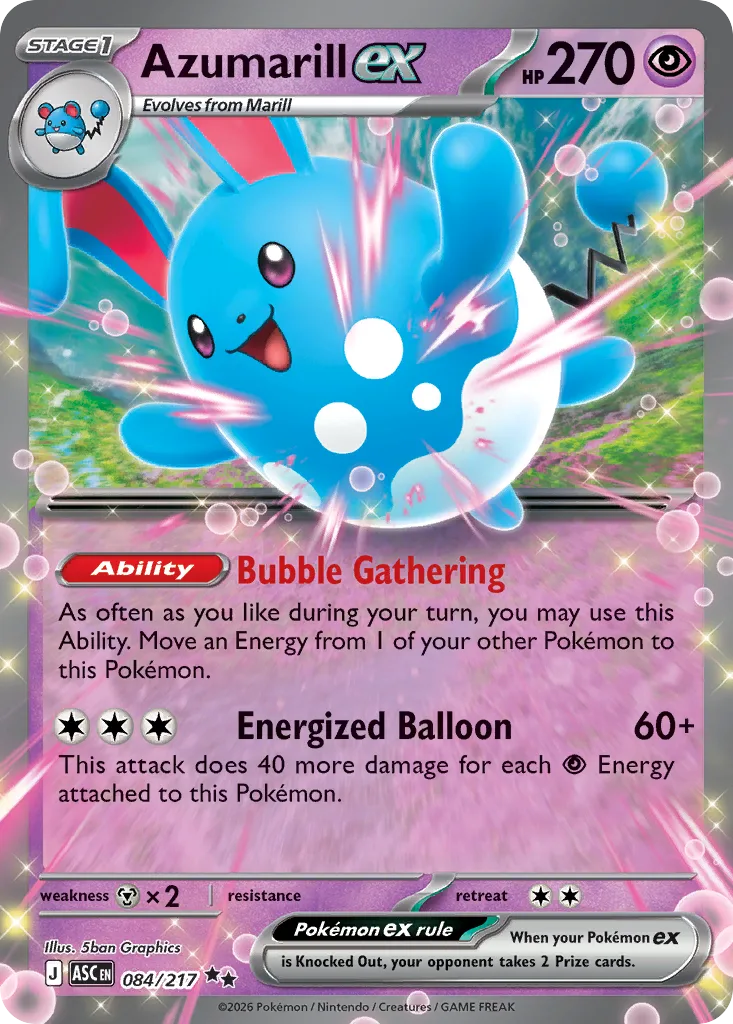
| Manual, unlimited | "As often as you like during your turn" | 18 | Azumarill ex, Bubble Gathering |
| Passive | No activation clause at all | The remainder | Kakuna, Exoskeleton |
| Entry or movement | "when you play this Pokémon", "when this Pokémon moves from your Bench" | 63 | Cobalion ex, Metal Road |
| Reactive | "if this Pokémon is damaged by an attack", "even if this Pokémon is Knocked Out" | 20 | Qwilfish, Poison Point |
A sixth pattern sits on top of the first two rather than beside them: 22 Standard-legal printings charge a cost, phrased as "in order to use this Ability." Delphox from Chaos Rising makes you discard a Basic Fire Energy from hand before it refills you to seven cards. Mega Greninja ex charges a Basic Water Energy to place six damage counters. Those are still Abilities, still free of the attack step, and still usable on the same turn you attack.
The "once during your turn" clause is per Pokémon, not per player. Two Toucannon on your Bench draw two cards. You can prove this from the card text rather than taking it on faith: Meowth ex from Perfect Order has to spend a whole extra sentence saying "You can't use more than 1 Ability that has 'Last-Ditch' in its name each turn," which would be redundant if the game already capped you at one use per name.
Special Conditions do not touch Abilities
This is the single most common misplay in the vertical, and the rulebook settles it by omission — but the omission is complete enough to be an answer. Here is what each Special Condition actually blocks:
| Special Condition | What the rulebook says it stops |
|---|---|
| Asleep | Cannot attack or retreat |
| Paralyzed | Cannot attack or retreat |
| Confused | Coin flip before attacking; on tails the attack does not happen and it takes 3 damage counters |
| Burned | Nothing; 2 damage counters at Checkup, then a flip to recover |
| Poisoned | Nothing; 1 damage counter at Checkup |
Not one of the five mentions Abilities. Bulbapedia's rules page states it directly: unlike the older Pokémon Powers, Abilities are not disabled by a Special Condition. That is a deliberate change of era, not an oversight. Poké-Powers and Poké-Bodies switched off under Special Conditions; Abilities replaced them in the Black & White series and dropped that restriction.
So a Paralyzed Active with a manual Ability still uses it. A sleeping Pokémon still generates. If your plan for stopping an engine is to put it to sleep, you do not have a plan — and note that Special Conditions only exist in the Active Spot anyway, so the engine you actually wanted to stop is almost certainly on the Bench. The full Special Conditions rules cover the Checkup order in detail.
The parenthetical that decides your damage math
Damage-reduction Abilities end with a parenthetical, and players read it as flavour. It is an instruction telling you where in the damage sequence to apply the number. The rulebook's damage order is fixed:
- Start with base damage printed next to the attack.
- Apply damage effects on your own Active Pokémon.
- Increase for Weakness on the defender.
- Reduce for Resistance on the defender.
- Apply damage effects on your opponent's Active Pokémon — the rulebook's example here is literally an Ability reading "This Pokémon takes 20 less damage from attacks (after applying Weakness and Resistance)."
- Place one damage counter per 10 damage. If the total is 0 or less, place none.
Among Standard-legal Pokémon printings, 31 say "before applying Weakness and Resistance" and 25 say "after." The difference is not cosmetic, because Weakness on current cards is ×2.
Take an attack for 100 into a defender with ×2 Weakness and a flat 20 reduction:
| Reduction timing | Math | Damage taken |
|---|---|---|
| "before applying Weakness and Resistance" | (100 − 20) × 2 | 160 |
| "after applying Weakness and Resistance" | (100 × 2) − 20 | 180 |
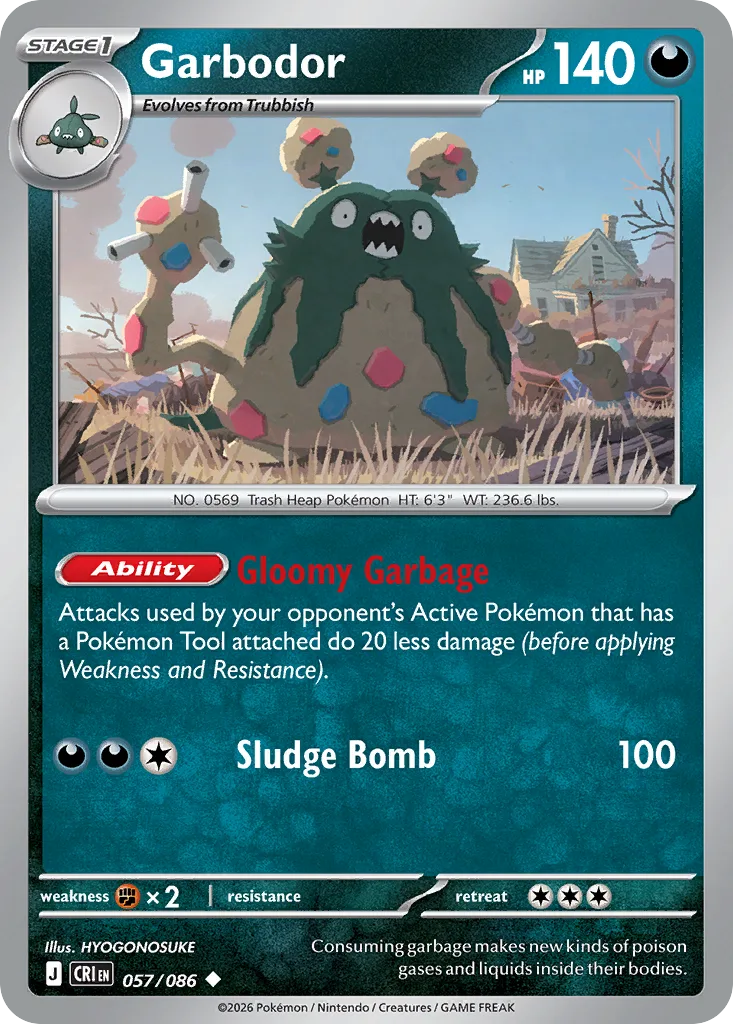
Twenty printed points of reduction is worth 40 real points when it lands before the Weakness step. Garbodor from Chaos Rising is the "before" case: attacks from your opponent's Active Pokémon with a Pokémon Tool attached do 20 less damage, applied before Weakness. Aurorus from Perfect Order is the "after" case, cutting 50 off attacks against your Water-Energy Pokémon — and it carries the other clause worth reading, "The effect of Tundra Wall doesn't stack," which appears on 18 Standard-legal printings. Two copies of a non-stacking Ability give you one copy of the effect.
Ability lock in Standard is four cards, and all four are conditional
Searching every Standard-legal printing for the phrase "no Abilities" returns four distinct cards. That is the whole lock package available to a legal deck right now:
| Card | Set | What it switches off | The out |
|---|---|---|---|
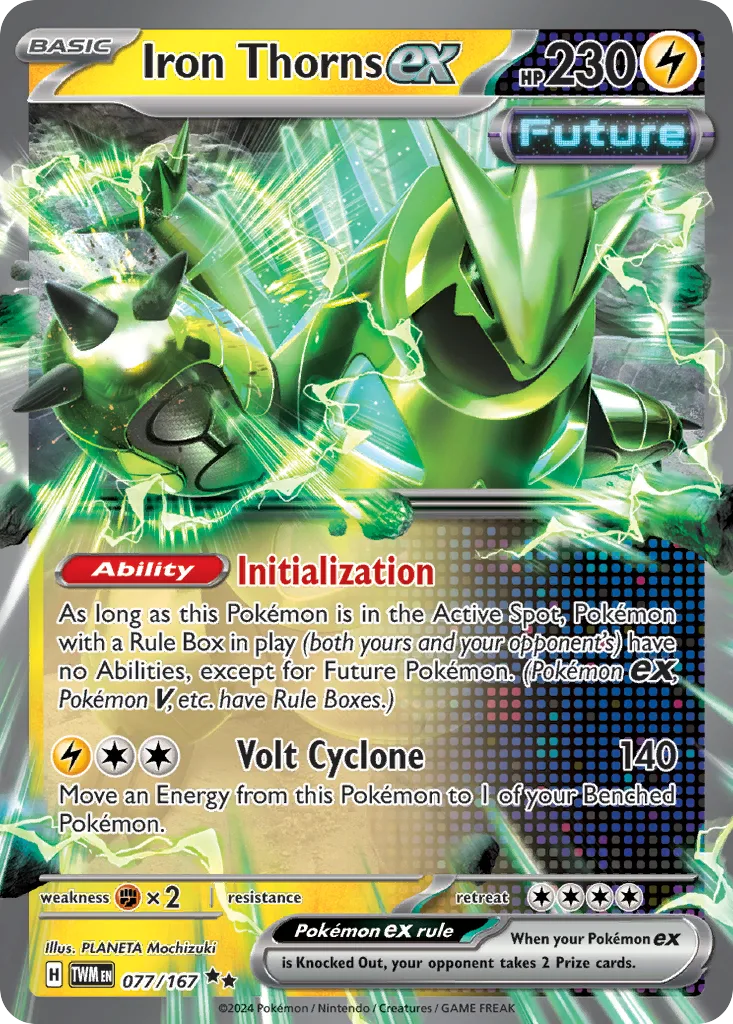
| Iron Thorns ex | Twilight Masquerade | Pokémon with a Rule Box, both players, except Future Pokémon — while it is Active | Knock it out, or make them switch |
| Flutter Mane | Temporal Forces | Your opponent's Active Pokémon only — while it is Active | Retreat or switch the locked Pokémon out |
| Gastrodon | Surging Sparks | Benched Stage 2 Pokémon, both players — while it is Benched | It hits your own Stage 2 line too |
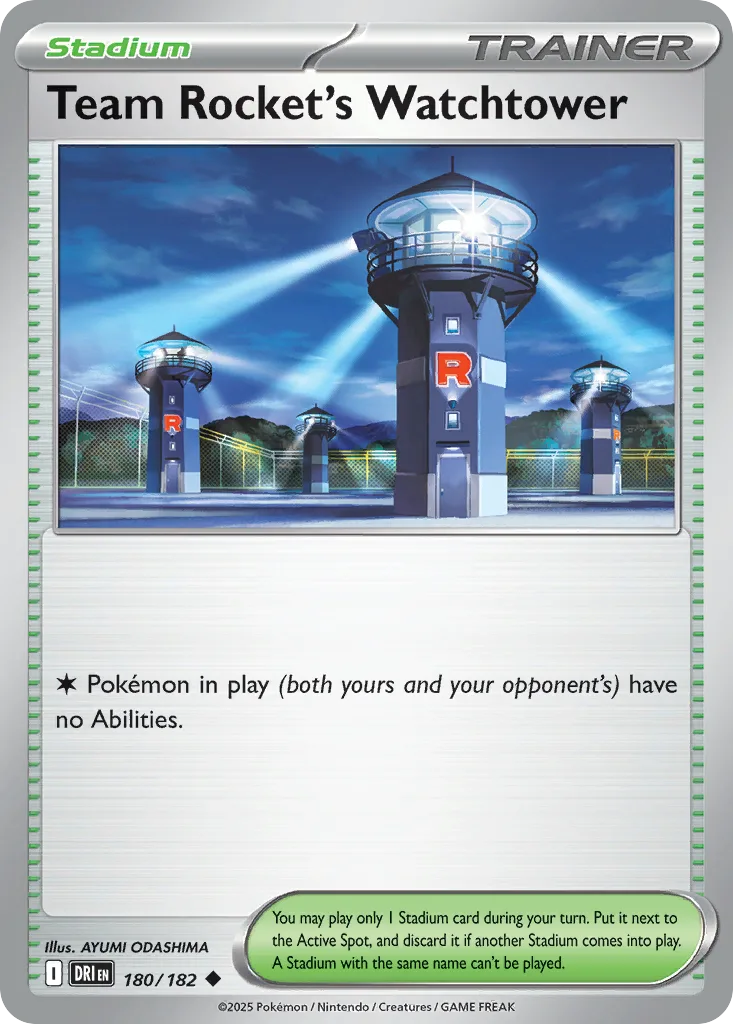
| Team Rocket's Watchtower | Destined Rivals | Colourless Pokémon, both players, Stadium | Play your own Stadium over it |
Every one of them is positional or symmetrical. Iron Thorns ex and Flutter Mane both stop working the moment they leave the Active Spot, which means a switching Item answers them for a single card. Gastrodon shuts off Benched Stage 2 Abilities for both players, so it is a deckbuilding commitment rather than a splash. Team Rocket's Watchtower is a Stadium, and any Stadium replaces it.
There is also personal protection, which is a different thing from lock. Mega Clefable ex prevents all effects of your opponent's Pokémon's Abilities done to it. The Hide 'n' Sneak line — Poltchageist, Sinistcha, Shuppet and Banette in Pitch Black — prevents all effects of the opponent's attacks and Abilities done to that Pokémon, with the parenthetical that matters most on the card: "Damage is not an effect." Those Pokémon are immune to being moved, discarded and manipulated. They are not immune to being hit.
Abilities during Pokemon Checkup
Between turns, Special Conditions resolve and so does anything a card says happens at that moment. The rulebook's ordering rule is precise and gives you a real decision: "The player whose turn is next decides the order of the effects, but all Special Conditions must happen at the same time — for example, you can't add Poison damage, then apply an Ability, then flip for Asleep, etc. But you can apply one Ability, then Special Conditions, and then another Ability."
So Checkup is one Special Conditions block that cannot be split, with Ability effects sequenced freely around it by the player who is about to take a turn. The rulebook's worked example is a Snorlax whose Lazy Eating Ability heals 10 damage between turns — resolve it before or after the Poison counter depending on which order keeps something alive.
The up-to rule that quietly costs games
This one is buried on page 21 and it applies specifically to Abilities:
"For effects of attacks, if a card uses the phrase 'up to X,' you can choose any number between 0 and the maximum. For other effects (such as the effects of Trainer cards and Abilities), you can choose any number between 1 and the maximum."
Read that again. On an attack, "up to 3" includes zero. On an Ability or a Trainer, it does not — the floor is 1. If an Ability says "discard up to 2 cards from your hand," you are discarding at least one. There is one carve-out: any effect that lets you search your deck or discard pile for any card you want, without specifying a kind, forces you to choose at least 1.
What an Ability is not: VSTAR Powers, previous stages, and BREAK
Three edges that get argued at league tables:
- VSTAR Powers. A VSTAR Power can be an attack or an Ability, and the once-per-game restriction covers both. The rulebook: you can't use more than one VSTAR Power during an entire game, regardless of how many Pokémon VSTAR you play. Flip the marker.
- Previous stages. When a Pokémon evolves, "a Pokémon cannot use the attacks or Abilities of its previous Evolution unless a card says so." The Ability you were relying on is gone the instant you evolve over it. Pokémon BREAK is the printed exception — a BREAK keeps the attacks and Abilities of the card underneath and adds its own. The evolution rules go through what else survives the stack.
- Ancient Traits. These sit under the Pokémon's name and are explicitly "not attacks or Abilities, so cards that prevent those from being used won't affect Ancient Traits." That is an XY-era mechanic and not a Standard concern, and it is a separate thing from the Ancient and Future labels introduced in Paradox Rift — do not read Iron Thorns ex's "except for Future Pokémon" clause as being about Ancient Traits.
Quick Action Checklist
- Use Abilities before you attack, not instead of attacking. There is no per-turn budget and no tempo cost.
- Announce them. The rulebook asks you to, and it is what keeps a Checkup ordering dispute from becoming an argument.
- Read the location clause first. 73 Standard-legal printings need the Active Spot, 13 need the Bench, and the rest work from either.
- Count "once during your turn" per Pokémon. Two copies on the board is two uses.
- Never plan around a Special Condition stopping an Ability. None of the five do.
- Check the damage parenthetical before you do the math. "Before" reduction gets doubled by ×2 Weakness; "after" reduction does not.
- Against Iron Thorns ex or Flutter Mane, look for a switch first. Both locks end when the Pokémon leaves the Active Spot.
- Treat "up to X" on an Ability as a minimum of 1. It only includes zero on attacks.
Frequently Asked Questions
Can you still attack after using an Ability in the Pokémon TCG?
Do Abilities work when a Pokémon is Asleep, Paralyzed, or Confused?
Do Benched Pokémon Abilities work in the Pokémon TCG?
What is Ability lock in the Pokémon TCG Standard format?
What does "before applying Weakness and Resistance" mean on an Ability?
Is "once during your turn" per Pokémon or per player in the Pokémon TCG?
How many Pokémon cards have Abilities in the current Standard format?
Keep Reading
- The Pokémon Company — Pokémon Trading Card Game Web Rulebook, 2026 edition (PDF, updated July 2026): Turn Actions p. 12, Special Conditions pp. 15-16, What counts as an attack? p. 19, Full details of attacking p. 20, "up to" vs "any amount" p. 21, glossary
- Pokémon TCG API — card text, Ability text, and printing counts by regulation mark
- The Pokémon Company — 2026 Pokémon TCG Standard Format Rotation Announcement (regulation marks H, I, J legal; G rotated 10 April 2026)
- Bulbapedia — Ability (TCG): replacement of Poké-Power and Poké-Body, Special Condition interaction
Related Guides
Pokémon TCG Prize Cards Explained: 1, 2, and 3-Prizers
The Prize count is the only score the Pokémon TCG keeps. Here is what each Pokémon actually costs you when it goes down — one, two or three — measured across all 2,947 Standard-legal printings, plus the 44 Standard-legal card names whose text reads the Prize count or changes what a Knock Out pays.
Pokémon TCG Formats Explained: Standard, Expanded, Unlimited
Play! Pokémon sanctions three Constructed formats, and Standard is the one the circuit runs on. Here is what the other two actually are: the Expanded card pool the Tournament Handbook enumerates set by set, the 27-card ban list that trims it, the Unlimited format with no bans at all, and the awkward truth about where you can still sit down and play any of it.
Pokémon TCG Tournament Rules: Deck Lists, the Clock, and Penalties
The rules that decide your first League Cup are not in the rulebook. They are in three separate Play! Pokémon documents, revised on a quarterly cycle, and they cover sleeve colour, how a die has to be numbered, what happens to your match when the clock hits zero, and the two penalties that exist in the Pokémon TCG and nowhere else in the program.
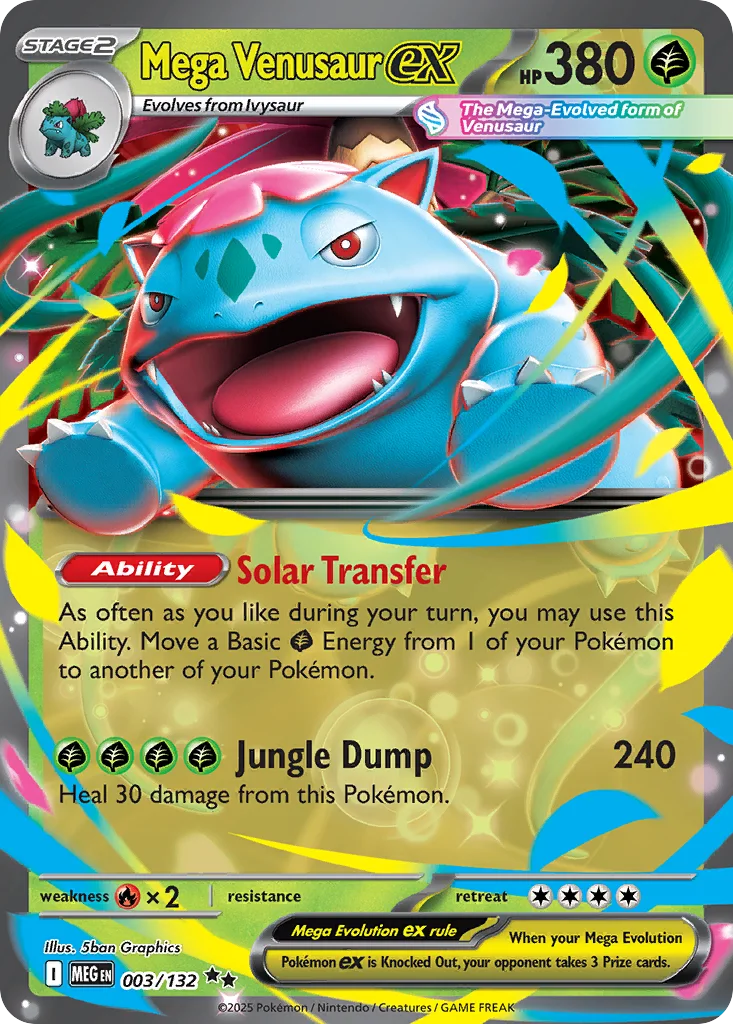
Pokémon TCG Evolution Explained: Stages, Rare Candy, Mega
Evolving looks like the simplest action in the Pokémon TCG until you count the restrictions — there are three, plus two more that get treated as restrictions and are not. Here is what the rulebook actually says about stages, timing, and what survives an evolution, plus how the 2025-26 Mega Evolution era quietly rewrote the whole mechanic for the second time.
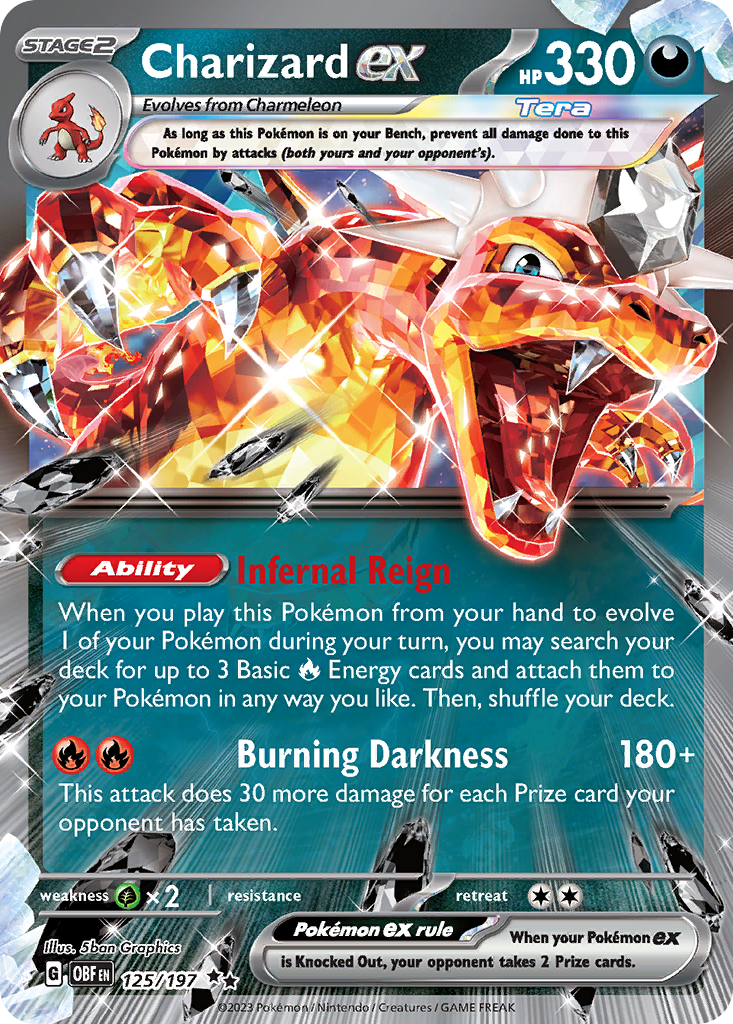
How to Play the Pokémon TCG — Full Rules and Turn Structure (2026)
Two players, 60 cards each, six face-down Prize cards, and a coin flip. That is the whole skeleton of the Pokémon TCG. Here is every rule that actually matters on turn one, from setup through the three ways to win.
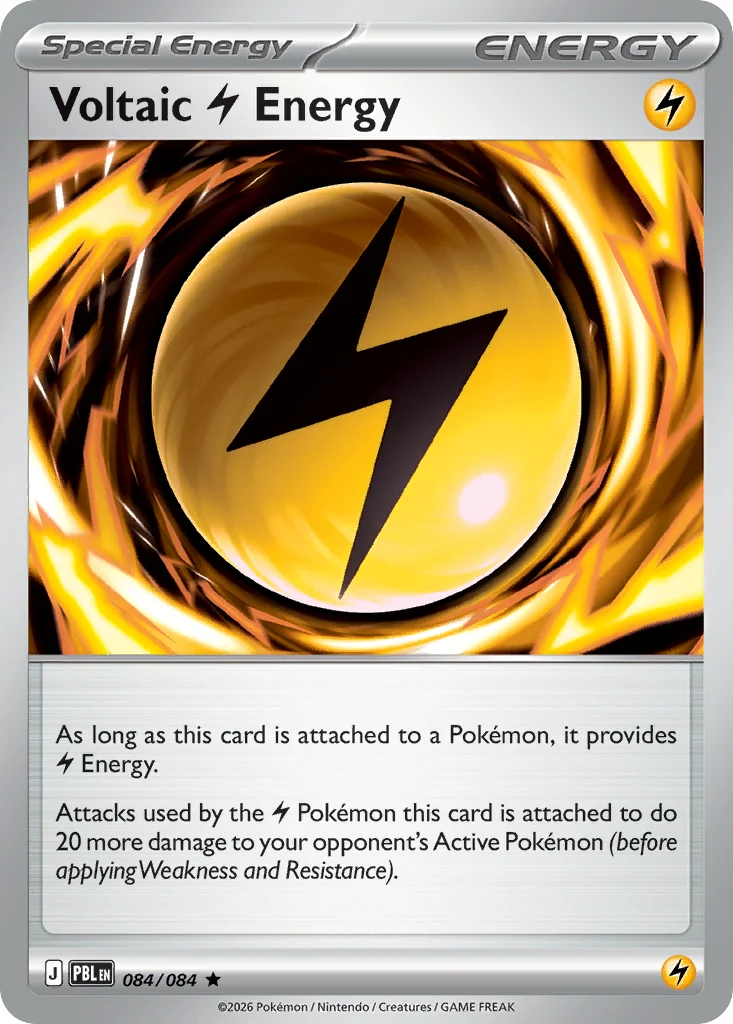
Pokémon TCG Energy Explained: Basic vs Special, Attack Costs, and the One-Per-Turn Rule
Attacking never spends your Energy. Retreating does. There are exactly nine basic Energy cards in the game's history and two Pokemon types that never got one. Here is how Energy actually works, straight from the rulebook and the card database — attack costs, the one-per-turn attachment rule, every legal way around it, and why Special Energy is a target painted on your attacker.