The Witcher 3 Best Side Quests: The Ones You Should Never Skip
The Witcher 3 buries some of its finest writing under a map full of question marks and notice-board scraps. These are the side quests that earn the game its reputation, the ones with real choices and real fallout, and the two you can permanently lock yourself out of.
The first time I played The Witcher 3, I did what I do in every open-world RPG: I mainlined the story, cleared the odd question mark, and told myself I would "do the side stuff later." Then I hit a notice board in Velen, took a contract about a missing wife, and forty minutes later I was standing in a cave making a genuinely awful decision about a grieving man and a werewolf. That contract, Wild at Heart, is not the main story. It is not even a named companion quest. It is a notice-board job, and it is better written than the entire back half of most games.
That is the trap and the gift of The Witcher 3. Its best material is scattered sideways, disguised as errands, sitting behind bulletin-board scraps and question marks that also happen to mark forgettable loot piles. If you're brand new, run through our Witcher 3 beginner's guide first so the combat doesn't get in the way. Then come back, because these are the side quests that earn the reputation, ranked by how hard they hit and flagged for the two you can permanently lose.
Why side quests are the whole game
CD Projekt Red built The Witcher 3 around a simple, ruthless idea: most quests hand you a moral problem, not a monster. You investigate, you learn something ugly about the humans involved, and then you make a call the game refuses to grade as right or wrong. There is no paragon meter. The fallout just happens, sometimes hours later, in a village you forgot you visited.
That structure is why the side content lands harder than the Wild Hunt chase it hangs off of. A contract that starts as "kill the thing in the woods" almost always ends as "decide who deserves to live." The best ones stack a detective sequence, a combat payoff, and a decision with no clean answer. The worst thing you can do is skip them for the main quest, because the main quest is often the least interesting story in the region you're standing in.
The Whispering Hillock and the choice that haunts Velen
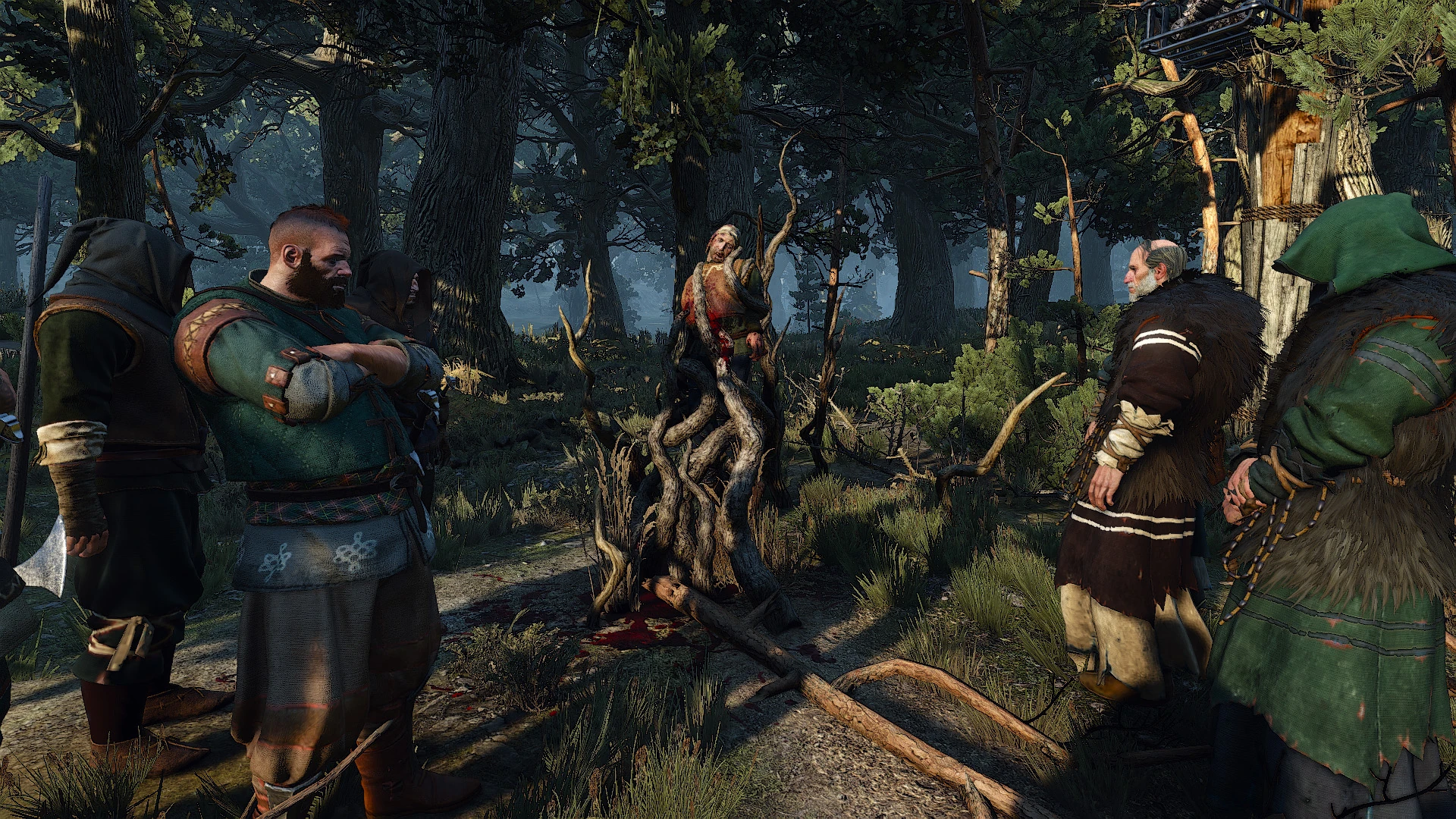
If you only remember one decision from your whole playthrough, it will probably be this one. The Whispering Hillock is technically a step inside the Ladies of the Wood main-quest thread in Velen, but it plays like a self-contained tragedy and the game treats your answer as one of its heaviest.
You find a spirit trapped beneath a tree, and it makes an offer: free it, and it will save the orphans held at Crookback Bog by the Crones. To release it you gather a raven feather, the spirit's bones, and a wild black horse, then perform a ritual. The catch is that the spirit is not clean. The game warns you in plain text that your choice here "will have a major impact" on the villagers of Downwarren, the orphans in Crookback Bog, and the Bloody Baron's family, and it is not bluffing.
Free the spirit and the children escape the Crones, but the thing you released takes its own revenge and the price is paid in blood elsewhere. Refuse, side with the Crones, and Downwarren is spared while the orphans meet a far darker end. There is no version where everyone walks away. These choices ripple exactly the way the main-story decisions steer your ending, and this is the one that teaches new players the game is serious about consequence.
Wild at Heart, a contract that is not about the monster
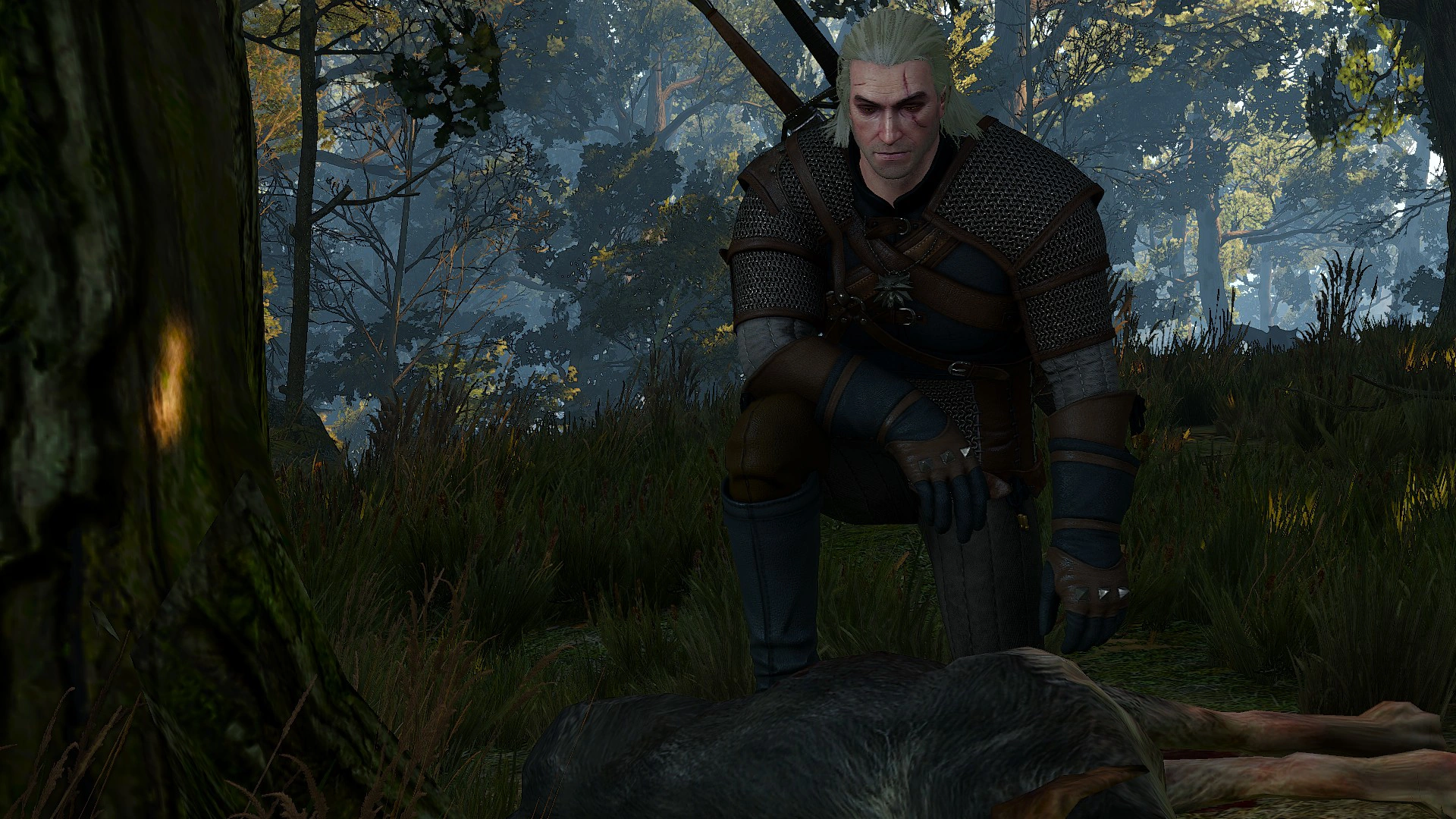
Wild at Heart begins as a level-7 secondary quest near Blackbough: a hunter named Niellen asks you to find his missing wife, Hanna. You talk to the blacksmith, the butcher's wife, a couple of kids, and follow the clues into the woods, where you find a corpse surrounded by wolves. Then Niellen's sister-in-law, Margrit, shows up and tries to bribe you to lie and tell him Hanna simply left.
Keep digging and the "monster" turns out to be a person's cruelty. Niellen is a werewolf, and the werewolf fight is a genuinely nasty one: he heals with a howl at half health, so you want fast silver-sword strikes, dodges over parries, and Axii to interrupt his regeneration. When his health drops, Margrit runs in and the truth spills out. She had loved Niellen for years and knew what he was, so she showed Hanna his curse hoping her sister would leave in disgust. Instead Niellen lost control and killed his own wife. Now he wants Margrit dead, and you get a timed choice: tell her to run and finish him yourself, or let the werewolf have his revenge before he asks you to end him too. A missing-persons notice, and it ends here. That is the whole appeal.
A Towerful of Mice and the curse you can make worse
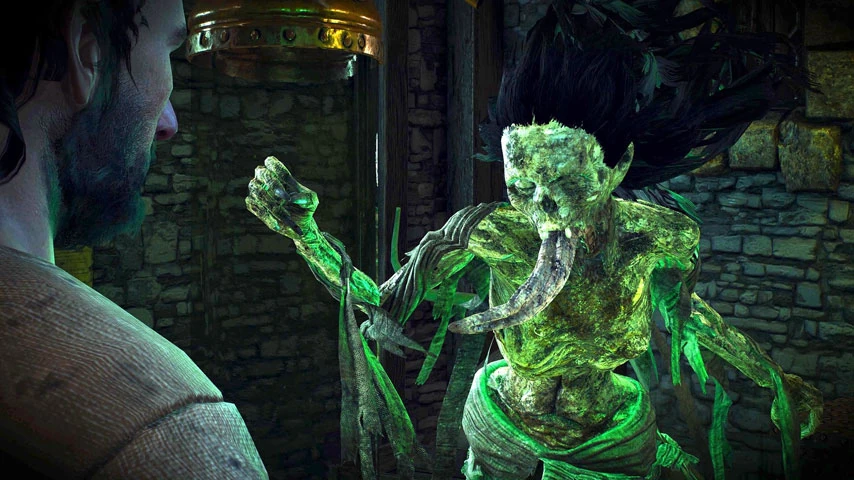
Tied to the sorceress Keira Metz's questline in Velen, A Towerful of Mice sends you to Fyke Isle, a rat-infested tower with a haunting on it. Using a magic lantern to watch the ghosts replay their last moments, you piece together a massacre: a mage named Alexander was experimenting with plague-carrying rats, peasants stormed the tower, and the lord's daughter, Anabelle, drank what she thought was poison to escape them. It only paralyzed her, and the rats ate her alive.
Her ghost asks you to bring her bones to Graham, the man she loved, so he can bury them and she can forgive him. Here is the quiet horror of it: the "kind" option is a trap. If you take the bones off the island to Graham, the curse breaks, but Anabelle reveals herself as a plague maiden and is now free to roam Velen and spread the Catriona plague. If instead you refuse and bring Graham to her, he proves his love in person, dies reuniting with her, and the curse dies with the island. The gentler-sounding choice unleashes a plague. Watch every ghost with the lantern before you decide, because doing so is what unlocks the option to refuse.
Carnal Sins: Novigrad gets a murder mystery
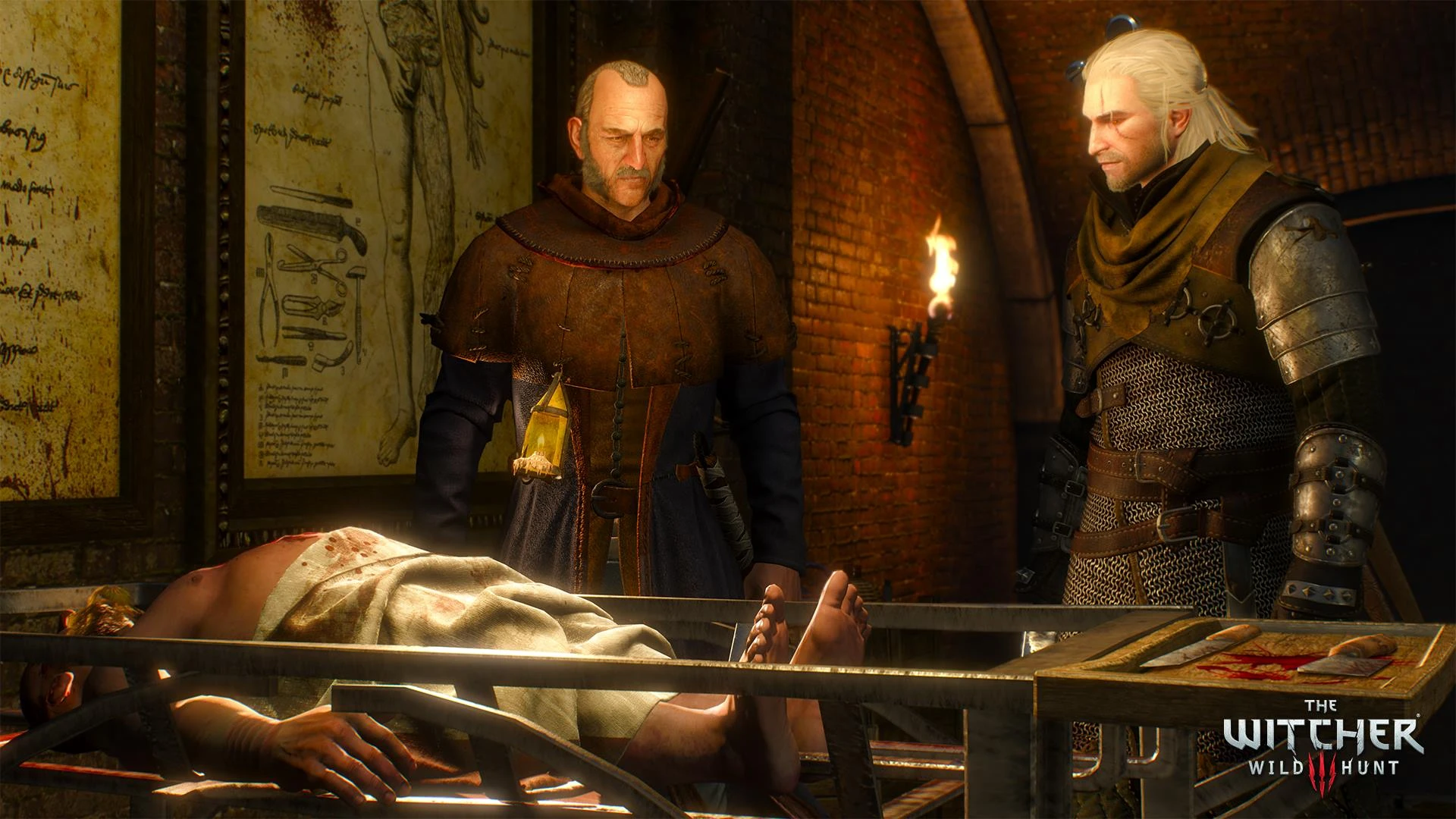
Carnal Sins is the closest the base game gets to a full detective procedural, and it earns the comparison. It kicks off when Dandelion's partner Priscilla is attacked in Novigrad and left barely alive. You follow the head doctor, Joachim von Gratz, into the sewers and down to the morgue to examine a previous victim, and from there it becomes real casework: three crime scenes you can investigate in any order, a note naming Priscilla as the next target, and a set of religious sermons pinned near the bodies.
The genius is in the misdirection. There are two suspects, and the game strongly pushes you at the wrong one, an ugly zealot named Nathaniel Pastodi. Rush in and kill him without hearing him out and you lock yourself out of finding the real killer entirely. Play it patient and the trail leads to the coroner, Hubert Rejk, who reveals himself in a warehouse as a katakan, a breed of higher vampire, and drops a katakan mutagen when you put him down. Bring the right oils and decoctions for that fight, because a katakan is not a drowner.
The Last Wish, or why you should not skip Yennefer
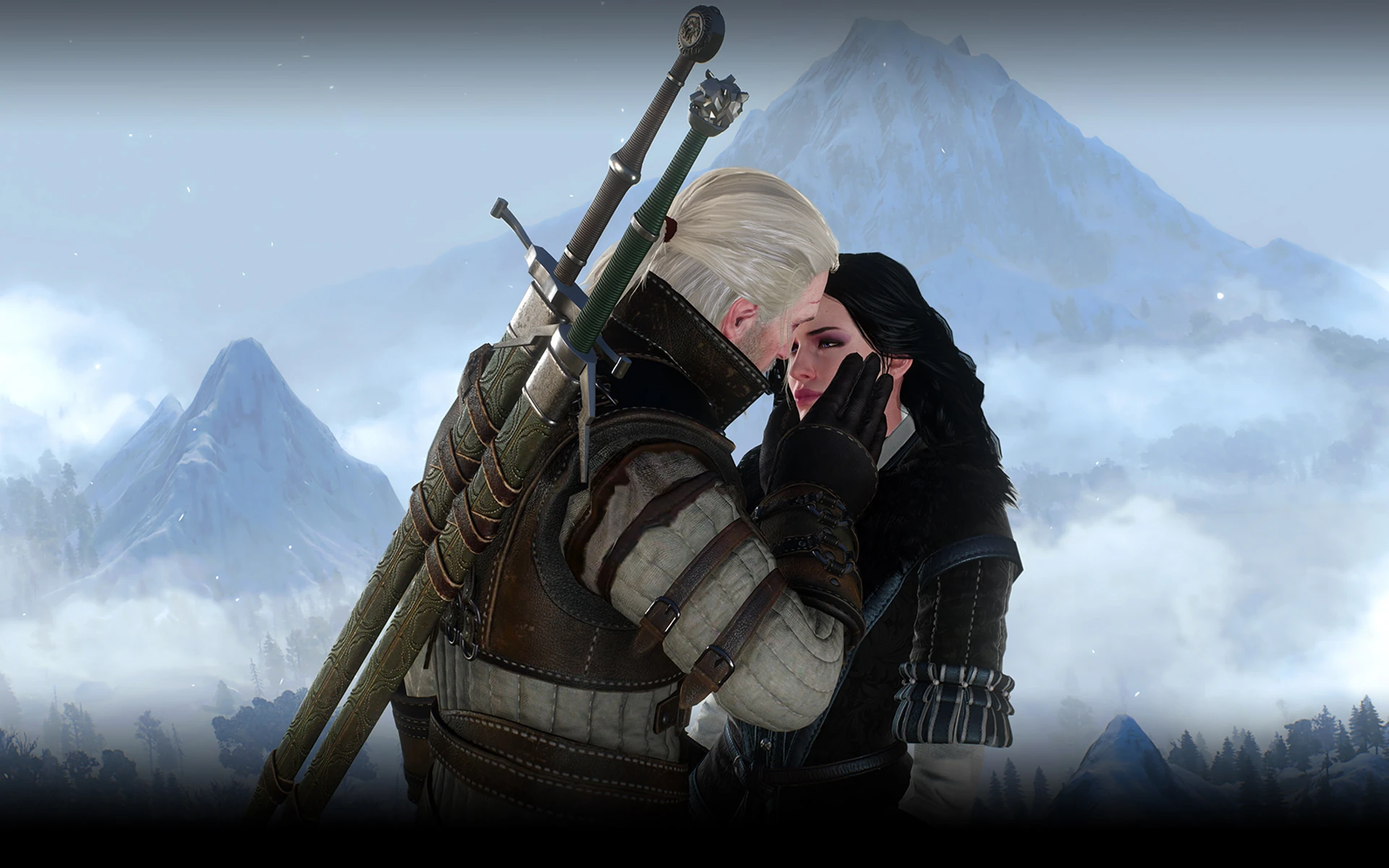
This is the first of the two quests I will yell about missing. The Last Wish is a level-15 secondary quest in Skellige, where Yennefer wants to know whether the love between her and Geralt is real or just an artifact of the djinn's old magic binding them together. Answering that means hunting a djinn at the ruins near Hindarsfjall, a genuinely tough fight where Yrden and the wider sign toolkit do a lot of work.
Here is the part people learn too late: The Last Wish fails permanently if you have not completed it before you retrieve Uma during the main quest Ugly Baby. Blow past that main-story beat and the quest is gone, and with it the cleanest path to a real Yennefer romance. If you are on Team Yen, do this before you leave Skellige for the main plot. Skellige is packed with good secondary quests, so treat this one as a priority and not a maybe.
In the Heart of the Woods, a no-win contract
The Witcher 3's monster contracts are usually simple: read the notice, brew the right oil, kill the beast, collect crowns. In the Heart of the Woods, a level-22 contract in Skellige, quietly refuses to be simple. The village of Fayrlund is split. Half the villagers, led by an elder named Harald, worship the forest spirit and feed it sacrifices. The other half, led by a younger man named Sven, want you to kill it.
The "monster" is a leshen, a Woodland Spirit, and the twist is that both sides are partly right and partly monstrous. Side with Sven and slay the leshen and you're rewarded better, roughly 110 experience plus a leshen trophy and a pair of assassin's boots, but you've stripped a village of the protector some of them believe in. Side with Harald and spare it and you leave a thing that eats people alive. There is no reading of this where you're clearly the hero, which is precisely why it stuck with me more than half the game's actual boss fights.
Ghosts of the Past and why your old saves matter
Ghosts of the Past is a short, low-level Velen quest that means everything or nothing depending on choices you made in a different game. If you helped a witcher named Letho of Gulet survive the events of The Witcher 2, or imported a save where he lived, he turns up here being hunted by Nilfgaardian agents, and you can fight alongside him one more time.
It is not a mechanically complicated quest. What makes it worth calling out is that it is the game rewarding continuity, giving long-time players a reunion that newcomers will never trigger. If you're playing without a Witcher 2 history, the game simulates a set of assumed decisions when you start, and you can shape a few of them through the "story so far" prologue. It is a small thing that tells you how seriously this series treats the idea that your past choices are still in the room.
Reason of State, the endgame quest most players miss
Reason of State is a level-30 secondary quest, and it is one of the most consequential political beats in the whole game, which makes it wild how easy it is to lock out. It is the payoff to Novigrad's slow-burn plot about the mad King Radovid, and reaching it requires you to have worked through a whole chain of earlier quests, including Redania's Most Wanted and the Roche and Dijkstra threads, without cutting them off.
Do the setup and you're handed a decision about who ends up steering the North after Radovid, a choice with a bloody, morally filthy meeting where old allies turn on each other and you pick a side in real time. Miss any of the prerequisite links and the quest never appears, and a large chunk of players finish the game without ever seeing it. If you care about the political story more than the fairy-tale one, protect this quest chain. It is a reminder that in The Witcher 3, the biggest stories are often the ones you have to earn access to.
How to avoid missing the best ones
A few habits keep the good quests from slipping past you. Do the notice-board contracts and named secondary quests in each region before you push the main story out of that region, because several of the best ones, The Last Wish especially, are gated behind main-quest triggers that fire without warning. Read your journal's quest descriptions, since the game usually hints when a quest is about to become unavailable. Keep your gear roughly level-matched using the witcher gear guide so a level-22 leshen or a katakan doesn't wall you.
And do not overlook the expansions once you reach them. The entire Blood and Wine expansion is essentially one enormous, gorgeous side quest with its own region, and Hearts of Stone contains a run of secondary quests as good as anything in the base game. The rule of thumb: if it has a name and a person attached to it, do it. If it's an anonymous question mark, you can let it go.
The short version
- The Whispering Hillock is the choice that defines your Velen, and every option has a real cost. Do not skip it to rush Ladies of the Wood.
- Wild at Heart, a level-7 notice-board contract, is one of the best-written quests in the game and ends with a hard call about a grieving werewolf.
- A Towerful of Mice punishes the "nice" choice: taking Anabelle's bones off Fyke Isle frees a plague maiden. Watch every ghost first to unlock the safer path.
- Carnal Sins is the game's full murder mystery. Do not kill Nathaniel before hearing him out, or you lose the real culprit, the vampire Hubert Rejk.
- The Last Wish fails forever if you don't finish it before Ugly Baby. Do it before leaving Skellige if you want to romance Yennefer.
- In the Heart of the Woods forces you to pick between two versions of wrong. Side with Sven for the better loot, or spare the leshen for the villagers who need it.
- Ghosts of the Past rewards a living Letho from your Witcher 2 choices, and Reason of State is a gated endgame quest a lot of players never even see.
Frequently Asked Questions
What are the best side quests in The Witcher 3?
Which Witcher 3 side quests are missable?
What is the best choice in The Whispering Hillock?
Who is the killer in Carnal Sins?
Do I need to have played The Witcher 2 for Ghosts of the Past?
Should I do side quests before or after the main story in The Witcher 3?
Are the Witcher 3 expansion quests worth it?
Keep Reading
Related Guides

The Witcher 3 Beginner's Guide: Your First 20 Hours
Most people who bounce off The Witcher 3 do it in White Orchard, and it is almost always the same three reasons: they never learned Quen, they never applied an oil, and they treated the skill tree like a shopping list. Here is the fix.
The Witcher 3 Remastered Rewards: Fire Horse, Scarlet Crest
Ninety minutes of Twitch buys Roach a 90-Stamina saddle that only one saddle in the game beats, and you can loot it before the prologue ends. Here is every Remastered reward in the Vizima chest, how to claim each one before the Twitch drops close on 27 October, and what the Fire Horse and Scarlet Crest sets are actually worth.
The Witcher 3 Remastered Skill Tree: What Unlocks What
CD PROJEKT RED described the Remastered skill overhaul in three bullet points and has published no skill list. The Witcher wiki has since filled in all four trees. Here is how unlocking works now, what every skill needs and does at rank 1 and rank 3, and which old skills are gone.

The Witcher 3 Remastered PC Requirements: All Six Tiers
CD PROJEKT RED's Remastered patch notes carry a six-column PC spec table, from a GTX 1660 at 1080p on Low up to an RTX 5080 for path tracing at 4K. Here is every tier, which upscaler your graphics card actually gets, why CDPR's own storage figures disagree, and the PC settings its patches and support pages have touched since launch.
The Witcher 3 Fist Fights: Every Circuit and Brawl Master
Skellige's fistfighting champion is a bear, the Champion of Champions is a rock troll, and before the troll will fight you at all you have to lose a fight to a ghost on purpose. Here is every fistfighting circuit opponent across Velen, Novigrad, Skellige and Toussaint, what each one pays, and the single loss that makes Brawl Master unobtainable.
The Witcher 3 Remastered Mods: How to Install, What Broke
Remastered put a Mods button on The Witcher 3's main menu, and CD PROJEKT RED says the same update stopped mods carrying script, XML or w3strings files from working. Here is how the mod.io menu works on PC and console, what broke and who fixes it, which Steam branch actually gets your old build back, and what a mod does to your trophies and your cross-save.