How to Build a Budget Cookie Run: Braverse Deck (Competitive on a Shoestring)
You do not need a wallet full of EXR pulls to play real Braverse. Here's how to build a budget deck that holds its own, what to spend on, and what to ignore until later.

Trading card games have a reputation for being a money pit, and Cookie Run: Braverse can absolutely be one if you let it. But it doesn't have to be. The format's structure - 60-card decks, a slow one-Support-per-turn resource curve, and Starter Decks that are fully legal out of the box - is genuinely friendly to budget players. You can build a deck that beats real opponents without ever opening a chase card.
This guide is a plan for doing exactly that: a competitive-enough Braverse deck on a shoestring, what to spend on, and what to ignore. One honesty note up front: we won't quote prices, pull rates, or box values. Those numbers are reported inconsistently across the web and they move constantly, so anywhere money comes up we tell you the principle and leave the dollars to you - prices and stock vary, so check a current retailer for the actual numbers. If you're brand new, pair this with deck-building basics and the best starter deck guide.
Why budget decks work in Braverse
A few things about this game tilt in the budget player's favor:
- Starter Decks are complete and legal. Each one is a ready-to-play 60-card deck. You are not buying a "demo" - you're buying a functional deck you can sit down and win with.
- The resource curve is slow. Because you only add one Support card per turn, raw card power matters less than a coherent plan. A clean, cheap deck that does one thing well can beat a pile of expensive cards with no direction.
- Consistency beats splash. Running four copies of a cheap, reliable card is often better than one copy of an expensive bomb you rarely draw. Budget decks lean into consistency, which is exactly what wins games.
The budget truth: in a slow-ramping format, a focused common-heavy deck loses to top-tier lists at the margins, not by a mile. You'll be competitive at locals and learn the game faster than someone hiding behind expensive cards.
Start with a Starter Deck

The single most cost-effective purchase in Braverse is a Starter Deck. It hands you a legal 60-card shell built around one color, with a sensible curve already assembled. Your budget "deck-building" is really deck-improving from that base.
Buy a Starter in the color whose plan you like (see the five colors explained), play 10 games, and only then start tweaking. You'll spend far less if you upgrade a known quantity than if you try to brew from scratch out of loose packs.
A second tip: if a friend is starting too, buy two different-color Starters between you. Two decks, two colors, instant sparring - and you split the cost of learning the format.
The cheapest archetype to build
If your goal is "most game for the least money," build Red aggro. It's the most budget-friendly archetype in nearly every TCG, and Braverse is no exception, for structural reasons:
- Its best cards are cheap by design - low-cost Cookies with high attack. The good ones are usually commons and uncommons, not chase rares.
- It wins fast, so it doesn't need an expensive, card-hungry late game.
- Its plan is forgiving and clear, which means you don't pay a "skill tax" in mistakes while you learn.
Contrast that with combo (Blue), which often wants specific, harder-to-find payoff pieces, or a grindy control deck (Yellow) that leans on premium late-game finishers. Those archetypes can get expensive fast. For best-value purposes, Red is the lane. For the specific cards, see our best Red cards guide. Which Red staples sit at common or uncommon shifts with the card pool, so confirm the current ones against the official card database.
If you're optimizing purely for dollars-per-win as a new player, a Red Starter plus a handful of common upgrades is the strongest budget play in the game right now.
Where your money actually matters
Budget doesn't mean never spend - it means spend in the right places. Here's where a small, targeted outlay pays off most:
| Spend here | Why it's worth it | Roughly how much |
|---|---|---|
| A second Starter Deck | A sparring partner and a second color's worth of cards | Low |
| Playset of your best cheap attacker | Consistency is the engine of a budget deck | Low |
| Sleeves | Protects resale value and keeps cards legal-looking | Low, one-time |
| A few singles for key roles | Filling a reach or removal gap beats a random box | Varies - buy the card, not the gamble |
The throughline: buy the specific cards you need, not the gamble. A targeted single fills a known hole; a booster box is a lottery ticket dressed up as a deck upgrade.
What you can safely skip
Just as important as where to spend is where not to:
- Chase EXR / Secret-rarity cards purely for the art or the flex. The rarity ladder reportedly runs C, U, R, SR, UR, EXR, plus Secret tiers (SEC / SSR / SUR), and the top of that ladder is collector territory, not competitive necessity. A higher rarity does not mean a stronger card.
- Booster boxes, if your goal is a deck. Boxes are for collectors and for people who enjoy opening packs. As a deck-building strategy they're inefficient - you pay for cards you'll never run.
- Premium accessories beyond basic sleeves, until you actually care.
For what the rarity letters mean and when they matter, see the rarities and collecting guide, and confirm current rarity treatments and box configuration against the official site, since these can change set to set.
A budget build plan, step by step
Here's the actual sequence we'd follow with a tight budget:
- Buy one Starter Deck in a color you like (Red if you want the cheapest competitive path).
- Play it stock for ~10 games. Learn what it does well and what it lacks before spending another cent.
- Identify your two weakest slots. Usually a budget deck wants more reach (closing damage) and a touch more consistency in its core attackers.
- Buy a playset of one cheap upgrade that fixes your biggest weakness. One change at a time so you can feel the difference.
- Add a second Starter (different color) for sparring, or to harvest its commons if you're going multicolor later.
- Sleeve up and call it a deck. You're now competitive-enough for a local night.
This whole arc costs a fraction of chasing a netdeck, and you'll understand your deck better for having built it deliberately. The 60-card construction rules (four copies max of a card number, at least one Cookie, up to 16 FLIP cards) are covered in deck-building basics; they're well-corroborated, but worth confirming against the official rulebook before a sanctioned event.
Upgrading without overspending
Once your budget deck is humming, upgrade surgically. The temptation is to buy the flashiest new card from the latest set; resist it. Instead:
- Watch which cards you're consistently glad to draw and which feel dead. Cut the dead ones.
- Upgrade one role at a time - reach, then removal, then a better top-end - and only when you can name why the current card is underperforming.
- Track new set releases via the set release timeline, but wait a week or two after a set drops; prices and availability settle, and you'll learn which new commons are actually good rather than overpaying on hype.
Budget mistakes to avoid

The classic ways budget players accidentally overspend:
- Buying boxes hoping to "build a deck." You'll end up with 200 cards and no coherent deck. Buy the Starter and the singles you need.
- Chasing rarity for power. EXR doesn't beat a good common in a focused plan. Higher rarity is often just nicer cardboard.
- Brewing multicolor too early. Splashing a second color makes your resource base worse, which hurts budget decks most. Learn one color first.
- Over-teching for matchups you rarely face. Build the consistent core; don't dilute it with narrow answers to decks you'll meet once a month.
The cheapest mistake to avoid is impatience. Play the deck, find the real weakness, then buy the one card that fixes it. That discipline saves more money than any deal.
Quick Action Checklist
- Buy a Starter Deck first - it's a legal, complete 60-card deck and the best value in the game.
- Go Red aggro for the cheapest competitive path - its best cards are cheap by design and it wins before needing a pricey late game.
- Spend on consistency, not chase cards - a playset of a good common beats one expensive bomb.
- Buy singles, not boxes, when your goal is a deck. Boxes are a collector's gamble.
- Upgrade one role at a time and only when you can name why the current card underperforms.
- Skip premium rarities for power - higher rarity does not mean stronger card.
- Verify all prices at a current retailer - we don't quote numbers, and they move constantly.
Frequently Asked Questions
Can you build a competitive Cookie Run: Braverse deck on a budget?
What is the cheapest Braverse archetype to build?
Should I buy a booster box to build a deck on a budget?
Where should a budget Braverse player spend money?
Do I need expensive high-rarity cards to win in Braverse?
How should I upgrade a budget deck over time?
Keep Reading
Related Guides

Cookie Run: Braverse Tempo Deck Guide (Build & Pilot Blue Tempo)
Tempo is aggro that learned to play defense. Here's how to build a Blue-Red tempo shell in Cookie Run: Braverse, a real decklist of cards you can buy, and how to keep the clock running while the other deck flails a turn behind.

Cookie Run: Braverse Combo Deck Guide (Build & Pilot Purple Recursion)
Combo in Braverse isn't a one-card instant-kill - it's a Purple value engine that replays Cookies out of your trash until the opponent runs out of answers. Here's the real decklist, the loop, and how to pilot it without bricking.
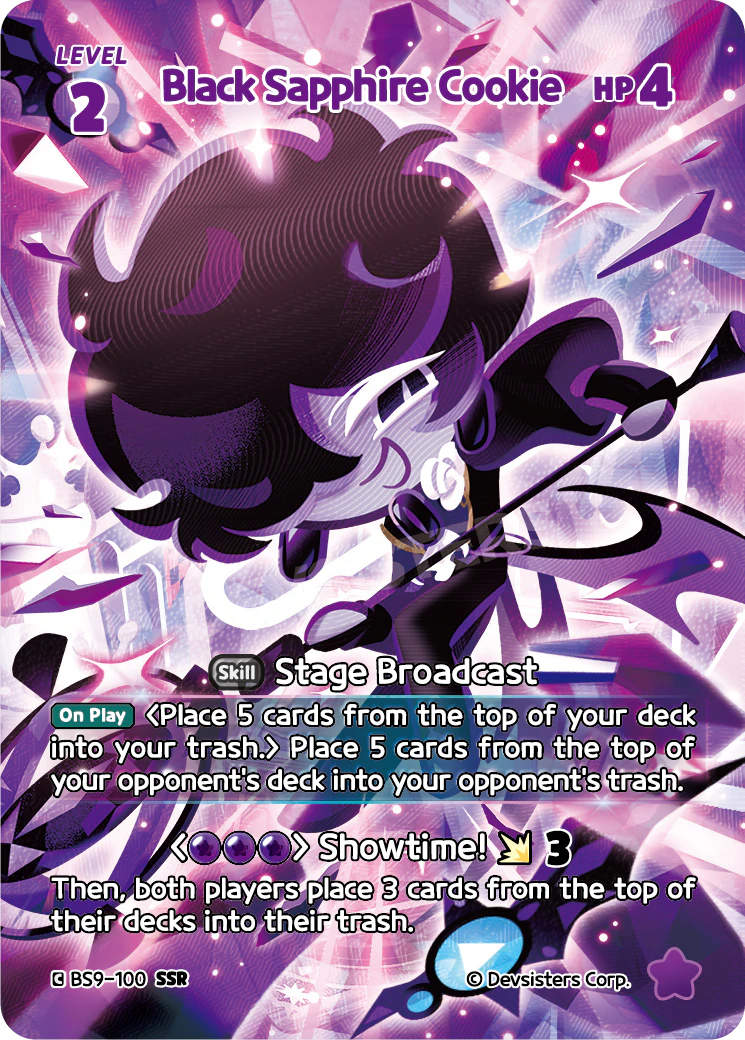
Cookie Run: Braverse Mill Deck Guide (Build & Pilot Purple Deck-Out)
Mill in Braverse won't deck someone to zero for an instant win - the game doesn't work that way. But a Purple deck-out shell weaponizes the opponent's trash, fuels its own payoffs, and starves their Cookie supply. Here's the real list.

Cookie Run: Braverse Control Deck Guide (Build & Pilot Blue/Purple Control)
Control is the deck that says "go ahead, swing" and then makes you regret it. Here's how to build a reactive Blue/Purple control shell in Cookie Run: Braverse, a real 60-card list of cards you can actually buy, and how to pilot it without drowning in your own clever answers.
How to Play Cookie Run: Braverse - A Complete Beginner Guide
Cookie Run: Braverse is the rare TCG you can teach in a single match. This guide covers everything a first-time player needs: card types, setup, turn structure, how you pay for cards, the FLIP mechanic, and how to win.

Cookie Run: Braverse Meta Tier List — Best Decks & Archetypes Ranked
Which Cookie Run: Braverse decks are actually carrying right now? Here's a meta tier list of the strongest archetypes - the real cards that anchor each one, why they rank where they do, and what's overrated.