Cookie Run: Braverse Tech Cards Guide (Flex Slots That Win Games)
Tech cards are the flex slots that answer the deck your list has no plan for. Here's which Braverse answer traps, removal, bounce, and hate cards are worth running - all verified against the official database - plus how many slots to give them.
Every Braverse player hits the same wall. You build a clean 60 - right curve, stable color base - then sit down across from the one deck your list has no plan for and get run over while your hand is full of perfectly good cards that do nothing about the actual problem. That gap - between a deck that does its own thing and one that can also disrupt yours - is where tech cards live.
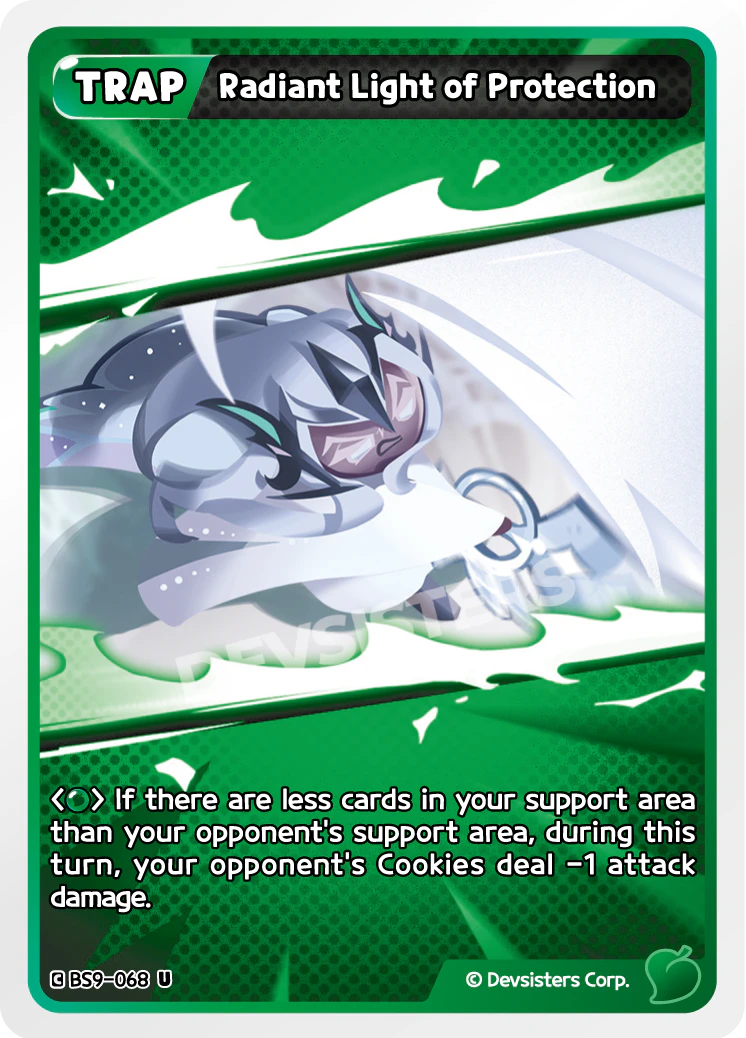
Here's the claim I'll defend: a single flex slot like Radiant Light of Protection (BS9-068) - one Green energy to drop every one of your opponent's Cookies to -1 attack damage for a turn - swings more close games than a fourth copy of your best attacker ever will. It does something your core 55 cards can't: it changes what the opponent is allowed to do. Usual honesty note - the English meta is young and the pool shifts set to set, so re-verify the current list against the official database before an event, and if your core isn't stable yet, start with the deck-building basics.
What actually makes a card a tech card
A tech card is a flex slot you include to answer a specific problem rather than to advance your own game plan. Be strict about it, because "tech" gets thrown around loosely. Your best attacker and your draw engine aren't tech - they're core, doing what your deck is built to do every game. A tech card is the one you'd cut in a heartbeat if you only ever played the mirror.
The test: would I still run this if every opponent were on my exact deck? If no, it's tech. Radiant Light of Protection is dead in a slow mirror and game-winning against go-wide aggro - and that swing, low value in most matchups and huge in the one it's built for, is the signature of real tech.
In Braverse, tech mostly lives in three places. Traps are the closest thing to reactive, opponent's-turn answers - set in your support area, they fire in response to what the other player does. Items are proactive answers you play on your own turn. And a few Cookies (the bounce ones especially) staple a tech effect onto a body so you don't lose tempo teching them in. For the full ranked rundown of the non-Cookie pool, the best Items, Traps, and Stages guide is the companion piece to this one.
The answer-Trap package every deck should run
Traps are where Braverse hides its combat tricks and fog effects, and they're the most universally useful tech in the game - "the opponent swings for lethal and you say no" is a problem every deck faces. The strong ones share a mechanic: reduce a Cookie's attack damage for the turn, turning a lethal alpha strike into a whiff.
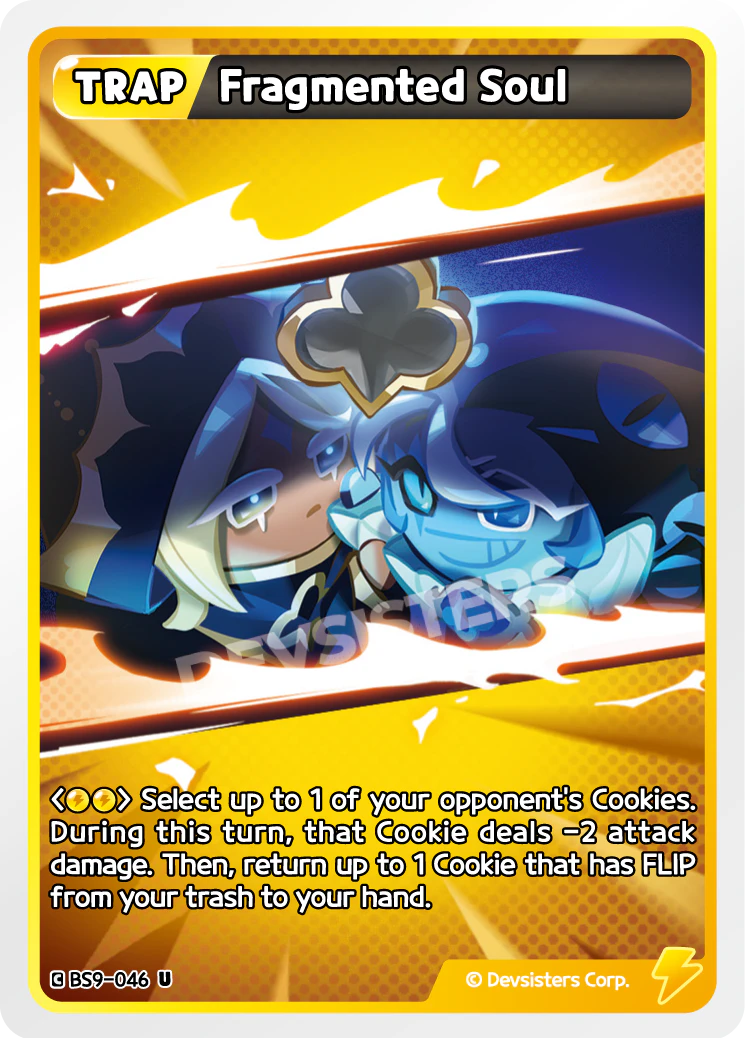
The headliner is Fragmented Soul (BS9-046), a Yellow Trap: for two Yellow energy it drops one opponent Cookie's attack damage by 2 this turn, then returns up to 1 FLIP Cookie from your trash to your hand. That second clause is what makes it great tech - you blank a swing and rebuy a resource in one card, so it isn't dead when the answer isn't needed. Reversed Prophecy (BS9-093) is the Blue version: two Blue energy for -2 attack damage, and if you have five or fewer cards in hand you draw 2 and put 1 back on top. An answer that replaces itself.
If you're leaning cheaper, Overtaken Other-Realm (BS9-045) costs a single Yellow energy for -2 attack damage plus draw 2, but the hidden cost is steep: you discard 2 FLIP Cookies from your hand to fire it - a bargain in a FLIP-heavy Yellow shell, a trap anywhere else. And Radiant Light of Protection (BS9-068), the card I opened with, is the go-wide answer: one Green energy, and if you have fewer support cards than your opponent, all of their Cookies deal -1 attack damage this turn - across a board of small attackers, an erased turn of pressure.
Point removal and reach as your proactive answers
Braverse doesn't hand you clean "destroy target Cookie" removal - what exists is conditional and rewards a specific game state. The skill is matching the condition to the decks you actually lose to.
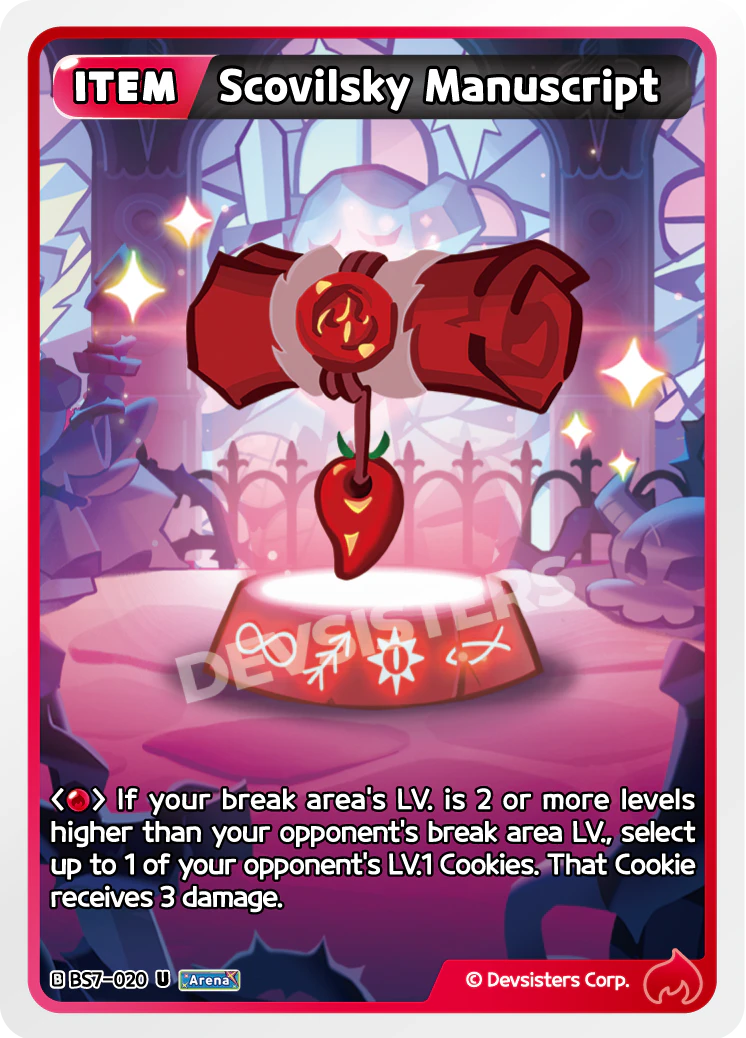
Scovilsky Manuscript (BS7-020), a Red Item, is my favorite example. For one Red energy, if your break area is at least two levels higher than your opponent's - meaning you're the one taking the beating - you deal 3 damage to one of their LV.1 Cookies. Comeback removal, tuned to fire exactly when you're behind and need to clear a threat: in an aggro-heavy field that ping wipes an early attacker and buys the turn you were missing.
Crimson Dragon Mask (BS5-020) is the conditional sweeper: two Red energy, and if you have two Cookies at 1 remaining HP, it deals 2 damage to all of your opponent's Cookies. Niche, but a blowout against a wide board. At the premium end, Soul Jam: Light of Deceit (BS9-092) is a Blue Item costing a Blue plus one of any color and a 2-card discard - it deals 2 damage to a Cookie, then optionally equips to your Shadow Milk Cookie for -3 damage protection when your hand is low. It's a Secret Super Rare chase card budget builders can skip, but it's clean removal that doubles as protection.
Removal here is matchup-shaped, not universal - jam the one whose condition matches the losses you're trying to fix, not the flashiest number.
Bounce is the most flexible answer in the game
If I had to hand a new player one category of tech, it'd be bounce. Returning a Cookie to its owner's hand is the most flexible answer Braverse offers - it doesn't care about HP, level, equipped gear, or FLIP status, it just resets the piece and taxes the energy to redeploy it.
Peppermint Cookie (BS5-070) is the clean one: a Blue LV.2 with 3 HP whose On Play returns any Cookie in your opponent's battle area to their hand, no strings attached. Adventurer Cookie (BS6-080), a Blue LV.1 with 3 HP, does the same on a smaller body if you have five or fewer cards in hand. Because both ride on a Cookie you were playing anyway, bounce barely costs you tempo - you develop and answer in one card. That's why it's the backbone of the tempo archetype, but it earns flex slots in plenty of decks that aren't tempo.
The one caveat: bounce delays, it doesn't kill. Against a recursion deck it can even help them re-trigger an On Play they wanted back. Bounce is best against expensive, developed, or buffed-up Cookies the opponent can't cheaply recast - and a wasted card against a one-drop they'll just replay.
Hate cards for teching against a specific deck
Hate cards are the narrowest, highest-variance tech you can run: dead weight in most matchups, backbreaking in the one they target. You only run them when the deck they answer is genuinely everywhere.
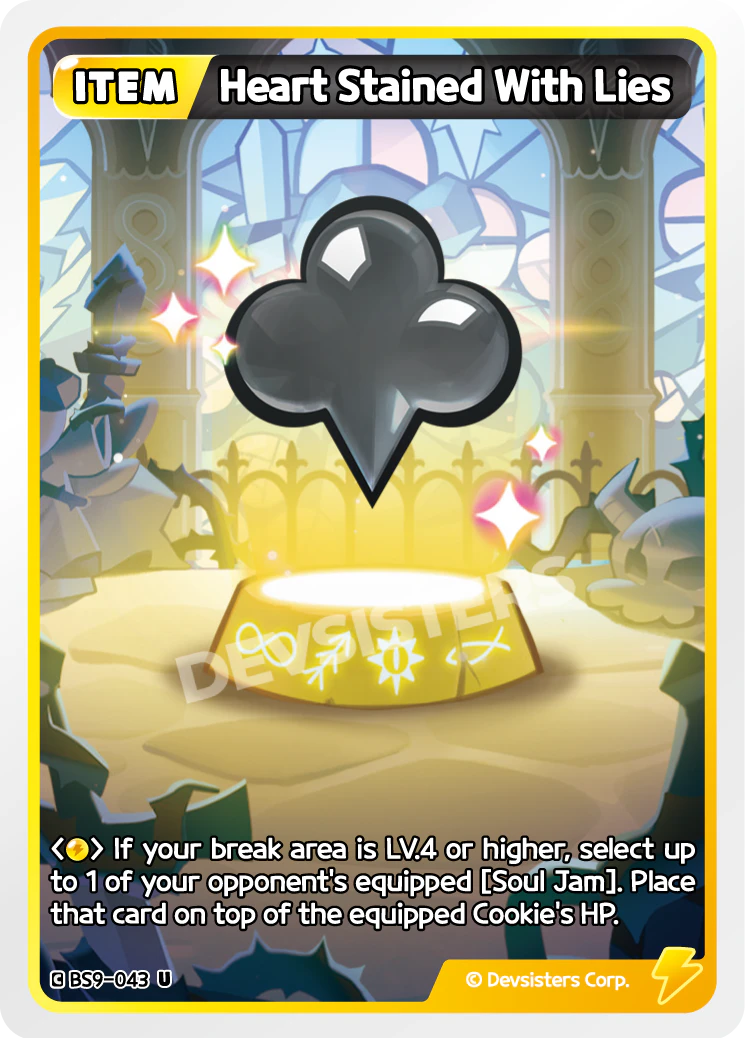
The poster child is Heart Stained With Lies (BS9-043), a Yellow Item: one Yellow energy and, if your break area is LV.4 or higher, you select an opponent's Equipped Soul Jam and place it on top of that Cookie's HP - stripping the buff off their key threat. Soul Jam decks lean hard on a single equipped Cookie, so peeling it off is a targeted haymaker, and it fires when you're behind (LV.4+), exactly when they've been beating you. If Soul Jam is a big slice of your field it earns a slot; if not, it's dead. The best Soul Jam cards guide shows what you're teching against.
Purple offers a different flavor: cards that attack the opponent's deck. Flipped Coin (BS9-114) mills 5 off your own deck when your trash is small or 3 off your opponent's when it's stocked; Wolf in Sheep's Clothing (BS9-115) draws a card, then mills the opponent 3 if their trash is under 15. You tech these when your plan is to attack the library or fuel Purple trash synergies - the mill deck guide has the full engine.
The rule with hate cards is easy to break: only run them if you can name the deck they beat and expect to face it. Check the meta tier list before committing slots to a deck that isn't popular in your room.
Consistency tech that makes the rest work
Here's the part everyone forgets: tech you can't draw is tech you don't have. A one-of silver bullet buried in 60 cards shows up when you need it maybe a third of the time. So the least flashy category is arguably the most important - the dig and draw that raise the odds your answers appear on the turn they matter.
Concealer of Truth (BS9-067) is a Green Item: one Green energy, place a support card into your trash, draw up to 2 - raw card advantage toward your answers at a cost a support-light deck barely feels. Storybook of Lies (BS9-090), a Blue Item for one Blue, views the top 3 cards and reorders them - a scry that can bury a dead tech card and surface the live one. And for Red shells, Fateful Cookie Cutter (BS9-020) draws 2 and discards 1 if one of your Red LV.1 Cookies fainted last turn - refuel that turns a lost trade into gas.
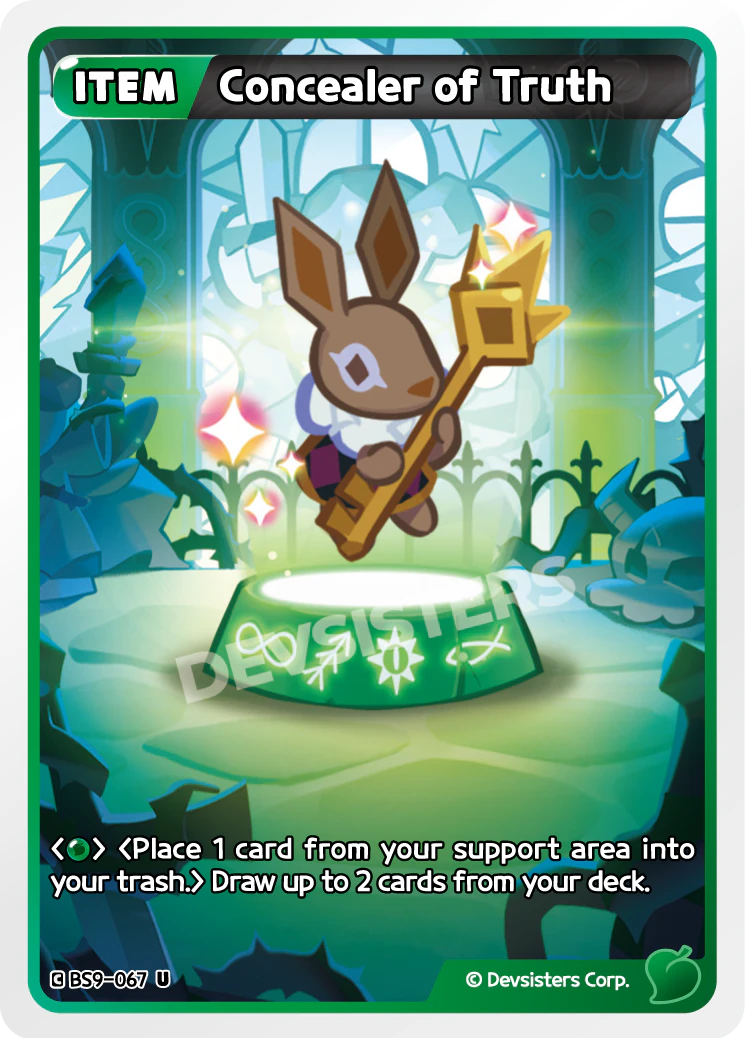
None of these are answers themselves. They're what let your two-of Fragmented Soul actually be in hand the game the opponent goes wide. Budget a slot or two for digging and your narrow tech gets quietly more reliable.
How many tech slots should you run
The math is zero-sum. A Braverse deck is 60 cards, and every slot you hand to tech is a slot not advancing your own plan. Over-tech and you become a pile of answers with no threat - you disrupt three decks and lose to the fourth because you never did anything.
My rule of thumb: keep roughly 48 to 52 cards on your core game plan and reserve 8 to 12 as flex, then split that budget by breadth. Broadly-useful answers - a couple of attack-reducing Traps, a bounce or two - can be maindeck staples because they're live in most matchups. Pointed hate (Soul Jam removal, deck-attack tools) only earns slots proportional to how much of your field it beats: two or three copies if a deck is 40% of your room, zero if it's 10%. And prefer flexible over narrow when power level is close - a card that answers three archetypes beats one that dominates a single deck. It's the same muscle as sideboarding, applied to your maindeck flex: work through the matchup guide to see what you're configuring against, and lock your split before an event with the tournament guide.
Tech-card mistakes that cost you games
These feel reasonable in the moment and quietly tank your win rate:
- Teching for decks you imagine, not decks you face. The most common mistake. Log your last 20 losses, find the top two or three decks beating you, and tech those - not the scary deck a streamer played once.
- Running narrow hate as an undrawn one-of. A single silver bullet you never draw does nothing. Commit two or three copies so it shows up, or cut it. There's no middle ground.
- Forgetting the hidden cost. Overtaken Other-Realm's "discard 2 FLIP Cookies" is trivial in a FLIP deck and crippling outside one; Concealer of Truth eats a support card. Free answers are rarely free.
- Calling bounce removal. Returning a Cookie to a deck that wants to replay it is a favor, not an answer. Bounce is a tax on expensive redeploys, not a kill button.
- Cutting core consistency for tech. Trim your game plan too far and the deck stops doing its own thing and loses to whatever you didn't tech for. Protect the core first - the beginner mistakes guide covers more.
The list that wins a local isn't usually the one with the best cards - it's the one whose flex slots were pointed at the exact decks in that room. Build your core, watch your losses, and let the field tell you which answers to run.
Quick Action Checklist
- Lock your core first - keep roughly 48-52 cards doing your game plan before you spend a single slot on tech.
- Run 2-3 attack-reducing Traps - Fragmented Soul (BS9-046) and Reversed Prophecy (BS9-093) blank lethal swings and refund a card.
- Match removal to your losses - Scovilsky Manuscript (BS7-020) is comeback removal; pick the answer whose condition fits the decks that beat you.
- Keep bounce for expensive threats - Peppermint Cookie (BS5-070) and Adventurer Cookie (BS6-080) tax redeploys; never bounce a one-drop.
- Only run hate when the meta demands it - Heart Stained With Lies (BS9-043) is great against Soul Jam decks and dead against everything else.
- Budget a dig slot or two - Concealer of Truth (BS9-067) and Storybook of Lies (BS9-090) make your one-of answers actually show up.
- Commit or cut narrow tech - a single undrawn silver bullet does nothing; run two or three copies or none.
- Tech the decks you face, not the ones you fear - log your losses and configure against the real field.
- Verify current printings against the official database - the English pool is young and shifts set to set.
Frequently Asked Questions
What is a tech card in Cookie Run: Braverse?
How many tech cards should a Braverse deck run?
What are the best answer cards in Cookie Run: Braverse?
Are Traps or Items better as tech cards in Braverse?
How do I tech against Soul Jam decks in Braverse?
Keep Reading
Related Guides
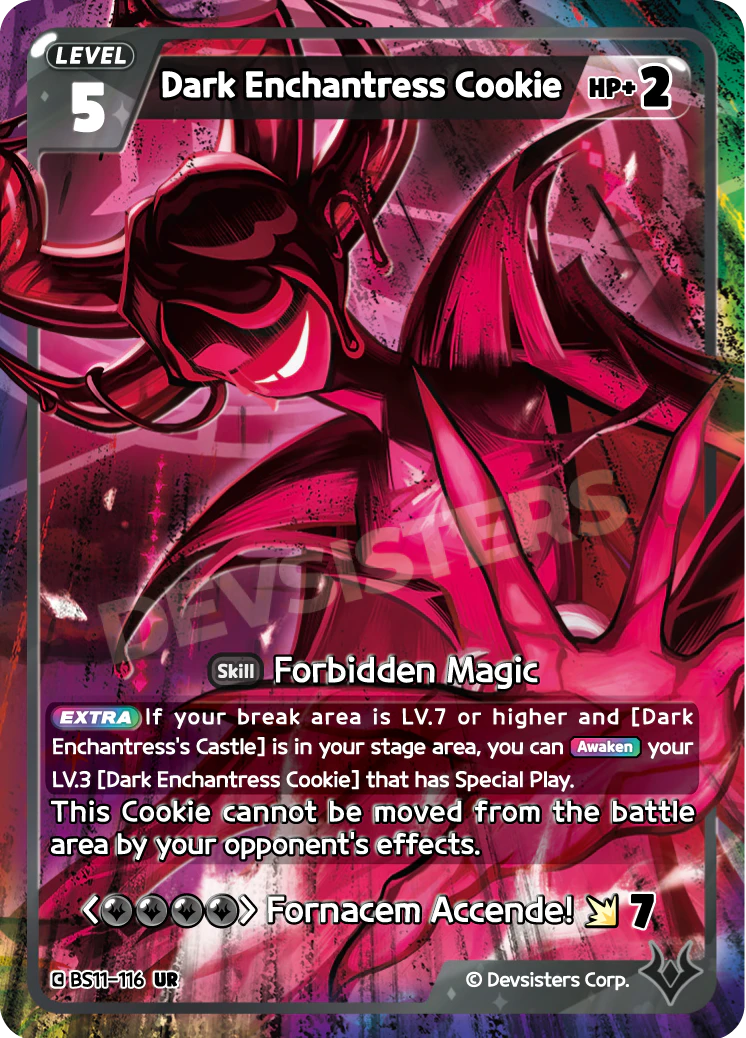
Cookie Run: Braverse Extra Deck Guide — All 17 Cards
The Extra Deck is six free cards that most Braverse players fill wrong. Here is how the zone actually works, all 17 EXTRA cards broken down by their printed conditions, and the build rule that decides whether your slots ever fire.
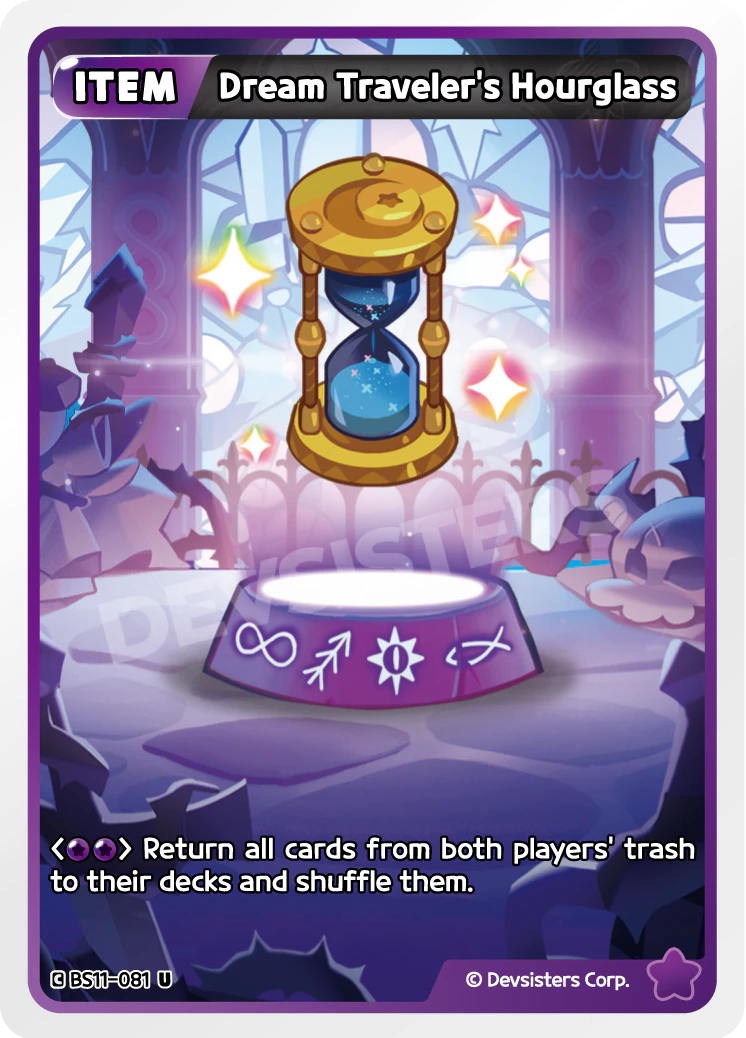
Cookie Run: Braverse Sideboard Guide — Tech Without One
Braverse locks your deck at registration - there's no sideboard to hide behind. This guide covers the tech binder system, flex-slot math, and database-verified swaps for aggro, control, mill, and midrange, so your 60 is already right before round one.
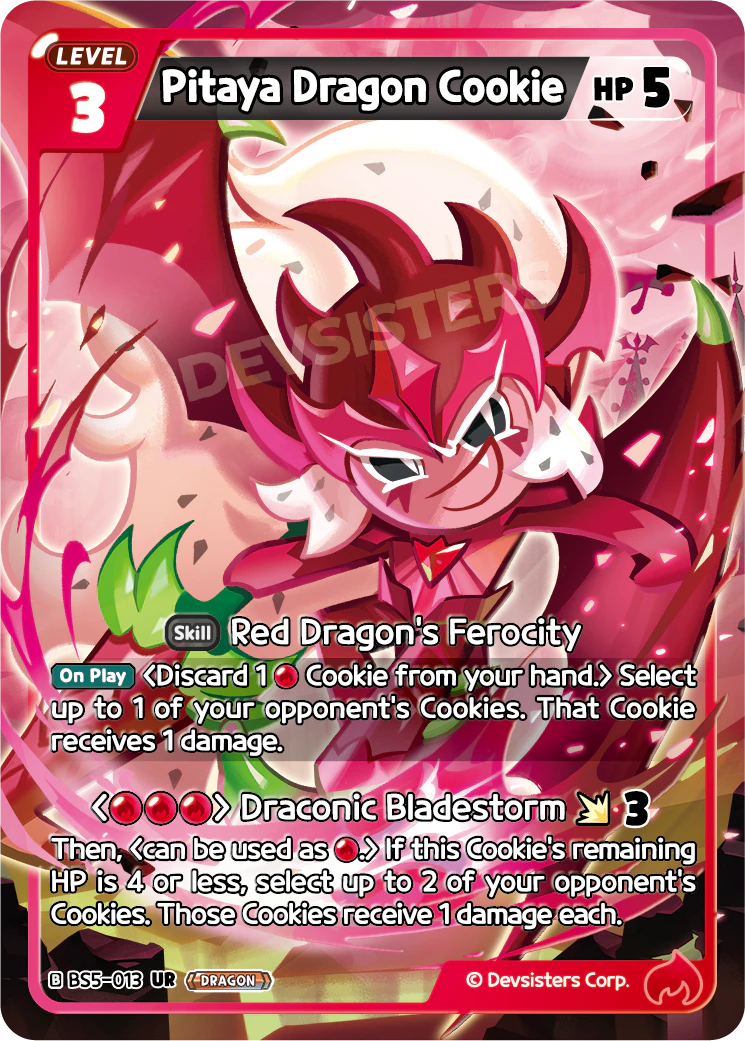
Cookie Run: Braverse Matchup Guide - Archetype vs Archetype
Knowing your deck cold is half the battle - knowing the matchup is the other half. Here is how Braverse's five archetypes actually play against each other, who has to be the aggressor, and the plan that wins each pairing.

Cookie Run: Braverse Color Pairs Guide: Which Two-Color Decks Actually Work
Two-color decks in Braverse aren't just 'jam your favorite cards together.' The generic-energy system decides which splashes hold up and which ones brick your Support Area. Here's what actually works.

How to Play Cookie Run: Braverse - A Complete Beginner Guide
Cookie Run: Braverse is the rare TCG you can teach in a single match. This guide covers everything a first-time player needs: card types, setup, turn structure, how you pay for cards, the FLIP mechanic, and how to win.

Cookie Run: Braverse Meta Tier List — Best Decks & Archetypes Ranked
Which Cookie Run: Braverse decks are actually carrying right now? Here's a meta tier list of the strongest archetypes - the real cards that anchor each one, why they rank where they do, and what's overrated.