Disney Lorcana Beginner Guide: Your First 10 Games
Lorcana takes twenty minutes to learn and about ten games to stop losing to the basics. Here is what to buy, what the inkwell decision actually costs you, and the errors that quietly decide your first matches.
Ten games is about how long Disney Lorcana takes to stop feeling like a licensed product and start feeling like a card game with real decisions in it. The rules fit on a folded pamphlet, which fools people into assuming there is nothing underneath them. Then you lose four in a row to someone who is doing nothing flashy - just quietly putting a card in their inkwell every single turn - and it clicks that the depth was never hidden. It was just boring-looking.
This is the practical layer, not the rulebook. If you have never physically shuffled a Lorcana deck, start with how to play Disney Lorcana and come back; everything below assumes you know what a turn looks like. What follows is what to buy, which decision actually decides your games, and the specific errors that will cost you matches one through ten.
What to buy for your first ten games
Two purchases matter and neither of them is a booster pack.
Lorcana products fall into three buckets: sealed booster packs (random cards, terrible for learning), ready-to-play decks sold alongside each set, and learn-to-play boxes. The exact contents, card lists, and prices of those decks change with every set, so anyone handing you a permanent "best starter deck" ranking is selling you a snapshot. Check the current product listings on the official Disney Lorcana site before you buy, and treat any deck-contents list you read online as dated until you verify it.
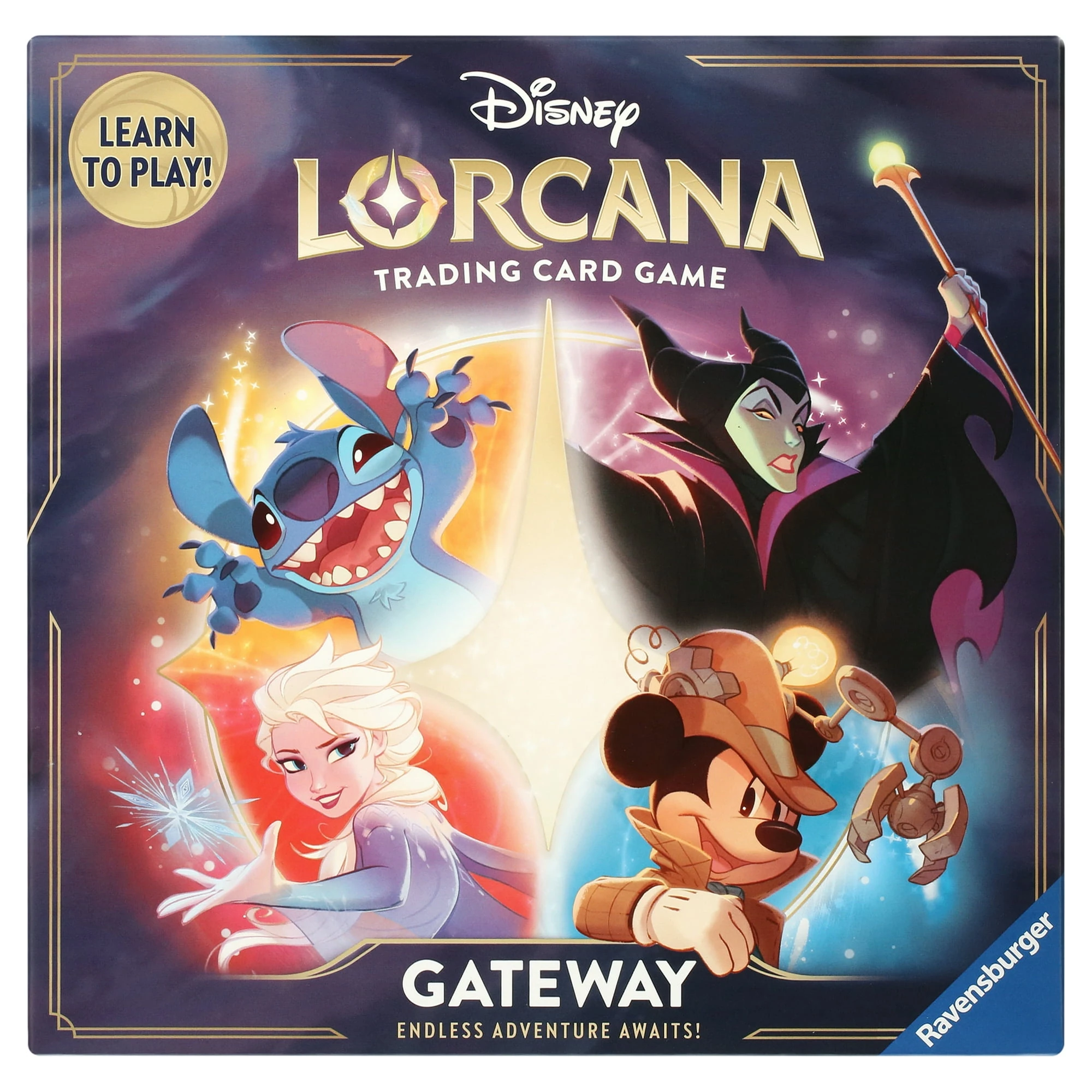
The one product worth naming specifically is Gateway, because it is structurally different from everything else. It is a board-game-style onboarding box: two 30-card starting decks, four reward packs you open as you clear achievements, a game board, and damage counters. You play a game, open a pack, add cards, play again. By the end your decks have grown from 30 cards to 66 and you have been introduced to card types one at a time rather than all at once.
Gateway also runs three deliberate training-wheel rule changes: you cannot alter your opening hand, inking has to be the first action of your main phase, and running out of cards does not lose you the game. All three differ from real Lorcana - the last one especially. In a normal game, a player whose turn ends with no cards left in their deck loses (Comprehensive Rules 1.8.1.2).
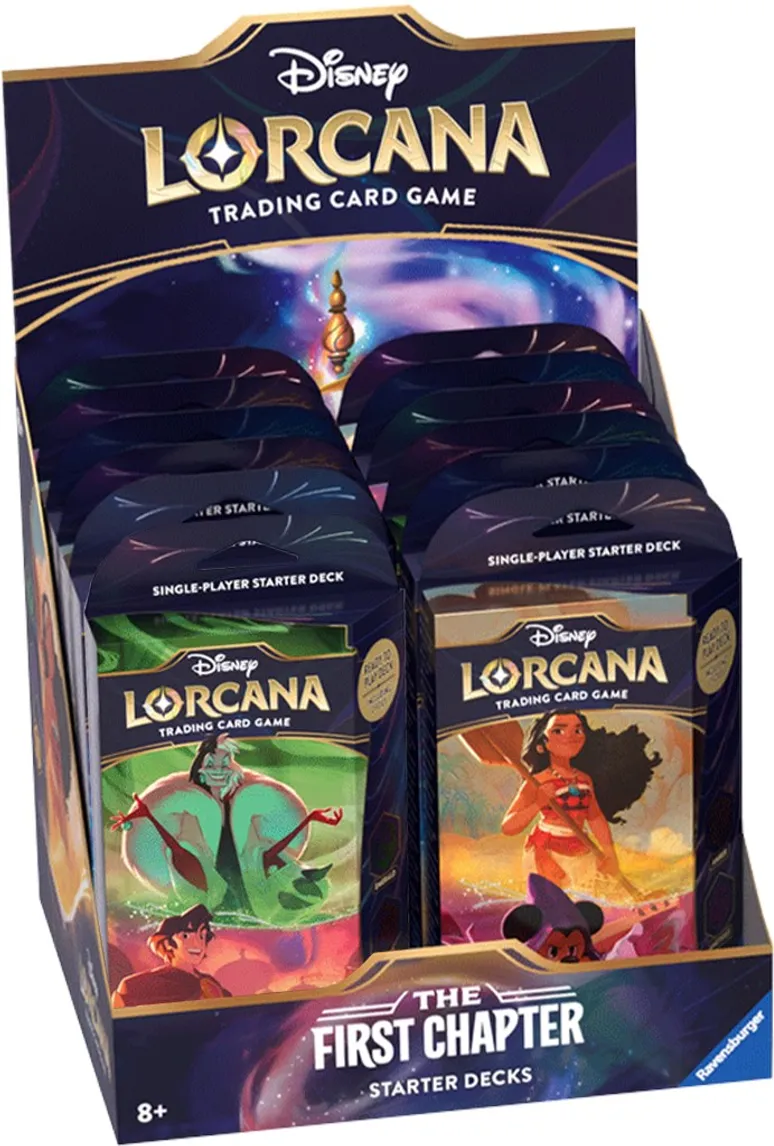
If Gateway is not on the shelf, the fallback is simple: buy two ready-to-play decks, not one. A single deck means you need to find an opponent who already owns cards, which for a lot of people is the actual barrier to ever playing. Two decks means you can teach a friend on a kitchen table tonight. This is the same logic that makes two-player sets the right entry point in every other card game - the Braverse buying guide reaches the identical conclusion for the same reason.
What to skip for now: singles, sleeves, and boosters. Boosters are a collecting activity - a bad way to acquire a functioning deck and an expensive way to learn a game.
The inkwell decision is the whole game
Here is the mechanic that separates Lorcana from most card games, and the one that decides more beginner matches than any combat decision.
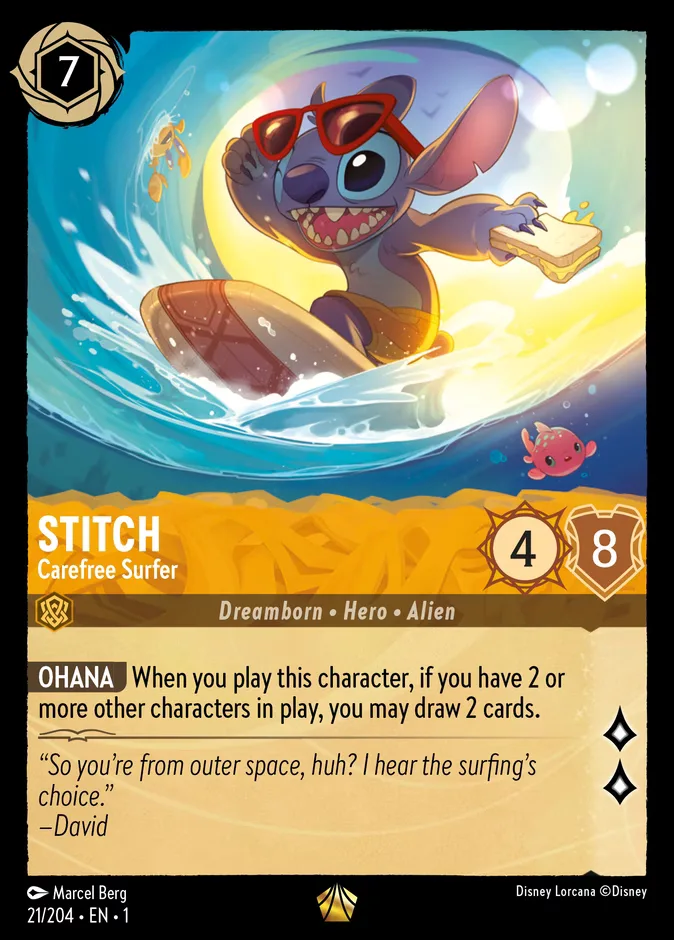
Once per turn, as your ink action, you may take a card from your hand and put it into your inkwell. It goes in facedown and ready, and each card in there pays for 1 ink. There is no cap on inkwell size. But the card has to have the inkwell symbol around its cost, and not every card does.
Three consequences fall out of that, and they matter enormously.
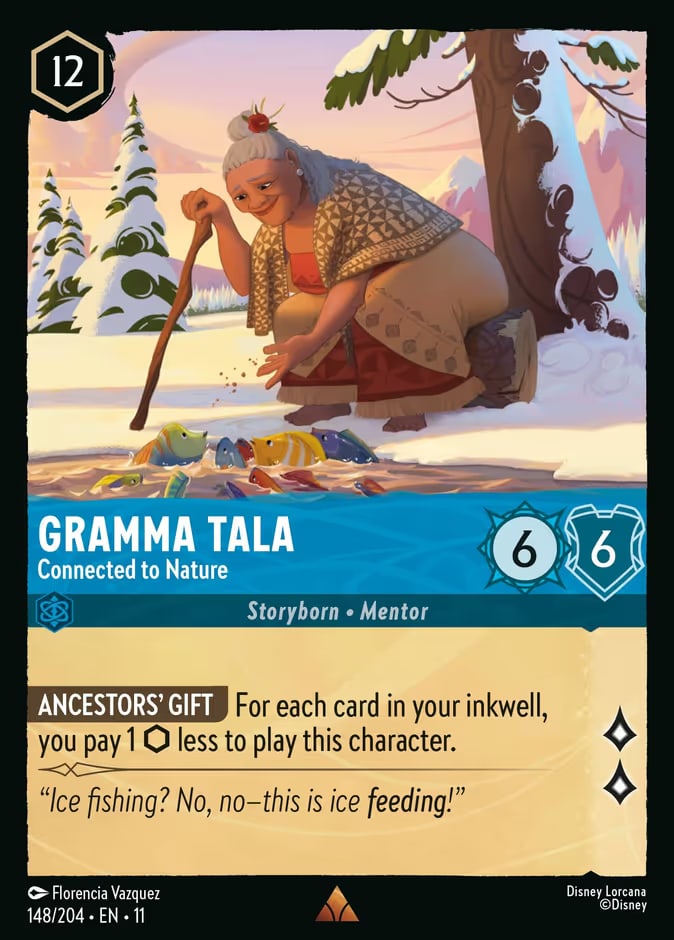
Your economy tracks your turn number. The ink action is once per turn (Comprehensive Rules 4.2.3), so without help from a card, turn five gives you at most five ink cards. The help does exist, but it has to be in your deck. Sapphire has ramped since The First Chapter: Belle - Strange but Special lets you ink an additional card each turn, and Fishbone Quill puts cards from your hand straight into your inkwell (rules 4.2.3.1 and 4.2.3.2). Both rotated out of Core Constructed with Attack of the Vine!, though, so today they are Infinity Constructed cards. From 16 October 2026, when Comprehensive Rules 2.3.0 takes effect, Hyperia City adds ink drops - single-use counters that sit in your inkwell and pay 1 ink each - and Ravensburger says every ink combination can make them. Its Ink Drop Deep Dive pitches the song Higitus Figitus as a way to play an 8-cost character as early as turn five. Skip your ink for a turn without one of those cards and you are a turn behind on every play you make afterwards. Not "behind for a turn" - behind for the rest of the game.
You are paying with cards, not with land. Magic players get a free pass because lands are a separate resource that does nothing else. Lorcana has no such thing. Short of a few card effects that pull cards back out of the inkwell, such as Mufasa - Ruler of Pride Rock and Ink Geyser, every card you ink is a card you will never cast, never quest with, never draw again. Ten turns in, you have buried ten cards. That is the real cost, and it is why "what do I ink?" stays the hardest question on your turn.
You cannot look at your own inkwell. It is a private zone by rule - not just your opponent's, yours too. Once a card is in there, it is gone from your planning. Your opponent can count how many cards you have and how many are ready, but nobody, including you, gets to check what is underneath.
The practical heuristics: ink on every single turn of the early game, no exceptions, even when it hurts. When you have two copies of something, ink one. Ink the expensive card you cannot cast for four more turns before you ink the cheap card you will cast next turn. And never ink your only answer to the thing that is currently beating you - a card in your inkwell is a card you have decided you do not need.
Questing vs challenging: the tension that decides matches
You win at 20 lore. That is the entire objective, and there is exactly one main way to get there: questing.
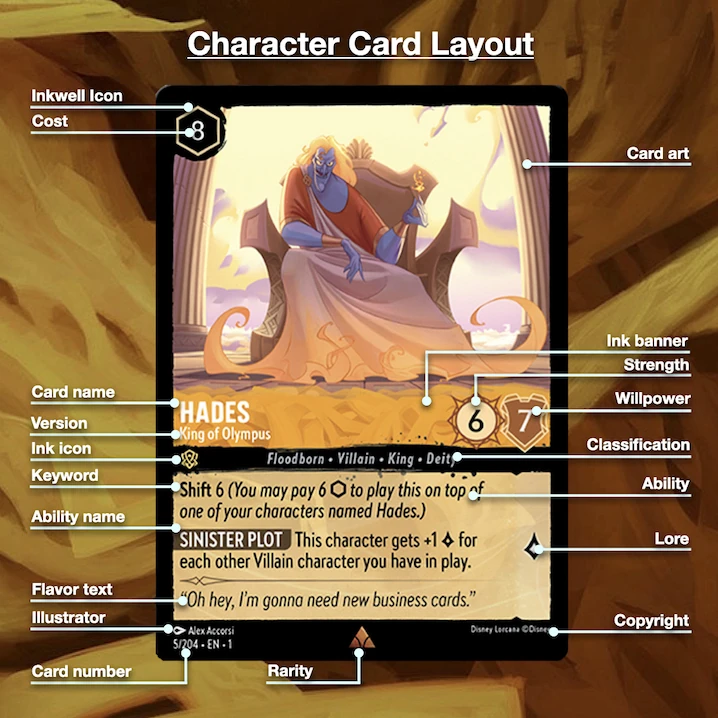
To quest, you exert a character and gain lore equal to the lore value printed in its bottom-right corner. Simple, unconditional, no dice. Do it with a 2-lore character ten times and you have won a game.
The catch is the other half of the sentence. To challenge an opposing character, you must choose one that is exerted. Ready characters cannot be challenged at all. So the act of questing - exerting your character to score - is also the act of offering that character up as a legal target on your opponent's next turn.
That is the whole tension, and it is genuinely elegant. Scoring costs you safety. Staying safe costs you the game clock.
When a challenge happens, both characters deal damage equal to their Strength to each other, simultaneously. There is no attacker advantage. Damage counters stay on a character until something removes them, and once a character has damage equal to or greater than its Willpower, it is banished. That means a big Strength number is not the same as a good challenger - a character with high Strength and low Willpower kills things and dies doing it.
Locations are the exception worth knowing early. They are never ready or exerted, so they can be challenged at any point during your main phase, and they have no Strength, so they do not hit back. Free damage, if your opponent leaves one sitting there.
The beginner failure modes are symmetrical. One: quest with everything every turn, hand over a board full of exerted targets, watch it get dismantled. Two: never quest because everything feels too valuable to expose, then lose 20-4 to someone willing to take the risk. Quest with the characters your opponent cannot profitably kill, and hold back the ones that would die for free.
Drying, and why your board is always one turn behind
A character you played this turn is drying. Drying characters cannot quest, cannot challenge, and cannot exert to pay costs. Any "when you play this character" ability still triggers normally - drying only stops the things that require exerting.
The rule sounds like a footnote. It is not. It means every character you cast is a delayed investment: you spend the ink now and get the effect next turn. Plan one turn ahead or you will repeatedly cast something expecting it to defend you and then watch it stand there uselessly while your opponent scores.
There is a matching wrinkle at the start of the game. The player who goes first skips their draw step on turn one. That is the price of the first-turn advantage: going first buys you tempo, going second buys you a card. Neither is strictly better, and being clear on which one you took should change how you play the first three turns.
Six mistakes that cost beginners their first ten games
1. Skipping your ink for the turn. The single most expensive error in the game and the least dramatic. If you are ever unsure, ink something. A card in the inkwell is worth more than a card you never got to cast.
2. Questing with a character you cannot afford to lose. Exerting to score puts that character on the menu. Before you quest, look at their board and ask what could kill it if it is exerted. If the answer is "the thing they obviously have," quest with something else.
3. Never challenging. Newer players treat challenging as optional because questing is the win condition. Meanwhile the opponent quests unopposed and hits 20 first. If your opponent ends a turn with exerted characters and you have a ready character that trades well, take the challenge.
4. Forgetting about drying. Casting a defender on the turn you need it does nothing. It dries at the start of your next turn, which is one turn too late.
5. Building a three-ink pile. Legal Lorcana decks contain at most two ink types. Beyond the legality problem, jamming your three favourite colours wrecks consistency in a game where you are already burying a card a turn in the inkwell. This is exactly the same trap as going greedy multicolour too early in other card games - the Braverse beginner mistakes post makes the same point about colour discipline.
6. Treating your deck as infinite. If your turn ends with no cards left in your deck, you lose the game (Comprehensive Rules 1.8.1.2). Drawing your last card is not the loss on its own, but unless something puts cards back into your deck before your turn ends, the game is over. A 60-card deck holds 53 cards after your opening hand, so it takes a long game and plenty of extra card draw to get there - count your deck before you cast another draw effect.
The deckbuilding rules you actually have to follow
There are exactly three constraints on a standard Lorcana deck, and they are short enough to memorise on your first read.
- At least 60 cards. There is no upper limit, which is a trap: more cards is worse, because it dilutes the deck. Play 60 unless you have a specific reason not to.
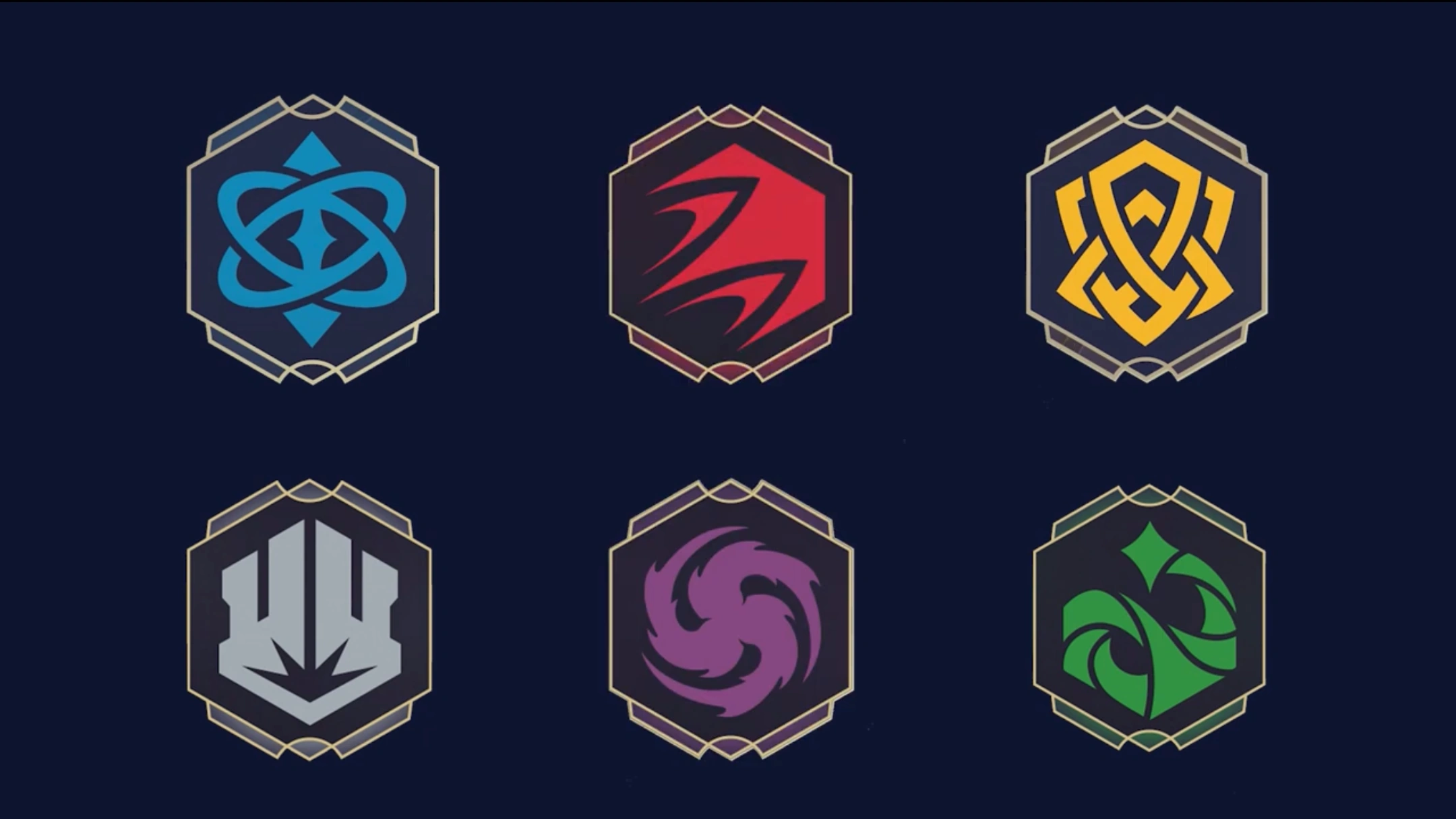
- At most two ink types. Your whole deck is built from up to two of the six inks - Amber, Amethyst, Emerald, Ruby, Sapphire and Steel. What each one is good at, and which pairs actually work together, is its own subject; the six inks explained covers it properly.
- At most 4 cards with the same full name. Full name is the important part. A Lorcana character card carries a name plus a version subtitle - Hades - King of Olympus, for example. A different version of the same character is a different full name, so it does not share the 4-copy cap. This is a genuine deckbuilding tool once you notice it.
Beyond the rules, the beginner deckbuilding advice is the same as it is in every constructed card game: do not brew from scratch before you understand the format. Play a ready-made deck until specific cards feel dead in your hand, then swap those specific cards. The Braverse deck-building basics guide walks through the same patch-a-known-good-list method, and it transfers cleanly.
A game-by-game plan for your first ten
Do not try to fix everything at once. Fix one thing every couple of games.
Games 1-2 - Ink every single turn. That is the only goal. Play the deck as built, make no clever deviations, and put a card in your inkwell every turn including the turns where it feels wasteful. If you finish both games having inked on every turn, you have already beaten a meaningful chunk of new players.
Games 3-4 - Narrate the lore race. Out loud, every turn: "I am on 6, you are on 9." It sounds silly and it works. Most bad Lorcana decisions come from not knowing whether you are the aggressor or the one who needs to stabilise, and the score tells you.
Games 5-6 - Force yourself to challenge. Make at least one challenge per game, even a mediocre one. You cannot build an instinct for what a good trade looks like by reading about Strength and Willpower.
Games 7-8 - Check before you quest. Before exerting any character, scan their board and ask what happens to this character if I leave it exerted. That single question is most of the gap between a new player and a competent one.
Games 9-10 - Make three swaps. Not thirty. Identify the three cards you never wanted to draw, cut them, and add three more copies of the cards that were consistently good. Small, targeted changes to a working deck beat rebuilding from scratch every time.
Where to go after game ten
By game ten you should have a functioning mental model: ink every turn, quest when it is safe, challenge when it is profitable, and never let a character sit drying when you needed it a turn earlier. That is the foundation. Everything else in Lorcana is built on it.
From here, learn what the six inks actually want to do - the inks explained - and pick up the rules detail you have been safely ignoring, like the bag, keyword interactions, and location play, all of which live in how to play Disney Lorcana.
If you are coming from another card game, most of your instincts transfer. The resource system is unusual; the "build a board, then race a clock" shape is not, and anyone who has drafted before already has the curve discipline from our Limited draft guide for beginners. The inkwell is the only part you have to learn fresh.
Frequently Asked Questions
What should I buy first in Disney Lorcana?
How do you win a game of Disney Lorcana?
How many cards can I put in my inkwell each turn?
Can I look at the cards in my own inkwell?
Why can I not challenge that character in Lorcana?
What does drying mean in Disney Lorcana?
How many cards are in a Disney Lorcana deck?
Should new players build their own Lorcana deck or play a preconstructed one?
Keep Reading
- Official Disney Lorcana site (Ravensburger)
- Disney Lorcana Comprehensive Rules 2.2.0 (EN), in force until 15 October 2026 - rules 1.8.1.2 and 4.2.3
- Disney Lorcana Comprehensive Rules 2.3.0 (EN), effective 16 October 2026 - ink drop counters (1.13)
- Ink Drop Deep Dive (Ravensburger, 29 September 2026)
- Lorcana Wiki - Deck Rules
- Lorcana Wiki - Gateway
Related Guides
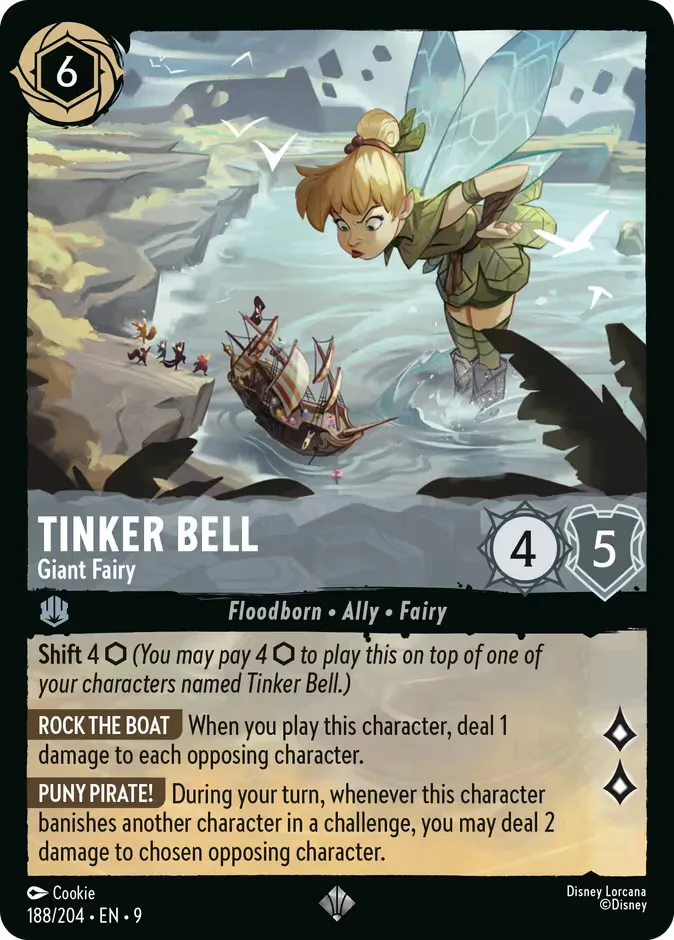
Lorcana Shift Explained: Stacks, Damage and All 6 Variants
Shift is 199 cards across the 13 main sets before Hyperia City and a full page of rules, and most of that page is about the card underneath. Here is what a shifted character inherits, why 63 Core-legal cards care about the stack, where every card goes when the top one leaves play, and what each of the six variants actually lets you shift onto.
Disney Lorcana's Bag Explained: How Trigger Order Works
Six other posts on this site mention "the bag" in passing and none of them explain it. Here is the actual rule: what goes in, what never does, the exact order it resolves in when two abilities fire at once, and the two different ways a Lorcana card can make something happen later.
Disney Lorcana Uninkable Cards: All 585, and How to Ink One
The inkwell symbol is the first rule Lorcana teaches and the last one anybody puts a number on. Here is the whole uninkable pool counted off the live card data - 585 of 2,476 cards - cut by rarity, cost, type and ink, plus the Comprehensive Rules clause that lets five specific cards put an uninkable card into your inkwell anyway.
Disney Lorcana Format Coconut Explained: All 18 Beta Cards
Ravensburger put a new multiplayer format into open beta and then did not print a single card for it. The 18 Coconut cards live in the Companion app, the rules fit on one page, and the deckbuilding restrictions are stranger than the summary makes them sound. Here is the whole thing, with the card pool behind each Coconut counted.
How to Play Disney Lorcana - Rules, Turn Structure, and the Race to 20 Lore
Lorcana is the rare TCG where you never attack your opponent directly. You race them to 20 lore. This is the full rules walkthrough - inkwell, turn phases, questing, challenging, drying, card types, and deck limits.
Disney Lorcana Actions Explained: All 196, No Instant Speed
An action in Lorcana resolves the moment it is played, and the rules give your opponent no window to answer it. Here is the whole card type counted from the live pool - 196 non-song actions, what they actually do, and the handful of cards that can interfere before the fact.