How to Play Disney Lorcana - Rules, Turn Structure, and the Race to 20 Lore
Lorcana is the rare TCG where you never attack your opponent directly. You race them to 20 lore. This is the full rules walkthrough - inkwell, turn phases, questing, challenging, drying, card types, and deck limits.
Every trading card game hangs on one number. In Magic it's your opponent's life total counting down. In Lorcana it's your own score counting up, and you can't attack theirs: challenges hit characters and locations, never a player. You need 20 lore. They need 20 lore. Their total drops only when a card makes them lose lore (rule 1.11.1), like Steal from the Rich.
That one choice is why Lorcana plays nothing like the TCGs it resembles. Come in treating it as a life-total game and you'll lose to somebody who just quested nine turns straight while you built a board. Here are the actual rules, in the order you need them at the table.
What Disney Lorcana actually is
Disney Lorcana is a two-player trading card game published by Ravensburger under license from Disney. The first set, The First Chapter, hit local game stores in August 2023, so the card pool is young enough that a new player can realistically catch up.
You play an Illumineer, summoning "glimmers" of Disney characters using magical ink. Mechanically: you put cards into an inkwell to generate resources, play characters into your play area, and send them on quests to gain lore. First to 20 wins.
For TCG veterans it's a racing game with an interaction tax. You can't burn your opponent out. What you can do is slow them down by killing the characters they want to quest with - and every character you spend on that job is one not scoring for you. If you want the shopping-and-first-week version instead, start with our Lorcana beginner guide.
What you need to sit down and play
- Two players, each with a deck of at least 60 cards. A starter deck out of the box is legal and playable.
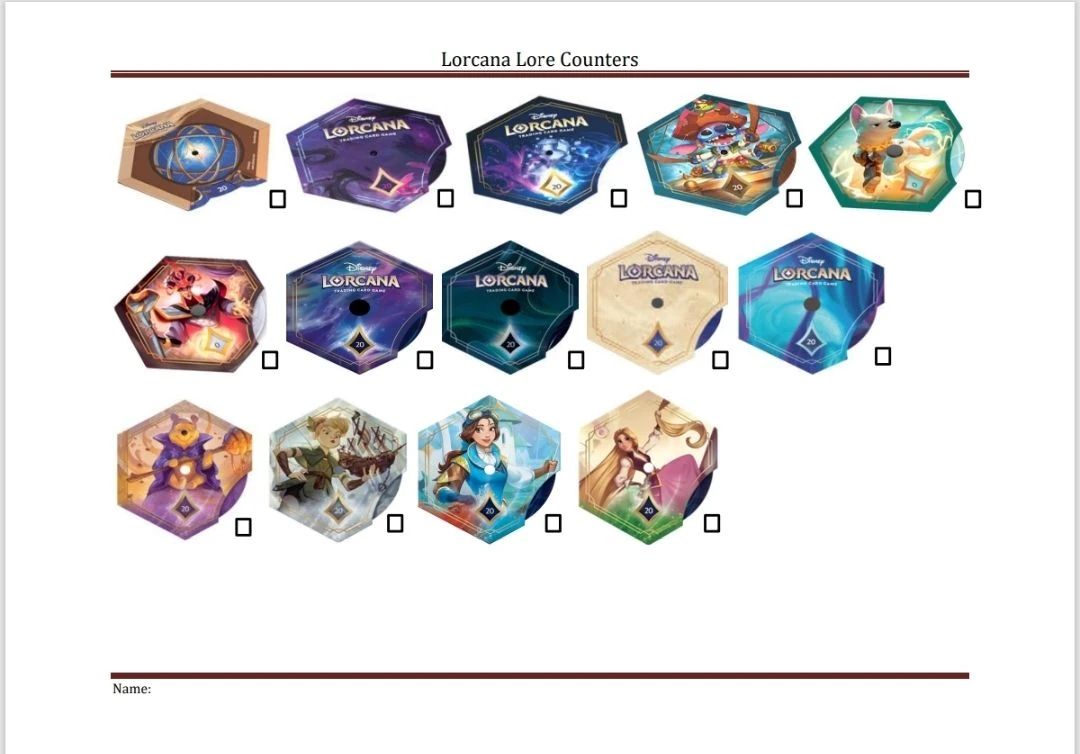
- A way to track lore from 0 to 20. Pen and paper, dice, the official companion app - the rules allow any method.
- Damage counters. Damage on characters is persistent and accumulates all game, so you need to physically mark it.
- Space for facedown ink cards, which sit in their own row and grow every turn.
The win condition: 20 lore
The comprehensive rules are blunt about this. When a player reaches 20 lore, they win. It's caught by the game state check, which runs at the end of every step and after every ability resolves, so you never have to wait for a phase to tick over.
The rules name one other way to lose besides conceding: if your turn ends with no cards in your deck, you lose (rule 1.8.1.2). Drawing your last card isn't the loss - ending a turn with an empty deck is. Decking out is real, but at a 60-card minimum and one draw per turn it almost never decides a game. Footnote, not a plan.
And that's it. No direct damage to players, no poison counter. Every line of play gets measured against one question: does this get me closer to 20 than it gets them?
Deck-building: the four rules that matter
Four constraints, from the official deck rules:
- At least 60 cards. No upper limit, but also no reason to go over 60 unless a card tells you to.
- Up to two ink types. Not three. Not "splash a third for one bomb." Two.
- Up to 4 cards with the same full name. "Full name" is the name and the version - the subtitle after the dash. Two versions of the same character are two different full names, so you can run four of each.
- No banned cards. That list lives with the official tournament rules and changes rarely.
There are six inks - Amber, Amethyst, Emerald, Ruby, Sapphire, and Steel - each with its own symbol on the left edge of the card, just above the text box. Your two-ink choice is the biggest deck-building decision you make. We break down what each one wants to do in the six inks explained.
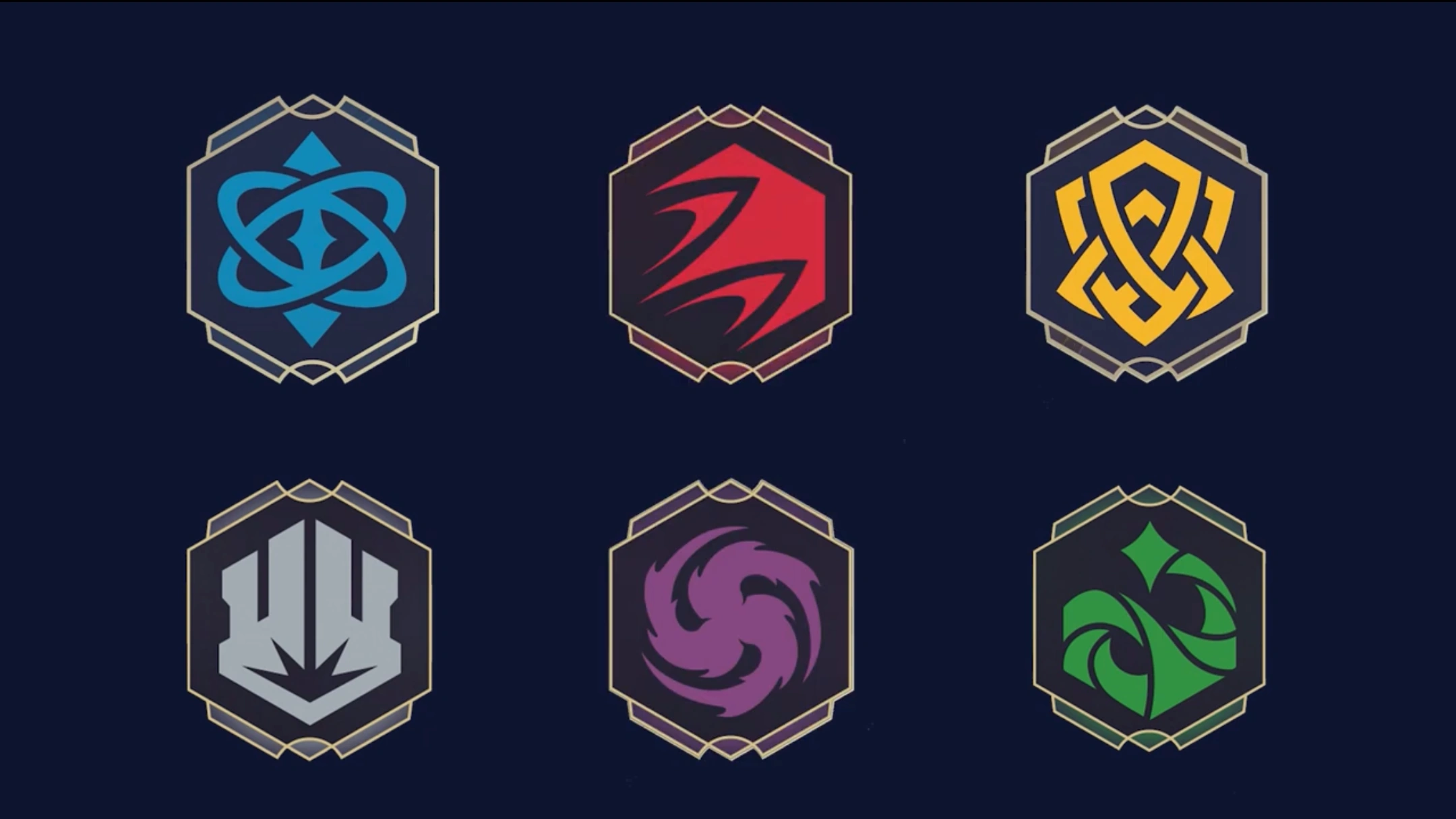
Coming from Magic, think fixed two-color guild rather than the five-color wheel of our color pie breakdown. Lorcana's cap is enforced at deck registration, not at the mana base. It's closer in feel to the locked identities in Braverse colors explained.
How to read a Lorcana card
A character card carries more numbers than most TCG creatures, and every one of them matters:
| Element | What it means |
|---|---|
| Cost | The ink you pay to play it. |
| Inkwell symbol | A swirl around the cost. If it's there, this card can go into your inkwell. If it isn't, it can never be ink. |
| Ink type | The symbol on the left edge above the text box. One of six. |
| Name and version | Name plus the subtitle after the dash. Together they're the "full name" your 4-copy limit counts. |
| Classifications | Tags like Storyborn, Hero, Villain, Princess. Cards reference these constantly. |
| Strength | How much damage it deals in a challenge. Characters only. |
| Willpower | Damage it can take before being banished. Characters and locations. |
| Lore value | How much lore you gain when it quests. |
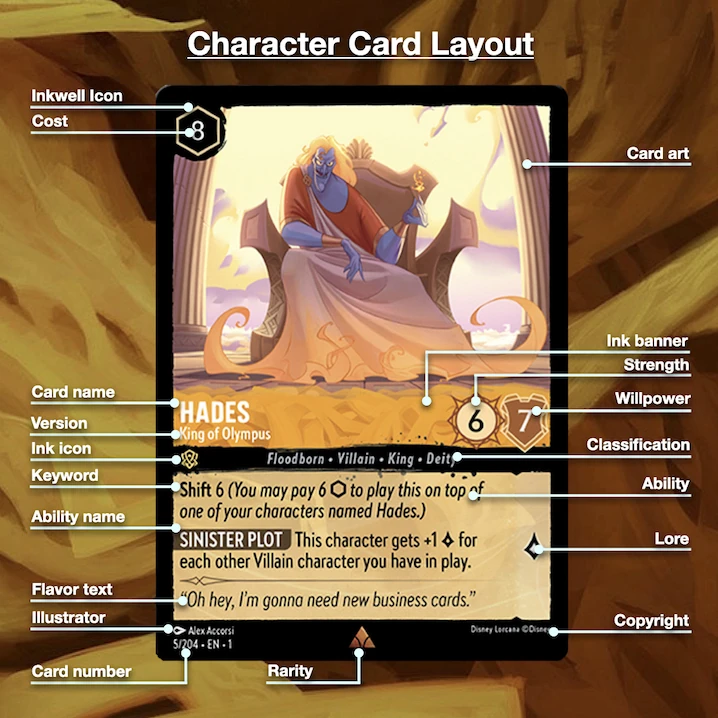
The inkwell symbol is the one new players skip and then regret. Broadly, the more efficient a card is, the more likely it isn't inkable - and a hand of five uninkable bombs is a hand you cannot cast.
The inkwell: how you pay for everything
Once per turn, as a turn action, you may put one card from your hand into your inkwell. You announce it, reveal it so both players can verify the inkwell symbol is present, then place it facedown and ready in your inkwell row.
Key details people get wrong:
- Each ink card is worth exactly 1 ink, no matter what it was. A 9-cost legendary makes the same ink as a 1-drop.
- Nothing on the front of an ink card matters once it's ink. Its ink type, its abilities, its stats - all irrelevant.
- The inkwell is a private zone. You can't look at cards in an inkwell, including your own. You can count them, and the number of ready ink cards can't be hidden from your opponent.
- There's no cap on how many cards you can have in your inkwell.
- Ink readies every turn during your Ready step, so it's a renewable resource, not a spend-down pool.
- Ink drops join the inkwell on 16 October 2026. Comprehensive Rules 2.3.0, effective that day and written for the Hyperia City set, adds ink drop counters (rule 1.13.1.2). They aren't cards. Card effects generate them, they sit in your inkwell, and you can remove any number of them to pay 1 ink each toward any ink cost, including playing a card, using an activated ability and moving a character to a location (4.3.2.4, 4.4.3.4, 4.7.3.4). A removed drop ceases to exist (1.13.2), so unlike ink cards they're spent, not readied. Rules 2.2.0, in force until then, has no ink drops at all. Full breakdown in ink drops explained.
The consequence: every card in hand is a choice between "play this" and "this is my land drop." Missing an inking turn early is the closest thing Lorcana has to a disaster, which is why deck lists obsess over inkable-card counts.
The five card types
| Type | Where it goes | What it does |
|---|---|---|
| Character | Play zone | Your questers and challengers. Has Strength, Willpower, and a Lore value. |
| Action | Resolves, then discard | A one-shot effect. Never "in play." |
| Song | Resolves, then discard | An Action with "Song" on its classification line and an alternate cost. |
| Item | Play zone | Sticks around. Its activated abilities can be used the same turn you play it. |
| Location | Play zone, landscape orientation | Has a cost, a move cost, and Willpower. May have a Lore value. |
Two deserve extra words.
Songs are the flashy one. Every song offers an alternate cost instead of its ink cost: exert one of your characters in play with an ink cost of N or greater to play the song for free. Your board doubles as a spell engine. The catch is that exerting to sing is a cost, so the singer has to be dry - and a character that sings is a character that didn't quest.
Locations are the weird one. Printed sideways, never ready or exerted, challengeable at any point in the Main Phase, and carrying Willpower but no Strength, so they never hit back. If a location has a Lore value, you gain that lore automatically during the Set step. Passive scoring that can't be exerted or challenged out of a quest is exactly as strong as it sounds.
Setting up a game
- Randomly determine who chooses the starting player. Dice, coin, whatever. In a best-of series, the previous game's loser chooses.
- Both players shuffle and offer an opponent the chance to cut.
- Both players start at 0 lore.
- Each player draws 7 cards.
- Each player may alter their hand once, starting with the starting player: put any number of cards from hand on the bottom of the deck facedown, draw back up to 7, then shuffle and offer a cut.
That alter step is generous - a free, no-penalty partial mulligan where your hand size never shrinks. Compare the London mulligan in Magic, where every mulligan costs a card off the top. There is no reason to keep a Lorcana hand with two inkable cards in it. Ship the dead weight.
How a turn actually flows
A turn has three phases: Beginning, Main, and End of Turn.
Beginning Phase runs three steps in order - Ready, Set, Draw:
- Ready. All your cards in play and in your inkwell ready. Everything untaps.
- Set. Characters played last turn stop drying, and you gain lore from any locations with a Lore value. Any "at the start of your turn" triggers that queued in "the bag" during the Ready step resolve now, and you pick the order if you have more than one. The bag is Lorcana's waiting room for triggered abilities, not a Magic-style stack - the full process is in our guide to the bag.
- Draw. Draw one card. The active player skips this step on the first turn of the game - the standard on-the-play tax.
Main Phase is everything else. The turn actions, in any order, as many times as you can pay for:
- Put a card into your inkwell (once per turn only).
- Play a card by paying its ink cost: exert one ready ink card per point (from 16 October 2026, ink drops can cover some or all of it).
- Quest with a character.
- Challenge with a character.
- Move a character to one of your locations by paying its move cost.
- Use activated abilities on cards in play.
End of Turn Phase ends "this turn" effects, resolves anything that triggered, and passes.
Note what is not in that list: your opponent doing anything. There are no instants and no interaction on your opponent's turn - only the active player plays cards. Everything you want to do, you do on your own turn, which is why tempo carries so much more weight here than in a game with open mana.
Questing: how you score
Only characters can quest. You declare a character, check that nothing prevents it, exert it, and gain lore equal to its Lore value. Done.
The cost is hidden in that word "exert." A questing character is now sideways, and a sideways character is a legal target for a challenge. Every point of lore you take is an invitation to kill the thing that took it. That's the whole tension of Lorcana - a cleaner version of the attack-or-hold-back squeeze you get in Cookie Run: Braverse.
Challenging: how you stop them
Challenging is Lorcana's combat, and it comes with a hard restriction that shapes every game:
- Only characters can challenge.
- The challenging character must be dry (in play since the start of your turn), ready, and otherwise able to challenge.
- You may only challenge an exerted opposing character - or any opposing location, at any time.
- You exert your challenger to declare the challenge.
- Both characters deal damage equal to their Strength to each other, simultaneously. There is no attacker-advantage first strike by default.
- Damage is placed as counters and is persistent - it does not wear off between turns.
- Any character or location with damage equal to or greater than its Willpower is banished to its owner's discard pile.
Locations break every one of those rules: never ready or exerted so they can always be challenged, Willpower so they can be banished, no Strength so they never hit back.
The "must be exerted" rule is why questing is a real decision. A character sitting ready is untouchable by challenges; the moment it quests, it's fair game. A board of ready characters isn't a board, it's a threat - and threats that never quest never win.
Drying, and why your new character is useless
A character played after the start of your current turn is drying - the ink isn't dry yet. It can't quest, can't challenge, and can't exert to pay any cost, which rules out singing songs and using exert-cost abilities. It stops drying during the Set step of your next turn.
What still works while drying: non-activated abilities, including "When you play this character" triggers and static abilities, are fully live. Drying characters can still be affected by card effects.
Items and locations do not dry - their activated abilities work the same turn you play them. Worth remembering when you're choosing between spending a turn on an item or a body.
Keywords you'll meet in your first game
Comprehensive Rules 2.2.0, the version in force until 15 October 2026, defines 14 keywords and lists them in rule 8.1.1: Alert, Bodyguard, Boost, Challenger, Evasive, Reckless, Resist, Rush, Shift, Singer, Sing Together, Support, Vanish, and Ward.
Version 2.3.0, effective 16 October 2026, adds a fifteenth in section 8.16: Adventurous. A character with it can't challenge, and you can't end your turn while it's ready and able to quest - the mirror image of Reckless. The English 2.3.0 PDF's 8.1.1 summary line still names the old 14, but the numbered keyword sections now run 8.2 to 8.16. The rest of that update is in Hyperia City rules changes.
Three will change your play immediately:
- Rush lets a character challenge the turn it's played, sidestepping the drying restriction for challenges specifically.
- Evasive means it can't be challenged except by a character with Evasive - or one with Alert, which ignores Evasive's restriction. The closest thing to unblockable, and a nightmare on a big quester.
- Reckless means the character can't quest, and you can't end your turn while it's ready and able to challenge. Downside, not upside.
Keywords usually come with italic reminder text on the card (rule 8.1.1), so you're rarely guessing at the table.
A sample first three turns
Turn 1 (on the play). No draw. Ink one card. You have 1 ink, so you play a 1-cost card or pass. Most starter decks just ink and pass.
Turn 2. Ready. Draw. Ink a second card. Deploy a 2-cost character. It's drying, so it does nothing this turn.
Turn 3. Ready. Your 2-drop finishes drying in the Set step. Draw. Ink a third card. Now you choose: quest with the 2-drop and expose it to a challenge, or hold it ready and play a 3-cost character instead. Usually you quest - it's too early to be trading, and lore compounds.
That third turn is the whole game in miniature. Score and be vulnerable, or stay safe and fall behind.
Quick reference checklist
- Get to 20 lore first to win. The only other loss in the rules, bar conceding: ending your turn with an empty deck.
- Deck: 60+ cards, two inks max, four copies of a full name max.
- One card into the inkwell per turn, inkwell symbol required, worth 1 ink regardless of what it is.
- Turn order: Ready, Set, Draw, Main Phase, End of Turn. Skip the draw on the game's first turn.
- Quest = exert a character, gain its Lore value.
- Challenge = exert a dry, ready character to hit an exerted enemy character or any location. Both deal Strength simultaneously.
- Damage persists; Willpower reached or exceeded means banished.
- New characters are drying until your next Set step.
- Songs are sung by exerting a dry character with a high enough ink cost.
- Locations score during your Set step and can be challenged at any time.
The rules take fifteen minutes. Knowing when to quest into a challenge takes a lot longer. Play five games with a starter deck before you build anything, and let the tension between scoring and surviving do the teaching.
Frequently Asked Questions
How do you win Disney Lorcana?
How many cards are in a Disney Lorcana deck?
How does the inkwell work in Lorcana?
What are the six inks in Disney Lorcana?
Can you challenge a character that has not quested?
Why cannot my new character quest in Lorcana?
What is the turn structure in Disney Lorcana?
How do songs work in Disney Lorcana?
Keep Reading
Related Guides
Lorcana Shift Explained: Stacks, Damage and All 6 Variants
Shift is 199 cards across the 13 main sets before Hyperia City and a full page of rules, and most of that page is about the card underneath. Here is what a shifted character inherits, why 63 Core-legal cards care about the stack, where every card goes when the top one leaves play, and what each of the six variants actually lets you shift onto.
Disney Lorcana's Bag Explained: How Trigger Order Works
Six other posts on this site mention "the bag" in passing and none of them explain it. Here is the actual rule: what goes in, what never does, the exact order it resolves in when two abilities fire at once, and the two different ways a Lorcana card can make something happen later.
Disney Lorcana Uninkable Cards: All 585, and How to Ink One
The inkwell symbol is the first rule Lorcana teaches and the last one anybody puts a number on. Here is the whole uninkable pool counted off the live card data - 585 of 2,476 cards - cut by rarity, cost, type and ink, plus the Comprehensive Rules clause that lets five specific cards put an uninkable card into your inkwell anyway.
Disney Lorcana Format Coconut Explained: All 18 Beta Cards
Ravensburger put a new multiplayer format into open beta and then did not print a single card for it. The 18 Coconut cards live in the Companion app, the rules fit on one page, and the deckbuilding restrictions are stranger than the summary makes them sound. Here is the whole thing, with the card pool behind each Coconut counted.
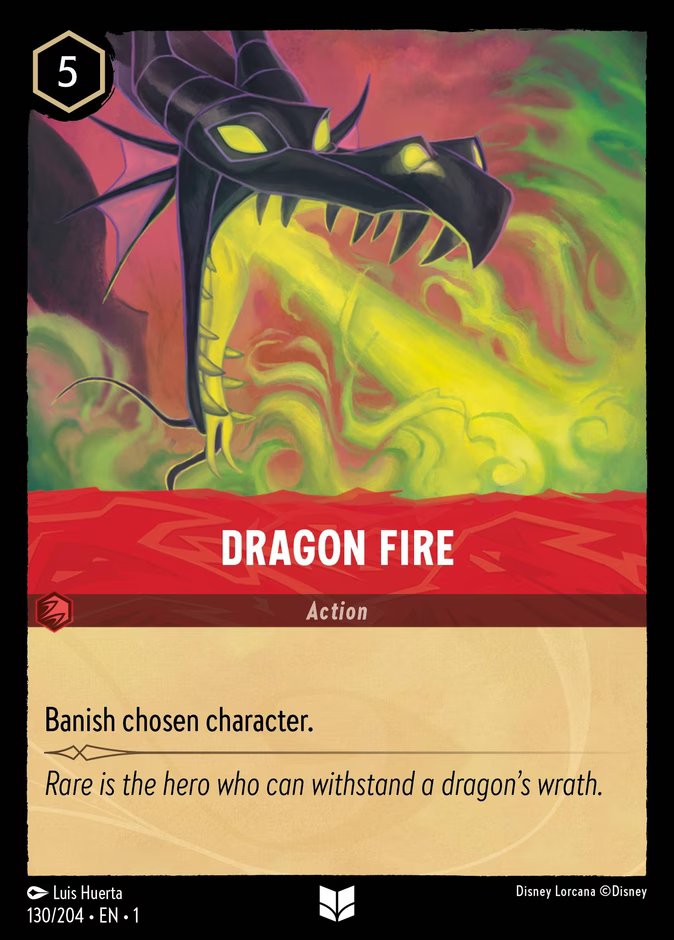
Disney Lorcana Actions Explained: All 196, No Instant Speed
An action in Lorcana resolves the moment it is played, and the rules give your opponent no window to answer it. Here is the whole card type counted from the live pool - 196 non-song actions, what they actually do, and the handful of cards that can interfere before the fact.
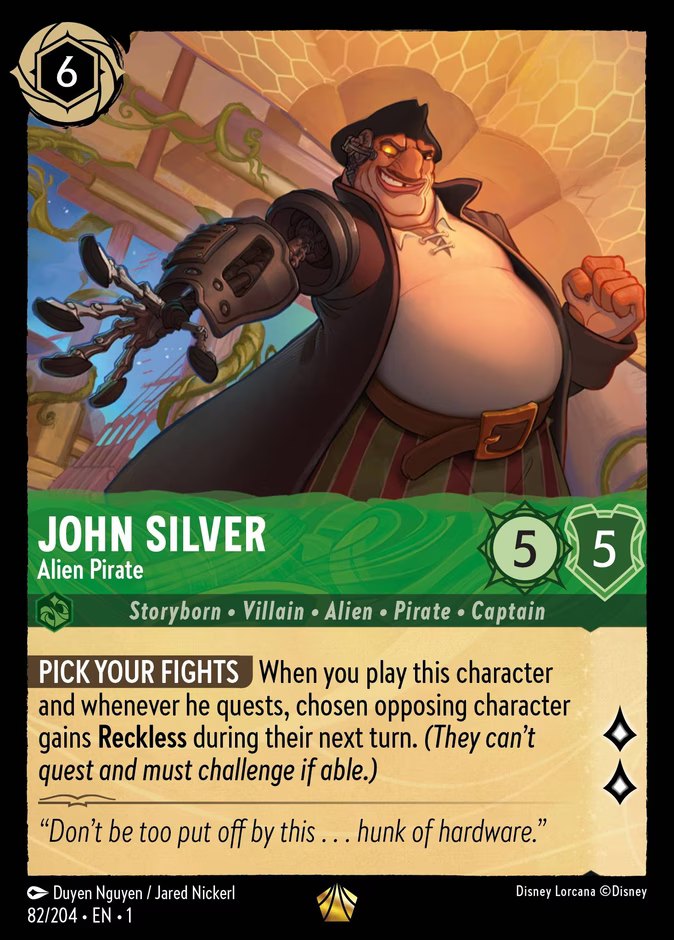
Disney Lorcana Character Classifications Explained: All 47, and Why Storyborn Does Nothing
Rule 5.3.3.2 lists 47 classifications, and a card needs one of them to legally be a character at all. Then you count the card pool and find that the two most common words on the type - Storyborn and Dreamborn, 1,688 characters between them - are referenced by exactly zero cards.