Fortnite Vehicles Guide: Rotate, Cover, and Ram
Most players treat vehicles like toys. Good players treat them like the fastest, safest rotation tool in the game — and a giant noise beacon that gets you third-partied. Here's how to use cars and boats to beat the storm, use them as mobile cover, and know the exact moment to bail out.
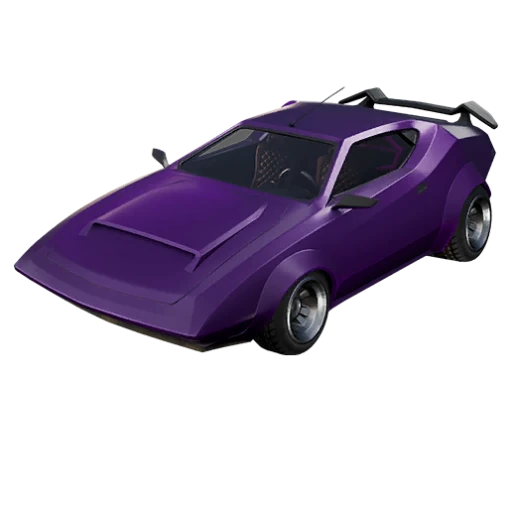
The single most common way to die in Fortnite is not losing a gunfight. It's getting caught in the open, out of position, taken by the storm or a third party while you were trying to walk somewhere. A vehicle solves that problem better than any weapon in your inventory — and most players still hop in one only to goof around, then leave it in a ditch when it actually mattered.
The specific vehicles rotate constantly. Epic vaults cars, adds boats, drops in whatever seasonal machine fits the current island, and swaps the loot pool every few weeks. So this guide is not a list of "the best car this season." It's the durable stuff: how to use any vehicle as a rotation tool, as mobile cover, and as a weapon, plus the discipline of knowing when it's saving your life and when it's about to end it. The chassis changes. The playbook doesn't.
A vehicle is a rotation tool, not a toy
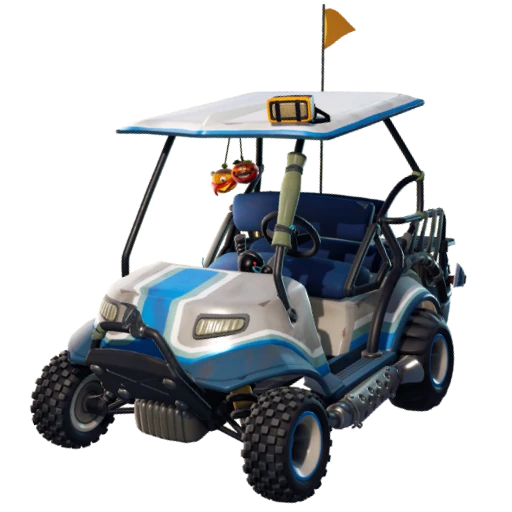
Rotation — getting from where you are to where the safe zone will be — is where vehicles earn their keep. On foot, a long rotation across open ground is one of the deadliest things you can do: you're slow, exposed, and predictable. In a vehicle you cross that same gap in a fraction of the time, and you can take a longer, safer path around the edges instead of sprinting straight through the middle where everyone's watching.
The mindset shift is this: you're not driving to look cool, you're driving to be somewhere better before anyone else gets there. A car that puts you on the high ground inside the next circle, with time to loot and set up, is worth more than any gun you'd have found walking. Our full rotation guide covers reading the circle and timing your moves; a vehicle is simply the fastest way to execute the plan it lays out.
A few rotation habits that separate good drivers from bad:
- Leave early, not late. The whole point is to arrive with time to spare. Driving into a closing storm at the last second wastes the advantage.
- Take the edges. Vehicles let you loop around the outside of the zone rather than plow through the contested center. Fewer fights, safer arrival.
- Park with purpose. Stop behind cover or on the terrain you actually want to hold, not in the middle of an open field where the sound of your engine just announced you.
Cars: fuel, health, and drive-bys
Cars are the workhorse land vehicle, and they come with two gauges you have to respect: fuel and health. Fuel drains as you drive and refills at gas pumps or with gas cans, so a car isn't infinite — plan your route around roughly how far a tank gets you and don't strand yourself. Health matters even more: cars take damage from gunfire, explosives, and crashes, and when the health bar hits zero the vehicle explodes, which will chunk or kill anyone still inside. Driving a smoking, near-dead car into a fight is how you hand the enemy a free elimination.
The other thing cars unlock is the drive-by. Passengers can lean out and fire their weapons while the car is moving, which turns a four-seat vehicle full of teammates into a rolling firing squad. If you're the driver, your job is to keep the car moving and give your passengers clean angles; if you're a passenger, you're free to shoot without spending your own mobility. This is one of the strongest reasons to keep the squad in a single vehicle during a rotation instead of splitting up — coordinated drive-by fire covered by a moving chassis is brutal against players caught on foot. For how the whole squad should be thinking during these moves, see our team play guide.
Quick car discipline:
- Watch the fuel gauge the way you watch the storm timer — running dry in the open is the same death as arriving late.
- Bail before it blows. A car at low health is a bomb you're sitting in. Get out before the explosion instead of riding it to zero.
- Keep it moving in a fight. A parked car is a stationary target; a moving one is much harder to hit and lets your passengers deal damage.
Boats and the water shortcut
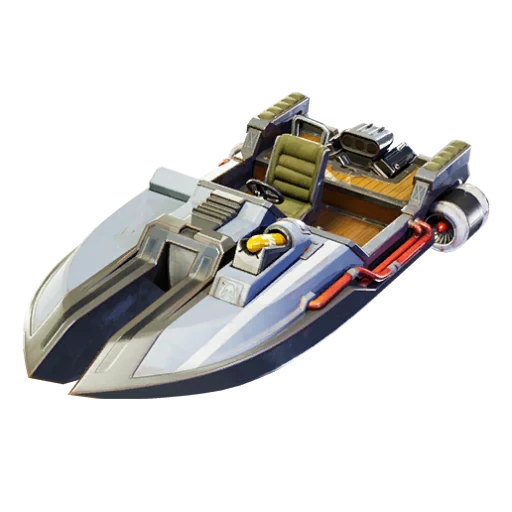
Whenever the map has rivers, lakes, or coastline, boats are one of the most underrated rotation tools in the game. On water they're extremely fast, and many boats carry a boost for bursts of speed plus onboard missiles you can fire on the move — so a boat isn't just transport, it's a mobile weapons platform for anyone caught near the shoreline. The classic Motorboat can even crawl across dry land, slowly, which means you're not fully stranded the moment you leave the water.
The reason boats win rotations is that water is usually an empty highway. Most players fight and loot on land, so the coastline and rivers are open lanes where you can travel fast with almost nobody watching. If the safe zone touches water, taking a boat around the edge is often the safest rotation on the map. Even the fishing spots that dot the shoreline give you a reason to know the waterways — the same routes that hold loot make clean rotation lanes.
Boat notes worth remembering:
- Water is a low-traffic lane. Use it to skip the crowded center of the map entirely.
- Save the boost for the storm or an escape, not for showing off across an open lake where it drains for nothing.
- The missiles are real damage — a boat can pressure players on shore, but firing them also screams your position, so pick your moment.
Using a vehicle as mobile cover
This is the trick that most players never learn: a vehicle is a wall that moves. When you're caught in the open with no time to build — or in a mode where you can't build at all — the vehicle body itself blocks bullets. You can crouch behind a parked car to break line of sight, use it to soak damage while you heal, or keep it between you and an enemy as you shuffle toward better cover. In Zero Build, where you can't throw up a wall, a vehicle is often the only hard cover available in an open field, which makes it far more valuable there than in Build mode.
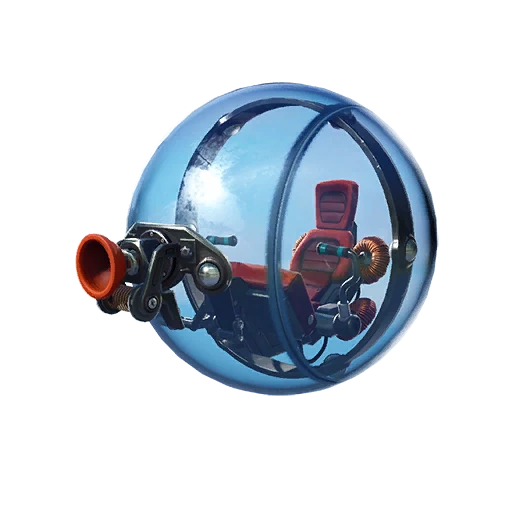
Some vehicles are practically built for this. The Baller, for example, is a fully enclosed ball with a grappler — it moves fast, protects you on all sides, and lets you reposition out of a bad spot without ever exposing yourself. Whatever the current roster looks like, the principle holds: if you're getting shot in the open, get the vehicle's body between you and the gun.
How to use a vehicle as cover well:
- Angle the body toward the threat, then heal or reposition behind it — treat it like a wall you can drive.
- Don't sit in a car you're using as cover if it's low health; crouch behind it instead, so you're not inside a bomb.
- Use it to cross open ground under fire — drive from cover to cover instead of sprinting exposed between them.
Ramming and vehicle combat
Vehicles are weapons in their own right: ramming a player deals damage, and heavier vehicles hit harder. A well-timed ram can knock, break a build, or finish a low opponent who thought they were safe behind a wall. Driving straight through someone's box in Build mode can shatter the structure and leave them exposed, and in a squad rotation a car barreling into a group on foot forces everyone to scatter.
That said, ram-attacking a healthy, alert player is usually a bad trade. They'll simply shoot your vehicle — and you — while you line up the hit, and a car that eats a full magazine on the approach is a car about to explode with you in it. Ramming is best as a finisher or a disruptor, not an opening move: use it to close out a player who's already low, to break a build and follow up with your gun, or to blow through a group and create chaos, not to duel a full-health opponent head-on.
When ramming pays off:
- Finishing low players who can't out-damage your approach.
- Breaking builds to expose a boxed-up enemy, then swapping to your weapon.
- Scattering a squad on foot so they can't focus fire — a disruption play, not a solo kill.
Every vehicle is a giant noise beacon
Here's the cost that balances everything above: vehicles are loud, and sound is information. An engine can be heard from a long way off, and every player nearby now knows roughly where you are, which direction you're headed, and that you're committed to a loud, visible machine. Audio is one of the biggest sources of free information in Fortnite — the same way a good player tracks footsteps, they track your engine. (If you're not already using sound to your advantage, our audio settings guide is worth a read.)
The practical consequence is that vehicles invite the third party. You roll up loud to a fight, win it, and now the two other squads who heard the engine are converging on the noise. Driving into an active fight is often a mistake for exactly this reason — you announce yourself to everyone in earshot. Manage it by using the noise deliberately: drive when speed matters more than stealth, and go quiet — get out and move on foot — when you're approaching a fight or setting up in the endgame. For the wider skill of not becoming the third-party victim, see our third-party guide.
When to ditch the vehicle
A vehicle that saved your life on the rotation becomes a liability the moment the fight actually starts. The endgame is the clearest case: in a tight final circle, an engine is a beacon, the vehicle is a huge target, and there's nowhere to drive anyway. Get out before the circles get small. Once you're setting up for the endgame, you want to be quiet, covered, and on foot, not sitting in a loud metal box everyone can hear and see.
Ditch the vehicle when:
- The safe zone is small and there's no more real distance to cover — the engine now only gives you away.
- The car is low on health; don't ride a near-exploding vehicle into a fight or park it as "cover" while sitting inside it.
- You're approaching a fight you want to win by surprise — go quiet on foot rather than announcing yourself.
- Fuel is nearly gone and there's no pump on your route — get the value out of it before it strands you, then move on.
The rule of thumb: a vehicle is for getting to the fight, not for being in the final one. Use it to arrive early and well-positioned, then abandon it before it turns you into the loudest, biggest target on the map.
Build vs Zero Build vehicle play
The mode changes how much a vehicle is worth. In Build mode, you always have another form of cover and mobility — walls, ramps, and mats — so a vehicle is a strong rotation tool but not your only lifeline. If a fight goes bad, you can build. That means you can lean on vehicles for speed and drop them the instant you need to fight, because your building mats cover the defense.
In Zero Build, there is no wall to throw up, so vehicles and other mobility items carry far more weight. The vehicle body might be the only hard cover in an open field, and getting caught in the open with no car and no mobility item is often a death sentence. Zero Build players should treat any nearby vehicle as a genuine resource — a moving wall and an escape route rolled into one — and think harder about holding onto one through the mid-game, since they can't build their way out of a bad rotation.
Either way, the vehicle is part of your kit, not a distraction from it. It's the mobility slot that happens to seat your whole squad.
Quick Action Checklist
Turn the theory into habits you actually use:
- Drive to rotate, not to goof around — arrive early, take the edges, park with purpose
- Respect fuel and health — don't strand yourself, and bail before a low-health car explodes
- Use drive-bys — keep the squad in one vehicle so passengers can fire while you keep it moving
- Take the water — boats are a fast, low-traffic rotation lane whenever the zone touches it
- Treat the vehicle body as mobile cover, especially in Zero Build where you can't build a wall
- Ram as a finisher or disruptor, not as an opening move against a healthy player
- Remember the engine is a beacon — go quiet on foot when you approach a fight
- Ditch it before the endgame — small circles turn a vehicle into the biggest, loudest target on the map
Frequently Asked Questions
What is the best way to use vehicles in Fortnite?
Can you use a car as cover in Fortnite?
Does ramming players with a vehicle deal damage in Fortnite?
When should I get out of a vehicle in Fortnite?
Why do vehicles get me third-partied in Fortnite?
Keep Reading
Related Guides

Fortnite Arenas Boxfights: How the Ranked Mode Works
Arenas Boxfights is Epic's own build-only Ranked mode built around the box fight, and the lobby size, win target, Overtime and the loot pool have all changed since launch week. Here is how a match runs as of update v42.40, what each Ranked season's rewards are, and where Arenas tournaments stand.

FNCS Global Championship 2026 Results: SwizzY and Pixie Win
Twelve games, 50 duos, $2,000,000 — and two points between first and second. SwizzY and Pixie never led the Fortnite Global Championship 2026 until the last game ended, while the duo that led for six straight games scored nothing in the final two. Here are the full standings, the game-by-game swing, and how the scoring decided it.

Fortnite Siphon Explained: Why Every Kill Heals You
You win a box fight and your health snaps back to full before you've even reloaded — no Shield Potion required. That's siphon, the mechanic that turns every kill into a heal and makes competitive Fortnite play nothing like your casual pubs. Here's what it does, where it's on, and how to build your whole gameplan around it.
Fortnite Reload Nitemare Island: Map, Loot and Rewards
Nitemare Island came back to Reload on October 8 with something the 2025 version never had: a match modifier that can hand you a rival and pays out a reward from Kado Thorne when you drop them. Here is the map, the three-map rotation it has sat in since the Squid Grounds weekend, the loot Epic lists as Nitemare-specific, and what the new Ranked and Map Mastery tracks pay.
Fortnite Weapon Tier List: How to Rank Any Loot Pool
Any Fortnite tier list is stale the second a patch drops. So instead of memorizing this season's gun names, learn how to rank weapons by class and role — the framework that's S-tier in every season.

Best Fortnite Settings for PC & Console
Half your settings menu is noise; a handful of options decide whether you can see, aim, and build. Here's what to change on PC and console, why, and the one number nobody else can pick for you.