Fortnite Sniper Guide: How to Actually Hit Your Shots
You did not miss because your aim is bad. You missed because the bullet was still in the air when they strafed. Fortnite snipers fire physical projectiles that arc and take time to land — here is how to lead them, range them, and stop announcing every shot with Sniper Glare.
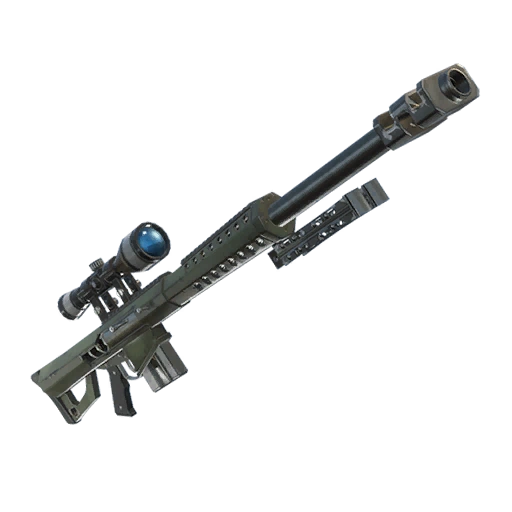
You lined up a player standing still on a roof 150 meters out, put the crosshair dead on their head, clicked, and watched the bullet kick up dirt somewhere near their feet. Then you blamed your sensitivity, or the servers, or the fact that snipers are "inconsistent."
They are not inconsistent. They are just not lasers. Almost every sniper rifle Fortnite has ever shipped fires a physical projectile that leaves the barrel, travels at a finite speed, and falls the whole way there. Your assault rifle rewards pointing at a person. A sniper rewards pointing at where that person is going to be, slightly above where you want to hit them, and then living with a half-second of consequences. Everything else in this guide stacks on top of that one difference.
A sniper round is a physical object, not a laser pointer
The Fortnite wiki puts the mechanic plainly: most sniper rifles fire a projectile bullet, meaning the bullet does not instantly hit where you aim, and that projectile is affected by gravity. Two weapons in the game's entire history broke that rule — the Rail Gun and the long-removed Zapotron were the only snipers to fire a hitscan bullet that connects the instant you pull the trigger. Everything else in the class is a physical round with travel time.
That has three consequences you have to build habits around:
- There is a delay between your click and the hit. Your target has a window to move after you have already committed. If they were mid-strafe when you fired, the round arrives where they used to be.
- The round drops as it flies. Gravity acts on it the whole way, so the further out the target, the higher above them you have to aim.
- Every sniper has its own projectile speed. The wiki is explicit that different sniper rifles fire different-speed projectiles, so the lead that worked with one rifle is wrong for the next one you pick up. That is the single most common reason a player who "used to be good at sniping" suddenly is not — the gun changed, the muscle memory did not. No memorized "aim one body-width ahead" rule survives a weapon swap.
Leading a moving target
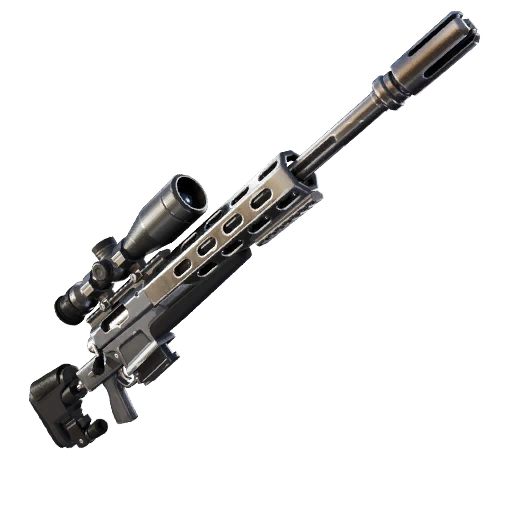
Leading is aiming at the empty air your target is about to walk into. How much you need scales with two things: distance (longer flight time) and how fast they are crossing your view (more ground covered during that flight).
- Sprinting across your view at medium range is the standard case. Put the crosshair a body-width or so ahead and let them run into it. That is a starting point, not a law — calibrate it against the rifle you are holding.
- Running directly at or away from you needs almost no horizontal lead, because their movement is along your bullet's path rather than across it. Head-on pushes are the easiest snipes in the game. Take them when offered.
- Ziplines, vehicles, and gliders are the free shots. Constant speed, predictable straight line, no juking — a player on a zipline physically cannot dodge. If you land one long-range snipe a game, it should be that one.
- Mobility items make a target erratic. Someone mid-launch is changing direction on a curve. Wait for them to land or commit to a straight line rather than spending your one chambered round on a guess. (Our mobility items guide covers what those items do to a player's movement.)
The mistake most players make is leading a stationary target. If they are standing still, do not lead — they will still be there. Lead is for lateral movement only. Drop is a separate correction that applies whether they move or not.
Bullet drop: hold over the target
Drop is the vertical half of the problem. Because gravity pulls the round the whole way, a shot aimed dead-center at long range lands low. The fix is holdover: aim above the point you want to hit, so the arc brings the round back down onto it.
The tool nobody uses: mark the target first. Placing a marker on an enemy or a spot shows you the distance to it, which is the number the whole calculation depends on. Guessing distance by eye is the real failure mode — most players are not bad at holdover, they are bad at knowing the target is 200 meters out and not 90.
From there, use the reticle. Sniper scopes in Fortnite have hash marks below the center of the crosshair, and those marks are holdover references — the further out the target, the further down the ladder you go before placing them on it. Do not trust a chart that assigns exact meter values to each line, because scopes and rifles differ and Epic adjusts weapons constantly. Calibrate the ladder yourself: in Creative, put a target at a known distance, mark it, and find which line lands the shot. Three or four distances gives you a reference that is actually true for the gun you play with.
And if you are going to miss, miss high. A round that lands short hits dirt for zero; a round that lands slightly long can still clip a head.
Snipers have no damage falloff, and that changes everything
Here is the fact almost nobody plays around, straight from the wiki's description of the class: sniper rifles do not have damage falloff. They deal the same damage up close as they do at any range. Most other weapon classes lose damage as distance grows. Snipers do not.
The implication is not "snipers are good far away." It is that a sniper is a full-power weapon at every distance, and the class is strong enough that most of them can knock a player at any range with two well-placed shots. A sniper round to the chest at 8 meters hits exactly as hard as one at 180.
What to do with that:
- Stop treating the sniper as a long-range-only tool. A scoped rifle across a 30-meter gap between two builds is not a compromise shot. It is your full damage.
- The scope, not the damage, is the close-range problem. What kills you in a close fight with a sniper out is tunnel vision and re-chamber time. That is a handling problem, solved by picking your moment rather than swapping guns.
- A no-scope is a real option in a pinch. Fortnite acknowledges it directly: eliminating a player without aiming down sights with a sniper prints a "NO SCOPED" message in the kill feed. Low percentage, but with full damage behind it, it is a legitimate panic button when someone rushes you mid-reload.
Sniper Glare: scoping in puts you on the map
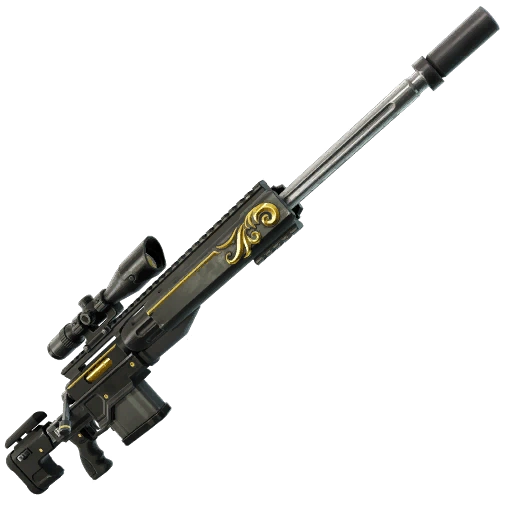
This is the mechanic that separates people who understand modern Fortnite sniping from people still playing by 2018 rules. Sniper Glare was introduced in Chapter 4 Season 2, and it does exactly what it sounds like: aiming down the scope of a sniper rifle — or any weapon carrying a sniper scope mod — produces a large, visible white glare from the lens.
The details that matter:
- It is visible from any range. The glare is not a subtle tell that only shows up at 50 meters. Per the wiki, it is highly visible regardless of time of day, biome, direction of sunlight, and distance. If you are scoped, someone looking your way sees a bright dot.
- It is not exclusive to snipers. Any weapon with a sniper scope attached emits it, sniper rifle or not. A glare across the field does not automatically mean a one-shot rifle is pointed at you — identify the weapon before you panic-build.
- The counter is your scope discipline. Stop using the scope as a telescope. Every second you sit zoomed in scanning the horizon, you are broadcasting your position to the entire lobby for free. Glass the area with your naked eyes, decide on a target, scope, fire, unscope. In and out.
- On mod-compatible rifles, you can remove the glare entirely. Swapping the sniper scope for a thermal optic gets rid of it — the wiki calls out the Reaper Modular Sniper Rifle and the Modular Huntress DMR as the obvious candidates, and pairing that thermal optic with a suppressor is the best concealment setup available. The thermal view also reads better in dim areas and at range.
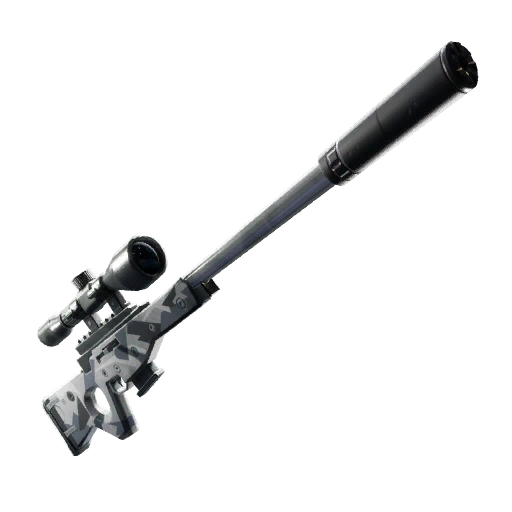
The flip side is that glare is information you also get to use. A white pinprick on a distant hill or in a build window means someone is scoped, and probably scoped at you. Break line of sight and rotate — and remember the shooter has a chambered round to burn and a reload to survive.
Where to take the shot from
Positioning does more for your snipe percentage than any aim drill, and most players violate all four of these at once:
- Have cover you can step behind, not cover you have to build. The side of a rock, the corner of a building, a window edit in your own box. Fire, then break the sightline. A sniper who stands in the open after firing is about to get third-partied — and a long-range duel is the loudest invitation to a third party in the game, since both of you are stationary and distracted. (Our third party guide covers the timing on both sides of that.)
- Do not skyline yourself. Standing on a ridge or a build with sky behind you turns you into a high-contrast silhouette. Sit a step back from the crest so terrain is behind you instead.
- Height helps, but only a little. Elevation gives sightlines and lets you shoot down onto exposed builds — it also makes you visible to everyone else. Take a modest platform, not the tallest tower in the lobby. (Our high ground retake guide covers getting the angle back when you lose it.)
- Move after the shot, always. The glare told them where you were. The tracer told them again. Fire, unscope, reposition even ten meters. The second shot from the same window is the one that gets you killed.
Sniping builds instead of people
A shot that hits a wall is not a wasted shot. Snipers deal structure damage, and breaking the enemy's cover is often worth more than threading a headshot:
- Opening a boxed player for a teammate. You snipe the wall, your teammate pushes the hole. A coordinated kill neither of you gets alone. (More on that split of roles in the duos and trios strategy guide.)
- Breaking a ramp under someone mid-rotation. A player crossing on builds who suddenly has no floor is falling, panicking, and out of position. You never had to hit them.
- Denying a rebuild. A sniper trained on one wall costs them materials and tempo every time they replace it.
The honest caveat: structure damage on snipers has been tuned up and down repeatedly, so how many shots a wall takes depends on the material, the weapon, and the current balance pass. Test it in-game rather than trusting a number from an old video.
Sniping in Zero Build vs Build
The mode changes what a snipe is worth.
In Build, a sniper is an opener and a tempo tool. Nobody dies to a long-range snipe unless they are asleep, because the instant reaction to damage is a wall. What the shot buys is chip damage, a forced material spend, and information. Best used at the start of a fight you intend to close, or against players committed to a rotation who cannot stop to build.
In Zero Build, sniping is genuinely lethal. There is no instant wall — the counter is cover you have to physically run to, plus the mode's recharging overshield soaking damage between hits. Long sightlines are dangerous in a way Build players are not used to, and holding an angle over open ground is a real strategy. If you only enjoy sniping in one mode, it is this one. (Our Zero Build guide covers cover and rotations without walls.)
When to drop the sniper
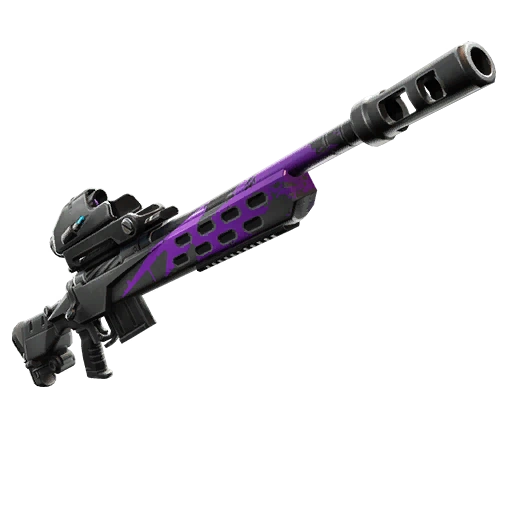
A sniper occupies an inventory slot, and slots are the most expensive currency in the game.
Keep it when you are playing a passive or supportive role, the terrain has long sightlines, a teammate is doing the pushing, or the rifle brings utility beyond damage. Fortnite has shipped snipers whose whole selling point was that utility — the Storm Scout Sniper Rifle displayed the next storm circle in the corner of your screen while you were scoped, making it a rotation tool that happened to also shoot people.
Drop it when the circle is small, every fight is under 30 meters, you have no shotgun or no heals, or you have gone three fights without firing it. A sniper you never use is a slot that should have been a mini shield stack.
The rule of thumb: a sniper is the third or fourth item in a good loadout, not the first. Shotgun and a mid-range weapon come first, then heals, then the sniper — and if heals and the sniper are fighting over the last slot, take the heals. (The loadout priority guide covers what earns a slot at each stage; the shotgun guide covers the close-range half.)
How to practice sniping so it sticks
Sniping is one of the few Fortnite skills where deliberate practice pays off almost immediately, because the variables are mechanical and measurable.
- Ranging drills before flick drills. Put targets at 50, 100, 150, and 200 meters in Creative and hit each from a standstill. You are training the holdover ladder for that specific rifle, not your reflexes — so re-run it every time the weapon changes. (Our Creative mode guide covers finding practice maps.)
- Moving targets second. Once holdover is calibrated, add lateral movement — strafing bots or a friend running a fixed path is enough.
- Watch your own misses in replay. The replay shows whether the round landed short, long, or behind, which tells you whether your problem is drop or lead. Those are different fixes, and guessing which one you have is why people plateau. Our replay and VOD review guide covers the workflow.
- Track glare discipline, not just hits. Over your next few games, count how many times you scoped in without firing. That number is how often you gave away your position for nothing.
Quick Action Checklist
- Treat the round as a projectile — travel time on the way out, drop the whole way
- Lead lateral movement only — a stationary target needs holdover, not lead
- Take the free shots: ziplines, vehicles, gliders, and head-on pushes
- Mark the target for its real distance before committing to a holdover
- Calibrate the scope hash marks yourself in Creative — do not trust a generic chart
- Remember there is no damage falloff — a sniper is full power at every range
- Scope in, fire, scope out — Sniper Glare shows at any range, biome, or time of day
- Swap to a thermal optic on mod-compatible rifles if you want the glare gone
- Reposition after every shot — the glare and the tracer both gave you away
- Drop the sniper when the circle closes and the slot is worth more as heals
Frequently Asked Questions
Do Fortnite snipers have bullet drop?
How much do you need to lead a target when sniping in Fortnite?
What is Sniper Glare in Fortnite and how do you avoid it?
Do Fortnite snipers do less damage at long range?
Is sniping better in Zero Build or Build mode in Fortnite?
Keep Reading
- Mythras blog
- Fortnite coverage hub
- Fortnite weak spots and aiming guide
- Fortnite aim training guide
- Fortnite shotgun guide
- Fortnite loadout priority guide
- Fortnite Zero Build guide
- Fortnite third party guide
- Fortnite high ground retake guide
- Fortnite Creative mode guide
- Fortnite replay and VOD review guide
- Fortnite mobility items guide
- Fortnite duos and trios strategy
Related Guides
Fortnite Inventory Management: Slot Order and Drop Rules
Five slots. That's the entire budget, and most players spend two of them on garbage they picked up in the first ninety seconds and never reconsidered. Inventory management is the cheapest skill in Fortnite to fix and the one that quietly decides whether you're ready when the fight starts.
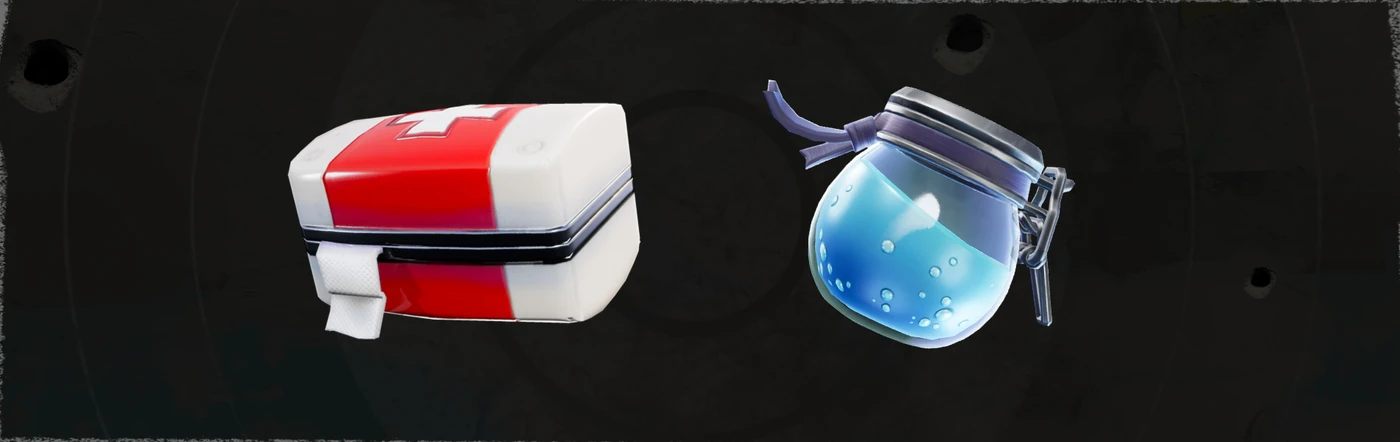
Fortnite Shield & Heal Management: When to Pop What
Most fights in Fortnite aren't lost to bad aim — they're lost at 40 HP with a full Med Kit sitting in your inventory. Healing is a resource you manage, not a button you mash when the damage numbers turn red. Here's the durable framework for shields, heals, and the timing that actually keeps you alive.
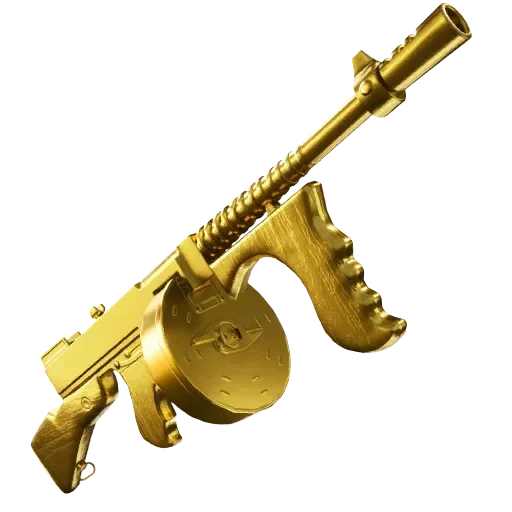
Fortnite Mythic Weapons Guide: Bosses, Vaults, and Gold Guns
Every named mythic in a Fortnite lobby usually exists exactly once, somebody has to rip it off a boss to get it, and half the server is planning to rip it off them next. Here's how the gold-gun economy actually works — and when chasing it is throwing.
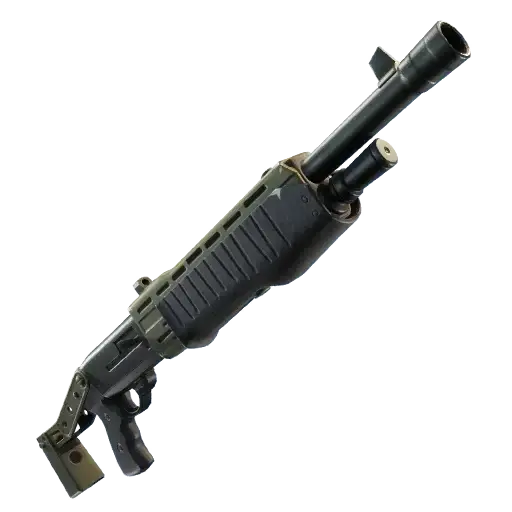
Fortnite Shotgun Guide: Win Every Close-Range Fight
Most Fortnite fights are decided inside ten meters, and the player holding the shotgun almost always wins. Here's how each shotgun archetype actually works and the close-range habits that turn coin-flip brawls into free kills.
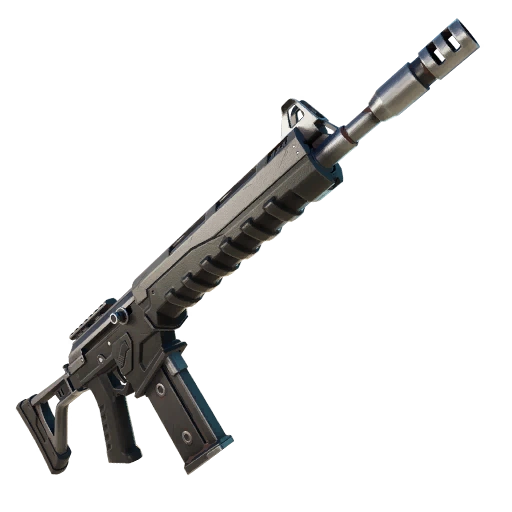
Fortnite Weapon Tier List: How to Rank Any Loot Pool
Any Fortnite tier list is stale the second a patch drops. So instead of memorizing this season's gun names, learn how to rank weapons by class and role — the framework that's S-tier in every season.
Best Fortnite Settings for PC & Console
Half your settings menu is noise; a handful of options decide whether you can see, aim, and build. Here's what to change on PC and console, why, and the one number nobody else can pick for you.