Minecraft Copper Guide: Oxidation, Bulbs, and Copper Golems
Copper used to be the ore you mined by accident and never touched again. The Copper Age changed that with tools, armor, and a golem that sorts your chests. Here is the whole material, from oxidation math to the new toys.
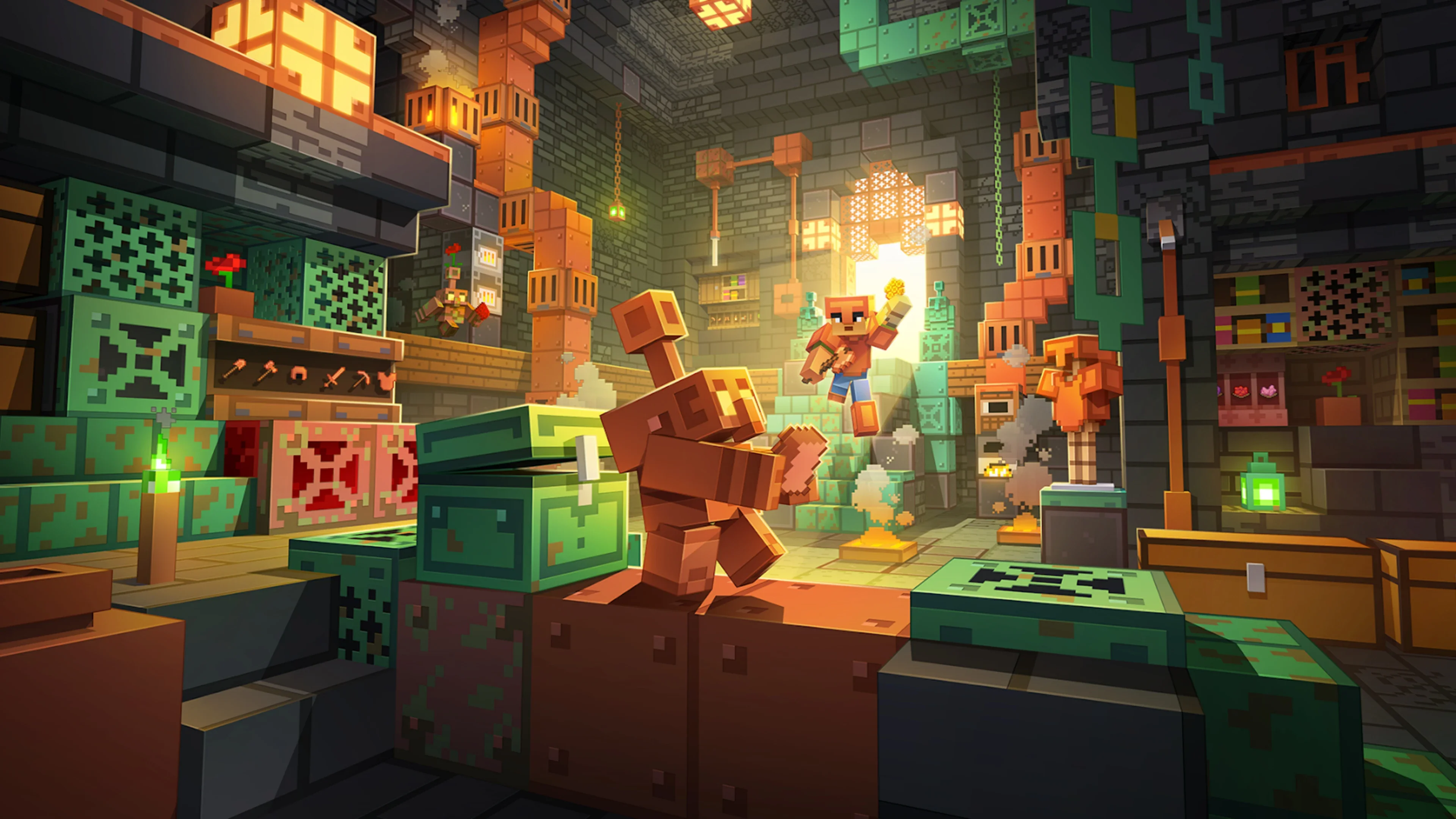
For years, copper was Minecraft's most pointless ore. You mined it, smelted it, built a lightning rod and a spyglass, and then watched 40 stacks of the stuff clog a chest with nothing to do. That era is over. The Copper Age drop — Java 1.21.9 and Bedrock 1.21.111, released September 30, 2025 — turned copper into a full material tier: copper tools, copper armor, a copper golem that sorts your storage for you, and a stack of new decorative blocks. Copper is finally worth mining for reasons beyond "the roof looks nice."
It still keeps the one mechanic nothing else in the game has, though: it changes color on its own. Leave a block of copper alone and it rusts from bright orange to a chalky teal over a very long time, and you can freeze it at any shade in between. This guide covers the whole material — where to dig it, how oxidation actually works (with the real numbers, not the campfire myths), copper bulbs, lightning rods, and every new toy the Copper Age added. Every figure here is checked against the Minecraft Wiki, because copper "facts" online are wrong more often than they are right.
Why copper finally earned its spot
Before the Copper Age, copper's entire résumé was the lightning rod, the spyglass, the brush, and a decent supply of orange building blocks. Functional, but nobody was mining copper on purpose. The 2025 update bolted on an actual reason to hoard it: a mid-tier equipment set that slots neatly between stone and iron, plus the copper golem — the first genuinely useful automation mob the game has added in years.
The result is that copper is now the material you want early. It is everywhere near the surface, it smelts cheaply, and a copper pickaxe or sword covers you until you find iron. If you have been treating copper as decoration, the rest of this guide is the case for taking it seriously.
Mining copper and smelting it down
Copper ore generates across a huge slice of the world: anywhere from Y -16 up to Y 112, peaking hard around Y 47 and 48, with a bonus batch that only spawns in dripstone caves. That makes it one of the easiest ores to trip over — if you have ever mined for iron, you have walked past mountains of copper.
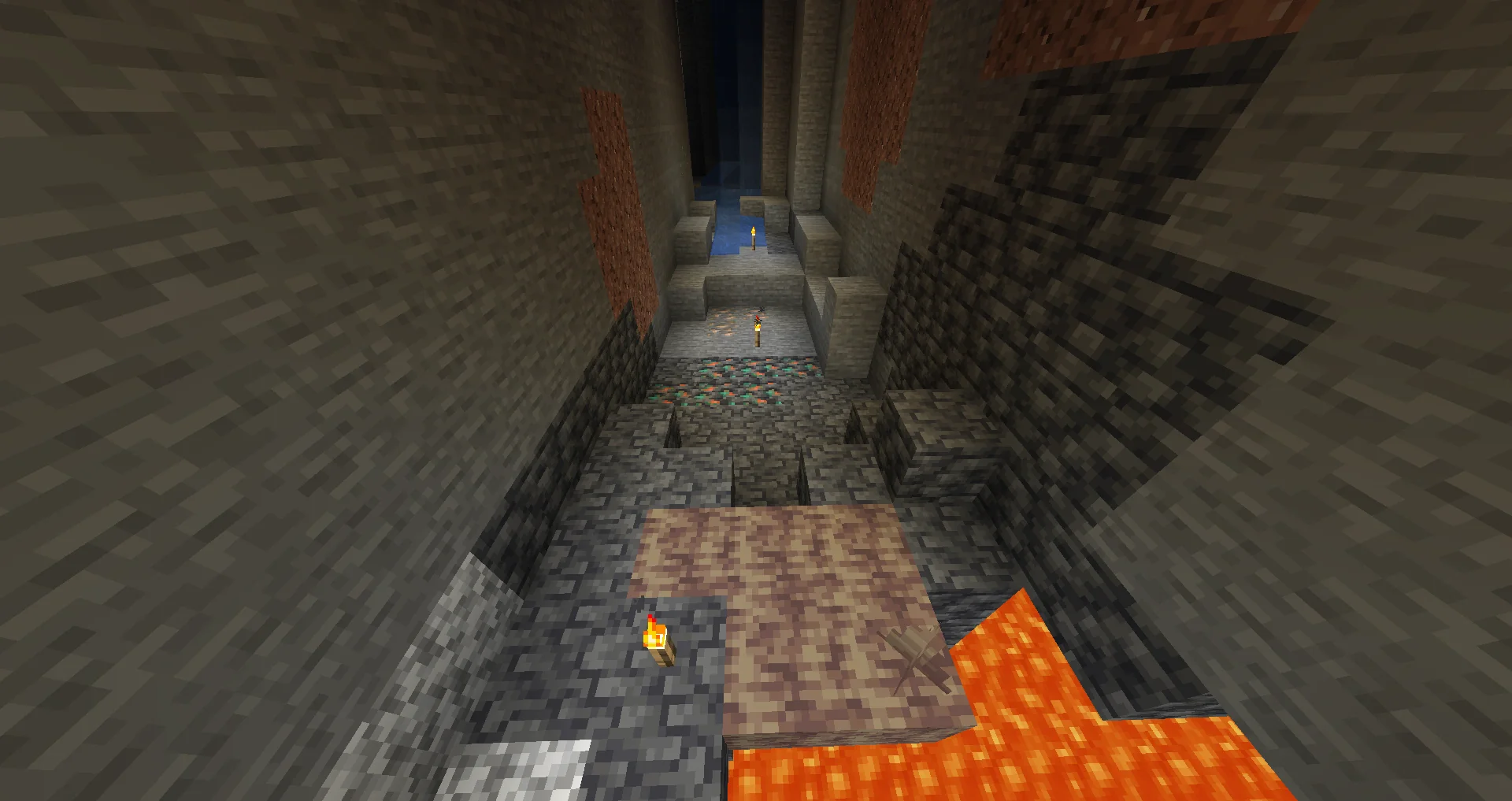
The rules for pulling it out:
- You need a stone pickaxe or better. A wooden pickaxe gets you nothing but a broken block.
- Each ore block drops 2 to 5 raw copper, which is already a generous base yield.
- Fortune stacks hard on copper. Fortune III can push a single block up to 20 raw copper, averaging about 7.7 per block — roughly tripling your take. If you are stripping a vein, bring a Fortune pick. For which enchantments are worth chasing first, see the best enchantments guide.
- Silk Touch drops the ore block itself instead of raw copper, handy if you want to relocate a vein or save it for a Fortune pick later.
Smelt raw copper in a furnace or blast furnace and you get one copper ingot each. Nine ingots crush into a block of copper, and a block crafts straight back into nine ingots — so it is a lossless way to store the metal compactly. If you are setting up a real dig, the mining guide covers branch-mining layouts that sweep up copper, iron, and redstone in a single pass.
The four oxidation stages
Copper is the only block group in the game that ages. Every non-waxed copper block moves through four cosmetic stages, always in this order:
- Unoxidized — the bright, shiny orange you get straight from crafting.
- Exposed — orange dulling toward brown, with the first green speckles.
- Weathered — mostly teal-green with orange patches still showing.
- Oxidized — the full chalky mint-green patina, barely any orange left.
Every copper variant has all four stages: blocks of copper, cut copper, stairs, slabs, chiseled copper, grates, doors, trapdoors, bulbs, and lightning rods. The stage is purely visual for most of them — a weathered copper block is exactly as strong and useful as a shiny one. The two exceptions are the copper bulb (its light level drops as it ages) and, in a roundabout way, the copper golem (it eventually freezes solid), both covered below.
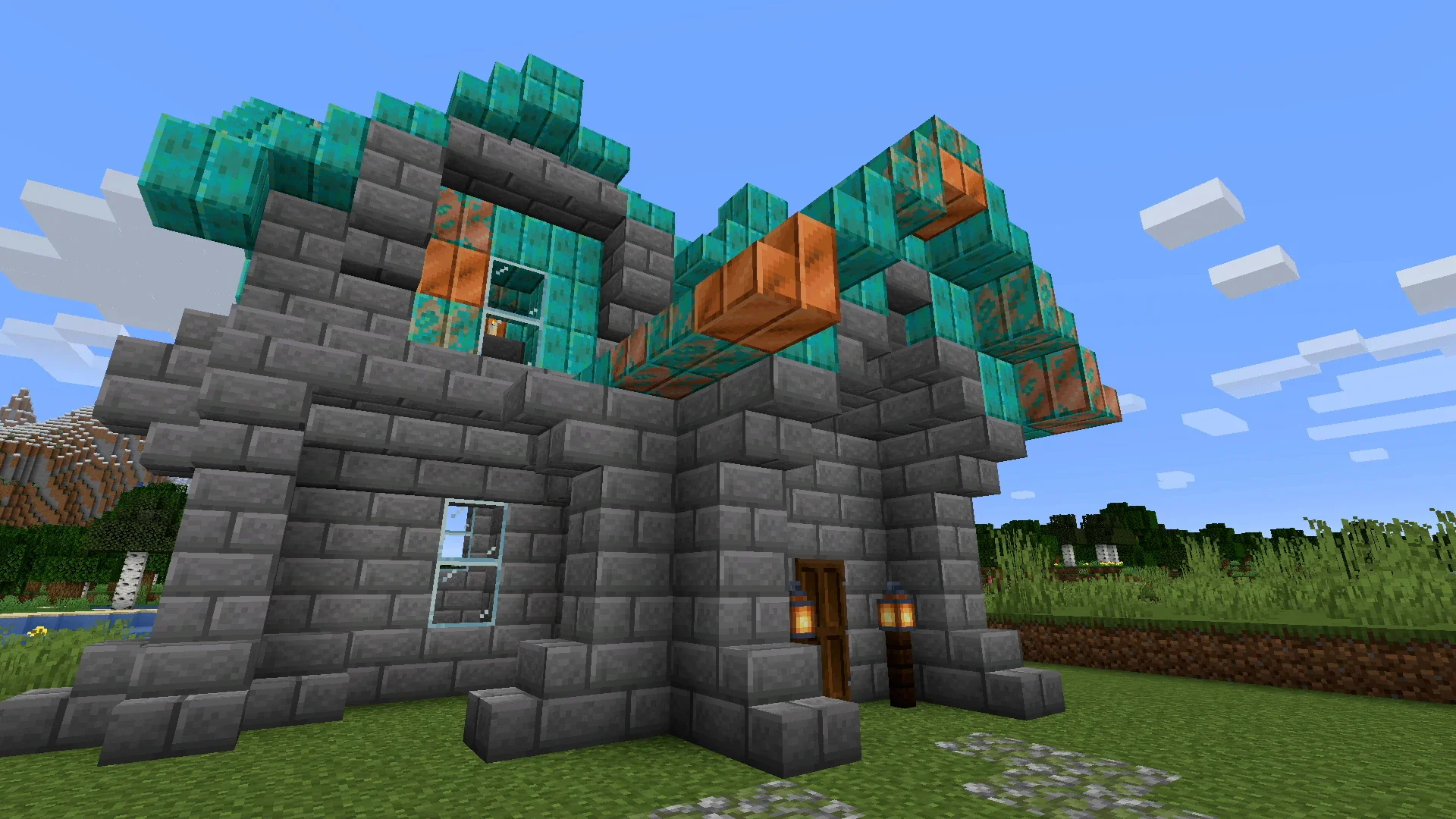
The reason builders love it is exactly this range. A copper roof that is left to age unevenly gives you that streaky orange-and-verdigris look you cannot fake with any other block. The building tips guide leans on copper for exactly this kind of natural weathering.
How oxidation actually works
Here is where the myths pile up. The truth, straight from the game's code:
- Oxidation runs entirely on random ticks. It is slow and probabilistic. A given copper block has roughly a 5% chance per minute to begin its first step toward the next stage, which works out to around 20 minutes on average just to start advancing — and the later stages take even longer. Fully oxidizing a block from shiny to green is a multi-hour, real-time process.
- Rain and water do nothing. Unlike real life, splashing water on copper or leaving it out in a storm does not speed it up at all.
- Covering it does nothing either. Burying a copper block behind other blocks does not stop it oxidizing. There is no "seal it away" trick — only waxing stops the clock.
Then there is the mechanic almost nobody knows about: copper blocks influence each other. When the game checks whether a block should oxidize, it looks at other non-waxed copper within a taxicab distance of 4 blocks. If any nearby copper is at a lower oxidation stage than the block being checked, that block will not advance at all. Otherwise, the more neighbors that are further along than it, the faster it progresses.
The practical upshot: a big solid mass of copper oxidizes patchily and unevenly, with random blocks racing ahead and dragging others along — which is exactly why copper builds get that lovely mottled look instead of turning a uniform green. A single isolated copper block, with no neighbors, just ticks along on its own slow schedule. If you want a perfectly uniform color, you have to wax the whole thing at the same stage.
Waxing and scraping: locking in a color
You control copper's color with two tools: honeycomb and an axe.
Waxing freezes a block forever. Use a honeycomb on any copper block, at any oxidation stage, and it becomes the "waxed" version — oxidation stops permanently. Want a whole build to stay bright orange? Wax every block while it is fresh. Want that half-aged streaky look locked in? Let it weather to taste, then wax it. Honeycomb comes from bee nests and hives (mind the bees — the bees and honey guide covers harvesting without getting swarmed).
Scraping moves a block backward. Use an axe on a copper block and it removes one layer of oxidation, stepping it back one stage toward shiny. The axe deals with wax first: hit a waxed block and it strips the wax (letting it age again); hit an unwaxed, oxidized block and it scrapes off a stage. So an axe plus a honeycomb lets you dial any copper block to the exact shade you want and pin it there.
One bonus method: lightning. A lightning strike removes all oxidation from the block it hits and de-oxidizes nearby copper in a spreading pattern. It is not a reliable tool, but if lightning hits your green copper tower, do not be surprised when a chunk of it flashes back to orange.
Copper building blocks worth knowing
Beyond the plain block of copper, the crafting and stonecutting menu is deep:
- Cut copper, plus its stairs and slabs — the clean, tiled version most builders actually use. Four blocks of copper make four cut copper in the crafting grid, or run a block through a stonecutter for the same result with less fuss.
- Chiseled copper and copper grates — decorative variants, also cut from blocks of copper on the stonecutter. The grate is a see-through block that lets light pass through it.
- Copper doors and trapdoors — and here is the useful part: unlike iron doors, copper doors and trapdoors can be opened by hand as well as by redstone. You get the industrial look of metal without needing a button or lever on every door.
All of these still oxidize and can all be waxed, so the same color rules apply to your stairs and doors as to a raw block. Trial chambers, by the way, are built almost entirely out of copper variants — if you want to see the full palette in the wild, the trial chambers guide is basically a copper showroom.
Copper bulbs: a light with a memory
The copper bulb is the sleeper hit of the copper family, and it is two useful things at once.
First, it is a light source you toggle with redstone. Crafted from blocks of copper, a blaze rod, and redstone dust (yielding four bulbs), the copper bulb flips between lit and unlit every time it receives a redstone pulse. That last part matters: it does not stay on while powered like a redstone lamp — a single pulse switches it, and it holds that state until the next pulse. In other words, it is a built-in toggle, or T flip-flop, which redstone engineers used to build out of a mess of repeaters and comparators. Drop a bulb into a circuit and you get one-tap on/off memory for free. The redstone contraptions guide shows why that is such a big deal for compact builds.
Second, its brightness depends on oxidation — the one place where an aging copper block actually changes function. A lit copper bulb emits:
| Oxidation stage | Light level (when lit) |
|---|---|
| Unoxidized | 15 |
| Exposed | 12 |
| Weathered | 8 |
| Oxidized | 4 |
So a fresh bulb is a max-brightness lamp, while a fully oxidized one is a soft, dim accent light. Pick the glow you want, then wax the bulb at that stage to lock the brightness in place. Unlit bulbs emit no light at all, regardless of age. If flip-flops and pulses are new to you, start with the redstone basics guide before wiring a bulb into anything fancy.
Lightning rods: cheap storm insurance
The lightning rod is copper's oldest job and still one of its best. Craft one from 3 copper ingots stacked vertically, plant it on top of your build, and during a thunderstorm it becomes the highest-priority target for lightning in the area.
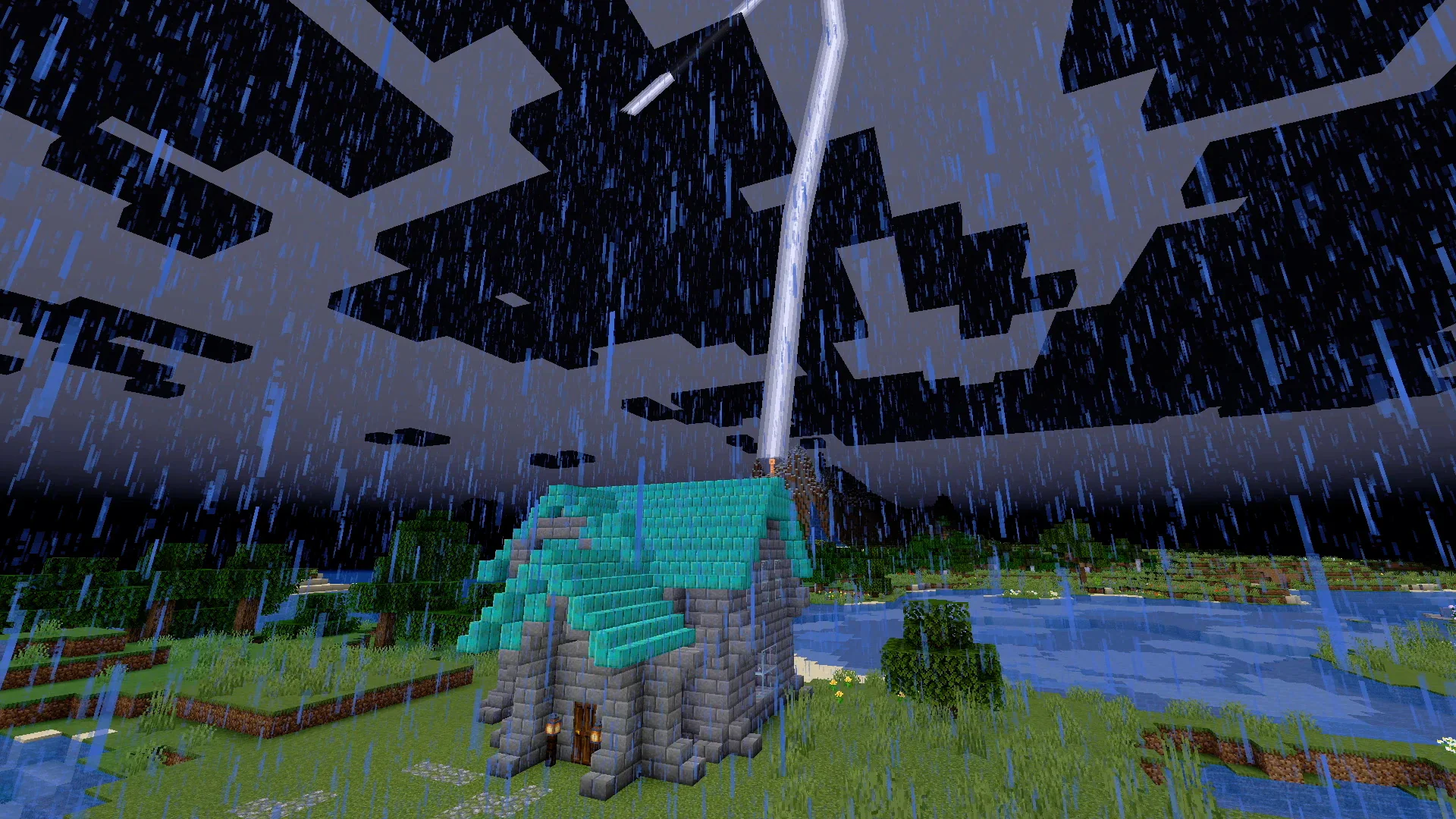
What it actually does:
- It diverts lightning strikes to itself within a radius of 128 blocks in Java Edition (64 in Bedrock). That is the whole point — it stops random bolts from setting your wooden house or your farm on fire by soaking the strike harmlessly.
- When struck, it emits a redstone pulse, strongly powering the block it is attached to at signal strength 15 for 8 game ticks (0.4 seconds). That makes it a natural trigger for lightning-detector contraptions and mob farms.
- It oxidizes like any copper block, but the color is purely cosmetic here — a green lightning rod works exactly as well as a shiny one. Wax it if you care about the look.
A neat trick: a trident enchanted with Channeling, thrown at a lightning rod during a storm, will call lightning down onto it on demand — which is how players trigger lightning for charged-creeper farms or just to de-oxidize a copper build.
The Copper Age update: golems, tools, and armor
This is the reason copper matters now. The Copper Age drop added a whole equipment tier and the game's best new automation mob.
The copper golem
The copper golem is a small, friendly automation mob, and it is genuinely useful. You build one by placing a carved pumpkin or jack o'lantern on top of a block of copper (pumpkin last). The copper block is instantly replaced by a copper chest, and the golem spawns on the spot with 12 HP (6 hearts).
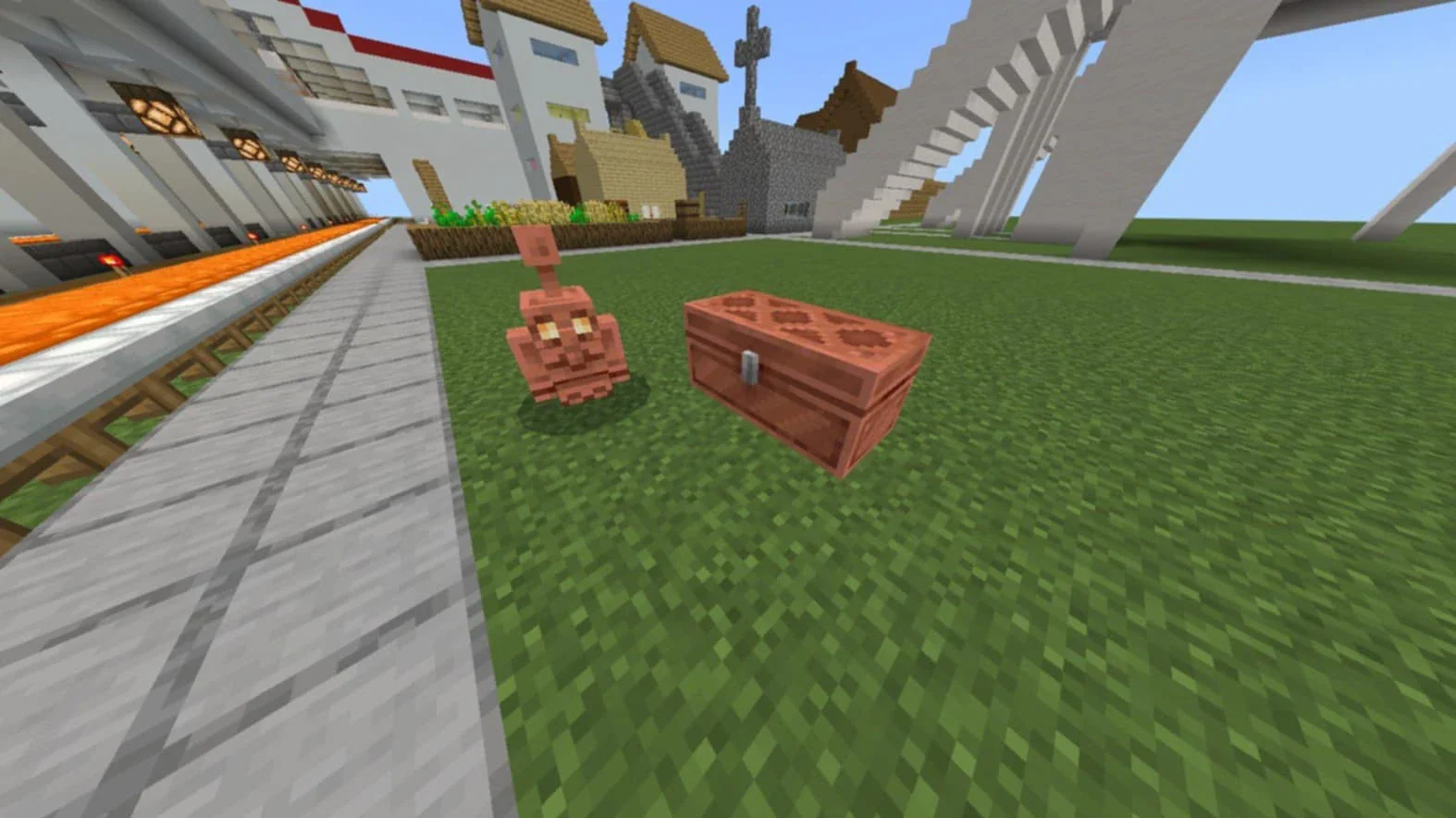
Its job is sorting your storage. The golem opens the nearest copper chest, grabs up to 16 of the first item type it finds, then carries them to the nearest wooden chest or trapped chest and drops them in. Point a couple of golems at a bank of labeled chests and you have a self-running sorting system with no hoppers or redstone at all.
The catch is that the copper golem oxidizes just like a block, advancing a stage every 7 to 7 hours 40 minutes. Once fully oxidized, it has a 0.58% chance per tick to freeze into a copper golem statue in a random pose, dropping whatever it was holding and stopping work entirely. To bring it back, scrape the statue with an axe until it is unoxidized, then one more axe hit reanimates it. Or skip the whole problem: wax the golem with a honeycomb and it stays active forever. (Killed golems drop 1 to 3 copper ingots, so they are cheap to replace either way.)
Copper tools and armor
Copper now fills the gap between stone and iron:
- Copper tools (axe, hoe, pickaxe, shovel, sword) deal the same damage as stone tools but have higher durability, and mine at a speed between stone and iron. Their enchantability is 13 — actually higher than diamond's — so they take good enchantments. Best of all, copper tools do not oxidize, so they never change color in your hand.
- Copper armor (helmet, chestplate, leggings, boots) gives 10 armor points total, with durability above gold but below chainmail and iron. Its enchantability is 8, the lowest of any armor, so it is a stopgap rather than an endgame set. There is also copper horse armor worth 4 armor points. Like the tools, copper armor does not oxidize. For how it stacks up against the full ladder, see the armor guide.
The rest of the update rounds out the decorative side: copper bars, copper chains, copper lanterns, copper torches, copper chests (which can be doubled up), and copper nuggets (nine make an ingot; smelting copper gear returns nuggets). It is a lot, and it finally gives that overflowing copper chest somewhere to go.
Copper tips most players miss
- Wax it at the exact shade you want. Oxidation is one-directional without an axe, and it is slow. Decide your color early and lock it with honeycomb rather than waiting and hoping.
- Isolated blocks oxidize on their own clock; masses go patchy. If you want an even color across a big build, wax every block at the same stage. If you want streaky verdigris, let a solid mass age and the neighbor mechanic does the mottling for you.
- Copper bulbs are free flip-flops. Even if you never care about the light, keep a few bulbs around purely as one-tap toggle memory in redstone.
- Wax your copper golem immediately. A statue-frozen golem stops sorting and drops its cargo. One honeycomb makes it permanent.
- A stone pickaxe is enough. Do not waste an iron pick mining copper unless it has Fortune — and if it does, Fortune III nearly triples your yield.
- Lightning rods are fire insurance, not decoration. One rod on a wooden base can save the whole build during a storm, covering a 128-block radius in Java.
- Copper doors open by hand. Use them where you want a metal look without wiring a button, something iron doors can never do.
Quick Action Checklist
- Mine copper ore with a stone pickaxe or better (Y 47-48 is the sweet spot); bring Fortune to triple the yield
- Smelt raw copper into ingots; compress nine into a block for storage
- Decide your oxidation color early — wax with honeycomb to freeze it, scrape with an axe to reverse it
- Remember masses oxidize unevenly while isolated blocks age on their own; wax everything at once for a uniform color
- Craft copper bulbs for a toggle-able light and a free redstone flip-flop; wax at the stage whose brightness you want
- Put a lightning rod on any flammable build — it diverts strikes within 128 blocks (64 on Bedrock)
- Build a copper golem (carved pumpkin on a block of copper) and wax it so it never freezes into a statue
- Craft copper tools and armor as a stone-to-iron bridge; note they never oxidize
Frequently Asked Questions
How do you stop copper from turning green in Minecraft?
How long does copper take to oxidize in Minecraft?
What is the copper golem and how do you make one?
How much light does a copper bulb give off?
Are copper tools and armor good in Minecraft?
Keep Reading
Related Guides
Minecraft Wandering Trader Guide: Trades, Spawns and Llamas
Every wandering trader shows 9 offers drawn from a pool of 100 that is the same on Java 26.3 and Bedrock 26.50. Here is the full price list from the game's own trade files, the odds of seeing the offer you want, what the trader buys from you, how long one takes to spawn, and why a name tag will not keep it.

Minecraft on Switch 2: Free Upgrade, Price and Minecoins
Digital owners of Minecraft for Nintendo Switch get the native Switch 2 version free in most regions until January 31, 2027. Cartridge owners have been offered nothing so far. Here are the editions, the US prices, what the native version changes, and the Minecoins change that lands on the same day.
Minecraft Spear Guide: Jab, Charge Damage, and Lunge
A diamond spear jabs for 4 damage. Held low on an elytra at rocket speed, the same spear charges for 37. The spear's charge takes its damage from how fast you are moving, and the weapon breaks several rules the rest of Minecraft combat runs on. Here are the real numbers for every tier, both attacks, and Lunge.

Minecraft Game Rules List: Every Rule and Its New Name
Java 1.21.11 renamed every game rule: keepInventory is keep_inventory now, doDaylightCycle is advance_time, and doFireTick is gone entirely. Here is the full list for Java 26.3 and Bedrock 26.50, with old names, new IDs, menu labels, defaults, and the 19 Bedrock rules that switch your achievements off for good.
Minecraft Survival Guide for Beginners: Your First Days
You have about ten minutes of daylight before the sun sets and the world tries to kill you. Here is exactly what to do with them — punch a tree, build a tool chain, and get a roof over your head before the zombies arrive.
Best Minecraft Enchantments, Ranked — The Ones Worth Your XP
Mending is the enchantment that ends the grind — gear that repairs itself forever. Everything else is a fight over your XP and anvil uses. Here is what actually earns a slot, ranked, with the real max levels.